Connect with us

Business

Rithm Capital Preferreds: Balancing Yield Against Call Risk. (NYSE:RITM)

Published

on

Rithm Capital Preferreds: Balancing Yield Against Call Risk. (NYSE:RITM)

This article was written by

I have been managing investments for over eight years in capital markets. By qualification I am a CFA Charter holder. I primarily look for discrepancies between the price and value of a security. With a focus on first-principal mindset, I try breaking down ideas into their core- most tangible parts, affecting the theses while deliberately avoiding the non-significant matter into crowding the analysis. If you like my ideas or frameworks, reach out via email/message for more granular and concentrated- portfolio level specific investment researches and ideas. I am at prakhar@shrihittruealphacapital.com.

Analyst’s Disclosure: I/we have no stock, option or similar derivative position in any of the companies mentioned, and no plans to initiate any such positions within the next 72 hours. I wrote this article myself, and it expresses my own opinions. I am not receiving compensation for it (other than from Seeking Alpha). I have no business relationship with any company whose stock is mentioned in this article.

Readers are advised to fact-check thoroughly before making any investment-related decisions; this reflects the personal views of the author and should not be pursued as formal financial or investment advice in any manner. While every effort has been made to ensure accuracy, errors may exist in the data and financial projections presented. The author is not responsible for any financial gains or losses incurred from investments made based on this content.

Advertisement

Seeking Alpha’s Disclosure: Past performance is no guarantee of future results. No recommendation or advice is being given as to whether any investment is suitable for a particular investor. Any views or opinions expressed above may not reflect those of Seeking Alpha as a whole. Seeking Alpha is not a licensed securities dealer, broker or US investment adviser or investment bank. Our analysts are third party authors that include both professional investors and individual investors who may not be licensed or certified by any institute or regulatory body.

Continue Reading
Click to comment

You must be logged in to post a comment Login

Leave a Reply

Business

Major US Clinical Trial Finds Silver Liquid Stops Childhood Cavities Without Drilling, Shots or Sedation

Published

on

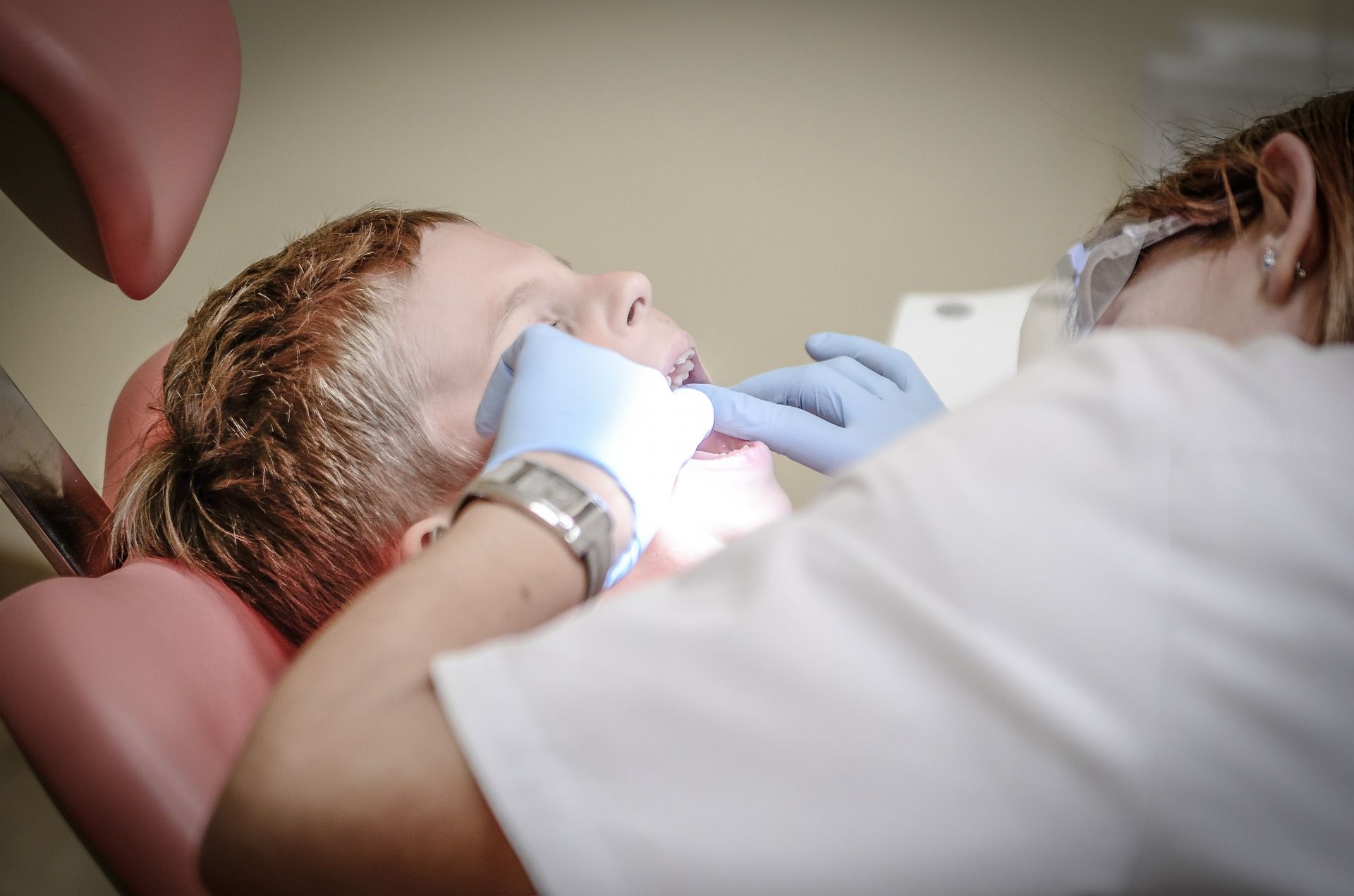
Representation. A dentist.

A large U.S. clinical trial has found that a simple, inexpensive liquid can halt tooth decay in young children without the need for drilling, injections or sedation, offering researchers the kind of rigorous domestic evidence that has been missing for a treatment already used successfully around the world for decades.

The study, led by researchers at the University of Michigan and published in JAMA Pediatrics, examined a treatment called silver diamine fluoride, commonly abbreviated as SDF. Dentists apply the liquid directly to a cavity using a small sponge-tipped applicator, a process that takes only a few seconds per tooth and requires no removal of decayed tooth material, unlike traditional cavity treatment, which typically involves drilling out damaged tissue before placing a filling.

The Phase III trial enrolled 830 children younger than age 6, recruited through dental offices, pediatric medical practices, and Head Start and Early Head Start programs across Michigan, New York and Iowa. Researchers found that applying 38% SDF every six months stopped tooth decay in more than half of the affected baby teeth included in the study.

Margherita Fontana, a professor of dentistry at the University of Michigan School of Dentistry and the study’s lead investigator, described the strength of the results. “This is a very effective and safe treatment — even in children as young as 1,” Fontana said.

Advertisement

Tooth decay remains the most common chronic disease among children in the United States, affecting more than 40% of children nationwide, according to the study. Left untreated, cavities can lead to significant pain, infection, difficulty sleeping or eating, missed school days and repeated medical appointments. Untreated cavities also send thousands of young children to hospital emergency departments across the country each year, though emergency physicians are typically unable to address the underlying dental problem, leaving some children to continue suffering from pain and infection or eventually requiring surgery under general anesthesia to fully resolve the issue.

Although SDF has been used successfully in many other countries for decades, its use in the United States has remained more limited. American dentists have applied it off-label since 2014, when the U.S. Food and Drug Administration first approved the substance as a medical device intended to reduce tooth sensitivity, rather than as an approved treatment for cavities specifically. Until now, researchers had not completed the kind of large-scale U.S. clinical trials needed to formally demonstrate the treatment’s safety and effectiveness against tooth decay, evidence the FDA would require before considering approval of SDF as a drug specifically indicated for treating cavities.

Fontana said the newly published trial results fill that evidentiary gap. “If we want more children and families to benefit from this treatment, we need rigorous evidence showing both that it works and that it’s safe,” Fontana said. “From a public health perspective, if we want broader implementation across the United States, including in medical settings, we need carefully collected data in U.S. populations, and we now have that.”

The treatment does carry one notable visible drawback: the silver in the solution permanently darkens the decayed portion of the treated tooth. Despite that cosmetic tradeoff, researchers said SDF could prove especially valuable for certain groups of patients, including very young children, older adults, people with developmental or physical disabilities, and patients who experience severe dental anxiety. The treatment may also benefit people with limited access to conventional dental care or those who cannot easily tolerate standard drilling-based procedures.

Advertisement

Fontana noted that the treatment’s simplicity could allow it to be used earlier in a child’s life than a typical dental visit might otherwise occur. “It is important to have data they can refer to because young children often see pediatricians years before they ever visit a dentist,” Fontana said. “Broader acceptance could allow many more cavities to be treated while a referral to a dental home is successful, and before they become painful, infected, or require surgery.” Fontana added that in medicine, clinicians generally require high-quality evidence of this kind before they are willing to change established clinical practice.

The research, which began in 2018 and continued despite disruptions caused by the COVID-19 pandemic, was conducted in collaboration with researchers from New York University, the University of Iowa and Indiana University, along with the National Institutes of Health’s National Institute of Dental and Craniofacial Research, which provided more than $12 million in funding to support the study. Elevate Oral Care, the manufacturer of the specific SDF product tested in the trial, known commercially as Advantage Arrest 38% SDF, supplied the treatment used throughout the study.

Amr Moursi, a professor of pediatric dentistry at New York University College of Dentistry and a co-principal investigator on the study, said the trial’s findings could support formal regulatory approval of the treatment going forward. “Our results support FDA approval of SDF for managing arrest of tooth decay in young children,” Moursi said. “Removing SDF from off-label status would be an important innovation which could lead to increased utilization by providers, enhanced payments by insurers and more consistent product quality.”

Researchers noted that SDF may function differently depending on the age of the patient and the specific clinical situation. For young children with baby teeth, repeated application of the treatment every few months may be sufficient to control a cavity until the affected tooth eventually falls out naturally as part of normal childhood dental development. In adults, the treatment could instead serve as either a long-term management option or a temporary measure to control decay until a more permanent restorative procedure becomes financially or logistically feasible for the patient.

Advertisement

Fontana summarized the treatment’s broader potential impact on public dental health. “For almost anyone, this can arrest the decay and stop the infection and the pain it causes,” Fontana said. “This could benefit many people.”

The trial’s results now provide the manufacturer with the clinical evidence needed to formally submit a dental caries drug application to the FDA, a step researchers said could ultimately expand access to the treatment well beyond its current off-label use across American dental and medical practices.

Continue Reading

Business

FTSE 100 Climbs to a Fresh Record High as Rolls-Royce and BAE Systems Earnings Beats Lift Shares Higher

Published

on

Tesla's robotaxi launch in Texas comes as Elon Musk focuses on his business ventures following his stint in Washington

London’s benchmark stock index climbed to another all-time high on Thursday, extending a remarkable rally that has left the FTSE 100 among the world’s best-performing major indexes even as chip-heavy markets in the U.S. and Asia continue to churn through volatility tied to artificial intelligence spending concerns.

The FTSE 100 rose 0.44%, adding 48.24 points to trade at 10,956.65 as of early afternoon in London, according to index data. The index touched an intraday high of 10,979.60 during the session, another fresh record, while its low for the day stood at 10,865.37. Thursday’s close compares with Wednesday’s finish of 10,908.41, itself a record at the time, meaning the index has now set new all-time highs in consecutive trading sessions.

Strong corporate earnings drove much of Thursday’s advance, with Rolls-Royce among the standout performers after the aerospace and defense engineering giant lifted its full-year guidance. The company raised its forecast for underlying operating profit to a range of £4.7 billion to £4.9 billion, alongside expected free cash flow of £3.8 billion to £4.0 billion, an upgrade that analysts characterized as reflecting genuine operational improvement rather than simply a broader defensive-sector bounce. The upgrade helped lift the FTSE’s aerospace and defense sector by 3.6% during the session.

BAE Systems also contributed significantly to Thursday’s gains, raising its own full-year profit guidance after reporting stronger first-half results driven by higher defense spending. The company posted a 9% increase in sales to £15.8 billion for the six months through June, with growth recorded across all of its business divisions. Underlying operating profit rose 11% to £1.7 billion, while underlying earnings per share climbed 13% to 38.9 pence. Order intake for the period increased to £16.4 billion from £13.2 billion a year earlier, leaving BAE Systems with a record order backlog of £84 billion.

Advertisement

Thursday’s gains build on a broader rally that has taken hold across the FTSE 100 over the past several trading sessions, driven substantially by strength in the index’s heavyweight energy, banking and mining sectors. Wednesday’s session saw the index touch what was then an all-time intraday high of 10,951.06 points, propelled by a surge in oil and gas stocks after renewed fighting in the Middle East pushed Brent crude prices up nearly 7% in a single session, settling at $90.74 a barrel. Energy stocks jumped 2.9% during Wednesday’s trading as investors weighed the implications of dashed hopes for an imminent resolution to the ongoing conflict between the United States, Israel and Iran.

Analysts have pointed to the FTSE 100’s relatively limited direct exposure to major semiconductor manufacturers and megacap technology companies as a key factor insulating the index from the sharp volatility hitting chip-heavy markets elsewhere in the world this week. That contrast has been especially stark against South Korea’s KOSPI index, which has fallen roughly 20% over the past five trading sessions amid a punishing selloff in memory chip stocks, and against the Nasdaq Composite in the United States, which has declined roughly 10% over the past month as investors reassess the sustainability of artificial intelligence infrastructure spending. XTB market analyst Kathleen Brooks noted that the backdrop heading into Thursday’s session was “one of rising volatility,” particularly for technology-heavy indexes in the U.S. and Asia, a dynamic the FTSE 100 has so far largely avoided given its heavier weighting toward energy, banking and mining stocks rather than technology.

Thursday’s trading session also coincided with the Bank of England’s latest interest rate decision, announced at midday London time. The central bank’s Monetary Policy Committee vote showed a degree of internal division, with policymaker Catherine Mann joining a more hawkish faction within the committee. Peel Hunt economist Kallum Pickering said Mann’s position likely “only matters at the margin,” suggesting it could reflect a more reactive response to recent escalation in the Middle East rather than a fundamental shift in the committee’s broader policy stance. Minutes from the meeting noted that while the committee judged “the risks to the inflation outlook are tilted to the upside relative to the central projection,” policymakers also stressed there “remains scope for the outlook to change materially as events in the Middle East unfold.”

Other notable corporate movers on Thursday included Mondi, the packaging and paper group, which surged on improved trading momentum and lower capital expenditure despite weaker first-half earnings, a pattern some analysts characterized as signaling the company may be emerging from a margin trough. Rentokil Initial moved in the opposite direction, falling after the pest control company reported weakening lead flow in its North American residential business toward the end of the second quarter and withdrew a previously stated 2027 margin target, a move analysts said signaled potential softening in the company’s growth trajectory.

Advertisement

Dividend-focused investors have also taken note of the strength across the FTSE 100 this earnings season. Investment platform AJ Bell has forecast total FTSE 100 dividends of £88.8 billion for the year, alongside declared 2026 share buybacks estimated at £36 billion, according to the firm’s most recent dividend tracking data. AJ Bell investment director Russ Mould said Wednesday’s wave of corporate earnings announcements had helped push the running buyback total toward £40 billion, though both figures remain estimates and running tallies rather than confirmed final outcomes for the year.

With the Bank of England’s decision now delivered and corporate earnings season continuing to unfold across London’s blue-chip companies, investors are likely to remain focused on whether the FTSE 100’s current run of records can be sustained against a backdrop of continued geopolitical uncertainty in the Middle East and ongoing volatility across global technology and semiconductor markets in the sessions ahead.

Continue Reading

Business

Yum Brands (YUM) Q2 2026 earnings

Published

on

Yum Brands (YUM) Q2 2026 earnings

The Taco Bell logo is displayed at a Taco Bell restaurant on July 14, 2026 in Pasadena, California.

Mario Tama | Getty Images

Yum Brands on Thursday reported mixed quarterly results, and said the cyclospora outbreak tied to Taco Bell restaurants damaged sales at the chain in its current quarter.

Advertisement

“The brand has seen a meaningful near-term sales impact ,” CEO Chris Turner said on the company’s earnings conference call, adding that the company expects the downturn to be a temporary problem for Taco Bell.

Since the Food and Drug Administration first linked the parasitic outbreak to iceberg lettuce served by Taco Bell in mid-July, daily traffic to the chain’s locations has plunged by double-digit percentages, according to Placer.ai data. Yum depends on Taco Bell as a “growth engine” for the company, and the crisis puts that title in jeopardy, at least in the near term.

Sales trends have been “steadily improving” over the last 10 days, according to Turner, and brand sentiment on social media has returned to pre-crisis levels.

“Elevated uncertainty initially weighed on consumer demand, and since then, consumers have become increasingly aware that this is an industry-wide issue, not an issue specific to Taco Bell,” Turner said.

Advertisement

Other restaurant chains not implicated in the outbreak have also seen their sales slip. Chipotle Mexican Grill executives said consumers’ mistrust of chains serving fresh lettuce weighed on sales in the second half of July.

The results Yum reported are for its second quarter ended June 30, before it was tied to the foodborne illness outbreak. The restaurant company does not typically provide an outlook for same-store sales growth or earnings per share for the full year or the next quarter.

Yum Brands’ second-quarter results

Choose CNBC as your preferred source on Google and never miss a moment from the most trusted name in business news.
Continue Reading

Business

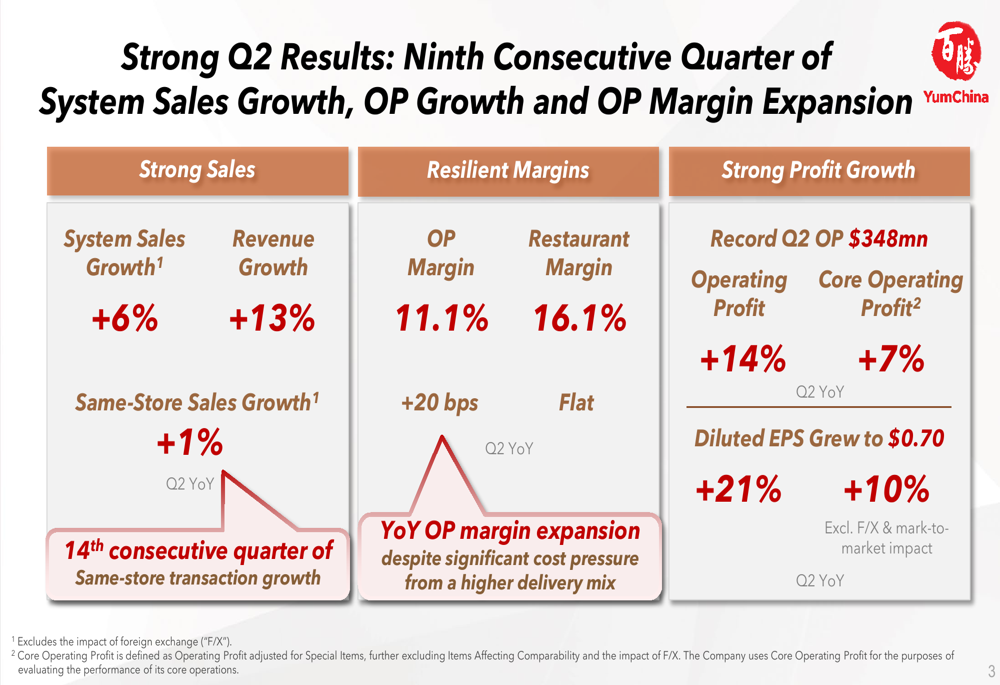
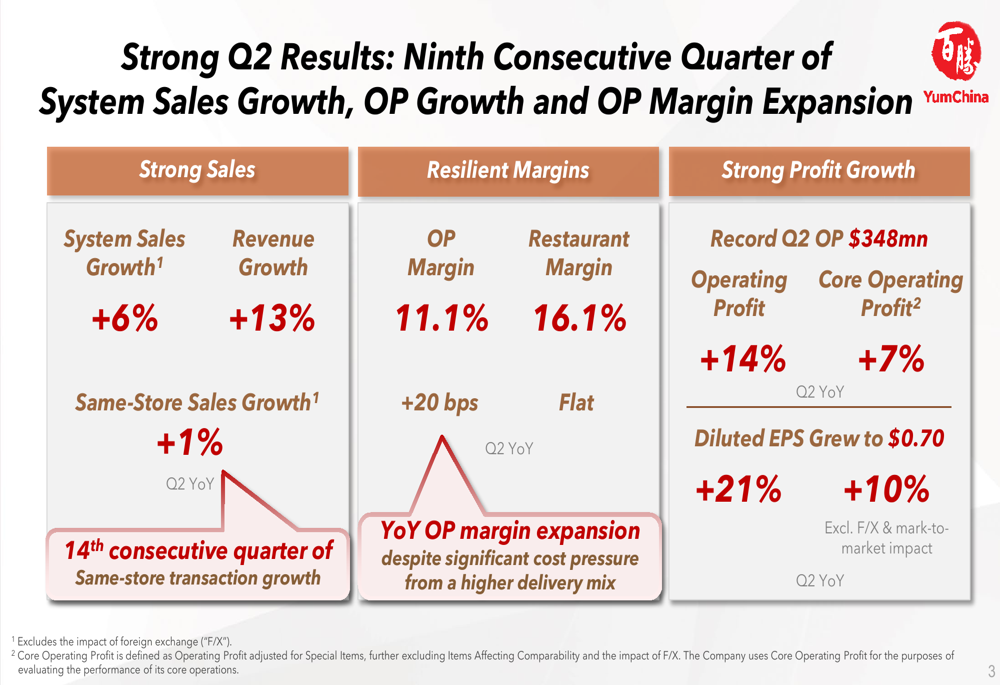
Yum China Q2 2026 slides: record profit, aggressive expansion

Published

on

Yum China Q2 2026 slides: record profit, aggressive expansion


Yum China Q2 2026 slides: record profit, aggressive expansion

Continue Reading

Business

Earnings call transcript: Hyundai Motor India Q1 2026 profit falls as stock rises

Published

on


Earnings call transcript: Hyundai Motor India Q1 2026 profit falls as stock rises

Continue Reading

Business

‘Backing rockstars’: Argonaut launches private equity-style fund

Published

on

‘Backing rockstars’: Argonaut launches private equity-style fund

Argonaut is hunting for up to 20 per cent stakes in mining and logistics companies backed by industry ‘rockstars’ through its newly launched private equity-style fund.

Continue Reading

Business

The Big Cash Flow Problem That Is Sinking Meta Stock After Earnings

Published

on

The Big Cash Flow Problem That Is Sinking Meta Stock After Earnings

The Big Cash Flow Problem That Is Sinking Meta Stock After Earnings

Continue Reading

Business

Above the Storm, the Sun’s Always Shining

Published

on

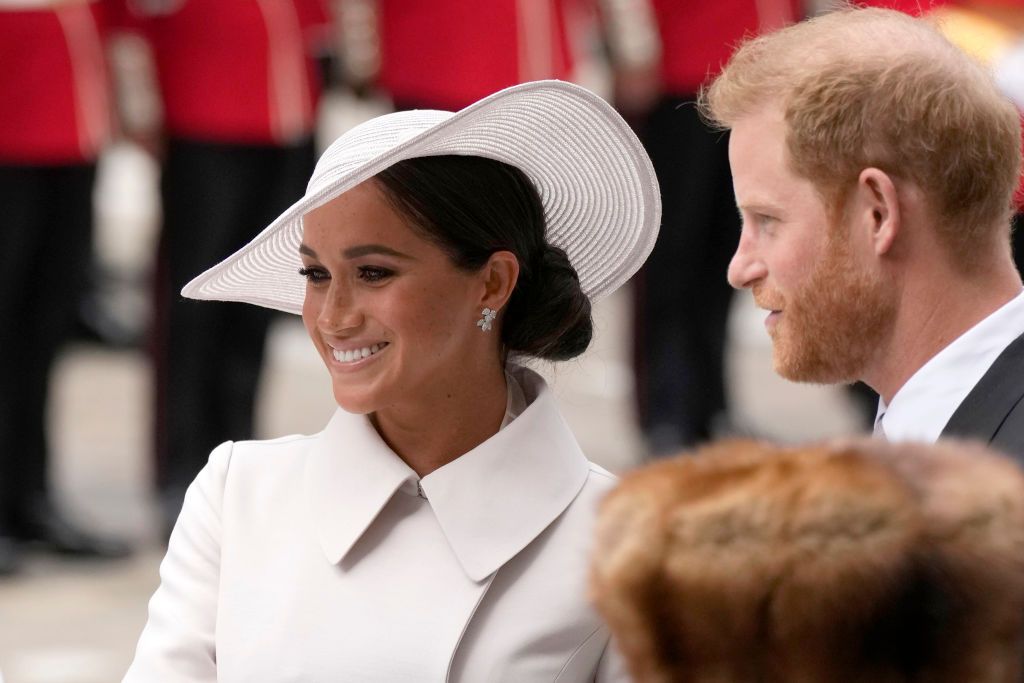
Meghan Markle

Meghan Markle recently opened up about a piece of advice her husband, Prince Harry, shared with her years ago that she says continues to help her navigate difficult moments in life.

The Duchess of Sussex made the comments during a premiere and question-and-answer event for her and Harry’s documentary film “Cookie Queens,” according to a report from People magazine. During the event, an audience member asked Markle how she copes with the tough moments life inevitably brings.

In her response, Markle described drawing on something Harry had told her long before, rooted in his years of military service. “Funny enough, I was thinking about something my husband told me ages ago, because we all go through experiences and life is full of surprises, but you know, he was a helicopter pilot in the British Army for 10 years,” Markle said. “And sometimes on really hard days … he said, ‘Hey, but my love, you know, even if there’s a storm happening, above the storm, the sun’s always shining.’”

Harry served as an Apache helicopter pilot during a decade-long military career with the British Army, including two deployments to Afghanistan. That military background has continued to inform how he approaches challenges even years after leaving active service, according to Markle’s account of the advice he shared with her.

Advertisement

Markle and Harry married in 2018 in a ceremony held at Windsor Castle in the United Kingdom, and the couple shares two children, Prince Archie and Princess Lilibet. In January 2020, the couple announced they were stepping back from official royal duties, relocating to California, where they have built out a range of business and media ventures in the years since.

Harry has more recently made efforts to repair his relationship with his family in the United Kingdom following the couple’s departure from royal life. Markle and Harry traveled to Britain with their children for events tied to the Invictus Games, the international sporting competition for wounded, injured and sick servicemembers and veterans that Harry founded in 2014. During the same trip, the couple held a private meeting with King Charles III and Queen Camilla, marking the first time the king and queen had seen their grandchildren in four years.

Markle has also continued to build her public media presence in recent months, including a recent appearance as a guest judge on “MasterChef Australia,” where she set contestants a challenge to prepare dishes she described as “fit for a Duchess.” During the taping, Harry called into the show despite his own schedule, and the couple discussed the competition together on air, with Markle noting that Harry would have enjoyed several of the dishes the contestants prepared, a moment that drew smiles from those present.

The “Cookie Queens” documentary, which was the subject of the event where Markle shared Harry’s advice, adds to a growing slate of media projects the couple has developed since relocating to the United States, building on ventures that have included Markle’s Netflix lifestyle series “With Love, Meghan” and her lifestyle brand, As Ever, which she relaunched earlier this year.

Advertisement

Markle’s willingness to share personal reflections on coping with hardship comes as the couple has continued to navigate significant public scrutiny in the years since stepping back from royal duties, including ongoing questions about Harry’s UK security arrangements and periodic tension in his relationship with other members of the royal family. Even amid those continued pressures, both Markle and Harry have described their relationship as a source of mutual support, with Markle’s recent comments underscoring the emotional grounding she says Harry’s perspective, shaped by his own military experience, has continued to offer her during difficult periods.

The couple’s recent UK visit and reported meeting with King Charles and Camilla have been widely covered as part of a broader narrative of gradually thawing relations between Harry and the royal family following years of public tension that followed the couple’s 2020 departure from official duties and the subsequent publication of Harry’s memoir, “Spare,” in 2023, which included pointed criticism of several family members.

As Markle continues to balance her expanding media and business ventures with her family life in California, her recent comments about leaning on Harry’s advice during hard times offer a rare glimpse into how the couple has navigated the personal challenges that have accompanied their high-profile and, at times, turbulent transition away from formal royal life over the past several years.

Advertisement
Continue Reading

Business

Welsh vehicle accident repair firm acquired by the Vella Group

Published

on

Business Live

RGM Vehicle Body Repairs has been trading from more than 50 years serving customers across South Wales

RGM Vehicle Body Repairs.

Family-owned accident repair specialist RGM Vehicle Body Repairs is under new ownership.

The business, which has been serving motorists across South Wales for more than 50 years, has been acquired by leading vehicle accident repair ventures the Vella Group, in a deal that gives it a presence in Wales for the first time.

The Vella Group were advised on the deal by the Cardiff office of FRP Corporate Finance. The value of the acquisition has not been disclosed. Vella’s acquisition has been backed by private equity firms Ama Capital and Keyhaven.

RGM Vehicle Body Repairs, which has repair workshops in Swansea and Haverfordwest, was originally founded by Robert Morgan and is now led by Paul Morgan.

Advertisement

As part of the transaction, Paul will remain with the business on a consultancy basis to help ensure a smooth transition for its 40 colleagues, its customers and partners.

FRP Corporate Finance, led by partner Thomas Edwards and manager Alexander Griffiths, advised on offer structure, project managed due diligence workstreams and led negotiations on equity price adjustments. This marks the fifth deal on which FRP Corporate Finance has advised the Vella Group.

Marc Holding, chief executive officer at The Vella Group, said: “We’re delighted to welcome Paul and everyone at RGM to the Vella Group. They’ve built a fantastic reputation over many years through hard work, integrity and consistently delivering for their customers. Businesses like RGM don’t earn that reputation overnight, and we’re committed to preserving everything that has made the business so successful while supporting its next chapter.”

Paul Morgan, director at RGM Vehicle Body Repairs said: “After 53 years in operation, finding the right home for the business was one of the most important decisions we’ve had to make. We wanted to work with a business that would value what we’ve built, look after our team and continue delivering the high standards our customers expect. From the outset, it was clear that the Vella Group shared those values, and I’m looking forward to supporting the business through the transition and seeing it go from strength to strength.”

Advertisement

Mr Griffiths, manager at FRP Corporate Finance said: “It has been a privilege to support the Vella Group as it has continued to grow and strengthen its position as one of the UK’s leading accident repair groups. This acquisition further demonstrates Vella’s commitment to strategic growth, expanding its geographic footprint and reinforcing its strong position in the market.

“RGM has become a well-established specialist provider over five decades, focusing on quality workmanship, investing in its people and always putting customers first. Those values closely align with the Vella Group’s own approach to building a sustainable, values-led business.”

Other advisers on the deal included, Broadfield (legal), and Crowe (due diligence).

Advertisement
Continue Reading

Business

Wealth managers face a new challenger: their clients’ AI chatbots

Published

on

Wealth managers face a new challenger: their clients’ AI chatbots

Boy Wirat | Istock | Getty Images

A version of this article first appeared in CNBC’s Inside Wealth newsletter with Robert Frank, a weekly guide to the high-net-worth investor and consumer. Sign up to receive future editions, straight to your inbox.

Even high-net-worth clients who can afford top-notch advisors are asking artificial intelligence chatbots like Claude for portfolio recommendations and tax advice, wealth management leaders told CNBC. 

Advertisement

“My personal opinion is that ChatGPT is the single largest investment advisor in the world right now,” said Matthew Fleissig, CEO and cofounder of Pathstone, a registered investor advisory with $185 billion in assets.

Asking AI for a second opinion can help clients come up with informed questions and have deeper conversations with their financial advisors, according to firm leaders. That said, the practice comes with risks, such as getting incorrect advice or having personal information leaked.

“I think for a client who’s dealing with something that’s very technically complex and doesn’t have that grasp, it may be harder to differentiate between a hallucination or an error of fact versus a good insight that the engine has,” said Michael Zeuner, managing partner at WE Family Offices.

Moreover, as these large language models get more sophisticated and popular, wealth advisories – especially those that target the mass affluent — will have to do more to justify their fees, according to Morningstar’s Sean Dunlop. He told CNBC that wealth management stocks have already pulled back as AI has encroached on the industry, such as an AI tax planning tool by Altruist released in February or a personal finance feature launched by OpenAI in May.

Advertisement

Dunlop said it’s unlikely that AI will wipe out traditional wealth managers — but they will do more than help advisors become more efficient.

“I think the truth’s probably somewhere in the middle where the service level is going to get better. You probably need fewer advisors to serve the pool of assets, which might itself expand a little bit, and there’s going to be some group of customers that are willing to do it themselves that weren’t before,” said Dunlop, director of equity research at Morningstar. 

“At a minimum, it ought to raise the floor. Like, if you’re an advisor and you’re keeping half your client’s balance in cash in an IRA, then this really ought to be a wake up call,” he added.

AI enters the chat

Pamela Lucina of Northern Trust said she first noticed clients using AI to double-check the firm’s advice about 18 months ago and that it has become a more frequent occurrence since. 

Advertisement

“We’ve had clients tell us directly that they’re going to ask AI the questions that they’re going to ask us,” said Lucina, the firm’s chief fiduciary officer and leader of its trust and advisory practice. “I think what they’re often testing us for is not the answer, but having more specifics or evidence that we’ve actually done these things before.”

Many prospective clients also use LLMs to help them decide whether to work with Northern Trust, she added. Before the rise of AI chatbots, typically only billionaire clients would ask the firm to submit a formal proposal for managing their wealth, according to Lucina. Now she estimates about half of clients send requests for proposals, even those with as little as $100 million in assets. Some have told the firm that they used ChatGPT or other LLMs to formulate their highly specific questions, she said. 

This process can save time and make client meetings more efficient, Lucina said.

“Less of our conversation is about information sharing and more about focusing on the outcome they are trying to achieve and how it actually applies to families,” she said. “The fact that there’s more information out there is not a threat. It can take a conversation to the next level.”

Advertisement

Get Inside Wealth directly to your inbox

Zeuner said he first noticed clients talking openly about feeding portfolio recommendations into LLMs about five months ago. It has become so common that his firm is considering whether to run every recommendation in Microsoft Copilot so advisors can prepare for questions clients may ask.

He said he views the use of LLMs as a second set of eyes and a positive trend.

“The AI is enabling and empowering them to get involved, to learn, to ask questions, to get a second opinion,” he said. “Whether they challenge us or validate, it doesn’t matter; they’re engaged.”

The pitfalls of AI advising 

Still, Zeuner said he’s concerned about clients not catching AI-made mistakes. For instance, he said, if a client uploads a trust document into a LLM and asks a question about it days later, the chatbot might hallucinate details of the document in its answer. 

Advertisement

Zeuner also said he’s seen LLMs make simple mistakes, such as ChatGPT telling a client that two ETFs in his portfolio appeared to be identical. While the ETFs tracked the same index, one was equal weight and the other was cap-weighted, he said.

When Lucina asked an LLM for examples of how clients could save on capital gains taxes, it got the math completely wrong, she said.

“I generally use AI to poke holes, to try to find criticisms in a way of thinking, and I think it is good for that,” she said. “But more often than not, especially on the advice side, it’s wrong.”

 More crucially, clients risk exposing identifying information if they use a personal account, even if they spring for a paid plan. Financial institutions, including wealth advisories, typically pay for enterprise plans that come with strict data protections. For instance, WE Family Offices has an agreement with Microsoft Copilot that data the firm enters is never used to train public AI models, according to Zeuner.

Advertisement

“We talk to [clients] about general best practices for using these LLMs, given their high profiles and wealth,” he said. “If you have an AI assistant capture every meeting, where is that transcript going? Do you know how it is stored? Who has access to it and how secure is it?”

Lacking a human touch

Fleissig said that while AI chatbots like Anthropic’s Claude and OpenAI’s ChatGPT are capable of great analysis, that’s not the same as actionable advice. 

He described LLMs as “semi-objective tools” that aren’t always equipped to make subjective decisions. A trusted advisor can guide clients to make the choice that’s right for them based on a variety of factors, he said.

“There is value in human-to-human interaction from a relationship standpoint because there’s so much nuance to it,” he said.

Advertisement

And though an LLM could make an argument for investing in pre-initial public offering Anthropic, for example, it can’t put that advice into practice and get you access to a funding round.

“You get access because of relationships that you have, and you also have all these experiences that you’ve had with clients,” Fleissig said. “Deals today are still not getting done via AI.”

Vince Lumia, a Morgan Stanley veteran of 27 years, said that the value of human touch is more easily overlooked during bull markets. That changes during times of crisis or uncertainty, said Lumia, who oversees Morgan Stanley’s 16,000-plus financial advisors. 

“The world sort of starts to think that it’s actually easy. The one guarantee I could have is that the markets will be volatile, and they won’t go up in a straight line, and there’ll be disturbances,” he said. “And when those disturbances happen, larger clients tend to want advice.”

Advertisement
Choose CNBC as your preferred source on Google and never miss a moment from the most trusted name in business news.
Continue Reading

Trending

Copyright © 2025