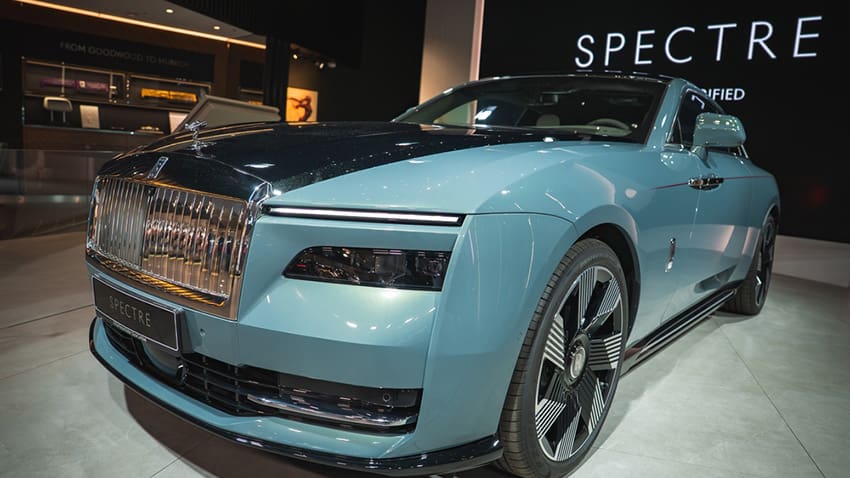
Rolls-Royce Motor Cars has abandoned its ambition to become a fully electric brand by 2030, marking a significant shift in strategy as the global transition to electric vehicles shows signs of slowing at the very top end of the automotive market.
The decision, confirmed by chief executive Chris Brownridge, reverses a high-profile commitment made in 2022 under his predecessor Torsten Müller-Ötvös, who had pledged that Rolls-Royce would cease production of its iconic V12 combustion engines by the end of the decade.
At the time, the company positioned its first electric model, the Spectre, as the beginning of a rapid transition, targeting 20 per cent of annual sales in the near term and as much as 70 per cent by 2028. The long-term ambition was clear: a complete shift away from internal combustion engines within eight years.
However, Brownridge has now acknowledged that the assumptions underpinning that strategy have changed materially. He pointed to a combination of softened customer appetite for fully electric luxury vehicles and a broader easing of regulatory pressure in key markets.
“For every client that loves an electric vehicle there is one who does not,” he said, underlining the continued demand among Rolls-Royce’s ultra-high-net-worth clientele for traditional powertrains. “Some clients do want an electric vehicle, we build what is ordered.”
Advertisement
The recalibration reflects a wider industry trend, particularly among premium and luxury manufacturers, where the pace of electrification is proving more uneven than previously anticipated. While mass-market brands continue to push towards electrification, high-end marques are increasingly adopting a more flexible, demand-led approach.
Brownridge was careful not to outline a revised electrification timeline, declining to specify new targets for zero-emission sales or confirm how many additional electric models Rolls-Royce plans to introduce. Nor did he disclose current sales performance for the Spectre, though its market reception has been closely watched as a bellwether for electric adoption in the luxury segment.
Instead, the emphasis appears to be shifting towards optionality rather than outright transition. The V12 engine, long synonymous with Rolls-Royce’s heritage and brand identity, will remain part of the company’s offering for the foreseeable future.
“The V12 is part of our history,” Brownridge said, suggesting that legacy and customer preference are now being given equal weight alongside environmental considerations.
Advertisement
The move comes amid a broader reassessment of electric vehicle strategies across the luxury automotive sector. Just a day earlier, Bentley confirmed that its own transition to an all-electric lineup would be delayed, with its first zero-emission model now expected at least two years later than originally planned.
Together, the announcements highlight a growing divergence between policy ambition and market reality. While governments continue to push for decarbonisation, including through bans on new petrol and diesel vehicles in the 2030s, manufacturers are increasingly signalling that consumer demand, particularly at the premium end, may not align neatly with those timelines.
Rolls-Royce’s original 2030 commitment was made at a time of strong political momentum behind electrification and rising optimism about battery technology, infrastructure rollout and customer adoption. Since then, a more complex picture has emerged, with concerns around charging infrastructure, range anxiety and the experiential differences between electric and combustion engines influencing buyer behaviour.
In the ultra-luxury segment, where emotional connection and heritage play a significant role in purchasing decisions, those factors appear to be even more pronounced.
Advertisement
Despite stepping back from a fixed deadline, Rolls-Royce is not abandoning electrification altogether. The Spectre remains a central part of its future portfolio, and the company is expected to continue investing in electric technology. However, the transition will now be paced according to customer demand rather than dictated by a hard deadline.
The shift underscores a broader reality facing the automotive industry: the road to electrification is unlikely to be linear. For Rolls-Royce, the strategy now appears to be one of balance, preserving its legacy while adapting to a changing, but still uncertain, future.
Paul Jones
Harvard alumni and former New York Times journalist. Editor of Business Matters for over 15 years, the UKs largest business magazine. I am also head of Capital Business Media’s automotive division working for clients such as Red Bull Racing, Honda, Aston Martin and Infiniti.
Financial influencer Taylor Price joins ‘Varney & Co.’ to break down how shifting your mindset can help Americans grow wealth and achieve the American Dream.
American consumers who are in the market for used cars are facing the highest prices in nearly three years, according to a new report.
Wholesale prices for used vehicles rose to their highest level since the summer of 2023 in March, with the Manheim Used Vehicle Value Index rising 6.2% year over year to a reading of 215.3.
Advertisement
Data from Manheim, a Cox Automotive brand and the largest wholesale marketplace in the U.S., found that demand for used vehicles remains strong. Values rose 1.4% in the month of March, which the report noted is well above long-term norms, and are up 2.3% from the start of 2026.
“As soon as this year began, prices at Manheim started moving higher as dealers anticipated strong demand from higher tax refunds to consumers,” said Jeremy Robb, chief economist at Cox Automotive.
Used car prices at the wholesale level rose to their highest level in nearly three years, the Manheim data showed. (Bess Adler/Bloomberg via Getty Images)
“Sales conversion rates, a clear sign of demand, were higher against 2025 for every week but one in Q1, and vehicle value trends at auction show we are well ahead of last year and where we would normally be during a spring bounce in the wholesale markets,” Robb added.
Advertisement
“We thought we’d see some impact from the Middle East conflict, and that may still happen. But right now, the data is clear: used-vehicle demand is healthy and inventory levels are relatively tight,” he added.
Cox said it’s unclear whether the Middle East conflict will impact U.S. consumer demand. (David Paul Morris/Bloomberg via Getty Images)
The Manheim report found that buyer activity was strengthening and there was increased competition for the available inventory in the wholesale lanes, as the sales conversion rate rose to 68.2% in March. That’s 4.6 percentage points higher than the most recent three-year average for March and is up 5.5 percentage points from the revised-higher February rate of 62.7%.
Used electric vehicles (EVs) also showed strength in the first quarter with firm pricing and activity for the quarter as values rose alongside the seasonal increase.
Advertisement
It noted that used EVs offer consumers affordability advantages over new EVs, while there’s also an increasing flow of off-lease EVs entering wholesale channels.
Demand for used EVs has been strong given the affordability differential with new EVs, the report found. (David Paul Morris/Bloomberg via Getty Images)
Retail used vehicle sales also showed momentum, with first quarter sales up about 2% compared with the same level a year ago. Inventory also tightened, with the days’ supply metric declining below 40 in March, which was the lowest point this year and down from a year ago.
Cox Automotive’s outlook for 2026 sees used vehicles continuing a stronger-than-expected start to the year, before being offset by a softer second half of 2026 with total used vehicle sales declining 1% year over year.
Advertisement
“As we move towards summer, we expect Manheim values to hold their ground with many more consumers yet to file their tax returns this year,” Robb said.
“The end of March typically proves to be the ‘peak’ for price action at Manheim. The Middle East conflict could dampen the spirits of the U.S. consumer, but we just haven’t seen it yet – our data is showing resiliency in the economy,” Robb said.
Fresh leaks about Apple’s iPhone 18 Pro models promise significant upgrades for the 2026 lineup, including the company’s first 2-nanometer A20 Pro chip, a dramatically smaller Dynamic Island cutout and a striking new deep red color option that could replace the traditional black finish.
iPhone 18 Pro Leaks: 2nm A20 Pro Chip, 35% Smaller Dynamic Island and Deep Red Color Set Stage
The reports, circulating widely in early April 2026, paint the iPhone 18 Pro and iPhone 18 Pro Max as evolutionary yet meaningful steps forward, even as attention shifts toward Apple’s anticipated foldable iPhone launching alongside them in September. Analysts say the combination of advanced chip technology, refined design elements and improved efficiency could help Apple maintain its premium positioning amid intensifying competition from Android flagships.
The most talked-about upgrade centers on the processor. Multiple reliable sources indicate the iPhone 18 Pro models will feature the A20 Pro chip, built on TSMC’s first-generation 2nm process. This marks a major leap from the 3nm architecture used in the current A19 Pro. The shift to 2nm is expected to deliver noticeable gains in both performance and power efficiency, potentially up to 15% faster processing and 30% better energy savings compared with the previous generation.
The new manufacturing process also incorporates Wafer-Level Multi-Chip Module (WMCM) packaging, which integrates the CPU, GPU, Neural Engine and RAM more closely on the same wafer. This tighter integration could boost memory bandwidth and enable more flexible configurations for demanding AI tasks. Rumors suggest the Pro models may ship with 12GB of RAM, up from 8GB in recent generations, further enhancing multitasking and on-device artificial intelligence capabilities.
Advertisement
Apple’s in-house C2 5G modem is also expected to debut, promising improved connectivity, lower power draw and better performance in challenging signal conditions. Combined with the efficient 2nm chip, these changes could translate into meaningfully longer battery life — a perennial user request.
Leaks point to a Pro Max battery exceeding 5,000 mAh for the first time, possibly reaching 5,100 to 5,200 mAh depending on whether the model includes a physical SIM tray. The standard iPhone 18 Pro could see a more modest but still improved capacity around 4,100 mAh or higher. Faster charging up to 40W wired is another rumored enhancement.
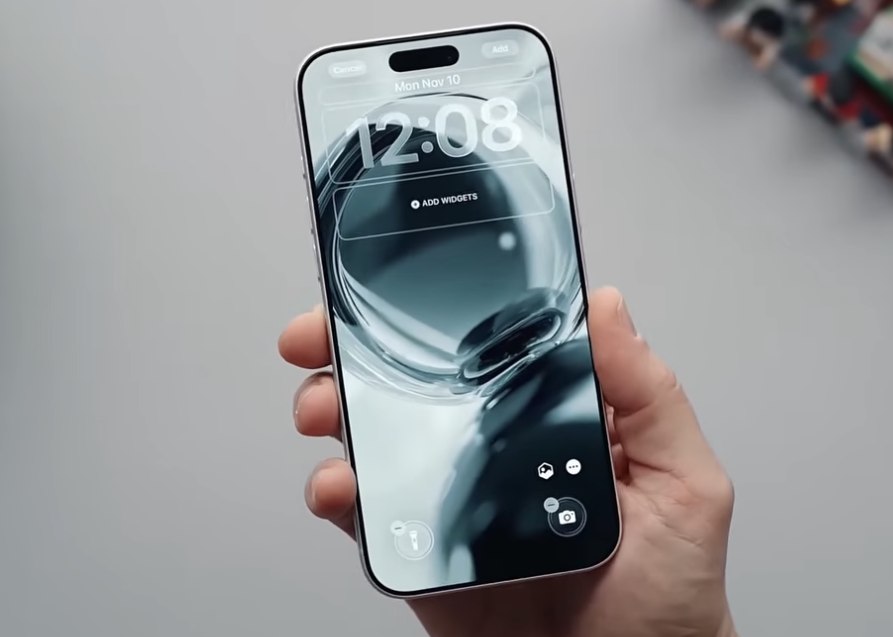
Design-wise, one of the most visible changes involves the Dynamic Island. Recent leaks suggest the pill-shaped cutout on the iPhone 18 Pro could shrink by approximately 35%, giving users more usable screen real estate while retaining the interactive notification and control features introduced with the iPhone 14 Pro. Some reports indicate this reduction may come alongside progress toward under-display Face ID, though full implementation might not arrive until later models. The front camera could shift to the top-left corner in certain configurations, further minimizing the notch area.
The rear camera system is expected to retain the triple 48-megapixel setup — main, ultrawide and telephoto — but with meaningful refinements. A variable aperture on the main Fusion camera would allow users greater control over depth of field and light intake, mimicking professional camera behavior. Other rumored camera tweaks include an 18MP selfie camera with improved Center Stage capabilities.
Advertisement
On the exterior, Apple is reportedly testing a deep red finish as the signature color for the iPhone 18 Pro lineup. The bold hue could join more traditional options while notably skipping the black titanium finish that has been a staple in recent Pro models. A “coffee” or bronze-like shade has also been mentioned in some leaks. The overall chassis is expected to maintain the same 6.3-inch and 6.9-inch display sizes as the current generation, with the familiar camera “plateau” housing the triple-lens array. A slightly thicker and more uniform design has been floated, potentially to accommodate larger batteries and improved thermal management via a stainless steel vapor chamber.
These changes arrive as Apple navigates a transitional period. The standard iPhone 18 models may face a delayed launch until spring 2027, shifting the spotlight entirely to the Pro duo and the new foldable device in the fall 2026 event. That foldable iPhone, expected to measure roughly 5.5 inches when closed and 7.8 inches when open, is also rumored to use the A20 Pro chip, creating a cohesive high-end ecosystem.
Industry watchers say the 2nm process represents a critical milestone for Apple’s silicon ambitions. TSMC’s N2 technology is viewed as one of the most advanced in the semiconductor industry, promising denser transistor packing that benefits everything from gaming performance to machine learning inference. Enhanced Neural Engine capabilities could supercharge Apple Intelligence features, enabling more sophisticated on-device processing with greater privacy and speed.
Advertisement
Battery and thermal improvements are particularly important as devices handle increasingly complex AI workloads. Longer runtime without compromising the slim form factor remains a key selling point for premium smartphones.
The smaller Dynamic Island addresses a common aesthetic complaint while preserving functionality. Early concept renders circulating online show a noticeably sleeker front face, which could make the iPhone 18 Pro feel more modern and immersive for media consumption and productivity.
Color choices have always generated buzz in Apple’s lineup. A deep red option would echo past vibrant finishes like (PRODUCT)RED while offering a fresh, premium look that stands out from the titanium grays and blues of recent years. Dropping black could disappoint some traditionalists but aligns with Apple’s pattern of refreshing its palette periodically.
Pricing is expected to remain in line with current Pro models, starting around $999 for the iPhone 18 Pro and $1,199 for the Pro Max, though storage tiers and regional variations could influence final figures. Storage options may extend to 2TB on higher-end configurations.
Advertisement
Supply chain analysts note that moving to 2nm production involves significant technical and cost challenges. Yields on the new process could initially be lower, but Apple’s close partnership with TSMC typically ensures priority access and rapid improvements.
As excitement builds, some caveats remain. Many details stem from unverified leaks and analyst notes, and Apple has a history of refining or altering plans before launch. Official confirmation won’t arrive until the expected September 2026 keynote.
Still, the early buzz suggests the iPhone 18 Pro could deliver one of the most substantial under-the-hood upgrades in recent cycles. The combination of cutting-edge 2nm silicon, refined display elements and thoughtful design tweaks positions it as a compelling upgrade for users seeking peak performance and longevity.
For consumers holding onto older iPhones, the rumored efficiency gains and battery improvements may provide extra incentive to wait. Photography enthusiasts are particularly intrigued by the variable aperture possibility, which could elevate mobile imaging beyond current capabilities.
Advertisement
Apple continues to face pressure to innovate amid slowing iPhone sales growth in some markets and rising competition from foldable devices offered by Samsung and Chinese manufacturers. The 2026 lineup, including the foldable, represents a pivotal moment as the company balances incremental Pro refinements with bolder form-factor experiments.
Whether the deep red color becomes an instant classic or the smaller Dynamic Island noticeably improves the everyday experience will ultimately be judged by users when the devices ship. For now, the leaks have generated considerable anticipation and discussion across tech communities.
As development continues through the summer, more concrete details are likely to surface. In the meantime, the iPhone 18 Pro appears poised to carry forward Apple’s tradition of blending powerful hardware with elegant design — this time with a bolder color palette and more efficient core technology at its heart.
Wolf Richter is the analyst at, and the publisher of, WOLF STREET, where he discusses business, finance, and money. Core focus: Federal Reserve, credits, equities, residential and commercial real estate, the auto industry, trade, consumers, and energy. He started this operation in 2011. Prior to that, he worked for 20 years in C-level positions, including 10 years in the auto industry. MBA from the University of Texas at Austin.
A prominent luxury wedding planner has directly debunked viral speculation that Taylor Swift and Travis Kelce will tie the knot at Rhode Island’s exclusive Ocean House resort on June 13, delivering a clear message to eager fans and tabloids: “Taylor is not my bride this weekend!”
SEOUL, South Korea — BLACKPINK member Jisoo is receiving an outpouring of praise after gifting her agency staff luxury Dior handbags worth more than 4 million won (approximately $2,652) each, a generous gesture that has gone viral and stood in stark contrast to recent controversies plaguing the K-pop industry.
Blackpink’s member Jisoo
The 31-year-old singer-actress, who launched her own one-person management agency BLISSOO after parting ways with YG Entertainment for solo activities, personally selected and presented the high-end bags to employees as a token of appreciation for their hard work. Staff members shared photos of the gifts on social media, with some posting heartfelt messages like “I love you, CEO Jisoo,” quickly sparking widespread admiration online.
Reports indicate Jisoo spent at least 12 million won (around $7,956) on the gifts for four staff members, with some bags priced even higher. The items came from Dior, the luxury French brand for which Jisoo serves as a global ambassador, adding a personal touch that fans described as thoughtful and meaningful.
The news emerged in early April 2026 through fan accounts and entertainment media, with photos showing elegant Dior handbags in various styles. Employees expressed genuine gratitude, highlighting the gesture as more than a simple perk but a reflection of Jisoo’s caring leadership style since establishing BLISSOO.
In the competitive and often high-pressure world of K-pop, where idols and agencies frequently face criticism over unfair contracts, intense schedules and treatment of staff, Jisoo’s actions have resonated strongly. Netizens and fans have hailed her as a “world-class CEO,” praising her for fostering a positive workplace environment and showing respect to those supporting her career.
Advertisement
One online commenter wrote, “This is how you treat people who work hard for you,” while others contrasted the story with recent industry scandals involving alleged power imbalances and exploitative practices at some agencies. The timing amplified the positive reaction, as discussions about idol welfare, mental health and fair treatment continue to circulate in Korean entertainment circles.
Jisoo, a member of one of the world’s biggest girl groups alongside Jennie, Rosé and Lisa, has built a multifaceted career as a solo artist, actress and brand ambassador. Her agency BLISSOO handles her solo endeavors, including music releases and acting projects, allowing greater control over her schedule and creative direction.
Fans noted that the luxury gifts align with Jisoo’s elegant image and her long-standing partnership with Dior. As a global ambassador, she frequently attends the brand’s fashion shows and events, making the choice of Dior bags a natural yet luxurious expression of thanks.
The story quickly spread across platforms like Instagram, TikTok and X, with hashtags related to Jisoo and the gifts trending. Supporters from the BLINK fandom celebrated the news as evidence of her kind personality, often citing past instances where she showed appreciation to staff and fans alike.
Advertisement
Entertainment insiders suggest such gestures can boost employee morale and loyalty, particularly in smaller agencies where teams work closely with artists. Jisoo’s approach appears to emphasize gratitude and team spirit, qualities that have endeared her to both domestic and international audiences.
This positive spotlight comes amid broader conversations in the K-pop industry about artist-agency relationships. While some groups and idols have faced backlash over reported mistreatment or overly demanding conditions, stories like Jisoo’s offer a counter-narrative of mutual respect and generosity.
Jisoo debuted with BLACKPINK in 2016, and the group has achieved global success with hits like “DDU-DU DDU-DU,” “How You Like That” and “Pink Venom.” The members have increasingly pursued individual projects while maintaining strong group unity, with each establishing personal agencies for solo work.
As an actress, Jisoo has taken on roles in dramas and expanded her presence in entertainment beyond music. Her poised demeanor and versatile talents have earned her a dedicated following, and the recent gift-giving episode has only enhanced her reputation for humility and thoughtfulness despite her superstar status.
Advertisement
BLISSOO has not issued an official statement on the gifts, but the staff’s social media posts served as authentic endorsements of the workplace culture Jisoo cultivates. In an industry where hierarchical structures sometimes lead to “gapjil” — a Korean term for abuse of power by those in superior positions — Jisoo’s actions stand out as the opposite: a leader uplifting her team.
Fans have drawn comparisons to other artists known for generous treatment of staff, noting that such stories humanize idols and strengthen fan connections. The Dior bags, while expensive, were seen less as flashy spending and more as a sincere thank-you for the behind-the-scenes efforts that support Jisoo’s busy schedule of music, acting, endorsements and BLACKPINK activities.
Social media reactions mixed admiration with lighthearted envy. “Jisoo treating her staff better than some companies treat their idols,” one user posted, capturing the sentiment. Others simply celebrated the heartwarming moment in a year filled with mixed K-pop news.
Jisoo’s generosity aligns with her public image as the elegant, warm-hearted “visual” of BLACKPINK, but also reveals a practical side of leadership. Running a personal agency requires managing a small but dedicated team, and investing in their well-being can contribute to long-term success and stability.
Advertisement
As BLACKPINK continues its global dominance and individual members carve out solo paths, moments like this remind fans of the human element behind the glamour. Jisoo’s gift-giving has not only brightened her staff’s day but also provided a feel-good story that resonates far beyond the K-pop bubble.
While the luxury bags represent a significant expense, the real value, many observers say, lies in the message of appreciation. In an era where mental health and fair labor practices gain increasing attention in entertainment, Jisoo’s gesture offers a positive example of how success can be shared.
The story continues to circulate widely as of April 7, 2026, with more fans discovering the details and adding their praise. Whether through music, acting or thoughtful leadership, Jisoo keeps proving why she remains one of the most beloved figures in global pop culture.
For BLISSOO staff, the Dior bags serve as daily reminders of their CEO’s gratitude. For fans worldwide, the anecdote reinforces why they support Jisoo — not just for her talent, but for the kindness that shines through even in her professional decisions.
Advertisement
In the fast-paced, high-stakes K-pop landscape, small acts of generosity can leave a lasting impression. Jisoo’s latest display of appreciation has certainly done just that, earning her even more admiration as both an artist and a leader.
Center for Medicare Director Chris Klomp joins ‘Mornings with Maria’ to outline the Trump administration’s latest Medicare rate update, defend new efforts to curb rising healthcare costs and highlight ongoing moves to lower prescription drug prices a
Falling prescription drug costs are emerging as a key development in the broader push to rein in U.S. health care spending, with new pricing shifts beginning to show up at the pharmacy counter.
Medicare Director Chris Klomp joined FOX Business’ Maria Bartiromo on “Mornings with Maria” to discuss how recent policy changes are starting to impact affordability across the health care system.
Klomp pointed to early signs that pricing pressure is easing, particularly for high-demand medications like GLP-1 drugs, which have surged in popularity but have remained out of reach for many patients. He attributed the recent price declines to actions taken by President Donald Trump to lower drug costs through new pricing initiatives.
FOX Business’ Gerri Willis reports on a Gallup poll showing 61% of Americans are greatly concerned about rising healthcare costs, surpassing worries about the economy and inflation.
“If you need a GLP-1, you’re now paying half of what you were paying just a couple of months ago before he announced those deals,” Klomp said.
Advertisement
Klomp framed the pricing changes as part of a broader effort to address affordability challenges that have prevented many Americans from filling prescriptions.
Woman injecting a syringe of medicine into her stomach (David Petrus Ibars/Getty Images / Getty Images)
“That’s solving the problem for a quarter of Americans who can’t pick up a prescription when they get to the pharmacy counter because they can’t afford it right now,” Klomp said.
The price drop reflects a broader effort to align drug costs more closely with international benchmarks while increasing competition in the market. GLP-1 medications, commonly used for diabetes and weight management, have become a focal point in the affordability debate as demand continues to climb.
Advertisement
eMed chief wellness officer Tom Brady and eMed CEO Linda Yaccarino discuss GLP-1 market growth and the company’s latest funding round on ‘Mornings with Maria.’
Klomp suggested the changes extend beyond a single drug class, pointing to similar trends in other treatments where costs have historically been a barrier to access.
“If you want to grow your family, you need to pick up fertility medicine again. You’re paying about half for those drugs, saving you thousands of dollars per cycle of treatment than you were just a couple months ago,” he said.
The shifts come as policymakers look for ways to reduce out-of-pocket costs while maintaining long-term sustainability in federal health care programs.
Advertisement
“[Trump’s] delivering on affordability for every American family to be their healthiest self,” Klomp said.
PE-backed firm teams up with Royal Fulfillment for centres in New Jersey, Chicago and Los Angeles
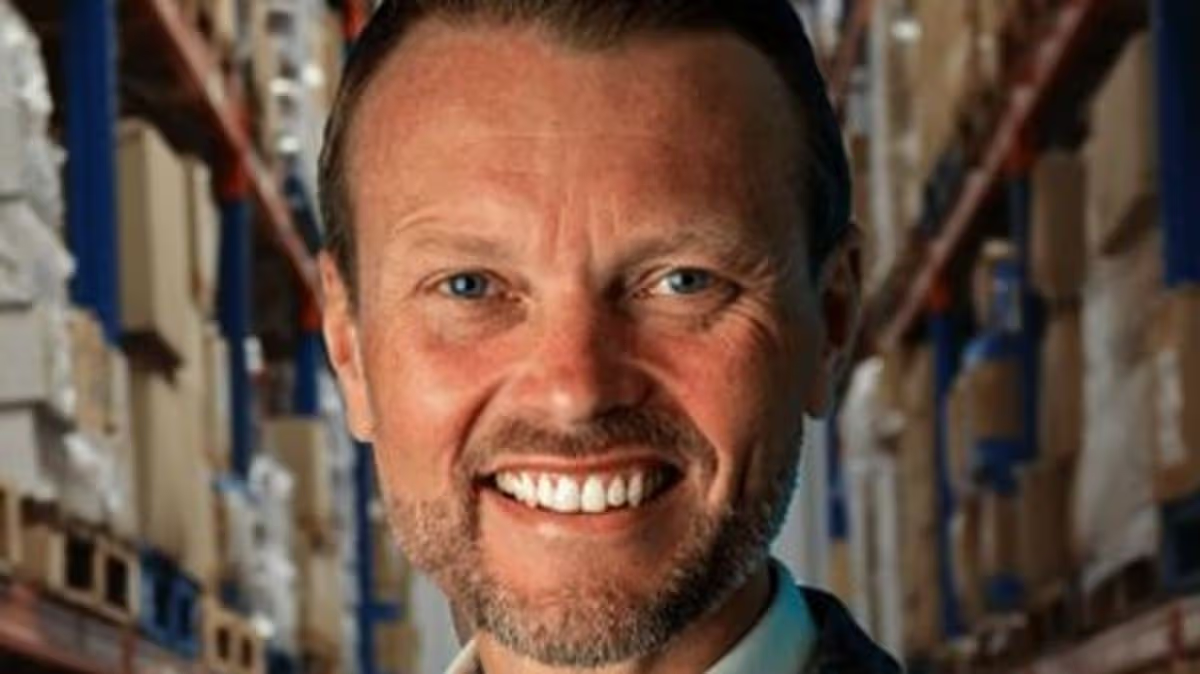
fulfilmentcrowd’s CEO Lee Thompson(Image: fulfilmentcrowd)
Logistics tech specialist fulfilmentcrowd is expanding its US network with new centres in New Jersey, Chicago and Los Angeles.
Chorley-based fulfilmentcrowd has teamed up with American group Royal Fulfillment on the centres designed to “support high-volume eCommerce and B2B distribution across the United States” and to offer coast-to-coast coverage for brands serving the US market. They will replace the group’s two previous US sites.
Royal Fulfillment is a family-run operator with more than 18 years of industry experience. Its centres can handle both direct-to-consumer and large-scale retail distribution, and the business has worked with major retailers such as Amazon, Walmart and Sephora.
Advertisement
Fulfilmentcrowd says its expanded US network will give its customers access to a wider range of US shipping services, including through carriers such as USPS, FedEx and DHL
Lee Thompson, CEO at fulfilmentcrowd, said: “The US is a critical growth market for many of our clients. With this three-centre network, we’re aiming to reduce operational friction at scale, giving global brands the ability to operate domestically across the US with speed, flexibility and cost control built in.”
He added: “This is about more than just adding locations. These centres add to a network that already reflects how modern brands operate: omnichannel, fast-moving and customer-first. Now we can support these requirements across the entire United States.”























































You must be logged in to post a comment Login