Connect with us
DAPA Banner
DAPA Coin
DAPA
COIN PAYMENT ASSET
PRIVACY · BLOCKDAG · HOMOMORPHIC ENCRYPTION · RUST
ElGamal Encrypted MINE DAPA
🚫 GENESIS SOLD OUT
DAPAPAY COMING

Business

RPM International: Steady Progress And Better Positioning, Arguably Undervalued (Upgrade)

Published

on

RPM International: Steady Progress And Better Positioning, Arguably Undervalued (Upgrade)

RPM International: Steady Progress And Better Positioning, Arguably Undervalued (Upgrade)

Continue Reading
Click to comment

You must be logged in to post a comment Login

Leave a Reply

Business

China’s CXMT Stock Soars 466% in Historic Shanghai Debut, Becoming the Nation’s Most Valuable Listed Company

Published

on

Wix Stock Jumps Nearly 10% as Battered Shares Rebound Ahead

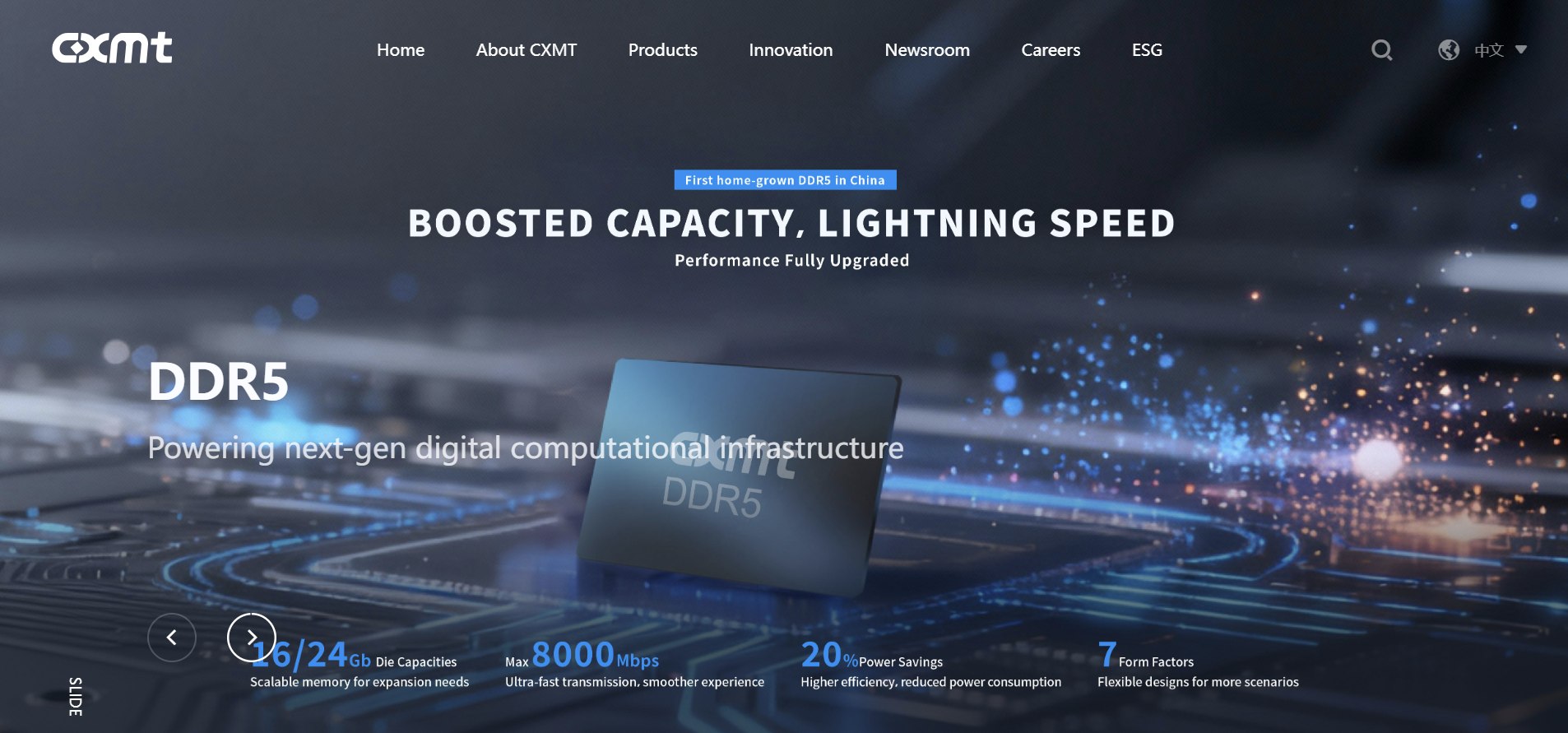
Shares of Chinese memory chipmaker CXMT Corp exploded on their Shanghai trading debut Monday, surging 465.82% to close at 49.00 yuan, instantly catapulting the company to the top of China’s stock market by valuation and marking one of the most spectacular initial public offerings in recent financial history.

The stock, which priced its IPO at 8.66 yuan per share, closed the session up $40.34 in value terms, after touching as high as 54.65 yuan during intraday trading on the Shanghai Stock Exchange’s technology-focused STAR Market.

Asia’s Biggest IPO of the Year

CXMT, formerly known as ChangXin Memory Technologies, raised 57.92 billion yuan, or approximately $8.6 billion, in the offering, making it the biggest mainland Chinese semiconductor listing on record and surpassing SMIC’s $7.5 billion Shanghai share sale in 2020. The IPO proceeds could rise to 66.61 billion yuan if an over-allotment option is fully exercised.

Advertisement

The listing was Asia’s largest IPO of 2026, with proceeds earmarked to expand production capacity, fund research and development, and strengthen the company’s working capital. The debut also outpaced the more than 100% first-day gain posted by China Resources New Energy following its $3.6 billion IPO earlier this month.

A New Most-Valuable Company in China

The rally lifted CXMT’s market capitalization to 3.65 trillion yuan, or roughly $539.21 billion, sharply up from $85.5 billion during the IPO process, making it the most valuable company listed in China and overtaking Industrial and Commercial Bank of China, the market’s previous heavyweight. That valuation now exceeds Intel Corp’s roughly $464 billion market cap, positioning the Chinese chipmaker ahead of one of the world’s most storied semiconductor names just hours after its trading debut.

By the close of trading, CXMT shares settled at 49 yuan, giving the company a market capitalization of about 3.3 trillion yuan, still enough to overtake Industrial and Commercial Bank of China’s 2.6 trillion yuan valuation.

Advertisement

A Rising Force in the Global Memory Market

Founded in 2016, CXMT manufactures dynamic random-access memory, or DRAM, chips used in products ranging from smartphones and personal computers to AI servers, positioning it at the center of China’s push for semiconductor self-sufficiency. According to its IPO prospectus, CXMT held a 7.67% share of the global DRAM market based on fourth-quarter 2025 sales, trailing industry leaders SK Hynix, Micron Technology and Samsung Electronics.

Analysts at Morningstar expect CXMT’s global DRAM market share to increase to 10% in 2026, citing strong AI infrastructure investment and growing demand for Chinese-made memory chips. The company’s financial turnaround has been dramatic in recent months, swinging to an operating profit of 35.43 billion yuan in the first quarter from a loss of 2.83 billion yuan a year earlier, driven by continued growth in global computing power demand and capacity allocation from major manufacturers.

Apple’s Reported Interest Adds Fuel

Advertisement

Part of the excitement around CXMT’s debut stems from reports that one of the world’s largest technology companies may already be evaluating its chips. Recent media reports showed that Apple was seeking approval from the Trump administration to use memory chips supplied by CXMT in devices sold outside the United States, as the company looks to diversify its supply chain amid a global memory shortage.

That reported interest from Apple has added weight to the view that CXMT could emerge as a legitimate global supplier rather than simply a domestically focused player serving China’s internal semiconductor ambitions.

Tight Global Supply Supports the Rally

Industry analysts pointed to persistent global memory shortages as a key factor underpinning investor enthusiasm for the listing. According to TrendForce analyst Ellie Wong, tight memory market conditions are expected to keep prices elevated through the end of 2027, with ongoing supply shortages pushing many customers to diversify their supplier base in ways that could meaningfully benefit CXMT.

Advertisement

Political Headwinds Remain

Despite the blockbuster debut, CXMT faces notable political obstacles to expanding its reach into Western markets. The Pentagon has included CXMT on its roster of Chinese enterprises with purported military connections, though this classification does not presently restrict American companies from conducting commercial transactions with the chipmaker.

Those restrictions, along with broader U.S. export controls on advanced chipmaking equipment, are expected to limit how quickly CXMT can scale its most cutting-edge production capabilities, even as its balance sheet and market valuation swell following Monday’s debut.

Part of a Broader Global Memory Boom

Advertisement

CXMT’s debut arrives amid a broader rally across memory chipmakers worldwide. SK Hynix experienced a 13% surge during its initial Wall Street trading session earlier this month, following a $26.5 billion capital raise in the largest-ever U.S. market debut by an international company, with the South Korean firm’s market capitalization exceeding $1 trillion in May. Both Samsung and Micron have also recently crossed the $1 trillion valuation threshold, milestones driven predominantly by intensifying demand for AI-oriented semiconductors.

A Word of Caution From Skeptics

Not everyone views the memory sector’s runup as sustainable. Some analysts have suggested the industry may be nearing a short-term peak in sentiment around the current memory cycle, noting that investors had already begun selling into the IPO, particularly within China itself, even as the broader business fundamentals of memory chipmaking remain durable over the long term.

CXMT’s explosive debut sets the stage for a closely watched stretch across the global semiconductor industry, with major memory chipmakers including SK Hynix and Micron set to report earnings in the coming days. Investors will be watching closely to see whether CXMT’s newfound scale translates into a genuine competitive threat to established DRAM leaders, or whether Monday’s rally proves to be a speculative debut-day frenzy that eventually cools as trading normalizes in the sessions ahead.

Advertisement
Continue Reading

Business

5 Ways China’s Newly Public CXMT Could Threaten Samsung and SK Hynix in the Global Memory Chip Market

Published

on

Wix Stock Jumps Nearly 10% as Battered Shares Rebound Ahead

China’s ChangXin Memory Technologies delivered one of the most explosive stock market debuts in recent history Monday, with shares surging more than 465% on the Shanghai Stock Exchange and instantly making the company China’s most valuable listed firm. The blockbuster listing has intensified a debate that has been building for months in South Korea’s semiconductor industry: whether CXMT represents a genuine long-term threat to the dominance of Samsung Electronics and SK Hynix in the global memory chip market, or whether the technology gap between the Chinese newcomer and Korea’s established giants remains too wide to close anytime soon.

Here are five ways analysts say CXMT’s rise could create real problems for the two Korean memory titans.

1. Aggressive Low-Cost Pricing in Commodity DRAM

CXMT’s most immediate competitive weapon is price. The company’s commodity DDR5 memory chips are priced 15% to 20% below comparable Korean products, a gap significant enough that major PC makers HP and Dell have already begun quality testing CXMT’s chips as potential alternatives. That kind of price undercutting poses a direct threat to the profitability of Samsung and SK Hynix in the commodity memory segment, which still accounts for a substantial share of both companies’ overall earnings.

Advertisement

Backed by enormous Chinese government subsidies, CXMT’s strategy of flooding the commodity DRAM market with low-cost supply poses a direct threat to the profitability of South Korean giants Samsung Electronics and SK Hynix. If that pricing pressure spreads beyond entry-level products into higher-margin segments, it could squeeze margins that have only recently expanded to record levels amid the broader AI-driven memory boom.

2. Explosive Financial Growth Fueling Rapid Expansion

CXMT’s balance sheet has transformed dramatically in a short period, giving the company the financial firepower to keep expanding aggressively. The company’s first-quarter net profit surged 1,688% year-on-year, lifting its global DRAM market share to 7.67%, with revenue of 50.8 billion yuan representing a 719% increase from the prior year. Much of that profitability came from selling roughly 28 billion yuan worth of DRAM inventory secured during a previous price downturn at significantly higher prices during the recent industry upswing.

That kind of profit surge, combined with the fresh capital raised in Monday’s IPO, gives CXMT substantially more resources to plow into new production capacity, research and development, and technology upgrades, resources that could accelerate its climb up the global market share rankings faster than many Korean analysts previously anticipated.

Advertisement

3. Rapidly Expanding Production Capacity

Perhaps the most concrete threat lies in CXMT’s raw manufacturing capacity, which is on pace to grow dramatically over the next several years. U.S. semiconductor analysis firm SemiAnalysis forecast that CXMT’s production capacity would grow to about 350,000 wafers per month by the end of this year, approaching Micron’s 385,000 per month over the same period, and projected it would reach 500,000 per month by 2028, accounting for 17% of the world’s total DRAM supply.

In terms of production capacity alone, the outlook suggests CXMT could soon overtake Micron to become the world’s third-largest DRAM maker. Some analysts see an even steeper trajectory. Nomura Holdings projected CXMT’s memory chip output to grow at 40% to 45% annually through 2030, expanding its global DRAM market share to 18% by the end of 2028, with the firm’s analyst writing that CXMT’s market share gains are likely to accelerate given that the global supply of memory is unlikely to ease in the coming years.

4. A Widening Base of Customers Willing to Diversify

Advertisement

CXMT’s growing credibility with major global customers represents another emerging challenge for the Korean incumbents. Recent media reports indicated Apple was seeking approval from the Trump administration to use memory chips supplied by CXMT in devices sold outside the United States, as the company looks to diversify its supply chain amid a global memory shortage. Combined with HP and Dell’s ongoing quality testing of CXMT’s commodity DRAM, that growing roster of potential customers suggests the Chinese chipmaker is no longer confined to serving only domestic Chinese demand.

Industry analysts note that persistent global memory supply shortages are pushing many customers to diversify their supplier base in ways that could significantly benefit CXMT and create additional business opportunities for the company going forward. If that diversification trend continues, it could chip away at the loyalty major electronics makers have historically shown toward Samsung and SK Hynix.

5. A National Economic Priority With Deep Government Backing

Unlike a typical private competitor, CXMT benefits from being a strategic priority for the Chinese government’s broader semiconductor self-sufficiency campaign, giving it access to resources and policy support that private rivals in South Korea do not enjoy to the same degree. With over 40% of South Korea’s exports dependent on semiconductors, CXMT’s rise is viewed not merely as corporate competition but as a warning signal for the national economy.

Advertisement

That government backing helps explain why CXMT has been able to sustain aggressive pricing and rapid capacity expansion even while posting the kind of profit swings that would typically concern private investors, a dynamic that gives Beijing considerable influence over how quickly the company can scale.

The Case for Skepticism

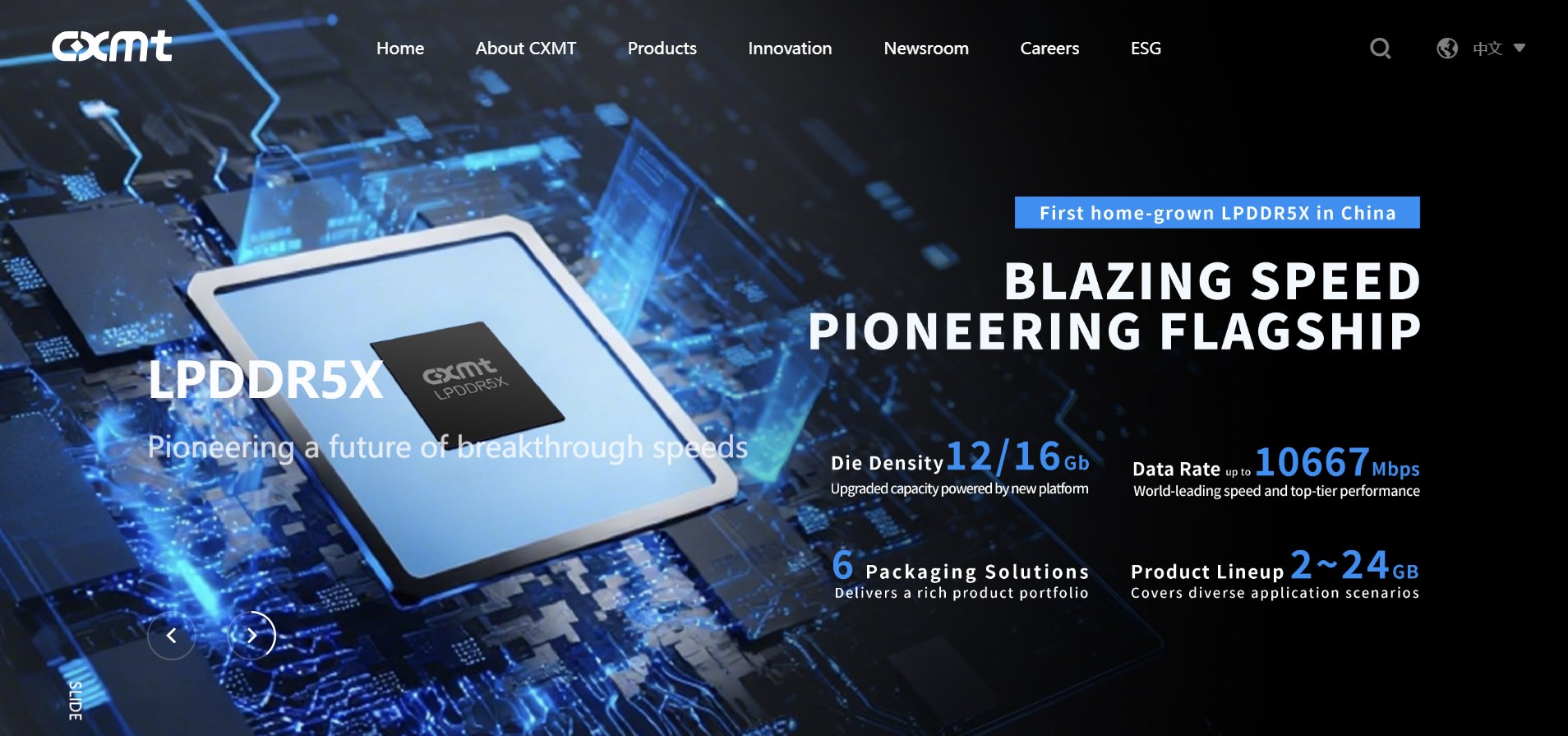
Despite these five pressure points, many analysts caution that CXMT remains far from displacing Korea’s dominance in the segments that matter most for future profitability. According to market research firm TrendForce, the three dominant players, Samsung Electronics, SK Hynix and Micron, controlled over 91% of the global DRAM market as of 2025, and CXMT’s mainstay products remain concentrated in the mobile LPDDR segment, with its presence in the high-bandwidth memory market critical for AI servers remaining negligible.

Samsung Electronics holds the largest share at 38% for the first quarter of 2026, followed by SK Hynix at 29%, according to Counterpoint Research, while CXMT’s market share stands at just 8%, a sharp jump from previous years but still far behind the two Korean leaders. SK Hynix in particular has cemented its lead in the highest-margin HBM segment, with Goldman Sachs estimating the company will maintain over 50% of the total HBM market share and having already secured roughly two-thirds of the orders for Nvidia’s next-generation HBM4 memory chips.

Advertisement

For now, CXMT’s rise poses a real and growing challenge in the lower-margin commodity DRAM segment, even as Samsung and SK Hynix retain a commanding lead in the advanced, AI-driven memory products that are increasingly defining the industry’s most lucrative growth frontier.

Continue Reading

Business

10 Most Successful Global K-Pop Stars to Emerge From HYBE Corporation’s Roster of Music Labels So Far

Published

on

Brian Doerksen

HYBE Corporation has built one of the most commercially dominant rosters in modern K-pop, spanning multiple labels that have each produced acts capable of topping global charts, selling out stadiums, and reshaping how Korean pop music is consumed worldwide. From the genre-defining success of BTS to the rapid rise of newer fourth-generation groups, here is a look at 10 of the most successful acts to come out of HYBE’s multi-label system so far.

1. BTS

No group has done more to define HYBE’s global success than BTS. Entering 2026, BTS remains the undisputed leader among K-pop acts worldwide, boasting approximately 82 million Spotify followers and around 24 to 26 million monthly listeners, with influence extending far beyond music into fashion, philanthropy and global cultural trends. The group returned in March 2026 with the album “Arirang,” which debuted at No. 1 on the Billboard 200 and posted 641,000 equivalent album units in its first week, the highest total for any album released that year. All seven members, RM, Jin, Suga, J-Hope, Jimin, V and Jungkook, have now completed their mandatory military service and entered what fans are calling their “Post-Military Era.”

2. SEVENTEEN

Advertisement

Under HYBE’s PLEDIS Entertainment label, SEVENTEEN has established itself as one of the group’s most consistent commercial performers. The 13-member group’s world tour “NEW_” drew approximately 840,000 concertgoers across 29 shows in 14 regions, one of the clearest signs of the group’s scale in 2026. SEVENTEEN currently sits at the No. 3 spot on the Global Artist Chart, a reflection of how strongly fans support the group through both album sales and touring.

3. TOMORROW X TOGETHER (TXT)

Also under BIGHIT MUSIC, TXT has become one of HYBE’s fastest-rising acts internationally. The group achieved a historic milestone by selling out three consecutive nights at the Tokyo Dome just two years after its debut, while its studio album “Odyssey” earned multiple “Album of the Year” nominations. The group’s blend of vulnerable storytelling and genre experiments, including emo-rock and indie-pop influences, has helped it build roughly 6.9 million monthly listeners while resonating with fans through its members’ relatable, “boy next door” image.

4. LE SSERAFIM

Advertisement

Operating under HYBE’s SOURCE Music label, LE SSERAFIM has emerged as one of the company’s most prominent girl groups, building international visibility through consistent chart performance and a global touring presence that has helped position the group among the industry’s leading fourth-generation acts.

5. ENHYPEN

Formed through HYBE’s BELIFT LAB in partnership with CJ ENM, ENHYPEN debuted through the reality survival show “I-LAND” in 2020. The group’s origin as a joint venture between BigHit and CJ ENM helped establish BELIFT LAB as one of HYBE’s key incubators for new talent, producing a group that has since built a substantial global following.

6. NewJeans

Advertisement

Debuting under ADOR in 2022, NewJeans quickly became one of the most talked-about acts in HYBE’s roster. The group’s Y2K revival aesthetic and Jersey club-inspired sound exploded via TikTok virality, helping the group reach roughly 14 million monthly listeners. Described as achieving massive streaming numbers and cultural buzz through minimalist concepts and viral hits, NewJeans frequently appears in top global preference and streaming charts, particularly among younger demographics. The group’s success has come alongside a highly publicized dispute between former ADOR chief executive Min Hee-jin and HYBE over the label’s independence and creative direction.

7. ILLIT

Another BELIFT LAB act, ILLIT debuted in March 2024 and quickly built a significant digital footprint. The group became a notable part of the broader controversy involving NewJeans, after allegations surfaced that ILLIT’s concept bore similarities to its labelmate, a dispute that became a flashpoint in HYBE’s internal management conflicts that year.

8. TWS

Advertisement

Debuting under PLEDIS Entertainment, TWS represents one of HYBE’s newer boy group ventures, produced under the same label lineage responsible for SEVENTEEN’s success. The group has continued to build its presence within HYBE’s broader roster as the company expands its portfolio of active acts across multiple genres and concepts.

9. BOYNEXTDOOR

Under KOZ Entertainment, the label led by veteran artist and producer Zico, BOYNEXTDOOR has grown into one of HYBE’s notable boy group properties, contributing to the label’s broader strategy of pairing established industry figures with new talent development.

10. Zico

Advertisement

As both a solo artist and the head of KOZ Entertainment, Zico occupies a unique position within HYBE’s ecosystem, having built a long solo career prior to his label’s acquisition by the company while continuing to develop new acts like BOYNEXTDOOR under his own imprint.

HYBE’s Broader Strategy

HYBE’s roster spans BIGHIT MUSIC (BTS, TOMORROW X TOGETHER), BELIFT LAB (ENHYPEN, ILLIT), SOURCE Music (LE SSERAFIM), PLEDIS Entertainment (SEVENTEEN, TWS), KOZ Entertainment (ZICO, BOYNEXTDOOR) and ADOR (NewJeans), reflecting a multi-label structure designed to let each imprint operate with a degree of creative autonomy. The company has continued expanding that structure, most recently unveiling a new girl group called TUIDE under its ABD label, set to debut in the second half of 2026.

HYBE Chairman Bang Si-hyuk has described the company’s broader international expansion, including new auditions in India and joint ventures in Japan and the United States, as part of a “multi-home, multi-genre” strategy aimed at building K-pop-style acts across multiple countries and markets simultaneously.

Advertisement

With BTS’s continued dominance, SEVENTEEN and TXT’s growing global touring power, and newer acts like NewJeans, ILLIT and LE SSERAFIM expanding HYBE’s reach among younger audiences, the company’s roster illustrates how a single entertainment conglomerate has managed to produce a remarkably broad range of commercially successful acts across nearly every corner of the K-pop landscape.

Continue Reading

Business

Form 144 WESBANCO INC For: 27 July

Published

on


Form 144 WESBANCO INC For: 27 July

Continue Reading

Business

Axiom Foods, NNB form ‘protein+’ partnership

Published

on

Axiom Foods, NNB form ‘protein+’ partnership

Companies are focused on functional, plant-based innovation.

Continue Reading

Business

China Is Why AI Won't Pop Like The Dot-Com Bubble

Published

on

China Is Why AI Won't Pop Like The Dot-Com Bubble

China Is Why AI Won't Pop Like The Dot-Com Bubble

Continue Reading

Business

Which Mag Seven stock offers the best future cash flow value?

Published

on

US stocks fall as Middle East tensions drive oil prices higher

Since early June, Wall Street’s major stock indexes have all rallied to fresh record highs. While artificial intelligence (AI) is the trend behind this surge in stock valuations, it’s the “Magnificent Seven” that have done most of the heavy lifting.

These are some of Wall Street’s most influential businesses, and they’re all, to some degree or another, dependent on the AI revolution for their future growth prospects. They’re also companies with markedly different outlooks, based on their operating cash flow.

Advertisement

Ranking the Magnificent Seven according to their forward-year cash flow

While the time-tested price-to-earnings ratio is the safety blanket for investors when quickly evaluating mature businesses, it doesn’t do justice to growth stocks (i.e., the Magnificent Seven). Given that these companies aggressively reinvest their cash flow into high-growth initiatives, future cash flow serves as a far better measure of value.

Wall Street traders.

The Magnificent Seven stocks are some of Wall Street’s most influential businesses. (Brendan McDermid/Reuters)

MAGNIFICENT 7 STOCKS SHED HUNDREDS OF BILLIONS AMID AI SPENDING FEARS

According to Wall Street’s consensus cash-flow-per-share estimates for next year, here’s how the Magnificent Seven rank from most (i.e., cheapest) to least attractive (as of July 23):

  • Meta Platforms: 9.44 times estimated forward-year cash flow
  • Amazon: 10.36
  • Microsoft: 13.04
  • Alphabet: 14.87
  • Nvidia: 15.79
  • Apple: 28.82
  • Tesla: 64.71

Based on future cash flow, neither electric-vehicle maker Tesla nor iPhone titan Apple are particularly attractive. On the other hand, Meta and Amazon stand out for all the right reasons amid a historically expensive stock market.

A technology executive stands on stage presenting new hardware during a company event.

Meta and Amazon stand out for all the right reasons amid a historically expensive stock market. (David Paul Morris/Bloomberg via Getty Images)

TESLA TOUTS 380,000 UNSUPERVISED ROBOTAXI MILES WITH ‘ZERO NOTABLE INCIDENTS’

Advertisement
Ticker Security Last Change Change %
META META PLATFORMS INC. 595.19 -10.91 -1.80%
AMZN AMAZON.COM INC. 232.11 -1.55 -0.66%
MSFT MICROSOFT CORP. 381.70 +0.12 +0.03%
GOOGL ALPHABET INC. 319.74 +2.05 +0.65%
NVDA NVIDIA CORP. 206.84 -1.92 -0.92%
AAPL APPLE INC. 333.02 +11.36 +3.53%
TSLA TESLA INC. 313.03 -6.66 -2.08%

Meta and Amazon are screaming bargains amid a pricey stock market

Meta Platforms is the cheapest Magnificent Seven stock, which likely reflects the immediate benefits it’s recognized by integrating generative AI into its social media advertising platforms. Companies having the ability to tailor static or video messages to users are improving click-through rates and enhancing Meta’s already stellar ad pricing power.

Meta’s predominantly ad-driven sales are also intricately tied to the health of the U.S. economy, which spends a disproportionate amount of time expanding. Advertising might not be a game-changing operating model, but businesses have demonstrated a willingness to pay a premium for Meta’s services.

GOOGLE LAUNCHES GLOBAL STUDY OF MILLIONS OF AI CHATS TO UNDERSTAND HOW PEOPLE USE ARTIFICIAL INTELLIGENCE

Meanwhile, Amazon’s ancillary segments have become its shining star. Though its dominant online marketplace still accounts for a majority of its revenue, cloud infrastructure services platform Amazon Web Services (AWS) generates the bulk of its operating income.

Advertisement
Andy Jassy, chief executive officer of Amazon.com Inc.

Andy Jassy, chief executive officer of Amazon.com Inc., speaks during an unveiling event in New York, on Feb. 26, 2025. (Michael Nagle/Bloomberg via Getty Images)

Since AWS integrated generative AI and large language model solutions into its platform, sales growth for this considerably higher-margin operating segment has reaccelerated. When coupled with excellent subscription pricing power with Prime and sustained double-digit advertising sales growth, it’s easy to see why Wall Street analysts expect Amazon’s full-year operating cash flow to more than double between 2025 and 2028.

GET FOX BUSINESS ON THE GO BY CLICKING HERE

Although bargains are few and far between at the moment, Meta and Amazon fit the bill.

Sean Williams has positions in Alphabet, Amazon, and Meta Platforms. The Motley Fool has positions in and recommends Alphabet, Amazon, Apple, Meta Platforms, Microsoft, Nvidia, and Tesla. The Motley Fool has a disclosure policy.

Advertisement
Continue Reading

Business

Wix Stock Jumps Nearly 10% as Battered Shares Rebound Ahead of the Company’s Next August Earnings Report

Published

on

Wix Stock Jumps Nearly 10% as Battered Shares Rebound Ahead

Wix.com Ltd. shares surged Monday, climbing 9.64% to $56.37 on the Nasdaq, adding $4.96 as the battered web-development platform’s stock staged one of its sharpest single-day rallies in recent weeks ahead of its upcoming quarterly earnings report.

The gain marks a notable bounce for a stock that has been under significant pressure for much of 2026, following a disappointing first-quarter earnings report, a major corporate restructuring, and mounting legal scrutiny from securities law firms.

A Rough Year for Wix Shareholders

Monday’s rally comes against the backdrop of a brutal 12 months for Wix investors. The stock has experienced an 83.9% decline over the past five years, though some analysts suggest it may now be undervalued based on sales metrics. Even after Monday’s jump, the stock’s 52-week range extends from a low of $40.16 to a high of $190.93, reflecting just how far shares have fallen from their prior highs.

Advertisement

Prior to Monday’s gains, some valuation models had pegged the stock’s fair value estimate at $186.75, more than triple its recent trading price, with a forward price-to-earnings ratio of 9.7 times significantly below the company’s historical five-year median of 102.5 times.

A Disappointing Quarter Triggered the Slide

Much of Wix’s recent struggles trace back to a weak first-quarter earnings report. Wix reported first-quarter 2026 earnings per share of $0.68, missing analyst estimates of $1.00 by 32%, a sharp reversal from the $1.55 per share the company posted in the same quarter a year earlier. The stock’s decline was severe enough that investors saw the price of their shares fall $20.56, or 27%, on a single day in mid-May, wiping out more than $1.1 billion of the company’s market value.

Major Restructuring in Response

Advertisement

In the wake of that disappointing performance, Wix moved swiftly to overhaul its cost structure and refocus its strategy around artificial intelligence. Wix announced plans to cut about 20% of its workforce, or roughly 1,000 jobs, citing the stronger Israeli shekel against the U.S. dollar and the impact of AI on staffing needs, while reiterating its full-year 2026 revenue growth guidance.

The company’s organizational realignment, announced June 8, includes scaling down or discontinuing certain activities, initiatives, products and subsidiaries, alongside the workforce reduction communicated in late May. Wix also revised its earnings guidance for both the second quarter and full fiscal year 2026, adjusting expected revenue growth from mid-teens percentage growth to a range of low-to-mid-teens percent.

Legal Scrutiny Adds Pressure

Beyond the operational challenges, Wix has also faced a wave of securities law firm investigations in recent months. Multiple law firms, including Bleichmar Fonti & Auld LLP and The Portnoy Law Firm, announced investigations into Wix.com for potential securities fraud following the stock’s sharp declines earlier this year. Those investigations have added a layer of legal uncertainty to a stock already grappling with operational and competitive headwinds.

Advertisement

A Pivot Toward AI

Central to Wix’s turnaround strategy has been a deeper push into artificial intelligence tools for website building and development. With its acquisition of Base44, the company has moved into what’s known as vibe coding, a software development approach in which artificial intelligence generates code based on natural language instructions.

Wix has also been selected as a partner for OpenAI’s Codex Enterprise launch, offering a dedicated plugin that connects Codex-built frontends directly to Wix Headless and the company’s broader suite of business tools. That partnership builds on Wix’s earlier collaboration with Microsoft, through which the company brought its Wix Harmony AI website builder into Microsoft 365 Copilot.

Mixed Signals From Wall Street

Advertisement

Analyst sentiment on Wix has remained divided in recent weeks, with several firms trimming price targets even as some maintain positive ratings on the stock. Recent analyst commentary following the mixed first-quarter results has highlighted margin pressures tied to higher AI compute costs, the Base44 acquisition, and heavier marketing spend, with several firms cutting price targets even as many continue to maintain Buy or Overweight ratings.

Other firms have taken a more cautious stance. Morgan Stanley downgraded the stock to Equal Weight from Overweight, while Wells Fargo, Citi and Scotiabank have each lowered their price targets in recent weeks, reflecting broader skepticism about the pace of Wix’s recovery. Bank of America, by contrast, has maintained a Buy rating on the shares despite trimming its own price target.

Earnings on the Horizon

Investors are now looking ahead to Wix’s next quarterly report, which will offer the clearest signal yet of whether the company’s restructuring efforts are translating into improved financial performance. Wix is expected to release its next earnings report on August 4, 2026, with analysts forecasting earnings per share of $0.98 for the quarter.

Advertisement

That report will be closely watched for updates on how the workforce reduction and broader organizational realignment are affecting the company’s cost structure, as well as any fresh commentary on how Wix’s AI-focused product initiatives, including its OpenAI and Microsoft partnerships, are contributing to revenue growth.

For now, Monday’s rally offers a rare bright spot in what has otherwise been a difficult year for Wix shareholders. Whether the gains can be sustained will likely depend heavily on the company’s ability to demonstrate progress on its cost-cutting initiatives and AI strategy when it reports earnings in early August, particularly given the stock’s steep decline from its 52-week high and the overhang of ongoing securities litigation. Investors appeared willing Monday to look past the company’s recent struggles, at least for one trading session, as they positioned ahead of what could be a pivotal report for the web-development platform’s turnaround story.

Continue Reading

Business

Big Four retreat from AIM as mid-tier auditors gain ground in London

Published

on

Business Live

PwC, Deloitte, EY and KPMG have significantly reduced their presence on London’s AIM market in the last three years

View of London

View of London(Image: Getty Images)

Mid-tier audit firms have capitalised on a wave of new clients as the Big Four heavyweights made a deliberate withdrawal from London’s junior market.

Three years ago, PwC, Deloitte, EY, and KPMG audited almost half of the FTSE Alternative Investment Market (AIM) 100 index with 49 clients between them. Today, however, that market share has slumped to just 30 clients, according to a new report by Adviser Rankings.

In the FTSE AIM UK 50, the Big Four’s share of constituents has fallen from a commanding 58 per cent three years ago to 42 per cent over the second quarter of 2026.

Mid-tier firm BDO has seized high-profile mandates directly from Big Four rivals, among them oil and gas company Serica Energy PLC from EY and agricultural group Camellia PLC from Deloitte.

Advertisement

Freshly bolstered by private equity backing, Grant Thornton added the greatest number of new clients in the FTSE AIM 100 during Q2, rising to fifth place, and doubled its client count in the FTSE AIM UK 50 to draw level in fourth place alongside KPMG and RSM UK, as reported by City AM.

AIM specialist PKF Littlejohn extended its client lead over BDO from 12 to 21 clients, reaching 90 total AIM mandates — the firm’s highest client count in two years and the highest overall tally recorded by any auditor since January 2025.

Meanwhile, London-listed MHA audit services added two new clients to break into the total AIM top 10 for the first time, leaping from eleventh to ninth place.

Following a series of high-profile audit failures that resulted in substantial fines from the watchdog, the Financial Reporting Council (FRC), the Big Four have systematically stripped their client lists of higher-risk companies in a bid to safeguard reputations and prevent future regulatory penalties.

Advertisement

As AIM is fundamentally a junior, growth-oriented market, it presents a greater risk of failure than main market blue chips.

Also, the heightened pressure from the FRC for improved audit quality, coupled with escalating audit costs, has made audits unaffordable for many mid-cap and small-cap AIM companies. Meanwhile, the Big Four dominate the FTSE 100 audit market.

A recent report disclosed that, for the first time in almost eight years, Deloitte, KPMG, and PwC were locked in a three-way tie at the top of the FTSE 100 audit rankings.

Advertisement
Continue Reading

Business

Welsh economic policy is currently too one-handed and to avoid stagnation we must quickly learn

Published

on

Business Live

Frank Holmes says Wales can no longer afford to think small or continue to operate with a fragmented strategy.

Frank Holmes.

Capital is a restless, pragmatic force. It does not invest on sentiment, nor does it anchor itself to history.

It flows predictably towards environments where the regulatory, financial and physical frameworks make long term risk viable.

Advertisement

Ultimately, this reality dictates a harsh truth: a nation’s standard of living is entirely bound to its competitiveness, namely its fundamental ability to unlock domestic potential and attract global capital.

For Wales to claim its place in this global arena, we must build a cohesive economic architecture, and this demands a fundamental reorientation of Welsh economic policy.

We can no longer afford to think small, nor can we continue to operate with a fragmented strategy.

To secure a prosperous future, we must learn to think and act as an ambidextrous nation by mastering two distinct capabilities at once.

Advertisement

With one hand the nation must optimise, modernise and defend its industrial strengths With its other hand, Wales must boldly explore, fund and create the high-value, intellectual-property-led industries of the future.

Welsh economic policy is currently too one-handed; to avoid stagnation, we must quickly learn to use both.

This ambidextrous shift is not an academic preference; it is an urgent structural necessity. Modern economic growth is increasingly defined by a sweeping global transition away from physical capital and towards intangible assets, specifically patents, algorithms, software and brand equity.

These intangible assets operate under a different set of economic rules, where capital alone cannot solve the problem, especially when early stage small and medium sized enterprises (SMEs) remain so highly vulnerable.

Advertisement

Globally, SMEs represent the bedrock of economic activity, yet they are significantly less productive than large, established firms. The mortality rate is brutal: approximately 20% of these enterprises close within their first year, and more than 55% fail to survive beyond their fifth.

Helping these companies scale requires a dedicated infrastructure that makes intangible assets State bankable for the very first time by introducing specific market making instruments, and removing the baseline risk that currently prevents commercial lenders and investors from financing pure ideas.

Simultaneously, we must intentionally connect these early-stage companies with venture capital accelerators providing immediate access to investor ready bootcamps, sector specific experts and seasoned entrepreneurial mentors.

Wales possesses world class universities and genuine regional depth, but their potential is currently outweighed by archaic spin out commercialsation rules, startups and scaleups missing venture grade ambition, a lack of competitive funding and a lack of realistic understanding of what global scale truly requires.

Advertisement

An ambidextrous nation does not allow its startup ecosystem to exist in isolation from its industrial base. Inward investment must be strategically anchored within our existing regional sectors of strength: advanced manufacturing, particularly our world class compound semiconductor cluster, the creative industries, life sciences and fintech.

Highly competitive industrial clusters rely on deep, collaborative partnerships where large market integrators directly raise the operational standards of local SME suppliers. By actively transferring knowledge, coordinating long term demand planning and building management capabilities, anchor firms help smaller partners improve efficiency and access entirely new markets.

This creates a resilient, win win economic fabric. The steady, muscle bound scale of the global anchor supports and shields the quick, agile innovation of the local SME. This integration provides the crucial fuel for scaling, effectively preventing the dangerous customer concentration and dependency that so often cripples an SME before it is strong enough to expand operationally and geographically.

To accelerate this integration, the state must step forward as an active market maker. This means co financing collective branding programmes to position regional SME clusters in global markets, and, Nordic-level integration, leveraging strategic public procurement as a primary growth driver.

Advertisement

Rather than deploying passive subsidies, the public sector can use its massive purchasing power to offer commercial contracts for necessary services. This establishes the critical, first customer relationships that transform pre-revenue SMEs into mature, venture backed entities.

Since high value, IP led economies rely so heavily on geographic clustering, they are uniquely fragile and often highly dependent on human capital.

liveability as two sides of the same coin.

Direct response to shifting market demands is paramount. At the same time, we must treat community liveability as a core strategic asset. High performing schools, affordable modern housing, reliable public transport and excellent healthcare are not secondary luxuries; they are the primary determinants of whether high value talent chooses to relocate and remain in Wales.

Advertisement

You only have to look at Ireland, which despite is enviable economic success, an acute shortage of affordable housing in the Dublin area is driving its talent overseas.

Moving beyond narrow material metrics, economic data consistently reveals that robust economic growth fosters trust in government, and shared prosperity boosts social cohesion. When liveability factors underperform, the consequences are stark: underperforming schools, crumbling public services and communities left in managed decline. To prevent this brain drain, our institutional framework must be firmly embedded in statute. This ensures a durable, stable and legally grounded environment that makes long-term capital commitment and talent retention rational across unpredictable political cycles

Finally, exploiting modern technologies and productivity multipliers, such as artificial intelligence, advanced robotics and automated manufacturing require a resilient digital and energy infrastructure whilst high value technology clusters cannot operate without a constant, energy supply to power modern data centres, automated supply chains and high-speed digital connectivity.

In our midst is the biggest natural gift, the second highest tidal range in the world capable of generating multi-Gigawatts of clean, predictable, affordable energy, whilst delivering unprecedented sovereign national wealth.

Advertisement

Upgrading our physical energy grid to power the digital, IP led economy is the ultimate act of national ambidexterity. To maximise the economic return on these investments, our institutions and government must execute their infrastructure strategies with absolute rigour ruthlessly removing bureaucratic barriers and guaranteeing resilience to unexpected market headwinds.

The lesson across all economic history is clear: competitiveness, innovation and long term survival are not passive occurrences. They do not happen by accident, and they cannot be sustained through wishful thinking or political rhetoric. They are the direct result of deliberate, structurally sound choices.

Ecosystems that thrive are those that systematically bridge the productivity gap between large and small enterprises, construct lean, fast moving validation vehicles to capture emerging opportunities, and back every single strategic decision with an uncompromising commitment to timely and to- budget delivery.

Economic growth is not everything for everyone, but the evidence indicates it is very close to being so. Historically, it has created remarkable progress and elevated living standards across the globe.

Advertisement

Our current societal challenges indicate that we do not have too much economic growth, but that we have had far too little.

By executing an ambidextrous strategy with absolute operational and flawless execution, Wales can secure its prosperity, protect its communities and command its economic future.

  • Frank Holmes is partner with Gambit Corporate Finance and chairs the investment board of the Cardiff Capital Region.

Continue Reading

Trending

Copyright © 2025