Connect with us

Business

Russell 2000 Advances 1.63% to 2,881.75 as Small-Cap Stocks Lead Market Gains

Published

on

FTSE 100 Surges 0.8% Today as Oil Eases and Markets

NEW YORK — The Russell 2000 index climbed sharply on Thursday, rising 46.29 points or 1.63% to close at 2,881.75 as small-cap stocks outperformed larger peers amid renewed investor appetite for domestic-focused companies and signs of economic resilience.

The benchmark for small-capitalization U.S. equities posted one of its stronger daily gains in recent weeks, reflecting a rotation into more economically sensitive names as traders assessed mixed inflation data and corporate earnings. The move helped lift broader market sentiment, with the S&P 500 and Dow Jones Industrial Average also finishing higher, though with more modest advances.

Small-Cap Strength and Market Rotation

Small-cap stocks have lagged larger counterparts for much of the year but showed renewed vigor on Thursday. The Russell 2000’s outperformance highlighted investor bets on domestic economic recovery, lower interest rate sensitivity for smaller firms and potential benefits from fiscal and monetary policy shifts.

Advertisement

Financials, industrials and consumer discretionary names within the index led the advance, benefiting from expectations of steady consumer spending and easing borrowing costs. Regional banks and smaller industrial firms, which had faced pressure from higher rates, attracted buying interest as traders priced in a more accommodative environment later in the year.

Technology and healthcare components also contributed, with innovative smaller companies in software and biotechnology drawing attention. The session’s breadth, with advancing issues significantly outnumbering decliners, suggested healthy participation rather than concentrated buying in a handful of names.

Economic Backdrop Supporting Small Caps

Recent economic data provided a mixed but ultimately supportive picture. The latest Consumer Price Index report showed headline inflation at 4.2% year-over-year in May, driven largely by energy costs. However, core measures remained closer to the Federal Reserve’s 2% target, giving policymakers flexibility and supporting hopes for eventual rate relief.

Advertisement

Smaller companies, which often carry more variable-rate debt and rely heavily on domestic demand, stand to benefit disproportionately from lower borrowing costs. Analysts note that easing financial conditions could unlock growth opportunities for firms that struggled under higher rates.

The labor market remains broadly balanced, with recent employment figures showing steady hiring. This resilience supports consumer spending, a key driver for many Russell 2000 constituents in retail, services and regional economies.

Corporate Earnings Influence

Earnings season has offered encouragement for smaller companies. Many Russell 2000 members reported results that beat expectations, with particular strength in sectors tied to domestic consumption and industrial activity. Forward guidance in several cases highlighted improving demand and pricing power, helping alleviate concerns about margin compression.

Advertisement

The rotation into small caps reflects a broader shift away from mega-cap technology names that have dominated market gains. Investors appear to be seeking value and growth opportunities in less crowded segments of the market.

Technical and Sentiment Indicators

The Russell 2000’s advance pushed it above recent resistance levels, with technical indicators showing improving momentum. The index had been consolidating after earlier weakness but found support as broader market sentiment improved.

Options activity reflected increased bullish positioning, while institutional flows suggested accumulation in small-cap exchange-traded funds. Sentiment indicators moved from neutral toward mildly optimistic, though caution remains around upcoming economic data releases.

Advertisement

Broader Market Context

Major indexes finished the session higher, with the S&P 500 and Nasdaq Composite recording modest gains. The Dow Jones Industrial Average also advanced, though large-cap names showed more restraint compared to their smaller peers.

The day’s trading reflected a healthy market environment where leadership broadened beyond a handful of mega-cap stocks. This rotation is often viewed as a positive development for overall market health, reducing concentration risk and supporting more sustainable gains.

Global markets showed mixed performance overnight, but U.S. equity strength suggested domestic factors were driving the session’s narrative. The U.S. dollar traded in a stable range, while commodity prices reflected balanced risk perceptions.

Advertisement

Analyst and Strategist Views

Market strategists have increasingly highlighted small caps as an area of opportunity in 2026. Many note attractive valuations relative to large caps, particularly after a period of underperformance. Smaller companies often offer higher growth potential in a recovering economy and could benefit from policy shifts favoring domestic investment.

However, analysts caution that small caps carry higher volatility and sensitivity to economic cycles. Success depends on sustained consumer spending, corporate earnings growth and a supportive interest rate environment.

Investment Implications

Advertisement

For investors, Thursday’s move underscores the potential for small-cap outperformance in certain market conditions. Those with longer time horizons may find current levels attractive for selective exposure through index funds or individual names with strong fundamentals.

Risk management remains essential, given small caps’ higher beta and sensitivity to macroeconomic shifts. Diversification across market capitalizations helps balance growth potential with stability.

The Russell 2000’s performance serves as a useful barometer for domestic economic health. Its recent strength suggests improving sentiment around U.S. growth prospects, though sustained gains will require continued positive data and corporate execution.

Looking Ahead

Advertisement

Markets will continue monitoring upcoming economic releases, including producer prices and retail sales data. Corporate earnings season remains in focus, with additional reports expected to shape sentiment in coming days.

The Russell 2000’s trajectory will depend on the interplay between economic fundamentals, monetary policy expectations and sector-specific developments. While near-term volatility is likely, many strategists maintain constructive medium-term outlooks for small-cap equities.

Thursday’s gain leaves the index well-positioned after a period of consolidation. Investors will watch closely for confirmation of upward momentum or potential reversals as new information emerges. The session’s performance highlights the market’s capacity to reward domestic-focused companies when conditions align favorably.

As 2026 progresses, small-cap stocks could play an increasingly important role in portfolio construction for those seeking growth and value opportunities. The Russell 2000’s recent movement serves as a reminder of the diverse opportunities available across different segments of the U.S. equity market.

Advertisement

Market participants will remain attentive to both risks and catalysts in the weeks ahead. For now, the index’s advance reflects measured optimism and broadening participation that could support further gains if economic conditions remain supportive.

Continue Reading
Click to comment

You must be logged in to post a comment Login

Leave a Reply

Business

Thailand News Update: Crime and Security Concerns

Published

on

Major Events in Politics, Economy, Tourism, and Society

Thailand has been at the center of a diverse array of news stories spanning crime, technology, economic policy, and cultural events. This roundup captures the most significant developments shaping the nation’s current landscape.

Crime and Security Concerns

A disturbing kidnapping case has dominated headlines this week. Three Indian tourists were lured to Thailand through a cheap travel package and subsequently kidnapped in Pattaya, with captors demanding a ransom of Rs 69 lakh (approximately Rs 40 lakh each). Authorities arrested five suspects—four Pakistani nationals and one Indian—in connection with the abduction. Reports indicate the victims were tortured during captivity, and investigators are now scrutinizing a Pakistan-linked mastermind believed to be operating from Dubai. This incident has drawn widespread media attention across Indian and Thai outlets, highlighting ongoing concerns about tourist safety and cross-border criminal networks targeting foreign visitors.

In a separate troubling development, five soldiers were killed in an attack on a checkpoint in southern Thailand, underscoring persistent security challenges in the region. Additionally, Thailand has formally requested that Malaysia deny safe haven to southern insurgents, reflecting continued efforts to address cross-border militant activity.

On the international front, China has asked Thailand to deport a Chinese journalist, prompting human rights organizations to raise concerns about potential persecution. Similarly, Human Rights Watch has urged Thailand not to forcibly return Chinese dissidents, adding to scrutiny of the country’s approach to politically sensitive extraditions.

Advertisement

Economic and Technology Initiatives

Thailand is positioning itself as a significant player in the semiconductor industry through its newly unveiled “Siam Silica” framework, an ambitious plan designed to establish the country as a regional chip manufacturing hub. According to Thailand Business News, this initiative aims to anchor ASEAN’s supply chain future by attracting investment in chips, talent development, and technology infrastructure, with targets set for 2030.

The country’s digital economy also faced setbacks, as Thailand’s Securities and Exchange Commission filed a criminal complaint against cryptocurrency exchange Bitkub, alleging the company concealed a cyberattack that resulted in losses exceeding $47 million. Separately, cybersecurity researchers revealed that hackers deployed an autonomous AI agent to spy on Thailand’s Ministry of Finance, signaling growing concerns about AI-powered cyber threats targeting government institutions.

On a more positive note, Thailand’s AI adoption rate has surged to 43%, though many firms reportedly continue to struggle with full-scale implementation. The nation is also advancing in the regional AI supply-chain race, reinforcing its ambitions in emerging technology sectors.

Trade and Infrastructure Developments

Thailand’s trade relationships remain in flux. The government is seeking 78 additional US tariff exemptions for key export goods, while simultaneously working toward finalizing an EU trade deal by September, as it recalibrates its diplomatic and economic ties with Beijing. Thai exports are expected to face pressure from new US tariffs, prompting the Commerce Minister to outline strategies for navigating this “tariff storm.”

Advertisement

In infrastructure news, Thailand has abandoned its long-discussed “Land Bridge” project connecting the Gulf of Thailand to the Andaman Sea, following reviews that flagged weak financial returns and environmental risks. Instead, the government is pushing forward with a 27-billion-baht rail link to achieve similar connectivity goals through alternative means.

Tourism and Cultural Notes

Tourism remains a vital economic pillar, with Thailand’s 30-day visa-free entry policy for Indian tourists expected to drive a record 2.7 million visitors. This aligns with Bloomberg’s earlier reporting that Thailand scrapped plans to end visa-free entry for Indian tourists, reversing an earlier policy consideration.

However, tourist experience challenges persist, as travelers reported three-hour immigration queues at Thailand’s largest airport. Meanwhile, Thailand has enforced a two-day alcohol sales ban during Buddhist holidays (July 29-30), a recurring measure tied to religious observances.

In entertainment and culture, an Italian student group issued a public apology after an incident on a Bangkok train sparked outrage among Thai citizens, reflecting ongoing sensitivities around tourist behavior and cultural respect.

Advertisement

Tragic Events and Investigations

Thailand continues to grapple with the aftermath of a devastating Bangkok pub fire that killed at least 27-28 people, one of several significant fatal fires reported in the country recently. Investigations into the causes and safety violations remain ongoing.

Separately, authorities confirmed that a missing Thai travel vlogger, known as “Hlun Solo,” was found dead in Tbilisi, Georgia, while Russian siblings who went missing had their motorcycle discovered buried, raising further questions in an unresolved case.

Regional Diplomacy

Thailand continues reinforcing its border fence with Cambodia following clashes in 2025, while Cambodia has proposed a three-track strategy for achieving lasting peace between the two nations. These developments reflect the delicate diplomatic balance Thailand must maintain with neighboring countries amid historical tensions.

Conclusion

Thailand’s news landscape reflects a nation balancing significant security challenges, ambitious economic transformation, and its enduring role as a global tourism destination, all while navigating complex regional and international relationships.

Advertisement

Source : Google News – Search

Continue Reading

Business

Airbus profits rise amid demand for commercial aircraft

Published

on

Business Live

The jet maker also reported a ‘strong’ half-year performance in its defence and space arm

The Airbus production site in Filton, Bristol

Airbus production site in Filton, Bristol.(Image: Rowan Griffiths)

Aerospace giant Airbus has seen orders for its commercial aircraft soar in the first half of the year against a backdrop of a “complex and fast-changing environment”, it said.

Consolidated revenues at the plane maker, which has UK bases in Filton near Bristol and Broughton in North Wales, increased 12 per cent year-on-year to €33.2bn for the six months to the end of June.

Adjusted EBIT – a measure of performance – totalled €2.7bn for the period, up from €2.2bn the year before.

A total of 351 commercial aircraft were delivered over the period, comprising 44 A220s, 271 A320 Family, 10 A330s and 26 A350s.

Advertisement

Revenues generated by the company’s commercial aircraft activities increased 15 per cent to € 23.9bn, mainly reflecting the higher deliveries and increased services, and were partially offset by the US dollar’s depreciation compared to H1 2025.

Meanwhile, Airbus Helicopter deliveries increased to 144 units – from 138 units in the same period in 2025.

“Our good H1 results mainly reflect the higher level of commercial aircraft deliveries and strong performance in Defence and Space, against the backdrop of a complex and fast-changing environment,” said Guillaume Faury, Airbus chief executive.

Gross commercial aircraft orders totalled 886 – up from 494 aircraft in the first half of 2025 – with net orders of 821 aircraft after cancellations.

Advertisement

The order backlog amounted to 9,222 commercial aircraft, while Airbus Helicopters registered net orders totalling 215 units with a backlog of 1,108 units.

Airbus Defence and Space, meanwhile, had an order intake value reaching €9.3bn, rising from €5.1bn a year earlier.

Elsewhere, the company said its A220 ramp-up was “ongoing”, with the company targeting a monthly production rate of 13 aircraft in 2028.

On the A320 family, airbus said it continued to expect to reach a rate of between 70 and 75 aircraft a month by the end of 2027. It is also targeting a rate of five for the A330 programme in 2029 and rate of 12 for the A350 programme in 2028.

Advertisement

“We are ramping up across all businesses to meet the growing demand for our civil and military solutions,” added Mr Faury.

“Our focus on steady execution is paying off, as demonstrated by strong deliveries in Q2. This fuels our confidence in our future performance, as reflected in the recently-communicated mid-term outlook.”

Airbus said its 2026 guidance is based on no additional disruptions to global trade or the world economy, air traffic or the supply chain. It includes the impact of currently applicable tariffs.

Advertisement
Continue Reading

Business

Tencent Shares Surge 4.3% to 466.40 HKD on AI Progress Ahead of Key Earnings Report

Published

on

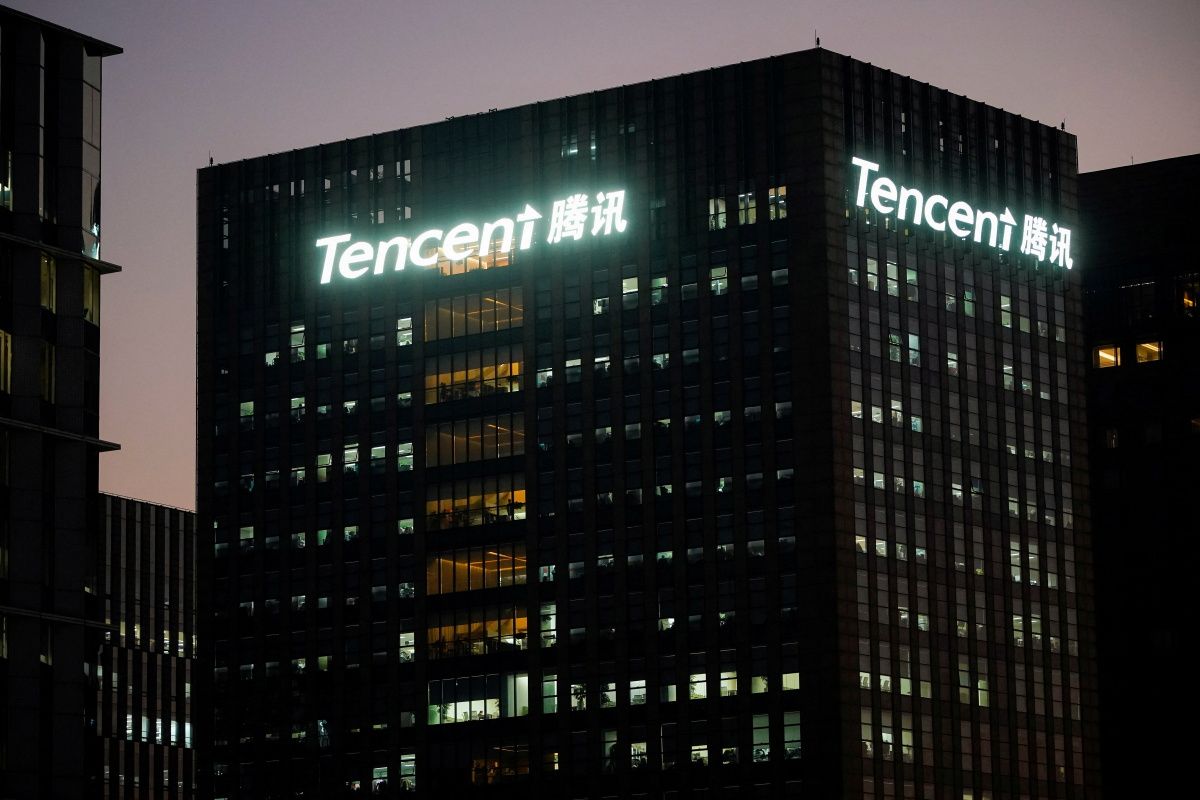
The logo of Tencent is seen at Tencent office in Shanghai, China December 13, 2021.

HONG KONG — Shares of Tencent Holdings Ltd. rose 4.29% on Wednesday to close at 466.40 Hong Kong dollars, gaining 19.20 dollars, as investors showed renewed interest in the Chinese technology giant‘s artificial intelligence initiatives and its upcoming midyear results.

The advance lifted the stock from recent lows and marked one of its stronger sessions in recent weeks. Trading volume was solid, with the shares touching an intraday high of 469.40 dollars before settling. The move came against a backdrop of broader recovery in some Hong Kong-listed technology names after a period of volatility.

Tencent, the operator of the ubiquitous WeChat messaging platform known as Weixin in mainland China, has faced pressure on its share price over the past year. The stock remains well below its 52-week high near 683 dollars reached in late 2025 and has declined about 16% over the past 12 months. Concerns have centered on the pace of monetization for heavy AI spending and shifting investor preference toward pure-play AI developers.

The company has responded in part with consistent share buybacks. Tencent has been repurchasing shares on most trading days in recent months, providing a measure of support during the selloff that erased substantial market value since the October peak.

Advertisement

Attention is now turning to the second-quarter earnings report scheduled for Aug. 12. Analysts will scrutinize progress in gaming, advertising, fintech and cloud services, as well as updates on AI-related capital expenditure and product traction.

In its first-quarter results released in May, Tencent reported revenue of 196.46 billion yuan, up 9% from a year earlier. Gross profit rose 11%, and the company highlighted early gains from new AI offerings alongside steady performance in core businesses.

Chairman and Chief Executive Ma Huateng said at the time: “We started 2026 by making significant initial progress on our new AI products, as well as continuing to utilise AI to grow our existing core businesses. The Hy3 preview model, built by our revamped team of AI researchers on re-architected AI infrastructure, is a leader in its parameter size class, delivering practical utility and cost efficiency, and has been top ranked in OpenRouter token measurements since April 28. Our productivity AI agent solutions have attained early traction, and we believe that our WorkBuddy is currently the most widely used productivity AI agent service in China. Our core businesses continued to grow their engagement, revenue and profit, providing the cash flow to fund our AI investments, as well as use cases for future AI deployment.”

The comments underscored Tencent’s dual strategy of embedding AI into its vast existing ecosystem while developing standalone models and agents. WeChat’s more than 1.4 billion monthly active users provide a ready distribution channel for AI features, including assistants that can interact with mini-programs, payments and content.

Advertisement

Tencent has been testing AI agents within WeChat and expanding capabilities in advertising technology, game development and enterprise tools. Its cloud business has also shown improving growth as customers adopt multi-cloud strategies. Management has indicated plans to increase AI-related investment substantially in 2026, building on spending levels already elevated in the prior year.

The stock’s recent path has reflected the tension between these long-term bets and near-term profitability optics. After a sharp decline in late July triggered partly by market rotation and questions about gaming revenue trends, shares have staged a partial recovery. Analysts at major firms have generally maintained constructive ratings, citing the resilience of Tencent’s cash-generative businesses and the potential for AI to enhance advertising targeting, user engagement and new service revenue over time.

Gaming remains a cornerstone, with evergreen titles continuing to drive engagement and monetization. Marketing services benefit from AI-powered improvements in matching and content creation. Fintech and business services, including payments and cloud, provide diversification.

Market participants note that Tencent’s valuation has compressed relative to historical averages and some global peers, trading at a price-to-earnings multiple in the mid-teens on a trailing basis. Average analyst price targets imply meaningful upside from current levels, though realization depends on execution in AI and sustained growth in traditional segments.

Advertisement

Hong Kong’s technology sector has experienced mixed performance in 2026, influenced by domestic economic conditions, regulatory developments and global shifts in AI investment narratives. Tencent’s scale and ecosystem advantages position it differently from pure model companies, potentially allowing it to capture value through product integration rather than solely through model leadership.

Share buybacks have been a consistent feature of capital return policy. The company has also maintained a net cash position that supports both investment and shareholder returns. Upcoming results will offer a clearer view of second-quarter trends in domestic and international gaming, advertising recovery and the early commercial impact of AI tools.

For investors, Wednesday’s advance reflected a combination of technical rebound, optimism around AI product momentum and positioning ahead of the earnings release. Whether the gains can be sustained will hinge on concrete evidence that AI investments are translating into measurable user adoption and revenue contributions without excessively diluting margins.

Tencent continues to navigate a competitive landscape that includes other major Chinese technology groups accelerating their own AI efforts. Its ability to leverage the WeChat platform for rapid deployment of agentic tools remains a key differentiator. At the same time, the company must balance aggressive spending on talent, infrastructure and research with the expectations of shareholders focused on profitable growth.

Advertisement

As the market awaits the August results, the stock’s performance on Wednesday provided a snapshot of shifting sentiment. The 4.29% rise brought the shares higher on the day and offered a measure of relief after weeks of choppy trading. Further direction is likely to be shaped by the detailed financials and management commentary due in less than two weeks.

Continue Reading

Business

Adidas shares slide record 17% as profit miss taints sales upgrade

Published

on


Adidas shares slide record 17% as profit miss taints sales upgrade

Continue Reading

Business

MediaAlpha, Inc. (MAX) Q2 2026 Earnings Call Transcript

Published

on

OneWater Marine Inc. (ONEW) Q1 2026 Earnings Call Transcript