Business
Samsung Electronics’ shares jump after tentative wage deal suspends strike
The union said the planned 18-day strike by nearly 48,000 members would be suspended while the tentative agreement is put to a vote between May 22 and 27.

The benchmark KOSPI was up 4.6% as of 0005 GMT.
(You can now subscribe to our ETMarkets WhatsApp channel)
Business
Expanding China’s Influence in Open-Source AI
The Chinese startup DeepSeek has released its latest artificial intelligence model, V4, continuing its strategy of utilizing open-source technology to challenge American dominance in the AI sector.
Key Points
- Technical Performance: DeepSeek V4 is highly specialized in writing computer code, significantly outperforming other existing open-source systems in that category.
- Open-Source Strategy: Unlike American giants, Chinese AI companies have largely embraced open-source distribution, which has accelerated the adoption of their models in sectors like robotics, logistics, and manufacturing.
- Global Market Impact: Chinese open-source models accounted for approximately one-third of global AI usage by the end of 2025, with DeepSeek and Alibaba emerging as the primary providers.
- Geopolitical Tensions: The competition has evolved into a power struggle; the U.S. has imposed export controls on advanced chips to hinder Chinese AI development, while Chinese firms leverage open-source tools as “soft power” to capture market share abroad.
- Overcoming Hurdles: Despite facing restricted access to advanced hardware and lower R&D spending compared to Silicon Valley, Chinese firms are narrowing the technical performance gap through rapid release cycles and collaborative development.
- Security Implications: As these models become more proficient at writing and analyzing code, they are simultaneously becoming powerful tools for both improving and potentially exploiting software cybersecurity.
By providing high-performing, cost-effective models that are freely available to the public, DeepSeek and other Chinese firms are gaining significant global influence among developers and industries. While American companies like OpenAI and Anthropic maintain proprietary models and allege that Chinese firms gain competitive edges through unauthorized data distillation, China’s open-source approach has successfully positioned its technology as a critical tool for global economic growth and industrial application.
This strategy not only fosters collaboration and innovation across borders but also challenges the dominance of Western tech giants in the AI landscape. By prioritizing accessibility and affordability, Chinese firms are rapidly building a reputation for democratizing advanced technologies, enabling smaller enterprises and emerging markets to harness the power of AI. As a result, this open-source approach is reshaping the competitive dynamics of the global AI industry, prompting other nations to reconsider their strategies in balancing innovation with intellectual property protection.
Other People are Reading
Business
Here is what you need to know
On 06 April, a false tweet about President Donald Trump’s plans for tariffs led the S&P 500 to swing eight percentage points in minutes.
However, the $2.7 trillion market rebound wasn’t driven by traders themselves, but by algorithmic trading bots trained to react within seconds to announcements that might affect the stock market.
Speaking to Bloomberg, Benn Eifert Managing partner and co-chief investment officer at the hedge fund QVR Advisors said “You have a daisy chain of buying reactions in response to a headline”. He added, “algorithms are tuned to react extremely quickly to any kind of headline reversing tariffs.”
It was a reminder, if one was needed, that AI is already influencing markets.
AI is already dominating algorithmic trading
It is estimated that 70-80% of trading volume on the US stock market is executed through AI and algorithmic trading systems. Globally, the figures are even higher. Almost 89% of global trading volume is handled by AI-driven algorithms.
As AI tools have become more powerful, hedge funds and algorithmic traders have leaned increasingly on the technology; and for good reason too.
A few years ago, you would have had good reasons to doubt AI’s precision. But now, there can be no questioning its ability to process huge volumes of data in real-time and make close-to accurate forecasts.
How has AI changed algorithmic trading?
Think of AI as a multiplier of an algorithm’s ability. Satellite imagery of retail car parks, earnings call transcripts, social media sentiment, breaking news: AI can ingest all of it in real time and extract signals from sources that would have been invisible, or at least opaque a decade ago, even to the most advanced algorithm.
AI helps traditional algorithmic trading models move beyond constrained rule-based systems. AI models can learn and adapt, improving their efficiency and trades. The level of precision this produces marks a significant evolution from the rule-based algorithmic trading systems of the previous generation.
Humans: the often-forgotten driver of AI, and algorithmic trading
One element that is frequently omitted in the AI trading discussion, and arguably the most important, is the human.
Rotem Farkash, AI and trading expert weighed in on the subject, “AI models are only as good as the conditions and data they were trained on.”
Farkash argued, “Automated systems enable firms to operate far beyond traditional human capabilities; that is a fact. However, human judgment, and input, remains vital to AI and algorithmic trading, at least for the present.”
24/7 markets and operational edge
AI and algorithmic trading models have also changed the timeframe of trading. Your AI model or algorithm can place trades 24/5, or longer. Gone are the traditional 6.5-hour trading days in one geography or another.
AI also enables ‘round the clock’ support and market monitoring, increased liquidity and the ability to respond swiftly to price movements and global events.
AI Trading Risks: flash crashes
As seen with the huge swing in the S&P 500 in early April, AI’s introduction to trading is not without risks.
The Warsaw Stock Exchange (WSE) also suspended trading this month for over an hour after a surge of automated high-frequency orders triggered a feedback loop of bot-driven sell orders the exchange’s own systems could not contain.
Warsaw’s WIG20 index had plunged 7% before the plug was pulled. It took manual human intervention to restore order and the WSE subsequently vowed to review its algorithmic trading regulations entirely.
Regulators have responded more broadly too. In February 2026, ESMA issued a supervisory briefing identifying seven areas of increased oversight focus, with AI in trading featuring among them.
AI is here to stay in Finance and Trading
There is no doubt that AI is here to stay in trading and the case for its use is formidable. AI can extract signals from data that would have taken human analysts weeks to process. But it is not risk free.
For now, AI is only as good as the data and conditions it has been built on. What it looks like when that changes will be one the most consequential open questions in finance.
Business
The Timken Company (TKR) Analyst/Investor Day – Slideshow
Business
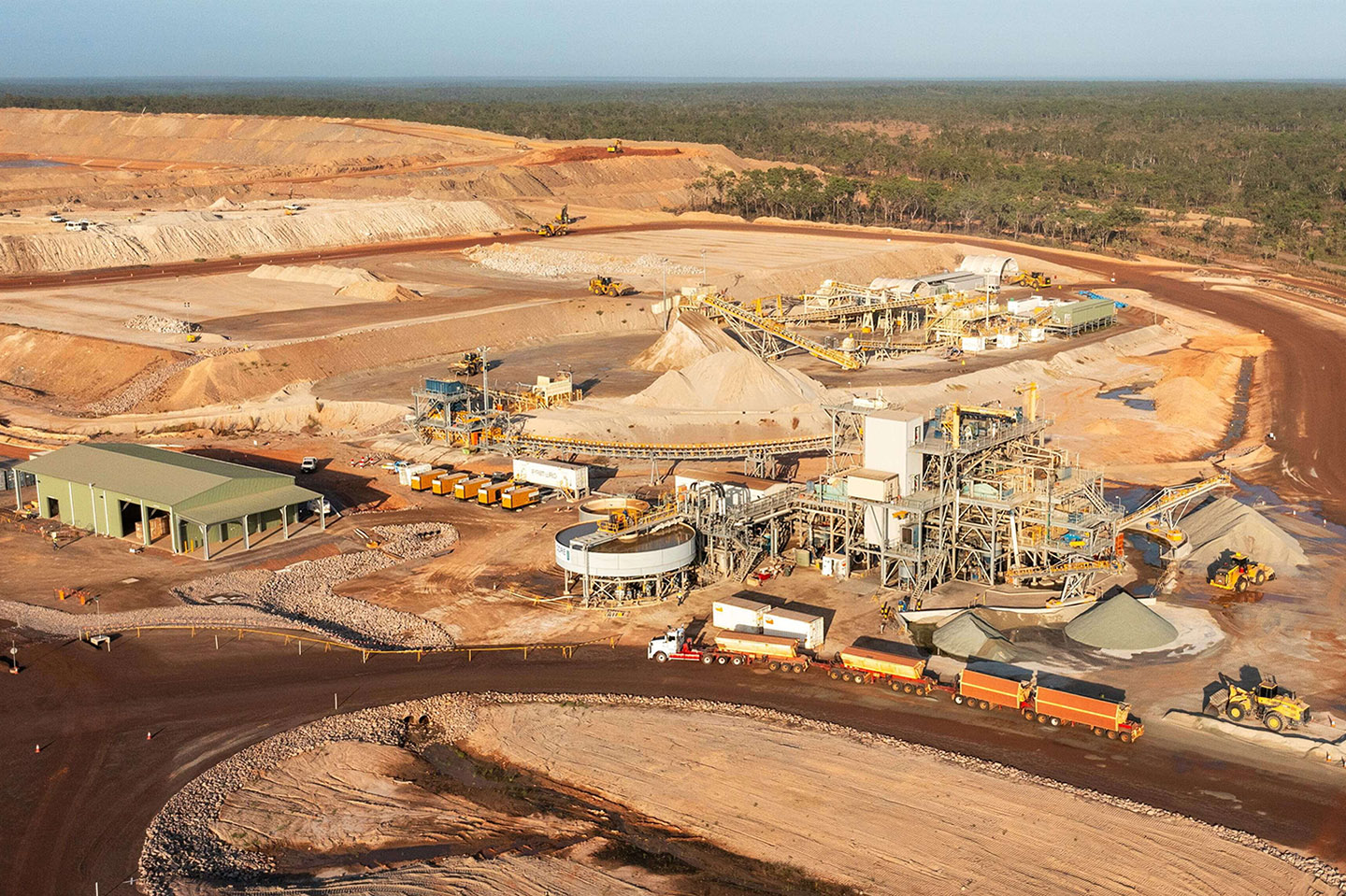
De Bruyn and Craib join Lion Rock
Subiaco-based Lion Rock Minerals has announced some big names as part of its push to fast-track its growth in Cameroon.
Business
Thailand’s Wellness Industry Set to Thrive, Aiming for Top 5 Global Hub Status
Thailand is aggressively positioning its wellness industry to become a top-five global hub, leveraging a current market value of approximately US$40 billion and a robust annual growth rate of 28%.
Key Points
- Rapid Expansion: Thailand’s wellness sector is growing at 28% annually, a rate four times higher than the global average of 7.6%.
- Strategic Objectives: The country aims to climb from its current global ranking of 24th to become one of the top five wellness hubs in the world by the end of the decade.
- Growth Drivers: Key sectors fueling this growth include wellness tourism, anti-aging and beauty services, healthy nutrition, and traditional Thai medicine.
- Economic Impact: With the global wellness economy projected to reach US$9.8 trillion by 2029, Thailand sees wellness as a critical engine for national GDP growth.
- Competitive Strategy: To compete with Asian leaders like Japan and India, Thailand must elevate the value of its traditional herbs through advanced research and modern, high-value manufacturing.
- Market Trends: Success in the sector is increasingly tied to consumer willingness to pay premiums for clean, traceable food and personalized, technology-driven wellness experiences.
- Urgency for Innovation: Industry leaders warn that the global wellness market is becoming highly competitive, necessitating strategic collaboration and unity to prevent neighboring countries from capturing Thailand’s market share.
While the nation currently ranks 24th globally, it already leads the world in wellness tourism and is focusing on integrating modern technology with traditional Thai medicine, healthy nutrition, and beauty services to surpass regional competitors like Japan and India. Experts emphasize that while the goal is achievable, success depends on maintaining momentum, fostering innovation in herbal processing, and adapting to emerging trends such as personalized and spiritual wellness.
Thailand is differentiating its wellness strategy from regional competitors like Japan and India through a specific focus on the following key factors:
- Integration of Traditional Knowledge with Modern Technology: Thailand aims to distinguish itself by elevating traditional medicine and herbs through research and technology. A specific example provided is the value-added processing of herbs like turmeric or black ginger. While raw roots may cost only a few dozen baht, processing them into high-quality extracts for supplements or cosmetics can increase their value to as much as THB 80,000 per kilogram.
- Focus on Emerging Global Wellness Trends: To maintain a competitive edge, Thailand is actively pivoting toward specific, modern wellness segments, including:
- Longevity.
- Personalized wellness.
- Spiritual and mental wellness (positioning the country as a destination for both health and spirituality).
- The “Health is the New Luxury” concept.
- Leveraging Existing Wellness Tourism Dominance: Thailand is building upon its status as the current world-leading destination for wellness tourism. The document notes that Thailand has already surpassed Europe in this sector, recording significantly higher numbers of annual wellness tourism trips.
- Strategic Focus on Key Growth Sectors: Beyond tourism, the strategy is anchored by concentrated efforts in three other primary pillars:
- Healthy eating, nutrition, and weight loss programs (capitalizing on consumer willingness to pay 15–25% more for clean, safe, and traceable food).
- Beauty and anti-aging services.
- Traditional Thai medicine.
To maintain its competitive edge against regional rivals like Japan, India, Singapore, and Malaysia, Thailand is focusing on emerging trends such as longevity, personalized wellness, and spiritual health. Experts emphasize that while the goal is achievable, success depends on high-level collaboration, the value-added processing of natural herbs, and the adoption of modern infrastructure to sustain momentum in an increasingly fierce global market.
Other People are Reading
Business
Taiwan says President Lai would be happy to talk to Trump

Taiwan says President Lai would be happy to talk to Trump
Business
How to Expand Right in These 3 UK Locations
Are you looking to grow your business in the coming years? There are several decisions you can make right now to increase the chances of that happening, and one of the biggest ones is choosing the right business location.
While there are 76 official cities in the UK, there are some that stand out from the crowd, some of which have been hand-picked in this article. Expanding in these cities may even help take your business from a small startup to a fully-fledged, profitable company.
Of course, you’ll need to go about it the right way, so here’s how to do it in any of these UK locations. This covers three distinct areas, all with different price points.
Balancing Opportunity with Affordability
Before you decide on the perfect city for your business, it helps to consider that you’ll need to balance opportunity with affordability. After all, some locations are far more expensive than others. As a general rule, any city in the south of England is going to be more expensive, whereas northern cities tend to come with lower office rental prices.
That’s why it’s a good idea to look at each popular city individually to weigh up what it can offer your company, alongside how affordable it is.
1. Manchester
Let’s start with a bustling city in the North West of England: Manchester. Manchester has plenty to love about it, as it’s solidified itself as the second-best city for tech companies (only falling behind London, the capital). As such, there are plenty of amazing opportunities for tech companies looking to expand – here are some ways to do it.
Choose a Flexible Workspace
In terms of affordability, Manchester is cheaper than many southern UK cities. However, because of its rapid growth, it isn’t the most affordable city in the north, and renting workspace there can get more expensive if you don’t choose the right options. The good news is that there has been a significant rise in flexible offices to rent in this well-loved city. Companies like BizSpace, Regus and Bruntwood are all providers of suitable solutions. Flexible workspaces in Manchester allow businesses to rent a space without lengthy or rigid terms, allowing for easy scalability. Plus, they tend to be more affordable than traditional office spaces (where you have to cover utility bills and internet).
Use Manchester’s Support System
Manchester has a lot to offer businesses looking to grow. For example, the GM Business Growth Hub. This is a business-to-business service in Manchester that helps firms of all sizes evolve. You can even access funding to make using this service more affordable.
This is just one of the ways Manchester stands out – it’s a collaborative, community-driven location where people like to lift one another up.
Pick the Right Manchester Location
There are several areas in Manchester that stand out for businesses wanting to grow.
- Media City: Media City sits just outside Greater Manchester in Salford. It’s a hub for all things media and tech, with major businesses like the BBC owning space there. It’s a modern area with lots of potential for anyone with innovative ideas.
- The Northern Quarter: Located in the heart of Manchester city centre, The Northern Quarter is where all the creatives make a home. There are plenty of exciting independent businesses in the area, creating a dynamic, bustling space prime for collaboration.
2. Cardiff
Cardiff is the capital of Wales, which naturally means it holds a lot of prestige and has plenty of growth opportunities for businesses. At the same time, this city offers balance, as it’s not as expensive as some other UK cities, such as London. Still, it has a high business density, great access to talent from local universities, and a thriving tech environment. Here’s how to get growth right in this location.
Use a Cardiff Growth Program
There are plenty of programs to help Cardiff-based businesses grow, such as the Business Growth Programme that helped support 75 entrepreneurs scale up their companies, with the goal of driving even more economic development in this Welsh zone. If expanding to Cardiff, keep an eye on business growth programs. They could help catapult you to success.
Use Targeted, Local Marketing
When you expand into Wales, you have the chance to target the local community with your marketing. You can advertise yourself as a business located in Cardiff, and many people will be drawn towards that. To do this, you could get in touch with Cardiff news outlets to see if they’ll run a piece on your business. Or, you can advertise in local community groups on social media.
Pick the Right Cardiff Location
If you choose Cardiff as a place for your business to grow, you have several options when it comes to the exact location.
- Central Square: As the name suggests, Central Square is located in the heart of Cardiff. It’s a premium business district that sits right next to the city’s main train station and is particularly popular with media and law businesses.
- Cardiff Bay: In past years, it was an industrial port, but now Cardiff Bay is a thriving hub for creative businesses and tourists, making it a great spot for business growth. Plus, the South Wales Metro now means that accessing Cardiff Bay is easier than ever.
3. London
It’s hard to make any top UK city list without mentioning London. While there’s no denying London comes with premium costs, it’s also worth remembering that it’s a global hub with plenty of growth for all kinds of businesses, including access to the best talent from all over the world. If you want to grow here, this is how you do it.
Utilise Public Transportation
You don’t have to be right in the centre of London to grow here. You can always use the great transportation system that London has to offer. The efficient public transport (such as the always-expanding underground network) means you can get from one area of London to another in barely any time at all. So, you could rent a space on the outskirts but still feel like you’re in the heart of this capital city.
Pick the Right London Location
- Canary Wharf: This area was known for serving big banks, but it’s now also a great hub for technology and health companies. The infrastructure is captivating, as it offers 5G connectivity, great transport links, green spaces, and historic areas all in one.
- Soho: Soho is a historic hub that has already helped catapult many creative businesses to success. It’s known as a place for film, TV, and artistic industries, so if your company wants access to creative people, it’s the place to set up space.
Worthy Mentions
Beyond these three locations, other worthy mentions include:
Aberdeen: Known as the oil capital of Europe, Aberdeen has a lot to offer beyond oil and gas. That includes industry experts, many of whom boast amazing skills in technology, research, and future energy systems. These kinds of minds can help your own business grow.
Bristol: As one of the best-known hubs of innovation and creativity, it is a fantastic location for up-and-coming creative media businesses. Thanks to its strong startup culture and sustainability focus, industries of all kinds are moving here to scale up with more confidence.
Leeds: Leeds is considered one of the fastest-growing financial and digital hubs in the country, making it a desirable option for those in the finance industry and digital marketing. This is only strengthened by the young talent coming from the universities here.
Whether you choose Manchester, Cardiff, or London, each location offers plenty of benefits to a business.
Business
Centuria offloads Albany large format retail asset for $14.1m
Centuria Capital Group has sold a large format retail asset to a Victorian investor after 10 years of ownership.
Business
The fight against foreign developers buying Caribbean beaches
Campaigners in Barbuda, Grenada and Jamaica say they can no longer access their coastlines.
Business
why British businesses can’t afford to miss Europe’s leading tech conference
Artificial intelligence, cybersecurity, quantum computing, digital infrastructure and startup innovation are transforming the European business landscape at unprecedented speed.
In this rapidly evolving ecosystem, companies are increasingly looking for opportunities to connect with innovators, investors, technology providers and decision-makers capable of shaping the future of digital business.
This is precisely why events such as VivaTech Paris have become strategic reference points for the international technology sector. Scheduled in Paris in 2026, the event continues to strengthen its role as a leading European tech conference, attracting startups, enterprises, governments, investors and technology leaders from across Europe and beyond.
For British businesses in particular, VivaTech represents much more than a traditional technology exhibition. It has become a key opportunity to understand emerging trends, build international partnerships and remain competitive in a market increasingly driven by innovation and AI.
Europe’s technology ecosystem is evolving rapidly
Over the last few years, Europe has accelerated investments in digital transformation, artificial intelligence, cybersecurity and strategic technologies.
Governments and enterprises are prioritising:
- AI adoption
- cloud infrastructure
- digital resilience
- cybersecurity governance
- startup ecosystems
- sustainable innovation
At the same time, European regulation is becoming increasingly influential in shaping global technology standards through frameworks such as:
- the EU AI Act
- NIS2
- DORA
- GDPR
For UK companies operating internationally, maintaining visibility into these developments is becoming essential.
Technology events are no longer just networking opportunities — they are strategic observatories for understanding where the market is heading.
Why VivaTech has become strategically important
Unlike traditional trade fairs focused on individual sectors, VivaTech brings together multiple dimensions of the digital economy under one ecosystem.
The event typically attracts:
- global tech companies
- fast-growing startups
- venture capital firms
- cybersecurity specialists
- AI innovators
- public institutions
- enterprise decision-makers
This creates a highly dynamic environment where emerging technologies, business strategy and investment trends intersect.
For companies looking to expand internationally or identify new partnerships, access to this ecosystem offers significant strategic value.
AI is dominating the technology conversation
Artificial intelligence is expected to remain one of the dominant themes at VivaTech Paris 2026.
Across every industry, organizations are trying to understand how AI will impact:
- operational efficiency
- customer experience
- cybersecurity
- data governance
- automation
- workforce management
At the same time, businesses are also becoming more aware of the risks associated with uncontrolled AI adoption.
Issues such as:
- data exposure
- AI governance
- regulatory compliance
- third-party risk
- ethical AI usage
are becoming increasingly central in enterprise discussions.
This balance between innovation and risk management is likely to play a major role during the event.
Cybersecurity is now part of every technology discussion
One of the clearest trends in modern digital transformation is that cybersecurity can no longer be separated from innovation.
As companies accelerate cloud adoption and AI integration, their exposure to cyber threats also increases.
Today, organizations must manage:
- supply chain vulnerabilities
- ransomware risks
- third-party exposure
- identity compromise
- AI-related attack surfaces
- data leakage risks
Technology conferences like VivaTech increasingly reflect this reality by integrating cybersecurity into broader conversations around digital business transformation.
Paris is strengthening its role as a European innovation hub
Paris has become one of Europe’s most important technology and startup ecosystems. Significant investment in innovation, AI research and digital infrastructure has transformed the city into a major international hub for technology companies and investors.
For British businesses, this proximity offers important advantages:
- easier access to European markets
- networking with continental partners
- visibility into EU innovation policies
- opportunities for international expansion
Despite Brexit, collaboration between UK companies and European ecosystems remains extremely active, especially in sectors such as AI, fintech, cybersecurity and digital services.
Startups and enterprise innovation are converging
One of the defining characteristics of VivaTech is the interaction between startups and large enterprises.
Corporations increasingly rely on startup ecosystems to accelerate:
- innovation processes
- AI experimentation
- cybersecurity capabilities
- sustainability initiatives
- digital transformation strategies
At the same time, startups benefit from direct access to enterprise buyers, investors and strategic partners.
This convergence is reshaping how innovation is developed and commercialised across Europe.
Technology events are becoming intelligence platforms
Modern technology conferences are no longer just about product showcases or keynote speeches.
For many organizations, events like VivaTech function as real-time intelligence environments where companies can:
- identify emerging trends
- monitor competitor activity
- evaluate market shifts
- discover strategic partnerships
- understand evolving customer expectations
In highly competitive sectors, this visibility becomes strategically important.
Being physically present where innovation conversations happen often provides insights impossible to obtain remotely.
The growing importance of ecosystem visibility
As digital ecosystems become more interconnected, businesses increasingly need visibility not only into technologies, but also into the broader networks shaping the market.
This includes understanding:
- investment movements
- startup acceleration trends
- AI adoption patterns
- cybersecurity priorities
- regulatory evolution
- international partnerships
Events such as VivaTech offer a unique concentration of these signals within a single environment.
Why UK businesses should pay attention now
British companies continue to play a major role within the European technology landscape. However, the speed of technological change means that maintaining strong international visibility is becoming more important than ever.
Whether operating in:
- cybersecurity
- AI
- fintech
- SaaS
- cloud infrastructure
- digital consulting
UK businesses need direct exposure to the conversations shaping the future of European innovation.
VivaTech Paris 2026 represents one of the most important opportunities to engage with that ecosystem in real time.
Because in today’s technology market, competitiveness is no longer determined only by internal innovation, but also by the ability to understand, anticipate and participate in the broader evolution of the global digital economy.
-
Crypto World5 days agoBloFin War of Whales 2026 Grand Prix opens registration for $5M trading championship
-
Fashion5 days agoWeekend Open Thread: Theory – Corporette.com
-
Crypto World5 days agoE-Estate Announces 1 Year Live: Washington DC Summit as Real Estate Tokenization Enters Its Next Phase
-
Tech6 days agoTech Moves: Microsoft AI leader jumps to OpenAI; former AI2 exec joins Meta; and more
-
Tech5 days agoGoogle reimburses Register sources who were victims of API fraud
-
Crypto World7 days agoGoogle’s Gemini AI Predicts Incredible Solana Price by the End of 2026
-
Business6 days agoH&R Real Estate Investment Trust (HR.UN:CA) Q1 2026 Earnings Call Transcript
-
Entertainment6 days agoZara Larsson Has Blunt Response To Chris Brown Diss
-
Sports5 days agoNapoleonic enters 2026 Doomben 10,000 field via Abounding withdrawal
-
Crypto World5 days agoBeInCrypto 100 Institutional Awards Nomination: KAST for Best Digital Assets Neobank and Best Digital Assets Fintech
-
Crypto World5 days agoBitcoin Battles US Bond Nerves With BTC Price Dip Toward New May Lows
-
Fashion4 days agoOn the Scene at Gucci’s Cruise Show in New York City: Mariah Carey, Kim Kardashian, Lindsay Lohan, Iman, and More!
-
Crypto World5 days agoWall Street’s Boldest Gold Prediction Has Russians Rushing to Buy
-
Crypto World5 days agoICE and CME urge US regulators to curb Hyperliquid energy trading
-
Fashion5 days agoTrending Western Style Vests Perfect for Summer
-
Politics6 days agoDWP PIP Timms review continues to be an absolute farce
-
Entertainment6 days agoDavid Letterman Returns to Late Show, Blasts Cancellation
-
Crypto World5 days agoIREN closes $3 billion convertible notes deal amid AI infrastructure expansion
-
Fashion4 days agoAmazon Sundays: Memorial Day Hosting
-
Crypto World6 days agoLido Finance Selects Chainlink CCIP as the Official Cross-Chain Infrastructure for wstETH Security

You must be logged in to post a comment Login