
Business
Saudi Arabia Under Attack: Oil Should Be Above $200? (NYSEARCA:SPY)



Commodity Trading Adviser (CTA), member of National Futures Association. Professor of Finance, research on Global-macro issues. Editor-in-Chief, Journal of Corporate Accounting and Finance.
Analyst’s Disclosure: I/we have no stock, option or similar derivative position in any of the companies mentioned, and no plans to initiate any such positions within the next 72 hours. I wrote this article myself, and it expresses my own opinions. I am not receiving compensation for it (other than from Seeking Alpha). I have no business relationship with any company whose stock is mentioned in this article.
Seeking Alpha’s Disclosure: Past performance is no guarantee of future results. No recommendation or advice is being given as to whether any investment is suitable for a particular investor. Any views or opinions expressed above may not reflect those of Seeking Alpha as a whole. Seeking Alpha is not a licensed securities dealer, broker or US investment adviser or investment bank. Our analysts are third party authors that include both professional investors and individual investors who may not be licensed or certified by any institute or regulatory body.

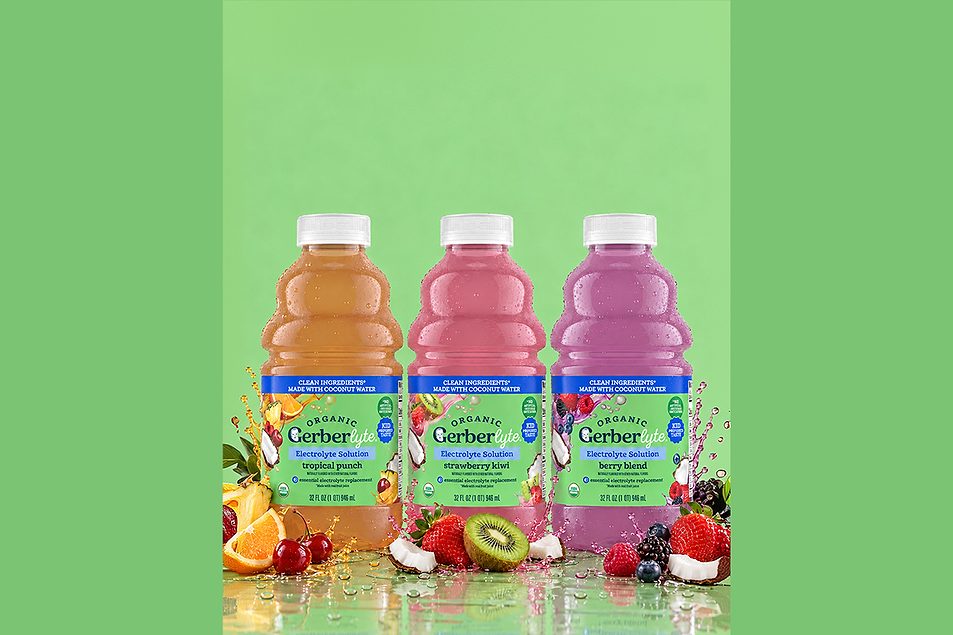

ARLINGTON, VA. — Nestle is expanding its Gerber brand with Gerberlyte, an oral rehydration solution (ORS) intended for children.
Gerberlyte is formulated with coconut water, electrolytes and 25% of the daily recommended intake of zinc per 12-oz serving. The beverage is the first USDA-Certified pediatric ORS, according to the company.
The beverage is available in kiwi, berry blend and tropical punch flavors.
“We heard from parents that they need simple, trusted solutions they can feel confident giving their children, whether they’re managing a stomach bug or replacing fluids after a long day of outdoor play,” said Oscar Benítez, president of Gerber. “For nearly 100 years, we’ve helped parents nourish their little ones, and with Gerberlyte, we’re extending the trusted quality and expertise families know from Gerber to new moments when hydration support matters most.”
The rehydration beverage is available in a 32-oz multi-serve bottles and a 4-count pack of 4-oz bottles. The beverages are available at retailers nationwide.

WaterBridge Infrastructure: The Value Is In The Destination, Not Just The Pipeline


Amazon has paused operations with cargo carrier 21 Air following the fatal crash of an Amazon-branded freighter at Miami International Airport earlier this month.
“After the tragic incident last weekend, we’ve spent time supporting the investigation and reviewing some of the surrounding circumstances, and we’ve decided to pause our operations with 21 Air, the operator of Flight 7598,” Amazon spokesperson Kelly Nantel said in a statement to Reuters. “We’ll continue working to support the investigation and everyone affected.”
The Sept. 6 flight, operated by 21 Air for Amazon Air, overran a runway while landing in Miami after arriving from San Juan, Puerto Rico, striking multiple vehicles on the ground. The crash killed five people and injured five others.
AMAZON SAYS IT’S ‘WORKING CLOSELY’ WITH AUTHORITIES AFTER CARGO PLANE CRASH KILLS 5
The aircraft was a 32-year-old Boeing 767-300 freighter. The National Transportation Safety Board is investigating the crash and said preliminary flight recorder evidence showed the pilots raised concerns about the aircraft’s speed during the landing.
Investigators have also said recorded data showed no indication that the aircraft’s speed brakes or thrust reversers were deployed before it traveled roughly 1,300 feet beyond the runway.
21 Air said it remains focused on supporting the families and loved ones affected by the crash and cooperating with investigators.
“We are confident in our safety policies, procedures and training,” the carrier said in a statement to Reuters.
In an earlier statement, 21 Air CEO Keith Winters said the company was “devastated” by the accident and was cooperating fully with the NTSB, Federal Aviation Administration and local authorities.
“Our deepest condolences are with the families and loved ones of those who lost their lives,” Winters said.
Amazon Air is the company’s cargo logistics network. 21 Air began operating Boeing 767 freighters for Amazon in 2024.
The crash has also prompted lawsuits in Florida alleging negligence by 21 Air, Amazon and other parties connected to the flight. The NTSB has not determined a probable cause, and its investigation remains ongoing.
CLICK HERE TO GET FOX BUSINESS ON THE GO
The Miami crash was the first fatal accident involving Amazon’s air cargo network since 2019, when an Atlas Air Boeing 767 operating for Amazon crashed in Texas, killing all three people aboard.
Reuters contributed to this report.

Free browser-based tools let you create professional-looking 3D text without installing heavy software or learning complex design programs. This guide walks through the whole process, from picking a generator to exporting a file that fits your project.
What Is 3D Word Art?
3D word art is text with a tangible, three-dimensional quality: raised letters catch light, throw shadows, and look like they have physical depth. You see it on YouTube thumbnails, social media graphics, company logos, product labels, decorative wall art, and even cake toppers made on a 3D printer. Where flat type can get lost in a busy design, 3D lettering adds visual weight and draws the eye.
Making 3D text used to mean buying professional design software and spending weeks learning it. Online generators changed that by putting the process in your browser. You type a word, choose a style, and the tool renders a dimensional version you can download, no design degree needed.
Choosing the Right 3D Text Generator
Before you start, pick a generator that fits your needs. Here are the core features to look for:
- Free and browser-based: Many good options run directly in your browser at no cost. You should not have to install software or create an account.
- A solid font library: Whether you need a bold sans-serif for a logo or a playful script for a party sign, built-in fonts should cover common styles. Some tools let you upload your own font file for extra control.
- Flexible styling: You should be able to adjust depth, add or soften a bevel, apply a material like metal or neon, and change colors. Having both raised and engraved options lets you design for screen and print.
- Multiple export formats: For graphics, you will likely want a transparent PNG. For 3D modeling or printing, you need a 3D file format such as STL, OBJ, or GLB.
The right choice depends on the final use. Meshy satisfies all four core criteria: it runs in the browser, includes built-in fonts, provides flexible depth and styling controls, and exports true 3D files in STL, GLB, and OBJ formats.
Step-by-Step: Creating Your Own 3D Word Art
Once you have chosen a generator, the creative workflow is usually the same. Follow these steps to get professional-looking results.
Step 1: Type your text and choose a font
Start by entering the word or phrase you want to render. Keep it short enough to stay legible, especially if you plan to print it, because tiny, intricate letters can lose detail. Then pick a typeface. For an easily readable result, go with a bold sans-serif like Roboto Bold, Bebas Neue, or Bungee. Script and thin fonts look striking in renders but may fall apart when printed at a small scale. If the tool allows custom font uploads, use your brand’s typeface or a font that matches the project’s mood.
Step 2: Add depth and shape
Depth is what makes text look 3D. Increasing the extrusion depth pulls letters further out from a flat surface, creating a bolder, more pronounced effect. For a subtle, premium feel on a logo, keep the depth modest. For a fun, playful keychain or a sign, go deeper so the letters stand out.
A bevel softens the sharp edges where the front face of each letter meets its sides. A small bevel adds a smooth, polished finish and catches light attractively. Make sure the bevel size is proportional to the overall depth. If a bevel is too large relative to the text, it can cause rendering glitches or look distorted.
Step 3: Choose a style and texture
Now decide on the overall style. For engraved text, the letters are recessed into the base. This is a robust, durable choice that feels more industrial or subtle. For raised or embossed text, the letters extend outward. Raised text is easier to read quickly because its edges cast shadows, and it feels bold and prominent.
Then add visual interest with a material or texture. Many generators offer preset materials: shiny chrome, brushed gold, glossy plastic, or a neon glow effect. When printing on paper or posting on screen, metallic or glossy textures can make the text look premium and eye-catching.
Step 4: Adjust geometry and spacing
If your generator exposes more detailed settings, fine-tuning them can make a large difference. Adjust the letter spacing so evenly spaced characters do not stick together when extruded. Set curve or segment quality to keep the edges of curved letters smooth. A high polygon count gives a clean silhouette, while a simplified mesh is better for performance or slicing. Depending on the tool, you may also change the base-plate shape for a unified look.
Step 5: Preview and double-check
Before exporting, spend a few seconds rotating your 3D text in the preview to catch any geometry or text issues. If a letter looks distorted or the depth seems uneven, go back into your settings and adjust. This step matters even more when the text is headed to a 3D printer, where the physical result cannot be fixed with a single undo.
Step 6: Export your design
Once the design is ready, choose the format by destination. Export GLB for an interactive scene, AR experience, or game engine; export STL for 3D printing. Inspect the final geometry before moving it into the next tool.
With this platform, paste your text, choose a built-in font, adjust depth and styling, preview the lettering from different angles, and download it as STL for printing or GLB for digital use.
Conclusion
Good 3D word art starts with readable lettering, appropriate depth, and an export format matched to the final use. Try the Meshy 3D Text Generator in your browser to design, preview, and export a finished model in a few steps.
A ‘Barron’s Roundtable’ panel discusses ‘AI-free’ stock picks, including Royal Caribbean and Planet Fitness.
President Donald Trump doubled down on the importance of developing artificial intelligence despite the potential harms on Sunday.
The statement comes just days after Anthropic CEO Dario Amodei called for a blanket slowdown in AI development in order to ensure safety. Trump on Sunday appeared to push back on that sentiment.
“I’m not downplaying, but it’s, you know, it’s going to be more good than bad, but by a lot,” Trump told reporters when speaking of AI development.
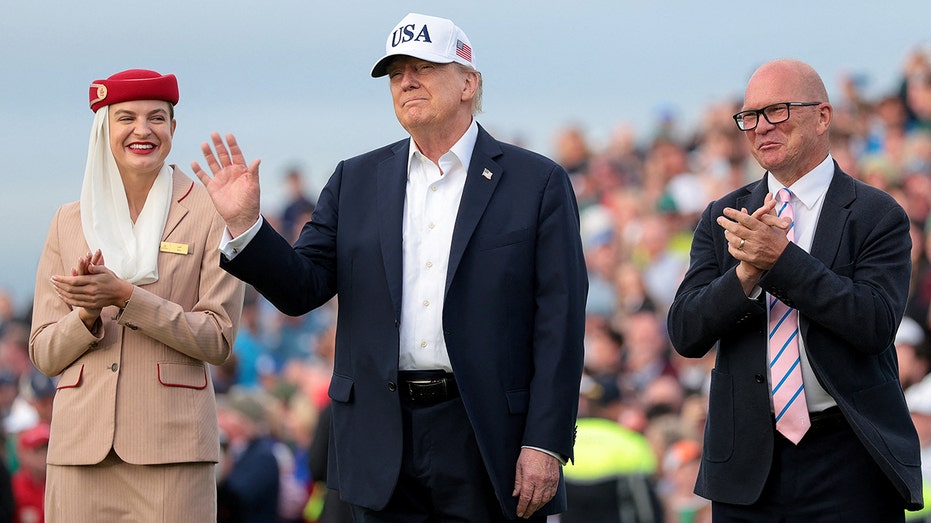
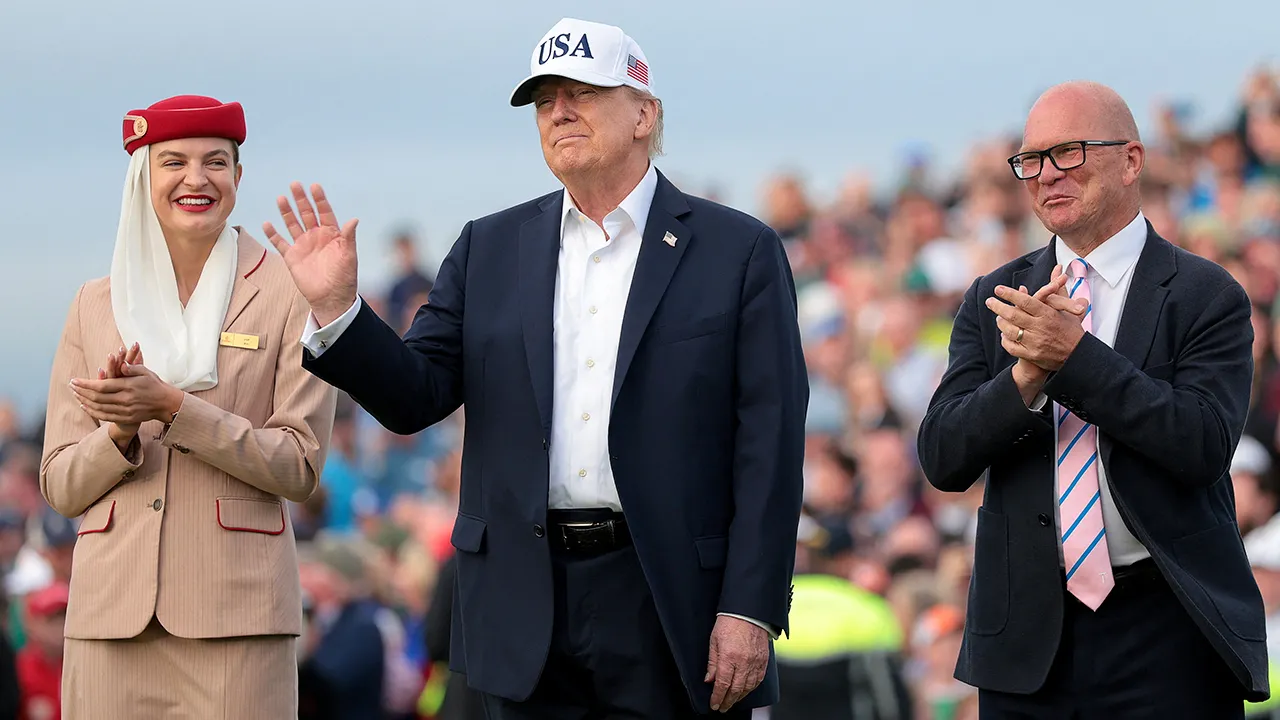
President Donald Trump attends the Amgen Irish Open at Trump International Golf Links in Doonbeg, Ireland, Sept. 13, 2026. (REUTERS/Kylie Cooper / Reuters Photos)
“But have you heard directly from any of them?” a reporter pressed, asking about AI tech leaders.
“I said it from the very beginning. Whoever wins AI, and we’re leading by a lot. Whoever wins AI wins,” Trump responded, going on to demur when asked if he uses AI himself.
MIKE JOHNSON REJECTS AI MORATORIUM OVER CHINA THREAT AS CONSERVATIVE ACTIVIST DEMANDS GUARDRAILS
Amodei’s essay published Saturday also argued that a “Chinese lead in AI would pose grave danger for the United States and the world.” He urged the Trump administration to implement more stringent limits on what AI chips can be sent to Beijing’s development facilities.
A smartphone displaying the Anthropic logo is shown in the foreground with a blurred Claude Mythos themed background on July 11, 2026. (Imen Ben Youssef / Hans Lucas / AFP via Getty Images / Getty Images)
China’s foreign ministry dismissed Amodei’s statement as “fearmongering.”
US ADVERSARY TURNS UP THE HEAT ON AMERICA’S AI LEAD WITH AN UNDERESTIMATED EDGE
“Fearmongering, confrontation and vicious competition will only disrupt the process of global AI governance which serves no one’s interest,” ministry spokesperson Guo Jiakun said at a Monday news conference.
Concerns over AI development burst back onto the scene last week after a developer from Anthropic resigned and publicly claimed the company was “gambling with our lives” with its research.
AI EXTINCTION WARNINGS DOMINATE HEADLINES AFTER EX-ANTHROPIC EMPLOYEE’S VIRAL POST
Jacob Coxon, 27, who said he spent the past three years doing pretraining research at OpenAI and Anthropic, noted that it’s not a completely hopeless scenario.
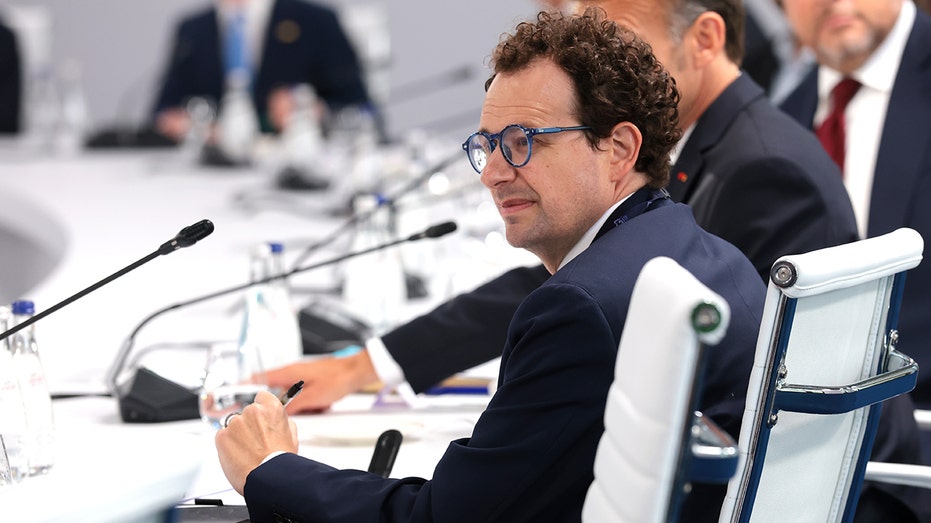
CEO of Anthropic Dario Amodei attends a working lunch with G7 leaders, G7 outreach partners, and global tech CEOs on innovation and AI, during the G7 Summit on June 17, 2026 in Evian-les-Bains, France. (Anna Moneymaker/Getty Images / Getty Images)
Evan Hubinger, alignment science lead at Anthropic, expressed his agreement with Coxon’s X post.
REP. TED LIEU: AI IS ALREADY TOO POWERFUL. WE NEED A KILL SWITCH BEFORE DISASTER STRIKES
“Jacob is correct here — we really do earnestly believe AI could kill all humans!” he wrote on X. “I personally think it is >10% within the next decade. I believe Anthropic is trying its best, but we do not yet have a plan to solve alignment for superintelligence and are not clearly on track to.”
GET FOX BUSINESS ON THE GO BY CLICKING HERE
“To be clear, as we say in our latest Risk Report, I think the risk from present models is low,” Hubinger added. “What I am worried about is superintelligence arising from recursive self-improvement, as we have said is happening faster than we thought.”

FLJP: I Still Like Japanese Equities To Wrap Up 2026

ScottishPower has recruited a record 465 graduates, apprentices, trainees and placement students this year, up 12 per cent on 2025, and called on the government to set a clearer long-term policy direction so that businesses create more openings for young people who are out of work, education and training.
The energy company said graduate opportunities were up 25 per cent on last year and placements on its Year In Industry programme, which gives a year-long paid role to those starting out in their career, were up 34 per cent. Other training opportunities rose by 8 per cent.
Keith Anderson, ScottishPower’s chief executive, said ministers could create more opportunities for young people who are not in employment, education or training if they set a “clear, long-term direction” that gave businesses the confidence to invest.
The Office for National Statistics estimated last month that 981,000 people aged 16 to 24 in the UK were not in employment, education or training between April and June 2026, or 13 per cent of that age group.
ScottishPower said its intake ran against a national decline in apprenticeship and graduate opportunities, citing recent reports showing graduate vacancies falling to their lowest level in a decade and apprenticeships becoming harder for young people to find.
Anderson calls for certainty
Speaking ahead of a round-table event for politicians and business leaders in Edinburgh, Anderson said: “Too often, debates about economic growth focus solely on major infrastructure projects or headline investment figures.
“Those are important, but they miss a crucial point. Growth becomes real when local businesses win contracts, when apprentices are recruited, when wages rise and when communities see a future worth investing in.
“The question now is how we continue to grow that and, importantly, replicate that success elsewhere.”
He added: “One lesson stands out above all others. Businesses need ambition, certainty and stability to invest. When government sets clear long-term direction and works in partnership with industry, companies respond. They expand facilities, train workers, develop expertise and build supply chains.
“The UK’s clean energy ambitions have helped create that environment for our sector. The challenge for policymakers is how to apply the same principles across other strategically important industries.”
Anderson said: “Britain needs growth. The good news is that we don’t need to start from scratch to find it. Across the energy sector, businesses are already showing what can be achieved when ambition is matched with certainty and investment. And with the right approach, I’m sure there’s more we can do to deliver inclusive growth.”
Workforce set to reach 11,000
The company said its hiring was underpinned by a record £24bn investment plan to rewire the grid and build more clean power, which would expand its workforce from 6,500 to 11,000 by 2030.
Roles filled this year include data science, engineering, fitting, jointing, logistics, overhead lines, project management and software engineering. The total includes those taken on by Energy North West, which ScottishPower recently acquired.
Jodie Dinnie, 23, a commercial business graduate who studied marketing at the University of Strathclyde, joined the Year In Industry programme before applying successfully for the graduate scheme. She said she had been up against a large number of applicants for graduate roles.
“From speaking to close friends, I know that the transition from education into employment can be incredibly challenging. Many people I studied with spent months applying for roles despite having strong qualifications and relevant skills,” she said.
“When you’re putting so much time and effort into applications, only to receive rejection after rejection, it can really knock your confidence and make you start questioning yourself. Others have ended up taking jobs outside the fields they originally wanted to work in because opportunities in their chosen area were limited.”
She added: “For many young people, the biggest challenge isn’t a lack of ability or ambition, it’s simply getting that first chance to prove themselves.”

Jamie Young
Jamie Young is Senior Reporter at Business Matters, covering SME finance, employment law and Westminster policy since 2016. He has reported on every Budget and Autumn Statement since 2018, helped make sense of the ‘covid era’ and the bounce-back loan scheme from launch through the fraud investigations, and broke the magazine’s coverage of the 2024 late-payment reforms. He joined Business Matters straight from completing his BA in Administration from Exeter University and is NCTJ-qualified. Reach him at jyoung@cbmeg.co.uk
Current Gold And Silver Set Up Vs. Silver Thursday

The promotional product has a longer and stranger history than most of the brands that hand them out.
The father of the freebie
The tale that explains why promotional notebooks still work so well usually begins with Jasper Meek, a printer from Coshocton, Ohio, in the late nineteenth century, who hit upon the idea of printing a local shoe shop’s name onto burlap book bags.
It was a simple insight with enormous consequences. Instead of paying for a one-off advertisement, a business could put its name on a useful object and let everyday life do the advertising, repeatedly and for free. That basic logic has powered the industry ever since.
From calendars to conference swag
Through the twentieth century, the promotional product multiplied. Calendars, pens, matchbooks and rulers carried brand names into homes and offices. As trade shows grew, so did the giveaway, and the word ‘swag’, sometimes explained as ‘stuff we all get’, entered the marketing vocabulary. The principle never changed: usefulness plus a logo equals lasting exposure.
“What’s remarkable is how little the core idea has changed in a hundred and thirty years,” observes Jessica Bane, Director of Business Operations at GoPromotional. “Meek understood that a practical object people actually use will out-advertise almost anything. That’s still exactly why branded notebooks work. It’s the same insight, just with better paper and a sharper logo.”
The survival of the useful
Not every promotional product has aged well. The novelty gadget that amuses for a day and then clutters a drawer has fallen out of favour, both because it wastes money and because it increasingly troubles the environmental conscience. The items that have endured are the genuinely useful ones: the bag, the bottle, the pen and, reliably, the notebook.
The notebook has proved especially durable because it satisfies both halves of Meek’s original equation better than almost anything else. It is useful for a long time, and it is seen by many people whenever it is opened. More than a century after burlap bags in Ohio, it remains one of the purest expressions of the idea he stumbled upon.
The freebie grows up
Today’s promotional industry is a far cry from a printer hand-lettering shoe bags, with global research bodies measuring impressions and return on investment. Yet the smartest modern choices are the ones closest to Meek’s instinct: pick something people want to keep and use, which is why the notebook still features so heavily in considered merchandise campaigns.
What the impressions research revealed
Meek’s instinct, that a useful object beats a fleeting advertisement, has since been measured rigorously. Studies by bodies such as the Advertising Specialty Institute have found that a single promotional product can generate thousands of impressions over its lifetime, and that the majority of recipients can name the advertiser on an item they have kept. These are the kinds of numbers a one-off advertisement rarely achieves for a comparable outlay.
What the research really confirmed is that the value was never in the moment of handover but in the long life that follows. The burlap bag worked because children carried it for months; the modern notebook works because professionals carry it for years. The medium changed; the underlying logic did not.
Why usefulness became the deciding factor
As the industry matured and budgets came under closer scrutiny, usefulness moved from being a nice quality to being the decisive one. A product nobody wants is money spent on litter, however clever the branding. The items that survived this scrutiny were, almost without exception, the ones people would have found useful even without a logo on them.
The notebook sits comfortably in that category. It is something a great many people genuinely want and use, which means the brand is not imposing itself but hitching a ride on a welcome object. More than a century on, that is still the surest test of a good promotional product, and still the one the notebook passes most easily.
An old idea, still working
The corporate freebie has survived depressions, digital revolutions and changing tastes because its founding logic is close to unbeatable. Give people something worth keeping and your brand travels with it. Jasper Meek proved it with burlap. The modern notebook proves it still.
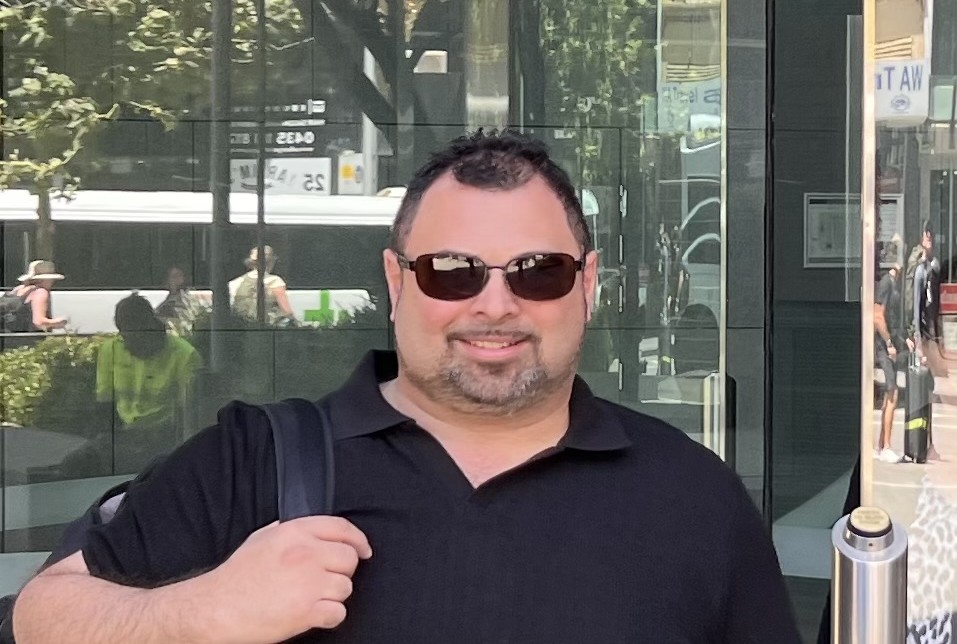
A judge has blasted self-styled whistleblower Alexander Cokic for trying to get compensation from his former employer Tronox after losing an injunction battle.

Traveling to China? Here Are the Apps You’ll Need to Survive

+1 ROLL MONEY TO BECOME RICH IN ROBLOX!

Gerber adds pediatric rehydration solution


-
 Tech6 days ago
Memory prices are slowing because buyers ran out of money
-

 Tech1 day ago
The Latest Weird Thing to Play Doom Is the Mapped-Out Brain of a Fruit Fly
-
 Business4 days ago
Micron Stock Climbs Above $1,031 as AI Memory Crunch and a $50 Billion Outlook Fuel the Rally
-

 Business5 days ago
AMD Stock Climbs After Management Lifts 2027 Data Center Outlook Toward $70 Billion in AI Sales
-

 Fashion3 days ago
Weekend Open Thread – Corporette.com
-
 Crypto World6 days ago
Bitcoin price risks $76K drop as $78K support weakens
-
 Crypto World6 days ago
Robinhood Stock: How To Take Advantage With Reduced Risk
-

 Crypto World3 days ago
XAG/USD: Silver’s Short-Term Rally Meets Its Moment of Truth
-

 Crypto World4 days ago
2 Chip Stocks Broke Out This Week. Neither Was Nvidia
-

 Crypto World6 days ago
Ethereum price stalls below $2,500 as ADX drops to 11
-

 Business3 days ago
10 Most-Streamed Songs On Spotify In 2026 So Far, Led By Ella Langley’s Dominant Run On The Charts This Year
-

 NewsBeat6 days ago
England up in reading, maths and science rankings as Scotland and Wales dip
-

 Crypto World4 days ago
OKX launches 10x OpenAI, Anthropic X-Perps in Europe
-

 Tech4 days ago
Battery life is the only iPhone 18 Pro and iPhone Duo upgrade I care about. Apple didn’t disappoint
-

 Crypto World3 days ago
Diesel Tops $6 a Gallon for the First Time as 28 States Set Records
-
 Crypto World6 days ago
Intel Stock Jumps 9% on Chip Price Hike Report, US Stake Gains $36 Billion
-

 Crypto World5 days ago
Bitcoin price risks $70K if $78K neckline breaks
-

 NewsBeat6 days ago
What went right this week: an ‘historic’ fall in violent crime, plus more
-
 Tech5 days ago
Apple Watch Ultra 4 vs Watch Ultra 3: Should you really spend another $799?
-

 Crypto World6 days ago
Pump Fun and Kraken delete Hunter Biden $LAPTOP promotion
You must be logged in to post a comment Login