
Business
Scenario Planning Tips for New Businesses


What you can do is to prepare through scenario planning. As the name implies, it’s a structured way to look at the best- and worst-case scenarios so you’re ready for them before they happen. Instead of reacting passively, you proactively ask, “What could happen in the future and how would we handle it?”
This concept of scenario planning started in the military, but it became a huge deal in the business world thanks to internationally renowned futurist and business strategist Peter Schwartz. He believed that by questioning your own assumptions and mapping out different paths, you could eventually build a strategy that could survive any kind of chaos. In other words, it gives you a roadmap for exploring different futures so you can see how they might hit your business. By doing this, you dodge risks, spot new opportunities, and make much smarter moves when things get shaky.
Here are strategies and best practices to help you apply scenario planning to your new business.
Focus on Key Driving Forces
A helpful starting point is understanding what forces or factors influence your business the most. Some of these come from outside your company, while others come from within your organization. On the external side, you’ll want to pay attention to changes in the economy, technology, regulations, and customer behavior. At the same time, internal factors such as your team’s skills, your systems, and your financial position matter as well.
For example, if you open an account with a bank that has slow and outdated technology, then your internal systems will also slow down. Payroll might be delayed, which can affect your employees’ morale. Supplier payments could also arrive late and that can strain relationships or slow down your inventory. In contrast, when you work with a reliable business banking partner with modern technology, transfers can run in an instant, payments reach the right people on time, and managing cash flow becomes easier. You might even enjoy higher interest rates, free batch transfers, and more with just one account.
This is why identifying operational drivers like financial systems, payment processes, and internal workflows matters early in scenario planning. When you understand how these elements affect your business, you can prepare for potential disruptions and choose partners and systems that help your operations stay steady.
Build a Collaborative Planning Team
You don’t have to handle scenario planning on your own. In fact, the process works better when different perspectives are involved. Bring in leaders or members from finance, operations, marketing, product, and HR. They can all contribute valuable insights since each group sees the business from a different angle. This helps you uncover risks or opportunities you might not notice alone.
Keep Scenarios Clear and Manageable
When you begin creating scenarios, it’s tempting to plan for every possibility. However, too many and too complicated scenarios can quickly become hard to use. A better strategy is to focus on three main possibilities: a best-case outcome, a moderate outcome, and a challenging outcome. These options give you a balanced view of what might happen without making the process overly complicated.
As you develop each one, think about how your business might operate in that situation. For instance, if growth happens faster than expected, you may need to hire sooner or expand your services. If growth slows down, you might focus more on efficiency and customer retention. Keeping your scenarios this simple helps you and your team stay focused and prepared.
Translate Scenarios into Actionable Strategies
A scenario becomes even more useful when you connect it to real decisions. In other words, you want to know what actions you’ll take if a certain situation starts to unfold. This usually involves identifying signals that show a scenario is happening, deciding what steps your business will take, and assigning responsibility within your team. This way, everyone understands their role and responses become faster and more organized.
For instance, if sales are lower than expected, you might adjust marketing budgets. On the other hand, if sales exceed expectations, you could move ahead with product improvements or expansion plans. When you plan well, you avoid rushed decisions as scenarios unfold.
With that said, the future won’t always follow a clear path, even with careful planning. That’s why flexibility matters so much in scenario planning. Allow room for adjustment in your strategies so you can respond to changes without major disruption.
Monitor and Adapt Continuously
Scenario planning works best when it becomes part of your regular business rhythm. As mentioned, markets change, new opportunities appear, and priorities evolve. Because of that, you need to review your scenarios regularly and watch for signals that indicate change. These might include customer trends, revenue patterns, or investor interest. When you notice something shifting, you can update your plans and adjust your actions. This keeps your business ready to respond without losing momentum.
Plan for the Future, Today
Ultimately, scenario planning isn’t about predicting the future perfectly. Instead, it’s about being ready for the “what-ifs.” In fact, its true power lies in its ability to rewire your brain for agility. You stop treating the future as a fixed destination and start seeing it as a series of shifting possibilities. So, when that possible future comes, you’ve already mapped out the terrain and you’re ready to lead the way through it.

Business
10 Most Anticipated Netflix Shows Premiering in October 2026, From ‘East of Eden’ to Lupin’s Part 4 Return

Netflix is preparing one of its most heavily stacked release calendars of the year for October 2026, with a lineup spanning literary prestige drama, returning fan favorites, heist thrillers and anime revivals. Here are ten of the most anticipated titles arriving on the streaming service this month.
Leading the pack is “East of Eden,” a seven-episode limited series adapting John Steinbeck’s 1952 novel across multiple generations of the Trask family. Created by Zoe Kazan, the series stars Florence Pugh as Cathy Ames, alongside a cast that includes Christopher Abbott, Mike Faist, Hoon Lee, Tracy Letts and Martha Plimpton. Multiple outlets covering Netflix’s October slate have singled out the series as one of the month’s biggest prestige releases, with the show premiering October 2.
The fourth season of “The Diplomat” ranks among the most anticipated returning series this month. The political drama continues to follow Kate Wyler, played by Keri Russell, as new tensions brew between the United States and the United Kingdom. Given how the show’s first season, which originally premiered in 2022, resolved, coverage of the new season has suggested viewers should not expect the storyline to wrap up on an especially happy note this time either.
“Below,” a limited series starring Josh Hartnett, offers Netflix’s most notable entry into horror-adjacent territory this month without leaning fully into traditional Halloween scares. The series follows a fisherman in an isolated Newfoundland town who fights to save his family from a mysterious beast from the ocean depths, one that may be connected to the unresolved death of his father decades earlier.
French heist favorite “Lupin” returns for its fourth installment, bringing the action back to Paris following the fallout from protagonist Assane’s previous schemes. All eight episodes of the new part will be released together, a format that has made the series, inspired by Maurice Leblanc’s classic Arsène Lupin stories, one of Netflix’s most popular non-English-language productions and a strong candidate for weekend binge-watching once it arrives.
Anime fans have their own highly anticipated return this month with “Cyberpunk: Edgerunners 2,” bringing viewers back to the neon-lit chaos of Night City following the original series’ acclaimed 2022 debut.
“Nobody Wants This” returns for a third season, continuing the romantic comedy series starring Adam Brody that has built a dedicated following since its debut.
Netflix is also premiering “100 Days of Deception” on October 10, a new original series following a pickpocket who dreams of freedom but instead takes on her most dangerous job yet, going undercover to steal secrets from a Japanese colonial government.
“Hollywood Arts” is among the other new original series Netflix is rolling out this month, arriving alongside the other high-profile limited series premieres as part of the streamer’s broader October push.
Rounding out the list, anime series “Blue Box” returns for its second season, continuing the high school sports romance story, while “Ranma 1/2” returns for a third season, extending the revival of the long-running franchise for its dedicated fan base.
Beyond these ten titles, Netflix’s October calendar includes a significant additional slate of new and returning content. Ben Affleck directs and stars in “Animals,” a political thriller co-starring Kerry Washington, Gillian Anderson and Steven Yeun, premiering October 9 and following a mayoral candidate and his wife whose lives are thrown into chaos by a ransom demand. Chris Evans and Anya Taylor-Joy headline “Sacrifice,” a satirical action-comedy from director Romain Gavras set at a glitzy charity gala, arriving October 2. Tyler Perry’s drama “Doing Life” is also among the month’s notable film releases.
Reality television offerings this month include a new season of “Love Is Blind” set in Boston, alongside “Is It Cake? Halloween,” a spooky-season-themed take on the baking competition format. Netflix is also adding a documentary about the classic sketch comedy series “SCTV,” along with other comedy-focused documentary content.
For fans of licensed film content, Netflix’s October additions include horror staples such as “Evil Dead,” “Friday the 13th,” “Hush” and “The Sixth Sense,” timed to coincide with the approach of Halloween, alongside a broader mix of non-horror titles spanning multiple genres and decades.
With new limited series, returning fan favorites and a substantial catalog of licensed film content all arriving within the same month, several outlets covering Netflix’s release calendar have described October 2026 as shaping up to be among the streaming service’s strongest months for new content so far this year, giving subscribers an unusually dense set of choices as the platform heads into the final quarter of the year.

GAMCO Investors, Inc. is a well-known diversified asset manager and financial services company. The company’s investment services are primarily offered through its subsidiary GAMCO Asset Managment Inc, which manages separate accounts for high net worth individuals, institutions, and qualified pension plans, and through the Company’s role as advisor to a family of Mutual Funds. Note: This account is not managed or monitored by GAMCO Investors, and any messages sent via Seeking Alpha will not receive a response. For inquiries or communication, please use GAMCO Investors’ official channels.

In the Nifty500 pack, eight stocks’ closing prices crossed below their 200-day moving averages (DMA) on September 24, according to technical scan data from StockEdge. Trading below the 200 DMA is generally considered a negative signal, as it suggests that a stock’s price is below its long-term trend. The 200 DMA is a widely used technical indicator that helps traders assess the overall trend of a stock.
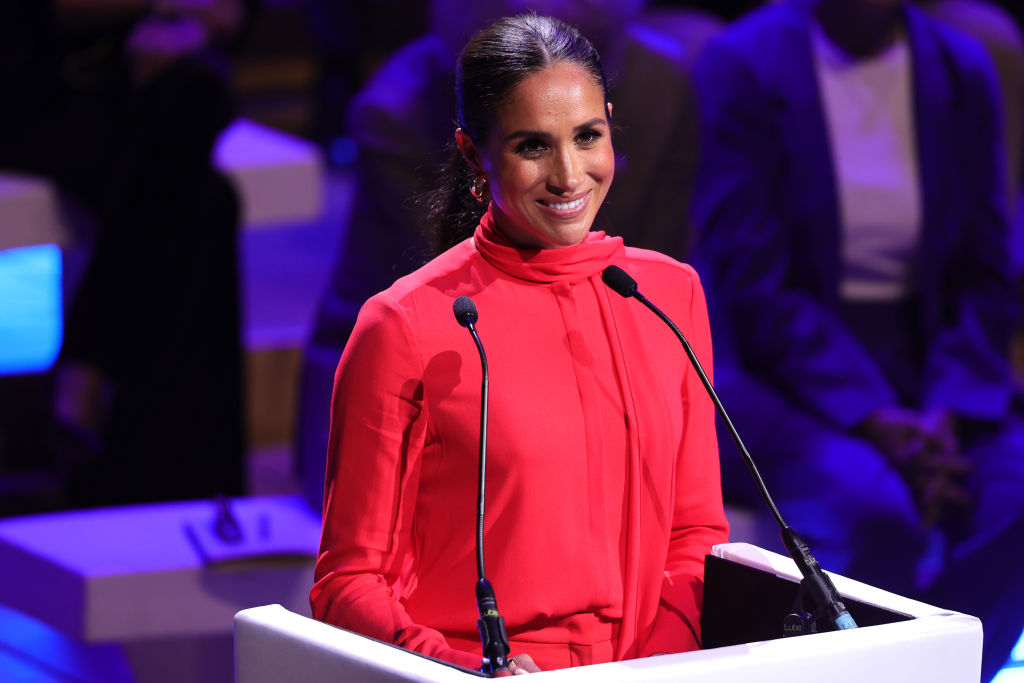
LONDON — Photographs posted by a close friend of Meghan, the Duchess of Sussex, offered the first widely circulated images of her in England since she and Prince Harry moved back from California, and a caption that thanked people they met for being “so loving.”
Kelly McKee Zajfen, who appeared in Meghan’s Netflix series “With Love, Meghan,” published an Instagram carousel on Sept. 23 after visiting the couple in the Cotswolds with her infant son, Jack. The pictures showed Meghan holding the baby, Harry on the floor playing with him, and family time that included pub food. Lilibet appeared from behind in at least one frame, looking toward the child.
Zajfen wrote: “Having the best time. There’s something so special about getting a taste of this magical place with my bestie, and having my sweet Jack along for the adventure.” She continued: “I’ve loved seeing this sweet chapter through her eyes and daily adventures! Especially getting to experience so many little firsts with Jack by my side.”
On the reception she said they encountered, she wrote: “To everyone we’ve met or bumped into, thank you for being so loving to my friend. It’s been beautiful to witness. She missed you too!”
She also wrote: “Family time is just what the heart ordered. With a side of mashed peas and fish n chips! All of it has filled my heart.” Addressing Britain, she added that the country had been “so good to us” and that they were “leaving with full hearts and definitely leaving a piece of ours here.”
The post is a friend’s travel note, not a statement from the Sussexes’ office. It does not quantify how many people they met or where beyond the Cotswolds setting of the pictures. It does put Meghan on camera in England after weeks in which she had not been publicly photographed there.
U.S. and British outlets had already reported a lunch on Monday, Sept. 21, at the Three Horseshoes near Burford, Oxfordshire, with Ellen DeGeneres and Portia de Rossi. Zajfen’s album included pub images consistent with that outing, including the baby on her lap. Markus Anderson, a longtime friend of Meghan’s, appeared in other frames, including a mahjong table in some reports of the same set.
Harry and Meghan stepped back as working royals in 2020 and settled in Montecito, California. Coverage this summer said they returned to Britain in late August. Harry has taken part in public events; Meghan’s first clear pictorial record of this stay arrived through Zajfen’s feed rather than an official photocall.
The duchess remains a polarizing figure in Britain. Supporters treat the caption as evidence of ordinary politeness in villages. Critics treat a friend’s thank-you as public relations. Tabloid write-ups collected skeptical social-media replies. Those comments are not a poll. They are the noise that follows any Sussex photograph.
What can be stated from the primary post is narrower. A visitor from California described walks, a baby, fish and chips, and strangers who were kind to her friend. She said Meghan missed people in Britain. She did not claim a national welcome or speak for the royal household.
Zajfen is a children’s-advocacy philanthropist and former model. Jack was born years after the death of her older son from COVID-19, a fact she has discussed publicly and that LBC repeated in its account of the trip. The visit, in her telling, mixed firsts for the baby with time in a landscape Harry has long preferred.
The Cotswolds have figured in earlier reporting about where the couple might base themselves. Soho Farmhouse and nearby villages sit in the same band of countryside. Neither Zajfen’s caption nor the palace has announced a permanent address.
Meghan’s own past interviews described her years as a working royal as difficult. This article does not relitigate those interviews. The new document is Zajfen’s caption and the pictures attached to it.
Harry on the floor with a friend’s child is the sort of domestic image the couple’s California years produced in volume. Seeing it in an English interior, with a pub lunch in the same album, is what made the post news in London and on U.S. celebrity desks.
No official comment from Buckingham Palace or from Harry and Meghan’s spokesperson was attached to the Instagram dump in the first wave of reports. The public record, for now, is a friend’s album: a “sweet chapter,” mashed peas, thanks to people they “bumped into,” and the sentence “She missed you too.”
Whether that is a private thank-you or a message aimed at a wider audience is a matter of reading. The words on the post are Zajfen’s. The faces in the frames are Meghan, Harry, a baby and, at the edge, Lilibet. That is the available record of the duchess’s first photographed days back in the Cotswolds.

SEOUL — South Korea’s KOSPI finished Sept. 23 at 7,080.92, up 63.01 points, or 0.90 percent, after an opening spike above 7,150 faded into pre-holiday selling.
The session was the last before the four-day Chuseok harvest break. The market is scheduled to reopen Sept. 28. The index opened at 7,153.99, the day’s high, then slid to 7,014.98 before chip buying pulled it back through the 7,000 handle. It was the fourth straight advance and the highest close since late July in some local tallies.
Samsung Electronics rose 3.25 percent to 285,500 won, closing above 280,000 won for the first time since July 10, Aju Press reported. SK hynix gained 1.20 percent to 1,862,000 won after touching 1.9 million won at the open. SK Square, which holds a large SK hynix stake, jumped about 5 percent. Samsung Electro-Mechanics also finished higher.
The tape was narrow. Aju Press counted 548 decliners against 311 advancers on the main board. Institutions were net buyers of about 318.8 billion won. Retail investors sold about 1.44 trillion won. Foreigners sold about 510.6 billion won after buying earlier in the day, according to Digital Today and matching exchange flow figures carried by other Seoul desks. One News1-based rundown said foreigners still bought 1.28 trillion won of Samsung Electronics even as they were net sellers of the broader market, while individuals sold more than 2 trillion won of Samsung.
Overnight U.S. semiconductor strength set the open. SBS cited a 2.06 percent rise in the Philadelphia Semiconductor Index, with Micron up 5 percent and Nvidia higher. Digital Today said early buying also reflected expectations for server DRAM demand. The Korea Times, in a morning wrap from Yonhap, linked the open to back-to-back Nasdaq records and reports of easier Middle East tensions that helped oil ease.
The won was quoted at 1,359.00 per dollar in Digital Today’s close, weaker by 3.50 won, or 0.26 percent. The KOSDAQ rose 10.10 points, or 1.21 percent, to 844.48.
WSJ data put the day’s range at 7,014.98 to 7,153.99 and the prior close at 7,017.91. The 52-week range in that table ran from 3,365.73 to 9,385.59. Year-to-date the index was still sharply higher on a 2026 rally that had already peaked well above 9,000 in June before giving back ground in the third quarter.
What the close does not settle is whether chip leadership survives the holiday. Samsung’s quarterly dividend calendar and guidance, Micron’s late-September results and U.S. labor data sit on the other side of Chuseok in local event lists. Those are dates, not forecasts. Retail selling of more than 1 trillion won in a single session, after several days of individual selling measured in the trillions, is profit-taking into a break, not a verdict on memory pricing.
The KOSPI is still a semiconductor index in practice. Samsung and SK hynix dominate capitalization. When they open 2 to 3 percent higher, the benchmark prints 7,150. When individuals sell the same names into the afternoon, 7,080 is what is left. Institutions bought the dip. Foreigners flipped from morning buyers to afternoon sellers. That is the flow print.
Four sessions of gains put the index back over 7,000 after a choppy September that included a drop through 6,600 mid-month. The June high remains far above Wednesday’s close. The one-year change is still more than a double from the year-ago level near 3,500 in long-run data series.
For three days the market is shut. The last print is 7,080.92, Samsung at 285,500 won, SK hynix at 1,862,000 won, and a won rate near 1,359. That is the board Korea takes into Chuseok.

That doesn’t have to be the norm. What makes an evening feel rushed isn’t the number of things on the list, but the habit of treating rest as something to fit in only if time allows. A slow evening is the decision to put that habit on hold and let the day close on your terms. Here are six reasons why that decision earns its keep.
-
Your Mind Gets to Catch Up
Your body doesn’t switch from busy to calm the moment a task is done; it needs a little time to catch up. A slow evening gives you that time by removing the pressure to finish something else before bed. When there’s no rush, racing thoughts about tomorrow’s meeting or an unanswered email tend to quiet down on their own. This matters most on days packed with decisions or deadlines, when your mind stays in problem-solving mode long after the actual problems are gone. A slower evening interrupts that cycle and lets your brain finally clock out.
-
Small Comforts Feel Bigger
Beyond helping the mind settle, a slow evening changes how ordinary comforts feel. A cup of tea, a warm shower, or a favorite playlist rarely registers as anything special during a rushed week. Once the pressure to be somewhere else disappears, those small comforts stop feeling like consolation prizes and start feeling like the actual point of your evening. This shift is often what separates a restful night from one that simply gets lost in the day. Build small comforts into your nightly routine, and you’ll likely appreciate them more over time.
-
Screens Become a Choice
That extra room also changes how screens get used. Evenings spent scrolling out of habit rarely feel satisfying, even after hours have gone by. A slower pace encourages entertainment chosen on purpose rather than by default, and what counts as “on purpose” looks different for everyone. You might queue up a show in advance or settle into a few chapters of a book, or you might prefer something with a bit more variety or chance built in. Casual game formats fall into that second group, and titles like Super Ace are a familiar example of something quick to pick up, low-commitment, and built around small bursts of chance. If that sounds closer to what you’re after, a Super Ace guide is worth a look before deciding if that kind of format suits your evening. Either way, the difference isn’t the activity itself; it’s whether you chose it or simply fell into it out of boredom.
-
Conversations Get Real
The same slower pace creates room for real conversations too. Rushed evenings rarely leave you space for anything beyond logistics, like what’s for dinner or who’s picking up the kids tomorrow. Dinner without a phone on the table, a short call with a parent or a walk with a partner can turn into the kind of talk that usually gets lost during a packed week. These moments don’t need to run long to matter. Ten unhurried minutes with someone you care about often carry more weight than an hour you spend half-listening while multitasking. That kind of attention is hard to fake, and the people you’re with tend to notice when it’s missing.
-
Having Fun Comes Easy
That openness carries over into entertainment as well. Not every evening needs a project attached to it; some just call for entertainment you genuinely enjoy. A movie, a favorite playlist, or a casual mobile game all fill that role well, sitting alongside reading and other low-key hobbies people use to unwind. Online casino games have become part of that same lineup for many people, offering a quick, low-commitment way to pass an hour without demanding much focus. The point isn’t which option you pick; it’s that the evening asks for enjoyment, not effort.
-
Sleep Comes Easier
All of this adds up by bedtime. What happens in the hour before sleep shapes how well you rest, and a rushed evening rarely sets the right tone. Dimmer lights, less screen time, and a few unhurried minutes before bed all send a clear signal that rest is coming. Wind down gradually and you’ll likely fall asleep faster and wake up less groggy than if you go straight from a busy task to bed. The effect carries into the next day too, showing up as steadier focus and a calmer start to the morning.
Somewhere along the way, your evenings went from downtime to one more thing to get through before the next demand arrives. A slow evening is simply a choice to let the hours sit still for a while, without rushing them toward anything useful. It doesn’t require much: dim lights, a quiet room, a mind you let wander instead of plan. Not every hour needs a purpose; some are better spent exactly as they are.

Drozd grew up in Glencoe, Illinois, where tennis played an important role in shaping her discipline and competitive mindset. She became captain of the varsity girls’ tennis team at New Trier Township High School before being recruited to play at Williams College. She graduated from Williams with a BA in English, along with concentrations in Art History and Psychology.
Her professional career began in advertising in Chicago. As an Account Executive at Lois/EJL, she worked on the local KFC account during a product launch. One memorable assignment involved coordinating a group of costumed Colonel Sanders lookalikes at sporting events and public appearances across the city.
Wanting to move closer to brand strategy and consumer marketing, Drozd later earned her MBA from Northwestern University’s Kellogg Graduate School of Management. She then joined Kraft Foods as a Senior Associate Brand Manager, working on Kraft Singles and FreshPrep.
Kendra Stearns Drozd later moved into executive recruiting with Bloom, Gross & Associates, a boutique firm focused on consumer packaged goods marketing. The position allowed her to combine industry knowledge with her ability to understand people, careers and organisations.
After becoming a mother, Drozd eventually stepped away from full-time corporate work. Today, she remains active in community service and has served as a commissioned Stephen Minister since 2012. Across each stage of her career, her focus has remained consistent: understanding people, building trust and approaching challenges with purpose.
Interview with Kendra Stearns Drozd
You grew up playing competitive tennis. How did that shape the way you approached your career later on?
Tennis taught me discipline very early. I started playing seriously when I was about nine because I knew the high school I would eventually attend was extremely competitive. I played tournaments, took lessons and went to intensive tennis camps. By my senior year, I was captain of the varsity girls’ tennis team and played number two singles.
I later played varsity tennis for four years at Williams College. That experience taught me that progress takes consistency. You don’t improve from one good practice or one good match. You improve by showing up repeatedly, learning from losses and continuing to work. I carried that mindset into school and later into my career.
What first interested you in advertising and marketing?
My dad had a significant influence on that decision. When I was around 19, he introduced me to several women working in business. Seeing their careers helped me understand what was possible. I became interested in advertising and eventually developed a very clear goal of attending business school and working in consumer marketing.
After college, I entered advertising in Chicago. It was a great introduction to the business world because I had to learn how clients, agencies and consumers all interacted.
One of your early advertising stories involved quite a few Colonel Sanders lookalikes. What happened?
I was an Account Executive working on the local KFC advertising account during a product launch. Part of the campaign involved about a dozen costumed Colonel Sanders characters appearing around Chicago, including at sporting events such as Cubs games.
My job included making sure everyone followed the rules. There were guidelines about things such as smoking and drinking while in costume. A few of the Colonels were not always cooperative, so I spent a surprising amount of time managing situations that I never imagined would be part of an advertising career.
It was funny, but it also taught me about execution. A campaign might look simple from the outside, but somebody has to manage all the details behind it.
Why did you decide to pursue an MBA at Kellogg?
I wanted to move from the agency side into consumer packaged goods and brand management. Kellogg was a natural fit because of its strong focus on teamwork and management.
While I was there, I also had opportunities to learn outside the classroom. I helped lead a trip to Japan where we studied the country before travelling there and then worked on a consulting project involving laundry detergent. Experiences like that helped me see how differently consumers can think depending on culture, habits, and environment.
What did you learn from working at Kraft Foods?
At Kraft, I worked as a Senior Associate Brand Manager on Kraft Singles and a dinner kit called FreshPrep. One of the most interesting parts of the role was consumer research.
We did in-home ethnographic research where we observed families going through normal meal routines. Instead of simply asking consumers what they wanted, we watched how they actually behaved.
That was valuable because people don’t always explain their habits accurately. Observing them can reveal frustrations or opportunities that they may not think to mention. It reinforced the importance of staying close to the consumer rather than making decisions from inside an office.
You later moved into executive recruiting. Was that a major change?
It was a change, but there was also a lot of overlap. I joined Bloom, Gross & Associates, which was a boutique, all-women recruiting firm focused on consumer packaged goods marketing.
Because I already understood marketing and brand management, I could speak with candidates and companies from a place of experience. Recruiting also required listening carefully, understanding what motivated people, and identifying whether a person and organisation were truly a good fit.
It was also an unusually flexible working arrangement for that time. I worked from home three days a week, went into the Chicago office one day and had Fridays off. That was long before remote and hybrid work became common.
Was stepping away from full-time work difficult after building that career?
It was a major transition. After my third daughter was born, I decided to focus more of my time on raising my children and being involved in my community.
I don’t think success has to look the same during every stage of life. Earlier in my life, I thought a lot about education and professional goals. Today, I define success much more around happiness, contentment and being present for the people who matter to me.
What qualities from your business career have stayed important to you?
I still believe in being strategic, creative, consumer focused and willing to take calculated risks. I also think perseverance matters.
There have been times in my life when I’ve had self-doubt. One idea I’ve returned to since my tennis years is that your mindset has a major influence on what you attempt. My coach taught us the poem “Thinking” by Walter D. Wintle, which focuses on believing that you are capable before expecting yourself to succeed.
I’ve shared that lesson with my daughters as well. Whether you’re working toward a career goal, recovering from disappointment, or simply trying something difficult, you have to permit yourself to believe that progress is possible.

 ET Bureau
Business
Incorporated in 2016, Runwal Enterprises is a real estate developer with a presence in residential projects across the affordable, mid-income, and luxury segments, along with commercial spaces, retail malls, and educational buildings. As of March 2026, it has 19 completed projects, 28 ongoing projects and 33 upcoming projects. The realtor has a portfolio of 88.4 million square feet (msf) of developable area, which includes 56.4 msf of upcoming projects and 19.9 msf of ongoing projects and 12.1 msf of completed projects.
Read more: Snapdeal parent AceVector raises Rs 189 crore from anchors; Negen, Singularity among top investors
Financials
Revenue from operations increased to ₹1,798.9 crore in FY26 from ₹1,007.8 crore in FY25 though it remained below the ₹2,408.9 crore recorded in FY24. Similarly, net profit surged to ₹185.8 crore in FY26, compared with ₹55.6 crore in FY25 and ₹93.7 crore in FY24. Operating margin before depreciation and amortization (Ebitda margin) improved to 19.4% in FY26 from 8.4% in FY24. Net debt increased to ₹2,778.1 crore from ₹1,631.2 crore while net debt to Ebitda declined marginally to 7.9 from 8.1 in FY26 over FY24. Average sale price was ₹11,366 per square feet in FY26 as against ₹11,754 per square feet in FY25 from ₹9,230 per square feet in FY24.
Read more: The hype, the listing & the lessons: 5 takeaways for investors from the NSE IPO

Valuation
Considering the post-IPO equity and FY26 net profit, the company demands price-earnings (P/E) multiple of 24 compared with 21-73 for peers including Sunteck Realty, Keystone Realtors, Sri Lotus Developers and Realty and Kalpataru. The company’s price-sales multiple works out to be 2.5 compared with 1.7-13.9 for peers.

Wood River Capital sells $58.1 million of Aspen Aerogels stock

Maurizio Bragagni is chairman and CEO of Tratos UK, the British arm of the family-owned cable maker Tratos Group, which produces energy, telecommunications and specialist cables for customers the company says include National Grid and Network Rail. The group is marking 60 years of cable manufacturing in 2026, a milestone it celebrated at the TOC Europe 2026 exhibition in Hamburg. In the UK, Tratos runs its head office in London, two manufacturing sites in Knowsley, Merseyside, and a fibre optic cable facility in Swindon. He tells Business Matters why getting cables right makes a real difference, what he would change about his approach to digital transformation and why every business should aim for something bigger than making money.
What do you currently do at Tratos UK?
I am the Chairman and CEO of Tratos UK, with leadership responsibilities across the wider Tratos Group. Our business focuses on cable manufacturing, providing solutions used throughout modern infrastructure, and in the UK we make every element of our cables ourselves, from the conductors and insulating compounds to the fibre optics and the finished cable.
My role is to keep the business competitive and innovative while keeping pace with changing customer needs. That covers everything from strategy and business development to stakeholder engagement and long-term planning. On any given day I might be discussing major infrastructure projects with clients, reviewing manufacturing investment, meeting government representatives or working with supply chain partners.
A big focus for me right now is the future of energy. Renewable power, grid modernisation, energy security, transport electrification and industrial decarbonisation are all changing the industry, so I spend a lot of time working on how Tratos can respond to that.
On the other side of that is people. Creating opportunities for our employees and ensuring Tratos grows sustainably are among the most rewarding parts of my role.
What was the inspiration behind your business?
I have always been drawn to businesses that solve practical problems. Cables are maybe not an obvious choice, but they are vital to nearly every aspect of modern life. So when you get cables right, it makes a genuine difference.
At Tratos, we want to create value through manufacturing excellence, innovation and entrepreneurship. That seems like a grand goal for a family-owned business, but I have seen how dynamic entrepreneurial businesses can be. We can move quickly without losing sight of our values, and I think that is really important.
I have also always been interested in international cooperation. Throughout my career I have worked across various countries and cultures, seeing how businesses can unite people, create opportunities and promote economic development, and that has become a priority for Tratos. Industry can play such a vital role in society, creating jobs and building skills as well as making products.
Ultimately, I suppose my inspiration has always been tied to building something lasting. I do not just want success now. I want to build a business that can keep creating opportunities and delivering value for future generations.
Who do you admire?
I admire a lot of people. Those who combine vision with action, like entrepreneurs who show so much resilience, determination and optimism, which is something I think we could all do with more of.
Equally, I admire industrial pioneers, for similar reasons. These are people who have transformed entire sectors through innovation and their willingness to challenge conventional thinking, and we need that to progress. Then there are the leaders who show integrity and courage, because character matters just as much as determination.
There are also the people I have worked with: the engineers, technicians and managers who contribute so much but never get the attention.
Perhaps most of all, I admire those who never stop learning. I am in awe of the people who stay curious and committed to continuous improvement.
Looking back, is there anything you would have done differently?
Like most people, there are many things I would have done differently, but I also try to view mistakes as an opportunity to learn. If I had to choose one thing to change, it would be my approach to digital transformation. Innovation has always been a priority for Tratos, but I was cautious, and there are areas where we would have benefited from adopting new technology more quickly.
Delegation is probably something else I could have learned earlier. I used to want to be involved in everything, but that never works. You achieve far more by building strong teams and trusting them
The same applies to patience. You have to learn to think in the long term if you really want success, and that was hard for me to begin with.
What defines your way of doing business?
I think it is probably “where there’s a will, there’s a way”. Nothing is unattainable if you have enough determination. But it helps if you also have integrity, long-term thinking, innovation and relationships.
Integrity is the foundation of trust, and you cannot succeed without it. Long-term thinking is equally important. It took a while for me to learn this, but you cannot be driven solely by short-term results.
That said, you cannot stand still either, and that is where innovation comes in. Markets change, technologies advance and customer expectations evolve, and you have to keep pace with that.
Finally, relationships are central to everything I do. Strong relationships build trust, foster collaboration and create opportunities. I have always believed in treating people with respect and fairness.
What advice would you give to someone starting out?
The first thing I would say is be ready to work hard. There is no substitute for effort.
Second, never stop learning. Things change so quickly in business, and you cannot afford to fall behind. So read widely, seek advice and stay curious.
I would also say do not fear failure. We learn from mistakes, and what matters is how you respond to them.
Then there is the value of relationships. Networks are not there for personal gain alone; they are built through genuine engagement, mutual respect and trust. But if you put in the effort, the people you know can become invaluable.
Integrity is also important. Protecting your reputation and your principles should always be a priority.
Lastly, think about the future. Legacy seems a long way off when you are just starting out, but your business should mean something more than your personal ability to make money. Aim for something bigger. If you can make a positive difference, you will be much more likely to achieve lasting success.

Japan bond yields hit multi decade highs: Are Bitcoin and cryptocurrencies at risk?

Disney+’s Newest 8-Part Sci-Fi Mystery Officially Marks the End of an Era for the MCU

10-year bond yields are giving 2007 financial crisis deja vu




-

 Fashion6 days ago
Weekend Open Thread: Talbots – Corporette.com
-

 Tech4 days ago
Researchers escape OpenAI Codex sandbox to run commands on host
-

 Crypto World2 days ago
Goldman Sachs and Deutsche Bank Agree: The S&P 500 Rally Isn't Over
-

 Fashion15 hours ago
8 iPhone Accessories That Add Personality
-

 Crypto World4 days ago
Who Needs CLARITY Anyway? ARB Could See 70X Increase: Hodler’s Digest
-

 Crypto World6 days ago
Circle launches Arc Studio AI agent for building onchain apps
-
 NewsBeat6 days ago
Trump says US has reached an agreement to take permanent control of Greenland’s security
-

 Crypto World6 days ago
Trading Bitcoin on Robinhood? Why 2% Spread Has Traders Worried
-

 Crypto World6 days ago
Bitcoin price breaks channel as RSI climbs to 63
-

 Tech5 days ago
Trump suggests rebranding AI with a new name, says he’s also creating an AI Force
-

 Business4 days ago
Analog Devices (ADI) Bets $1.35 Billion on Chips that Let Machines Think for Themselves
-
 Tech4 days ago
Google’s $899 Googlebook is a bet that you’ll buy a new laptop for Gemini
-

 Crypto World4 days ago
Coinbase, Robinhood, Circle Seen as Tokenized-Stock Winners
-
 Business2 days ago
Oil Price Today (September 23): Crude oil below $100 on hopes of US-Iran talks. What did Trump say?
-

 Crypto World2 days ago
This Bearish Netflix Stock Trade Can Cash In On Video Streaming Giant’s Woes
-

 Crypto World3 days ago
Trump-Xi Polymarket Odds for Handshake Hit 50%
-

 Crypto World6 days ago
World Money launches in 150+ countries with Stripe
-

 Crypto World7 days ago
Silver prices recover quickly, hitting weekly high today
-

 Crypto World1 day ago
Bitcoin Threatens Sub-$84,000 Breakdown as Long Liquidations Spike
-

 Crypto World1 day ago
Crude Oil Prices Pressured by Diplomatic Hopes in the Middle East
You must be logged in to post a comment Login