Connect with us

Business

Scott Kresan Tilbe on Creativity, Structure, and Building a Career Across Different Interests

Published

on

Scott Kresan Tilbe on Creativity, Structure, and Building a Career Across Different Interests

Raised in Goderich and Barrie, Tilbe developed an early interest in both structured and creative activities. He played saxophone, earned recognition at local music festivals, studied karate to black belt level, and became interested in photography, history, science, and visual art.

His education followed a similarly varied path. After studying introductory media, he completed programmes in digital photography and web design at Georgian College. He later studied computer science at Laurentian University and film and television at Canadore College.

Scott Kresan Tilbe has worked as an independent photographer and web designer and has held photography roles with organisations including Auction House Barrie and Edge Imaging. Earlier customer-facing roles at Toys “R” Us and RONA also gave him experience in sales, support, and communication.

Free newsletters
Advertisement

The stories that matter to UK business, straight to your inbox.

Advertisement

For the past four years, he has worked as an office administrator at a gastroenterology clinic in Barrie. His role involves supporting day-to-day office operations, managing priorities, and helping maintain an organised environment for staff and patients.

Across each stage of his career, Tilbe has continued to build practical skills while maintaining his creative interests. His experience shows how technical knowledge, visual thinking, and strong organisation can complement one another across different professional settings.

How did your early interests shape the direction of your career?

I had a lot of different interests when I was younger, and I think that shaped the way my career developed. I played saxophone and competed in local music festivals. I also trained in karate and eventually earned my black belt. At the same time, I became interested in photography, history, science, art, and computers.

Those things may sound unrelated, but they all taught me something useful. Music required practice. Karate required discipline. Photography trained me to notice details. History and science encouraged me to keep asking questions. I think I carried all of that into my education and later into my work.

Advertisement

You studied several different subjects. Was that always intentional?

Not completely. I knew I was interested in media and visual work, but I also liked technology. I studied introductory media and then completed programmes in digital photography and web design at Georgian College. Later, I studied computer science at Laurentian University and film and television at Canadore College.

I was interested in understanding both the creative and technical sides of media. Photography taught me composition and visual communication. Web design made me think about how people interact with information. Computer science introduced a more structured approach to problem-solving.

I do not think every educational experience has to lead to one specific job. Sometimes the value is in the way it changes how you think.

What did working in photography teach you about professional responsibility?

Photography is creative, but professional photography also requires a great deal of preparation and organisation. You have to understand what the client needs, pay attention to deadlines, manage equipment, communicate properly, and still produce work that meets a certain standard.

Advertisement

I worked independently and also had photography roles with organisations such as Auction House Barrie and Edge Imaging. Those experiences taught me that having technical ability is only part of the job. You also need to be dependable.

A good photograph may be the final result people see, but there is usually a lot of planning behind it.

How did web design add to that perspective?

Web design made me think more about the person using the finished product. Something can look impressive but still be difficult to navigate. I learned to think about layout, clarity, function, and how information is presented.

When I worked on independent web design projects, I tried to balance visual appeal with practicality. I still use that way of thinking in other areas. You have to ask what someone actually needs rather than only thinking about what you personally like.

Advertisement

You also worked in retail. What did those roles contribute to your career?

Working at Toys “R” Us and RONA gave me experience dealing directly with customers and working as part of a larger team. Retail can teach you a lot about communication because you interact with many different personalities.

You also learn that people do not always explain exactly what they need. Sometimes you have to listen carefully, ask the right questions, and then help them find a solution. That is useful in almost any profession.

How did you move into office administration?

For the past four years, I have worked as an office administrator at a gastroenterology clinic in Barrie. It is different from photography or web design, but there are more similarities than people might expect.

Administration requires attention to detail, prioritisation, communication, and the ability to manage several responsibilities at once. I use schedules and task lists to decide what needs immediate attention and what can be handled later.

Advertisement

I like having structure. At the same time, office work can be unpredictable, so you have to be able to adapt when priorities change.

Has your creative background helped you in administrative work?

Yes. Creative work teaches you to look at a problem from more than one angle. In photography, moving a few feet or changing the lighting can completely change the result. In web design, changing how information is organised can make something much easier to understand.

I think that translates into administration. If a process is not working well, I naturally start thinking about how it might be organised differently.

What do you think makes someone dependable in the workplace?

For me, it comes down to completing work properly and on time. I want the finished result to meet the standards of the people I am working with, but I also have my own standards.

Advertisement

I measure success partly by whether I can look at something I have completed and know that I gave it the attention it required. Positive feedback matters, but you also have to be able to evaluate your own work honestly.

How do you continue developing professionally?

I read constantly, especially about history and science, and I attend conferences or learning opportunities when they relate to my interests. I also like talking with people who know more about a subject than I do.

I think curiosity is important. Your formal education ends at some point, but learning does not have to.

What has your career taught you about having several professional interests?

I used to think that having several interests might make it harder to define what I do. Now I see it differently.

Advertisement

Administration, photography, and web design each use different skills, but there is overlap. They all require organisation, patience, communication, attention to detail, and the ability to understand others’ needs.

I do not think everyone has to fit neatly into one category. Sometimes having experience in several areas gives you a better way of approaching the work in front of you.

Advertisement
Continue Reading
Click to comment

You must be logged in to post a comment Login

Leave a Reply

Business

Mondelez elevates new global chief procurement officer

Published

on

Mondelez elevates new global chief procurement officer


Advertisement


Mondelez elevates new global chief procurement officer | Food Business News

Advertisement

Advertisement


Skip To Content

Advertisement

Continue Reading

Business

AMC Entertainment prices $2 billion notes, $850 million loan

Published

on


AMC Entertainment prices $2 billion notes, $850 million loan

Continue Reading

Business

Doctors Urge Early Flu Vaccination as 2026-2027 Season Approaches, Warning of Deadly Pneumonia Complications

Published

on

Flu jab 2019 do you need a flu jab

HATTIESBURG, Miss. — Doctors are urging patients to get vaccinated against influenza before flu activity begins climbing this fall, warning that while most cases can be managed at home, the virus can create dangerous openings for life-threatening complications like pneumonia in more severe cases.

Dr. Samuel Twedt of the Hattiesburg Clinic said most patients can manage flu symptoms without needing to see a doctor, but stressed the importance of recognizing when symptoms cross into more serious territory. “Most cases of the flu can be pushed through with Tylenol, Motrin and aggressive fluids like water or Gatorade for electrolytes. But if you’re feeling very, very ill, having difficulty breathing or feeling very faint, I advise you to be seen,” Twedt said.

Twedt identified pneumonia as one of the most serious risks tied to influenza infection, explaining the underlying mechanism by which the flu virus can leave patients vulnerable to secondary bacterial infections. “The influenza virus can just wreak havoc on your immune system. It creates this huge immune cascade that weakens your immune system temporarily. Opportunistic bacteria like Mycoplasma, Streptococcus and Klebsiella, among a whole bunch of others, can use that opportunity to cause an infection. Because your immune system is already weakened, it can be very, very aggressive and life-threatening,” Twedt said. “Pneumonia is the most common cause of death from influenza.”

Twedt and other doctors are encouraging patients to get vaccinated before flu cases begin rising in their communities, rather than waiting until the virus is already circulating widely.

Advertisement

That guidance comes as the country heads into the 2026-2027 flu season following an unusually severe prior year. The 2025-2026 season was driven in large part by a highly mutated influenza A(H3N2) subclade known as subclade K, which some doctors and media outlets referred to as a “super flu.” Doctor visits for flu-like illness during that season reached the highest levels recorded in more than 25 years, according to data from the Centers for Disease Control and Prevention. In response, federal regulators updated all three virus components of this year’s seasonal flu vaccines, with the U.S. Food and Drug Administration recommending changes on March 13 specifically aimed at improving protection against the subclade K strain that circulated so widely the previous season.

Predicting exactly how severe the coming season will be remains difficult, according to public health experts. “The only thing that’s predictable about influenza is it’s unpredictable,” said Dr. Daniel Jernigan, a former CDC director and contributing scholar at the Johns Hopkins Bloomberg School of Public Health. Dr. Albert Ko, a professor of epidemiology at the Yale School of Public Health, described forecasting flu severity as “a delicate art,” noting that researchers often look to flu activity in the Southern Hemisphere, where winter and flu season arrive earlier in the calendar year, with Australia frequently viewed as an early indicator of what the U.S. might experience in the months that follow.

Despite that uncertainty, public health officials remain unified in emphasizing vaccination as the single most effective tool available for reducing serious flu outcomes. Infectious disease expert Dr. William Schaffner described the purpose of annual flu vaccination in blunt terms, saying it is “designed to keep you out of the hospital, out of the intensive care unit, and out of the cemetery.” Vaccination has demonstrated measurable impact in recent seasons: flu vaccines are estimated to have prevented roughly 240,000 hospitalizations during the 2024-2025 season alone, with that protective effect concentrated primarily among adults aged 65 and older.

Even so, vaccination rates have continued to decline in recent years, according to some public health experts tracking the trend. One expert, identified in reporting as Thacker, said flu vaccine uptake fell below 50% last year, the lowest level recorded in many years. “We were under 50% protection last year, and that was the lowest it has been in many years. Fewer and fewer people are taking the flu shot,” Thacker said, adding that limited access is not the primary barrier. “Believe me, there are tons of places to get the flu shot, so accessibility isn’t really the issue. It’s the issue of choosing not to get it.” Thacker also noted that 179 children died from the flu during the prior season, according to CDC data.

Advertisement

The CDC’s current guidance calls for annual flu vaccination for everyone 6 months of age and older, with most people advised to get vaccinated in September or October, though vaccination remains recommended throughout the season for as long as flu viruses continue circulating. Adults 65 and older are specifically advised to preferentially receive a high-dose, recombinant, or adjuvanted vaccine formulation when available, given their heightened risk for severe complications. Vaccination is considered especially important for people at higher risk of serious flu complications, including young children, pregnant women, adults over 65, and people with chronic conditions such as diabetes, heart disease, kidney disease or asthma, along with those who live with or care for individuals in those higher-risk groups.

For the 2024-2025 season, the CDC estimated a total burden of 51 million flu-related illnesses nationally, 23 million medical visits, 710,000 hospitalizations and 45,000 deaths, a season the agency classified as high severity based on its standard assessment criteria. With flu activity in the United States typically beginning to rise in October and peaking between December and February, doctors say the coming weeks represent the most important window for patients to get vaccinated before this season’s flu activity begins accelerating in earnest.

Continue Reading

Business

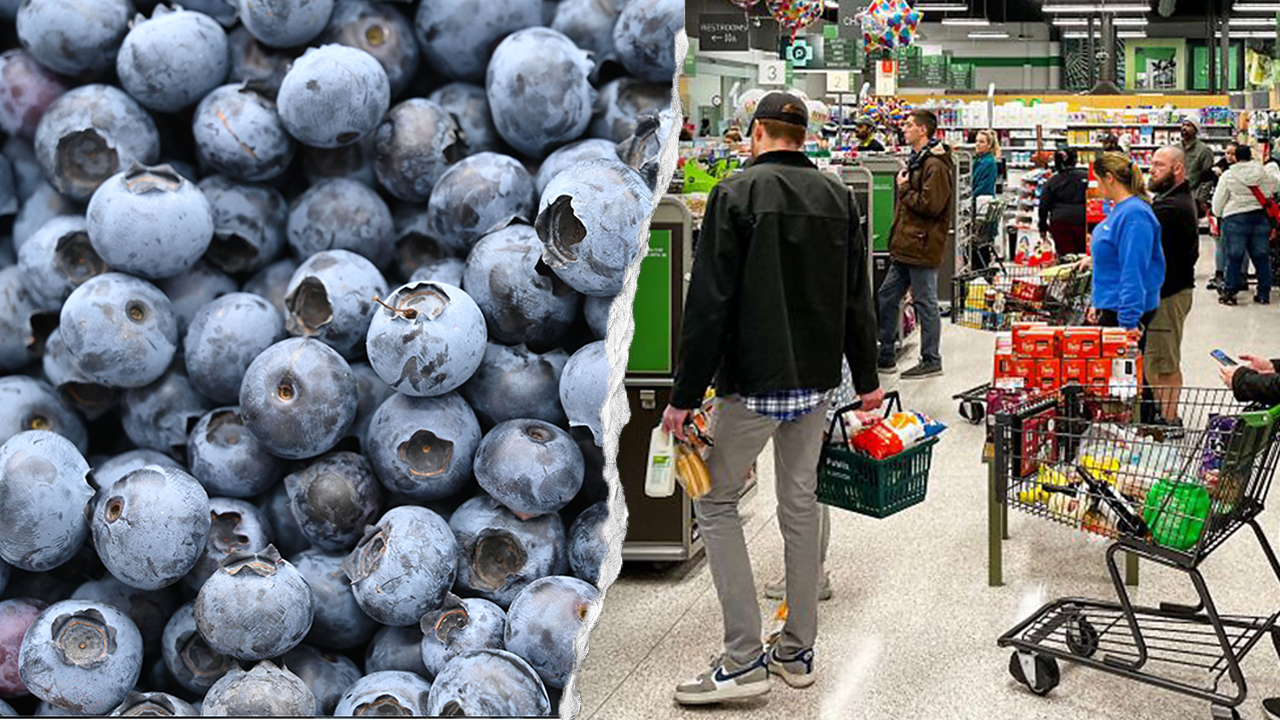
Publix, distributor sued over allegedly tainted blueberries after woman’s death

Published

on

Publix, distributor sued over allegedly tainted blueberries after woman's death

A Florida family is suing Publix and food distributor Quirch Foods, alleging contaminated frozen blueberries sold by the grocery chain caused the death of a woman and hospitalized her son.

The wrongful death lawsuit alleges Karla Mullins became sick after eating GreenWise Organic frozen blueberries purchased from a Publix store on Ulmerton Road in Largo. Her son ate the same product and was hospitalized after also becoming sick, according to the complaint.

Advertisement

Mullins died June 20, the lawsuit says. Her husband and son are seeking damages from Publix and Quirch Foods.

PUBLIX EXPANDS FROZEN BERRY RECALL AMID E COLI OUTBREAK THAT SICKENED 12

Package of Publix GreenWise Organic Whole Blueberries recalled over potential E. coli contamination

A package of Publix GreenWise Organic Whole Blueberries is shown. In July, Publix recalled its GreenWise Organic Whole Blueberries and Whole Mixed Berries over potential E. coli contamination. (FDA / Unknown)

“This family lost a treasured mother and wife because a product that was supposed to be safe was contaminated with a dangerous and deadly pathogen,” Morgan & Morgan said in a news release. “Karla Mullins should be alive today. We intend to hold Publix and Quirch Foods fully accountable for the role they played in putting this product on store shelves and into the hands of unsuspecting customers.”

The lawsuit accuses Publix, which sold the GreenWise-branded blueberries, and Quirch Foods, which it identifies as an intermediate distributor, of liability over what it describes as a defective and unreasonably dangerous product.

Advertisement

Representatives for Publix, Quirch Foods, and Morgan & Morgan did not immediately respond to FOX Business’ requests for comment.

JAGUAR LAND ROVER RECALLS 23,000 SUVS OVER RISK OF SUDDEN DRIVE POWER LOSS

Publix storefront

Publix expanded the recall on blueberries on July 29. (Joe Raedle/Getty Images, File / Getty Images)

The lawsuit follows a recall of GreenWise Organic frozen blueberries tied to a multistate E. coli O145:H28 outbreak.

Chilean supplier Frutas y Hortalizas del Sur S.A. initially recalled one lot of GreenWise Organic frozen blueberries on July 3. 

Advertisement

Publix expanded the recall on July 29 to cover all lots of GreenWise Organic Whole Blueberries and Whole Mixed Berries.

Package of Publix GreenWise Organic Whole Mixed Berries included in expanded E. coli recall

A package of Publix GreenWise Organic Whole Mixed Berries is shown. The retailer expanded its recall to all lots of the frozen berry products following a public health investigation into a multistate E. coli outbreak. (FDA / Unknown)

Federal health officials have linked the frozen berries to an outbreak of E. coli O145:H28, a Shiga toxin-producing strain that can cause severe stomach cramps, diarrhea and vomiting.

CLICK HERE TO GET FOX BUSINESS ON THE GO

The lawsuit was filed in Pinellas County Circuit Court.

Advertisement
Continue Reading

Business

How London Businesses Can Build a Stronger Digital Presence

Published

on

How London Businesses Can Build a Stronger Digital Presence

If you’re trying to get noticed, you’re not just up against the shop two doors down. You’re up against every business within a five-mile radius doing the same search terms, the same Google Ads, the same “we’re different” messaging.

Here’s where to put your effort if you want your digital presence to actually pull its weight.

1. Get your local listings sorted before anything else

Before you touch a content calendar or a paid campaign, check that your Google Business Profile is complete, accurate and claimed.

Free newsletters
Advertisement

The stories that matter to UK business, straight to your inbox.

Advertisement

Opening hours, address, phone number, category, photos. It sounds basic because it is, but a huge share of consumers now research a business online before ever walking through the door or picking up the phone, according to BrightLocal’s own consumer research. If your listing is wrong or thin, you’re losing people at the first hurdle, not the tenth.

2. Treat reviews as a running conversation, not a scoreboard

Reply to reviews, good and bad. A short, specific response to a two-star review does more for trust than ten five-star ones with no engagement behind them. Customers read how you handle criticism as a proxy for how you’ll handle them.

3. Build content around what people actually type into Google

Skip the generic “About Us” waffle and write pages that answer real questions your customers ask before they buy. A plumber in Hackney should have a page on emergency call-out costs, not a paragraph about company values. This is also where local search specialism earns its keep.

Agencies such as Maratopia, which works specifically on SEO strategy for London-based businesses, tend to focus on exactly this gap between generic web copy and the specific, high-intent phrases people search when they’re ready to spend money.

Advertisement

4. Make your site do the selling, not just the introducing

Your homepage isn’t a brochure. It should get someone to a decision within thirty seconds: what you do, who it’s for, how to get in touch.

If your bounce rate is high and you don’t know why, sit a stranger down in front of it and watch where they get stuck.

5. Don’t ignore mobile performance

Most local searches happen on a phone, often minutes before someone acts on them. A slow-loading site or a fiddly contact form costs you customers who’d otherwise have called within the hour.

6. Keep your business details identical everywhere

Directories, social profiles, your website footer. Inconsistent addresses or phone numbers confuse both customers and search engines, and in a market as saturated as London, that confusion is exactly the kind of small friction a competitor down the street won’t have.

Advertisement

Getting these six right doesn’t require a huge budget. It requires consistency, and a willingness to keep checking that what’s live online still matches how your business actually operates. London businesses that treat their digital presence as ongoing maintenance, rather than a project with an end date, tend to be the ones still winning new customers a year from now.

Advertisement
Continue Reading

Business

Nearly 1 in 6 Kids on GLP-1 Weight-Loss Drugs Developed a Nutritional Deficiency Within a Year, Study Finds

Published

on

beer-2288121_1920

Nearly one in six children and teenagers who started taking GLP-1 medications developed a new nutritional deficiency within a year, according to a study published last week, raising concerns that doctors may not be doing enough to monitor the nutritional health of young patients prescribed these increasingly popular drugs.

Researchers at Northwestern University’s Feinberg School of Medicine, along with collaborators at other institutions, examined medical claims data from a large database of real-world patients, identifying roughly 2,000 children between the ages of 10 and 17 who began taking a GLP-1 medication between 2017 and 2022 and had no preexisting nutritional deficiency noted in their medical records at the time. Within a year of starting the medication, about 17% of these children were diagnosed with either a nutritional deficiency or a related complication, such as anemia. Vitamin D deficiency was the most common diagnosis, identified in 12% of the children studied, followed by nutritional anemia at 1.55% and iron-deficiency anemia at 1.44%. The findings were published in the journal Childhood Obesity.

“Nutritional deficiencies are a meaningful and underrecognized risk among pediatric patients receiving GLP-1RA therapy,” the study’s authors wrote in their paper.

GLP-1 medications, including semaglutide, sold under the brand names Ozempic and Wegovy, and tirzepatide, sold as Mounjaro and Zepbound, have emerged in recent years as effective treatments for obesity and type 2 diabetes, including in pediatric patients. Childhood obesity remains a significant public health concern in the United States, with the Centers for Disease Control and Prevention’s most recent data showing approximately 22% of adolescents ages 12 to 19 classified as obese, along with 21% of children ages 6 to 11. Despite the drugs’ growing use among younger patients, researchers say considerable uncertainty remains about their long-term effects specifically in children.

Advertisement

The study’s design means its findings carry important limitations. Because the research was observational rather than a controlled clinical trial, the researchers cannot conclusively establish that GLP-1 use directly caused the nutritional deficiencies identified in the study, only that the two were associated within the studied population. The data also covers a period predating the more widespread adoption of GLP-1 medications for pediatric patients in more recent years, meaning current prescribing and monitoring practices may differ from those reflected in the dataset.

Even accounting for those limitations, the researchers noted that their findings align with a broader body of existing research. Intentional weight loss generally, regardless of the method used to achieve it, has previously been shown to increase a person’s risk of developing nutritional deficiencies. Other recent studies have similarly identified links between GLP-1 medication use and nutrition-related health problems, including rare but serious conditions tied to specific nutrient deficiencies.

While the study could not definitively explain why the children in the dataset developed these deficiencies, the researchers pointed to apparent gaps in the nutritional counseling many of the young patients received after starting their medication. According to the study, only about 5% of the children in the dataset received dietary counseling within the first 30 days after being prescribed a GLP-1 medication, and only a quarter received such counseling within six months of starting treatment.

Study author Justin Ryder, an associate professor of surgery and pediatrics at Northwestern University and a surgeon at the Ann & Robert H. Lurie Children’s Hospital of Chicago, said the findings point to a need for more proactive nutritional management rather than a reactive approach that waits until a deficiency has already developed. “We hope that our study findings bring much-needed recognition to the importance of proactive nutritional management when GLP-1s are prescribed to children, as opposed to waiting until a nutritional deficiency is diagnosed,” Ryder said in a statement released by the hospital. “Knowing the risks, we are in a much better position to prevent harm to children treated with GLP-1s during a pivotal period in their lives.”

Advertisement

The American Academy of Pediatrics began recommending GLP-1 therapy as a treatment option for childhood obesity in 2023. Those same recommendations emphasized the importance of pairing any pharmacological treatment with nutritional support for young patients, guidance that appears, according to the new study’s findings, to not always be consistently followed in real-world clinical practice.

The new findings add to a growing body of research examining both the benefits and potential risks associated with GLP-1 medications across different patient populations. Separate recent studies have identified other effects tied to the drugs, including associations between GLP-1 use and reduced rates of certain serious infections, as well as effects on respiratory conditions such as asthma and chronic obstructive pulmonary disease linked to the medications’ impact on obesity-related disease risk.

With GLP-1 prescriptions continuing to expand among pediatric patients treating obesity and type 2 diabetes, the study’s authors say their findings underscore the importance of consistent nutritional monitoring throughout a child’s course of treatment, rather than relying on providers to identify deficiencies only after symptoms or complications have already emerged. Given the observational nature of the current research, further studies, including those examining more recent prescribing patterns and monitoring practices, are likely needed to more precisely determine how significant a risk nutritional deficiencies pose to the growing population of children and teenagers using these medications.

Advertisement
Continue Reading

Business

Call for funding into industrial land

Published

on

Call for funding into industrial land

The Property Council says the government should treat the supply of industrial land like housing by helping fund utility connections.

Continue Reading

Business

Walker & Dunlop, Inc. (WD) Discusses Impact of Fed Rate Hike on Housing Market and Investment Strategies Transcript

Published

on

OneWater Marine Inc. (ONEW) Q1 2026 Earnings Call Transcript