




Connect with us
DAPA Banner

Business

Sebi grants relief in minimum public shareholding compliance norms, waives penalties amid Middle East conflict

Published

on

Sebi grants relief in minimum public shareholding compliance norms, waives penalties amid Middle East conflict
Market regulator Securities and Exchange Board of India (Sebi) has announced a one-time relaxation for listed companies struggling to meet Minimum Public Shareholding (MPS) norms, citing challenging market conditions driven by ongoing geopolitical tensions in the Middle East.

Sebi’s relief comes following representations from industry bodies highlighting the difficulties in achieving compliance amid volatile markets. The regulator has decided to ease these provisions temporarily.

The relaxation takes effect immediately, with stock exchanges instructed to notify listed entities and make necessary amendments to their rules and regulations to implement the directive.

Under existing rules, companies that fail to comply with MPS requirements face penal actions such as fines, freezing of promoter shareholding and other restrictions as outlined in Sebi’s master circular on listing obligations.

Advertisement

Sebi said that listed entities whose deadlines for meeting MPS norms fall between April 1, 2026 and September 30, 2026 will be exempt from penal actions during this period. Stock exchanges and depositories have been directed not to initiate any punitive measures against such companies. Additionally, any penalties already imposed for non-compliance during this window will be withdrawn.


The move comes as heightened uncertainty and subdued investor participation have made it difficult for companies to dilute promoter holdings and raise public shareholding to mandated levels.
Earlier today, Sebi provided relief to companies planning to tap the capital markets by granting a one-time extension for the validity of its observation letters, citing challenging market conditions due to ongoing geopolitical tensions in the Middle East.Under existing norms, companies are required to launch their public issues within 12 to 18 months from the date of receiving SEBI’s observations. However, the regulator noted that issuers are facing difficulties in mobilising funds and accessing capital markets amid subdued investor participation and heightened uncertainty.

Read more: Sebi grants one-time extension for IPO observation validity amid geopolitical volatility

(Disclaimer: The recommendations, suggestions, views, and opinions given by the experts are their own. These do not represent the views of The Economic Times.)

Advertisement
Continue Reading
Click to comment

You must be logged in to post a comment Login

Leave a Reply

Business

Form 144 SailPoint For: 7 April

Published

on


Form 144 SailPoint For: 7 April

Continue Reading

Business

Jet fuel supply concerns grow with Iran war as airlines cut flights

Published

on

Jet fuel supply concerns grow with Iran war as airlines cut flights

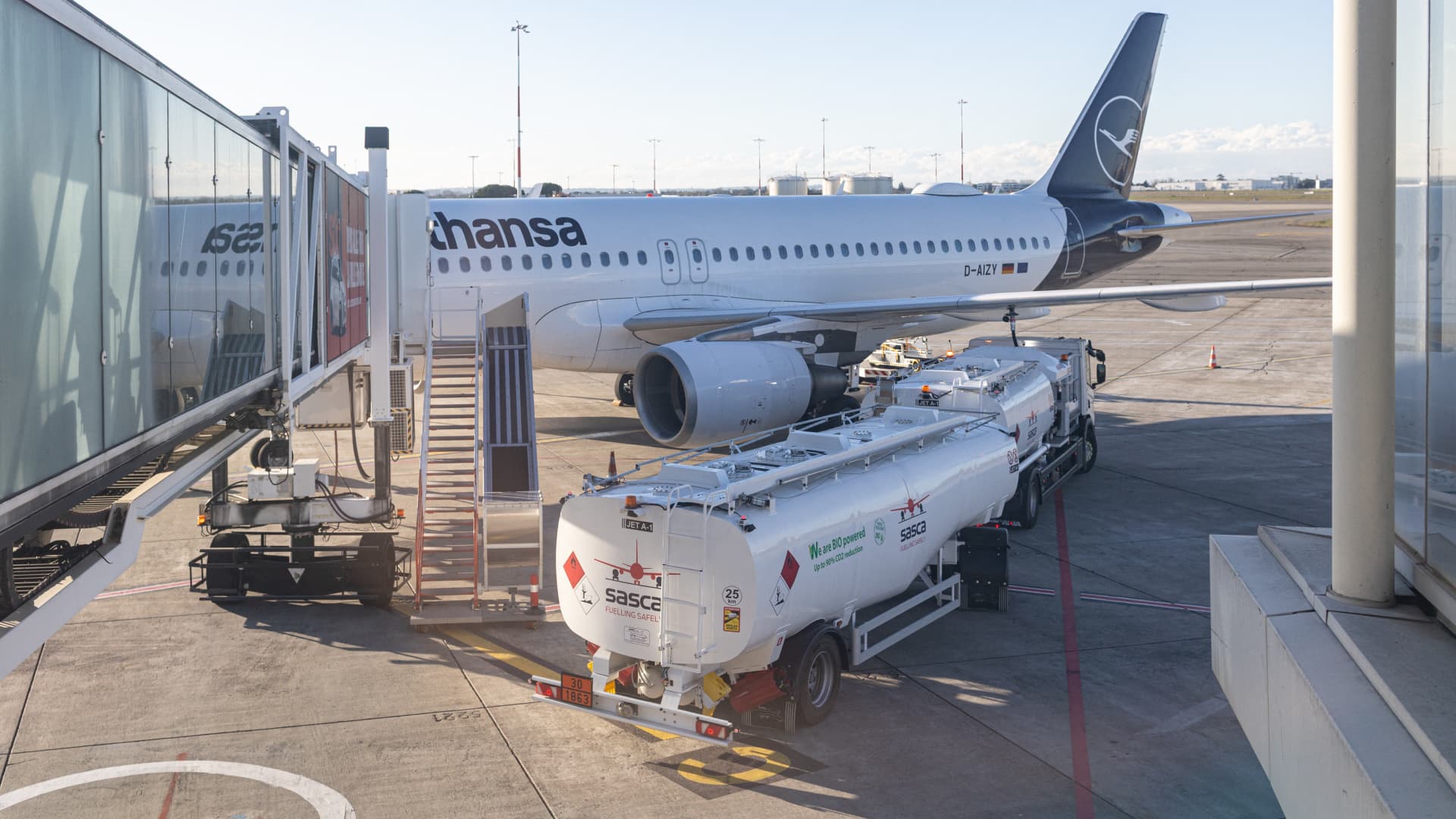
A Lufthansa passenger aircraft is parked at a gate while a SASCA fuel truck services it on the apron at Toulouse Blagnac Airport in Blagnac in Occitanie in France on March 15, 2026.

Isabelle Souriment | AFP | Getty Images

The surging price of jet fuel isn’t the airline industry’s only problem. Now, it’s whether it will have enough.

Advertisement

Since the U.S. and Israel attacked Iran on Feb. 28, the price of jet fuel in the U.S. has nearly doubled, going from $2.50 a gallon on Feb. 27 to $4.88 a gallon on April 2, with the increases even sharper in other regions. The effective closure of the Strait of Hormuz is choking off supplies of both crude and refined products like jet fuel, further driving up the price.

That’s forcing airlines to consider cutting flights, especially overseas.

Carsten Spohr, CEO of Germany’s Deutsche Lufthansa, told employees in a webcast last week that the carrier is assigning teams to come up with contingency plans because of the war in the Middle East, including for drops in demand or a lack of jet fuel, a spokesman said. Those plans could include grounding some of its aircraft.

The U.S. produces a lot of jet fuel and isn’t as exposed as other regions like Europe and parts of Asia are in comparison. But aircraft fill up locally, so some U.S. airlines could face shortages on international trips.

Advertisement

United Airlines CEO Scott Kirby told reporters late last month that the carrier, which has the most service to Asia among U.S. airlines, would have to cut back its flights there. He also said it’s “not impossible” that airlines collectively would have to reduce service in that region.

He noted that as the price of jet fuel goes up, it could be more acute in parts of the U.S. that aren’t as connected by pipelines.

“There’s not enough refining capacity, and so fuel price prior to this and going forward is more susceptible to supply weakness on the West Coast than anywhere else in the country,” he said.

Kirby told employees earlier in March that the airline is preparing for oil to stay above $100 a barrel through 2027 and is pruning some of its flights in the near term.

Advertisement

“To be clear, nothing changes about our longer-term plans for aircraft deliveries or total capacity for 2027 and beyond, but there’s no point in burning cash in the near term on flying that just can’t absorb these fuel costs,” he said in a March 20 message to employees.

Travel demand wild card

Airlines overall are pruning some flights for the coming months, though they often adjust schedules throughout the year to match demand, aircraft availability or other complications.

Domestic capacity in the second quarter for U.S. carriers is up 2.1%, down from previous plans of 2.3% growth, while total capacity is set to rise 1.1%, down from 2.4% on the week ended March 20, according to a Monday report from UBS.

“We expect more capacity cuts in the coming weeks,” UBS said.

Advertisement

So far, airline executives have said that travel demand is strong, but the fuel strains and price spikes are a headache for carriers and passengers alike as the peak summer travel season approaches.

Fuel is generally airlines’ biggest expense after labor, and carriers are already raising airfare and fees like for checked luggage to make up for the added cost.

A truck parks after refuelling a Citilink Airbus at Soekarno-Hatta International Airport following the government approval of a jet fuel surcharge, amid the U.S.-Israeli conflict with Iran, in Tangerang, on the outskirts of Jakarta, Indonesia, April 6, 2026.

Ajeng Dinar Ulfiana | Reuters

Advertisement

Investors will be listening for more insights into how the jet fuel spike could affect the industry as airline earnings kick off Wednesday with Delta Air Lines. That carrier owns a refinery, so it could benefit from jet fuel sales.

Delta on Tuesday raised checked bag fees, joining JetBlue Airways and United, which did the same last week.

The strong demand, particularly compared with this time last year could further insulate airlines, at least in the U.S. Last year, bookings fell as President Donald Trump‘s trade war kicked off with steep tariffs, markets sank and layoffs within the government, led by Elon Musk‘s so-called Department of Government Efficiency, took effect.

“The positive commentary on demand is still holding, but fuel at $4/4.50 [a gallon] for longer isn’t something airlines can pass through,” said Savanthi Syth, an airline analyst at Raymond James. “If fuel stays high, you’ll just see capacity being cut.”

Advertisement

Airlines could see a bigger problem if higher gasoline prices and other pressures on consumers cause a pullback in spending.

“We’re watching the airlines very closely right now. This doesn’t have to go on too terribly long at these [fuel price] levels before you start to see potential for ratings pressures,” said Joseph Rohlena, senior director at Fitch Ratings who covers U.S. airlines.

Read more CNBC airline news

Choose CNBC as your preferred source on Google and never miss a moment from the most trusted name in business news.
Continue Reading

Business

OmniAb director Foehr sells $29k in shares

Published

on


OmniAb director Foehr sells $29k in shares

Continue Reading

Business

The US refinery now processing Venezuelan oil

Published

on

The US refinery now processing Venezuelan oil

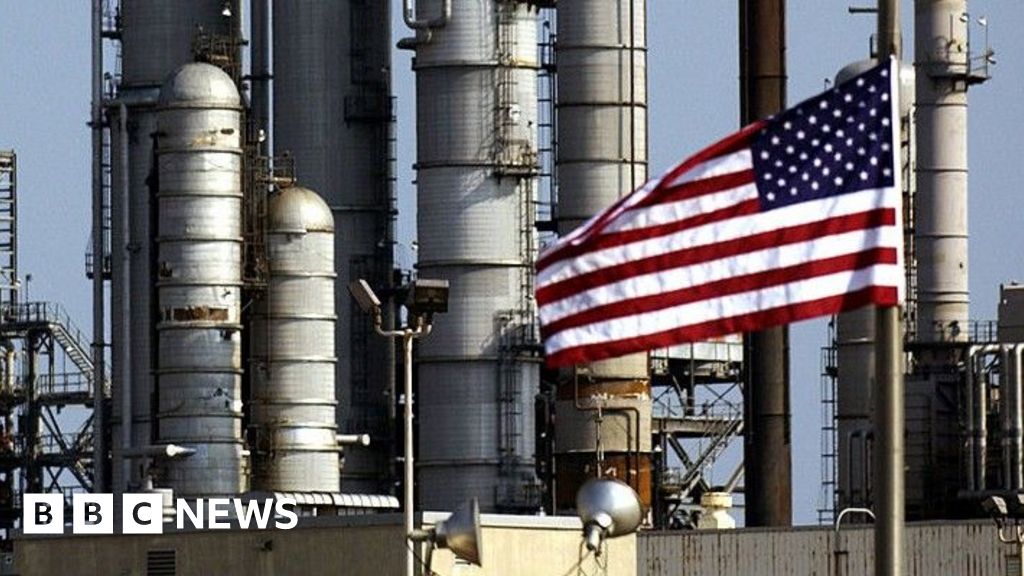
Chevron is now importing 250,000 barrels of crude per day from Venezuela.

Continue Reading

Business

Goldman, BoA, Citadel clash with brokers over options clearing

Published

on

Goldman, BoA, Citadel clash with brokers over options clearing
Bank of America, Citadel Securities and Goldman Sachs Group have rallied in support of a controversial plan from the world’s largest options clearing house. Retail brokers warn the changes would add hundreds of millions of dollars in extra costs. Executives from the three firms backed a proposal from the Options Clearing, which would change how contributions to a pot of money that pays out in the event a clearing member goes bust are tallied up. They said the plan “reduces the likelihood of abrupt and destabilizing clearing fund reallocations during periods of market stress.”

“Clearing members whose activities drive growth in the size of the overall clearing fund today are not responsible for funding that increase,” wrote Stuart Bourne, co-head of global equities and global head of prime financing at BofA Securities; Stephen Berger, global head of government and regulatory policy at Citadel Securities; and Alicia Crighton, global co-head of futures and global head of clearing at Goldman Sachs.

The row is a sign of growing tensions between Wall Street and retail brokers over risk management amid the explosion in retail derivatives trading since the Covid pandemic, with the Options Clearing now handling trades worth about $4 trillion in notional value a day. The clearinghouse wants risk charges “more fairly” allocated among large banks and retail brokers such as Robinhood Markets and Charles Schwab, which have helped fuel a 130% increase in average daily volume to 69 million trades a day, according to the clearinghouse.

Continue Reading

Business

Phoenix Education Partners, Inc. (PXED) Q2 2026 Earnings Call Transcript

Published

on

OneWater Marine Inc. (ONEW) Q1 2026 Earnings Call Transcript

Phoenix Education Partners, Inc. (PXED) Q2 2026 Earnings Call April 7, 2026 5:00 PM EDT

Company Participants

Elizabeth Coronelli – Vice President of Investor Relations
Christopher Lynne – President, CEO & Director
Blair Westblom – CFO & Treasurer

Conference Call Participants

Advertisement

Jasper Bibb – Truist Securities, Inc., Research Division
Alexander Paris – Barrington Research Associates, Inc., Research Division
Keen Fai Tong – Goldman Sachs Group, Inc., Research Division
Griffin Boss – B. Riley Securities, Inc., Research Division
Ryan Griffin – BMO Capital Markets Equity Research
Stephanie Benjamin Moore – Jefferies LLC, Research Division

Presentation

Operator

Advertisement

Good afternoon, and welcome to Phoenix Education Partners Second Quarter Fiscal 2026 Earnings Conference Call. [Operator Instructions]

I would now like to turn the call over to Beth Coronelli, Vice President of Investor Relations. Please go ahead.

Elizabeth Coronelli
Vice President of Investor Relations

Advertisement

Thank you. Welcome to the Phoenix Education Partners’ Second Quarter Fiscal 2026 Earnings Conference Call. Speaking on today’s call are Chris Lynne, our Chief Executive Officer; and Blair Westblom, our Chief Financial Officer. Before we begin, I would like to remind everyone that certain statements and projections of future results made in this presentation constitute forward-looking statements that are based on current market, competitive and regulatory expectations and are subject to risks and uncertainties that could cause actual results to vary materially.

Listeners should not place undue reliance on such statements. We undertake no obligation to update publicly any forward-looking statements after this presentation. The risks related to these forward-looking statements are described in our filings with the SEC, including our most recent Form 10-K, Form 10-Q and other public filings.

We will also discuss certain non-GAAP financial measures. You should consider our non-GAAP results as supplements to and not in lieu of our GAAP results. Reconciliations to the most directly comparable GAAP measures can be found in

Advertisement
Continue Reading

Business

Sebi grants one-time relaxation to companies planning public issues

Published

on

Sebi grants one-time relaxation to companies planning public issues
Mumbai: The Securities and Exchange Board of India (Sebi) on Tuesday provided a one-time relaxation to companies planning public issues, extending the validity of its observation letters in a bid to ease fundraising pressures in a volatile market.

“Sebi has received representation from the industry body on difficulties faced by the issuers in mobilising resources and accessing the capital market in the backdrop of ongoing geopolitical tensions in West Asia. This has led to several issuers to defer, recalibrate or withdraw issuance plans leading to potential lapses in observation letter validity and duplication of regulatory processes,” Sebi said in a circular.

The regulator said observation letters expiring between April 1, 2026, and September 30, 2026, will now remain valid until September 30, 2026. The relief is conditional upon the lead manager submitting an undertaking confirming compliance with updated disclosure requirements when filing revised offer documents.

“This is a pragmatic move by Sebi acknowledging the impact of global macroeconomic conditions on IPO market activity,” said Dharmesh Mehta, MD & CEO, DAM Capital Advisors.

Advertisement

Out of 141 valid approvals that were to collectively raise about ₹1.73 lakh crore through IPOs, regulatory nods for 15 mainboard companies were about to expire in 1-3 months with issuance worth ₹26,000 crore, according to data from Prime Database.


Under existing norms, Sebi’s observation letters – a key clearance for launching public issues – are valid for 12 months, or up to 18 months in certain cases. The regulator said the new rule takes immediate effect.

Continue Reading

Business

Port investment enables economic growth

Published

on

Port investment enables economic growth

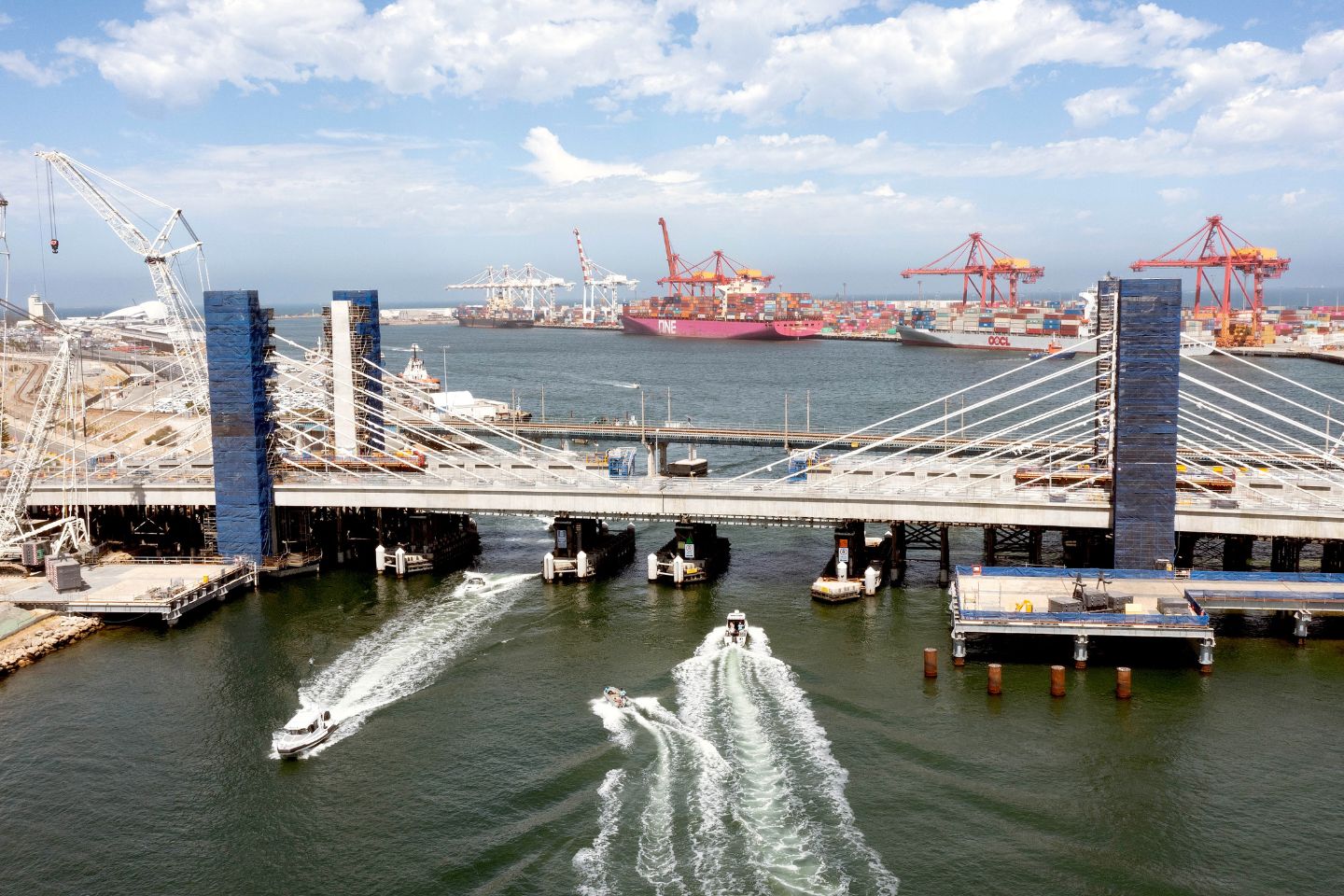
Transport infrastructure spending continues to provide for more volume and diversity.

Continue Reading

Business

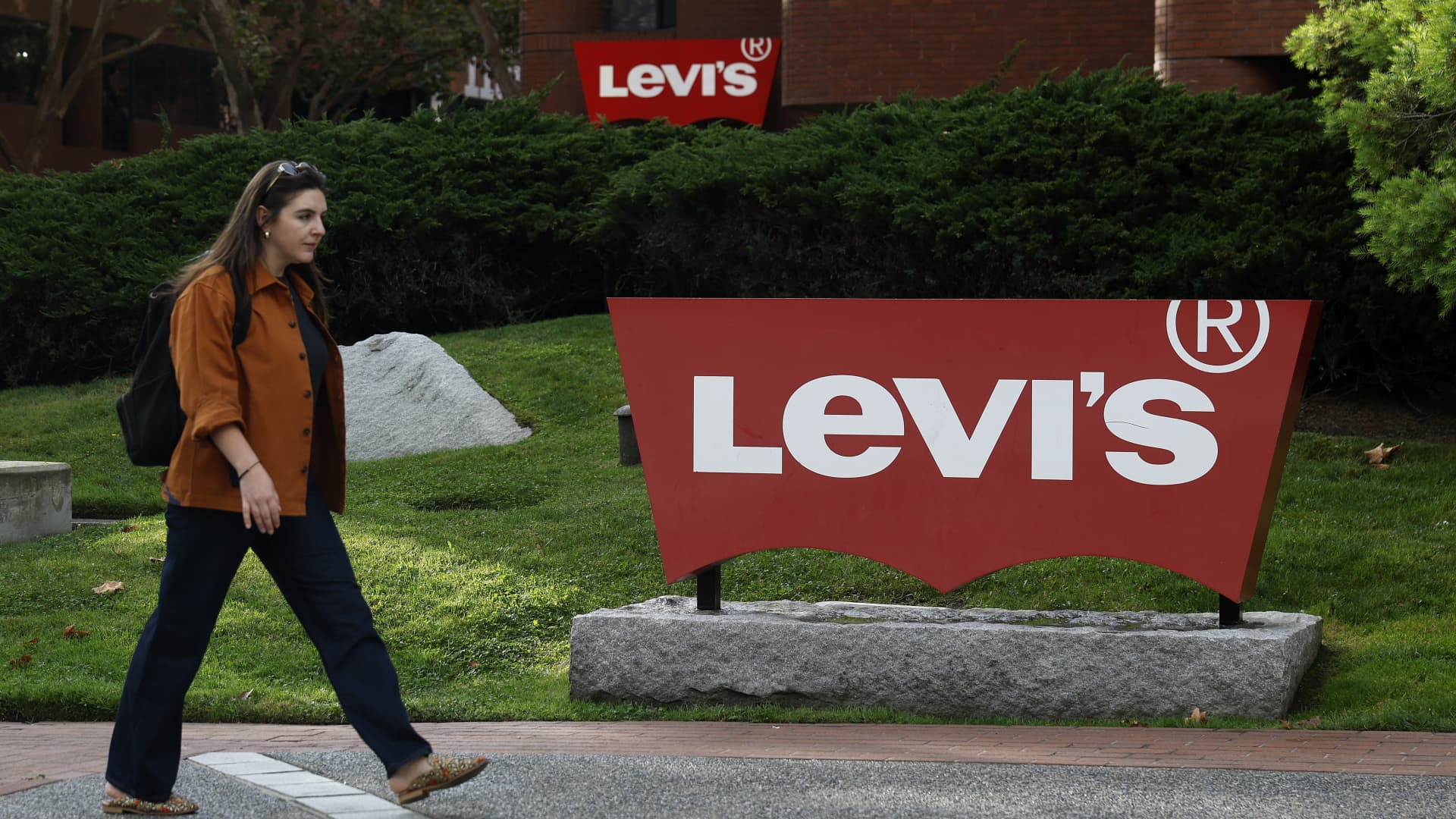
Levi Strauss (LEVI) earnings Q1 2026

Published

on

Levi Strauss (LEVI) earnings Q1 2026
Levi Strauss shares pop on strong Q1 earnings beat

Levi Strauss saw another quarter of strong sales, helped in part by higher prices, and direct-to-consumer sales made up more than half of its overall revenue — a milestone for a company that has long relied on wholesalers.

The denim maker’s revenue grew by 14% while DTC sales through Levi’s own stores and website jumped 16%, bringing total DTC sales to 52% of overall revenue.

In an interview with CNBC, CEO Michelle Gass said she expects DTC revenue to make up more than half of overall sales for the duration of the year, even as its more traditional wholesale channel continues to grow.

The growth is not from increased sales volume alone: Levi is benefiting from higher prices and positive foreign exchange headwinds. Finance chief Harmit Singh, who announced plans to retire on Tuesday, said about half of Levi’s growth is related to recent price increases and half is tied to actual units sold.

Advertisement

Given its first-quarter beat, Levi raised its guidance. It’s now expecting full-year adjusted earnings per share to be between $1.42 and $1.48, shy of expectations of $1.47 per share on the low end, according to LSEG.

It’s expecting sales to rise between 5.5% and 6.5%, largely ahead of estimates of 5.6%, according to LSEG. 

Here’s how the apparel maker did in its first fiscal quarter compared with what Wall Street was anticipating, based on a survey of analysts by LSEG:

  • Earnings per share: 42 cents adjusted vs. 37 cents expected 
  • Revenue: $1.74 billion vs. $1.65 billion expected 

The company’s reported net income for the three-month period that ended March 1 was $175.8 million, or 45 cents per share, compared with $135 million, or 34 cents per share, a year earlier. 

Sales rose to $1.74 billion, up about 14% from $1.53 billion a year earlier. 

Advertisement

Levi’s DTC-first strategy comes with bigger margins but also higher costs in the short term as it changes its distribution system, which has weighed on earnings. However, Singh said its sales are becoming more profitable as DTC scales.

He also noted that Levi’s guidance could rise later in the year. Currently, it’s assuming a 20% global tariff, though President Donald Trump has for now set a 10% duty on U.S. imports after the Supreme Court rolled back so-called reciprocal tariffs earlier this year. If that 10% tariff remains in effect, it could boost full-year earnings by $35 million, or 7 cents per share. The company could also be refunded as much as $80 million after the Supreme Court struck down Trump’s previous global tariff policy, Singh said.

While that could boost earnings, Levi could face weaker sales in the coming months as consumers digest higher gas prices and consider pulling back on nice-to-haves like new clothes. Gass told CNBC she has not seen a pullback in spending so far, and the business is segmented in a way that it’s reaching a wide array of consumer demographics.

For example, Levi’s value brand Signature saw sales rise 16% during the quarter and its middle market Red Cap was up 9%, while its premium line Blue Tab is also growing, said Gass.

Advertisement

“We talked about over the last couple years, we made big, bold moves like selling Dockers and other brands and businesses. Now we’re really focused on segmentation around the Levi’s umbrella,” said Gass. “We feel like we’re really covered to serve the consumer across really every demographic and psychographic cohort and I think the other piece is, when we think about our business globally, 60% of our business is outside the U.S., which also gives us some really nice diversification. So we’re watching it closely, but overall, we’re feeling good about the consumer.”

Choose CNBC as your preferred source on Google and never miss a moment from the most trusted name in business news.
Continue Reading

Business

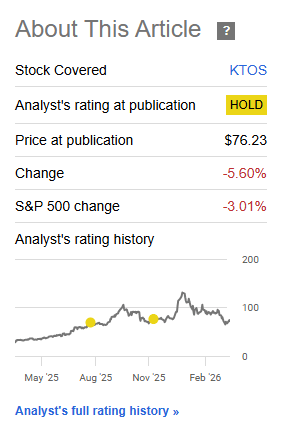
Kratos Defense: The Upside Is Real, The Risk Is Too

Published

on

Kratos Defense: The Upside Is Real, The Risk Is Too

Kratos Defense: The Upside Is Real, The Risk Is Too

Continue Reading

Trending

Copyright © 2025