
Business
Sebi turns down Adani-linked FPIs’ settlement applications


The regulator communicated its decision to the FPIs’ representatives last week, the people said, reviving a case that dates back to October 2020, when Sebi’s surveillance systems first flagged the unusual concentration of their holdings. Sebi’s investigation had flagged 13 FPIs. They subsequently sought to settle the case.
“The terms were not in line with the settlement terms suggested by Sebi. Therefore, Sebi rejected the application,” the regulator said in its communication to the FPIs. “This recommendation (rejection of the application) of HPAC (high-powered advisory committee on settlement orders) was accepted by the panel of whole-time members in terms of regulation 15(1) of the Settlement Regulations, 2018.”
ET has reviewed the letter’s copy.
Read more: Sebi proposes tighter curbs on promotional claims by online bond platforms

At the centre of the standoff, according to one of the people, was the reluctance of some FPIs to fully disclose information Sebi considered essential to any settlement. “You have to come clean if you want to settle a case. Some FPIs were unwilling to provide certain details to Sebi, which was a precondition for settlement,” the person said. “Entities must first agree to the non-monetary terms.”
 Agencies
Breach of Securities Law
Another person said some FPIs, at a joint meeting with Sebi, were unwilling to ‘disgorge’ the amount sought by the regulator, which ran into hundreds of crores.
Settlement is a well-trodden route for entities facing securities law violations in India, one that lets them resolve disputes without admitting or denying wrongdoing. An applicant proposes terms to Sebi, which reviews the application and counters with its own, typically a monetary settlement amount, and sometimes non-monetary conditions such as trading bans. The two sides negotiate, and the final proposal goes to Sebi’s high-powered advisory committee, led by a former high court judge, for approval or rejection.
The 13 FPIs are Albula Investment Fund, Cresta Fund, MGC Fund, Asia Investment Corporation (Mauritius), APMS Investment Fund, Elara India Opportunities Fund, Vespera Fund, LTS Investment Fund, Emerging India Focus Funds, EM Resurgent Fund, Polus Global Fund, New Leaina Investments and Opal Investments.
The funds filed multiple settlement applications in April 2024 after Sebi issued show-cause notices to them under two separate tracks – one questioning why their FPI registrations should not be cancelled, and the other seeking to fine them for breaches of securities law. It could not be ascertained which applications were turned down.
The regulator’s original concern was whether these FPIs were genuine public shareholders, or fronts for the Adani Group’s own promoters.
The probe gained global attention after a January 2023 report by Hindenburg Research accused the Adani Group of round-tripping and market manipulation, triggering a sharp sell-off in its stocks. The conglomerate denied the allegations.
In its submissions to the Supreme Court in August 2023, amid multiple public interest litigations seeking a probe into the Hindenburg claims, Sebi disclosed that it had reviewed trading in seven Adani stocks – Adani Enterprises, Adani Ports & SEZ, Adani Green Energy, Adani Energy Solutions, Adani Power, Adani Total Gas and Adani Wilmar – between March 2020 and December 2022, examining price-volume manipulation and breaches of minimum public shareholding, FPI investment limit and offshore derivative instrument norms.
The regulator identified 42 contributories to the FPIs’ assets under management. But it hit a wall trying to trace their ultimate beneficial owners, hampered by a lack of cooperation from its foreign counterparts.
When the Supreme Court disposed of the PILs in January 2024, it directed Sebi to bring its investigations to a “logical conclusion in accordance with law.”
With Sebi rejecting the settlement applications, the regulator will now continue legal proceedings against the FPIs.
Sebi, Adani Group and the FPIs did not respond to emailed queries.
Second Chance
The door may not stay shut for long. Sebi is planning to revise its settlement rules in a way that could give rejected applicants, including, potentially, these FPIs, another shot at resolving their cases.
Currently, an entity that has had its settlement application rejected cannot reapply at any stage of proceedings, including during an appeal. Under the proposed changes, applicants would be allowed to return to the settlement table if circumstances have changed and the grounds for the original rejection no longer apply. The price of a second chance: an additional 20% on top of the settlement amount.

 Agencies
Product concentration is a watchpoint, valuation a draw
Business
Incorporated in 2002, Symbiotec Pharmalab has a global leadership position in corticosteroid and steroidal-hormone APIs in volume terms in FY26, with a global volume market share of 38.2% in corticosteroid and 23.8% in steroidal-hormone APIs According to Frost & Sullivan. It was the only company to have a presence across the top 10 corticosteroid and steroidal-hormone APIs in FY26. The company has a backward-integrated platform with approvals from the United States Food and Drug Administration (US FDA), European Union Good Manufacturing Practices (EU-GMP), Ministry of Food and Drug Safety, Korea and other global organisations. APIs continue to be the primary revenue driver, contributing more than 96% to total revenue in FY26, while newer initiatives such as complex injectables and contract manufacturing (CDMO) offerings make up the balance. As of FY26, the company operated two API manufacturing facilities and commissioned two additional plants, expanding fermentation capacity to 700 KL and adding complex injectables capacity of 20 million vials annually.
Financials
Between FY24 and FY26, revenue from operations grew 10.2% annually to ₹869.1 crore, operating profit before interest, tax, depreciation and amortization (EBITDA) increased 14.5% to ₹232 crore and net profit rose 4.8% to 109.9 crore. While EBITDA margin expanded to 26.6% in FY26 from 24.5% in FY24, operating cash flow remained volatile, rising to ₹174.6 crore in FY26 from ₹47.3 crore in FY25, compared with ₹187.5 crore in FY24. It reflects heavy capital expenditure and fluctuations in working capital, particularly inventory and trade payables.Read more: Pride Hotels steps up expansion, plans Rs 1,000-cr IPO by December
Valuation
Symbiotec lacks an exact listed peer due to a niche in steroidal hormones and advanced drug-device formulation. Considering the post-IPO equity and net profit for FY26, the company demands a price-earnings (P/E) multiple of up to 58. For other API or biotechnology manufacturers such as Concord Biotech, Divi’s Laboratories, Cohance Lifesciences and Laurus Labs, the P/E range is between 63 and 110.
Business
PLS Group Limited 2026 Q4 – Results – Earnings Call Presentation (OTCMKTS:PILBF) 2026-08-23


Seeking Alpha’s transcripts team is responsible for the development of all of our transcript-related projects. We currently publish thousands of quarterly earnings calls per quarter on our site and are continuing to grow and expand our coverage. The purpose of this profile is to allow us to share with our readers new transcript-related developments. Thanks, SA Transcripts Team

It says something about Western Australia’s changing economy that, for the first time, the biggest development on our major projects map is not a mine, a gas plant or a railway. It is a shipbuilding precinct.

Earnings call transcript: Hipages lifts profit, cash flow in H2 2026


Tracking Akre Capital Management Portfolio – Q2 2026 Update

Earnings call transcript: City Chic lifts FY26 profit as turnaround gains pace

Growing up in Manchester, Mia Tanswell didn’t give her accent much thought – until her first week at university in Loughborough.
“I knew people were going to notice that I was northern and that I didn’t speak the ‘Queen’s English’,” the 22-year-old says.
“Definitely in seminars I would sometimes feel like my accent would sound a bit less intellectual than other people, especially if I was the only northern student in the classroom.”
She’s not alone. Fresh polling seen by the BBC suggests many workers still see so-called “accent bias” as a problem.
The survey found one in 10 people in Britain feel anxious or self-conscious about their accent in high stakes professional settings such as speaking up in a business meeting.
The research, conducted by the organisation More in Common of more than 3,300 adults across England, Scotland and Wales, found accent-related anxiety in work settings like these was highest among Geordies – from the region around Newcastle – and those with an east London – or Cockney – accent (at 19%), followed by people with a Welsh accent (at 18%).
Around 5% of respondents believed their accent had cost them a promotion, pay rise or senior role. “Brummies” – people from Birmingham – were the most likely to feel this, at 13%.
Respondents with a West Country accent reported the highest rate of having their accent mocked or criticised by colleagues, at 15%, followed by 13% of those with a Geordie accent.
The poll was commissioned by Common Ground, an organisation which aims to promote social cohesion. Its founder, Lara Newman, has worked in construction, property and the built environment industry for more than 30 years, and says she changed her own accent to get ahead in the workplace.
“I am incredibly realistic about what would have happened had I gone to university or gone into the workplace with a strong west country accent,” she says. “I felt like that was going to be an issue for me.”
Common Ground aims to support people from disadvantaged backgrounds into work but she says one of the layers creating a barrier to them is accent.
“I think there is a problem in the sense that [an accent] implies a level of education or otherwise. It implies class,” she says.

Lindsay Australia FY26 slides: revenue tops $1bn, eyes secondary growth
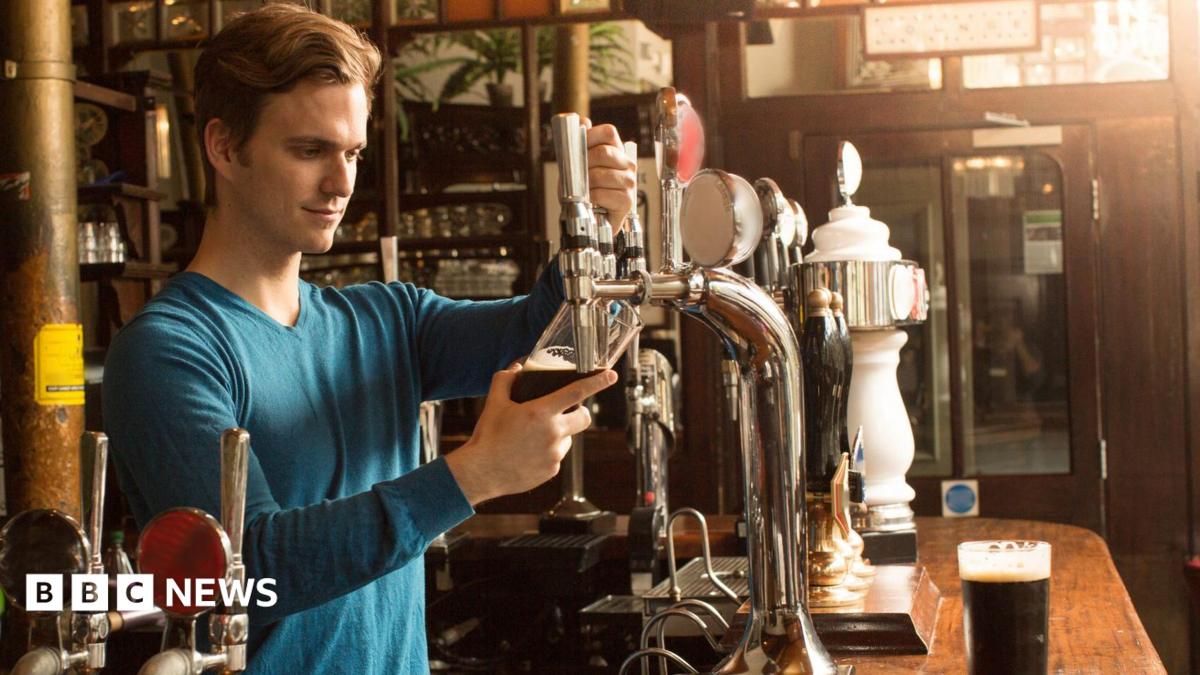
A review is being launched into the way business rates are calculated for pubs and hotels in England and Wales, and could lead to a reform of the system.
The Treasury says business rates expert Jerry Schurder will lead the review into rate valuations and report back in March 2027, with the government calling for the views of landlords, hoteliers and business owners to feed in to the process.
Last month, Andy Burnham announced a 20% cut in business rates for pubs, social clubs and live music venues in England, to come into effect in April.
Pub groups have argued they face disproportionately higher rates bills, but other businesses have called for a wider reform of the rates system.
According to the British Beer and Pub Association (BBPA), 161 pubs closed in the first three months of this year across England, Scotland and Wales, equating to the loss of around 2,400 jobs.
Rising business rates are cited as one issue facing the sector, although there have also been complaints that increases in National Insurance and the minimum wage have made staff costs more expensive.
James Murray, financial secretary to the Treasury, said the new review would look at “a rethink of valuations – so that we can build a fairer system for the future”.
Emma McClarkin, chief executive of the BBPA, said: “For years pubs have paid a disproportionately higher business rates bill which has ground down their ability to keep the doors open, so this review is sorely needed and hugely welcome.”
The BBPA says pubs are valued differently for rates than retail venues. Instead of being based just on floor area, they are judged by a measure called Fair Maintainable Trade – which means when a pub’s turnover increases, so does its rates bill.
Schurder is a former business rates policy lead at advisory firm Newmark UK, and his review will feed into the next rates revaluation in 2029.
His appointment was welcomed by Craig Beaumont of the Federation of Small Businesses (FSB) who said he would bring “crucial heavyweight business rates expertise into the Treasury”.
However, Beaumont said the government needed to address the wider business rates system and exempt more smaller firms by increasing the rates relief threshold for small businesses.
Tom Ironside from the British Retail Consortium also welcomed the review but said it was “vitally important that the needs of retailers are not overlooked”.
Shadow Chancellor Sir Mel Stride said the review was “far too late for a sector this Labour government has already done its best to kill off”.
“Tax hikes on business premises and jobs, alongside job-destroying regulation in the Employment Rights Act, have left many hospitality businesses on the brink,” he said.
Liberal Democrat Treasury spokesperson Daisy Cooper said reform of business rates was “long overdue”, but also called for an emergency VAT cut and a reverse to jobs tax changes “which have hammered hospitality in particular”.

New daily weight loss pill Foundayo available in UK pharmacies from today
Can Symbiotec Pharmalab IPO deliver long-term growth for high-risk investors?

It’s closer than you think





-

 Fashion2 days ago
Weekend Open Thread: Madewell – Corporette.com
-

 Crypto World2 days ago
anatomy of crypto’s biggest liquidation event since 2021
-

 Business6 days ago
SMA Solar Technology AG (SMTGY) Q2 2026 Earnings Call Transcript
-

 Tech6 days ago
Qwen3.8-27B runs frontier-class coding agents and reasoning locally, no cloud API required
-

 Crypto World6 days ago
OCC Greenlights Trump Family Crypto Firm for Trust Charter
-

 Politics2 days ago
6 months on, Irish renters crushed by effects of government housing bill
-

 Business1 day ago
Musk’s Tesla, SpaceX Confirm $16.8 Billion ‘Terafab’ Chip Plant as World’s Largest Building in Texas
-
 NewsBeat2 days ago
The ‘Lucky Dip Gang’ causing carnage for clicks: After five thugs were killed speeding in the wrong direction on a motorway, GUY ADAMS investigates a sick new trend… and why police aren’t even allowed to pursue them
-

 Crypto World6 days ago
NAVI Prime launches institutional lending framework on Sui
-

 News Videos4 days ago
Don’t Leave Your Financial Future To Chance | August 19, 2026
-

 Tech5 days ago
GLM-5.3 hits the API at $1.4/$4.4 per million tokens
-

 Tech7 days ago
Straight Up the Cliff, Yunnan’s New Fuyao Ladder Turns a Three-Hour Climb Into a 50-Second Ride for Students
-
 Crypto World6 days ago
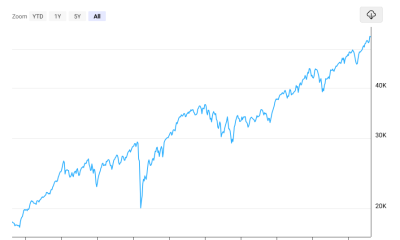
Dow’s 3-Year Winning Run Isn’t a Crash Signal, Still 49% Odds of Double-Digit Gains
-
Tech6 days ago
5 Of The Most Reliable Car Brands To Consider If You’re Buying A Used SUV
-

 Business6 days ago
Stock Market Today: Tech Futures Slide As Treasury Yields Jump; Nvidia, Micron, Sandisk Sell Off
-

 Tech6 days ago
Keychron K8 Ultra 8K review: a great value keyboard with comfort issues
-
 Tech6 days ago
Nvidia discloses $21B stake in SpaceX
-

 Business3 days ago
Five Below: Kids Discount Retailer Reaps Rich Rewards
-
 NewsBeat6 days ago
Trump explodes at CNN reporter after question about young blonde aide who wrote him besotted letters
-

 Business4 days ago
Marvell Shares Jump 7% as Google Chip Deal Confirms Custom AI Silicon Partnership, Analysts
You must be logged in to post a comment Login