

Business
Security staff to go on strike at Aberdeen Airport


Security staff at Aberdeen Airport have announced 14 days of strike action in a row over pay.
The union said it was left with no option as negotiations with ICTS HBS Security, through the conciliation service Acas, failed to produce a breakthrough.
The strikes, involving baggage screening staff, are set to begin on Monday.
The Unite union is warning of significant delays if the strikes go ahead and is urging the company to return to the negotiating table.
The development comes after summer strikes at Glasgow and Edinburgh airports were averted after new deals were struck.
Unite members unanimously supported industrial action at Aberdeen.
Union officials said there would be significant delays as its members in ICTS make up the majority of the baggage screening team at the airport.


Harvey Norman founder backs Frank Wilson’s family into Quintis’s former Mt Romance distillery and shop.

Tackling unemployment linked to long-term illness will unlock economic growth that’s “hiding in plain sight”, former John Lewis chair Sir Charlie Mayfield has said.
More than 250 of the UK’s biggest employers, including British Airways, Tesco, Royal Mail, and several government departments, have signed up to his Get Britain Working taskforce.
The group aims to prevent people dropping out of work due to ill-health and encourage those signed off to come back, with official figures showing the issue costs the UK £212bn a year.
However, some employers have said previously that tax rises mean many firms cannot afford to invest, while others have warned against pushing ill people into work.
The companies signed up will track sickness absence, return-to-work outcomes, and disability participation, which the government said would make workplace health performance visible for the first time.
Many big UK businesses, including Sainsbury’s, EDF Energy, and Currys, as well as 10 mayoral authorities, including London and Manchester, have agreed to take part.
Sir Charlie told the BBC: “I can’t tell you how many people I’ve met who said: ‘I was signed off work for three months, or six months, and I never had any contact with my employer at all.’
“That’s not because the employer is a bad person. It’s because we’ve got a situation at the minute where people don’t talk to each other when they really need to.”
Sir Charlie’s comments come as pressure grows on Andy Burnham, who is widely expected to take over as prime minister later this month, to reduce the UK’s welfare bill to free up money elsewhere.
According to government figures, total welfare spending in Great Britain is forecast to be 23.6% of the total amount the government spends in the 2025 to 2026 financial year.
Sir Charlie said his plans could help cut that bill.
“Fixing these problems at the fundamental level, could make a really big contribution to getting this economy working better — for employers, for employees, for the taxpayer, for all of us.”
He added: “This is not a zero-sum game. It’s not a question of employers win and employees lose and vice versa. Everybody can win.”
Sir Charlie suggested Burnham would back his plans.
“I can’t see any reason why he wouldn’t because of what Andy has said about good growth. If this isn’t good growth, I’m not sure what is, quite frankly.”
He said getting people back into work who are currently not working due to ill-health would be a simple way of boosting the workforce.
“You wouldn’t have had to build a single house, open a new channel of immigration, you wouldn’t have to wait for a cohort of young people to join the workplace. This is basically growth hiding in plain sight.”
Business
SK Hynix Files for Nasdaq Listing Under SKHY Ticker in Bid to Raise Record-Setting $29.4 Billion
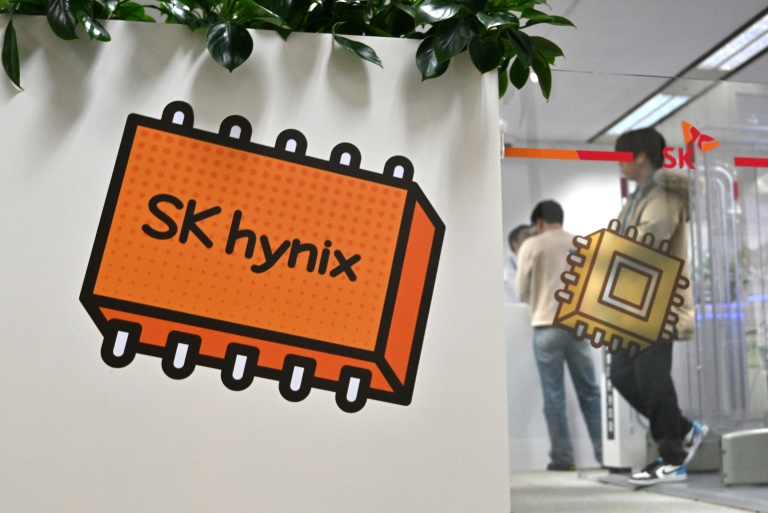
SEOUL — South Korean memory chip giant SK Hynix filed an amended registration statement with the U.S. Securities and Exchange Commission on June 30, formally launching what could become the largest American depositary share offering in history and potentially setting the stage for trading on the Nasdaq Global Select Market as early as July 10.
The company, the world’s second-largest memory chipmaker and the dominant force in the high-bandwidth memory chips that power Nvidia’s artificial intelligence accelerator systems, is seeking to raise approximately $29.4 billion through the listing of 17.79 million American Depositary Shares under the ticker symbol SKHY. That figure, if achieved at the expected ADS price of approximately $166 per share, would surpass Alibaba’s $21.8 billion New York debut in 2014 as the largest ADR listing in recorded market history.
SK Hynix Chief Executive Kwak Noh-jung addressed the strategic rationale behind choosing a Nasdaq listing directly at the announcement.
“The U.S. market, where global big tech is listed, will allow large institutional investors to properly reassess corporate value,” Kwak said.
BofA Securities, Citigroup, Goldman Sachs and J.P. Morgan are serving as global coordinators for the offering. The registration statement has not yet become effective, and prior to the offering, no public market has existed for the company’s ADSs. SK Hynix will continue to maintain its existing listing on the Korea Exchange KOSPI Market under identification code 000660, achieving a dual-listing structure that gives both Korean and American investors direct access to the company’s equity.
The 17.79 million shares being offered represent approximately 2.5% of SK Hynix’s total outstanding shares, a stake structured specifically to ensure that SK Square, the company’s largest shareholder, retains at least the 20% ownership required under South Korean regulations governing major corporate shareholders. The company said proceeds from the offering will be used for general corporate purposes, including capital expenditures for new semiconductor fabrication facilities and the acquisition of advanced extreme ultraviolet lithography equipment, with a delivery target of December 2027.
The primary destination for that capital is the Yongin Semiconductor Cluster, a massive new campus of memory chip fabrication plants being built in South Korea and set to begin coming online in 2027. SK Hynix is also constructing what will be its first manufacturing presence in the United States, a $4 billion advanced packaging facility in Indiana designed to bring some of the most complex chip production work closer to American technology customers.
The decision to list on Nasdaq rather than the New York Stock Exchange reflects a deliberate strategic calculation about where SK Hynix’s equity belongs in the global investment landscape. Analysts at BofA Securities have noted that passive investment funds now account for a larger proportion of global capital flows than active funds, and that a substantial share of that passive capital is concentrated in Nasdaq-listed technology and growth stocks. Once SK Hynix is included in Nasdaq indices and the ETFs that track them, it would generate continuous and stable inflows from index-tracking vehicles that currently have no mechanism to hold Korean-listed shares without going through intermediary ETF structures.
That dynamic mirrors the journey taken by Taiwan Semiconductor Manufacturing Co., which has traded on the New York Stock Exchange for decades. HSBC noted in a June 2026 research note that the years after American capital gained easier access to TSMC marked a sustained re-rating in how the company was valued relative to comparable businesses, and applied that framework to SK Hynix’s anticipated Nasdaq debut. The bank applied a 20% premium to its prior price-to-book ratio for SK Hynix, lifting the estimate from 2.8 times to 3.4 times and upgrading its price target for the company’s Korean shares from 2.9 million won to 4 million won, a 38% increase, reflecting what it described as improved accessibility to global investors and more proactive shareholder-friendly initiatives.
SK Hynix’s competitive position in the segments most relevant to the current AI infrastructure buildout is difficult to overstate. As of the first quarter of 2026, according to IDC data cited in the company’s own SEC filing, SK Hynix ranked second globally in DRAM by revenue with a 29.1% market share, first globally in high-bandwidth memory with a 56.4% revenue share, and second in NAND flash storage with an 18.5% share. Its customers include Nvidia, Google and Microsoft, effectively the full roster of companies spending tens of billions of dollars annually to build the computing infrastructure underlying the global AI expansion.
The high-bandwidth memory segment, where SK Hynix holds its most dominant position, has been at the center of a global supply shortage that has driven both extreme price appreciation and a dramatic revaluation of memory chipmakers broadly. Goldman Sachs raised its 2026 forecast for the global DRAM supply-demand gap to 4.9%, up from an earlier estimate of 3.3%, calling it the most severe memory shortage in 15 years. That shortage has been the primary driver behind SK Hynix’s Korean share price surge of more than 280% year to date, pushing its market capitalization above $1 trillion and establishing it alongside Micron Technology and Samsung Electronics as one of the three companies most directly positioned to benefit from continued AI infrastructure spending.
The Roundhill Memory ETF has climbed 160% so far this year, while the iShares Semiconductor ETF has gained 96%, performance gaps that reflect how specifically the market has rewarded memory-focused businesses relative to the broader chip sector. With a U.S. listing, SK Hynix would give American investors direct exposure to the world’s leading HBM supplier through a familiar exchange, without the friction of converting Korean won or navigating foreign brokerage infrastructure.
SK Hynix’s operating margin stood at 58.58% as of its most recent reporting period, reflecting the extraordinary pricing environment in which the current memory cycle is operating. The company’s Altman Z-score of 22.42 indicates extremely low financial distress risk, and its price-to-earnings ratio of approximately 24.88 places it at a moderate valuation relative to semiconductor peers, a multiple that analysts say could expand meaningfully once the stock begins trading on Nasdaq and passive capital flows begin accumulating automatically.

Central Park Tower, left, and One57, center, along Billionaire’s Row in New York, May 1, 2026.
Michael Nagle | Bloomberg | Getty Images
A version of this article first appeared in CNBC’s Inside Wealth newsletter with Robert Frank, a weekly guide to the high-net-worth investor and consumer. Sign up to receive future editions, straight to your inbox.
A month after the passage of a tax on second homes in New York City, sales of luxury real estate remain strong and inventory is falling, according to brokers and analysts.
When New York Gov. Kathy Hochul and the state legislature approved the so-called pied-à-terre tax on May 27, real estate agents and developers predicted an immediate impact. Brokers said the New York wealthy would flee to Florida, developers said they would halt new projects and real estate lobbyists predicted declines in employment. Many cited what they called “the Mamdani effect,” referring to New York City Mayor Zohran Mamdani and potential wealth flight from taxes.
“The tax on second homes will dampen market activity, reduce property values, hurt new development and weaken the city’s economy,” the Real Estate Board of New York said in a statement soon after the measure passed.
Yet sales of luxury apartments show little signs of weakness. There were 126 contracts signed for apartments priced at $4 million or more in June, up from 124 during the same four-week period last year, according to Olshan Realty.
The average price of a Manhattan apartment reached its second-highest level ever during the second quarter, up 5% over the past year to roughly $2.2 million, according to Brown Harris Stevens. Sales of condos priced between $10 million and $20 million surged 55%, according to Compass. Sales of condos over $20 million were up 33%, with average asking prices up 14%, the real estate brokerage said.
The deals in June included an $80 million duplex penthouse in a new condo building near Manhattan’s West Village, a $26 million condo downtown and a $22 million co-op on the Upper East Side. Brokers say that while some buyers were initially spooked by the tax, the flood of liquidity from recent initial public offerings and soaring wealth from asset prices has outweighed their fears.
“The amount of money out there is insane,” said Lauren Muss of Douglas Elliman, who had a $17.5 million condo listing go to contract in June. “We’re seeing big things come to us every day. It’s only getting stronger.”
It’s too early to judge the long-term impacts of the tax, of course. And real estate lawyers say there will be years of litigation related to valuations, co-op boards, residency status and other issues related to the new tax. While Hochul and Mamdani have said the tax will raise $500 million a year, the New York City Comptroller estimates it will raise about $340 million to $380 million.
Yet top brokers said the pied-à-terre tax fears are quickly subsiding. The surcharge, imposed on non-primary residences valued by the city at more than $1 million, was first proposed in April, approved in May and officially took effect this week. It applies to residences that fit the tax criteria as of Jan. 5, 2026. So any buyers of pricey pied-à-terres this year will be subject to the tax.
Some buyers initially paused their deals when the tax was first proposed, according to agents. Scott Hustis, of Paradigm Advisory at Compass, said he listed a $16.5 million penthouse duplex in Madison Square Park Tower on April 8. One buyer expressed immediate interest and was about to make an offer, he said, but when Hochul announced the proposed tax a week later, the buyer pulled back.
By late May, however, as the details of the tax started becoming more clear, buyers came back into the market. The penthouse went into contract on June 6.
“There is a lot of confidence out there,” Hustis said. “Markets are strong. A lot more New York buyers are coming out of the woodwork.”
Hustis declined to comment on the buyer of the $16.5 million penthouse or whether it will be a primary residence. If not, the apartment would be subject to a pied-à-terre tax bill of over $98,000 this fiscal year in addition to property taxes, based on city valuations.
But Hustis said ultra-wealthy buyers are more concerned about buying at the right time in the market cycle rather than paying an added tax.
“Right now, they’re seeing things go into contract and prices not coming down and they decide to execute,” he said.
Low inventory is adding pressure to buyers. Jonathan Miller, CEO of appraisal and research firm Miller Samuel, said luxury inventory is down 40% compared to last year and is now at the lowest level he’s seen since he began tracking it in 2004.
Marc Palermo of Douglas Elliman has a listing for a $19 million, 4,700-square-foot apartment at 565 Broome St., the glass condo tower whose buyers have included tennis great Novak Djokovic, Uber co-founder Travis Kalanick and niece of the president Mary Trump. In the fall of 2025 and early 2026, the listing attracted several offers for 20% or 25% below the asking price, Palermo said. Yet the building held firm to its price.
By late spring, with markets overcoming Iran war fears and the SpaceX IPO and other offerings creating massive liquidity events, the Manhattan market sprang to life, brokers said. Palermo said he got a “strong offer” for the $19 million apartment and it went to contact at the end of June. While he declined to comment on the buyer, he said they already own a unit in the building and wanted to expand. Since the buyer isn’t a primary New York tax resident, they will likely owe a pied-à-terre tax.
“People took a breath, they settled into the new reality and the smart ones charged in,” Palermo said.
He said the other two early bidders for the Broome Street listing also ended up closing on other apartments recently — one for a $15 million apartment and the other for a $17 million apartment. He said virtually all the high-end buyers in Manhattan are paying cash, without mortgages.
Along with the stock market gains and boom in finance, the so-called great wealth transfer is also driving demand in Manhattan. Palermo said he’s doing a number of high-end deals with buyers under the age of 40 in which the parents or a family office or trust is the underlying buyer.
“We’re seeing a lot of gifts coming in from parents,” he said. “If you’re under 40 and you’re buying in New York City, chances are you’re not making enough to buy on your own.”

Sarah Jackson, who works at coffee and pizza shop Red House, said she was hopeful the change could help people spend money at businesses.
She said “anything that can help bring money into the island is always important” and “having credit cards gives us another option for payment here”.
“I think it depends how obvious the opt-out option is if it’s something that’s very clearly stated and everyone knows when they’re up for it then good,” Jackson said.
“As long as everything’s regulated and following a certain procedure and you’ve chosen exactly what data you want shared then I’m sure it’s fine for people in general.”
Those who do not want their personal data shared can email customerservice@gov.je with subject header “OPT OUT” along with their full name, address and date of birth, or phone 01534 444444 and select option 6.
Follow BBC Jersey on X, external and Facebook, external. Send your story ideas to channel.islands@bbc.co.uk, external.

Young people tells the BBC what they think about the state pension.
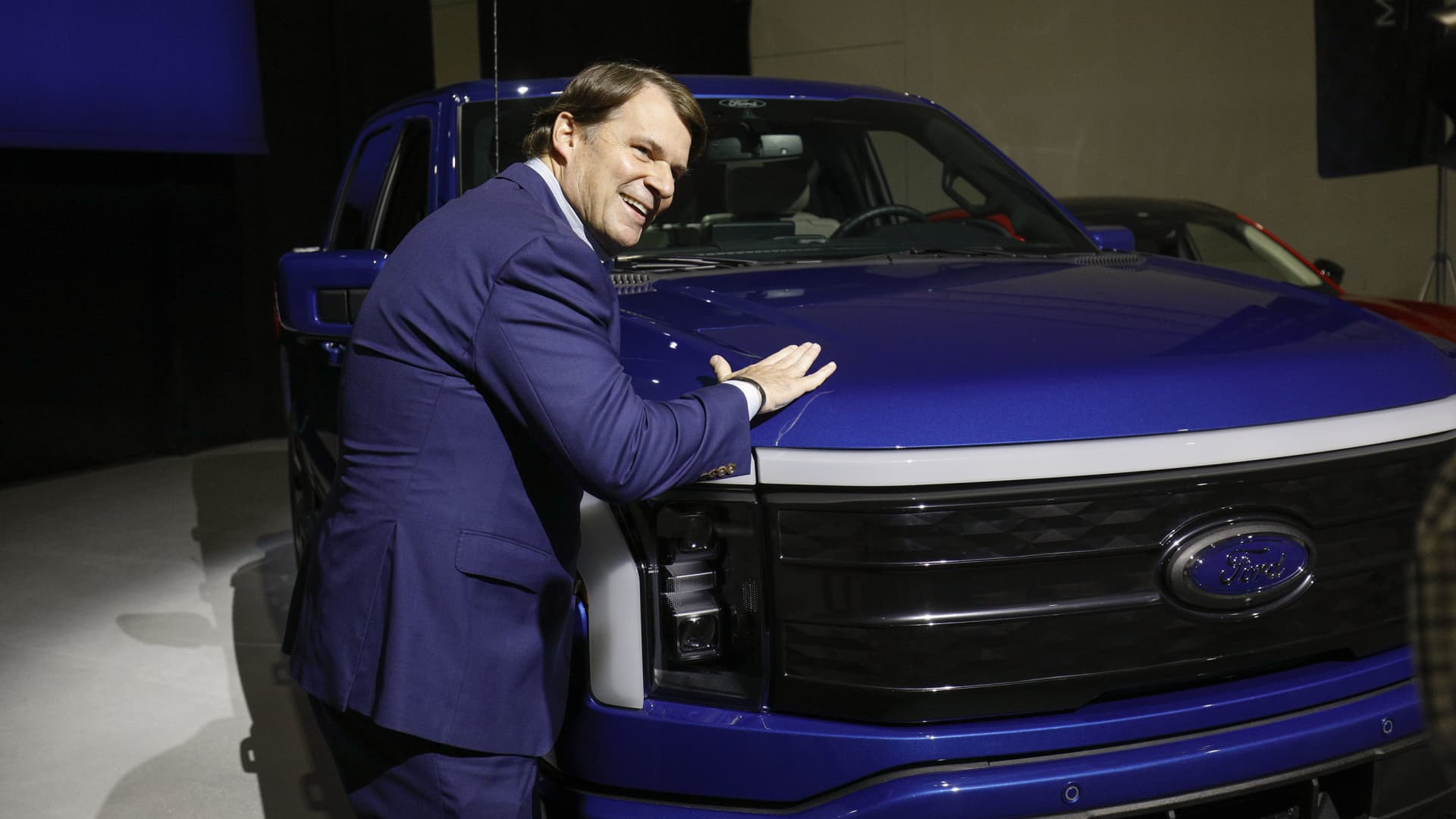
Ford Motor CEO Jim Farley speaks during a launch event for the 2025 Ford Expedition in Louisville, Kentucky, on April 30, 2025.
Michael Wayland | CNBC
DETROIT — Ford Motor regularly promotes itself as a cornerstone of American manufacturing, business and truck leadership with its best-selling F-Series pickups, but it also has led the U.S. in one area that it isn’t so proud of: vehicle recalls and quality issues.
They’ve plagued the Detroit automaker’s earnings, degraded customer trust and stained Ford’s reputation for much of the past decade. The automaker has issued 53 recalls for more than 12 million vehicles so far this year after an industry record of 153 recalls covering 13 million cars and trucks in 2025.
But that period for Ford is coming to an end, CEO Jim Farley told CNBC during an exclusive interview, as the automaker notched a key quality milestone. He said Ford has learned from its past mistakes and will use that knowledge to attempt to flawlessly launch a litany of new products in the coming years.
“Our best days are in front of us as we continue to execute this quality turnaround for our investors, for employees, for our customers,” Farley said during a phone interview. “We’re going to have all new vehicles across our entire North America range in a couple of years, and so that whole new lineup, we have to launch all those perfectly.”
Doing so will be a difficult task. New vehicle launches, especially ones with emerging technologies such as software-defined systems and electrified powertrains, are complex, and one issue can have a ripple effect on an entire product line.
A worker helps assemble a Ford F-150 truck before President Donald Trump arrive at the Ford River Rouge Complex in Dearborn, Michigan, on Jan. 13, 2026.
Anna Moneymaker | Getty Images
It’s something Farley knows all too well. Such issues have cost Ford billions of dollars in losses under his nearly six-year tenure leading the company.
The automaker this week added to its 2026 recall total by recalling 741,195 SUVs and F-150 pickup trucks that varied in age from the 2018 to 2021 model years.
Investors have been closely watching the issues, saying unneeded warranty costs are a risk to the company’s guidance and future business plans. Warranty costs are the expenses an automaker incurs to cover repairs, replacements and other costs for defective parts or workmanship under a certain period of time or miles driven after customers purchase a new vehicle.
Ford said it reduced warranty and materials costs by $1.5 billion in 2025, when adjusted for volume and mix, and is targeting an additional reduction in warranty and material costs in 2026. This follows the company’s warranty costs reaching a high of $4.8 billion in 2023.
“While warranty costs had been a clear drag to earnings over the past several years, Ford appears to have ‘turned the corner,’” Barclays analyst Dan Levy said in a May 15 investor note, citing four consecutive quarters of year-over-year warranty benefits. “We believe the 1Q warranty improvement is encouraging, yet believe further improvement will still be needed.”
Ford No. 1 in initial quality
The company last week received outside validation of its yearslong efforts to turn around its product issues as the Ford brand was named the top mass-market brand in the U.S. in J.D. Power’s initial quality ranking.
After the news was released on June 25, Ford stock rose 2%, making it the company’s second-best trading day of the month.

Ford stock in 2026
It’s the first time since 2010 that Ford has led mainstream brands in the influential study, which assesses expected new vehicle quality based on owner-reported problems within the first 90 days of ownership. Ford, which ranked No. 23 in 2023, ranked third among all brands, behind luxury makers Porsche and Hyundai’s Genesis. It came before Toyota’s Lexus brand at No. 4.
Ford improved in nearly every vehicle category measured by J.D. Power in initial quality, including software, infotainment and power trains.
The acknowledgement comes as Farley has doubled down on efforts to restructure Ford’s leadership, including its bonuses and incentives; focus on quality; and revamp its processes as well as those of suppliers and other partners to more proactively identify potential problems.
“I’m very proud that an American car company can beat the world in initial quality, but obviously none of us are satisfied,” said Farley, who worked at Toyota for nearly 19 years before Ford. “We have so much left to do to be the No. 1 quality brand in all attributes.”

Farley said Ford needs to continue trying to lower its warranty costs and future recalls as well as improve its overall quality reputation, including long-term durability.
Ford and its luxury Lincoln brand respectively ranked 18th and 19th in J.D. Power’s U.S. Vehicle Dependability Study released in February, well below the industry average. That study looks at vehicles over a longer period.
Farley declined to predict when Ford, which has led recalls in the U.S. since 2024, will not hold that position anymore, saying he can’t control what happens in older-model vehicles as well as competitors’ efforts in quality. But he did say everything the company is doing “will absolutely lead to a massive reduction” in future recalls of current and future products.
“The ultimate success metric is will we do it over the course of five or 10 years through launches, through all sorts of economic cycles,” he said. “Everyone wants the quick answer, but when it comes to quality, time is the most important measure of success.”
Ford’s quality efforts
Ford CEO Jim Farley pats a Ford F-150 Lightning truck on Feb. 13, 2023, in Romulus, Michigan.
Bill Pugliano | Getty Images News | Getty Images
Recalls are companies rectifying mistakes that weren’t caught or known during a vehicle’s development or production. They can range from mundane issues such as visor labels or software updates to severe, potentially deadly issues for consumers.
Ford’s most recent quality efforts have focused on finding any issues as soon as possible in a vehicle’s development, which Farley said meant structurally rearranging the company’s processes.
He implemented a new organizational structure and has hired 350 technical specialists since 2023, held more routine meetings, encouraged closer collaboration with suppliers and rolled out more rigorous testing during the entire vehicle development process.
Ford also changed its bonus structure, tying executive compensation more closely to quality metrics, including those for new executives from Whirlpool and Johnson Controls who brought additional quality expertise.
Ford has still had to deal with issues along the way. After it rolled out new artificial intelligence tools to detect problems, the company had to ultimately bring back what it calls veteran “gray beard” engineers to help guide younger staff members and to better train its AI models.

“We found in the past that Ford restructured the company to save money, only to find that we had let go experienced people in supply chain and manufacturing and engineering,” he said. “By bringing those people back, that complements all this AI technology.”
For many companies, AI has increasingly shown it can increase productivity of many tasks but might not be as efficient if it’s not properly trained and deployed to assist the work of human employees.
Farley said that while Ford’s quality efforts are a never-ending journey, he believes the company is about halfway through its most recent turnaround efforts under his Ford+ business plan, which is just beginning to show Ford’s future upside.
“I know after 40 years how important quality is and durability is, and how difficult it is to be the best, which we now are initial,” Farley said. “We cannot lose this momentum, it has to be a culture.”

On Thursday the government said pubs would be able to stay open until 05:00 on Monday.
Employers are being urged to use their “common sense and understanding” and allow flexible working requests where they can.
The TUC, the umbrella group for trade unions, says bosses where possible should allow staff to work from home, start later and make up their hours in the near future, or swap their hours.
John Palmer, senior advisor at conciliation service Acas, says firms must treat requests for time off fairly – there will be Mexico fans as well as England supporters in the workforce. Employees should be aware it might not be possible to book time off at short notice.
He adds some staff who have no interest in the football may be happy to swap shifts.
But some industries will be less able to offer flexibility than others. The British Chambers of Commerce says businesses where this will be challenging include manufacturing production lines, frontline retail and hospitality.
Its director of policy, Kate Shoesmith, says: “Ultimately, there will be some jobs, such as shift work, where it won’t be possible but we’re confident most employers will be thinking about how they can keep everyone onside.
“Talking to staff and customers about plans, can also help reduce disruption and decrease any impact on productivity.”
Supermarkets Sainsbury’s and Aldi say it will be business as usual in their stores on Monday.
Michelle Last, partner at Keystone Law, says employees don’t have a statutory right to take short-notice annual leave to watch a football match – “or to recover from watching one”.
But she says it might be prudent for employers to agree to short-notice leave requests.
“The alternative is that the employee might call in sick or turn up for work tired and unproductive in any event.
“Given this risk, employers might sensibly proactively encourage employees to apply to take annual leave in anticipation of the match. And hopefully, the ensuing celebrations.”

Artificial intelligence is transforming every aspect of business. But the value organisations gain from it will depend less on how quickly they adopt new tools and more on whether they use AI to support long-term strategy, growth and resilience.
Across businesses, marketing teams are experimenting with content generation, HR is automating recruitment, finance is streamlining reporting and customer service is introducing AI-powered assistants. Yet this is only the beginning, with AI poised to reshape virtually every area of business.
Currently, individual initiatives may deliver efficiencies, but the organisations that will realise the greatest value from AI won’t necessarily be those adopting it the fastest, but those that manage it as a business-wide strategic transformation.
That distinction matters because many organisations are still treating AI as a collection of individual efficiency projects, rather than as a fundamental shift in how the business creates value.
Claire explains: “Most businesses are understandably in the experimentation stage with AI. As such, the predominant approach to AI adoption is tactical. But it is also often anchored in driving “efficiency”, which is usually code for cost reduction”.
Whilst there is value in experimentation and efficiency, real success will lie in taking a strategic approach to AI adoption. To ensure sustained growth and profitability, leadership teams will need to ensure that AI supports the organisation’s long-term strategy rather than becoming a collection of disconnected tools solving isolated problems.
AI won’t fix your business
While improving productivity and reducing costs is important, approaching AI solely as a cost-reduction tool can create significant challenges further down the line.
For example, businesses might risk making restructuring decisions that remove too much human intelligence from the organisation, or implementing AI solutions that optimise one department while creating inefficiencies in another. When changes are made in isolation, rather than as part of a joined-up strategy, organisations can simply shift inefficiencies from one area of the business to another instead of eliminating them.
As Claire explained: “AI isn’t going to fix your business. It’s simply going to reveal the issues that already exist.”
The starting point should never be, “What can AI do for us?” Instead, Claire believes leadership teams should begin by asking: “What are we trying to achieve as a business? Where are our biggest challenges, and where would we most like to improve?” Only once these questions are answered and clear should they ask: “How do we want to approach embracing AI in our business?”
“If you ground the conversation in how AI can unlock value, that’s a fundamentally different discussion from asking how AI can save money,” she says.
Grounding AI in a business strategy fundamentally changes the conversation. It shifts the focus away from saving money in the short term towards unlocking value over the long term.
Organisations need to operate as connected systems
Long before AI became a boardroom priority, successful organisations understood that the only way businesses can compete today is by operating as one cohesive system.
“Every department needs to be aligned around where the business is going, what it’s trying to achieve and how it’s going to get there,” says Claire. “That need becomes even greater as AI adoption accelerates.”
Businesses that operate in functional silos today face the greatest challenge. If marketing adopts AI independently from sales, or customer service automates processes without considering operations, customers can end up receiving fragmented experiences while internal teams duplicate effort and create unnecessary complexity. The result is the exact opposite of what AI is intended to achieve.
Claire explains: “Without that systemic approach, you risk driving inefficiency into the business. You also limit your ability to innovate, grow and create long-term value.”
Rather than increasing efficiency, businesses simply create new silos where the left hand no longer knows what the right hand is doing.
Leadership teams therefore need to ask not simply how individual departments are using AI, but how every AI initiative contributes to the organisation as a whole.
“The question all leaders should be asking is ‘Are we looking at this holistically?’”
AI should support strategy, not replace it
There is understandable pressure on businesses to move quickly.
New AI platforms appear almost daily, accompanied by headlines suggesting competitors are racing ahead. “There’s a huge amount of FOMO around AI. Many leaders think everyone else has cracked it, but the reality is that very few organisations have,” says Claire
The temptation is to identify an operational problem, purchase a piece of AI software that appears to solve it and move on to the next issue. However, this tactical approach often increases complexity and cost rather than reducing it. It may also explain why MIT’s 2025 report, The GenAI Divide: State of AI in Business 2025, found that 95% of organisations were getting no measurable return from their GenAI pilots.
“Rather than allowing AI to happen to you, leaders need to decide what AI should be for their business. “Technology should follow strategy, not define it.”
Don’t outsource your intelligence
“The future isn’t AI replacing humans. It’s humans and AI working together,” says Claire.
AI provides artificial intelligence, but organisational success will still rely on applied intelligence, the experience, judgement, creativity and critical thinking that people bring. “The job is to avoid unintentionally outsourcing your intelligence to AI. Protect what makes your organisation uniquely valuable.”
This is particularly important given the reality of today’s workplace. Claire warns: “One of the biggest risks is that AI becomes a coping strategy for overwhelmed employees. They hand more and more tasks over to AI, and what disappears is judgement, evaluation and critical thinking.”
“If organisations don’t think carefully about how people adopt AI, they’ll introduce unnecessary risks around data, reputation and decision-making.”
The goal should never be replacing people with AI. It should be enabling people to work better alongside it.
Build capability for the future
AI also requires organisations to think differently about talent. “Entry-level roles shouldn’t be viewed as something you can eliminate. The real question is how you evolve those roles to support your long-term talent strategy,” says Claire.
Junior professionals still need opportunities to learn their craft. They simply have the opportunity to do so using AI from day one.
If organisations stop developing future talent because technology can perform today’s tasks, they risk creating significant capability gaps in years to come.
Strategic AI adoption therefore requires leaders to ask not only what capabilities can be automated today, but what capabilities the organisation will need tomorrow.
AI is a leadership responsibility
AI is overwhelming, and it is understandable that some leadership teams have turned to creating AI specialist roles. Whilst this sort of specialist expertise will undoubtably be valuable, leaders cannot afford to delegate responsibility for AI adoption to one person or one function.
“Leaders need to ensure they are clear on their business strategy and understand what role AI can play in fulfilling it. This alignment is crucial to ensuring the AI expertise you do bring into the business is pointed in the right direction”.
We’ve seen this before. When digital first emerged, many organisations appointed Heads of Digital. Over time, it became clear that digital could not sit in one department because it touched every aspect of the business.
AI is no different. It cannot become someone else’s responsibility. It must become part of the organisation’s DNA, with leadership teams taking collective ownership for how it is governed, adopted and embedded across the business.
“Get your house in order first. That’s how you’ll get the most value from AI specialists.”
Think beyond today
Clearly, AI has the potential to transform the workplace but it is not without its challenges or risks. If ever there was a need for leaders to consider how decisions taken today might affect the business in the future it is now.
“AI makes a stewardship mindset more important than ever. Stewardship is about protecting the long-term future of your organisation.”
Leadership teams should consider every AI decision through four interconnected lenses: protecting their brand, their people, their customers and the planet.
For example, within the current discourse around AI adoption, there is a definite lack of discussion and consideration around sustainability. Claire believes that it is a huge part of the piece. “Sustainability may not be the most fashionable part of the AI conversation right now, but consumers will eventually join the dots and the brands who have not taken a systemic approach to AI adoption, who haven’t considered how it impacts their own sustainability agenda, will be caught out.”
The organisations that succeed will protect what makes them unique while using AI to enhance, not replace, the intelligence that already exists within the business.
Above all, they will resist the temptation to chase technology for technology’s sake. AI is not a business strategy. It is a powerful enabler of one.
Leadership teams that start with strategic clarity, align every department behind shared goals and adopt AI as part of a connected organisational system will be the ones that create lasting value long after today’s AI hype has passed.
By Claire Croft, founder of executive coaching business Claire Croft Associates
For more information, visit: https://clairecroft.co.uk
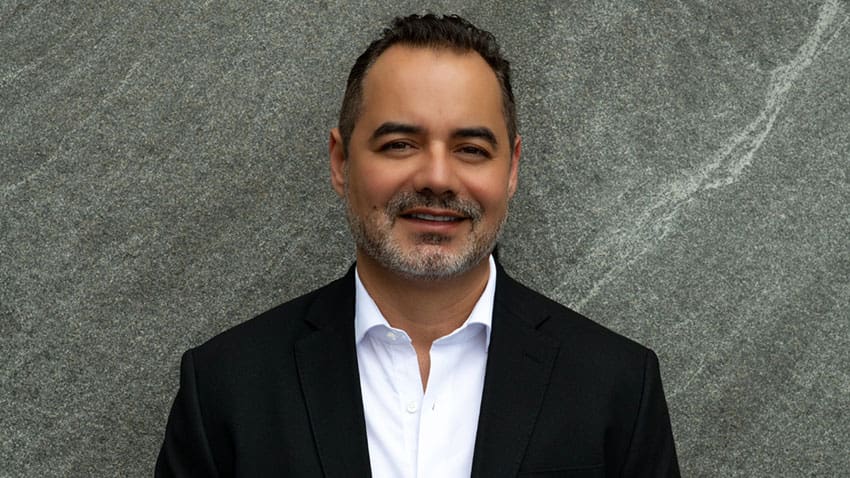
For more than 25 years, Juan Sebastian Palomo Murga has built companies that solve real-world challenges across infrastructure, logistics, technology, and financial services.
Today, much of that focus is centered on creating smarter transportation solutions through iPakket and Ride by iPakket.
Rather than viewing mobility as a single service, the companies are building an ecosystem that combines logistics, technology, and shared transportation to make moving people and goods more efficient. As Ride by iPakket continues expanding its carsharing services, the goal remains simple: provide practical, technology-driven solutions that improve accessibility and convenience for individuals and businesses alike.
In this interview, Juan Sebastian discusses the thinking behind the companies’ evolution, the future of shared mobility, and why innovation should always begin with solving everyday problems.
What inspired the expansion from logistics into shared mobility?
As we continued growing iPakket, we saw transportation becoming more connected. Logistics, deliveries, and personal mobility are all part of the same ecosystem. Technology gives us the opportunity to connect those services in ways that make transportation simpler and more efficient.
That is what led to Ride by iPakket. We wanted to create a platform that gives people more flexible transportation options while using technology to improve the overall experience.
What makes carsharing an important part of the future of transportation?
Many people are rethinking traditional car ownership, especially in urban areas. They want access to reliable transportation without the long-term costs and responsibilities that come with owning a vehicle.
Carsharing offers flexibility while making better use of existing resources. When supported by the right technology, it becomes a practical solution for both consumers and cities looking to improve mobility.
We believe transportation should be available when people need it, without unnecessary complexity.
How does technology support the Ride by iPakket experience?
Technology is the foundation of everything we build.
Customers expect transportation to be simple. They want to locate vehicles quickly, complete reservations easily, and have confidence that the service will be reliable. Behind that experience is a significant amount of technology working to improve efficiency, security, and convenience.
For us, technology is not about adding features. It is about removing friction from the customer experience.
How does your experience in infrastructure influence your approach to building technology companies?
Infrastructure taught me that every successful project begins with strong planning and disciplined execution.
Whether you are building roads, managing large construction projects, or developing mobility platforms, success depends on creating systems that people can trust. That mindset continues to guide how we grow iPakket and Ride by iPakket.
The industries may be different, but the importance of reliability never changes.
What role does innovation play across your companies?
Innovation only matters if it improves people’s lives.
Our goal is not to introduce technology simply because it is new. We focus on solutions that help customers save time, simplify transportation, and improve access to services.
As we continue expanding, we are also exploring additional technologies and strategic acquisitions that strengthen the broader ecosystem connecting logistics, mobility, and digital services.
How do you see urban mobility evolving over the next decade?
Cities will continue looking for smarter ways to move people efficiently.
I believe we will see greater adoption of shared transportation, connected mobility platforms, and digital services that allow users to manage multiple transportation options through a single experience.
Companies that can integrate technology with convenience will be well-positioned to meet those changing expectations.
How do sustainability and social responsibility fit into your business strategy?
A responsible business should always consider long-term impact.
Shared mobility has the potential to improve how transportation resources are used while giving more people access to flexible travel options. Beyond our commercial activities, we continue supporting initiatives that expand access to clean energy in underserved communities throughout Central America because infrastructure and energy both create opportunities for economic growth.
We also continue supporting organizations that promote human rights because strong communities are essential to sustainable development.
What do you hope people associate with iPakket and Ride by iPakket in the years ahead?
I hope they see companies that consistently solve real problems.
Our focus has always been on building practical solutions that people can depend on. Whether that means improving logistics, expanding shared mobility, or developing new technology, success comes from creating value that lasts.
If customers think of iPakket and Ride by iPakket as companies that deliver reliable innovation while keeping people at the center of every decision, then we will have accomplished what we set out to do.

Free family fun day and 1,000 bus fares at Teesside Park

Gerry Harvey backs Frank Wilson's family into Mt Romance

ESMA’s First Post-Deadline MiCA Update Adds Standard Chartered


-

 Fashion7 days ago
Weekend Open Thread: Staud – Corporette.com
-

 Crypto World3 days ago
Strategy authorizes up to $1.25B in Bitcoin sales under new capital plan
-

 News Videos5 days ago
MAJOR BITCOIN & MARKET UPDATE!!!! (MUST WATCH ASAP!!!)
-

 Tech5 days ago
Claude Code turned every engineer into three. Now companies need more product thinkers
-

 Tech3 days ago
Anonymous researcher drops 0-day ‘exploitarium’ repo
-

 Crypto World6 days ago
Coinbase, Circle Deepen Crypto Stock Losses Despite Resilient S&P 500
-

 Business3 days ago
Australia treasurer says alleged access of prime minister’s bank data ’incredibly concerning’
-

 Crypto World6 days ago
Kraken's xStocks Opens Bending Spoons IPO Registration to EEA Retail
-

 Sports7 days ago
FIH Pro League: India defeat Pakistan 7-1, register biggest win of campaign | Other Sports News
-

 Tech6 days ago
Bluekit phishing kit adopts browser-in-the-middle for login theft
-

 Tech6 days ago
Russian hackers now target Signal backup recovery keys
-
 Crypto World7 days ago
Hyperliquid Named on Singapore MAS Investor Alert Register
-

 Crypto World7 days ago
RTX holders must register wallets before token distribution begins
-
 Business4 days ago
The AI boom won’t burst all at once. It will pop in ‘rolling bubbles’: Macquarie
-

 Sports2 days ago
Broncos roster: OL Ben Powers (No. 74) entering final year of contract
-

 Tech6 days ago
Silicon Valley paid to kill AI regulation, now it wants the rules back
-

 NewsBeat3 days ago
Presenter Caroline Flack’s brother Paul Flack dies aged 55
-

 Crypto World1 day ago
Binance stock trading tops $1B in first month after launch
-
 NewsBeat1 day ago
New exhibition reflects five decades of movement between island of Ireland and GB
-
 Tech6 days ago
OpenAI mulls delaying IPO over valuation concerns
You must be logged in to post a comment Login