
Business
Seiko Epson Q1 profit beats estimates

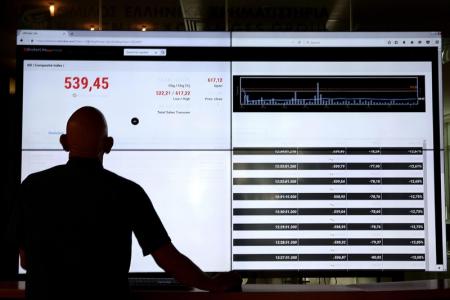


The sale of gaming giant Electronic Arts (EA) for $55bn (£41bn) to a group of buyers including Saudi Arabia’s Public Investment Fund (PIF) has been finalised.
The American company is known for making and publishing best-selling games such as EA FC, formerly known as Fifa, The Sims and Mass Effect.
The investors, who include Affinity Partners – led by President Donald Trump’s son-in-law, Jared Kushner – are taking EA private, meaning all of its public shares will be purchased and it will no longer be traded on a stock exchange.
It is thought to be the largest leveraged buyout in history, meaning a significant part of it is paid for with borrowed money, which the company will have to pay back.
This is because as well as the $36bn it has already put into the deal, PIF needs to borrow $20bn from investment bankers JPMorgan to close it, with the business taking on the debt.
How paying back this debt will affect EA as a business has been the source of much speculation from journalists and analysts.
Bloomberg’s Jason Schreier surmised it could lead to “mass layoffs, more aggressive monetization, and other big cost-cutting measures, external“, for one of the industry’s biggest companies.
Christopher Dring, editor-in-chief and co-founder of the Game Business, said the nature of the buyout, external was also likely to mean “a very hands-on approach from the investment group”.
“Private equity firms are typically aggressive in their management of companies,” he said.
Shams Jorjani, the chief executive of Arrowhead Game Studios – an independent studio which worked with publishers Sony to make the record-breaking Helldivers 2 – told the BBC that EA has traditionally been seen as having a wide portfolio of games, from blockbusters to smaller indie titles.
“This deal is consolidation, no question – and I wonder whether new ownership optimises for the safe bet – more sequels, more mega-franchises – over that breadth,” he said.
“I’m hopeful this leads to more of that range, not less, but if it turns EA into a sequel-and-mega-franchise machine, that’s a real waste of one of the best catalogues in the industry.”

Apple's Selloff Is Overdone

The 2 Most Misunderstood 10%+ Yielding Income Investments In The Market Today
Business
Next Shares Jump 6% as UK Retailer Raises Profit Forecast for the Third Time This Year on Strong Sales
LONDON — Shares of Next PLC surged Wednesday after the British fashion and homewares retailer raised its full-year profit forecast for the third time this year, delivering a trading update that reinforced its status as a bellwether for the strength of UK consumer spending even amid a broader cautious retail environment.
Next shares climbed as much as 7% in early trading, touching a fresh all-time high of 15,900 pence, before settling to a gain of 6.21%, or 920 pence, to close at 15,730 pence. The advance gave the retailer a market capitalization of £17.72 billion and extended a rally that has now pushed the stock up close to 19% so far this year.
A Third Upgrade in a Single Year
Next said full-price sales rose 9.2% in the 13 weeks to Aug. 1, comfortably outpacing the company’s own previous forecast of just 4% growth for the quarter, a target it had set after full-price sales growth of 6.2% in the first quarter reflected a tougher comparison with the prior year. Instead, sales came in £70 million ahead of the retailer’s expectations, split between a £19 million beat in the UK and a £51 million beat overseas.
On the back of that outperformance, Next raised its full-year pretax profit guidance by £25 million to £1.243 billion for the year ending January 2027, representing year-on-year growth of 7.3%. The company said £15 million of the increase stemmed from the additional sales, while the remaining £10 million reflected better-than-expected returns on its equity investments. Full-year earnings per share guidance was lifted to 812.9 pence, up 9.2% from the prior year.
The upgrade marks the third time Next has raised its profit outlook so far this year, following earlier increases from an initial forecast of £1.158 billion to £1.218 billion ahead of Wednesday’s announcement. According to one broker cited in coverage of the results, the pattern is a familiar one for the retailer, which has issued 19 profit upgrades since the start of its 2024 financial year, a track record that has made repeated guidance increases almost an expected feature of Next’s reporting calendar rather than a surprise.
Warm Weather and Middle East Demand Drive the Beat
Next attributed the stronger-than-expected quarter in part to weather conditions that matched the exceptionally warm summer seen the previous year, a factor the company said it had not anticipated when it issued its more cautious original guidance. The retailer also pointed to a release of pent-up consumer demand in the Middle East and Northern Europe, regions that had posted weaker sales performance in the first quarter before rebounding strongly in the second.
International online sales were the standout performer in the update, surging 36.9% during the second quarter and pushing first-half international online growth to 23.9%. By contrast, total UK sales rose a more modest 2.8% during the quarter, as a 0.3% decline in physical store sales was offset by 5% growth in UK online sales. Across the first half of the year as a whole, total full-price sales rose 7.7%.
Guidance for the Remainder of the Year
Despite the strong second-quarter beat, Next held its forecast for full-price sales growth in the second half of the year unchanged at 5%, a decision the company framed as appropriately cautious given the scale of the comparatives it will be lapping. The retailer specifically flagged that international sales growth is expected to moderate to around 14% in the second half, down from the elevated pace seen in recent quarters, as the comparison period begins to include the benefit of logistics upgrades made to its European distribution network the previous year.
Taken together, the updated guidance implies full-year full-price sales of £6 billion, up from a previous forecast of £5.9 billion, and total group sales of £7.5 billion, up from £7.3 billion previously. The updated forecast also assumes £524 million in share buybacks for the year, £14 million above the company’s prior guidance, underscoring Next’s continued emphasis on returning capital to shareholders alongside its operational growth.
A Bellwether for UK Retail
Next is widely regarded by analysts and investors as one of the clearest bellwethers for the health of British consumer spending, given its scale, with more than 800 stores across the UK and Ireland alongside a substantial international online operation. The company’s consistent pattern of upgrading guidance throughout 2026 has stood in contrast to a broader retail sector narrative that has often emphasized caution around consumer spending power amid persistent cost-of-living pressures across the UK.
Next’s international third-party brand business, which sells other companies’ products through its online platform alongside its own Wholly Owned Brands, has continued to expand as part of the company’s broader growth strategy, with international third-party brand sales having grown 22% year over year in the company’s most recent full fiscal year. The retailer has also continued to flag Middle East regional instability as a source of ongoing logistical and cost challenges, having previously estimated tens of millions of dollars in additional costs tied to fuel and air freight disruptions linked to the conflict in the region.
Next’s interim results are due to be published on Sept. 17, 2026, an event that investors and analysts are likely to watch closely for further detail on how the retailer’s momentum has carried into the back half of its financial year, along with any additional commentary on cost pressures tied to ongoing instability in the Middle East. With Wednesday’s upgrade marking the company’s third of the year and shares now trading at record levels, market attention is increasingly focused on whether Next’s pattern of beating its own conservative guidance can be sustained into the more challenging comparative period the retailer itself has flagged for the months ahead.
Business unit volume fell 16% during the third quarter.
The Eli Lilly logo appears on the company’s office in San Diego, California, Nov. 21, 2025.
Mike Blake | Reuters
Eli Lilly on Wednesday reported second-quarter earnings and revenue that blew past estimates and hiked its full-year sales outlook, as demand for its blockbuster weight loss drug Zepbound and diabetes treatment Mounjaro surged again.
The pharmaceutical giant now expects 2026 revenue to come in between $85 billion and $87 billion, up from a previous guidance of $82 billion to $85 billion.
Lilly projects its full-year adjusted profit to be between $35.50 and $36.50 per share, which compares with a previous outlook of $35.50 to $37 per share. The company said it raised the underlying profit guidance by $2.78 per share at the midpoint, but noted that it is offset by $3.03 per share in charges tied to deals in the quarter.
Shares of Lilly rose more than 5% in premarket trading Wednesday.
Fueled by a massive financial windfall from its obesity and diabetes drugs, Lilly is executing a historic M&A spending spree. The company most recently struck a deal to buy a psychedelics drugmaker in July, and also announced plans to buy three vaccine makers in May.
Resilient demand for Zepbound and Mounjaro has helped fuel several strong quarters for Lilly despite lower prices for the medications in the U.S.
Mounjaro’s worldwide revenue rose 91% to $9.94 billion for the quarter, including U.S. sales of $4.8 billion. That surpassed the $8.99 billion in worldwide sales and $4.44 billion in U.S. revenue that analysts were expecting for the quarter, according to StreetAccount.
Mounjaro notably saw strength internationally, with sales outside the U.S. jumping 172%.
Zepbound, which entered the market roughly three years ago, posted $4.93 billion in U.S. revenue for the second quarter. That’s up 44% from the year-earlier period, as demand for the drug also rose while realized prices dropped, in part due to previously announced cash-pay discounts. Analysts were expecting $4.69 billion in U.S. sales for Zepbound, according to StreetAccount.
Lilly’s newly launched obesity pill, Foundayo, which won U.S. approval in April, took in $98 million in sales for the second quarter. Analyst estimates compiled by FactSet as of Wednesday forecasted nearly $103 million in sales.
It marks the first earnings report that includes revenue from the GLP-1 pill, which is competing head-to-head with a rival oral drug from Novo Nordisk that rolled out a few months ahead.
Here’s what Eli Lilly reported for the second quarter compared with what Wall Street was expecting, based on a survey of analysts by LSEG:
- Earnings per share: $8.38 adjusted vs. $6.01 expected
- Revenue: $22.97 billion vs. $20.73 billion expected
Revenue in the U.S. climbed 33% to $14.4 billion. Lilly said it saw a 37% increase in volume — or the number of prescriptions or units sold — for its products, primarily for Mounjaro and Zepbound. That was partially offset by lower realized prices of those same medications.
Notably, revenue outside the U.S. jumped 80% to $8.6 billion, propelled by a 113% surge in volume and partly offset by a 36% drop in realized prices. Lower prices largely came from Mounjaro’s addition to China’s state-run health insurance coverage for Type 2 diabetes.
The pharmaceutical giant booked net income of $7.10 billion, or $7.94 per share, for the second quarter, which includes the $3.03 per share deal charges. That compares with net income of $5.66 billion, or $6.29 per share, a year earlier.
Excluding one-time items associated with the value of intangible assets and other adjustments, Eli Lilly posted earnings of $8.38 per share for the second quarter.
Eli Lilly CEO Dave Ricks said in an interview in late April that he expects lower prices to accelerate prescription volumes in the U.S. He estimated that global GLP-1 use will rise from approximately 20 million patients at the end of last year to 30 million at the end of 2026.
Both Lilly and Novo are expected to benefit from Medicare’s new coverage of obesity drugs, which launched in early July, in the back half of the year.
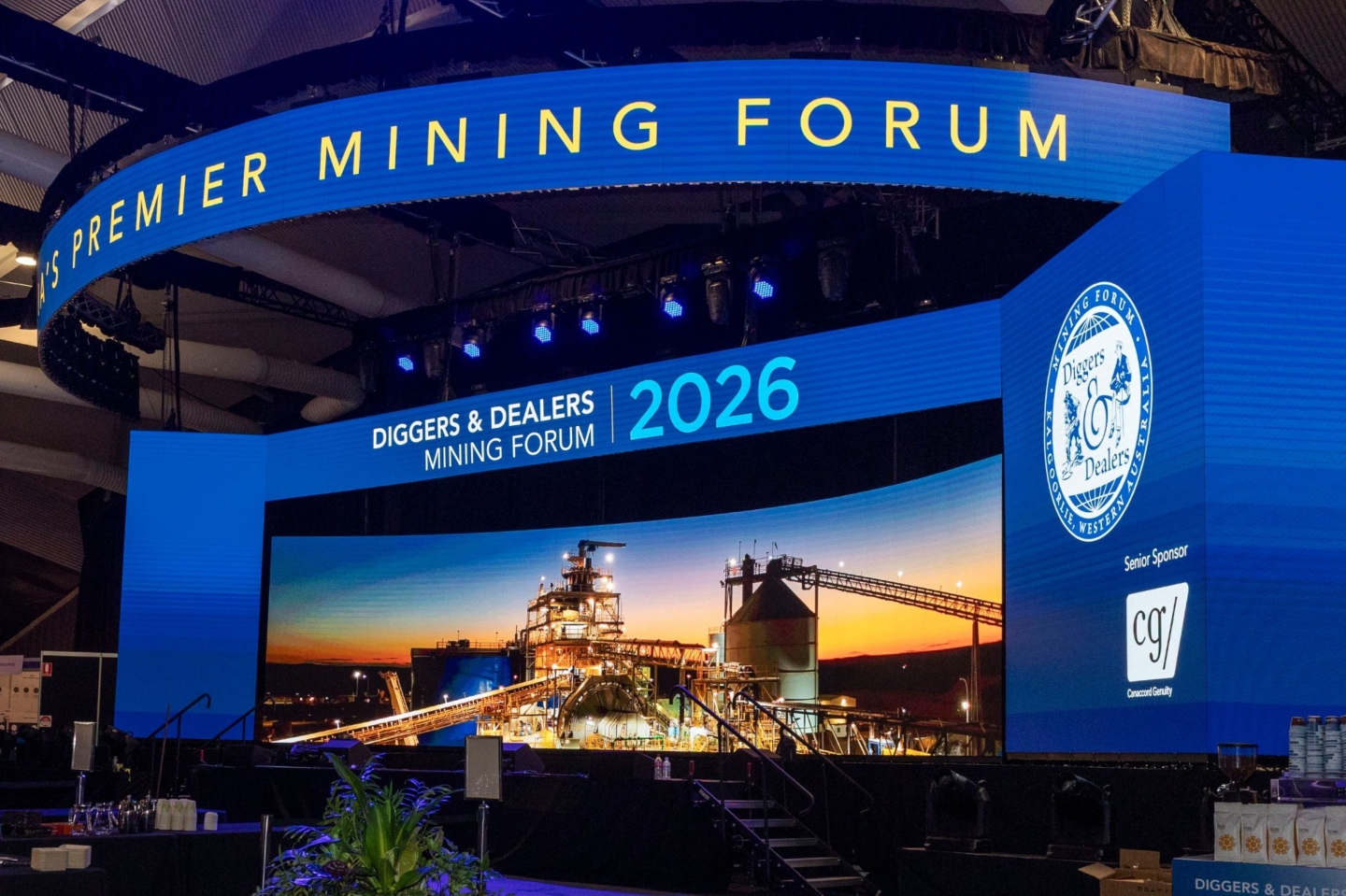
West African Resources has been crowned digger of the year while Greatland Resources took out best deal at the Kalgoorlie mining conference’s awards ceremony.

CVS Health on Wednesday blew past second-quarter earnings and revenue estimates and raised its 2026 guidance, as its insurance unit Aetna shows signs of recovery.
CVS, which operates the nation’s largest pharmacy chain, sees full-year adjusted profit coming in between $7.90 and $8.10 per share. That’s up from a previous guidance of $7.30 to $7.50 per share.
The company also expects revenue of at least $414 billion in 2026, up from its prior outlook of at least $405 billion.
In a release, CVS said the higher profit guidance reflects increases in its insurance and retail pharmacy segment, but noted that the company is maintaining a “cautious view” for the rest of the year amid high medical costs and potential challenges in the broader economy.
Shares of the healthcare giant rose 1% in premarket trading Wednesday.
All three of the healthcare giant’s business segments – insurance, pharmacy and health services —surpassed Wall Street’s revenue expectations. But Aetna’s results have been top of mind for investors, who have watched high medical costs in privately run Medicare plans batter several major health insurers for the last two years.
The results indicated continued progress in CVS’ broader turnaround plan, which has involved cutting $2 billion in costs, closing underperforming stores, shuffling leadership and reducing costs within Medicare Advantage plans. CVS’ report also adds to a solid second quarter for the broader health insurance sector.
Also on Wednesday, CVS announced a new collaboration with Eli Lilly that will make its obesity injection Zepbound and new weight loss pill Foundayo accessible to eligible patients on the CVS Health app. That offering, which will be available by early in the fourth quarter, will include both patients with insurance coverage and those paying out of pocket.
Here’s what CVS reported for the second quarter compared with what Wall Street was expecting, based on a survey of analysts by LSEG:
- Earnings per share: $2.58 adjusted vs. $1.85 expected
- Revenue: $106.10 billion vs. $100.11 billion expected
The company posted net income of $2.98 billion, or $2.31 per share, for the second quarter. That compares with net income of $1.02 billion, or 80 cents per share, for the same period a year ago.
Excluding certain items, such as restructuring charges and capital losses, adjusted earnings were $2.58 per share for the quarter.
CVS booked sales of $106.10 billion for the second quarter, up about 7% from the same period a year ago, as all three of its business segments showed growth.
Insurance unit improves
Insurers have grappled with higher-than-expected medical costs as more Medicare Advantage patients return to hospitals for procedures they delayed during the pandemic. Medical costs remain high, but Aetna and other insurers appear to be becoming better equipped to manage the trend, as many cut membership and benefits for patients and exit unprofitable markets.
Aetna’s medical benefit ratio — a measure of total medical expenses paid relative to premiums collected — decreased from the prior year to 87.4% from 89.9%. A lower ratio typically indicates that a company collected more in premiums than it paid out in benefits, resulting in higher profitability.
Analysts expected a ratio of 89.8%, according to StreetAccount.
The insurance business brought in $37.54 billion in revenue during the quarter, up around 3.5% from the second quarter of 2025. That came in higher than the $35.66 billion that analysts were expecting, according to StreetAccount.
In a release, CVS also said the year-over-year improvement in the unit was due to strength in its government plans and the lack of a so-called premium deficiency reserve, which was recorded in the same period in 2025. That refers to a liability that an insurer may need to cover if future premiums are not enough to pay for anticipated claims and expenses.
The unit’s medical membership of 26 million as of June 30 was about flat compared to March 31, CVS said.
CVS’ pharmacy and consumer wellness division posted $33.82 billion in sales for the second quarter, only slightly higher from the year-ago period. Analysts expected sales of $33.16 billion, StreetAccount estimates said.
That unit dispenses prescriptions in CVS’ more than 9,000 retail pharmacies and provides other services, such as vaccinations and diagnostic testing.
The company’s health services segment generated $51.8 billion in revenue for the quarter, up 11.5% from the same period a year earlier. That also topped Wall Street estimates of $47.78 billion, according to StreetAccount.
That unit includes the pharmacy benefits manager Caremark, which negotiates drug discounts with manufacturers on behalf of insurance plans, creates lists of medications, or formularies, that are covered by insurance, and reimburses pharmacies for prescriptions.

Tracxn Q1 FY27 presentation: data expansion accelerates, sales team doubles
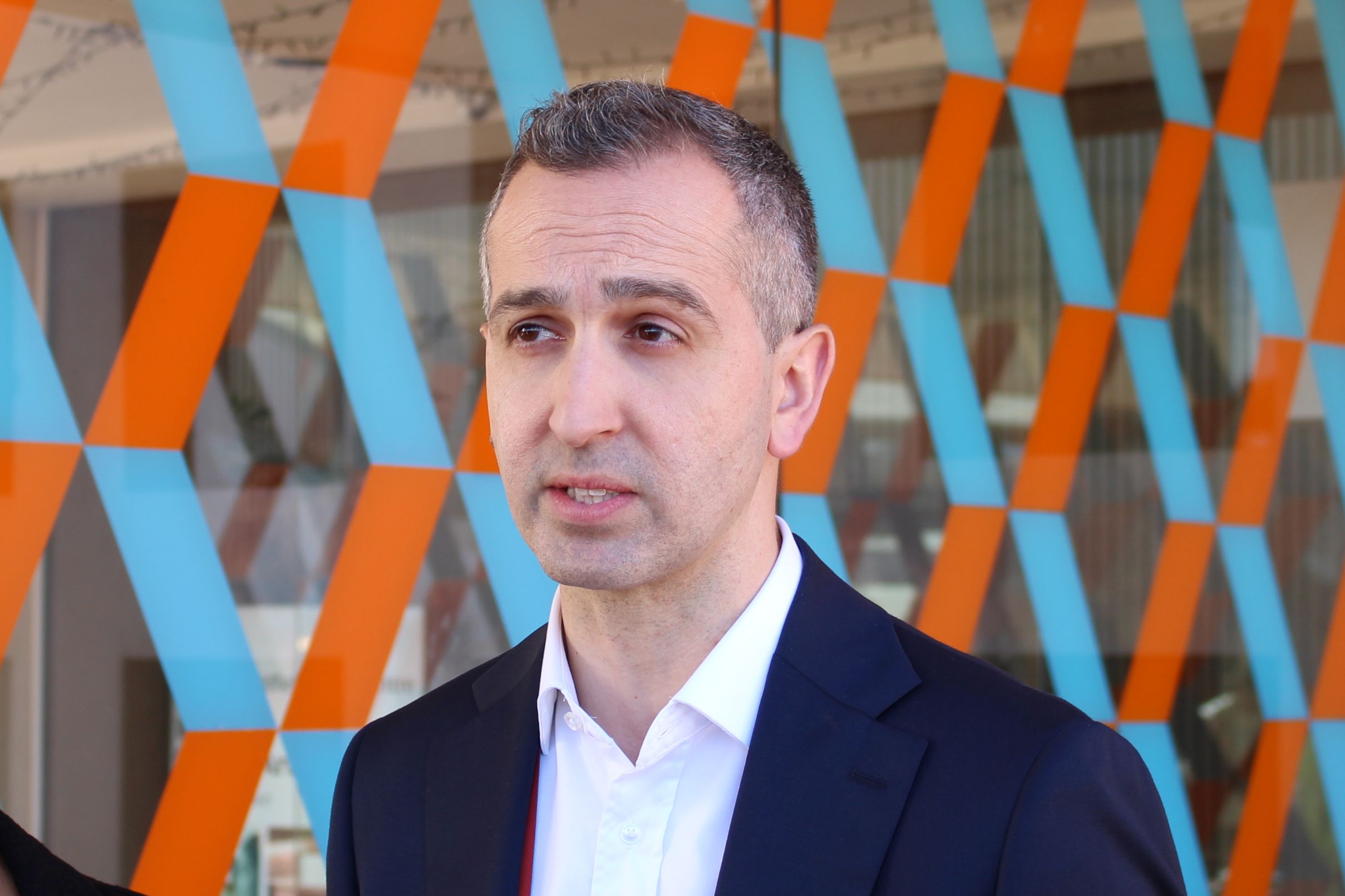
WA Mines Minister Daniel Pastorelli has insisted his government will hold its line on uranium exploration, while launching the latest round of exploration incentive funding.

Saudi-led group completes $55bn purchase of gaming giant EA

White House Weighs Extending Historic Jones Act Waiver to Lower Gas Prices
The 15 best comedy movies on Hulu

Renter of Home in Anne Heche Crash Denies Settlement With Son

No Jackpot Winner as $257 Million Prize Rolls Over to $269 Million Monday Draw

Weekend Open Thread: Staud – Corporette.com

Most Powerful Prayers for Financial Breakthrough with Psalms

The world’s financial system is entering its final days, mirroring 1923 Germany’s hyperinflation

FINAL WARNING to ALL Crypto Holders!! (I will delete this in 24 hours)
-

 Business7 days ago
Why Trees Belong on the Risk Register
-

 Fashion5 days ago
Weekend Open Thread: Wit & Wisdom
-

 Politics5 days ago
Meta enters AI-training agreement with far-right ‘propaganda rag’ Newsmax
-

 Politics7 days ago
Reform UK betrays West Mids residents by running from party pledges
-

 Politics3 days ago
Zack Polanski: an incitement to murder Nigel Farage?
-

 Crypto World4 days ago
MicroStrategy Post-Earnings CLARITY Act Push Could Add New Catalyst for Its Stock
-

 Crypto World4 days ago
XRP Ledger v3.3.0 brings five institutional features
-

 News Videos6 days ago
Bitcoin Enters the 3rd Stage of the Bear Market
-

 Politics6 days ago
Luke Littler’s dominance sparks GOAT debate
-

 Sports6 days ago
Seema Kaliramna Wins Discus Throw Bronze, Takes India’s CWG Medals Tally To 17
-

 Crypto World5 days ago
New York sues Kalshi over prediction market gambling
-

 Crypto World3 days ago
Crypto PAC spending tops $2M in Michigan House race
-

 Business5 days ago
Trump Announces Hamas Disarmament Agreement as Iran Strikes Kuwait Air Base and US Attacks Pause Overnight
-

 Tech3 days ago
ESET tracks rise in malicious AI skills and adaptable malware
-

 Business3 days ago
DTCR: Deleveraging And A Hedge Fund Collapse Point To A Possible AI Bottom
-
 Crypto World5 days ago
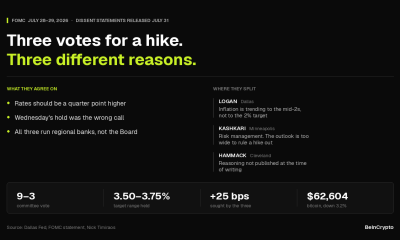
3 Fed Officials Just Explained Their Rate Hike Vote: Is Inflation Winning?
-

 Tech5 days ago
Gemini Spark can now use Chrome logins and saved passwords to run errands on your behalf
-

 Tech5 days ago
Building A Reproduction PlayStation Motherboard
-

 NewsBeat6 days ago
Four people die trying to cross Channel in small boats
-

 Sports4 days ago
France Cricket implodes: letters hidden in a drawer and a board at war
You must be logged in to post a comment Login