Business
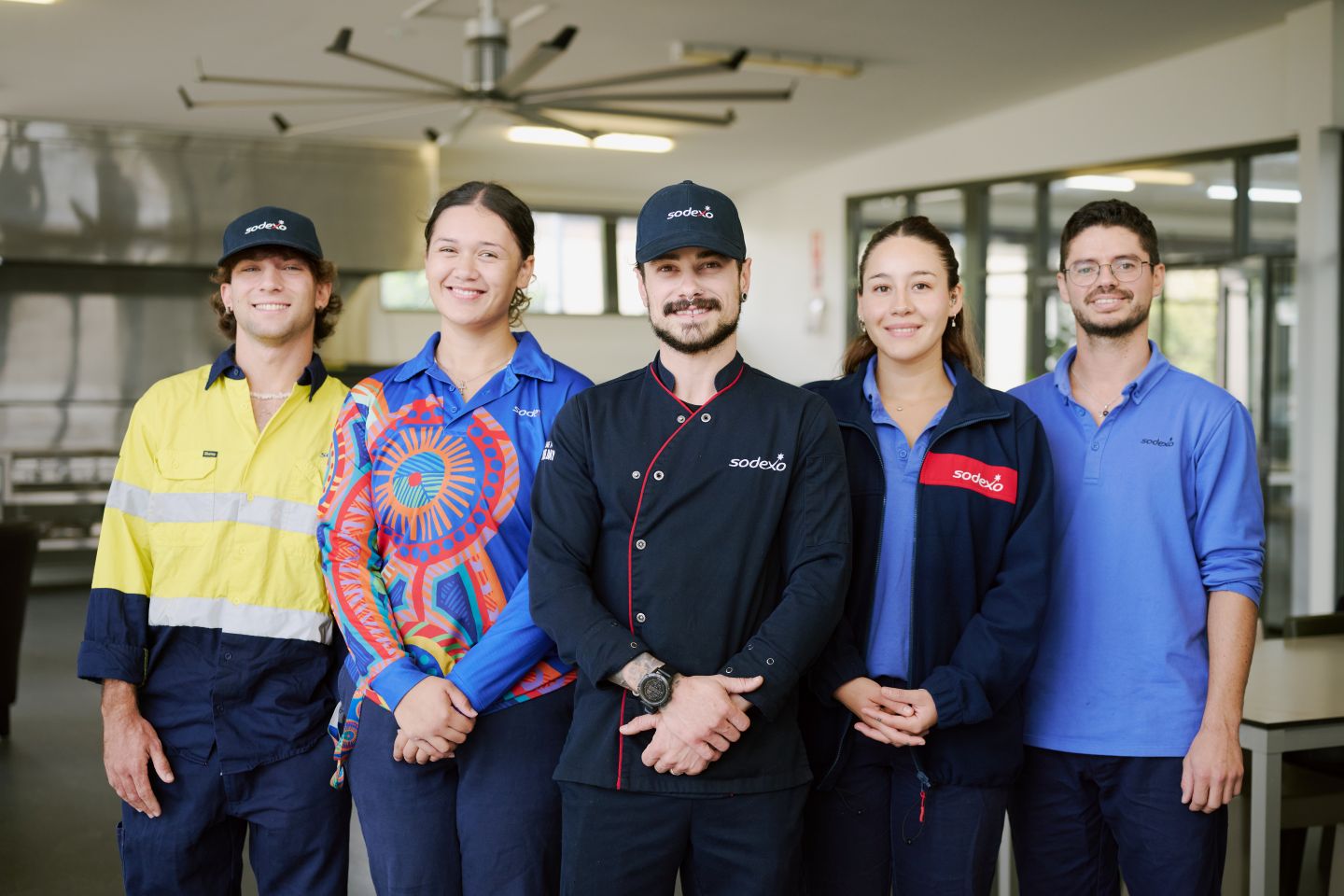
Sodexo books $100m Westgold contract
Business
How family offices are investing in the final frontier beyond SpaceX
As seen from Canaveral National Seashore, a SpaceX Falcon 9 rocket carrying 60 Starlink satellites launches from pad 39A at the Kennedy Space Center on October 6, 2020 in Cape Canaveral, Florida. This is the 13th batch of satellites placed into orbit by SpaceX as part of a constellation designed to provide broadband internet service around the globe. (Photo by Paul Hennessy/NurPhoto via Getty Images)
Nurphoto | Nurphoto | Getty Images
A version of this article first appeared in CNBC’s Inside Wealth newsletter with Robert Frank, a weekly guide to the high-net-worth investor and consumer. Sign up to receive future editions, straight to your inbox.
The investment firms of billionaires including ex-eBay President Jeff Skoll and AutoZone’s Pitt Hyde are set to reap rewards from SpaceX’s IPO this Friday.
However, while SpaceX’s profile eclipses that of nearly every other private space company, family office investors told CNBC that they see other opportunities in the sector even for companies without Elon Musk‘s name attached. Moreover, they said they view space-related startups as opportunities to invest in infrastructure and defense rather than flashy bets on space exploration.
Gary Lauder, a cosmetics heir turned venture capitalist, has invested in SpaceX through a special purpose vehicle and two venture funds. He told CNBC he was attracted to the strength of its Starlink satellite technology, not the prospect of space tourism.
Much of Lauder’s early investing was in telecommunications, and he took a seminar in satellite communications in the early ’90s.
“I never dreamed of being an astronaut,” he said. “It’s just an important mode of communication.”
Jason Blanck, an investor who started his namesake family office in 2024, said he is interested in the picks and shovels of space, like mission-critical hardware and data networks.
“I think the public markets are focused heavily on debating rocket launch cadences, costs around flight development, but from my perspective and where I sit, managing permanent family capital, the real narrative has actually quite evolved,” he said.
Robin Lauber’s Infinitas Capital invested in SpaceX in early 2025 through a secondary offering. He cited Musk’s track record and the success of Starlink as reasons to put money in. Lauber also noted the valuation was “reasonable” compared with the more than $1.75 trillion expected now.
He told CNBC that Infinitas would have sold some shares before the initial public offering had it found a willing buyer at the right discounted valuation. Lauber is open to selling locked-up shares at a discount to recover the initial cost of investment and seeing how the other shares fare.
Looking forward, Lauber is weighing more investments in European space companies such as Isar Aerospace, a German launch service provider. He is also considering participating in a new fund by Alpine Space Ventures, which counts a SpaceX alum as a founding partner.
“European sovereignty is a huge topic everywhere,” he said.
Investing in space-related firms was unpopular not so long ago, according to Jon Kutler of Admiralty Partners. He spent 10 years in the U.S. Navy before becoming an investment banker specializing in aerospace and defense in the early 1980s. He left Wasserstein Perella & Co. in 1992 to start his own investment firm in order to focus more on the sector to the chagrin of his then-boss, Bruce Wasserstein.
“”He told me I was an idiot because the Cold War was over and there was going to be no more spending in the defense industry,” Kutler said. “People had extrapolated that to be the end of the defense industry, but if you look over the history of mankind, we’re just not a very peaceful species. To me, it seemed ludicrous to declare an end to defense spending, and I was willing to bet against that with my own capital and my own time.”
Kutler sold that investment firm in 2002 to focus on his family office, Admiralty Partners. His investments include Firefly Aerospace, a rocket maker with clients including Lockheed Martin and the U.S. Space Force.
Investing in aerospace firms pioneering new technologies requires patience, Kutler said. This is where family offices have an edge on traditional private equity firms since they aren’t under pressure to realize returns on a fixed timeline.
While the prospect of traveling to Mars is exciting, space exploration companies face a harder path to financial success because federal government spending is less consistent, he said.
“Defense spending is going to be a recurring theme, It will have ups and downs based upon administration priorities, but there’s always going to be an end market there,” he said.
Kutler said the enthusiasm around the SpaceX IPO belies considerable risks to investing in aerospace, such as swings in federal spending. He added that he is concerned federal cuts to research funding will endanger the pipeline of future startups.
“There is a temptation because of what’s going on right now to think that commercial space companies are the answer to everything,” Kutler said. “Perhaps over time the commercial industry may able to do it cheaper, but if you amortize everything out, it takes a long time for that to happen, and these early investments by the government were key to making these things happen.”
Business
Northern Global Tactical Asset Allocation Fund Q1 2026 Commentary
Northern Trust Asset Management is a global investment manager that helps investors navigate changing market environments in efforts to realize their long-term objectives.
Entrusted with $1.2 trillion in assets under management as of March 31, 2024, we understand that investing ultimately serves a greater purpose and believe investors should be compensated for the risks they take — in all market environments and any investment strategy. That’s why we combine robust capital markets research, expert portfolio construction and comprehensive risk management in an effort to craft innovative and efficient solutions that seek to deliver targeted investment outcomes.
As engaged contributors to our communities, we consider it a great privilege to serve our investors and our communities with integrity, respect and transparency.
Northern Trust Asset Management is composed of Northern Trust Investments, Inc., Northern Trust Global Investments Limited, Northern Trust Fund Managers (Ireland) Limited, Northern Trust Global Investments Japan, K.K., NT Global Advisors, Inc., 50 South Capital Advisors, LLC, Northern Trust Asset Management Australia Pty Ltd, and investment personnel of The Northern Trust Company of Hong Kong Limited and The Northern Trust Company. Note: This account is not managed or monitored by Northern Trust Asset Management, and any messages sent via Seeking Alpha will not receive a response. For inquiries or communication, please use Northern Trust Asset Management’s official channels.
Business
US military confirms attack on third Indian-crewed tanker off Gulf of Oman
“U.S. Central Command (CENTCOM) acted against Guinea-Bissau flagged M/T Jalveer as it attempted to transport oil from Iran through the Gulf of Oman. A U.S. aircraft fired two Hellfire missiles into the ship’s engine room after the crew repeatedly failed to comply with directions from U.S. forces,” U.S. Central Command said in a statement.
CENTCOM cliamed that forces have disabled nine non-compliant vessels, redirected 135 ships that complied, and allowed 42 vessels supporting humanitarian aid to pass since initiating the blockade on April 13.
Also read: MEA flags growing threat to shipping as MT Jalveer crew evacuation begins
India expresses concerns on continuing attacks on shipping
India’s Ministry of External Affairs (MEA) expressed concern over continuing attacks on shipping in West Asia, calling them “deeply worrisome”, as evacuation of Indian crew members from the vessel MT Jalveer commenced following a maritime security incident near Oman.
“There have been several incidents involving Indian seafarers in West Asia in the last few days. We attach high importance to the welfare and well-being of our seafarers’ community. We need not re-emphasise this point…The continuing incidents of attacks on shipping in the region are deeply worrisome and a direct result of the ongoing conflict in the region. These attacks must cease and end. We also call for dialogue and diplomacy so that we can have an early return to peace and stability in the region,” MEA spokesperson Randhir Jaiswal said.
Jaiswal’s comments comments came after the Guinea-Bissau-flagged bitumen tanker, MT Jalveer, was involved in a maritime security incident in the vicinity of Shinas port in Oman.
According to the Ministry of Ports, Shipping and Waterways, the vessel had 20 Indian seafarers on board and all of them are safe. No casualties or injuries have been reported so far.
Additional Secretary in the ministry, Mukesh Mangal, said evacuation of the crew to Shinas port had begun.
“On 11th June, a Guinea-Bissau-flagged vessel, a bitumen tanker MT Jalveer, was reportedly involved in a maritime security incident in the vicinity of Shinas port, Oman. The vessel has 20 Indian seafarers on board, and all of them are reported to be safe. No casualties or injuries have been reported. As per the latest information, the evacuation of crew members to Shinas port has commenced. Six more are to be evacuated. The Ministry is closely monitoring the situation and is in continuous coordination with the Ministry of External Affairs, Indian Missions abroad and the Indian Navy and other relevant stakeholders,” Mangal said.
Business
Smucker finally getting its ‘arms around’ Sweet Baked Snacks business

Management’s focus is transitioning from stabilization to growth.
Business
Apple Unveils Functional Siri AI at WWDC 2026 Emphasizing Privacy and Trust
CUPERTINO, Calif. — Apple took a measured step forward in artificial intelligence at its Worldwide Developers Conference on Monday, unveiling a more capable version of Siri that prioritizes on-device processing and user privacy rather than competing directly on raw intelligence with rivals like OpenAI and Google.
The update, part of the broader iOS 27, iPadOS 27 and macOS 27 releases, marks the third major attempt by Apple to revitalize its voice assistant. Early hands-on testing suggests the new Siri can handle multi-turn conversations, cross-reference personal data such as emails and calendars, and execute practical tasks more reliably than previous versions, though it still trails competitors in some advanced capabilities.
Siri AI Delivers on Core Promises
During demonstrations at Apple Park, the updated Siri successfully parsed calendar events from screenshots, diagnosed plant issues from photos, and built reminder lists and calendar entries from natural language prompts. It also consistently read on-screen content when asked to add events, showing improved context awareness.
The Verge, granted hands-on access at Apple Park, described the experience as functional and reliable. “AI Siri is for real this time” and “so far it actually works,” the publication reported after testing features like multi-turn dialogue and proactive suggestions based on personal data.
Apple executives positioned the new Siri as the most trustworthy assistant rather than the most powerful. The system builds a local index of user data from email and messages stored on-device. When cloud processing is required, only relevant fragments are sent to Apple’s Private Cloud Compute servers, which the company says neither retain data nor allow Apple access after the session.
This privacy-first architecture stands in contrast to some competitors that request standing access to user accounts like Gmail or Google Calendar. Apple’s approach aims to give users confidence that their personal information remains protected while still delivering useful assistance.
Technical Foundation and Limitations
The new Siri relies in part on models from Google’s Gemini family for certain capabilities, leading some observers to characterize it as “Gemini, circa 2025.” While not a direct quote from Apple, the integration reflects the company’s strategy of leveraging proven technology while maintaining control over the user experience and data handling.
Current limitations include English-only support at launch, unavailability in the European Union and China due to regulatory reasons, and daily usage caps on server-dependent features. Expanded access requires an iCloud+ subscription in some cases. These constraints narrow the initial audience but align with Apple’s cautious rollout philosophy.
Developer testing began this week, with a public beta expected next month and full consumer release in the fall alongside new hardware. The staged approach is designed to identify and resolve issues before widespread deployment.
Broader Platform Updates
The iOS 27 family brings numerous refinements across Apple’s ecosystem. Performance improvements include faster app launches, enhanced AirDrop transfers and better responsiveness on older devices thanks to an optimized CPU scheduler. Search has been rebuilt with a new index for more relevant Spotlight results.
Photos gains the ability to share iCloud Shared Albums with Android and Windows users. Health receives advanced cycle tracking, while AirPods users will benefit from custom EQ settings. Apple Maps features richer Flyover imagery, and numerous smaller enhancements span Shortcuts, Freeform, Messages and other apps.
The updates extend support back to the iPhone 11 and second-generation iPhone SE, ensuring broad compatibility. This commitment to older hardware has become a hallmark of Apple’s software strategy, extending device lifespans and reducing electronic waste.

Tim Cook’s Legacy in Focus
The WWDC 2026 keynote, reportedly one of Tim Cook’s final ones according to some observers though not officially confirmed, highlighted the tension between Apple’s traditional strengths in privacy and integration and the demands of the AI era.

Cook’s tenure has emphasized execution, supply chain mastery and ecosystem coherence. The AI push tests whether Apple can compete at the frontier of software intelligence rather than simply iterating on proven concepts. The measured approach to Siri AI — focusing on reliability and privacy rather than claiming industry leadership — reflects a philosophy of controlled innovation.
Panel discussions at Apple Park framed the event around both the product launch and its implications for Cook’s legacy. Observers noted Apple avoided buzzwords like “agentic AI” despite their prevalence elsewhere in the industry, choosing instead to demonstrate practical, trustworthy features.
Competitive Landscape
Apple’s strategy differs markedly from rivals. While Google and OpenAI emphasize cutting-edge capabilities and broad access, Apple bets on seamless integration within its hardware-software ecosystem and strong privacy protections. The company does not need to outpace competitors feature-for-feature if users prefer its contained, reliable approach.
Early indications suggest the new Siri performs well for everyday tasks within the Apple ecosystem. Whether this proves sufficient to shift user behavior away from more powerful but less private alternatives will be determined in the coming months after wider release.
User Experience and Privacy Debate
For users already invested in Apple’s ecosystem, the improvements could represent meaningful daily enhancements. Cross-device continuity, on-device processing and careful data handling offer practical benefits that many may value over raw intelligence.
Privacy advocates have welcomed Apple’s emphasis on local processing and limited data sharing. However, independent verification of the company’s Private Cloud Compute claims remains limited, and some experts urge continued scrutiny of these assurances.
The debate reflects broader tensions in the AI industry between innovation speed and responsible development. Apple’s more deliberate pace may appeal to users concerned about data security and unintended consequences of rapidly advancing AI systems.
Market and Industry Implications
The updates position Apple to maintain its premium positioning while addressing long-standing criticisms of Siri. Success could strengthen the company’s services revenue and ecosystem lock-in, key drivers of its financial performance.
Developers will gain new tools and APIs to build experiences that leverage the improved Siri capabilities. The broad platform support across iPhone, iPad, Mac, Watch and other devices creates opportunities for innovative applications that span multiple form factors.
As the public beta approaches and fall release nears, real-world usage data will provide the ultimate test of Apple’s AI ambitions. Early developer feedback and hands-on impressions suggest meaningful progress, though the competitive gap with more advanced systems remains.
Apple’s approach at WWDC 2026 reflects confidence in its privacy and integration strengths while acknowledging the need to deliver functional AI experiences. The new Siri represents progress on previous attempts, focusing on reliability and user trust rather than frontier capabilities.
For millions of Apple users, the updates promise more helpful and private digital assistance integrated across their devices. The coming months will reveal whether this vision resonates strongly enough to shift behavior and solidify Apple’s position in the evolving AI landscape.
The measured strategy aligns with Apple’s long-standing philosophy of delivering polished, user-friendly experiences. As Siri AI moves from keynote demonstrations to everyday use, its real-world impact will shape perceptions of both the product and the company’s direction under Tim Cook’s leadership.
Business
Australia Fuel Crisis Eases Slightly but Long-Term Risks Loom as Imports Arrive
SYDNEY — Australia’s fuel supply situation has shown modest improvement in recent weeks with new shipments secured and retail stock-outs declining, but experts warn the crisis triggered by Middle East conflict is far from over, with potential shortages and higher prices persisting into the second half of 2026.
The government has worked aggressively to diversify import sources and release reserves, yet ongoing disruptions in global oil flows continue to pressure diesel and jet fuel availability. As of early June, national fuel stocks have stabilized above pre-crisis averages in major cities, but regional areas and certain sectors remain vulnerable.
Current Supply Status
Recent data from the Prime Minister and Cabinet’s Fuel Supply Taskforce shows retail availability improving. As of June 3, diesel shortages dropped notably, with stocks in the five largest cities sitting 35% below peak pre-conflict levels but on an upward trend for the fourth consecutive reporting period. Petrol availability has followed a similar path.
The government has secured multiple cargoes, including diesel and jet fuel shipments from South Korea, Brunei, Malaysia and other partners. Energy Minister Chris Bowen has confirmed dozens of vessels en route, with contractual commitments for billions of litres through the coming months. “We have fuel secured into August well through June and July,” Bowen stated in recent briefings.
However, the situation remains fragile. The closure of the Strait of Hormuz and broader conflict impacts have reduced global supply, forcing Australia to rely more heavily on alternative routes and suppliers. Jet fuel stocks, critical for aviation, are particularly monitored, with airlines like Qantas and Virgin Australia adjusting schedules to manage availability.
Government Response and Measures
The Albanese government has implemented several measures to mitigate the crisis. A temporary fuel excise cut was introduced to ease cost-of-living pressures, though it is scheduled to expire at the end of June. Discussions about extending the relief or introducing new support are ongoing as the budget process advances.
Emergency reserves have been released, and the government has lowered fuel quality standards temporarily to increase available supply. Plans for potential rationing in a worst-case scenario have been prepared, including daily purchase limits, though officials emphasize these remain contingency options.
Transport Minister Catherine King has highlighted diplomatic efforts to secure additional supplies from Asian refineries. “We continue to be well positioned,” she said, while acknowledging longer-term risks if disruptions persist.
Impact on Economy and Daily Life
The fuel crisis has ripple effects across multiple sectors. Trucking and logistics operators face higher costs, threatening food supply chains and delivery timelines. Up to 70% of truck drivers could face viability challenges within six months if diesel shortages worsen, according to industry warnings.
Aviation has been affected, with carriers reducing capacity and routes. Farmers are grappling with fertiliser shortages linked to energy costs, potentially impacting food production. Households continue feeling the pinch at the pump, with unleaded petrol prices elevated despite some moderation.
Retail stock-outs have decreased but remain a concern in rural and regional areas. As of early June, around 55 stations nationwide reported no petrol of any grade, with diesel shortages slightly higher.
Expert Warnings and Long-Term Outlook
Energy experts caution that the worst may still be ahead. John Blackburn from the Australian Energy Institute warned that global emergency stockpiles coordinated by the International Energy Agency are expected to run low by July or August. “We’re going to get to a stage globally by July where all those spare emergency stocks are gone,” he said.
The conflict’s duration and resolution will determine the crisis depth. Even if shipping through key routes resumes, recovery could take time. Analysts forecast sustained higher prices and potential rationing discussions if imports lag.
The government maintains the situation is “manageable but serious,” with stocks currently better than at the crisis outset in some categories. However, reliance on imports and vulnerability to global shocks highlight the need for stronger domestic resilience.
Political and Public Response
The fuel crisis has become a political flashpoint, with opposition parties criticizing the government’s preparedness. One Nation has seen polling gains amid voter frustration over cost-of-living pressures tied to energy costs.
Public sentiment remains anxious, with many Australians adjusting travel plans and seeking ways to reduce fuel consumption. The government has urged calm and advised against panic buying, emphasizing secured supplies for the immediate future.
Path Forward and Recommendations
Authorities continue monitoring the situation daily and urge the public to report any unusual activity or information. Motorists are encouraged to fuel up responsibly and plan trips efficiently.
Longer-term solutions under discussion include diversifying energy sources, investing in domestic refining capacity and advancing renewable alternatives to reduce oil dependence. The crisis has accelerated conversations around energy security and strategic reserves.
For now, the focus remains on managing current supplies and mitigating immediate impacts. As winter approaches and seasonal demand patterns shift, careful management will be essential to avoid further disruptions.
The Australian fuel crisis, while showing signs of stabilization through proactive government action and new imports, underscores the country’s vulnerability to global energy shocks. With winter driving needs and potential further international developments, vigilance remains high as the nation navigates this challenging period.
Experts and officials agree that while the immediate outlook has improved, sustained global stability is required for full recovery. Australians are advised to stay informed through official channels and prepare responsibly for any changes in fuel availability or pricing in the months ahead.
The government’s ongoing diplomatic and logistical efforts aim to ensure supply continuity, but the situation serves as a reminder of the importance of energy independence and diversified sources in an increasingly uncertain world.
Business
Emaar Properties plans new Dubai district worth 200b dirhams

Emaar Properties plans new Dubai district worth 200b dirhams
Business
Laser Photonics completes anti-drone system prototype

Laser Photonics completes anti-drone system prototype
Business
Atossa Therapeutics stock tumbles on $4.5M stock offering

Atossa Therapeutics stock tumbles on $4.5M stock offering
Business
SpaceX Just Got Its First Analyst Ratings
-
Fashion6 days agoWeekend Open Thread: Evereve – Corporette.com
-
Crypto World6 days ago
Jensen Huang Approves Samsung, SK Hynix, and Micron for NVIDIA (NVDA) HBM4 Memory Supply
-
Entertainment4 days agoThe Best Mystery Series of All Time Is Surging on Streaming 30 Years After It Ended
-
Crypto World3 days agoAnatomy of the June crypto crash: Fed, Iran, Saylor
-
NewsBeat4 days agoAlexander Zverev wins the French Open to finally earn a 1st Grand Slam title
-
Tech5 days agoSuspicious Polyfill login prompts pop up on Toshiba, Muji websites
-
Crypto World5 days agoSenator Cynthia Lummis Calls CLARITY Act the Most Consequential Financial Legislation of This Generation
-
Tech4 days agoMicrosoft unveils seven homegrown AI models in new bid for ‘long term self-sufficiency’
-
Tech6 days agoMicrosoft launches MXC, an OS-level sandbox for AI agents, with OpenAI and Nvidia already on board
-
Business6 days ago(VIDEO) Justin Bieber Delivers Surprise Happy Birthday Serenade to Diners at Los Angeles Mexican Restaurant
-
Business4 days agoThe Pain Points Taking a Fragile Tech Rally Down a Notch
-
Business3 days agoHigh Stakes for Wembanyama as New York Pushes for 3-0 Lead
-
Crypto World3 days ago
Eli Lilly (LLY) Stock Surges 4% Following Breakthrough Sleep Apnea Trial Results
-
Tech5 days agoVon der Leyen’s AI envoy pick draws conflict-of-interest fire
-
Tech6 days agoMeta steals a tactic from Tesla and builds data centers in tents
-
Crypto World6 days ago
LBank Surpasses 25 Million Users Worldwide as AFA Partnership Continues to Drive Global Growth
-
Tech5 days agoHackers now exploit SolarWinds Serv-U flaw to crash servers
-
Crypto World4 days agoTrump’s AI Ownership Plan Could Benefit Anthropic at OpenAI’s Expense
-
NewsBeat4 days ago
Alexander Zverev conquers demons and outlasts Flavio Cobolli to win French Open for first major title
-
Sports2 days agoBangladesh beat Australia after 20 years in ODIs, register only their second win over six-time world champions | Cricket News

You must be logged in to post a comment Login