
Business
South32 cuts Perth office jobs



At the same time, Japan’s traditional markets for expansion have become increasingly less attractive, he says.
“Investment into China has fallen sharply amid geopolitical tensions and changing economic dynamics, the US market is more challenging because of tariffs and domestic competition, and the market size of other Southeast Asian economies is limited.”
Against this backdrop, India has become a natural target market for Japanese companies to drive long-term business growth.
Economic ties between the countries gathered pace at a government-to-government level when they signed an agreement to liberalise trade nearly a decade-and-a-half ago.
After Prime Minister Narendra Modi came to power in 2014, he elevated the relationship to a “special strategic and global partnership”, setting a target of doubling the number of Japanese companies in India and launching marquee projects like India’s first bullet train between Mumbai and Ahmedabad, built using Japanese Shinkansen technology.
But now, it is Japanese private firms that are driving business expansion in this latest investment up-cycle.
At a landmark summit in July held during Japanese Prime Minister Sanae Takaichi’s first official visit to Delhi, Japanese companies announced $12.5bn in investments through some 120 agreements in sectors ranging from semiconductors to green energy. And Goyal has said , externalJapan could prematurely meet its target of investing 10 trillion yen in the country.
Beyond the large corporations, several Japanese small and medium-sized companies (SMEs) are also actively looking at tapping the Indian market, says Jindal.
Hamamatsu City – where companies like Suzuki, Honda and Yamaha were founded and which has one of the highest concentrations of manufacturing SMEs in Japan – recently set up the Hamamatsu India Committee to explore how the city’s small companies could expand into India.
The rising interest in India has accompanied a fall in net Japanese investment in China which, as Toshiro Nishizaewa of the University of Tokyo wrote recently, external, is a reflection of “Japanese firms’ autonomous market diversification strategies – a commercially driven reallocation of capital rather than a policymaker-led geopolitical shift from China to India”.
But Japanese firms aren’t abandoning China en masse. What they are doing is “reducing concentration risk after several years of supply chain disruptions and geopolitical tensions”, Shruti Pandalai, India Chair at the Sydney-based Lowy Institute think tank, told the BBC.
India acts as a hedge against China-related risks, but there is also a growing overlap between Tokyo’s economic security priorities and Delhi’s manufacturing ambitions, which has strengthened the relationship despite significant political turnover in Tokyo, she says.
“With each successive government the targets have risen rather than fallen. That suggests the relationship has moved beyond leader-level diplomacy and become embedded in bureaucratic, corporate and strategic planning on both sides.”

Synopsys executive chair Aart de Geus sells $11.1m in stock

Mpm Bioventures 2014 L.P. sells $615,777 of Entrada Therapeutics stock

Solidion appoints three independent directors to board

UK retailers raise prices by most since 2024, BRC data shows
Business
JP Morgan traders back down bullishness on US stocks after Fed chair Warsh’s Jackson Hole speech

Traders led by Andrew Tyler, head of US market intelligence, moved away from their bullish view ahead of the Fed’s Sept. 16 policy decision, citing uncertainty over the interest-rate outlook.
Despite near-term risks, JPMorgan expects the broader market backdrop to remain supportive, helped by economic data and corporate earnings.
“We are moving to a tactically cautious / neutral view, which is to say that equity-market fundamentals remain strong, but that near-term variables are likely to cause markets to chop sideways,” Tyler wrote.
The US 10-year Treasury yield rose above 4.75% on Monday for the first time since January 2025. Swaps now imply nearly a 70% probability of a quarter-point Fed rate hike next month.

Tyler cited rate uncertainty, seasonal weakness and a potential unwind in high-flying AI stocks as key near-term risks, while noting that overall equity positioning remains largely neutral.
September is historically the weakest month for US stocks, adding to investor concerns over the sustainability of the AI rally and persistent inflation.The August jobs report due Friday will be important, while consumer-price data due Sept. 11 could have greater significance for the Fed’s decision.
Tyler said a recession is currently unlikely over the next few quarters, but added that the Fed’s Sept. 16 meeting is a “live meeting” given the latest inflation concerns.
“Equity bull markets tend to end with either a hiking cycle or a recession,” Tyler said. “Currently, a recession is highly unlikely to manifest over the next few quarters,”

Hyper Bit completes $1.49M private placement for mining rigs
Business
Bessent calls on global financial leaders to refocus on driving ‘stronger and more durable growth’
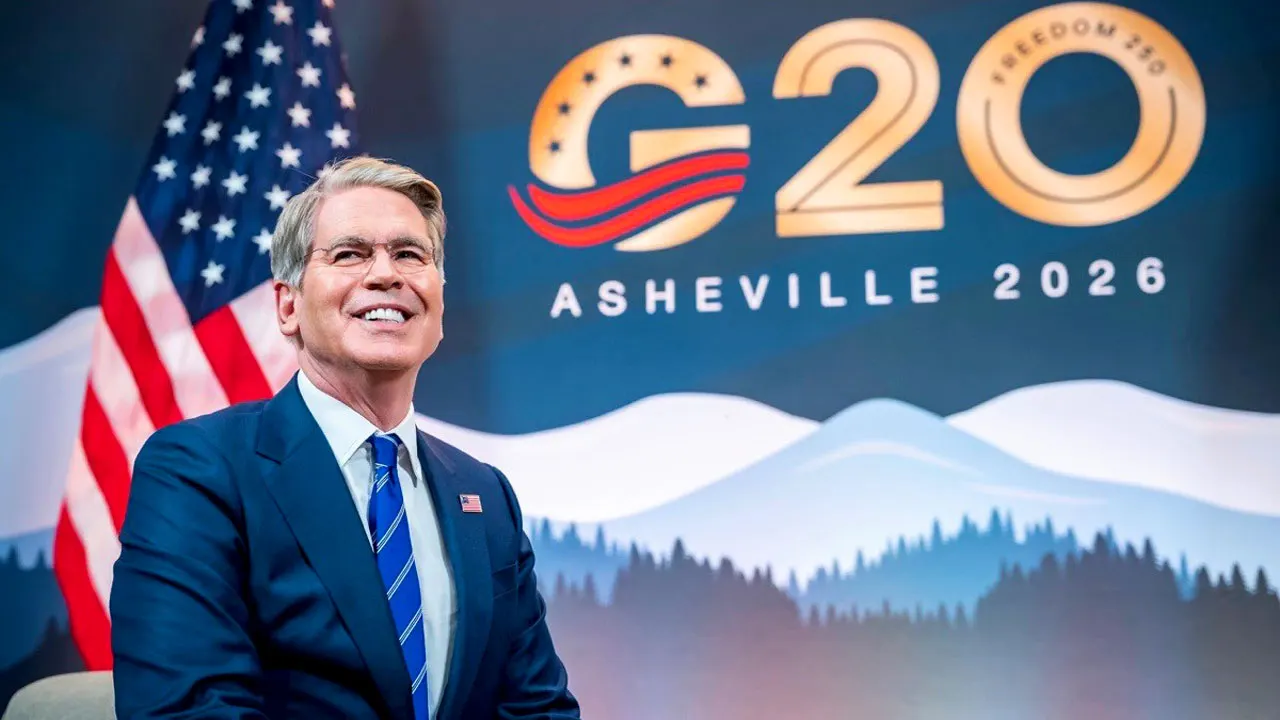
White House Deputy Press Secretary Kush Desai previews the G20 summit in Asheville, N.C., U.S. sanctions on Iran, public opinion regarding data centers and White House Press Secretary Karoline Leavitt’s best moments at the podium.
ASHEVILLE, N.C. – Treasury Secretary Scott Bessent delivered a firm call to action to global financial leaders in his opening remarks at the G20 Finance Track meetings on Monday, urging the group to refocus on driving “stronger and more durable growth” by dismantling government-imposed economic barriers.
Speaking at the gathering of finance ministers and central bank governors, Bessent framed the U.S. presidency of the G20 around a “back-to-basics” approach to economic policy, arguing that global growth has underperformed for far too long.
“Many forces can inhibit economic growth,” Bessent said in his opening remarks. “But policy failures of our own making must no longer be one of them.”
WHAT WARSH’S JACKSON HOLE SPEECH SIGNALS ABOUT WHERE INTEREST RATES ARE HEADED
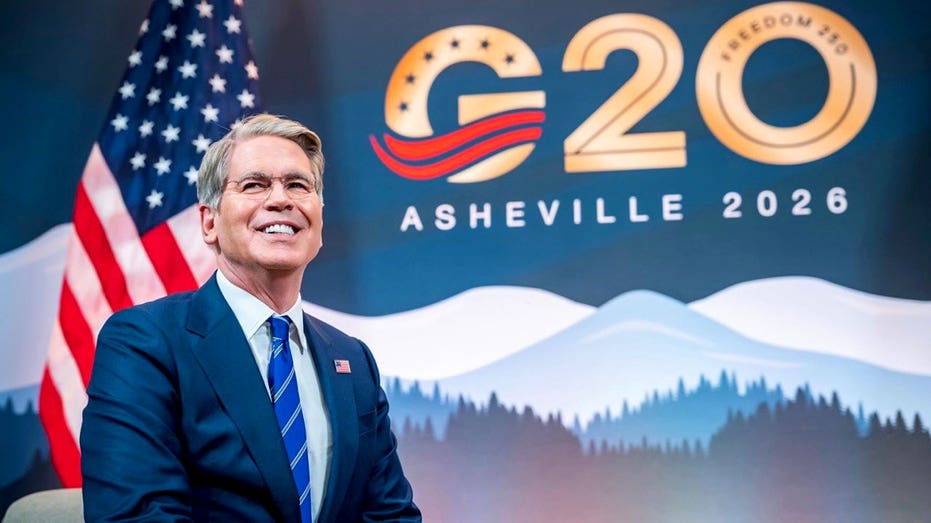
Treasury Secretary Scott Bessent at the G20 Finance Track meetings in Asheville, North Carolina. (Department of Treasury)
Bessent outlined a comprehensive list of drag factors identified by the G20 finance track that hamper global expansion. Among the key bottlenecks named were excessive regulatory burdens, poorly designed tax systems, internal market fragmentation, lagging public and private investment, and persistent gaps in workforce mobility.
“I think we’re already seeing a lot of these leading indicators that we’ve been talking about, for instance, robust factory construction growth. In order to have factory jobs, you need factories to be constructed first,” White House senior deputy press secretary Kush Desai told FOX Business, regarding the U.S. economy. “And so far, this president has added tens of thousands of factory construction jobs.”
BESSENT SAYS TREASURY AUCTIONS WILL CONTINUE AS USUAL DESPITE EXPANDED BUYBACK PROGRAM
To counter these challenges, Bessent presented the Trump administration’s domestic policy model as a blueprint for foreign counterparts. Highlighting what he termed a “great regulatory reset,” Bessent pointed to aggressive deregulatory measures aimed at stimulating investment and boosting wages. He noted that federal agencies drastically surpassed the administration’s initial goal of eliminating 10 existing regulations for every new one issued, achieving a 129-to-1 reduction ratio over the past year.
International Monetary Fund Managing Director Kristalina Georgieva used the U.S. model as an example of the right policy to attract business. She told FOX Business at the Federal Reserve’s Jackson Hole Symposium that “You realize that here, 2.5% a year. You go to Europe, it is zero. You go to Japan, half a percentage point. Because of this entrepreneurial environment and the commitment to eliminate red tape, so businesses can flourish.”

International Monetary Fund Managing Director Kristalina Georgieva used the U.S. model as an example of the right policy to attract business. (Wang Haizhou/Xinhua via Getty Images)
U.S. Pitch to International Partners
Bessent pitched the U.S. as the premier global destination for capital, citing historic tax relief for working families and energy independence as primary drivers for the next era of economic expansion.
TREASURY YIELDS HIT MULTI-DECADE HIGHS AMID SURGING NATIONAL DEBT
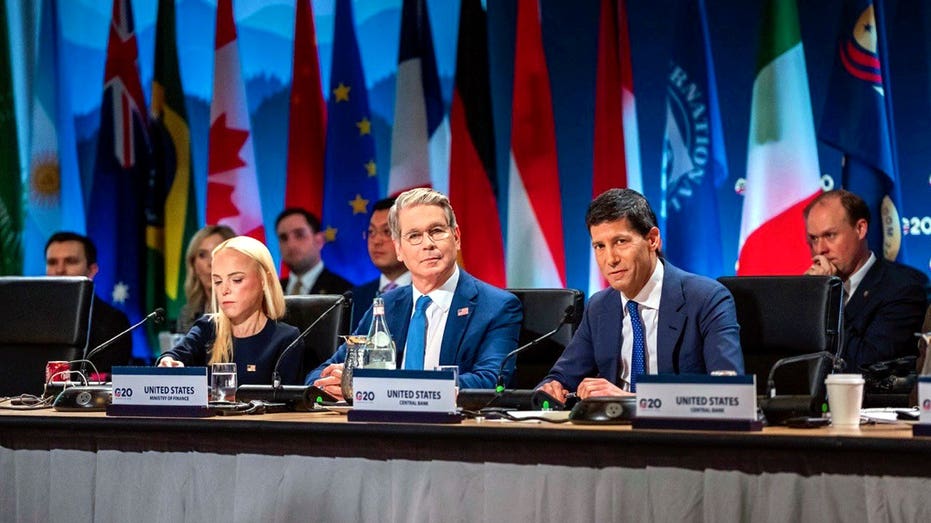
Treasury Secretary Scott Bessent at the G20 Finance Track meetings in Asheville, North Carolina. (Department of Treasury)
He also commended international partners for pursuing ambitious reform programs of their own to engage the private sector and spur market activity, welcoming collaborative feedback as discussions continue over the two-day summit.
GET FOX BUSINESS ON THE GO BY CLICKING HERE
The Asheville meetings mark a critical milestone in the U.S. host year for the G20, setting the stage for the Leaders’ Summit in Florida later this year. Discussions will continue through Tuesday, focusing on structural reform, global financial stability and private sector investment.

BlackSky CFO Henry Dubois sells $95,120 in company stock
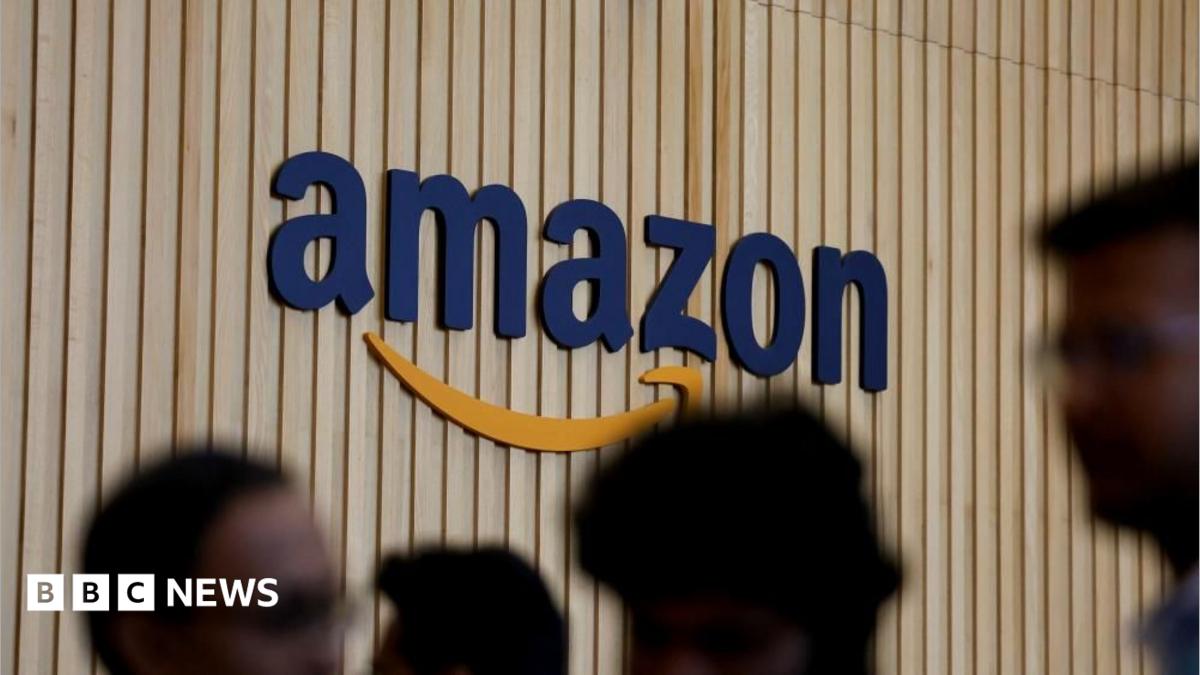
The US Federal Trade Commission (FTC) and a bipartisan group of 22 states has filed a lawsuit alleging Amazon secretly overcharged more than a million advertising customers by manipulating online auctions it uses to set ad prices.
The FTC and states say in their lawsuit filed Monday that the alleged scheme has likely netted the company $20bn from advertising customers since 2019.
“Amazon overrides and replaces the actual auction results with higher prices set by Amazon to increase its profits,” says a complaint filed in the company’s home state of Washington.
In a statement to the BBC, Amazon “strongly disagrees” with the premise that it misled advertisers and called the suit “misguided.”
In addition to advertisers, the FTC, a US consumer watchdog, and the states say Amazon customers have also been harmed as extra costs are passed onto shoppers.
“Consumers are suffering, have suffered, and will continue to suffer substantial injury as a result,” the complaint states, prompting swift pushback from Amazon.
“The FTC wants the public to believe this case is about higher prices for consumers. It is not,” Amazon said in its statement.
The company’s shares fell following the announcement of the lawsuit, closing 2.5% lower on Monday.
Many brands and sellers compete on Amazon to place Sponsored Product ads and Sponsored Brands ads when consumer search for products using keywords on Amazon’s e-commerce platform.
Those placements are then auctioned off to the highest bidder.
The complaint accuses Amazon of secretly charging advertisers more in so-called “second price” auctions, whereby prospective advertisers expect to pay one cent more than the next highest bidder for each bid they win.
But in practice, the complaint alleges, Amazon has charged its Sponsored Products advertisers their own winning bid close to 80% of the time.
The lawsuit states that Amazon’s methods were spurred because “it was unhappy about how much revenue its advertising auctions were generating”.
Amazon responded by saying the FTC “fundamentally misunderstands how advertisers operate”.
“Advertisers adjust bids based on real-world performance, not descriptions of auction mechanics,” Amazon said in its statement.
“Average winning bids fell 50% from 2019 to 2025 on Sponsored Products search ads, and roughly 92% of placed ads are not given to the highest bid,” the company added.
Amazon has tangled with the consumer watchdog in the past.
Last year, it settled a case with the FTC that alleged that it enrolled millions of consumers in its Prime subscription offering without their consent, and knowingly made it difficult for consumers to cancel.
Amazon settled the case for $2.5bn, including civil penalties and consumer refunds.

Indian paddler Ankur bags maiden WTT title and doubles gold in Czechia | Other Sports News

My friend has cancer. I saw her ask ChatGPT for medical advice, and it shook me.

Why Would Bessent Blow Up the Financial System?





-

 Crypto World6 days ago
SpaceX stock could rise 75% to $240, JPMorgan says
-

 Fashion3 days ago
Weekend Open Thread: Maeve – Corporette.com
-

 Crypto World4 days ago
Bitcoin’s 22% rally now needs real demand to outlast Treasury liquidity boost
-

 Crypto World5 days ago
Warsh Jackson Hole keynote puts financial innovation first
-

 Crypto World7 days ago
A $30 Billion AI Fund Implodes, Now the SEC Is Investigating Wall Street’s Role
-

 Business4 days ago
Salesforce Stock Soars 19% as Blowout Earnings and Agentforce AI Growth Silence Software Skeptics
-

 Crypto World6 days ago
Did Trump Just Move SpaceX Stock With One Truth Social Post?
-

 Crypto World5 days ago
Elon Musk Grok Bot Promise: We Will Make You Whole if AI Loses Your Money
-

 Business4 days ago
Apple Confirms September 9 Keynote and Reveals Its Full Pre-Order Schedule
-

 Business3 days ago
Onto Innovation Stock: AI’s Next Bottleneck Is Yield (NYSE:ONTO)
-
 NewsBeat5 days ago
Lindsay Clancy jury braces for closing arguments as judge tells court: ‘You’ve heard all the evidence’ – Live updates
-

 Business5 days ago
Walmart takes aim at younger shoppers with new fashion brand
-

 Crypto World3 days ago
Bitcoin price tests $82K resistance as Brandt stays long
-

 Business6 days ago
Thailand’s Eastern Economic Corridor Capital City (EECiti): Key Developments and Investment Opportunities
-

 Crypto World5 days ago
NVIDIA revenue hits $96.2B as AI demand doubles
-

 Business3 days ago
iPhone 18 Pro Pre-Orders Could Shift to Saturday as Apple Reportedly Avoids September 11 Anniversary
-
 NewsBeat6 days ago
Trump’s trade truce with China faces test with Iran effort
-
 Crypto World5 days ago
Nvidia Q2 Earnings Reveal $96.2 Billion Beat, So Why Is NVDA Falling?
-

 Tech5 days ago
Claude Cowork gets its own browser that doesn’t touch your tabs, bookmarks, or saved passwords
-

 Crypto World4 days ago
Truflation calls for Fed rate cut after PCE forecast
You must be logged in to post a comment Login