

Business
S&P ASX 200 Slips 0.33 Percent as Australian Markets Navigate Global Economic Signals


SYDNEY — The S&P/ASX 200 index edged lower on Thursday, closing at 8,779.2 after declining 29.2 points, or 0.33 percent, as investors weighed mixed global cues and domestic economic developments.
Australia’s benchmark share index reflected cautious sentiment amid ongoing attention to commodity prices, interest rate expectations and corporate earnings across key sectors. Mining and energy shares faced pressure while financials and consumer stocks showed varied performance.
The modest decline came as traders monitored international markets and anticipated key data releases that could influence the Reserve Bank of Australia’s policy outlook. Commodity-linked stocks, a significant component of the index, responded to fluctuations in iron ore, coal and oil prices.
Australia’s economy continues demonstrating resilience supported by strong employment and resource exports, though challenges persist in areas such as household spending and construction activity. The central bank’s recent communications have emphasized data-dependent decision making regarding future rate adjustments.
Sector Movements and Influences
Resources companies, heavily weighted in the ASX 200, experienced headwinds as some metal prices softened on global demand concerns. Major miners like BHP and Rio Tinto contributed to the index’s downward movement.
Financial institutions presented a more mixed picture. Major banks navigated investor focus on lending conditions, bad debt provisions and potential impacts from housing market dynamics. Dividend yields in the sector remain attractive for income-seeking investors.
Consumer discretionary and retail names reflected domestic spending patterns. Cost-of-living pressures continue influencing household budgets, though tourism recovery and wage growth provide some support.
Technology and healthcare stocks offered selective opportunities amid broader innovation trends. Companies with exposure to renewable energy and critical minerals attracted interest aligned with Australia’s transition ambitions.
Economic Backdrop
Australia’s resource-rich economy maintains close ties to global growth, particularly in Asia. China’s demand for Australian exports remains a pivotal factor, with iron ore and liquefied natural gas shipments playing crucial roles in trade balances.
Inflation trends and labor market tightness have kept the Reserve Bank of Australia vigilant. Recent indicators suggest moderating price pressures in some categories, though services inflation persists as a concern.
Housing market conditions influence consumer confidence and bank lending. Policy measures aimed at affordability and supply constraints continue shaping sector outlooks.
Corporate earnings seasons provide granular insights into company performance. Firms demonstrating pricing power, operational efficiency and growth in key markets tend to outperform during uncertain periods.
Market Sentiment and Outlook
The ASX 200 has shown resilience throughout the year despite periodic volatility tied to international developments. Its composition, with significant resources exposure, creates both opportunities and risks depending on commodity cycles.
Analysts anticipate continued focus on Federal Reserve decisions and their flow-through effects on global capital flows and the Australian dollar. Currency movements impact multinational earnings and import costs.
Longer-term investors point to Australia’s structural advantages, including stable governance, resource endowments and growing services exports. Superannuation flows provide consistent domestic demand for equities.
Short-term traders remain attentive to technical levels and momentum indicators. Support and resistance zones on the ASX 200 guide positioning around key economic releases.
Investment Considerations
Diversified exposure across sectors helps manage volatility inherent in resource-heavy indices. Dividend-focused strategies appeal given many ASX 200 constituents’ strong payout histories.
Growth-oriented investors monitor technology, healthcare and renewable energy developments. Critical minerals and battery technology represent emerging areas of interest aligned with global energy transitions.
Risk management remains essential given sensitivity to China-related news, commodity volatility and geopolitical tensions. Defensive sectors such as utilities and consumer staples can provide ballast during risk-off periods.
Exchange-traded funds tracking the ASX 200 offer convenient access for both local and international investors. Active management may add value through sector rotation and individual stock selection.
Broader Australian Market Context
The Australian Securities Exchange serves as a vital capital formation venue for domestic and international companies. Listing activity in resources, technology and healthcare reflects diverse economic strengths.
Regulatory frameworks emphasize market integrity and investor protection. Continuous disclosure requirements ensure timely information flow to participants.
Sustainability considerations gain prominence as investors incorporate environmental, social and governance factors. Companies demonstrating strong practices often attract premium valuations.
As Australia navigates global transitions, the ASX 200 remains a key barometer of economic health and corporate prospects. Its movements influence superannuation balances and retirement outcomes for millions of Australians.
Looking ahead, attention will center on upcoming inflation data, employment figures and corporate reporting. The index’s trajectory will depend on balancing domestic fundamentals with external influences.
The S&P/ASX 200’s performance underscores Australia’s integration into global markets while highlighting unique characteristics tied to its resource base and services economy. Continued adaptation and innovation will shape future returns.


Shares of Tata Chemicals, Tata Investment Corporation and other group companies may benefit if Tata Sons gets listed. Tata Chemicals owns a 3% stake in Tata Sons, the value of this stake could be around Rs 20,000 crore, equivalent to the stock’s current market value. Any step toward a Tata Sons listing would be a transformative unlock for Tata Chemicals shareholders.
On Wednesday, the RBI finalised new rules for identifying systemically important non-banking financial companies, or upper-layer NBFCs, with assets exceeding Rs 1 lakh crore, which are required by law to list their shares publicly. In doing so, the RBI rejected industry feedback that had sought to raise the threshold to Rs 2.5 lakh crore and simplified the earlier multi-parameter methodology into a cleaner, asset-size-based test. The regulator also reiterated that entities falling under this category would be “specifically identified annually.”
Also Read |RBI finalises NBFC-UL norm that may see Tata Sons list
Tata Sons, with estimated standalone assets of over Rs 1.75 lakh crore, comfortably clears that bar. The salt-to-semiconductors giant was originally mandated to list by a September 2025 deadline but has since applied to the RBI to surrender its NBFC licence—a move that, if approved, would render the listing obligation moot. As of now, the application remains unresolved. When the RBI last published its list of upper-layer NBFCs in January last year, it noted that Tata Sons’ de-registration request was “under consideration.”

The debate over a listing has also exposed fault lines within the Tata Trusts, the majority owner of Tata Sons. The Trusts passed a resolution opposing a listing—a position firmly backed by Trusts chairman Noel Tata. However, two of its vice chairmen, Venu Srinivasan and Vijay Singh, have publicly broken ranks, stating that a listing would be a positive outcome. Their remarks have become a source of open discord among the trustees.

Manappuram Finance shares tumbled nearly 3% to trade at Rs 309.35 apiece on NSE, while those of Muthoot Finance and IIFL Finance fell over 2% each.
The dollar index, which tracks the US currency against a basket of six major peers, climbed to a more than one-year high on Wednesday and traded around 101.5 on Thursday. The move reflects growing expectations of a hawkish US Federal Reserve, with traders increasing bets on an interest rate hike later this year.
The US Federal Reserve kept interest rates unchanged at its latest policy meeting, but a larger number of policymakers signalled the possibility of higher borrowing costs later in the year amid concerns over inflation remaining above the central bank’s 2% target. In the first FOMC meeting under Chairman Kevin Warsh, the Fed noted that inflation remained elevated relative to its goal, partly due to supply shocks that have pushed up prices in sectors including energy.
According to the CME FedWatch Tool, traders are now expecting three rate hikes this year and see roughly a 67% probability of a hike in September. While gold is traditionally seen as an inflation hedge, it loses its appeal as a non-yielding asset in a high-interest-rate environment.
Gold prices fall
Gold futures in MCX extended their decline. Gold futures for August 2026 delivery have declined by Rs 5,863 in two days to Rs 1,40,666 per 10 grams. In the international market, spot gold slipped 0.4% to $3,985.89 per ounce by 0043 GMT, after falling to its lowest level since November 2025 on Wednesday.
US gold futures for August delivery were down 0.2% at $4,001.60. Bullion dropped below the key $4,000-an-ounce mark on Wednesday for the first time since November 2025.
Also read: Gold prices fall Rs 6,000/10 gram in two days; silver tanks Rs 15,500/kg on rate hike fears. Time to sell precious metals?
Why are gold financier stocks falling today?
Manappuram Finance, Muthoot Finance and IIFL Finance provide loans with gold as collateral. Falling gold prices will reduce the value of the pledged collateral. Since gold loans are sanctioned based on the per-gram valuation of gold, lower prices will require borrowers to pledge additional jewellery to access the same loan amount.
What lies ahead?
“As investors face losses in equities, many are selling liquid assets such as gold to raise cash, meet margin requirements, and reduce leverage. At the same time, money is flowing into the US dollar, with the stronger dollar adding further pressure on bullion prices. This is one of those rare periods where both equities and gold are declining together as investors sell what they can rather than what they want,” said Jateen Trivedi, VP Research Analyst of Commodity and Currency at LKP Securities.Manoj Kumar Jain of Prithvi Finmart said gold and silver prices are likely to remain volatile this week amid fluctuations in crude oil prices and the dollar index, as well as ahead of the release of US GDP and Core PCE price index data.
According to Jain, gold has support at $3,980-$3,920 per troy ounce and resistance at $4,040-$4,085, while silver has support at $55.50-$53.80 and resistance at $60.00-$61.40 per troy ounce in the current session.
(With inputs from agencies)
(Disclaimer: Recommendations, suggestions, views and opinions given by the experts are their own. These do not represent the views of The Economic Times)

Lineage: Another Serious Fire Could Spell Trouble
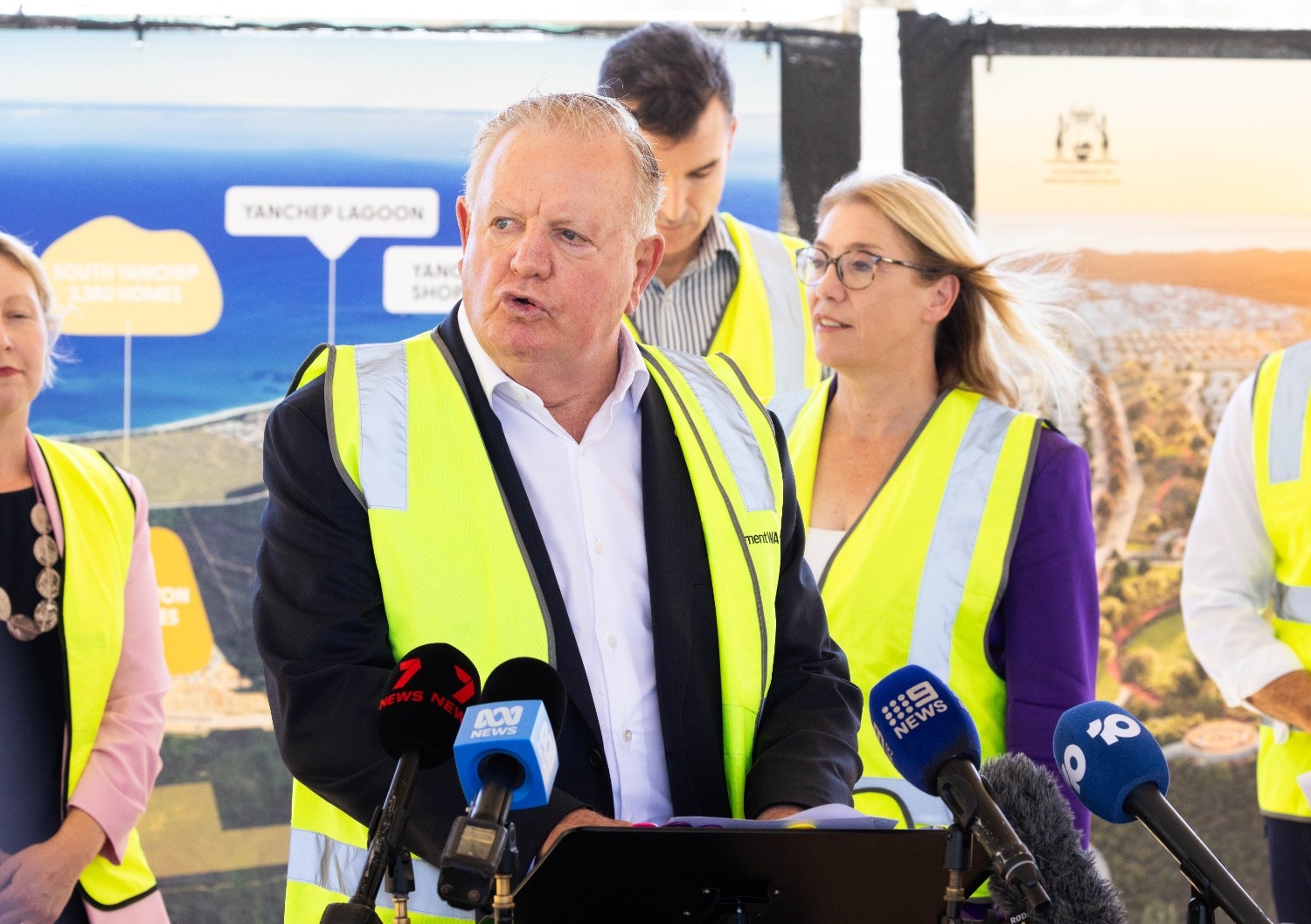
Nigel Satterley is forecasting his companies to generate profit before tax of $260 million annually, as Satterley Property Group lodges financials publicly for the first time since 2019.

The price of oil has fallen to levels not seen since before the Iran war as traffic through the key Strait of Hormuz shipping route gradually resumes.
Global benchmark Brent crude briefly fell below, $72.48 ($55) a barrel, the price it was at the day before the US and Israel launched attacks on Iran on 28 February, before edging up to $72.63.
Energy prices have been on a wild ride since Iran responded to the strikes by effectively closing the strait, a critical waterway for oil and gas shipments.
The cost of crude has been moving sharply lower since the US and Iran signed a Memorandum of Understanding (MOU) on 17 June which set out a 60-day period for negotiations on Tehran’s nuclear programme and other measures to end the war.
Representatives from the two sides met in Switzerland last weekend for talks to end the war, which resulted in the US partially lifting sanctions on Iranian oil exports.
The number of vessels crossing the Strait of Hormuz has risen significantly since the MOU was signed, according to maritime intelligence firm Kpler.
The ships passing through the waterway in recent days include those carrying crude oil, liquefied natural gas (LNG), fertiliser and other goods, Kpler told the BBC.
The US and Iran had also formed a “communication line” to prevent misunderstandings “with the aim of safe passage for commercial vessels through the Strait of Hormuz”, mediators Qatar and Pakistan said in a joint statement on Monday.
There has been a “tremendous shift” with far more ships using the strait in recent days, said Dimitris Maniatis, the chief executive of Marisks, a maritime risk advisory firm working with ships stuck in the region.
His company estimates around 80 ships have crossed the Strait of Hormuz since Monday after the first round of peace talks between US and Iran in Switzerland.
A limited number of ships can cross a northern passageway with the permission of Iranian authorities, he said.
The US navy has also provided guidance for vessels to travel through a southern route that is safe from mines and other obstacles that has been laid out since the war, Maniatis said.
But the number of ships crossing the strait is still below levels seen before the war, when it was used by more than 100 ships a day.
Hundreds of ships still appear to be waiting in the Gulf.
Business
Commodity correction offers buying opportunity; defence, banking remain long-term bets: Dharmesh Kant

Copper, aluminium, crude oil and silver have all witnessed sharp declines over the past few sessions, dragging commodity stocks lower. However, Kant believes such corrections are a normal part of long-term commodity cycles.
“Commodity as an asset class is always like this. Whenever the upside is there, it continues for one or two years. We have already seen a major part of the upcycle, and normally it corrects and consolidates for a meaningful period,” he said.
According to Kant, demand fundamentals remain favourable. He expects industrial demand for metals such as aluminium, copper and zinc to strengthen as global economic activity improves. Silver, too, continues to enjoy structural support due to its widespread use in electric vehicles, electronics and renewable energy.
“Silver demand has an industrial connotation. Electric vehicles, electronics and solar panels all use silver, and demand is likely to compound at 15-17% CAGR going forward,” he said.
Given this backdrop, Kant believes quality commodity companies deserve fresh attention.
“This is a good opportunity to accumulate good-quality commodity stocks. One can look at Hindalco, Vedanta and JSW Steel. We still believe there is at least one to one-and-a-half years of the upcycle left,” he added.Lower Crude Prices to Aid Corporate Margins
Kant also expects the sharp decline in crude oil prices to provide a meaningful boost to corporate profitability over the coming quarters.
He noted that while companies may see some impact in the June quarter, the benefits of lower input costs should become much more visible during the second half of the financial year.
“Q2 and Q3 will have the benefit of lower input costs, but price rollbacks never happen. That will support better profitability in the second half of the year,” he said.
He also believes easing tariff concerns and resilient domestic demand have strengthened India’s macroeconomic outlook.
“Our ground checks suggest there has been no let-up in consumption, credit demand or collections. Credit growth itself will be around 17-18%, and these indicators suggest this is the time to be bold with cherry-picking,” Kant said.
Defence Story Remains Intact
Despite recent volatility in defence stocks, Kant remains optimistic about the sector’s long-term prospects. While he is less constructive on Bharat Dynamics, he continues to favour Bharat Electronics (BEL), Hindustan Aeronautics (HAL) and Mazagon Dock Shipbuilders.
Recent selling pressure, he said, has largely been driven by trading positions and news flow rather than any deterioration in fundamentals.
“It is a no-brainer if you are looking from a three-year perspective. HAL, BEL and Mazagon Dock remain strong long-term plays,” he said.
Kant also highlighted the potential of the long-awaited P-75 submarine project, which could significantly expand Mazagon Dock’s order book and transform its growth trajectory.
Cautious on AI-Themed Stocks
On India’s artificial intelligence investment theme, Kant advised investors to separate genuine long-term opportunities from market narratives.
Discussing Sterlite Technologies, he acknowledged the company’s strong order book but questioned the sustainability of its business model.
“There is no IP or moat in the business. It has largely remained a trading play over the last 10-15 years, so we are staying away from the fundamental call,” he said.
Banking Preferred Over Auto and Ancillaries
Among sectors that could benefit from lower crude prices, Kant prefers banking and financial services over automobiles and auto component manufacturers.
While paint companies have already recovered significantly from recent lows, he believes expensive valuations and intense competition limit their upside. Auto and ancillary companies, meanwhile, could struggle because of a high base effect in the second half of the year.
“If you are looking at a one- or two-year perspective, they may find it difficult to deliver 20-25% profitability growth. It is a tactical call to stay away for now,” he said.
Instead, he believes banking remains the strongest indirect beneficiary of improving macroeconomic conditions and lower energy prices, making it one of the preferred sectors for investors over the coming quarters.

Kraken Robotics Inc. (PNG:CA) Shareholder/Analyst Call – Slideshow

Airbus: A220 Mega Order Masks The Real Challenge Ahead
Nigel Satterley says his various companies are forecast to generate earnings before tax of around $260 million annually from FY25 to FY27, requiring Satterley Property Group to lodge financials publicly for the first time since 2019.

Citizens Hires $800 Million Advisor Team From Morgan Stanley

World Cup 2026: Brazil and Morocco put on a show and secure qualification – Sports

Slate Auto’s Radically Simple Electric Truck Starts At $24,950

Tanker comes out of Strait of Hormuz on Oman route despite Iran threat


-

 Fashion6 days ago
Weekend Open Thread: Miami – Corporette.com
-

 Entertainment4 days ago
Renter of Home in Anne Heche Crash Denies Settlement With Son
-
 Sports2 days ago
Two goals and an assist by sheer aura: Cristiano Ronaldo just entered the World Cup chat
-

 Tech3 days ago
Microsoft accidentally kills epic Outlook email threads
-

 Business4 days ago
Soccer-U.S. defends Iran World Cup travel restrictions, says discussions ongoing
-
Crypto World1 day ago
Bitcoin (BTC) Dips Below $62K, Ethereum (ETH) Plunges 6% Daily: Market Watch
-

 Politics5 days ago
Andy Burnham and the meaning of Makerfield
-

 Politics7 days ago
BBC Reporter Discusses Cross Party Criticism Of Trumps Iran Deal
-

 Crypto World1 day ago
Securitize Wraps Roubini's SEC-Registered ETF as Dubai VARA Digital Security
-
Business1 day ago
Entergy settles forward sale agreements, raises $672 million in cash proceeds
-

 NewsBeat6 days ago
Keir Starmer Allies Question His Chances For No 10
-
 Business5 days ago
Wall Street Week Ahead: Investors see Micron earnings as pulse check of AI rally momentum
-

 Tech7 days ago
AWS enters the context layer race with a graph that learns from agents, not manual curation
-
 Crypto World5 days ago
Can Charles Hoskinson Really Rescue Cardano?
-

 Crypto World5 days ago
HIVE shares jump as $220M AI deal speeds Bitcoin mining pivot
-

 Crypto World5 days ago
Jake Chervinsky accuses CME of protecting derivatives monopoly
-
 Tech4 days ago
Signal’s Meredith Whittaker says AI chatbots ‘are not your friends’ and calls Copilot agents a backdoor
-

 Entertainment5 days ago
Jose Alvarado Wants Taylor Swift at More Knicks Games
-

 Tech3 days ago
Nearly 7,000 fake Amazon domains registered ahead of Prime Day 2026, researchers warn
-

 Sports6 days ago
FIFA World Cup 2026: Canada beat 9-men Qatar 6-0 to register first ever win | FIFA World Cup 2026
You must be logged in to post a comment Login