Connect with us

Business

Starbucks franchise firm the Magic Bean Co expanding with 75 new drive-thrus

Published

on

Business Live

The Swansea firm’s expansion is being backed with a new £21m funding facility with HSBC

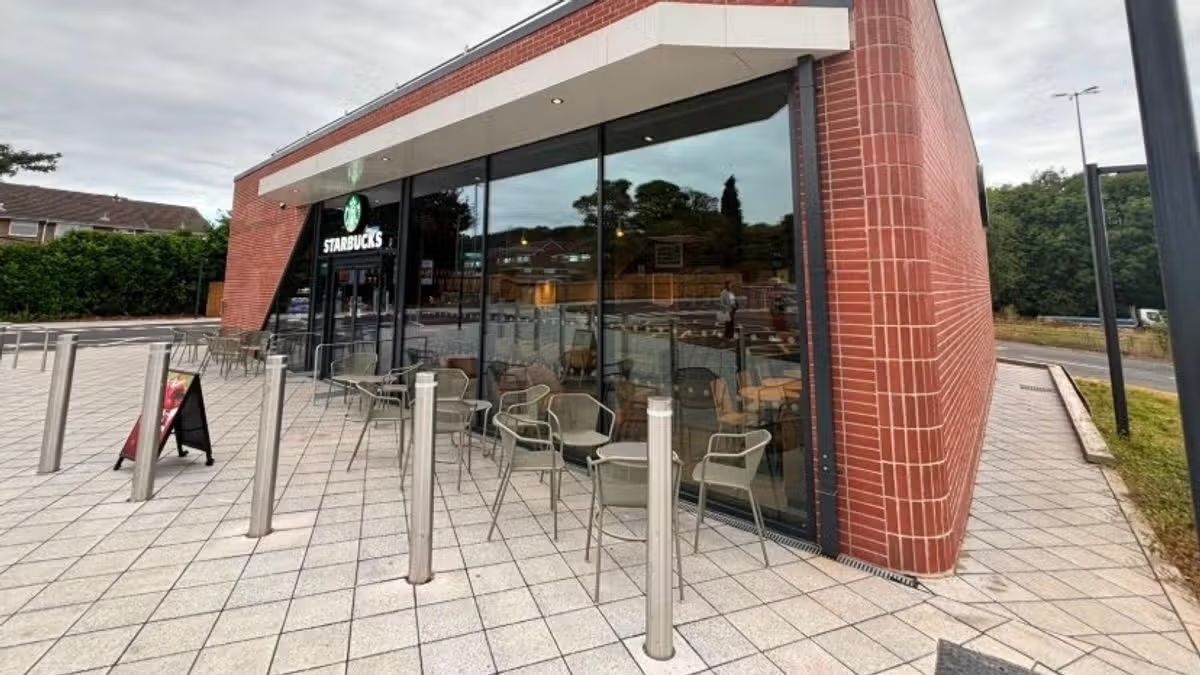
A Starbucks driv-thru from the Magic Bean Co.

Swansea-based Starbucks franchise venture the Magic Bean Co has revealed major expansion plans for 75 new drive-thrus across the UK.

The business, which currently operates 47 franchise outlets, is being backed to expand with a new £21m funding line from HSBC. The bank, through a revolving credit facility, has support the firm since its was established in 2013 and opened its first Starbucks outlet in Cardiff a year later. The new facility builds on a previous £15m funding agreement.

Advertisement

The expansion over the next five years, will create more than 1,00 new jobs. Every drive-thru with having electric charging points after the company secured a national electrical vehicle channel license agreement. The business currently employs around 700.

Of the new sites, four have already opened . A further four will launch by year end i ncluding those in Port Talbot and Swindon and Netherton in September, followed by Lichfield in November.

Over the five-year period, the business anticipates its turnover will double from £34m to to £68m.

The HSBC UK funding will enable the Magic Bean Co to invest in the development and refit of the new sites, while providing headroom for working capital and supporting the business’ long-term growth.

Advertisement

.Jamie Evans, finance director at the Magic Bean Co, said: “HSBC UK has been with us from the very beginning, supporting us from the opening of our first Starbucks drive-thru in Cardiff in 2014 through to establishing our first revolving credit facility, which helped us expand from 19 sites to the 47 we operate today.

“This latest funding will support the continued rollout of our Starbucks drive-thru portfolio, enabling us to serve more customers in more locations.”

Lyndsey Connor, corporate banking relationship director at HSBC UK, added: “With the UK targeting 300,000 public EV charge points by 2030, investment in innovative roadside developments has never been more important.

“We’re delighted to support the Magic Bean Co on this unique venture, bringing together premium coffee and EV charging to enhance the customer experience while supporting the UK’s transition to electric vehicles.”

Advertisement
Continue Reading
Click to comment

You must be logged in to post a comment Login

Leave a Reply

Business

Trump $1 coins aka ‘Golden Dollars’ are here, minus the gold. The US Mint is putting the sitting president’s face on American money for the first time

Published

on

Trump $1 coins aka 'Golden Dollars' are here, minus the gold. The US Mint is putting the sitting president’s face on American money for the first time
For the first time in U.S. history, a living American president has appeared on a circulating dollar coin.

The U.S. Mint has begun selling a new gold-colored $1 coin featuring President Donald J. Trump, part of the nation’s preparations to mark its 250th anniversary in 2026.

The coin went on sale September 2 at noon Eastern time and is being offered through the U.S. Mint in rolls and bags aimed at collectors. A roll of 25 costs $61, while a 100-coin bag is priced at $154.50.

Despite being described as a “golden dollar,” the coin contains no actual gold. It is made primarily of copper, along with 6% zinc, 3.5% manganese and 2% nickel.

The obverse features Trump’s likeness, based on an official White House photograph, along with the inscriptions “LIBERTY,” “IN GOD WE TRUST” and “1776 ~ 2026.” Chief Engraver Joseph Menna designed the portrait.

Advertisement


The reverse side of the coin features the Presidential Seal, with the number “250” added to the eagle’s shield to commemorate the nation’s semiquincentennial.
There is also a detail that could make some of these coins especially interesting to collectors: the Mint is randomly distributing 250,000 coins struck on July 4 with a special “July 4th” privy mark among the rolls and bags sold through its website.

Why is Trump’s face allowed on a coin?

The release has attracted attention because U.S. law has traditionally prohibited the portraits of living people from appearing on U.S. coins and currency.

The Trump administration says the new dollar is permitted under the Circulating Collectible Coin Redesign Act of 2020, which authorized special $1 coins commemorating the 250th anniversary of the United States during 2026.

The precedent for a sitting president appearing on U.S. currency is extremely unusual. In 1926, President Calvin Coolidge appeared alongside George Washington on a commemorative half-dollar marking the 150th anniversary of American independence. Coolidge remains the only other sitting president to have appeared on U.S. currency, reported Euronews.

Advertisement
Continue Reading

Business

WA critical to AUKUS success, says UK envoy

Published

on

WA critical to AUKUS success, says UK envoy

The head of the United Kingdom’s nuclear submarine capability has underlined WA’s critical role in driving the success of the controversial AUKUS program during a visit to Canberra.

Continue Reading

Business

How one investor is playing the school year

Published

on

How one investor is playing the school year

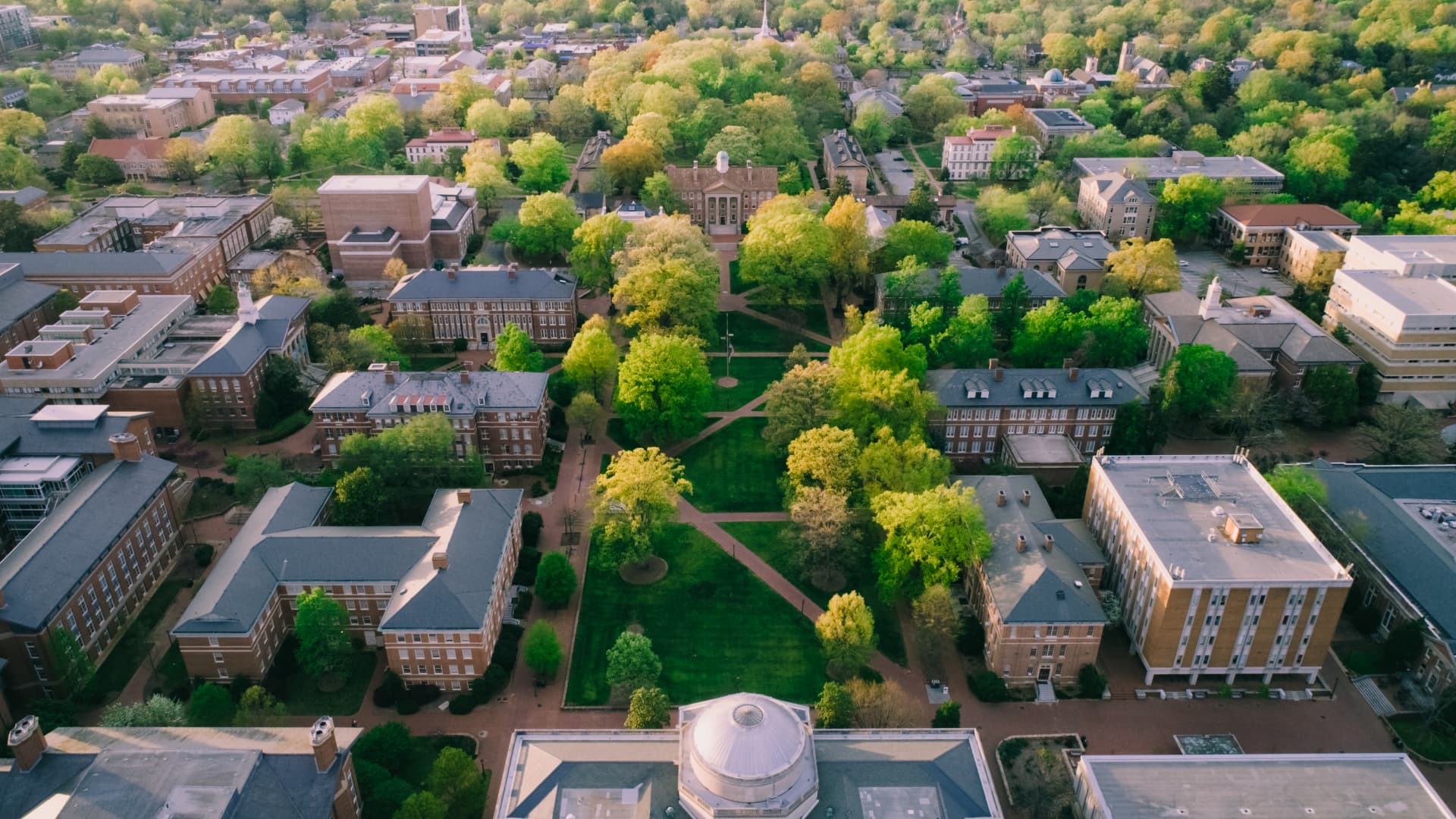
Aerial over the University of North Carolina-Chapel Hill

Ryan Herron | Istock | Getty Images

A version of this article first appeared in the CNBC Property Play newsletter with Diana Olick. Property Play covers new and evolving opportunities for the real estate investor, from individuals to venture capitalists, private equity funds, family offices, institutional investors and large public companies. Sign up to receive future editions, straight to your inbox.

Students are heading back to school across the nation and leasing student housing at a faster clip than they were last year. 

Advertisement

For investors, that creates new opportunities, but one leader in the field cautions that the differences in market fundamentals are widening across universities and regional markets. Some types of universities are seeing much higher occupancies and lagging construction, while others are overbuilt with falling demand.

On a national level, pre-leasing across the Yardi 200 — a curated set of the most important student housing markets, representing 90% of the institutional space — reached 89.1% in July ahead of fall move-ins. That is up from 88.1% in July 2025 but still below August 2025 levels of 89.9%. 

According to Yardi, 117 of the 200 markets surveyed in July were at or above their year-earlier pre-leasing levels, but there was significant variation across different markets. 

“New supply is increasingly concentrated in large markets, dragging down performance at schools with the most beds and weighing more heavily on national metrics,” wrote Tyson Huebner, director of research at Yardi Matrix, in the report.

Advertisement

Harrison Street Asset Management is one of the largest investors and developers in the sector, with more than $24 billion allocated across 432 student housing properties since its launch in 2005. Its investments total more than 238,000 beds across 200 university markets in North America and Europe. 

“Our conviction in student housing is really high, but our conviction in every student housing market is not,” said Mike Gordon, global chief investment officer for real estate at Harrison Street. “Frankly, I think that creates a really interesting investment environment.”

Gordon said there are a lot of investors trying to get access to the sector, but only a limited number of managers with long-term experience in it. Specialization, he said, is more vital than ever, because the differences between university markets have grown quickly due to funding cuts, enrollment and specific student demand. 

Get Property Play directly to your inbox

CNBC’s Property Play with Diana Olick covers new and evolving opportunities for the real estate investor, delivered weekly to your inbox.

Advertisement

Subscribe here to get access today.

“Enrollment, applications, selectivity, research funding, student outcomes are increasingly concentrated at many of the leading institutions. Michigan, UVA, UNC, a number of the large public Power Four universities,” said Gordon, referring to the schools that belong to the four major athletic conferences. “Prospective students continue to value strong graduation incomes, alumni earnings, research capabilities, and many of the university markets that we focus on are really operating at or above 95% occupancy.”

He noted that housing supply has lagged enrollment growth at the universities in a number of these markets, specifically citing Virginia Tech, Auburn University and Penn State. 

“I think about the best university towns almost like factory towns where the factory is never closing. The university is the factory, and what it produces is intellectual capital. It attracts students, obviously, but also professors and researchers, entrepreneurs, companies that want to be close to that intellectual capital, and everyone needs somewhere to live,” Gordon said. 

Advertisement

Harrison Street acquires and develops assets on its own and through public-private partnerships with state universities. It has also been selling some of its assets given rising demand in certain markets. 

Earlier this year, Harrison Street sold a 12-property student housing portfolio for $910 million, one of the largest dispositions in the sector in recent years.

Continue Reading

Business

Apple’s new boss starts with gamble on costly new foldable iPhone

Published

on

A cut of of Anthony Zurcher wearing a suit and tie in front of a red, black, grey and blue graphic background featuring the US Capitol Building

John Ternus has entered his second week as Apple’s chief executive and the company has revealed the first major change to the iPhone since it was released almost 20 years ago.

Ternus, who took on Apple’s top job after Tim Cook stepped down, was onstage on Wednesday at the company’s annual product release event in front of huge images of the first foldable iPhone.

With a book-style format, the new iPhone, dubbed the Duo, is the largest ever size of the product. And with a starting price of $2,000 (£1,475) going up to $3,200, it is also the most expensive.

Ternus said the Duo was “inspired by the iPad” but called the folding features “fluid and completely intuitive.”

Advertisement

The foldable phone has been a work-in-progress inside Apple for several years.

When unfolded, it has the look of a small iPad. When folded in half, it has the look of a wider iPhone.

Ternus said during the event that Apple wanted to avoid the look and feel of other foldable smart phones on the market, which he said “feel like two phones stuck together… making a larger screen feel much smaller.”

The Duo, he said, is the “result of a series of remarkable innovations that we think will redefine the experience of using a foldable phone.”

Advertisement

Ternus was directly involved in developing the foldable iPhone as he spent many years as a top executive inside Apple’s hardware division before being tapped earlier this year as Cook’s successor.

Ben Wood, chief analyst at technology research firm FDM, said it was likely Ternus’s promotion was timed specifically “to coincide with what will be arguably one of the biggest iPhone launches for many years”.

“Nothing happens by accident at Apple,” Wood added.

Altering the design of the iPhone may address some criticism that Apple has yet to land a major product hit or truly exciting innovation since the first iPhone came out in 2007.

Advertisement

“The foldable risks becoming a premium-priced ornament in the portfolio, imparting badge value but not meaningful growth,” said Dipanjan Chatterjee, an analyst at Forrester.

Previously, the highest starting price of the newest iPhone was $900 (£664). Apple also revealed on Wednesday the new iPhone 18 and 18 Pro, which start at $1,200 (£885) and $1,300 (£959) respectively.

Chatterjee said the foldable iPhone could go the way of Apple’s Vision Pro headset, which the company priced at $3,699 (£2,729) and has not been a hit with buyers. Or, he said, it could be the company’s next Apple Watch which, while not as popular as the iPhone, is bought by millions of people each year.

Wood noted that the current market for foldable smartphones from the likes of Samsung and Huawei make up only 2% of smartphone sales. Even with Apple’s version likely driving interest and demand, sales are only expected to reach 4% of the total market in the next decade, according to data and analytics firm FDM.

Advertisement

The iPhone has been Apple’s top-selling product and accounts for more than half of the company’s sales each year.

In recent quarters, the company has boasted that the iPhone is more in-demand than ever, with the most recent version of the device becoming its most successful product launch.

Continue Reading

Business

Nepal rescuers continue search for missing as identification of dead remains challenge

Published

on

Nepal rescuers continue search for missing as identification of dead remains challenge
Kathmandu: Rescuers in Nepal continued searching for those missing, as authorities faced continuing difficulties in identifying the dead, 11 days after devastating floods struck large parts of the country.

The death toll stood at 1,344, while nearly 5,000 people, including 589 foreign nationals, remained missing, according to Nepal Police. Around 13,400 people have been rescued so far.

The disaster was triggered by an ice-rock avalanche near the Nepal-Tibet border on August 26, sending a massive surge of water and debris downstream through the Bhotekoshi River and devastating settlements in northern and central Nepal. Homes, vehicles, roads, bridges and hydropower infrastructure were swept away or damaged.

At least 43 people were killed on the Chinese side, while more than 500 people remained missing in Tibet, according to Chinese media reports.

Of the bodies recovered in Nepal, at least 85 were children, while around 500 were recovered with body parts missing, according to officials. The condition of many bodies has complicated efforts to establish their identities.

Advertisement


Chitwan district accounted for the largest number of recovered bodies, with 362, followed by other affected districts including Nawalparasi East, Nawalparasi West, Nuwakot, Rasuwa, Gorkha, Dhading and Tanahun, according to Nepal’s National Disaster Risk Reduction and Management Authority (NDRRMA).
Only 98 bodies had been identified and handed over to their families, according to NDRRMA.Identifying the dead has emerged as a major challenge, with many bodies recovered after being swept downstream severely damaged, decomposed or recovered only in parts. The police have said that bodies carried far from the disaster sites and those that remained in water and mud have made identification particularly difficult.

Nepal Police has begun collecting DNA samples from relatives of missing people to help identify unclaimed bodies and human remains recovered after the floods. Relatives in Nepal can provide samples through the Nepal Police Hospital in Kathmandu or their nearest district police office.

More than 1,000 unidentified bodies have been buried after DNA samples were collected to facilitate their identification in the future, officials said.

Hospitals struggled to cope with the growing number of unidentified bodies. Large crowds continued to gather at medical facilities, carrying photographs of missing relatives and scrutinising images of the dead displayed on the walls.

Nepal’s Information and Communication Minister Bikram Timilsina has said the government would ensure that there was no shortage of relief materials or mismanagement in their distribution to flood victims. The government was actively involved in relief and rehabilitation efforts despite the scale of the disaster, Timilsina told the online edition of the government-owned Gorkhapatra.

Advertisement

“Nepal demands climate justice at this moment and the international community should be serious about this,” Timilsina said, adding that the disaster underscored the need for greater preparedness for future climate-related disasters.

Nearly 88,000 cooking gas cylinders have been brought into Kathmandu Valley through alternative routes over the past three days as authorities work to maintain supplies after the disruption of the Prithvi Highway – the primary vital link connecting the Kathmandu Valley to the rest of Nepal and to India.

According to Nepal Oil Corporation (NOC), 87,877 LPG cylinders were brought into the Valley between September 3 and September 6 by 18 companies.

The cylinders were filled at plants in Bara, Parsa, Makawanpur, Chitwan, Nawalparasi, Dhanusha and Mahottari districts before being transported to Kathmandu.

Advertisement

NOC spokesperson Manoj Thakur said supplies of petroleum products and LPG to Kathmandu Valley and surrounding areas were continuing through alternative routes despite the disruption of the main highway.

The Prithvi Highway was disrupted at Krishnabhir in Dhading on August 30 after erosion by the Trishuli River damaged the road, leaving fuel tankers and LPG carriers unable to proceed towards Kathmandu.

Nepal’s Foreign Minister Shisir Khanal and his South Korean counterpart Cho Hyun on Sunday discussed ongoing search, rescue and relief operations. In their meeting in Kathmandu, the two leaders held in-depth discussions on efforts to locate missing South Korean nationals, Khanal’s office said.

Khanal thanked the South Korean government for sending an inter-agency rapid response team and the Korea Disaster Relief Team to flood-hit areas, as well as for providing humanitarian assistance and relief materials. He also outlined Nepal’s priority of rebuilding resilient and durable infrastructure and expressed hope for continued South Korean support.

Advertisement

Cho expressed the “willingness of the Korean Government to support Nepal in the post-disaster reconstruction efforts” and called for Nepal and South Korea to work together to raise awareness about the impacts of climate change, including at global forums such as COP.

Kathmandu has urged friendly countries to confine travel advisories to specific flood-affected areas, while highlighting that the rest of the country remains open and safe for travel and tourism.

The country’s Ministry of Foreign Affairs said on Sunday that it and Nepal’s missions abroad were working closely with friendly countries on the issue.

The request comes after the United States issued a travel advisory on September 4, placing entire Nepal under Level 2, or “Exercise increased caution”, due to natural disasters.

Advertisement

Tourism is a major contributor to Nepal’s economy, accounting for about 6.4 per cent of GDP and 15.2 per cent of total employment in 2024, according to World Bank data, making travel restrictions a significant concern for the country.

Meanwhile, a fresh flood in Gorkha district early Sunday swept away four houses and a suspension bridge, although there were no casualties.

The flood occurred in Chumnubri Rural Municipality-4 after the Namrung Khola River overflowed, according to police. The four houses were swept away after residents became aware of the approaching flood and fled to safety.

Authorities said the river may have been temporarily blocked near its source before releasing a surge carrying mud and debris downstream. The Namrung Khola flows into the Budhigandaki River, and residents along the Budhigandaki have been urged to remain alert.

Advertisement

The flooding damaged two small hydropower projects in the wider Namrung area, according to local reports. It also affected movement in the area after the suspension bridge was swept away. PTI

Continue Reading

Business

Bernie Sanders pushes 32-hour workweek amid warnings it hurts workers

Published

on

Bernie Sanders pushes 32-hour workweek amid warnings it hurts workers

Sen. Bernie Sanders, I-Vt., is renewing his push for a shorter workweek. Critics warn the 32-hour workweek proposal could come at a steep cost for American workers.

Club for Growth President David McIntosh argues the plan could cost workers jobs and benefits while making life “more unaffordable for Americans.”

Advertisement

McIntosh joined FOX Business’ Stuart Varney on “Varney & Co.” to discuss Sanders’ renewed push for a 32-hour workweek and the potential impact on American workers.

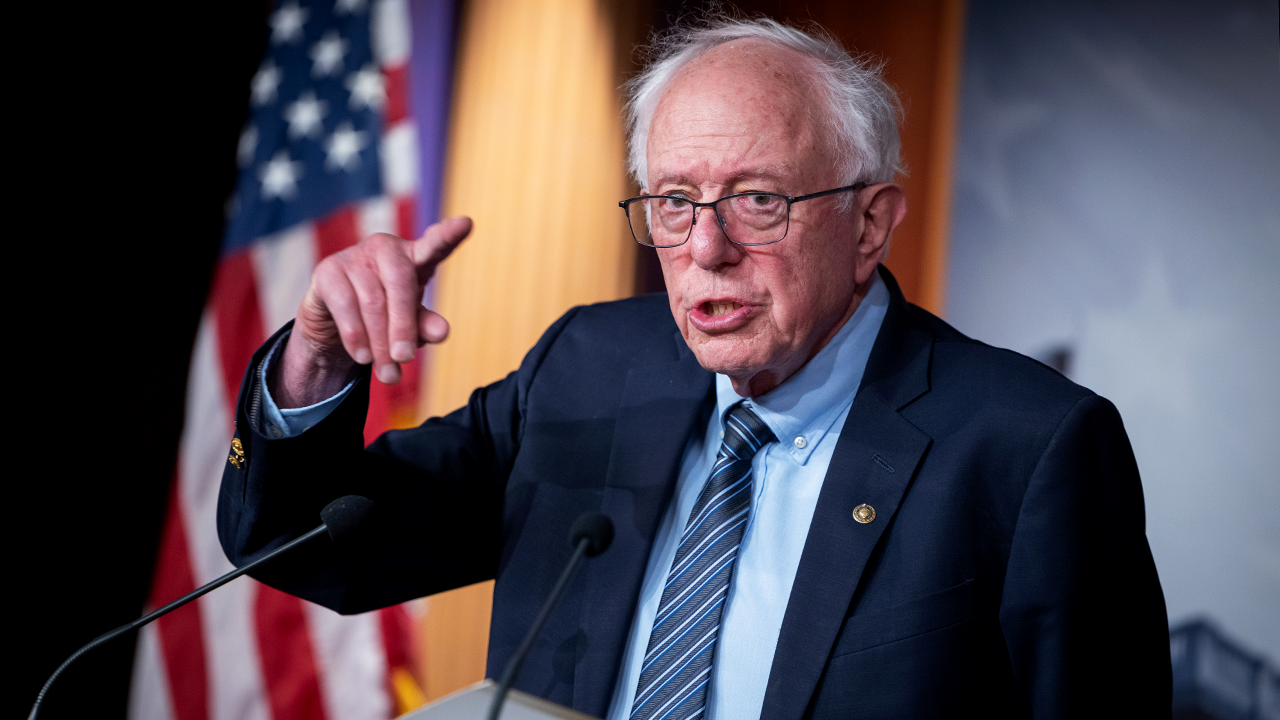
Senator Bernie Sanders (I-VT).

Sen. Bernie Sanders is renewing his push for a 32-hour workweek as critics raise concerns over the potential impact on American workers. (Nathan Posner/Anadolu / Getty Images)

Sanders’ proposal would lower the federal standard workweek from 40 hours to 32 hours over four years without reducing workers’ pay or benefits, with overtime applying after 32 hours. He has tied the renewed effort to advances in artificial intelligence and argued that workers should share in productivity gains.

BERNIE SANDERS UNVEILS PLAN TO TAKE 50% STAKE IN AI COMPANIES FOR GOVERNMENT WEALTH FUND

McIntosh pushed back, arguing that while AI could boost productivity and wages, mandating a shorter workweek could have unintended consequences for employees.

Advertisement

“AI will make people more productive, and they’ll get paid more, but Bernie’s idea will hurt the very workers he’s trying to help. A lot of people will lose their job, lose their benefits when they implement something like that,” McIntosh said.

DALLAS MAYOR SOUNDS ALARM ON THE ‘GRAVE THREAT’ FACING AMERICA’S CITIES

He also framed the proposal as part of a broader economic agenda he believes could raise costs, criticizing what he called “far-left radical socialist policies” and warning they risk “making life more unaffordable for Americans.”

Advertisement

In an appearance on “The Sunday Briefing,” Agriculture Secretary Brooke Rollins also discussed the idea of a shorter workweek.

“We believe in the dignity of work. It is a biblical foundation. I can’t imagine a scenario where we’d say, ‘Oh, everyone just stay home a couple more days. We’re only gonna work a couple of days.’ The American dream does not include a four-day work week from my perspective, at least,” Rollins said.

GET FOX BUSINESS ON THE GO BY CLICKING HERE

Advertisement
Continue Reading

Business

SailPoint: Noticeable Deceleration Amid Steep Multiples (Downgrade)

Published

on

SailPoint: Noticeable Deceleration Amid Steep Multiples (Downgrade)

SailPoint: Noticeable Deceleration Amid Steep Multiples (Downgrade)

Continue Reading

Business

CLSA sees 29% downside in Meesho despite a 19% YTD rally. Buy, sell or hold?

Published

on

CLSA sees 29% downside in Meesho despite a 19% YTD rally. Buy, sell or hold?
Meesho shares have gained nearly 19% so far in 2026, but CLSA believes the stock’s valuation already reflects overly optimistic expectations for advertising revenue, order growth and logistics savings.

The company’s shares have gained 18.76% year to date, outperforming the Nifty 500, which has declined 3.90% over the same period. Despite the rally, CLSA maintained its Underperform rating and target price of Rs 150. The target implies a 29% downside from its previous close of Rs 210.30.

CLSA said, “Investor discussions around Meesho were largely focused on three potential growth drivers: advertising monetisation, higher order frequency and savings from latent logistics capacity. However, the brokerage believes the market is assigning a higher probability of success to these drivers than warranted.”

Investors are factoring in advertising revenue equivalent to about 5% of net merchandise value by FY30, compared with CLSA’s estimate of 3.9%. The brokerage said this expectation could be difficult to achieve because Meesho already operates at a take rate of 17.8%, compared with 5.1% for Chinese ecommerce company PDD.

Advertisement

Meesho’s sellers also generate only about one-tenth of the merchandise value generated by an average PDD seller, while its seller base is about 5% of PDD’s. According to CLSA, weaker seller-level economics could restrict advertising budgets and make it harder for Meesho to scale ad revenue.


Order frequency is another area where investors expect stronger growth. Meesho’s annual order frequency stood at 10.1 in FY26, and CLSA expects it to rise to 13.4 by FY29 and about 17 by FY32.
A significant increase beyond these estimates would require Meesho to expand into categories such as fast-moving consumer goods and daily essentials, CLSA said. This could require a more localised supply chain and faster deliveries, increasing operational complexity and potentially weakening the company’s asset-light model.The brokerage also questioned whether logistics capacity would remain readily available as Meesho grows. The company accounts for about 39% of India’s ecommerce shipments, up from around 3% five years ago. As more volumes shift to Meesho’s Valmo logistics network, third-party partners may have less incentive to invest in additional infrastructure, potentially creating capacity constraints.

CLSA expects Meesho to remain loss-making through FY27, with a projected net loss of Rs 357 crore. It forecasts a profit of Rs 651 crore in FY28 and Rs 1,483 crore in FY29. The stock trades at about 149 times CLSA’s estimated FY28 earnings and 66 times FY29 earnings.

The Rs 150 target is an equal-weighted blend of CLSA’s relative-valuation estimate of Rs 172 and discounted cash-flow valuation of Rs 128. Faster advertising growth, stronger order frequency and greater logistics efficiencies remain key upside risks to the brokerage’s cautious view.

Disclaimer: This article has been written by Somanjali Das, who is not a SEBI-registered Research Analyst or an Investment Adviser. Somanjali Das and his/her ‘relative(s)’ (as defined under Section 2(77) of the Companies Act, 2013) do not hold any financial interest in the companies mentioned in this article as of the date of publication. The views/recommendations mentioned in this article, wherever applicable, are those of the respective SEBI-registered Research Analyst/brokerage and have been reproduced/reported with due attribution. They should not be construed as the views or recommendations of The EconomicTimes Digital or the journalist. Readers are advised to consider the original research report and make their investment decisions based on their own assessment.
Brokerage disclaimers here

Advertisement
Continue Reading

Business

Entrada Therapeutics at cantorfitzgerald healthcare conference: data catalysts ahead

Published

on


Entrada Therapeutics at cantorfitzgerald healthcare conference: data catalysts ahead

Continue Reading

Business

Stan Kroenke agrees to buy MLB’s Angels, valuing team and regional network at $4B

Published

on

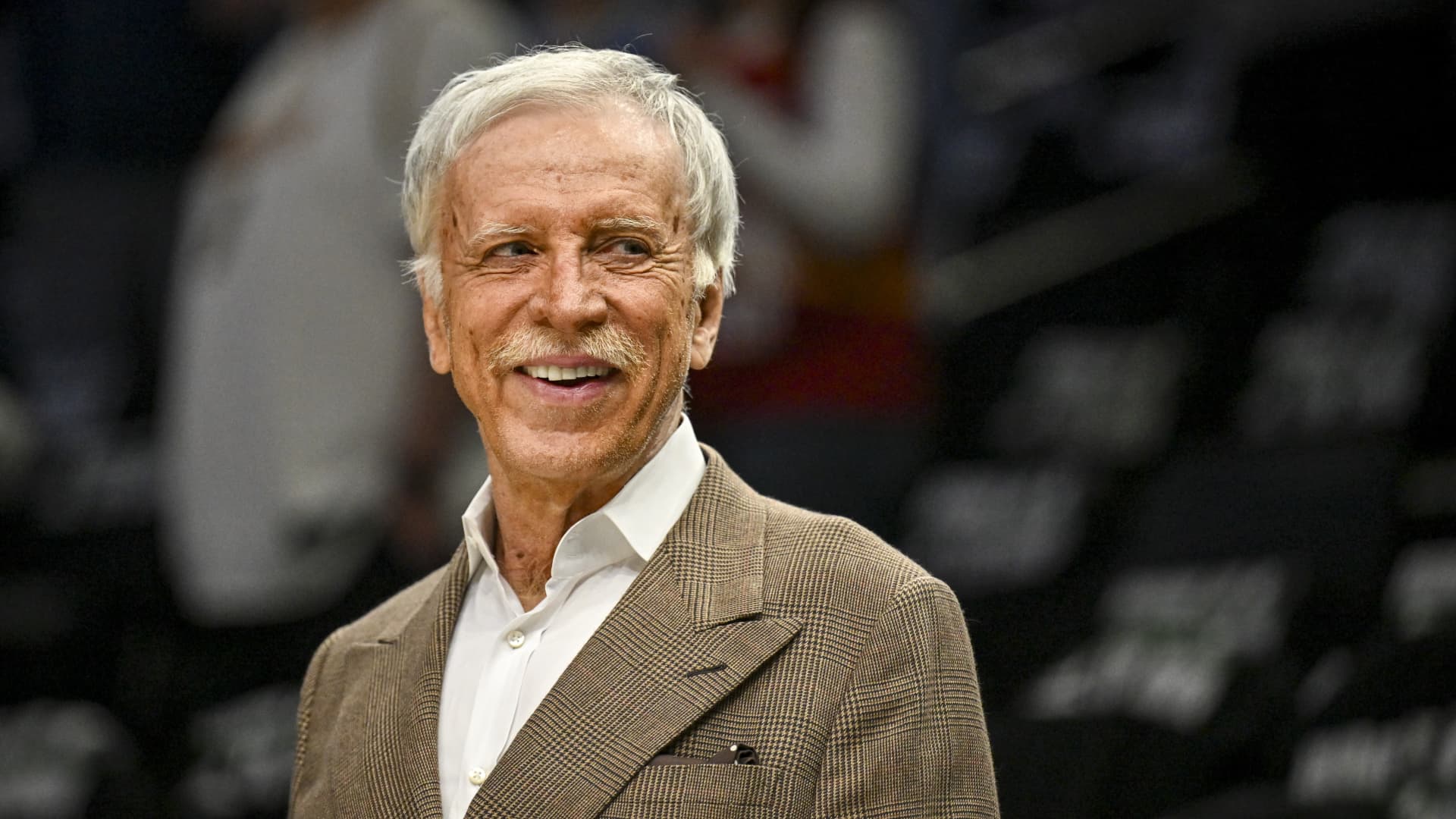
Stan Kroenke buys controlling stake in MLB's Los Angeles Angels

Owner Stan Kroenke of the Denver Nuggets on the court before Game 4 of the Nuggets’ NBA Playoffs series against the Minnesota Timberwolves at the Target Center in Minneapolis, Minnesota, April 25, 2026.

Aaron Ontiveroz | Denver Post | Getty Images

Stan Kroenke has added an MLB team to his growing sports empire, agreeing to purchase a controlling stake in the Los Angeles Angels from the Moreno family, according to a release.

The transaction values the Los Angeles Angels and their regional sports network at $4 billion, according to a person with direct knowledge of the deal, who was not authorized to speak on the matter.

Advertisement

The deal is expected to close in the first quarter of 2027, the release said.

“The Angels are a storied franchise anchored in a great market. We look forward to an exciting future with the Angels organization,” Kroenke, owner and chairman of Kroenke Sports and Entertainment, said in the release.

Denzer Guzman #23 of the Los Angeles Angels and Vaughn Grissom #5 look on during the game between the Cleveland Guardians and the Los Angeles Angels at Angel Stadium of Anaheim on Wednesday, Aug. 26, 2026 in Anaheim, California.

Rob Leiter | Major League Baseball | Getty Images

Advertisement

Kroenke Sports and Entertainment was valued at more than $26 billion in CNBC’s most recent list of the world’s most valuable sports empires, published in June.

The addition of a baseball team gives KSE ownership in every major professional sport and a deeper presence in one of the top sports and entertainment markets in the world.

Get the CNBC Sport newsletter directly to your inbox

The CNBC Sport newsletter with Alex Sherman brings you the biggest news and exclusive interviews from the worlds of sports business and media, delivered weekly to your inbox.

Subscribe here to get access today.

Advertisement

KSE also owns the NFL’s Los Angeles Rams, the NBA’s Denver Nuggets and the NHL’s Colorado Avalanche, as well as Major League Soccer’s Colorado Rapids, the National Lacrosse League’s Colorado Mammoth and the Premier League’s Arsenal Football Club.

KSE also owns SoFi Stadium and the 300-acre Hollywood Park district in Inglewood, California. Kroenke spent more than $5 billion on the stadium, which is home to both the Rams and the Los Angeles Chargers.

“The Moreno Family has been honored to steward the Angels for 23 years and we believe with KSE’s experience and success they are the best next owner for the franchise,” Arte Moreno said in a statement.

Advertisement
Continue Reading

Trending

Copyright © 2025