Connect with us
DAPA Banner

Business

Startups pushing the boundaries of cottage cheese innovation

Published

on

Startups pushing the boundaries of cottage cheese innovation
Continue Reading

Click to comment

You must be logged in to post a comment Login

Leave a Reply

Business

How AI Threatens Climate and Social Stability

Published

on

How AI is Driving Profitable Growth in Southeast Asia

The numbers from the World Economic Forum’s Executive Opinion Survey 2025 are striking, and they deserve far more attention than they have received.

Key Takeaways

  • Business leaders in Southeast Asia are significantly more concerned about AI risks than their global counterparts (ranking them fourth worldwide), fearing the technology will widen existing regional fault lines like inequality, informality, and institutional fragility.
  • The AI boom threatens to increase inequality by outpacing the readiness of small-to-medium enterprises and institutions, potentially impacting up to 164 million employees, with women and youth in service and entry-level roles expected to be the most affected by automation.
  • The expansion of data centers—essential for AI—poses an environmental risk by driving up power demand in a region heavily dependent on fossil fuels, creating a contradiction to Southeast Asia’s climate transition pledges.

While business leaders and executives worldwide rank the risks from artificial intelligence in tenth place, their counterparts in Southeast Asia place them in fourth. Six ranks higher. That is not a marginal discrepancy; it is a flashing warning light from the people closest to the ground.

To be clear, the executives surveyed are not AI skeptics or technophobes. These are the same leaders overseeing key cloud and AI investment programmes from Microsoft in Indonesia and Malaysia, Singapore’s Green Data Centre Roadmap, and an AI research and development centre from Qualcomm in Vietnam. They are beneficiaries of the boom. And yet, they are more worried than anyone else on earth.

A Region Racing Ahead of Its Own Readiness

The WEF acknowledged that while the AI boom in Southeast Asia has brought about myriad opportunities, it has also caused fault lines to widen. This is not an abstract concern. The fault lines run along the most familiar fractures in the region: inequality, informality, and institutional fragility.

Consider the employment picture. While just under half of firms in the region are beginning to scale AI, this is not the case for small and medium-sized enterprises, where most workers are employed. Even in Singapore, the most digitally advanced economy in the bloc, AI adoption sits at just 15%. 

Advertisement

The technology is advancing at one speed; the institutions and businesses expected to absorb it are moving at another. That gap is where inequality is manufactured.

The WEF report frames the stakes with unusual directness: if large companies capture most of the productivity gains while workers across the labour market face job losses, AI could increase inequality, especially when unemployment already ranks as the second greatest perceived risk in the survey. The respondents are not describing a distant dystopia. They are describing a trajectory already in motion.

Women and Youth Will Bear the Brunt

Perhaps the most sobering finding in the data concerns who stands to lose the most. AI could affect as many as 164 million employees across the region, with women and younger workers expected to be the most impacted.

This is not a coincidence of demographics. It reflects the concentration of women and young people in service, administrative, and entry-level roles, precisely the categories most susceptible to automation. 

Advertisement

In a region where youth unemployment is already a political flashpoint and gender economic participation remains uneven, AI risks amplifying existing disadvantages rather than dissolving them.

The Carbon Cost No One Wants to Acknowledge

The productivity debate dominates headlines, but there is a second, quieter crisis embedded in the region’s AI expansion. 

The WEF warned of the high power demand of data centres in a region where electrical grids are still largely dependent on fossil fuels, a trajectory likely to produce exponentially greater emissions, particularly in Malaysia, the Philippines, and Indonesia.

Southeast Asia has committed, at least rhetorically, to the climate transition. Turbocharging a data centre build-out powered by coal and gas is not a footnote to that commitment. It is a contradiction at its heart. Governments cannot credibly pursue green pledges while subsidizing the infrastructure of an AI economy that runs on fossil fuels.

Advertisement

Governance cannot Keep Waiting

The Brookings Institution has previously noted that Southeast Asia faces significant disparities in AI readiness, governance capacity, and technical expertise, and that uneven institutional capacity and fragmented governance frameworks increase exposure to AI-related risks.

That assessment is not a critique of any single government. It is a structural observation about a region of extraordinary diversity, in language, legal tradition, development level, and institutional strength. ASEAN’s consensus-based architecture, valuable in so many diplomatic contexts, is poorly suited to the pace of technological change. By the time ten nations agree on an AI governance framework, the technology will have moved on twice.

The Region Cannot Afford Complacency

The WEF survey data does not suggest Southeast Asia should slow its AI ambitions. The opportunity cost of falling behind is real, and the region’s young, digitally engaged population is genuinely one of its greatest assets in this transition.

But opportunity and risk are not opposites. They are companions. The business leaders surveyed understand this, which is why their concern levels outpace the rest of the world by such a significant margin. They are watching an enormously powerful technology land in a landscape that is, by any honest measure, not yet ready to manage its consequences.

Advertisement

The question for governments, regulators, and civil society is not whether AI will reshape Southeast Asia. It will. The question is whether the region will shape that transformation deliberately, or simply absorb it.

The survey suggests the people closest to these decisions are already nervous. Policymakers would do well to listen.

Advertisement
Continue Reading

Business

Costco expansion aims to ease overcrowded stores with 30 new sites a year

Published

on

Costco expansion aims to ease overcrowded stores with 30 new sites a year

Costco is betting big on a massive global expansion strategy, aiming to open 30 new warehouses annually over the next decade.

Driven by a combined goal to fix overcrowded stores and record-breaking demand, the retail giant is moving into new territories like Port St. Lucie, Florida, while eyeing a 50-50 split between U.S. and international growth. For the American consumer, this could mean shorter lines, better parking and more access to bulk savings as the company tackles “overburdened” locations.

Advertisement

“We tend to look five to 10 years out in terms of our real estate plans, and we would still see a really good roadmap for 30-plus warehouses a year, which is the goal that we have at least achieving 30 new warehouses a year. The goal that we set for ourselves,” Costco CFO Gary Millerchip said during the company’s second-quarter earnings call.

COSTCO SAYS YOUR NEXT CHECKOUT COULD TAKE UNDER 10 SECONDS THANKS TO NEW AUTOMATED PAY SYSTEMS

“If we want to get into some of these inner cities, you’re not going to find 25 acres available for us to go into. So how can we infill in some of these very strong markets, like Los Angeles, New York, different places, with a unique model for Costco that is going to allow us to continue to expand?” CEO Ron Vachris said.

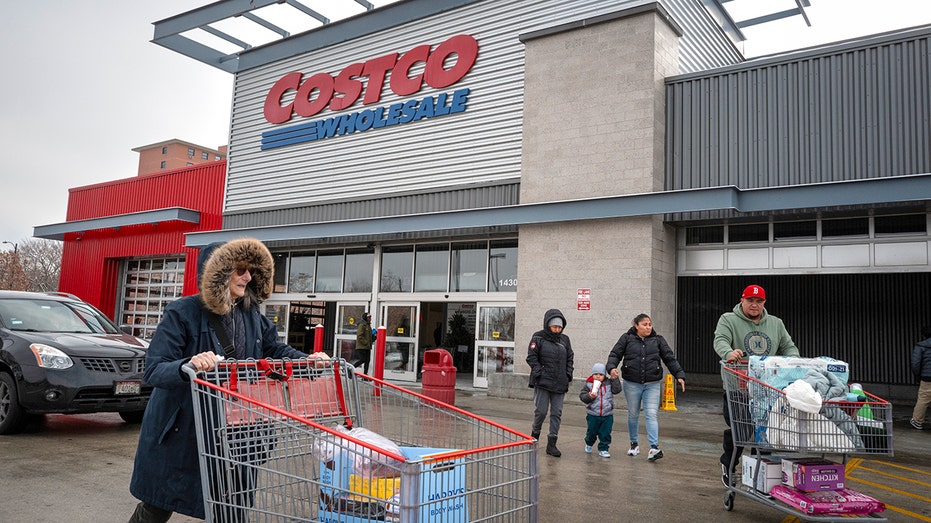
Customers with shopping carts outside Costco store

Customers walk in the parking lot outside a Costco store on Dec. 2, 2025, in Chicago. (Getty Images)

“We’re not only expanding buildings, we’re relocating and we’re also upgrading the insides of a lot of our older warehouses too,” Vachris added. “So we continue to put the money back into the company to drive top-line sales and grow our business globally.”

Advertisement

One of the more notable upcoming expansions is in Port St. Lucie, where years of speculation and endless message board requests have officially resulted in a deal for a brand-new 170,000-square-foot Costco warehouse and gas station, with the city selling the land for the site at $6 million.

While roughly half of the expansion will remain focused on the U.S. market to meet soaring demand, the long-term vision is aggressive for store expansions abroad in countries such as Spain.

“We’re expecting around half, maybe slightly over half, to be in the U.S., and then just around half to slightly under a half to be in the rest of the markets that we operate in. So think of that being Canada, Mexico, Europe, Asia, Australia,” Millerchip said.

Advertisement

With many Costco locations exceeding $300 million to $400 million in annual sales — as noted by former CFO Ron Galanti — the wholesaler is intentionally building new stores near existing high-traffic ones to redirect sales and improve the member experience.

GET FOX BUSINESS ON THE GO BY CLICKING HERE

And to move faster, Costco is no longer just building from the ground up, but also refurbishing old structures, including former home improvement stores and international grocers.

Advertisement

“We tend to focus on being our own toughest competitor or finding ways of how can we lower prices and continue to deliver more value,” Millerchip added. “So generally speaking, there’s nothing I would call out that we see an impact to our membership base when we’re competing against different operators in each market.”

READ MORE FROM FOX BUSINESS

Continue Reading

Business

DOJ reportedly pursues criminal antitrust probe of beef meatpackers

Published

on

DOJ reportedly pursues criminal antitrust probe of beef meatpackers

The Justice Department is reportedly pursuing a criminal antitrust investigation of large meatpacking companies after President Donald Trump called for them to face a probe over the higher prices facing consumers.

The Wall Street Journal reported, citing sources familiar with the matter, that while the DOJ indicated it was investigating beef companies following the president’s request, the criminal nature of the probe hasn’t been disclosed previously.

Advertisement

Trump claimed in November that beef companies were manipulating the purchase price of cattle they bought from ranchers while raising prices on consumers. The report noted that criminal antitrust cases typically focus on allegations related to market collusion or price fixing.

The Journal reported that although Trump’s comments placed blame on “majority foreign owned meatpackers,” the investigation is looking at four major companies that sell beef in the U.S. 

TRUMP TEAM PLEDGES TO DRIVE BEEF PRICES DOWN BY 2026 AS USDA CHIEF PUSHES BACK ON $10-PER-POUND WARNING

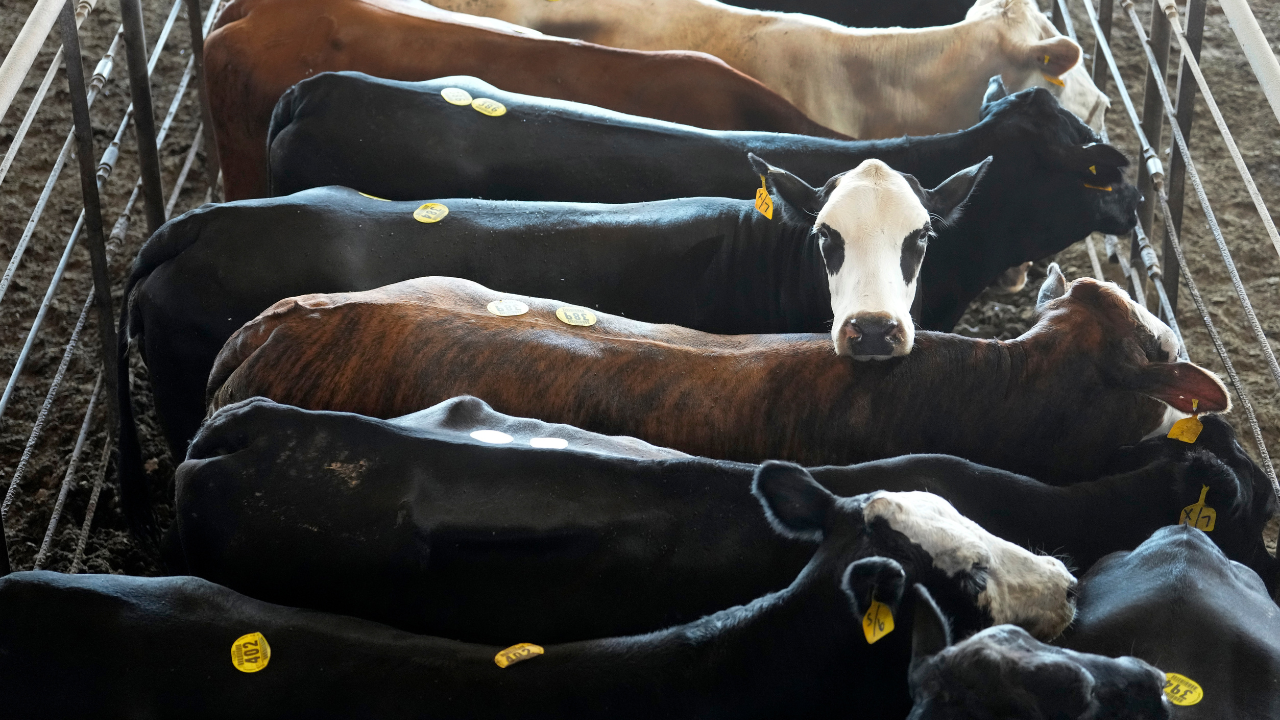
American cattle shown at a livestock auction

President Donald Trump called for meatpacking companies to be investigated over beef prices last year. (Melissa Phillip/Houston Chronicle/Getty Images)

The report noted that Tyson Foods, Cargill, JBS and National Beef are the four leading companies operating in that portion of the U.S. market, with Tyson and Cargill both U.S.-headquartered firms, while JBS and National Beef are from Brazil.

Advertisement

Antitrust regulators have looked into the contracts used by beef companies to acquire cattle from ranchers which reference a pricing benchmark that some ranchers have claimed is manipulated, one of the Journal’s sources told the outlet.

BEEF PRICES HIT RECORD HIGHS AS NATIONWIDE CATTLE INVENTORY DROPS TO LOWEST LEVEL IN 70 YEARS

Justice Department seal

The Justice Department is reportedly investigating meatpacking companies over their dealings with ranchers. (Samuel Corum/Bloomberg via Getty Images)

Additionally, the Journal reported that leading beef processors were the subject of an investigation that began in Trump’s first term and continued through Biden’s term, but was closed by the Justice Department weeks before it launched its most recent probe on similar grounds.

Beef prices have surged over the last year amid strong demand from consumers while the U.S. cattle industry is facing a shortage with the cattle supply at its lowest level in over 70 years.

Advertisement

BEEF PRICES IN FOCUS AS TRUMP SIGNS ORDER AIMED AT CONSUMER RELIEF

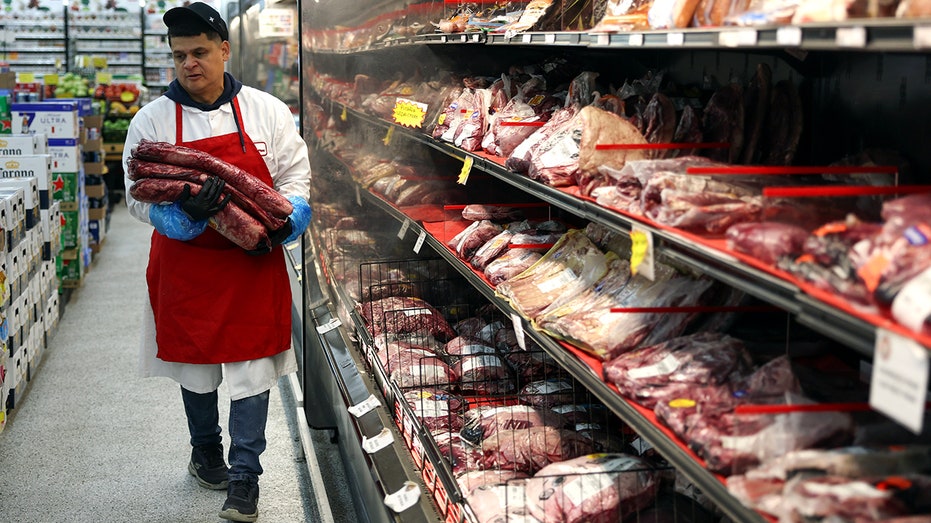
A man carries beef to the store shelf

Beef prices have surged over the last year amid the national cattle shortage. (Joe Raedle/Getty Images)

Drought contributed to the decline in the cattle supply, as it impacted grasslands in states like Texas, Oklahoma, Kansas and parts of the Southeast that were used by cattle ranchers’ herds. The loss of those foraging areas caused ranches to liquidate cows and shrink their herds.

Ranchers are also facing rising overhead costs, as items like feed, labor, fuel and equipment expenses have trended higher.

GET FOX BUSINESS ON THE GO BY CLICKING HERE

Advertisement

The Bureau of Labor Statistics’ data from the March release of the consumer price index (CPI) showed that beef and veal prices were up 12.1% over the last year. Within that category, ground beef prices are up 11% while prices for beef steaks have risen 15.2% over that period.

Continue Reading

Business

Asia stocks fall despite US-Iran truce extension; Nikkei hits record high

Published

on


Asia stocks fall despite US-Iran truce extension; Nikkei hits record high

Continue Reading

Business

OpenAI in talks to commit up to $1.5 billion to private equity joint venture, FT reports

Published

on

OpenAI in talks to commit up to $1.5 billion to private equity joint venture, FT reports


OpenAI in talks to commit up to $1.5 billion to private equity joint venture, FT reports

Continue Reading

Business

World's biggest condom maker set to raise prices due to Iran war

Published

on

World's biggest condom maker set to raise prices due to Iran war

Malaysia-based Karex produces more than five billion condoms a year and supplies global brands like Durex and Trojan.

Continue Reading

Business

Beef prices up 50% since 2021 as Trump demands action

Published

on

Beef prices up 50% since 2021 as Trump demands action

Rising beef prices are drawing renewed scrutiny as federal investigators examine whether market dynamics or potential misconduct, are driving costs higher for American consumers.

FOX Business’ Jeff Flock joined FOX Business’ Stuart Varney on “Varney & Co.” to report on a new Justice Department criminal investigation tied to the surge in beef prices as households continue to feel the strain at grocery stores.

Advertisement
Packaged U.S. beef in grocery store.

Beef on display at a grocery store in Chicago. (John Gress/Corbis / Getty Images)

POPULAR BABY FOOD BRAND HIT BY ‘CRIMINAL ACT’ AS RAT POISON FOUND IN SEIZED JAR

Government data shows ground beef prices have surged, with the Consumer Price Index putting a pound at $6.86 in March, up from $4.64 in 2021, an increase of roughly 50%. Prices are also about $1 higher than a year ago. Steak has climbed as well, reaching about $12.73 per pound.

These concerns have reached Washington. President Donald Trump, in November, called for action on rising prices and industry practices in a post on Truth Social.

“Action must be taken immediately to protect consumers, combat illegal monopolies, and ensure these corporations are not criminally profiting at the expense of the American People,” he said.

Advertisement

At Lombardi’s Prime Meats in Philadelphia, butcher Rob Passio said customers are adjusting their spending habits as prices rise.

“It is what it is. We gotta eat… Maybe they’re saving on other aspects… Maybe they are not going out to dinner as much. Maybe they’re… saving on their utilities,” Passio said.

PEPSICO REVENUES SOAR AFTER SLASHING PRICES ON LAY’S, DORITOS AMID ‘HOLISTIC’ COMPANY TRANSFORMATION

Advertisement

Industry pressures extend beyond the checkout counter. Passio pointed to rising operational costs affecting businesses across the supply chain.

“Having two businesses, everything’s high. Insurances went up, payrolls up, utilities are up. So could the meat packers at this time be like, you know what, we have to make some extra money. We have to raise the prices to cover these added expenses,” he said.

The investigation comes as the U.S. cattle herd remains at historically low levels and drought conditions continue to impact key livestock regions, factors that have contributed to tighter supply and elevated prices.

Advertisement

CLICK HERE TO DOWNLOAD THE FOX NEWS APP

Continue Reading

Business

Upslope Capital Q1 2026 Investor Letter

Published

on

Upslope Capital Q1 2026 Investor Letter

Concentrated, long/short, midcap, global developed markets. CO registered investment adviser. DISCLAIMER: Upslope Capital Management (“Upslope”) is a Colorado registered investment adviser. Upslope may only transact business in those states in which it is registered, or qualifies for an exemption or exclusion from registration requirements. Nothing published by Upslope on this or other websites should be construed by any consumer and/or prospective client as Upslope’s solicitation to effect, or attempt to effect transactions in securities, or the rendering of personalized investment advice for compensation, over the Internet. Any subsequent, direct communication by Upslope with a prospective client shall be conducted by a representative that is either registered or qualifies for an exemption or exclusion from registration in the state where the prospective client resides. For information pertaining to the registration status of Upslope, please contact the state securities regulators for those states in which Upslope maintains a registration filing. A copy of Upslope’s current written disclosure statement discussing Upslope’s business operations, services, and fees is available at the SEC’s investment adviser public information website (www.adviserinfo.sec.gov) or from Upslope upon written request. Upslope does not make any representations or warranties as to the accuracy, timeliness, suitability, completeness, or relevance of any information prepared by any unaffiliated third party, whether linked to on this or Upslope’s website or incorporated herein, and takes no responsibility therefor. All such information is provided solely for convenience purposes only and all users thereof should be guided accordingly.  From time to time, Upslope may publish research reports with the aim of receiving feedback from the broader investment community. Such materials are not intended to be investment advice and should under no circumstance be considered a recommendation to take action with respect to any security. Upslope, its Managing Member, and its clients may hold positions, long or short, in such securities, and Upslope may trade without informing or updating readers.   Investments involve risk and unless otherwise stated, are not guaranteed. Be sure to first consult with a qualified financial adviser and/or tax professional before implementing any strategy. Information published by Upslope on this website is not intended to provide investment, tax, or legal advice.

Continue Reading

Business

Bank of Queensland Limited (BKQNY) Q2 2026 Earnings Call Transcript

Published

on

OneWater Marine Inc. (ONEW) Q1 2026 Earnings Call Transcript

Bank of Queensland Limited (BKQNY) Q2 2026 Earnings Call April 21, 2026 8:01 PM EDT

Company Participants

Jessica Smith – General Manager of Investor Relations & Corporate Affairs
Rodney Finch – MD, CEO & Director
Racheal Kellaway – Chief Financial Officer

Conference Call Participants

Advertisement

Ed Henning – CLSA Limited, Research Division
Andrew Triggs – JPMorgan Chase & Co, Research Division
Andrew Lyons – Jefferies LLC, Research Division
Matthew Wilson – Jarden Limited, Research Division
Jonathan Mott – Barrenjoey Markets Pty Limited, Research Division
Sally Hong – Morgan Stanley, Research Division
Brian Johnson – MST Financial Services Pty Limited, Research Division
Carlos Cacho – Macquarie Research
Brendan Sproules – Goldman Sachs Group, Inc., Research Division
Nathan Lead – Morgans Financial Limited, Research Division
Nathan Zaia – Morningstar Inc., Research Division
Matthew Dunger – BofA Securities, Research Division
John Storey – UBS Investment Bank, Research Division
Thomas Strong – Citigroup Inc., Research Division

Presentation

Jessica Smith
General Manager of Investor Relations & Corporate Affairs

Advertisement

Good morning, and welcome to BOQ’s financial results presentation for the half year ended 28th of February 2026. My name is Jessica Smith. I am the General Manager, Investor Relations and Corporate Affairs at BOQ. On behalf of the management team, I would like to acknowledge the traditional custodians of the land we are meeting on today, the Gadigal people of the Eora Nation. We pay our respects to elders past and present.

I’m joined in the room today by BOQ’s Managing Director and Chief Executive Officer, Rod Finch; and our Chief Financial Officer, Racheal Kellaway, who will present the results. We are also joined by BOQ’s executive team. Following the briefing, there will be an opportunity for questions.

I will now hand over to Rod.

Advertisement

Rodney Finch
MD, CEO & Director

Thank you, Jess. Good morning, everyone, and thank you for joining us today. Our first half 2026 results reflect disciplined execution against our strategy and

Advertisement
Continue Reading

Business

The Hidden Energy Cost Dragging Down Metal Finishing Operations

Published

on

The Hidden Energy Cost Dragging Down Metal Finishing Operations

For most metal finishing businesses, energy is one of the largest operating costs on the books. Plating lines, rinse tanks, coating systems, and drying stages all run continuously, and the cumulative electricity bill reflects it.

What many operations do not realise is that a significant portion of that energy spend goes toward one of the least efficient tools on the production floor: compressed air.

Compressed air has been a default blowoff and drying method in metal finishing for decades. It handles the job well enough, but the efficiency picture is less flattering when you examine it closely. Generating compressed air typically requires ten times more energy than the actual pneumatic work being performed. Most of that energy dissipates as heat, leaks, and pressure loss before the air ever reaches the part surface.

For businesses managing tight margins in a competitive sector, this is not a theoretical concern. It is a recurring overhead cost that compounds across every shift, every month, every year.

Where the Loss Actually Happens

The physics of compressed air blowoff explains why the system is so wasteful. A compressed air nozzle at 80 PSI delivers high-velocity air at the nozzle tip, but pressure drops dramatically with distance. At six inches from the tip, a standard flat jet nozzle operating at 80 PSI retains only a fraction of its original impact pressure. Beyond that point, the air has spread and slowed to the point where its blowoff effectiveness drops sharply.

Advertisement

This means that for any application where parts need drying or blowoff at a working distance, the compressed air system has to work significantly harder than the actual process requires, consuming far more energy to compensate for the pressure loss inherent in the technology.

Add to this the losses from system leaks (industry estimates put average leakage rates at 20 to 30 percent of total compressed air output in typical facilities), pressure drop across long pipe runs, and the energy required to run the compressor itself, and the total cost of compressed air as a blowoff method becomes considerably higher than the electricity meter alone suggests.

The Alternative That Precision Manufacturers Are Moving To

Centrifugal blower systems paired with engineered air knives work on a fundamentally different principle. Rather than generating high-pressure air and accepting the energy losses that come with it, a blower system generates high-velocity, low-pressure airflow and delivers it through a precision-machined knife slot as a continuous, laminar curtain across the full width of the part or product.

The result is more uniform coverage, better impact efficiency at working distance, and dramatically lower energy consumption. Whereas a compressed air system might require hundreds of horsepower to dry a wide product format, a properly sized blower and air knife installation can achieve equivalent or superior drying performance at a fraction of the energy input.

Advertisement

In metal finishing specifically, where parts move through rinse and plating stages before reaching drying or blowoff points, the uniformity of air knife coverage also reduces defect rates. Spotting, streaking, and residual moisture that cause problems in downstream painting, coating, or inspection stages can often be traced back to inconsistent compressed air coverage. Properly engineered air knife systems for metal finishing address this by delivering an even, controlled sheet of airflow that covers the entire part surface consistently, regardless of part geometry.

What the Numbers Look Like in Practice

The energy savings from switching to a blower-based air knife system are substantial enough that payback periods are often measured in months rather than years, particularly in high-throughput finishing operations.

Consider a continuous drying application where compressed air currently requires 150 to 200 horsepower to maintain adequate blowoff across a production line. A centrifugal blower system sized for the same application might achieve the same result with 20 to 40 horsepower. At typical UK industrial electricity rates, that gap translates to tens of thousands of pounds in annual savings on a single line.

Beyond direct energy savings, businesses also report reductions in compressed air system maintenance costs, fewer part rejects due to inconsistent drying, and in some cases, the ability to increase line speeds because the blower system maintains effective coverage at higher throughput.

Advertisement

Sizing and Specification: Where Businesses Go Wrong

The most common mistake when evaluating a switch from compressed air to a blower and air knife system is treating it as a straightforward product selection rather than an engineering exercise. The blower model, knife slot dimensions, working distance, attack angle, and airflow velocity all need to be matched to the specific application. A system specified correctly for one application will not necessarily perform well in a different process, even if the parts look similar.

Key variables to establish before specifying a system include:

  • Part width and geometry, including any contoured surfaces that require angled airflow
  • Line speed and throughput requirements
  • The nature of what is being removed: water, rinse solution, shot blast media, or surface debris
  • Required working distance between the knife and the part surface
  • Whether the application requires ambient air, heated air, or temperature-controlled airflow

Suppliers who provide application-specific engineering rather than a catalogue recommendation will generally produce better outcomes. The difference between a correctly engineered system and an off-the-shelf approach becomes apparent quickly once production starts.

A Practical Starting Point for Metal Finishing Businesses

For operations currently running compressed air across plating lines, rinse stages, or post-coating drying, the most useful first step is an energy audit of the existing compressed air blowoff stages. Calculating the horsepower currently being consumed specifically for blowoff and drying, separate from other compressed air uses in the facility, gives you a realistic baseline against which a blower system proposal can be measured.

From there, a reputable supplier should be able to provide an application assessment and a projected energy comparison. The capital cost of a centrifugal blower and air knife installation is typically recoverable within one to two years in a high-use finishing environment, making it one of the more straightforward capital investment cases available to manufacturing businesses looking to reduce operating costs without compromising output quality.

Advertisement

In a sector where margins are tight and energy prices remain elevated, that kind of return on investment deserves serious attention from any business still relying on compressed air as its primary drying and blowoff method.

Advertisement
Continue Reading

Trending

Copyright © 2025