




Connect with us

Business

Stocks to Watch: Palantir, SpaceX, HSBC

Published

on

Stocks to Watch: Palantir, SpaceX, HSBC
Continue Reading
Click to comment

You must be logged in to post a comment Login

Leave a Reply

Business

5 REITs That Earn Me Significant Passive Income

Published

on

5 REITs That Earn Me Significant Passive Income

This article was written by

Jussi Askola is the President of Leonberg Capital, a value-oriented investment boutique that consults hedge funds, family offices, and private equity firms on REIT investing. He has authored award-winning academic papers on REIT investing, has passed all three CFA exams, and has built relationships with many top REIT executives.

He is the leader of the investing group High Yield Landlord, where he shares his real-money REIT portfolio and transactions in real-time. Features of the group include: three portfolios (core, retirement, international), buy/sell alerts, and a chat room with direct access to Jussi and his team of analysts to ask questions. Learn more.

Analyst’s Disclosure: I/we have a beneficial long position in the shares of HOM.U:CA; UDR; NRR.UN; GOODO; NET.UN:CA either through stock ownership, options, or other derivatives. I wrote this article myself, and it expresses my own opinions. I am not receiving compensation for it (other than from Seeking Alpha). I have no business relationship with any company whose stock is mentioned in this article.

Seeking Alpha’s Disclosure: Past performance is no guarantee of future results. No recommendation or advice is being given as to whether any investment is suitable for a particular investor. Any views or opinions expressed above may not reflect those of Seeking Alpha as a whole. Seeking Alpha is not a licensed securities dealer, broker or US investment adviser or investment bank. Our analysts are third party authors that include both professional investors and individual investors who may not be licensed or certified by any institute or regulatory body.

Advertisement
Continue Reading

Business

Jetstar will charge passengers to use overhead bins starting in 2027

Published

on

Jetstar will charge passengers to use overhead bins starting in 2027

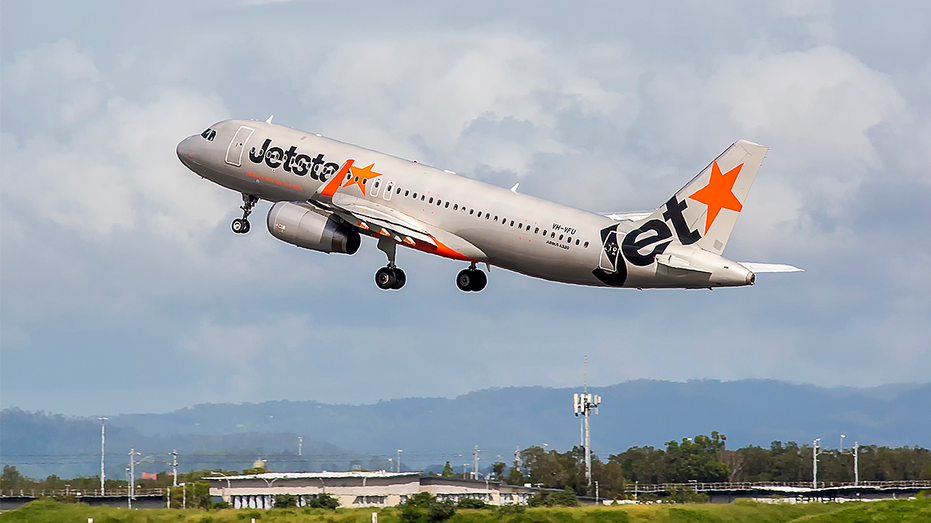
Budget Australian airline Jetstar will begin charging passengers for storing carry-on bags in the overhead compartments as part of an overhaul of the airline’s cabin baggage policy.

The new policy will take effect in February 2027, costing travelers between A$25 and A$52 ($18 and $37 USD), depending on the route, to stow large bags on a one-way flight.

Advertisement

Bags stowed in the compartments can weigh up to 22 pounds and will no longer be weighed by airline staff before boarding, removing the current 15-pound limit. This pre-purchase “Priority Carry-on” option also includes early boarding access.

Passengers will still be allowed to stow smaller bags such as a purse, laptop bag or backpack that falls within specified measurements under the seat in front of them at no charge.

AIRBUS JET COMPLETES 24-HOUR FLIGHT IN PUSH FOR WORLD’S LONGEST COMMERCIAL ROUTE

Overhead compartment

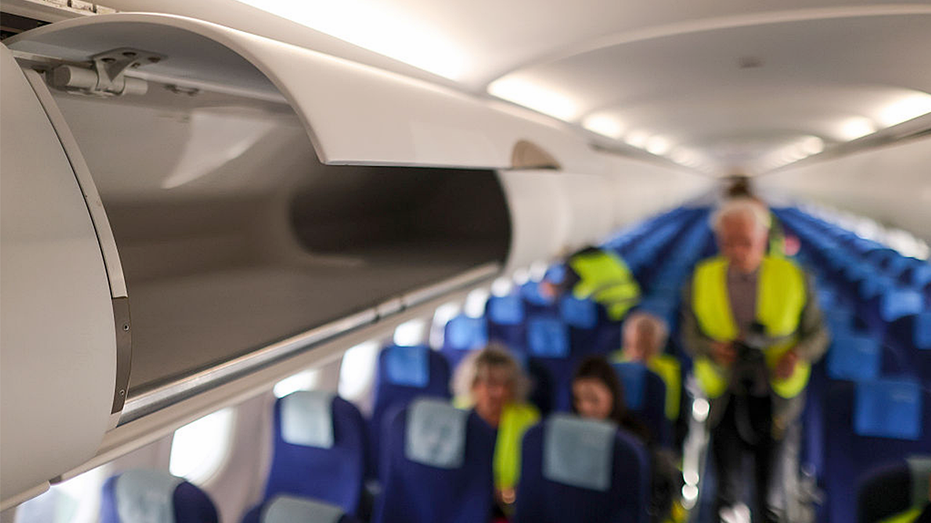
Budget Australian airline Jetstar will begin charging passengers for storing carry-on bags in the overhead compartments. (Jan Woitas/picture alliance via Getty Images / Getty Images)

Fees for baggage, excess luggage, seat selection and priority boarding make up a growing share of revenue for budget airlines. The charges have sparked criticism from some consumer groups, arguing that advertised base fares do not reflect the true cost of travel.

Advertisement

Jetstar’s policy shift comes after passengers and airline staff described having bags weighed at the gate and struggling to find room in overhead lockers as one of the most stressful parts of the airport experience, the company said in a statement.

The airline said the change would cut down on frustrations at boarding gates.

“By giving customers an underseat bag with the option to add Priority Carry-on, we can make better use of overhead locker space, streamline boarding and help more flights depart on time,” Jetstar CEO Stephanie Tully said in a statement, adding that the change would ensure customers only paid for what they needed.

Jetstar Airbus A320

The new policy will start in February 2027, costing travelers between $18 and $37, depending on the route. (Getty Images / Getty Images)

“You only pay for what you need — traveling with less means paying less, and you can always add more if you need,” she said.

Advertisement

It is now the latest low-cost carrier to introduce a payment requirement for carry-on bags, as budget airlines in the U.S. and Europe often charge passengers to use the overhead compartments.

Just like other carriers around the world, Australian and New Zealand airlines already charge for checked luggage, seat selection and some dining and in-flight entertainment options, but Jetstar’s latest announcement makes it the first to charge for overhead compartments.

RYANAIR PASSENGER RECOUNTS BEING PARTLY SUCKED OUT AIRPLANE WINDOW: ‘I AM LUCKY’

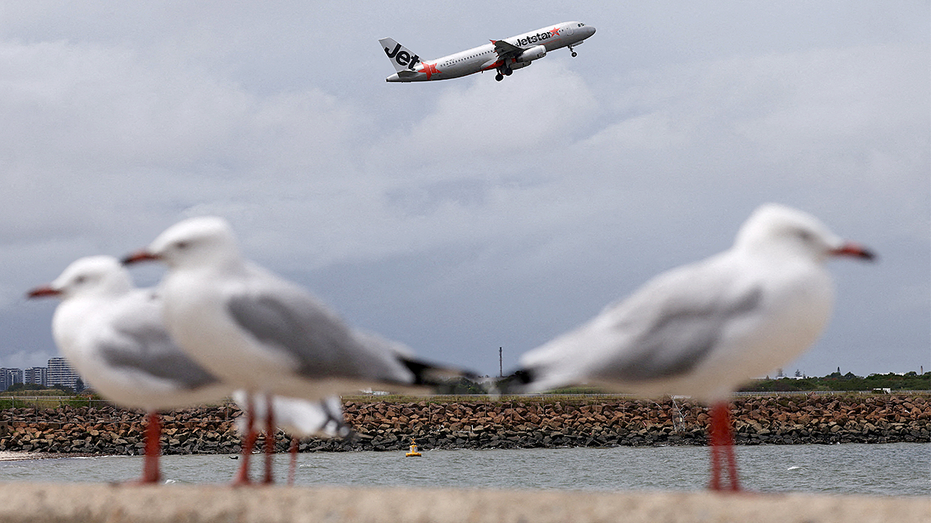
Seagulls stand on a wall overlooking the Sydney Airport as a Jetstar Airbus A320 takes off

The airline said the change would cut down on frustrations at boarding gates. (REUTERS/Hollie Adams / Reuters Photos)

GET FOX BUSINESS ON THE GO BY CLICKING HERE

Advertisement

Australian opposition Sen. Bridget McKenzie said on social media that the new changes amounted to a “cash grab.”

Federal Transport Minister Catherine King said airlines should disclose any additional charges to passengers when they purchase their tickets to avoid any “surprises” at the airport.

“Jetstar claim this change is to keep fares affordable. It will be up to them to demonstrate that to passengers,” King said in a statement.

Reuters contributed to this report.

Advertisement
Continue Reading

Business

Cashing in on SpaceX: ‘Every chance I get, I’ll sell a little more’

Published

on

Three vertical photos, from left a woman wearing a white mini dress, a woman wearing an orange strappy maxi dress and men wearing shorts and shirts all walking in the street in London

Andre Lavoie joined SpaceX in 2009 as an engineer, designing the pressure tanks that help power its rocket. He was paid partly in stock – a common trade-off at start-ups as a hiring incentive.

Some 17 years on, those 200,000 shares he was given are worth about $23m (£17m) – and the 63-year-old says he’s ready to start cashing them as soon as he can.

“Every chance I get going forward, I’ll sell a little bit more,” he tells the BBC.

“The shares have been going up so radically it keeps messing up my life plans – you really can’t know the future, so it’s better to sell early and in intervals.”

Advertisement

Lavoie is far from being the only one who has seen the value of his stake in SpaceX rocket over the years.

The company’s founder, Elon Musk, said on Fox News that SpaceX’s listing on the stock market in June had likely made “several thousand” employees millionaires – including staff “who were working on the production line”.

According to reports, there are estimated to be 4,400 new millionaires created by the listing.

Unlike most newly-listed firms, SpaceX shares are set to be released in stages: the first 20% on 6 August, with more due in batches through the rest of the year.

Advertisement

Whether or not shareholders decide to sell their stake at the first opportunity is a matter for individuals. Unlike Lavoie, some may choose to hold onto their shares altogether in the hope of bigger gains later.

SpaceX listed on the Nasdaq in June, in the biggest initial public offering (IPO) in history, valuing the rocket and satellite firm at more than $2 trillion.

It briefly made Elon Musk the world’s first trillionaire, before the stock cooled and his fortune slipped back below the milestone within weeks.

In its first results as a public company this week, the firm’s quarterly revenue was shown to have nearly doubled to $7.8bn (£5.8bn) from a year earlier, while its spending ballooned to $18.3bn – more than six times what it was a year ago.

Advertisement

Overall, SpaceX made a net loss of $143m in the three months to June, and a loss of $2bn during the first six months of the year.

Musk pushed back against sceptics on an earnings call: “I think people are really underestimating Starlink”. He predicted the satellite internet service – the one part of the company that is currently making a profit – could one day deliver a majority of the world’s internet.

But shares in the company tumbled on the back of the earnings report, with investors generally spooked by the huge amounts of money being spent on AI.

SpaceX shares fell 13.6% on Wednesday to $108.27 (£80.44) – well below the initial listing price of $135 a share.

Advertisement

Lavoie plans to use his money from selling some of his shares to fund a hotel he is renovating in Pontebba, Italy’s northeastern Friuli region, plus a small brewery.

He says is priority for the future is raising awareness of air pollution in the area, in partnership with a local environmental group.

Before he was hired, Lavoie was interviewed by Musk himself.

“He’s a very charming person when he wants something,” Lavoie says.

Advertisement

He wouldn’t be drawn on Musk’s politics – “that’s his business” – but is unreserved about the company: “I’ve always been happily supportive and impressed, and would work hard with those incredible people again.”

Some analysts value SpaceX at less than half its current stock market price, warning its ties to xAI carry real financial risk – part of a broader worry on Wall Street that sky-high valuations for AI-linked firms, including SpaceX, OpenAI and Anthropic, could prove overdone.

Sinead O’Sullivan, an economist who has previously worked for Nasa, told the BBC in June she thinks SpaceX is an “Elon Musk ego project”.

“You’re buying a share of the Elon Musk brand more than any kind of space industry,” she said.

Advertisement

But Ron Epstein, an aerospace analyst at Bank of America Securities, says the recent share price swings say more about the market than the company.

“A lot of it has to do with macro trends,” he says. “None of it really has anything to do with what’s going on fundamentally at the company.”

He says investors judging SpaceX purely as an AI bet are missing the point: “They’re not just a compute provider. They’re not just an AI company. It’s a far more complicated picture than that.”

SpaceX, he adds, has cut the cost of reaching orbit from around $10,000-$20,000 a kilogram to about $2,000 with its Falcon 9 rocket – “they have built a railroad to space.”

Advertisement

Lavoie, for his part, isn’t rattled. He says: “The solid business model of SpaceX will prove itself to be worth the investment,”even as he takes some of his own winnings off the table.

Continue Reading

Business

Restaurant Brands International (Q2) 2026 earnings

Published

on

Restaurant Brands International (Q2) 2026 earnings

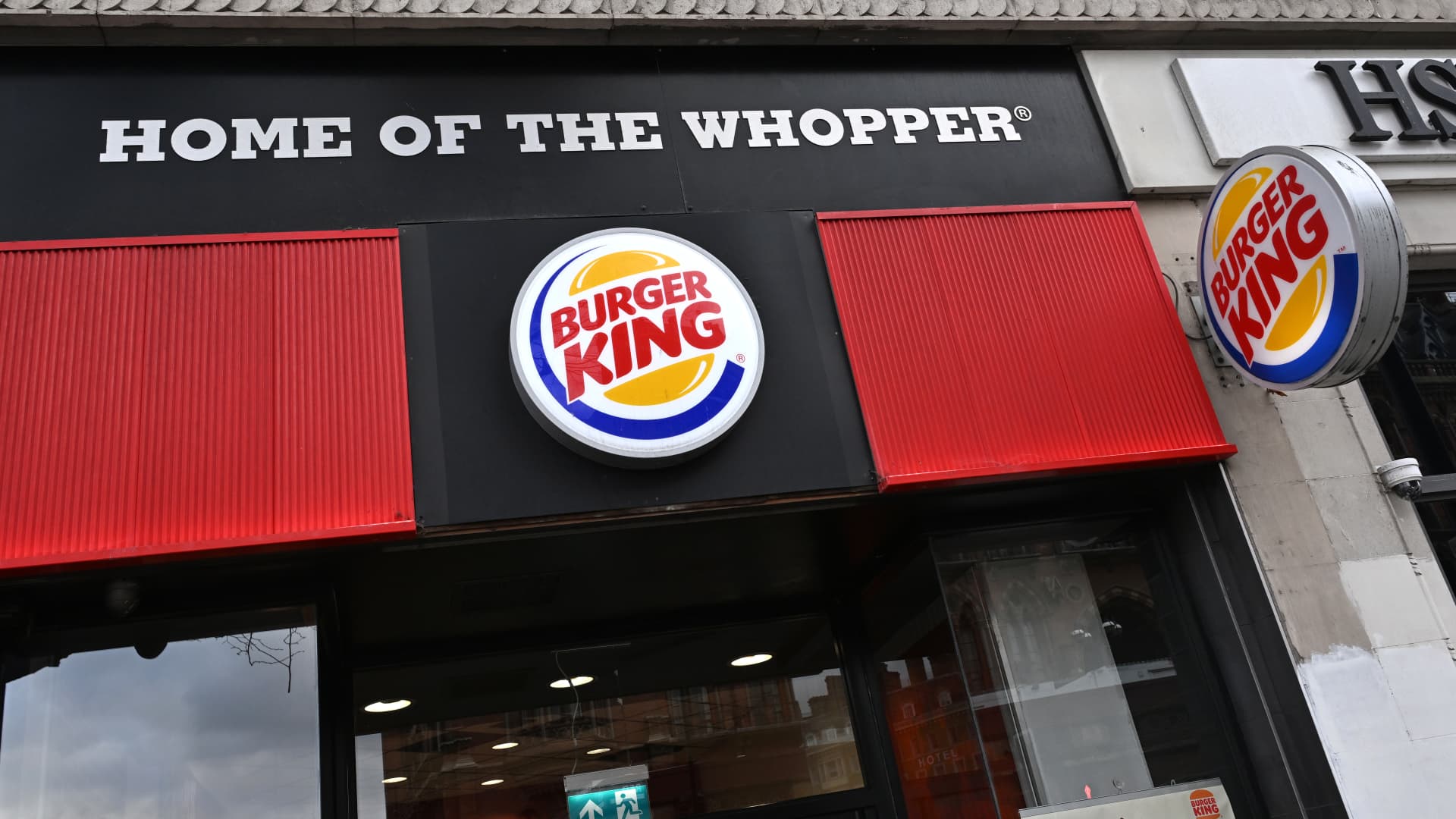
A general view of logo and signage for a Burger King, Home of the Whopper on January 29, 2026 in London, United Kingdom.

John Keeble | Getty Images

Restaurant Brands International on Thursday reported quarterly earnings that topped analysts’ expectations, fueled by strong growth for the once struggling Burger King, both domestically and abroad.

Advertisement

“Burger King’s performance is a great example of what’s possible when you invest in the fundamentals and execute well – an approach we’re applying across all of our brands,” Restaurant Brands CEO Josh Kobza said in a statement.

Here’s what the company reported compared with what Wall Street was expecting, based on a survey of analysts by LSEG:

  • Earnings per share: $1.07 adjusted vs. $1.03 expected
  • Revenue: $2.52 billion, in line with expectations

Restaurant Brands reported second-quarter net income attributable to shareholders of $507 million, or $1.45 per share, up from $189 million, or 57 cents per share, a year earlier.

Excluding transaction costs, advisory fees and other items, the company earned $1.07 per share.

Net revenue rose 4.5% to $2.52 billion.

Advertisement

Burger King’s U.S. same-store sales climbed 8.5%. In recent quarters, the burger chain’s turnaround has taken hold in its home market. Restaurant renovations, sharper marketing and a focus on core menu items like the Whopper have helped Burger King steal market share.

Rival McDonald’s reported U.S. same-store sales growth of just 0.8% in its second quarter, for comparison. Executives said that they were disappointed by the performance, and McDonald’s tapped a new U.S. president to help accelerate its sales.

Burger King is also seeing strong results outside of the U.S. Restaurant Brands said international Burger King restaurants saw same-store sales growth of 5.4% during the quarter.

But the rest of Restaurant Brands’ did not fare as well.

Advertisement

Tim Hortons’ same-store sales in Canada and overall were essentially flat for the quarter, while Popeyes Louisiana Kitchen reported U.S. same-store sales declines of 5.2%. The fried chicken chain has struggled in recent quarters as more chains compete for a smaller pool of diners, who have grown increasingly value conscious.

Choose CNBC as your preferred source on Google and never miss a moment from the most trusted name in business news.
Continue Reading

Business

Earnings call transcript: Aareal Bank posts solid H1 2026 results, keeps outlook

Published

on


Earnings call transcript: Aareal Bank posts solid H1 2026 results, keeps outlook

Continue Reading

Business

Persimmon sees house sales rise but says market remains ‘challenging’

Published

on

Business Live

The York-based firm has seen revenues rise 15% in the first half of the year

Plans for a new housing development at Upper Callerton, on the outskirts of Newcastle.

Plans for a new housing development at Upper Callerton, on the outskirts of Newcastle. (Image: Persimmon North East. )

Housebuilder Persimmon said the UK’s housing market remains “challenging” despite seeing a significant rise in sales in the first half of the year.

The York-based firm completed 5,189 sales – up 13% from the same period last year – and said it was on course to complete 12,500 homes in 2026, at the top end of its previous guidance. Group revenues increased 15% to £1.73bn and profit before tax was 15% up at £168m.

Persimmon said that net private sales were up 6% in the five weeks to the end of June, but it added that open market sales have “softened slightly in recent weeks” due to tough conditions in the wider housing market. Average house prices on its properties rose 1% to £285,752.

Group chief executive Dean Finch said: “Persimmon delivered a strong first half performance, growing our market share, increasing completions by 13% and underlying operating profit by 10%. In a challenging market, this performance demonstrates the strength of our established strategy, product mix and geographic footprint, alongside the benefits of our lower cost operating model, sustained investment in the business and ongoing commitment to self-help.

Advertisement

“We remain on track to deliver growth in 2026 in line with market expectations. I want to thank all my colleagues and our supply chain for their continued hard work in delivering this result.

“Market conditions remain challenging, with affordability constraints and build cost pressures affecting the sector. We have responded quickly, taking clear management action focusing on driving operational efficiencies throughout the business. Our disciplined land buying, industry-leading cost efficiency and vertically integrated operating platform give us important structural advantages as we seek to mitigate cost pressures and support growth.

“Persimmon’s strategy is delivering growth. Having significantly invested in our strategy over recent years, our focus is increasingly on converting those investments into improving returns. Our disciplined land investment at better margins, outlet growth, stronger brands and increasingly differentiated operating platform position us to progressively deliver higher volumes, stronger cash-generation and improving returns over time.”

Persimmon said it had increased market share and was “well-placed to drive further growth through our unique set of capabilities”. The company, which also operates the Charles Church brand, is the UK’s fourth largest housebuilder by volume, though, in common with its rivals, it has seen the number of homes it has built fall in recent years due to challenges in the wider economy.

Advertisement
Continue Reading

Business

Admiral profit falls 18% as UK car insurance division reports decline

Published

on

Business Live

Boss hails electric vehicle market as EV insurance surged 27% and European operations swung to profit

An Admiral sign

Admiral is pushing into EV insurance

Admiral saw its profits slide as the insurance giant was dragged down by reduced earned premiums in its UK motor business.

The group’s pre-tax profit declined by 18 per cent to £429.2m in the first half of the year, while turnover held steady at £3.11bn.

Milena Mondini, group chief executive, told City AM the market had been particularly subdued at the end of 2024 and into 2025, prompting the insurer to raise prices at the start of the year to keep pace with claims inflation, adding that she anticipates this will bear fruit in the second half of the year.

Within its motor division, Admiral recorded a 27 per cent increase in its electric vehicle (EV) insurance book, alongside growing demand for its complimentary subscription service aimed at offsetting the costs of EV ownership.

Advertisement

Mondini said Cardiff-based Admiral has been “very competitive for EVs” from a very early stage as EVs are “a great feature for the planet”.

Notwithstanding the challenges facing its UK motor arm, its European operation swung to a profit of £17.2m, recovering from a £0.6m loss the previous year. Mondini said she was “particularly proud” of France, which was running at “very strong margin” and double‐digit growth.

Customer numbers climbed by 5 per cent, surpassing 12 million for the first time.

Admiral shares climbed 4.4 per cent in early trading on Thursday. The stock has gained more than a fifth in value since the beginning of the year.
Advertisement

Matt Britzman, senior equity analyst at Hargreaves Lansdown, said: “The headline profit decline only tells half the story. Yes, Admiral is feeling the impact of last year’s softer motor pricing, but under the hood, it’s navigating the turn in the cycle well.

“There are also encouraging signs that Admiral is becoming more than a UK Motor story. Household, Europe and Admiral Money are all moving in the right direction. Near-term earnings may remain a little uneven, but the route back to growth is becoming clearer, and the building blocks for a stronger 2027 are falling into place.”

Continue Reading

Business

Wynn Resorts Adjusted Earnings Top Estimates as Casino Revenue Rises

Published

on

Wynn Resorts Adjusted Earnings Top Estimates as Casino Revenue Rises

Wynn Resorts’s WYNN quarterly revenue rose as the casino operator saw resilient demand from the wealthy customers it caters to.

“We service a very particular customer, and that customer has held up extremely well,” Chief Executive Craig Billings said during a call with analysts.

Copyright ©2026 Dow Jones & Company, Inc. All Rights Reserved. 87990cbe856818d5eddac44c7b1cdeb8

Continue Reading

Business

SpaceX Shares Plunge 13.6% After First Public Earnings as AI Capex Surge and Lockup Spark Selloff

Published

on

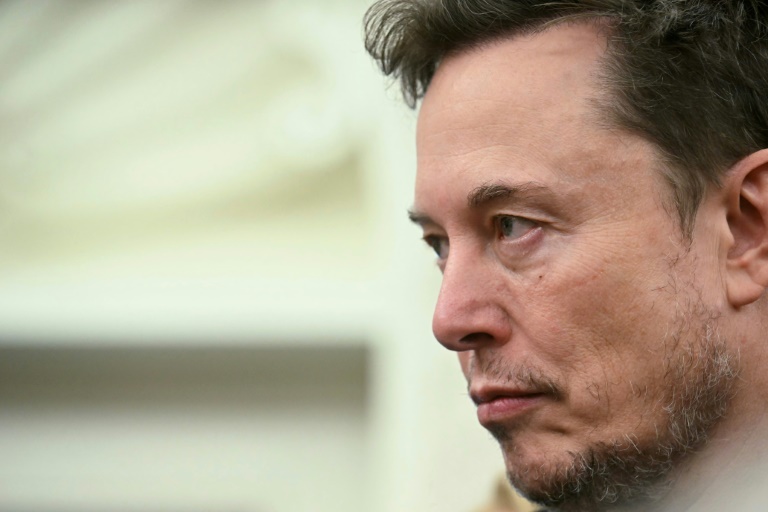
Elon Musk has stepped back from his job of cutting government spending by firing civil servants and gutting or closing departments

NEW YORK — Shares of Space Exploration Technologies Corp. plunged 13.61% on Wednesday, closing at $108.27 after the company’s first quarterly results as a public firm revealed explosive revenue growth that was overshadowed by heavy capital spending on artificial intelligence infrastructure and an impending release of insider shares.

The stock fell $17.06 from its previous close of $125.33, wiping out recent gains and extending a sharp decline from the June IPO peak near $225. After-hours trading saw a modest rebound to about $110. Volume surged well above average as investors weighed the debut earnings report against the scale of ongoing investment and a partial lockup expiration scheduled for Thursday that could free roughly 911 million employee and early-investor shares.

SpaceX reported second-quarter revenue of $7.81 billion, up 92% from $4.07 billion a year earlier and well above Wall Street estimates that clustered near $6.8 billion to $6.9 billion. The net loss narrowed to $541 million from $1.01 billion in the year-ago period. Adjusted EBITDA rose 191% to $3.54 billion. The company ended the quarter with approximately $100 billion in cash, cash equivalents and marketable securities and a backlog of $47.5 billion.

Revenue growth was broad-based. The Connectivity segment, anchored by Starlink, generated $4.29 billion, up 66% year over year, and produced $1.66 billion in operating income. Starlink subscribers doubled to 12 million. The AI segment delivered $2.56 billion in revenue, up 247%, though it recorded a $1.26 billion operating loss. The Space segment contributed $962 million in revenue with a $542 million operating loss, reflecting continued investment in Starship development.

Advertisement

Capital expenditures reached $18.4 billion in the quarter, of which $15.8 billion was directed at AI infrastructure. That level of spending, roughly 235% of quarterly revenue, drew the sharpest focus from investors. Management indicated capital spending would remain elevated at similar levels for at least the next two quarters as the company expands compute capacity, Starship production and next-generation Starlink satellites.

“2026 has been a momentous year so far, and the second quarter demonstrated the true power of SpaceX,” Chief Financial Officer Bret Johnsen said in the earnings release. “Revenue growth accelerated across all our business segments and we delivered strong operating leverage, with significant margin expansion led by our new AI compute agreements. Our unparalleled leadership in launch, Starlink subscriber growth, new enterprise and government partnerships, and best-in-class AI infrastructure underscore our ability to drive meaningful scale and deliver attractive returns.”

On the earnings call, Johnsen said the company had already signed an additional $6.7 billion in cloud services contracts in the early weeks of the third quarter and remained on track to reach a $100 billion annualized revenue run rate by the end of 2026, including expected contribution from the pending $60 billion acquisition of Cursor. He noted that new compute capital deployments were showing a payback period of less than one year.

Chief Executive Elon Musk described an accelerated timeline for long-term growth. Internal projections for reaching $1 trillion in annual revenue had moved forward to 2030 from 2031, with a non-zero chance of achieving the milestone as early as 2029. Musk said SpaceX expects to end 2026 with more than two gigawatts of compute capacity and closer to 10 gigawatts by the end of 2027, relying exclusively on Nvidia hardware for its data centers.

Advertisement

“We’re building AI compute capacity at scale faster than anyone else,” Musk said. On Starship, he stated: “With Starship, our aspirations, and I think we will achieve these aspirations, are to deliver well over 1 million tons to orbit per year, and probably ultimately 10 million tons per year.” He added that the $100 billion annualized revenue run rate target by December “is not a question mark. That’s what we would achieve if we basically did nothing.”

The company also highlighted two successful Starship Version 3 flight tests in the past 90 days, progress toward rapid reusability, the release of Grok 4.5, and more than $6 billion in multi-year U.S. government contracts for Starshield. Cloud services agreements signed in the period totaled $14.1 billion in contracted sales.

Despite the operational strength, investors focused on the capital intensity required to sustain the AI expansion and the near-term supply of shares from the lockup release. The partial unlock on August 6 involves shares held by employees and early investors and is separate from the main 180-day lockup that runs through December and a longer restriction on Musk’s holdings. Analysts and traders had flagged the event as a potential source of volatility in the weeks leading up to the earnings report.

Starlink average revenue per user declined year over year to $66, reflecting expansion into lower-priced international markets even as subscriber growth remained robust. The Space segment showed sequential improvement in revenue but continued to post operating losses tied largely to Starship research and development.

Advertisement

SpaceX completed its initial public offering in June at $135 per share, raising approximately $85.7 billion in net proceeds in what was described as the largest IPO in market history. The company also issued $25 billion in investment-grade senior notes later that month. The stock initially surged above $225 before giving back most of those gains amid concerns over valuation, capital intensity and the approaching unlock of restricted shares.

Wednesday’s decline left the shares below the IPO price and roughly halved from the post-IPO high. Short interest has remained elevated, and options activity showed a pronounced skew toward puts around the $100 and $110 strikes.

Management reiterated that the combination of Starlink cash generation, contracted AI compute demand and a strengthened balance sheet positions the company to fund its multi-year ambitions in launch, connectivity and artificial intelligence while maintaining long-term capital discipline. Investors will now watch the pace of share sales following the lockup release, the trajectory of free cash flow as capital spending continues at elevated levels, and evidence that the AI infrastructure investments are converting into the rapid payback periods management has described.

The first public earnings report delivered clear evidence of rapid top-line growth and expanding adjusted profitability in core areas, yet the market’s reaction underscored the high bar set by the company’s valuation and the scale of investment still required to realize the long-term targets Musk outlined.

Advertisement
Continue Reading

Business

Clear Channel earnings missed, revenue topped estimates

Published

on


Clear Channel earnings missed, revenue topped estimates

Continue Reading

Trending

Copyright © 2025