









Connect with us

Business

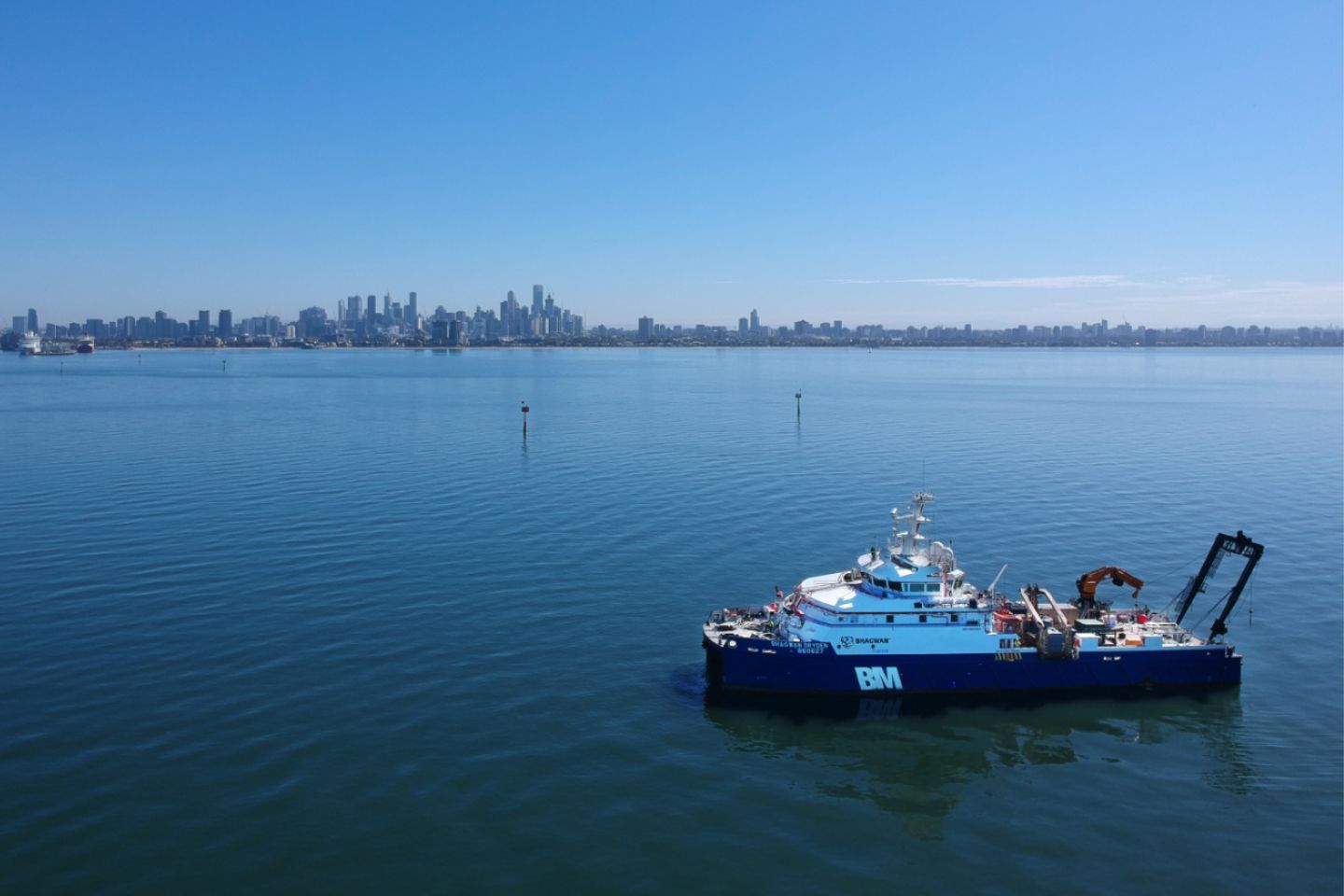
Supreme Court dismisses Monadelphous’ $2.6m claim against Bhagwan Marine

Published

on

Supreme Court dismisses Monadelphous’ $2.6m claim against Bhagwan Marine

The Supreme Court of WA has dismissed Monadelphous’ action against Bhagwan Marine, which involved an alleged $2.6 million worth of damage to a marine barge.

Continue Reading
Click to comment

You must be logged in to post a comment Login

Leave a Reply

Business

Tokenised Deposits vs Stablecoins: Why Thailand’s Cautious Path Differs from Hong Kong and Singapore

Published

on

Malaysian E-Commerce Startup Borong Leads Asia-Pacific's Fastest-Growing Companies Ranking
  • Hong Kong and Singapore are advancing tokenised deposits into live commercial use, with major banks including HSBC and Standard Chartered already serving institutional clients on blockchain-based treasury platforms. Thailand is pursuing a parallel but slower path, designing a fully reserved, baht-pegged stablecoin intended first for wholesale interbank settlement.
  • The divergence reflects differing regulatory philosophies rather than differing destinations. Banks across the region are favouring tokenised deposits over stablecoins partly due to deposit insurance protections and lighter compliance requirements, while Thailand’s sequenced approach prioritises design completeness and public consultation over speed to market.

Asia-Pacific’s financial institutions have split into two distinct tracks in the race to build programmable digital money. Hong Kong and Singapore are already moving tokenised deposits into commercial production, while Thailand is deliberately taking a slower, more sequenced route toward a baht-pegged stablecoin. The contrast says as much about regulatory philosophy as it does about market readiness, and it is shaping where institutional capital and infrastructure investment land next.

Hong Kong moves from pilot to real money

Hong Kong’s tokenisation programme has gone furthest, fastest. In November 2025 the Hong Kong Monetary Authority shifted its tokenised deposit pilot from test transactions to real-value settlement, bringing in seven banks to issue tokenised deposits and settle interbank transfers on a shared platform: Bank of China (Hong Kong), China Construction Bank (Asia), Fubon Bank, Fusion Bank, Standard Chartered Hong Kong, Bank of East Asia and HSBC. Asset managers BlackRock and Franklin Templeton joined as participants alongside Hong Kong Exchanges and Clearing and payment network JETCO.

The initial focus is tokenised money market fund transactions, letting banks and asset managers manage liquidity and treasury positions in real time rather than waiting on traditional settlement cycles. The programme runs through all of 2026, using Hong Kong’s existing Real Time Gross Settlement system before the HKMA upgrades to 24/7 settlement in tokenised central bank money. Four themes frame the wider experimentation: fixed income and investment funds, liquidity management, green and sustainable finance, and trade and supply chain finance.

Standard Chartered has already taken the model commercial. Its Hong Kong and Singapore units launched a tokenised deposit solution built on Ant International’s blockchain treasury platform, Whale, moving the collaboration from pilot to production and covering HKD, CNH, USD and SGD for Ant’s intragroup treasury flows. HSBC has gone further still, debuting its Tokenized Deposit Service in Hong Kong with Ant International as first client before extending the product to corporate clients in the US and UAE in the first half of 2026.

Singapore leans on corporate treasury use cases

Singapore’s push has centred on the same Standard Chartered-Ant International partnership, with the bank’s Singapore unit enabling SGD and USD transactions that interoperate with the Hong Kong leg’s HKD, CNH and USD capabilities. For Ant International, which runs merchant services and treasury solutions for SMEs worldwide, the appeal is near real-time, 24/7 liquidity movement between entities without relying on traditional correspondent banking rails.

Advertisement

More broadly, Singapore is positioning itself alongside Hong Kong and the UAE as a jurisdiction that can combine regulatory clarity with credible financial infrastructure to attract institutional stablecoin and tokenisation business, a competitive dynamic playing out as more of the region’s fintech investment concentrates in fewer, better-regulated hubs.

Why banks prefer tokenised deposits for now

The tilt toward tokenised deposits over stablecoins is not incidental. Regulatory reclassification is doing much of the work: both the EU’s MiCAR framework and the US GENIUS Act treat most stablecoins as e-money tokens requiring specific licensing that many issuers do not hold, while tokenised deposits, as regulated bank liabilities, sidestep that compliance burden entirely. There is also a protection gap that matters to treasurers moving large balances: stablecoins carry no deposit insurance, whereas tokenised deposits do.

The competitive pressure behind this shift is real. In IBM’s 2026 banking survey, 42 percent of executives said it was likely that major corporations would issue their own stablecoins, a scenario that could erode banks’ transaction fees, deposit bases and customer data. Sixty-three percent of corporate banking executives now see providing tokenised services, rather than resisting them, as their primary role going forward.

Thailand’s wholesale-first, carbon-linked approach

Thailand is building toward the same destination by a different, slower road. The Bank of Thailand’s design study for a baht-backed stablecoin is nearing completion, with a strict full-reserve requirement: tokens pegged 1:1 to the baht and backed by reserves held in segregated accounts at licensed institutions, redeemable on demand. Public hearings are expected before the end of 2026, with formal regulations targeted for late 2026 or early 2027, as Thailand Business News has reported.

Advertisement

The sequencing is deliberate. BoT governor Vitai Ratanakorn has said the stablecoin will function first as a settlement instrument between licensed financial institutions, with any public rollout considered only afterward, an approach that mirrors Hong Kong’s wholesale-first pilot more than it does a retail-facing product launch. Authorities are also examining a role for the stablecoin in carbon credit trading, tying the initiative to Thailand’s net-zero commitments alongside its payments modernisation goals.

This builds on groundwork already laid through the BoT’s wholesale CBDC work under Project Inthanon and mBridge, and its Programmable Payment Sandbox, launched in 2024 and expanded in December 2025 to test baht-backed stablecoins and programmable payment use cases under supervision. The central bank has also used the period to tighten enforcement around unregulated settlement loops, including a crackdown that saw roughly 5,000 accounts linked to peer-to-peer renminbi payment activity suspended between February 2025 and May 2026.

What the contrast means

Hong Kong and Singapore are racing ahead on live, bank-led infrastructure serving multinational treasuries today. Thailand, by contrast, is building toward the same wholesale settlement function but insisting on a completed design study, full-reserve rules and public consultation before anything goes live, a pace consistent with the BoT’s broader caution on digital assets. That gap creates near-term opportunity for regional banks and treasury platforms operating out of Hong Kong and Singapore, but it also means Thai institutions have longer to prepare for a framework designed to avoid the reserve and redemption gaps that regulators elsewhere are still working through.

For now, the practical test will be the BoT’s public hearings later this year and the results emerging from its sandbox, both of which will determine whether Thailand’s cautious sequencing pays off in a more resilient rollout, or simply cedes first-mover advantage to its regional rivals. The broader pattern is one Thailand Business News has tracked across Southeast Asian fintech more generally: rapid regional growth running up against fragmented, jurisdiction-by-jurisdiction regulation that leaves institutions weighing speed against consistency.

Advertisement
Continue Reading

Business

Verbio SE 2026 Q4 – Results – Earnings Call Presentation (OTCMKTS:VBVBF) 2026-09-25

Published

on

OneWater Marine Inc. (ONEW) Q1 2026 Earnings Call Transcript

This article was written by

Seeking Alpha’s transcripts team is responsible for the development of all of our transcript-related projects. We currently publish thousands of quarterly earnings calls per quarter on our site and are continuing to grow and expand our coverage. The purpose of this profile is to allow us to share with our readers new transcript-related developments. Thanks, SA Transcripts Team

Continue Reading

Business

Trump hosts Xi for state dinner at the White House

Published

on

Chinese leader Xi Jinping raises his champagne flute during a toast at a state dinner in the White House hosted by US President Donald Trump

When the BBC entered the dining hall for the dinner, SpaceX CEO Elon Musk was standing over a table and appeared to be telling an entertaining story that had two others nearby barreled over with laughter.

Defence Secretary Pete Hegseth was at another table, with a serious look on his face. His wife is sat beside him, with Jared Kushner and White House chief of staff Monica Crowley nearby.

The White House invited scores of US officials, as well as conservative broadcasters, tech industry bosses, social media CEOs and other corporate executives.

Attendees included members of Trump’s cabinet, as well as family members like his children Ivanka, Eric and Tiffany.

Advertisement

Bosses from the tech industry in attendance included Apple’s Tim Cook, OpenAI’s Sam Altman, Google’s Sundar Pichai, Amazon’s Jeff Bezos and Nvidia’s Jensen Huang.

Both Cook and Huang were seated at the same table as Trump and Xi. As was Musk, who previously worked in Trump’s administration leading the effort to shrink government.

Other companies whose leaders were in attendance include General Motors, Visa, Paramount Skydance, ExxonMobil and more.

Social media mogul Mark Zuckerberg also attended, as well as Jeff Yaas, the American billionaire who owns a share of TikTok.

Advertisement

“Everybody wanted to be there,” Trump said ahead of the event. “I would say you have the entire tech world, the entire banking world, and a lot more.”

But one notable absence was Anthropic – one of the biggest and most valuable AI firms in the world. The BBC has asked Anthropic if it was invited, or if they chose not to be there.

Continue Reading

Business

What's the smallest amount you'd ask a friend to pay back?

Published

on

Yasmin Rufo smiles while a young man points at the camera wearing jeans and a New York City T-shirt.

We ask New Yorkers to share the smallest amount they’d ask a friend to pay back.

Continue Reading

Business

Sampo buys back 5.05 million shares in week 39

Published

on


Sampo buys back 5.05 million shares in week 39

Continue Reading

Business

Inox Clean Energy likely to file Rs 10,000 crore IPO with Sebi

Published

on

Inox Clean Energy likely to file Rs 10,000 crore IPO with Sebi
New Delhi: Inox Clean Energy is likely to file a draft red herring prospectus for a ₹10,000 crore initial public offering of shares with the market regulator before the weekend, in what could be the largest IPO from a private Indian renewable energy company to date, people familiar with the matter said. The planned offering will comprise an issue of fresh shares by the INOXGFL Group company and an offer for sale from some of its existing shareholders, the people said.

The INOXGFL Group did not respond to ET’s queries. Government-backed NTPC Green Energy made a similar-sized IPO in November 2024.

Read more: Sebi clears PRIM route for PMS players to invest in mutual funds, SIFs; Rs 25 lakh minimum ticket

Inox Clean Energy in last December made a confidential DRHP filing with the Securities and Exchange Board of India, but withdrew it later. The latest plan comes after it raised funds privately from a diverse group of investors that included prominent global and local institutions, and expanded capacity through acquisitions in India and overseas. The company operates two related businesses: renewable energy generation and manufacturing of solar photovoltaic modules and cells.

Advertisement

Read more: Snapdeal parent AceVector raises Rs 189 crore from anchors; Negen, Singularity among top investors


It expanded its power generation and manufacturing businesses rapidly over the past year and a half, both organically and through an aggressive M&A strategy.
Inox Neo Energies, the company’s independent power generation vertical, operates renewable power plants with a total capacity of 5 gigawatts. An additional 11 gigawatts of projects are under development.

Continue Reading

Business

BlackBerry Limited 2027 Q2 – Results – Earnings Call Presentation (TSX:BB:CA) 2026-09-25

Published

on

OneWater Marine Inc. (ONEW) Q1 2026 Earnings Call Transcript

This article was written by

Seeking Alpha’s transcripts team is responsible for the development of all of our transcript-related projects. We currently publish thousands of quarterly earnings calls per quarter on our site and are continuing to grow and expand our coverage. The purpose of this profile is to allow us to share with our readers new transcript-related developments. Thanks, SA Transcripts Team

Continue Reading

Business

Opinion: Bringing clarity to the ‘grey zone’

Published

on

Opinion: Bringing clarity to the ‘grey zone’

OPINION: Marrying ethical intent with practice requires us to honestly assess our motivations and actions.

Continue Reading

Business

NSE’s modest listing puts spotlight on muted gains from big IPOs

Published

on

NSE’s modest listing puts spotlight on muted gains from big IPOs
The relatively modest stock market debut of the National Stock Exchange (NSE) has put the spotlight on the listing performance of India’s biggest IPOs, as several of the recent ones have struggled to deliver the kind of listing pop often associated with a buoyant primary market. NSE gained 2% on the listing day, while many of the other large issues in recent years either listed at a discount or managed only modest gains.

NSE listing performance highlights struggles of India's recent big IPOs<br>ET Bureau

Read more: Snapdeal parent AceVector raises Rs 189 crore from anchors; Negen, Singularity among top investors
Hyundai Motor India, which raised ₹27,870 crore in October 2024 in India’s largest IPO by issue size, fell 7.1% on listing day. LIC, which raised ₹20,557 crore in May 2022, dropped 7.7% on debut, while One97 Communications, the operator of Paytm, tumbled 27.2%. Tata Capital, which raised ₹15,512 crore in October 2025, managed a gain of 1.3% on listing day.
Read more: NSE shares list with gains on debut day: How much Radhakishan Damani, Raamdeo Agrawal & other ace investors’ stakes are now worth
The record has been mixed after up to one year of listing, though there have been exceptions. LG Electronics India surged 48.2% on its debut and is currently about 48% above its issue price. ICICI Prudential Asset Management, which listed in December 2025, is about 47% above its offer price.

Continue Reading

Business

Bolton plans industrial space and homes on land removed from green belt

Published

on

Business Live

Health Innovation Bolton is largest site covered in council proposals

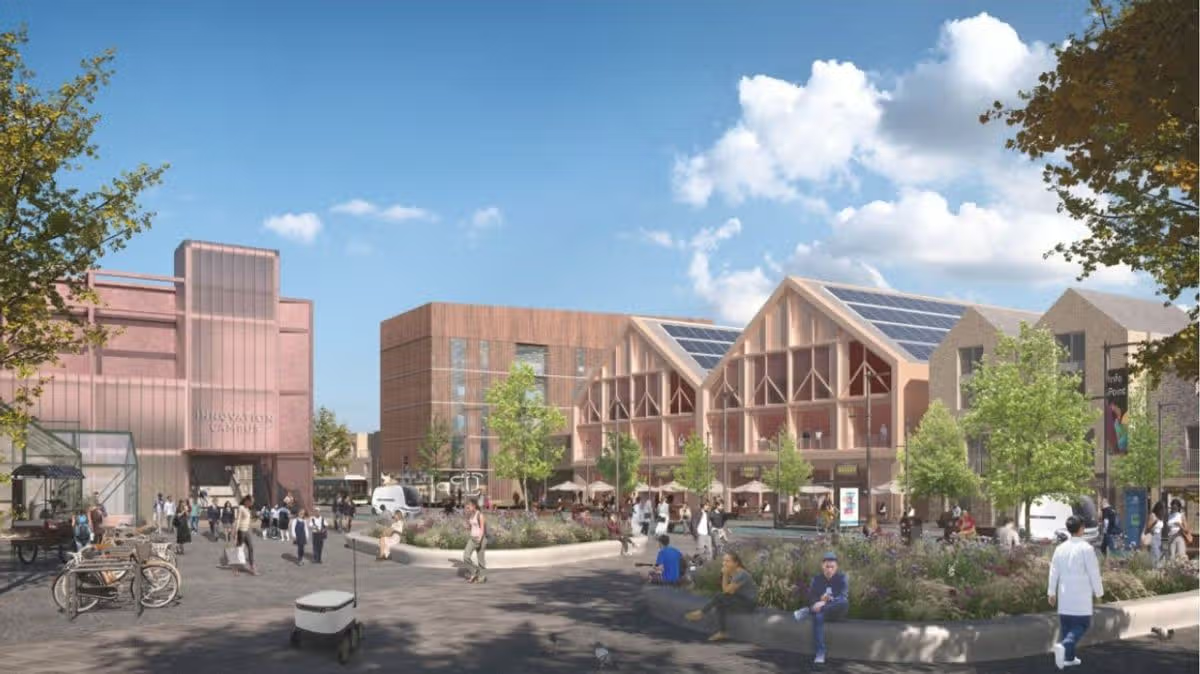
How the Health Innovation Bolton (HIB) project could look

How the Health Innovation Bolton project could look(Image: Health Innovation Bolton (HIB))

Bolton council wants to develop three areas which are currently green belt.

Advertisement

Their draft plan identifies the main areas where up to 14,052 new homes and a minimum of 135,099 sq m of industrial space is to be built before 2042.

Health Innovation Bolton (HIB) is the largest site earmarked to be taken out of the green belt. It is a large area of land between Royal Bolton Hospital and the M61 where it is proposed 1,895 homes and 40,839 sq ft of employment space will be created.

Another current green belt area within the draft plans is described as the Blackrod employment cluster, which is green land close to the village’s railway station. It is allocated for 44,800 sq m of employment space.

The third potential area of green belt to disappear is an extension to the Logistics North industrial park, just off the M61, near Over Hulton. That would accommodate between 30,000 to 80,000 sq m of employment space and possibly some housing.

Advertisement

A council cabinet report states that there are ‘two mixed use sites’ in the plan.

It said: “Health Innovation Bolton is a health innovation district combining housing with employment located with the hospital and the University of Greater Manchester medical school, creating high-quality jobs across healthcare, education, research, innovation, manufacturing and supporting sectors and the Logistics North extension floorspace is expressed as a range because it may include an element of housing to the west, reflecting its position between Logistics North and neighbouring residential areas.”

The report identifies a need for 14,052 housing units to be built during the period of the plan. Sites which already enjoy planning permission make up 4,976 of that number.

Additional strategic and ‘key housing allocations’ identify another 5,715 new homes. They are made up of Crompton Place (340), Health Innovation Bolton (1,895), Anchor Lane, Farnworth (460), Lee Hall (1,450), Ditchers Farm, Westhoughton (570) and Burnden Way, Middlebrook (1,000).

Advertisement

The report said the remainder of the home build target would be met by strategic housing and employment land availability assessment sites (1,741) and windfall sites (1,600).

The report contains a section titled ‘Brownfield Prioritisation and Green Belt’. It said: “Brownfield regeneration remains the priority and the first source of supply, and regenerating the town centre in particular is the starting point for the plan.

“Crompton Place is allocated because of its prominent location and should not be read as the only site that will come forward.

“The green belt boundary was established by Places for Everyone.

Advertisement

“This plan alters it only in exceptional circumstances, to meet identified development needs that cannot be met elsewhere.

“All available sources of supply have been assessed, and the needs cannot be met on brownfield or other non-green belt land within the borough.”

If the cabinet approves the proposals at its meeting on Monday, September 28, the draft local plan will go out for public consultation. Following that period, the representations received and assessment will be reported to council in December. At that stage approval to submit the local plan will be sought.

An inspector appointed by the Secretary of State from the Planning Inspectorate will then test the plan’s legal compliance and soundness at public hearings, expected during 2027.

Advertisement

The council said that timetable depends on the Planning Inspectorate’s capacity, with a large number of authorities, including several Greater Manchester districts, expected to submit in December.

Earlier this month, an agreement was signed by partners hoping to bring forward Health Innovation Bolton, the largest green belt allocation in the draft local plan. Partners said it would ‘create a new neighbourhood’ and transform much of the south of Bolton.

The agreement was between organisations including Bolton council, Peel Land and the hospital trust, which would have a capital investment of £520M.

The group said a public consultation on the scheme will take place in 2027 ahead of any planning application.

Advertisement
Continue Reading

Trending

Copyright © 2025




















