Connect with us
DAPA Banner
DAPA Coin
DAPA
COIN PAYMENT ASSET
PRIVACY · BLOCKDAG · HOMOMORPHIC ENCRYPTION · RUST
ElGamal Encrypted MINE DAPA
🚫 GENESIS SOLD OUT
DAPAPAY COMING

Business

Technology and liquidity are reshaping India’s investment landscape: Kailash Kulkarni

Published

on

Technology and liquidity are reshaping India's investment landscape: Kailash Kulkarni
India’s mutual fund industry has undergone a remarkable transformation over the past few years, driven by technology adoption, greater awareness about liquidity, and a shift towards long-term financial planning. According to Kailash Kulkarni, from HSBC Mutual Fund, the behavioural change among investors has been one of the most significant developments in the country’s financial landscape.

Speaking to ET Now, Kulkarni said the COVID-19 pandemic played a critical role in reshaping investment preferences. During the crisis, many households discovered that traditional assets such as real estate were not as easy to liquidate as they had once believed.

“People realised that liquidity has a cost. You had a house, but you could not sell it. Businesses were shut, salaries stopped for some people, and money was needed urgently. They realised that real estate was not easy to unlock as they had thought earlier.”

The experience prompted many investors to rethink how they allocated their savings. Mutual funds, with their ease of redemption and accessibility, emerged as a preferred alternative.

Advertisement

Technology Accelerated Financial Inclusion

Kulkarni credited technology for making investing simpler and more accessible than ever before. Digital platforms have dramatically reduced onboarding times, allowing investors to complete transactions within minutes.
“All these apps that are there in the market, and the ease with which integration has happened across onboarding and transactions, mean you can literally do everything within five minutes. That has been a big behavioural change.”
He noted that while technology was a powerful enabler, the real catalyst was investors’ growing appreciation for liquidity.
“Clients told us that when they needed money, they could redeem their mutual fund units immediately. In some cases, they could not even go to a bank to redeem a fixed deposit because branches were inaccessible. Those were the baby steps that fuelled the whole technology story and the idea of looking at mutual funds more positively.”

According to Kulkarni, serious money began flowing into mutual funds after investors witnessed these advantages firsthand, a trend reflected in the sharp acceleration of SIP growth since 2020.

Investors Are Asking Questions, Not Pressing the Sell Button
Market volatility over the past year has tested investor conviction, particularly among younger participants who entered the market after 2020. Yet Kulkarni believes the industry’s response has been encouraging.

“Ten years ago, if these kinds of choppy markets had existed, I can guarantee you the sell button would have been hit very often. Now investors do not hit the sell button immediately; they consult.”

Advertisement

He acknowledged that younger investors tend to react more quickly to market swings.

“It is the younger investor who is more adept at using fintech apps. They can buy or sell a mutual fund with the same ease with which they order an Uber. These are the people who get shocked quickly when volatility happens.”

However, he believes access to historical market data has helped investors stay invested through difficult periods.

“Today, you can show investors what happened in 2000, in 2008, and during COVID. Every time markets corrected sharply, the units accumulated at lower levels eventually generated strong returns when the recovery came.”

Advertisement

Communication Gap Remains a Challenge
Despite growing awareness, mutual fund participation remains relatively low. Kulkarni pointed to findings from SEBI’s Investor Survey 2025, which showed that while 63% of households are aware of securities market products, only 9.5% actively invest.

He believes the industry bears part of the responsibility.

“We are too technical in our conversations. We talk about ratios, abbreviations, and globally used terms. The retail investor does not understand that.”

Kulkarni argued that financial communication must become simpler and more localised.

Advertisement

“We are still largely communicating in English and to some extent Hindi. We are not communicating enough in Marathi, Bengali, Tamil, Kannada, Assamese, or other regional languages. People want simple answers. They want to know whether they can earn better returns than a fixed deposit and what kind of safety is involved.”

Smaller Cities Driving the Next Wave of Growth
While assets under management remain concentrated in major metropolitan centres, Kulkarni said transaction data paints a very different picture.

According to him, SIP registrations from cities beyond the top 30 urban centres are growing faster than those from major metros.

“Today, the number of SIPs coming from beyond the top 30 cities is outpacing SIPs from the top 30 cities. If you look at the number of investors and transactions instead of only AUM, you will see the real change happening.”

Advertisement

He added that wealth levels in cities such as Mumbai, Delhi, and Bengaluru remain higher, which explains their larger contribution to industry assets. However, participation is broadening rapidly across smaller towns and cities.

Patience Is Becoming the New Investment Theme
Kulkarni stressed that investor education remains central to maintaining confidence during volatile phases.

“Data is the truth. There are periods when SIPs may not generate returns for 15 or 18 months. At times, returns may even be negative. But when the cycle turns, those units accumulated at lower NAVs can suddenly deliver returns of 14% or 18%.”

He also highlighted the importance of adapting communication for younger audiences.

Advertisement

“Investors under 30 do not have the patience to listen to a 30-minute explanation. You have to communicate through short videos, reels, and concise messages that they can absorb quickly.”

Balancing Excitement With Long-Term Wealth Creation
The rise of speculative trading and digital assets has sparked concerns about over-financialisation among younger investors. Kulkarni acknowledged the risks but advocated a balanced approach.

“Many young investors made money when markets and digital currencies were rising rapidly, but they have also experienced losses of 30%, 40%, or even 50% in the current market.”

His advice is simple: separate excitement from long-term wealth creation.

Advertisement

“I tell young people to keep an excitement kitty. Use it for thrill and excitement. Travel, enjoy life, and spend on experiences. But also keep some money safe and invest it for the long term without looking at it every day.”

A Bullish Outlook for the Industry
Looking ahead, Kulkarni remains highly optimistic about the growth potential of India’s mutual fund industry.

Household participation in financial assets has already risen significantly over the past few years, and he believes the trend has much further to run.

“We were in low single digits in 2021 and have now reached low double digits. Can we reach 30% or 40% over the next ten years? Why not?”

Advertisement

He cited improving investor engagement, technological advancements, stronger distributor networks, and awareness campaigns by industry bodies as key drivers of future growth.

“Awareness is growing. Technology is enabling more people to invest. Distribution partners are engaging more closely with clients. I have never seen an industry so well positioned.”

Kulkarni concluded with a strong vote of confidence in the sector’s future.

“I am a super bull. Our industry will do exceedingly well.”

Advertisement
Continue Reading
Click to comment

You must be logged in to post a comment Login

Leave a Reply

Business

Vedanta Power shares rise 4%, snap 2-day losing streak since listing

Published

on

Vedanta Power shares rise 4%, snap 2-day losing streak since listing
The shares of Vedanta Power rose 4% on Wednesday, after falling for two consecutive days following their much-awaited market debut after the mega demerger on Monday.

Vedanta Power debuted at Rs 41.80 per share on the NSE on Monday. The shares of the company fell 2% on the first day, and another 2% on Tuesday.

The shares of Vedanta Power jumped around 4% today to trade at Rs 42 apiece on the NSE, crossing its listing price. The company’s market capitalisation currently stands at more than Rs 16,126 crore.

Also read:
Vedanta Power shares list at Rs 42 as mega demerger concludes

About Vedanta Power

Vedanta Power has more than 4 GW of installed capacity in four strategic assets in Punjab, Andhra Pradesh, Chhattisgarh and Odisha. It has several long-term and mid-term Power Purchase Agreements (PPAs) with state utilities.The power company aims to become one of India’s top three private thermal power players by FY33 through a combination of organic expansion and asset turnarounds. Its portfolio comprises Vedanta Power Talwandi Sabo Thermal Plant in Punjab (1,980 MW), Vedanta Power Meenakshi Energy in Andhra Pradesh (1,000 MW), Vedanta Power Sakti in Chhattisgarh (600 MW operational with another 600 MW under commissioning), and Vedanta Power Jharsuguda Thermal Plant in Odisha (600 MW).

Also read:
Vedanta Aluminium vs Vedanta Power; which can give investors better wealth in Rs 2 lakh crore demerger play

Advertisement

About Vedanta demerger

The Anil Agarwal-led conglomerate announced in April that each of its eligible shareholders will get one share in each of the four companies, namely Vedanta Aluminium, Vedanta Power, Vedanta Oil & Gas and Vedanta Iron & Steel, for every share held in Vedanta held on record date, marking one of the biggest corporate restructurings in India’s metals and mining space.


Vedanta had set May 1 as the record date for the much-awaited demerger. According to exchange notices, Vedanta Oil & Gas, Vedanta Power, Vedanta Aluminium Metal and Vedanta Iron & Steel, which made their much-awaited market debut on Monday, were initially placed in the Trade-to-Trade (T2T) segment, where every transaction results in compulsory delivery.

Also read:
4 new Vedanta Group stocks debut on Dalal Street. What’s ahead?
(Disclaimer: Recommendations, suggestions, views and opinions given by the experts are their own. These do not represent the views of The Economic Times)

Continue Reading

Business

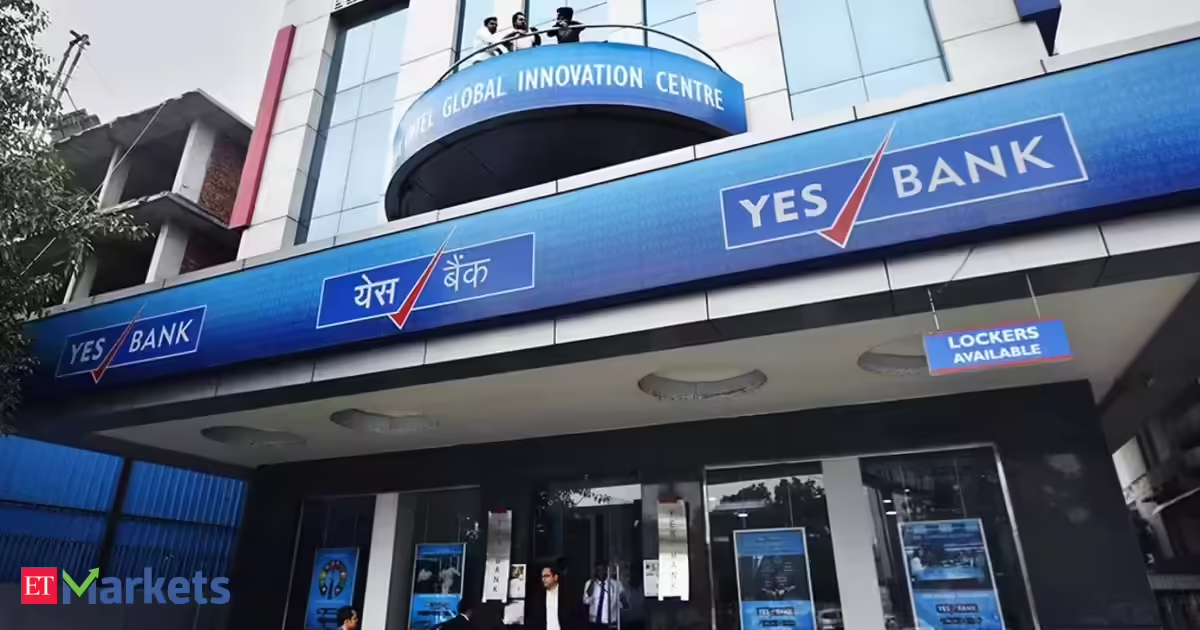
Yes Bank shares rally 15% in 4 sessions. What are technicals suggesting for traders?

Published

on

Yes Bank shares rally 15% in 4 sessions. What are technicals suggesting for traders?
Shares of Yes Bank gained as much as 6.5% to their day’s high of Rs 25.45 on the BSE on Wednesday, extending gains for a fourth straight session and rallying 15% over the same period. The private lender’s stock price is up 17% in 2026 and about 26% in one year.

From a fundamental perspective, the recent uptrend comes on the back of the lender announcing a strategic partnership with Northern Arc Capital aimed at expanding access to credit, scaling digital lending and offering debt investment opportunities to customers.

Also read: 5 under-the-radar stocks owned by 3 largest smallcap portfolios

For traders, here’s what technicals suggest

Ajit Mishra, Senior Vice President at Religare Broking, said Yes Bank share price has seen a healthy recovery from its crucial support zone near Rs 17 and is now moving towards a major hurdle at around Rs 26, which coincides with its 20-week exponential moving average (WEMA).

Advertisement

He expects the stock to face some consolidation around that level, with a decisive breakout above Rs 26 potentially triggering the next leg of the recovery. Mishra advises short-term traders to consider booking partial profits near Rs 26 and wait for sustained strength above that level before re-entering, or accumulate on dips towards the Rs 23-24 zone.

Ruchit Jain, Vice President of Technical Research at Motilal Oswal, said the banking and NBFC space has started gaining momentum and has outperformed the broader market this month. He noted that Yes Bank has broken above its key resistance level of Rs 24, supported by rising volumes over the past few sessions. According to Jain, the stock’s 200-week exponential moving average, placed around Rs 26, will be an important resistance level to watch.


Virat Jagad, Senior Technical Research Analyst at Bonanza, said the stock has delivered a decisive breakout above a long-term descending trendline resistance, backed by a strong bullish candle that cleared major overhead supply.
He noted that the RSI has moved firmly into bullish territory above 60 without any bearish divergence, signalling strong upward momentum. Jagad added that the stock’s EMAs remain aligned in a structural uptrend, supporting fresh long positions in the Rs 24.00-Rs 24.60 range, with upside targets of Rs 28.50 and Rs 31. He recommends a stop loss at Rs 22.80 for fresh positions and a trailing stop loss at Rs 21.90 for existing holdings.Read more: AI boom hands HFCL investors nearly 200% returns in just 6 months. Overheated or undervalued?

Yes Bank Q4 snapshot

The private lender reported a 45% year-on-year surge in net profit to Rs 1,068 crore for the January-March quarter of FY26, while its net interest income rose 16% YoY to Rs 2,638 crore for the quarter under review.

Net interest margin (NIM) gained 20 bps to 2.7%, while asset quality improved. Gross non-performing assets (NPA) ratio declined 30 bps YoY to 1.3%, while net NPA ratio declined 10 bps to 0.2%.

Advertisement

(Disclaimer: Recommendations, suggestions, views and opinions given by the experts are their own. These do not represent the views of The Economic Times)

Continue Reading

Business

Zeta Global: Why This AI Platform Is Just Getting Started (NYSE:ZETA)

Published

on

Zeta Global: Why This AI Platform Is Just Getting Started (NYSE:ZETA)

This article was written by

Dear Reader,I am a Senior Derivatives Expert with over 10 years of experience in the field of Asset Management, specializing in equity analysis and research, macroeconomics, and risk-managed portfolio construction. My professional background covers both institutional and private client asset management, where I have advised on and implemented multi-asset strategies, but highly focusing on equities and derivatives.As you might be as well, I am a stock market enthusiast. My core passion lies in understanding how macro trends influence both asset prices and investor behavior. I closely follow EU and US central bank policies, sector rotation, and sentiment dynamics, and construct actionable investment strategies.BA in Financial Economics, MA in Financial Markets. In the past decade, I have navigated through various market conditions, and this was my PhD.One of the essential goals of writing on Seeking Alpha is to share insights with colleagues, fellow investors, exchange ideas, and become slightly better than yesterday. I contribute to the idea that investing should be accessible, inspiring, and empowering. It might sound like a cliche, I know, but in the end it’s highly valuable – so let’s help each other build confidence in long-term investing. The analysis and opinions shared in my articles and comments are for informational purposes only and should not be considered financial advice. Please do your own research before making any investment decisions.Thank you and have a lovely day!Best regards

Analyst’s Disclosure: I/we have no stock, option or similar derivative position in any of the companies mentioned, but may initiate a beneficial Long position through a purchase of the stock, or the purchase of call options or similar derivatives in ZETA over the next 72 hours. I wrote this article myself, and it expresses my own opinions. I am not receiving compensation for it (other than from Seeking Alpha). I have no business relationship with any company whose stock is mentioned in this article.

Seeking Alpha’s Disclosure: Past performance is no guarantee of future results. No recommendation or advice is being given as to whether any investment is suitable for a particular investor. Any views or opinions expressed above may not reflect those of Seeking Alpha as a whole. Seeking Alpha is not a licensed securities dealer, broker or US investment adviser or investment bank. Our analysts are third party authors that include both professional investors and individual investors who may not be licensed or certified by any institute or regulatory body.

Advertisement
Continue Reading

Business

Japan moves toward first-ever consumption tax cut, adds to fiscal strain

Published

on

Japan moves toward first-ever consumption tax cut, adds to fiscal strain


Japan moves toward first-ever consumption tax cut, adds to fiscal strain

Continue Reading

Business

BMW shares slide after China weakness, Iran war prompt profit warning

Published

on

BMW shares slide after China weakness, Iran war prompt profit warning


BMW shares slide after China weakness, Iran war prompt profit warning

Continue Reading

Business

At Close of Business podcast June 17 2026

Published

on

At Close of Business podcast June 17 2026

Sam Jones and Nadia Budihardjo discuss the Asian engagement feature in the recent Business News magazine.

Continue Reading

Business

King doubles down on BHP strike support

Published

on

King doubles down on BHP strike support

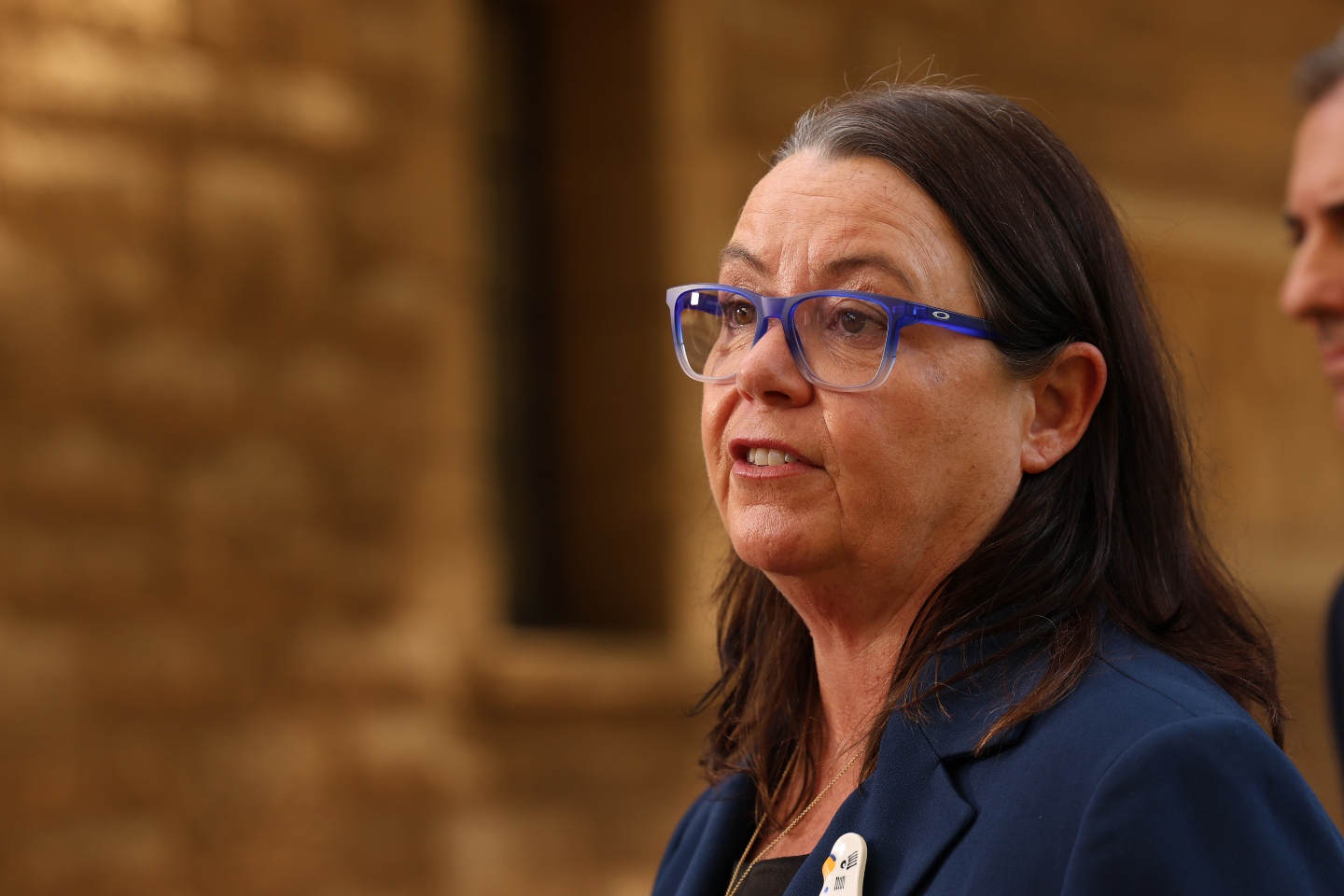
Resources Minister Madeleine King used a visit to Perth to reaffirm her support for strike action at BHP’s Port Hedland operations, which could cost the miner up to $120 million per day.

Continue Reading

Business

Ubtech Robotics: Site Visit Takeaways – Multiple Catalysts Ahead, Maintain Buy

Published

on

Baidu: Pivoting To AI Infrastructure, Robotaxis, And Embodied Robotics At A Discount

Ubtech Robotics: Site Visit Takeaways – Multiple Catalysts Ahead, Maintain Buy

Continue Reading

Business

Green light for $1b Gingin battery

Published

on

Green light for $1b Gingin battery

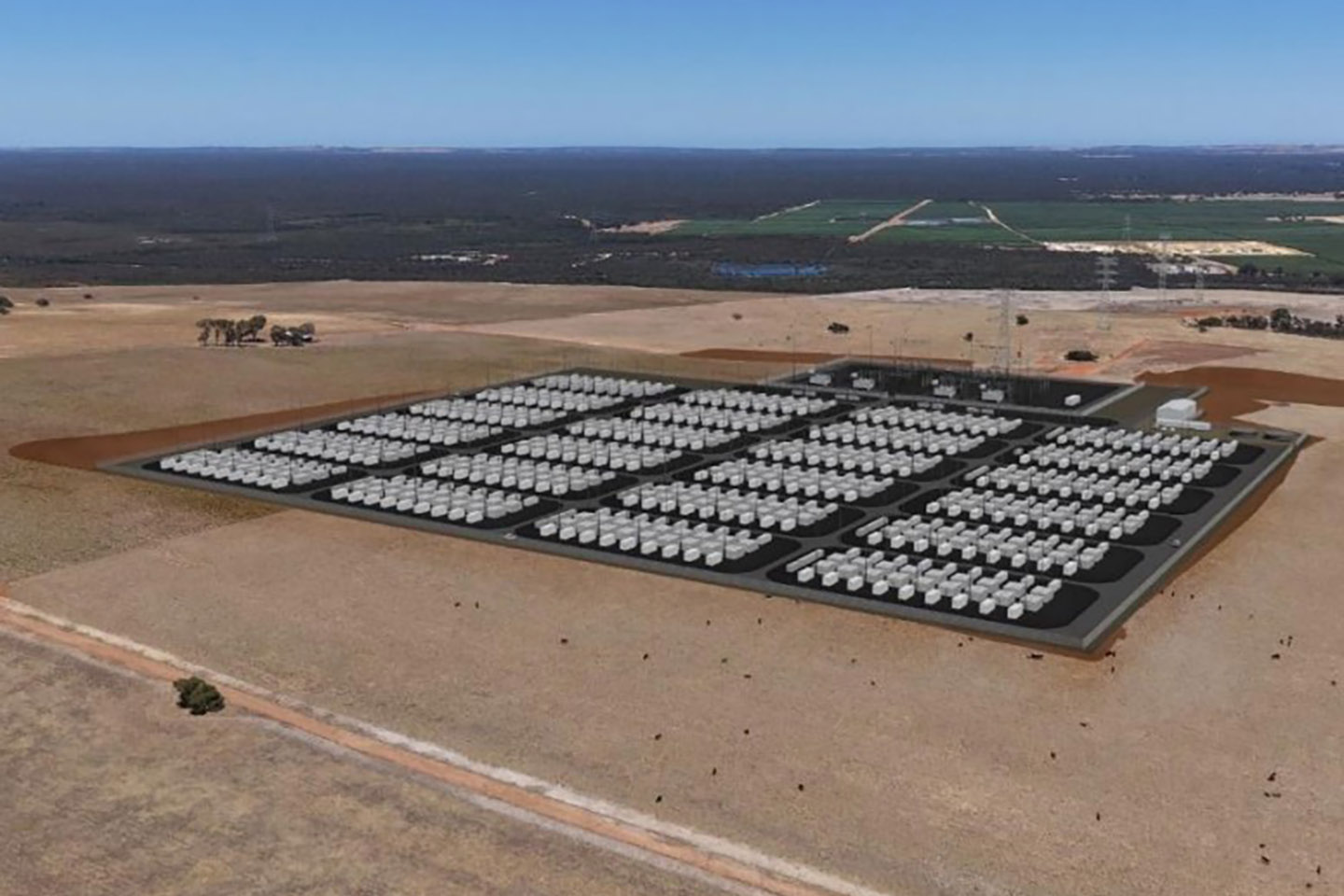
A team led by former Macquarie Capital bankers has cleared a planning hurdle to build a $1 billion battery energy storage system near Gingin.

Continue Reading

Business

Jeremy Clarkson shares ‘aggressive’ cancer diagnosis

Published

on

Business Live

The Hawkstone brewery co-founder confirmed the news on his hit television show Clarkson’s Farm

Jeremy Clarkson with Hawkstone beer

Jeremy Clarkson with a Hawkstone beer(Image: Handout)

Jeremy Clarkson has announced he has been diagnosed with cancer. The former Top Gear presenter and Hawkstone brewery co-founder revealed the news in the latest episodes of season five of Clarkson’s Farm.

He disclosed that the disease was “aggressive” but had been caught at an early stage.

Advertisement

“I’ve got cancer,” Clarkson told farm manager Kaleb Cooper and farmhand Charlie Ireland during discussions about harvest planning.

The TV presenter-turned-farmer said he anticipated being “fine” but would be out of action “for a while”.

Speaking from a hospital bed at the close of the season finale, Clarkson explained he had encountered complications throughout his treatment.

“We started season five with me in a hospital bed and here we are at the end of season five and I’m back in a hospital bed,” he said.

Advertisement

The 66-year-old reflected on the future of the show.

“What I wanted to say was if this is all successful, I’ll see you for season six, and if it isn’t, I won’t,” he said. “Take care, everyone.”

The revelation comes nearly two years after Clarkson underwent a cardiac procedure.

Clarkson’s Farm follows the veteran television presenter and his team as they tackle the trials and tribulations of running Diddly Squat Farm near Chipping Norton, Oxfordshire.

Advertisement

Since taking on the running of his farm in 2019 and subsequently launching his hugely popular reality series, Clarkson has become a prominent champion of British farmers, attending a protest in London against the Government’s plans to impose inheritance tax on farmland in November 2024.

The programme’s sixth series is scheduled to broadcast in 2027.

Clarkson has also found success with his brewery business. Earlier this month, Gloucestershire’s Hawkstone was named the fastest-growing private business in the South West of England by the Sunday Times.

Hawkstone topped the Sunday Times 100 regional list after making £44.9m in sales in the year to March – a staggering 128.19 per cent average annual growth in the last three years.

Advertisement
Continue Reading

Trending

Copyright © 2025