
Business
Tesla: Three Scenarios, Zero Upside



Varney & Co. host Stuart Varney warns NYC Mayor Zohran Mamdani’s tax proposals could drive jobs, capital and residents out of New York as a $12.6B deficit looms.
JPMorgan Chase CEO Jamie Dimon warned that New York City and other cities with high taxes and regulatory burdens run the risk of losing businesses and workers to locales with more hospitable business climates.
Dimon released his annual letter to shareholders on Monday in conjunction with the firm’s 2025 annual report and said that companies need to weigh the benefits of operating in places like New York City against areas with lower taxes on businesses and individuals.
“No matter who you are, you need to deal with reality and the truth. The truth is that while New York City has much going for it, particularly for financial companies (because of extraordinary local talent), it also has the highest city and state corporate taxes and the highest individual income and state taxes,” Dimon wrote.
“People often make this a moral or loyalty issue, but it is not. Companies need to remain competitive in this very tough, fast-moving world. And higher taxes lower returns on capital and less competitiveness by their nature,” he said.
JAMIE DIMON WARNS IRAN WAR COULD DRIVE INFLATION, INTEREST RATES HIGHER
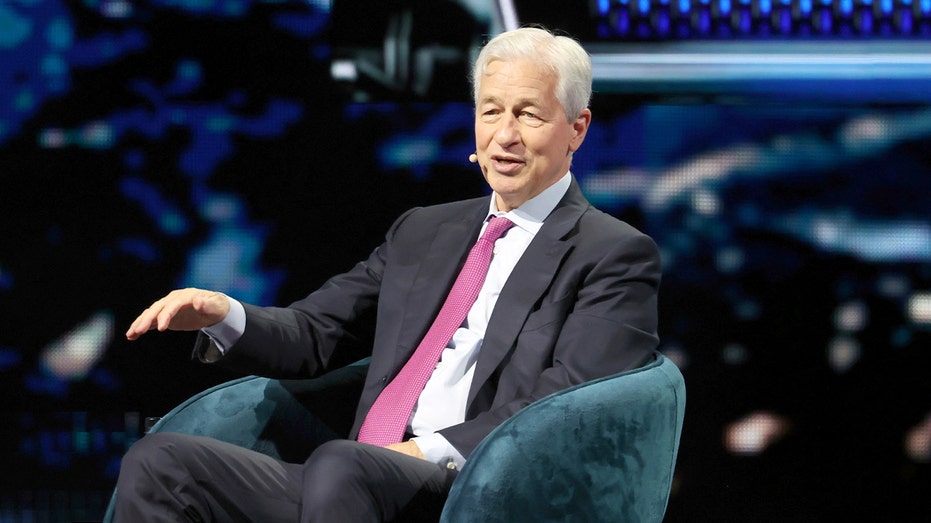
JPMorgan Chase CEO Jamie Dimon said that cities and states have to compete to keep businesses in their jurisdictions. (Alexander Tamargo/Getty Images for America Business Forum)
Dimon said while companies relocating their headquarters or significant aspects of their operations to states with more favorable tax and regulatory regimes may be easier to track, those shifts happen at the employee level as well and can amount to significant moves for the workforce.
“Additionally, individuals vote with their feet – you can already see a fairly large exodus of people and jobs out of some states with high taxes and high expenses (often due to high taxes and regulatory burdens). Sometimes you see companies leaving states, but migration also shows up in shifts of employees out of certain states,” Dimon wrote.
JAMIE DIMON SAYS US MUST ‘FINISH THIS THING’ WITH IRAN TO PROTECT GLOBAL ECONOMY

JPMorgan Chase has expanded its presence in Texas while its headcount has declined in New York City. (Tim Clayton/Corbis via Getty Images)
He explained how that dynamic has played out at JPMorgan, which has expanded its footprint in a low-tax state like Texas and will probably continue to do so.
“For example, while New York City is still our company’s global headquarters, we have shrunk our headcount in the city, from 30,000 a decade ago to 24,000 today, and increased our headcount in Texas, from 26,000 in 2015 to 32,000 today. This trend will likely continue,” Dimon said.
JAMIE DIMON SAYS US HAS ‘BECOME LIKE EUROPE’ ON DEFENSE, AND IT’S HOLDING THE COUNTRY BACK
| Ticker | Security | Last | Change | Change % |
|---|---|---|---|---|
| JPM | JPMORGAN CHASE & CO. | 295.45 | +0.85 | +0.29% |
The JPMorgan CEO said that he has seen an exodus of corporations out of New York City before that was driven in part by the business climate, adding it can pose significant problems for city governments.
“Sometimes this can be a disaster for a city. I am reminded that in the 1970s, nearly half of the 125 Fortune 500 companies based in New York City left,” he wrote. “While mergers accounted for some departures, the price of doing business in New York City accounted for most: cost of taxes, office rents, labor and so on.”
GET FOX BUSINESS ON THE GO BY CLICKING HERE
“No city – or company or country – has a divine right to success,” Dimon added.


The seasonings are free from salt and sugar.

Form 13G TYRA BIOSCIENCES INC For: 7 April

Tesla Stock: It's Cheap Again (Rating Upgrade)
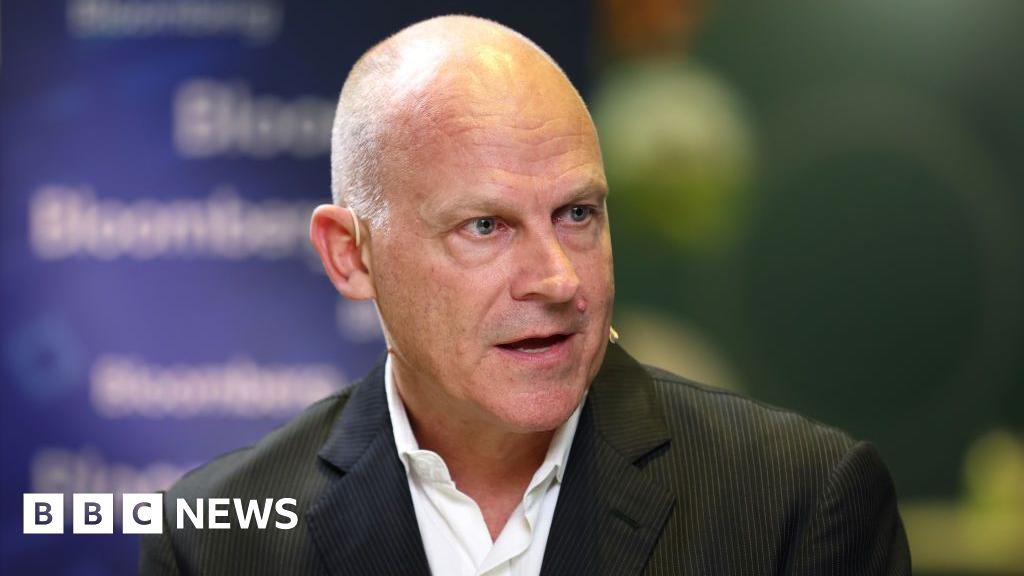
Wilson, whose term was set to end in 2027, will remain CEO and MD until a successor is appointed.
Form 6K Evotec SE ADR For: 7 April

The ChatGPT-maker said its early policy ideas aim to prompt discussions about action needed as AI systems become more capable.


Seed round fueling nationwide launch of company’s Hot Girl Pickle’s line.


Food companies may benefit from a ‘longevity dividend’ due to a potential reduction in chronic diseases.

Roku Inc. enters 2026 as the dominant force in connected television, commanding nearly half of all U.S. streaming hours and expanding its reach through aggressive growth in free ad-supported streaming television (FAST), artificial intelligence personalization and new revenue streams that have finally delivered consistent profitability.

The company, known for its streaming players, Roku TVs and The Roku Channel, reported strong momentum in its February 2026 earnings release for the fourth quarter of 2025. Revenue climbed 16% year-over-year to $1.39 billion, beating estimates, while the company swung to a net profit of $80.5 million, or 53 cents per share. For full-year 2026, Roku guided for total revenue of $5.5 billion — up 16% — with platform revenue growing 18% and adjusted EBITDA reaching $635 million.
As cord-cutting accelerates and consumers seek affordable entertainment options amid subscription fatigue, Roku’s hybrid model of hardware, platform services and content is paying dividends. Here are 10 essential things to know about Roku in 2026.
1. Roku dominates the streaming platform landscape with nearly 100 million households.
Roku powers streaming on tens of millions of devices and Roku-branded TVs, which now account for a significant share of U.S. television sales. The platform processes billions of streaming hours annually, giving it unmatched first-party data for advertising and personalization. This scale has turned Roku into the “Switzerland” of streaming — neutral ground where consumers access content from Netflix, Disney+, Amazon Prime Video and hundreds of other services alongside Roku’s own free offerings.
2. The Roku Channel continues explosive growth as a free streaming powerhouse.
The ad-supported Roku Channel added more than a dozen new live linear channels in March 2026 alone, bringing the total FAST lineup to well over 500 channels. Recent additions include Salem News Channel, Scripps Sports, Inspector Gadget, Grizzly and the Lemmings, Nat Geo Animals, Nat Geo History, Flo Racing 24/7 and Life with Derek. The service captured a record 3% share of total U.S. television viewership in late 2025 according to Nielsen data and continues to rank among the top apps on Roku devices. Creator content on the platform grew nearly 80% year-over-year in some metrics.
3. “Last Channel” button finally arrives on Roku TVs, delighting longtime users.
In a long-awaited upgrade rolled out in early 2026, Roku TV owners gained a “last channel” feature in the Live TV Guide. The addition mimics a classic cable TV convenience, allowing quick toggling between live channels — including hundreds of free FAST options — without lengthy reload times. The update significantly reduces lag when switching streams, addressing one of the most frequent user complaints about FAST viewing.
4. Howdy expands affordable ad-free streaming with mobile app and broader distribution.
Roku launched its low-cost Howdy subscription service — priced at just $2.99 per month for ad-free access to a curated library of movies, shows and classics — on Prime Video in March 2026 and introduced a companion mobile app. The service also expanded internationally, including to Mexico. Roku even partnered with Texas A&M University to gift incoming freshmen Howdy subscriptions, signaling creative marketing to younger audiences.
5. AI-driven personalization and advertising set to reshape viewing in 2026.
Roku issued five bold predictions for the streaming industry in 2026, starting with a major leap in personalized TV advertising through deeper data integrations with partners like Amazon and The Trade Desk. The company expects AI to shrink discovery time dramatically, deliver hyper-relevant recommendations and create safer advertising environments as generative AI disrupts the broader internet. Roku also forecasts the “ad-free viewer” becoming nearly extinct, with nearly 100% of audiences exposed to video ads, and TV colliding more deeply with the creator economy.
6. Platform revenue drives profitability while devices remain a strategic loss leader.
Roku’s high-margin platform business — which includes advertising, subscriptions and revenue-sharing from channels — is the growth engine. Executives project 18% platform revenue growth for 2026, with Q1 growth exceeding 21%. The devices segment, which includes streaming sticks and players, grows more modestly but serves as an on-ramp to the profitable platform ecosystem. Full-year 2026 guidance calls for adjusted EBITDA of $635 million, reflecting meaningful operating leverage.
7. Home screen redesign emphasizes monetization and The Roku Channel.
A major home screen overhaul is rolling out in 2026, placing greater prominence on The Roku Channel, the Live TV Guide and recommended free content. The redesign aims to boost engagement and ad inventory while remaining user-friendly. Early beta testers have noted more prominent rows for free channels and improved navigation, though some users can opt out of certain changes during the rollout.
8. Wall Street grows bullish on Roku’s 2026 catalysts.
Analysts have raised price targets following the strong Q4 report, with some calling for shares to reach $120 to $160. Baird lifted its target to $120, while Pivotal Research moved to $140. The stock has shown volatility but trades near $98 in early April 2026, with hedge funds and institutional investors increasing positions on the back of platform revenue gains, premium subscription growth and improving margins. Consensus points to continued double-digit growth and expanding profitability.
9. New hardware and software updates keep the ecosystem fresh.
Roku is preparing a refreshed lineup of streaming players, Roku TVs, security cameras and operating system enhancements for 2026. The company continues to refine the mobile app with richer visuals and interactive features. These iterative improvements help Roku maintain its edge against competitors like Amazon Fire TV, Google TV and Apple TV while attracting new users seeking simple, reliable streaming.
10. FAST and creator content position Roku for long-term leadership in a fragmented media world.
Roku predicts FAST channels could reach 10% of total TV viewing in 2026. By investing heavily in free content, local and national news integration, and tools for smaller advertisers and creators, the company is building a resilient business less dependent on traditional pay-TV bundles. Hyperlocal advertising, political campaign-style targeting and AI-optimized campaigns are expected to drive incremental revenue from brands that previously found TV advertising too expensive or complex.
Despite the positive momentum, challenges remain. Competition in connected TV is fierce, advertising markets can fluctuate, and Roku must continue executing on profitability while managing device gross margins that remain negative. Insider selling has occurred amid the rally, though many analysts view it as routine rather than a red flag.
For consumers, Roku in 2026 means more choice at lower cost: hundreds of free live channels, easy navigation, personalized recommendations and affordable ad-free options. For investors and advertisers, it represents a scalable platform with improving economics in an industry shifting rapidly toward streaming.
As Q1 2026 earnings approach in late April, all eyes will be on whether Roku can sustain its platform growth, deliver on AI initiatives and further expand its content and advertising footprint. The company that began as a simple streaming box has evolved into a full-fledged media and technology player shaping how millions watch television.
Roku, founded in 2002 and headquartered in San Jose, California, employs thousands and operates globally. Its mission remains making streaming television accessible, enjoyable and affordable for everyone.
Whether you are a cord-cutter seeking free entertainment, a marketer exploring connected TV, or an investor tracking the next phase of media disruption, Roku’s 2026 story is one of scale, innovation and resilience in a rapidly evolving landscape.

Welcome to Plathville’s Moriah Takes Off Her Wig in Public

Coffee Break: Coverack Rain Coat

Police update on Strictly Come Dancing star arrested over rape allegation


-

 NewsBeat5 days ago
Steven Gerrard disagrees with Gary Neville over ‘shock’ Chelsea and Arsenal claim | Football
-

 Business5 days ago
No Jackpot Winner and $194 Million Prize Rolls Over
-

 Fashion4 days ago
Weekend Open Thread: Spanx – Corporette.com
-

 Crypto World6 days ago
Gold Price Prediction: Worst Month in 17 Years fo Save Haven Rock
-

 Business2 days ago
Three Gulf funds agree to back Paramount’s $81 billion takeover of Warner, WSJ reports
-

 Business3 days ago
Expert Picks for Every Need
-

 Sports3 days ago
India men’s 4x400m and mixed 4x100m relay teams register big progress | Other Sports News
-

 Business6 days ago
Login and Checkout Issues Spark Merchant Frustration
-

 Crypto World7 days ago
Bitcoin enters the public bond market as Moody’s gives a first-of-its-kind crypto deal a rating
-
Business2 days ago
No Jackpot Winner, Prize to Climb to $231 Million
-
Crypto World7 days ago
Bitcoin stalls below key resistance as technical signals skew bearish
-

 Tech5 days ago
Commonwealth Fusion Systems leans on magnets for near-term revenue
-

 Politics7 days ago
Starmer’s centre has collapsed, and the left was right all along
-

 Crypto World6 days ago
Ripple rolls out enterprise crypto treasury platform for corporates
-

 Crypto World6 days ago
Why It’s Partnering, Not Issuing
-

 Fashion1 day ago
Massimo Dutti Offers Inspiration for Your Summer Mood Board
-
Crypto World7 days ago
AI Memory Rout Wipes 9% Off Nvidia Stock: Chart Says More Pain Ahead
-
 Sports7 days ago
How to teach yourself the perfect impact position with every club
-

 Tech7 days ago
Solo Leveling: Ranking All Sung Jinwoo Shadows by Power
-
Sports6 days ago
Tom Pelissero Drives the Final Nail in the Coffin
You must be logged in to post a comment Login