
Business
TFI International Inc. (TFII:CA) Shareholder/Analyst Call Transcript


Operator
Good afternoon, ladies and gentlemen. Thank you for standing by, and welcome to TFI International’s 2026 Annual Meeting of Shareholders. [Operator Instructions] I’d like to remind everyone that this call is being recorded on Monday, April 27, 2026. I would now like to turn over the call to Mr. Alain Bedard, Chairman of the Board, the President and Chief Executive Officer of TFI International. Please go ahead, sir.
Alain Bedard
President, CEO & Chairman
Well, thank you, and good afternoon, ladies and gentlemen. Welcome to the 2026 Annual Meeting of the shareholders of TFI International. Participation at this meeting by myself, the scrutineers and certain proxyholders is being done remotely. So we are making this meeting available by phone. We have, therefore, asked all shareholders to vote by proxy prior to the meeting, which many of you have done and we thank you for doing so. At the conclusion of the official business shareholders will be able to ask questions by following the instruction from the operator.
So I will act as Chairman of the meeting. And with the consent of the meeting, I’ll ask Josiane Langlois, who is President of TFI’s Head Office in Montreal to act as Secretary. Also, with the consent of the meeting, I’ll now ask Steve Gilbert and [ Vlad Tilibassa ], our Computershare Trust Company of Canada to act as scrutineers for the meeting, tabulate the number of shareholders and the number of shares represented at this meeting in person or by proxy and report to me as Chairman of the meeting. There are several routine matters to


The taxman has been forced into a tactical retreat over a contentious VAT levy on free medicines supplied to seriously ill patients, after Britain’s pharmaceutical heavyweights warned the policy was jeopardising the country’s standing as a global life sciences hub.
HM Revenue & Customs has confirmed to the industry that it will pause enforcement of disputed VAT bills issued against drugs companies providing medicines free of charge under early access programmes, while Whitehall thrashes out a longer-term settlement with the sector.
The climbdown follows mounting alarm in boardrooms after Bayer, the German pharmaceutical multinational, took the unprecedented step last month of halting new patient enrolments under its UK compassionate use scheme. *Business Matters* understands that at least one further major drugmaker is now actively weighing a similar withdrawal, raising the spectre of vulnerable patients being denied cutting-edge therapies.
At the heart of the dispute are post-clinical trial continuity of care and compassionate use schemes, arrangements designed to bridge the gap for patients with life-threatening or severely debilitating conditions who require access to medicines that have yet to secure marketing authorisation or NHS funding. For many of these patients, the schemes represent a clinical lifeline.
HMRC had begun issuing VAT demands to pharma companies on the basis that supplying these medicines, even gratis, constituted a taxable transaction. Industry leaders have argued the interpretation is not only commercially punishing but threatens to undermine the UK’s hard-won reputation as a destination of choice for clinical research, a sector ministers have repeatedly identified as central to the government’s growth ambitions.
The Association of the British Pharmaceutical Industry has been pressing ministers to confirm that “clinically justified” free-of-charge supply should fall outside the scope of VAT altogether. Without that assurance, executives warn, multinational sponsors will simply route their next generation of trials to more accommodating jurisdictions.
Following a recent meeting between Treasury officials and pharma chief executives, HMRC policy officials have informed the industry that, while the agency retains an obligation to protect Exchequer revenue, it accepts the government is “actively considering” the issue. The taxman has therefore agreed to exercise its discretion by extending review periods and holding off on enforcement action while talks continue. Crucially, however, HMRC has not budged on its view of historic tax liabilities, meaning bills already issued remain on the table.
A Whitehall source insisted that no blanket reprieve was on offer, with each case being assessed individually. “HMRC is not systemically extending review periods,” the source said.
The political temperature has been rising for months. Julia Lopez, the shadow science, innovation and technology secretary, wrote to Liz Kendall, her opposite number, in February warning that “the UK’s reputation as a home for clinical research is essential to our status as a life sciences superpower. That reputation is now at risk.”
In a reply this month, Lord Vallance, the science minister and a former senior executive at GSK, acknowledged ministers were “aware of the issue” and recognised “the importance of patients across the UK having access to innovative medicines.” He confirmed the government was in “discussions with the sector on this matter” and added: “I fully recognise the concerns you have raised.”
Bayer, in announcing its decision to suspend new enrolments, said it had been supplying treatments to patients with “life-threatening, long-lasting, or severely debilitating conditions or diseases which cannot satisfactorily be treated by any licensed and reimbursed drug in the UK.” Following the change in HMRC’s stance, the company said it had “made the difficult decision to pause the addition of new patients” while continuing to serve those already enrolled.
The Treasury maintains that “in certain circumstances the giving of goods away for free can be outside the scope of VAT,” and that where supply does fall within scope, a relief may apply. A government spokesperson said: “We are in active discussions with the sector. We fully recognise the importance of early access and compassionate use schemes and are fully committed to ensuring patients can continue to benefit from them.” A government source added that there had been no recent changes to UK VAT policy.
Lopez was unconvinced. “Even if HMRC has paused this damaging VAT charge, and it’s still not clear, the harm has already begun,” she said.
For an industry that contributes more than £17bn annually to the British economy and employs tens of thousands in high-skilled research roles, the affair has crystallised wider anxieties about the predictability of the UK tax environment. With the government banking heavily on life sciences as an engine of post-Brexit growth, ministers will be acutely conscious that a swift and unambiguous resolution is now needed — not least to reassure the international boardrooms where the next round of investment decisions is already being weighed.

Amy Ingham
Amy is a newly qualified journalist specialising in business journalism at Business Matters with responsibility for news content for what is now the UK’s largest print and online source of current business news.

UWM Holdings Corp CEO Mat Ishbia sells $11.1m in stock
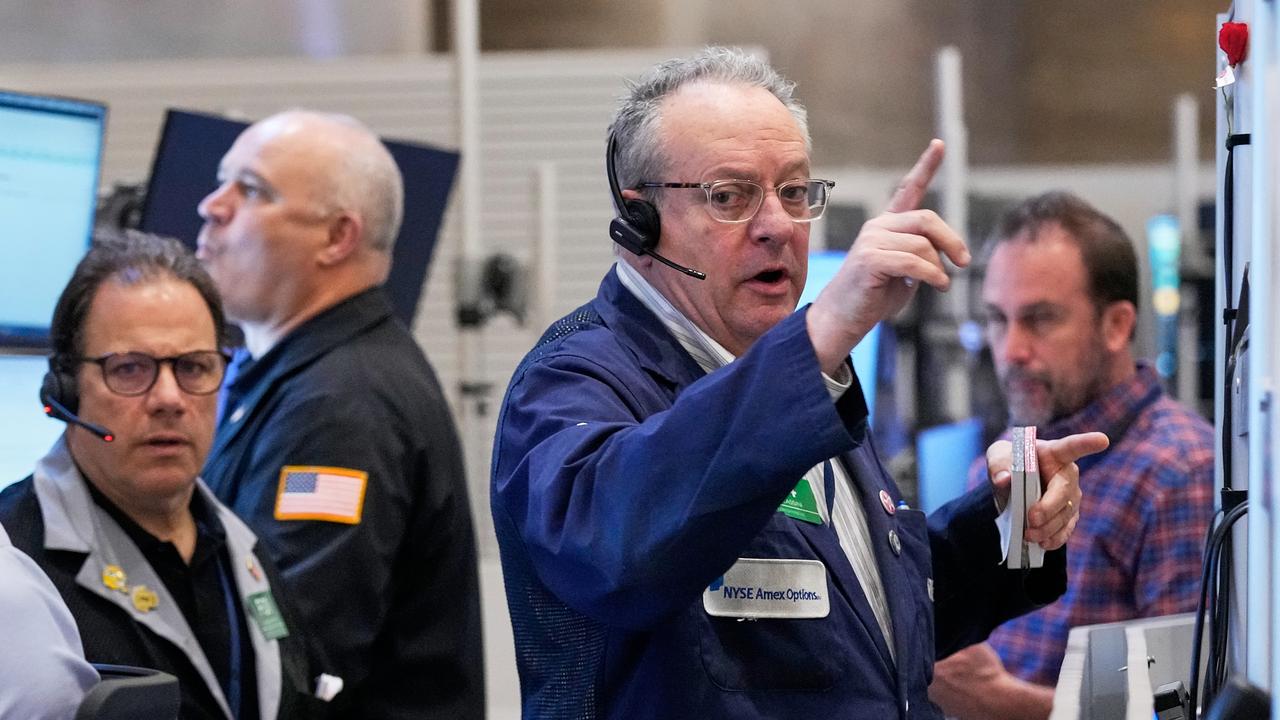
The S&P 500 and the Nasdaq eked out modest gains on Monday in muted trading, as investors took a breath at the top of an eventful week.

Ministers are turning up the heat on Britain’s biggest companies to fortify their cyber-defences, warning that a new generation of artificial intelligence tools, including Anthropic’s controversial Mythos model, risks unleashing a fresh wave of sophisticated hacking against UK plc.
In a pointed intervention, Baroness Lloyd of Effra (pictured), the cybersecurity minister, has written to almost 200 business leaders pressing them to back a new “cyber-resilience pledge” designed to drag boardrooms into the front line of digital defence.
To sign up, companies must make cybersecurity an explicit board-level responsibility, enrol with the National Cyber Security Centre’s early-warning service, and require the “Cyber Essentials” certification throughout their supply chains. The pledge will be formally launched in the summer and is intended to give investors, customers and trading partners a clearer benchmark by which to judge a business’s digital defences.
The push comes against a febrile backdrop. Anthropic, the San Francisco-based AI developer, revealed last week that it had decided not to release Mythos, a model honed for cybersecurity work, because of its uncanny ability to sniff out vulnerabilities in software. Instead, the company has quietly handed it to 40 US technology firms to help them shore up their defences.
While some industry watchers have dismissed the move as a marketing flourish, Wall Street, the City and financial regulators are taking it seriously. Britain’s biggest high-street lenders, including Barclays, Lloyds and NatWest, are understood to be in talks with Anthropic about gaining access to the model.
Andrew Bailey, governor of the Bank of England, has gone so far as to suggest that Anthropic may have “found a way to crack the whole cyber-risk world open”, an unusually colourful assessment from Threadneedle Street.
The UK’s AI Security Institute, one of the few bodies outside the United States to have put Mythos through its paces, described the model as a “step up” in capability. It concluded that Mythos was “at least capable of autonomously attacking small, weakly defended and vulnerable enterprise systems where access to a network has been gained”, though it stopped short of saying whether the model could breach better-fortified targets.
For SMEs, the assessment is uncomfortable reading. The lion’s share of “small, weakly defended” enterprise systems sits squarely in the small and medium-sized business community, where IT budgets are tight and dedicated security teams a rarity.
Dan Jarvis, the security minister, will press the pledge at this week’s CyberUK conference in Glasgow, where he is expected to argue that the country still suffers from a yawning perception gap between digital and physical crime. Drawing on the recent ransomware attack that crippled Jaguar Land Rover, Jarvis will tell delegates that had the same damage been done by “an old-school physical attack, it would have been the equivalent of hundreds of masked criminals turning up to dealerships across the country, breaking glass, smashing up computers and driving cars right off the forecourt”.
His message: “There is no real difference between them; they are both brazen acts of criminality.”
Lloyd struck a similarly urgent tone, telling business leaders: “The cyber threat facing UK businesses is serious, growing and evolving fast. AI is giving attackers capabilities that would have seemed extraordinary just a year ago and no organisation can afford to be complacent. Cyber-resilience isn’t just a technical issue; it’s a board responsibility and we’re asking every boardroom in Britain to prove they treat it as one.”
Despite years of warnings from Whitehall and the NCSC, the take-up of basic cyber hygiene measures remains stubbornly low. Just 56,000 Cyber Essentials certificates were issued in 2025, covering roughly 1 per cent of UK businesses, a figure that ought to give every chair, chief executive and finance director pause for thought.
Help, of a sort, is on the way. The Cyber Security and Resilience Bill, currently working its way through Parliament, will compel firms operating in critical sectors to raise their game. But ministers appear unwilling to wait for the legislation to land before applying pressure on the boardrooms they believe should already be ahead of the curve.
For SME owners and directors, the practical takeaway is unambiguous. AI-powered attack tools are no longer a theoretical worry kept at bay by the world’s best-resourced criminals. They are, increasingly, a clear and present danger, and a signature on a government pledge will count for little if the basics are not in place behind the boardroom door.
Amy Ingham
Amy is a newly qualified journalist specialising in business journalism at Business Matters with responsibility for news content for what is now the UK’s largest print and online source of current business news.

It comes after months of scrutiny by Chinese regulators over deal struck with Facebook owner.
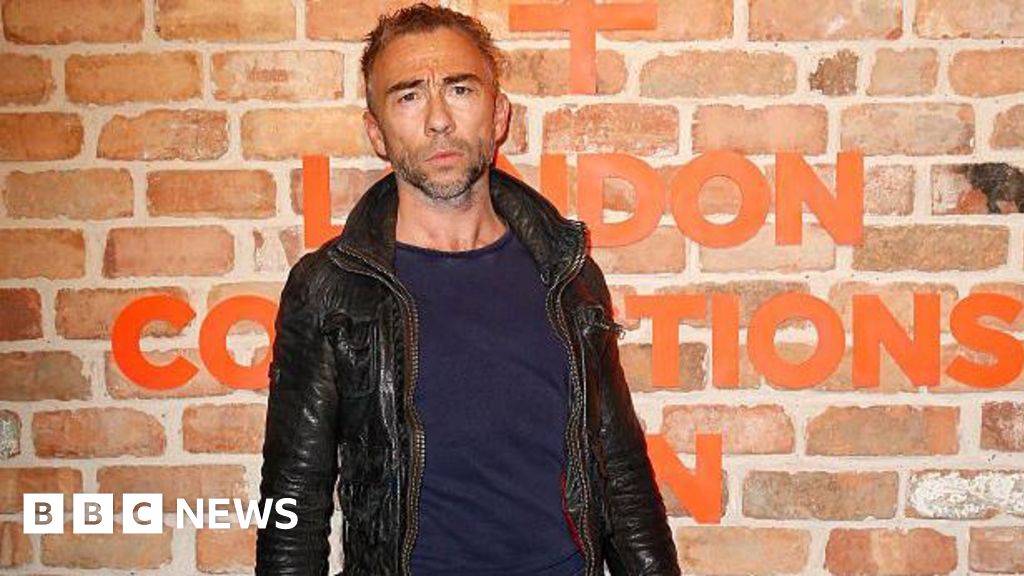
James Holder, 54, is accused of raping the woman after a night out in 2022, but denies the charges.
Business
Is Microsoft Outlook Down Now? Largely Operational Despite Scattered Login and Performance Glitches

SAN FRANCISCO — Microsoft Outlook is not experiencing a widespread outage on April 27, 2026, with core email, calendar and Teams integration services operating normally for the vast majority of users despite scattered reports of slow loading, sign-in delays and minor disruptions that have frustrated some during peak business hours.

Microsoft’s official service health dashboard and independent monitors like Downdetector show no major global incidents as of late Monday. While some users reported temporary issues with the new Outlook for Windows and classic desktop version — particularly after recent Windows updates — the problems appear localized and tied to individual network conditions, cached credentials or ongoing post-update adjustments rather than a platform-wide failure.
The latest wave of complaints began surfacing earlier in April following the rollout of Windows 11 25H2 updates, with some users experiencing freezing when new emails arrive or difficulties launching the app. Microsoft has acknowledged these issues in support documentation and is actively rolling out fixes.
Current Status Breakdown
As of Monday afternoon, Microsoft 365 service health indicators for Outlook.com, Exchange Online and the Outlook desktop client are green across most regions. The company’s status page reports no active incidents affecting email delivery, calendar syncing or basic functionality. However, a small percentage of users continue to encounter:
- Intermittent sign-in prompts or authentication delays.
- Slow performance when opening large mailboxes or shared folders.
- Freezing in the new Outlook app after receiving new messages.
These issues have been most commonly reported by enterprise users on Windows 11 who recently applied the April 2026 security updates. Microsoft has advised affected users to run the built-in repair tool or temporarily switch back to the classic Outlook view while patches are deployed.
Recent History of Outlook Stability
Outlook and broader Microsoft 365 services experienced a notable but short-lived outage earlier in April 2026 that affected sign-ins and Teams integration. That incident was quickly resolved, and the company has since focused on stability improvements. The current scattered reports are significantly smaller in scale and do not appear to stem from the same root cause.
Microsoft has postponed the full forced migration to the new Outlook for enterprise users until March 2027, giving organizations more time to prepare and reducing pressure on the system during the transition.
Troubleshooting Guidance
Users facing problems today can try these proven steps while Microsoft continues backend optimizations:
- Restart the Outlook app completely or reboot the device.
- Clear the app cache through settings or by running the repair tool in Windows.
- Switch between the new Outlook and classic view if both are installed.
- Check internet connection stability and try disabling VPNs temporarily.
- Ensure Windows and Outlook are fully updated, as recent patches have addressed many reported issues.
For enterprise administrators, Microsoft recommends monitoring the Microsoft 365 admin center for tenant-specific alerts and applying any pending updates.
Impact on Users and Businesses
Even minor disruptions can significantly affect productivity for the hundreds of millions who rely on Outlook daily for email, scheduling and collaboration. Sales teams, customer service departments and remote workers have reported delays in responding to clients, while some organizations shifted temporarily to web-based alternatives or mobile apps during peak glitch periods.
Small businesses and individual users appear less affected than large enterprises with complex shared mailbox setups. Microsoft has emphasized that the vast majority of users worldwide are experiencing normal service.
Microsoft’s Response and Ongoing Improvements
Microsoft has been proactive in addressing feedback from the April Windows updates. The company continues to refine both the classic and new Outlook experiences, with a focus on performance, reliability and user interface consistency. Regular updates are being pushed to mitigate the freezing issues reported by some users.
The delay in forcing the new Outlook migration reflects the company’s recognition that many organizations still prefer the familiar desktop client and need more time for testing and training. This measured approach has been welcomed by IT professionals managing large deployments.
Broader Context in 2026
As Microsoft continues evolving its productivity suite, Outlook remains central to the Microsoft 365 ecosystem. The company faces ongoing pressure to balance innovation with stability, especially as competition from Google Workspace and other platforms intensifies. Reliability during peak business hours is critical for maintaining user trust.
While today’s scattered issues have caused frustration for some, they do not represent a systemic failure. Most users checking service status reports will find Outlook fully operational. Those still experiencing problems are encouraged to use the official troubleshooting tools or contact Microsoft support for personalized assistance.
As the workday continues, Microsoft engineers are actively monitoring telemetry and deploying targeted fixes where needed. For the overwhelming majority of users, email, calendar and collaboration tools are functioning normally on April 27. The company remains committed to delivering a reliable experience as it refines Outlook for the future.

O’Leary Ventures Chairman Kevin O’Leary weighs in on the dispute between New York City Mayor Zohran Mamdani and Citadel CEO Ken Griffin on ‘Varney & Co.’
Google co-founder Sergey Brin slammed the proposed billionaire tax in California, likening it to the socialism that he fled with his family from the former Soviet Union.
Brin is one of the billionaires who relocated out of the Golden State to avoid the potential wealth tax that’s expected to appear on California voters’ ballots this fall. The proposal would impose a one-time 5% tax on residents whose net worth exceeds $1 billion.
Assets covered by the tax may include businesses, securities, art, collectibles, and intellectual property – though real property, pensions and certain retirement accounts would be exempt.
“I fled socialism with my family in 1979 and know the devastating, oppressive society it created in the Soviet Union. I don’t want California to end up in the same place,” Brin said in a statement to The New York Times regarding a story by the outlet that discussed his move.
CALIFORNIA BILLIONAIRE TAX NEARS BALLOT AFTER UNION COLLECTS NEARLY DOUBLE REQUIRED SIGNATURES

Google co-founder Sergey Brin said that he’s concerned about California’s drift toward socialism. (Jamie McCarthy/WireImage via Getty Images)
The proposed wealth tax applies retroactively to Californians who were residents of the state at the start of 2026, which prompted Brin to move out of the state late last year.
The Times reported, citing a person familiar with the arrangement, that Brin moved to the Nevada side of Lake Tahoe and is spending every other week at Google’s headquarters in California.
THE $1,600 LETTUCE: CALIFORNIA GROWERS WARN OF ‘MASTER PLAN’ STRANGLING FAMILY FARMS
| Ticker | Security | Last | Change | Change % |
|---|---|---|---|---|
| GOOGL | ALPHABET INC. | 350.34 | +5.94 | +1.72% |
The outlet previously reported that in December, an entity connected to Brin terminated or relocated 15 California limited liability companies (LLCs) out of the state, while several were converted into Nevada entities.
Advocates argue it would bring in significant funding for public services, while critics have warned it could drive job creators out of the state. If enacted, the tax bill would be due in 2027, with taxpayers having the option of spreading payments over five years.
OIL PRODUCER ORG SHREDS CALIFORNIA DEM FOR BLAMING IRAN WAR FOR HIS DISTRICT’S GAS PRICES

Brin relocated assets and moved out of California in advance of the cut-off date for the proposed wealth tax. (Lionel Hahn/Getty Images)
Brin’s opposition to the wealth tax on billionaires prompted him to work with other like-minded Californians and build support for an effort to defeat the measure.
The Times reported that Brin formed a pair of nonprofit groups as part of his political engagement around the wealth tax proposal, putting $57 million into Building a Better California over the last four months.

CAIRO — Iran has proposed ending its chokehold on the Strait of Hormuz in exchange for the United States lifting its naval blockade and agreeing to a permanent end to the ongoing war, two regional officials with knowledge of the offer said Monday, as Tehran’s foreign minister visited Moscow amid stalled peace efforts.

The new proposal, conveyed to the White House through Pakistani mediators, would delay talks on Iran’s nuclear program until after a ceasefire is solidified and the critical waterway is reopened to international shipping, the officials told The Associated Press on condition of anonymity because the negotiations are private.
The Strait of Hormuz, a narrow chokepoint at the mouth of the Persian Gulf, handles about one-fifth of the world’s traded oil and liquefied natural gas. Iran’s restrictions on the waterway, combined with the U.S. blockade of Iranian ports, have severely disrupted global energy markets and driven oil prices higher since the conflict escalated earlier this year.
Iranian Foreign Minister Abbas Araghchi, who was in Russia on Monday for consultations, described the visit as an opportunity to coordinate with Moscow on ending the war with Israel and the United States. Iranian officials have repeatedly said the strait will remain closed as long as the U.S. maintains its blockade, calling it a violation of the fragile ceasefire.
U.S. Position Remains Firm
President Donald Trump has insisted that any deal to reopen the strait must include concrete steps to dismantle Iran’s nuclear program. In recent statements, Trump has described the current situation as unsustainable and warned that prolonged closure of the strait would have devastating economic consequences worldwide.
White House officials familiar with the proposal expressed skepticism that the U.S. would accept terms that defer nuclear discussions. Trump has repeatedly said Iran will not be allowed to develop nuclear weapons and has highlighted the success of U.S. sanctions, which he claims are costing Iran hundreds of millions of dollars daily.
The proposal comes as Pakistan-mediated talks between Washington and Tehran have stalled. A temporary ceasefire in Lebanon provided a brief window for diplomacy, but deep disagreements over the nuclear issue and the blockade have prevented a broader agreement.
Economic Toll Mounts
The dual restrictions on the strait have created a maritime standoff that has reduced oil flows and driven up global energy prices. Shipping companies have largely avoided the area due to insurance risks, drone threats and Iranian toll demands on passing vessels. Some Iranian oil has continued to move through shadow fleet operations, but overall volumes are significantly lower.
Oil prices rose modestly Monday on the news of the Iranian proposal but remain volatile. Energy analysts warn that a prolonged closure could push crude above $120 per barrel, triggering broader inflation and economic pain worldwide.
Human and Regional Impact
The standoff has affected millions beyond energy markets. Fishermen in the Persian Gulf have seen their livelihoods disrupted, while countries dependent on Gulf oil imports — including major Asian economies — face higher costs and supply uncertainty. Regional allies on both sides have expressed concern about escalation.
Iranian officials have accused the U.S. of “piracy” through its blockade, while Washington maintains it is a necessary response to Iranian aggression and attempts to control the vital waterway. Both sides have seized vessels in recent weeks, raising fears of miscalculation leading to direct naval confrontation.
Path Forward Unclear
The latest Iranian offer separates the immediate humanitarian and economic issue of reopening the strait from the long-term security question of its nuclear program. Pakistani diplomats, who have served as intermediaries, are expected to continue shuttling proposals between the two sides in the coming days.
U.S. officials have not publicly responded to the specific terms but have reiterated Trump’s demand for a comprehensive deal that addresses Tehran’s nuclear ambitions, regional proxies and ballistic missile program.
Analysts say the proposal reflects Iran’s growing economic pressure from sanctions and the blockade, while also testing the Trump administration’s willingness to prioritize energy market stability over its maximum-pressure strategy.
As talks continue behind the scenes, the world watches the narrow 21-mile-wide strait — one of the most strategically vital waterways on the planet — where any misstep could send shockwaves through the global economy. For now, the dual blockade remains in place, ships stay away, and diplomats search for a breakthrough that could ease one of the most dangerous standoffs in recent memory.

Music streamer Deezer allows users to filter out AI music, so why does Spotify not offer the same?
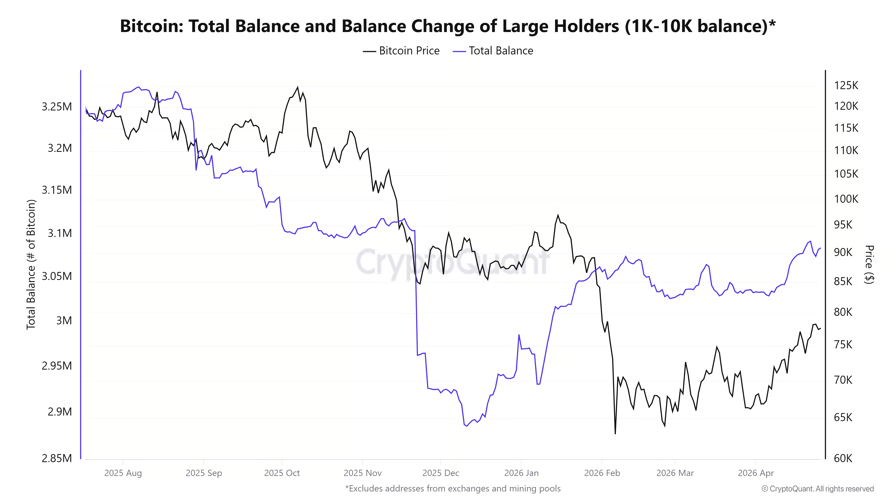
Bitcoin Whale Holdings Hit 5 Month High At 3.09M BTC

David Benavidez says world champion is avoiding him after feeling his power in sparring

Why the ASUS TUF Gaming F16 Quietly Became the Gaming Laptop Worth Grabbing Now

Manchester United reach agreement with Casemiro over contract clause amid transfer speculation

US brings back mandatory military draft registration

Steven Gerrard disagrees with Gary Neville over ‘shock’ Chelsea and Arsenal claim | Football


-

 Fashion3 days ago
Weekend Open Thread – Corporette.com
-
 Crypto World2 days ago
Hyperliquid $HYPE Rally Builds Momentum as AI Sector Enters Prove-It Phase
-

 Tech7 hours ago
Register Renaming | Hackaday
-

 Politics5 days ago
Making troops accountable for war crimes threatens US alliance, ex-SAS colonel warns
-

 Politics5 days ago
Disabled people challenge government SEND proposals over segregation concerns
-

 Business4 days ago
Patterson-UTI Energy, Inc. (PTEN) Q1 2026 Earnings Call Transcript
-

 Business6 days ago
Rolls-Royce Voted UK’s Most Iconic Trade Mark as IPO Register Hits 150
-
 Crypto World6 days ago
Five Value Stocks with Recovery Potential in 2026: PayPal (PYPL), Nike (NKE), and More
-
 Sports1 day ago
IPL 2026: Ruturaj Gaikwad registers slowest fifty of the season, enters all-time unwanted list | Cricket News
-

 Politics5 days ago
Starmer handler McSweeney to be dragged from shadows by Foreign Affairs Committee
-

 Politics5 days ago
Zack Polanski responds to home secretary’s taser threat
-
Politics5 days ago
Wings Over Scotland | How To Get Away With Crimes
-

 Crypto World6 days ago
New York sues Coinbase, Gemini over prediction market offerings
-
Entertainment6 days ago
Sydney Sweeney cameo cut from “The Devil Wears Prada 2”, source explains why (exclusive)
-
 Business6 days ago
HCL Tech share price tank over 9% after weak Q4. JPMorgan, HSBC & 3 others cut target price
-

 Fashion6 days ago
Kilkenny Design New Beauty Arrivals for Spring 2026
-
 Crypto World6 days ago
Crypto’s great hope in Senate’s Clarity Act still has a path to survive tight calendar
-

 Politics5 days ago
‘Iran is still a nuclear threat’
-
 Sports5 days ago
Tim Bradley names the current best in the world: “Better than Inoue and Usyk”
-

 NewsBeat2 days ago
LK Bennett closes all stores after entering administration
You must be logged in to post a comment Login