Connect with us
DAPA Banner

Business

UWM Holdings Corp CEO Mat Ishbia sells $11.1m in stock

Published

on

Continue Reading
Click to comment

You must be logged in to post a comment Login

Leave a Reply

Business

United CEO Scott Kirby says American Airlines rejected merger approach

Published

on

United CEO Scott Kirby says American Airlines rejected merger approach

United Airlines on Monday announced that it’s ending its pursuit of a potential merger with American Airlines after its rival rebuffed an initial approach to discuss a deal.

United CEO Scott Kirby said in a statement published on Monday that he approached American Airlines about a potential merger because he “thought we could do something incredible for our customers together.”

Advertisement

“I was confident that this combination, which would have been about adding and not subtracting, creating a truly great airline that customers love, could get regulatory approval,” he said. 

United Airlines CEO Scott Kirby

United Airlines CEO Scott Kirby said he thought a merger with American Airlines would add value for consumers and competition, rather than reducing it. (Al Drago/Bloomberg via Getty Images)

“I was hoping to pitch that story to American, but they declined to engage and instead responded by publicly closing the door. And without a willing partner, something this big simply can’t get done,” Kirby said.

AMERICAN AIRLINES CEO SAYS MERGER WITH UNITED WOULD BE ‘BAD FOR CUSTOMERS’

American CEO Robert Isom on Thursday said the airline wasn’t interested in a potential merger with United, saying it would be bad for all parties involved.

Advertisement

“The idea of the two largest airlines in the world getting together, that is something that we’ve viewed as being anti-competitive and obviously everybody that has weighed in suggests the same thing,” Isom said. “Bad for customers, bad for the industry and ultimately, that would be bad for American Airlines.”

Ticker Security Last Change Change %
UAL UNITED AIRLINES HOLDINGS INC. 91.90 -1.10 -1.18%

Kirby acknowledged that “American’s public comments make it clear that a merger like this is off the table for the foreseeable future,” but said that his vision for a merger between United and American involved using the scale of the combined airline to compete and lead around the globe.

BIPARTISAN SENATORS PRESS UNITED AND AMERICAN CEOS ON REPORTED MERGER OF LEADING AIRLINES

He wrote that the combined airline would have had opportunities to grow internationally and with expanded service to smaller communities, noting that both of those goals “are mathematically enabled by having a larger network.”

Advertisement

Kirby said that he thought a merger between United and American would have increased the total number of economy seats in the marketplace to give cost-conscious consumers more affordable options and choice, while the scale would boost competitiveness for international flights.

American Airlines CEO Robert Isom

American Airlines CEO Robert Isom dismissed the prospect of a merger with United. (Nathan Posner/Anadolu via Getty Images)

He also thought the combined company would’ve “created tens of thousands of new high-paying, unionized jobs with great benefits which would have led to even more career growth opportunities for the 250,000 employees already at United and American,” and also supporting domestic aircraft manufacturing.

UNITED AIRLINES MERGER TALK PUTS SPOTLIGHT ON AMERICAN CEO’S FUTURE, EXPERTS SAY

Kirby said he understood the scale of the merger would attract skepticism because “previous mergers have been about saving struggling airlines, previous legal and regulatory reviews have focused on subtraction and what’s being lost,” whereas he thought this merger proposal would be viewed as a “different proposition altogether.”

Advertisement
Ticker Security Last Change Change %
AAL AMERICAN AIRLINES GROUP INC. 11.68 -0.42 -3.47%

“While our pursuit of talks with American have ended, our mission to build the greatest airline in the history of aviation at United is well underway. We have a winning strategy, a culture of innovation and 115,000 of the best aviation professionals in the world working together to deliver for our customers,” Kirby wrote. 

GET FOX BUSINESS ON THE GO BY CLICKING HERE

“While the airline industry has always been dynamic and unpredictable (it’s one of the reasons that I love this business), United’s future is brighter than it’s ever been,” he added.

Advertisement
Continue Reading

Business

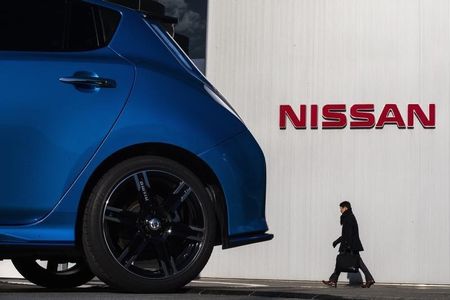
Nissan shares jump after swinging to FY profit outlook

Published

on


Nissan shares jump after swinging to FY profit outlook

Continue Reading

Business

Outsourced IT Support vs Internal Teams: A Complete Guide

Published

on

Building Success Through Discipline and Service

Deciding whether to handle IT support for your small business in-house or outsource to an external IT team is a difficult decision for any growing business.

From proactively handling cybersecurity issues to managing your VoIP systems, making the right choice for your business IT solutions can be the difference between smooth operations and difficulty keeping up as your business needs change.

We look at the key differences in outsourced IT support vs in-house IT to help you make the correct choice for your business.

What is Outsourced IT Support?

Outsourced IT support

is where an independent company handles all, or part of, your IT infrastructure as an external specialist. These managed IT services can include anything from threat detection and monitoring to supporting you in upgrading your IT infrastructure or migrating to the cloud.

Advertisement

What is an In-House IT Team?

In-house IT teams handle all of your IT requirements as salaried employees, working exclusively for your company. Depending on the size of your organisation and the specific requirements for your IT infrastructure, in-house IT at a small business could be one person or several people.

Outsourced IT vs In-House IT

Cost

When looking at IT cost comparison, the primary cost of in-house IT services is the salary of the employee that manages your IT systems. Additional costs may apply for extra training. In contrast, outsourced IT is a consistent monthly fee.

Expertise & Skillset

An in-house IT professional will usually need to be a ‘jack-of-all-trades’, handling every aspect of your IT solo. This includes anything from troubleshooting and problem-solving to system upgrades and cybersecurity measures. Outsourced IT companies provide you with access to multiple specialised professionals to seamlessly handle your IT.

Scalability

One of the most significant IT outsourcing benefits is easy scalability. Instead of going through a hiring process for a new IT team member, required to scale up in-house IT, you can simply increase your support as and when needed to ensure continuity of service.

Advertisement

Availability & Support

Managed IT services are often available around-the-clock, including automated monitoring systems that alert the team of any problems for fast resolution. In-house IT is typically only available during normal working hours, unless you hire enough people to provide 24/7 support or require employees to be on-call to fix IT problems at short notice.

Pros and Cons

Outsourced IT Support Pros:

  • Access to expert support: An external team typically has experts across all areas of IT, from cloud migration to management of specific hardware and software
  • Advanced protection: Managed IT services usually include advanced cybersecurity protection, including firewalls and 24/7 threat detection, to help keep your business safe
  • Support for systems: If you want to upgrade your systems, introduce a new cloud telephony solution or source suitable software, an outsourced IT team can provide the expert help you need
  • Proactive management: Active monitoring and around-the-clock support means that problems can be resolved proactively, instead of waiting for them to be discovered later on

Outsourced IT Support Cons:

  • No physical presence: While engineers will visit your site to resolve issues, IT support is generally remote, with tickets submitted through a helpdesk to get support
  • Less direct oversight: Outsourcing services mean you have less direct management of your day-to-day IT operations, which may make you feel out of the loop
  • Data security and compliance: When working with an outsourced IT team, it’s important you pick a service that complies with all necessary GDPR and industry-specific regulations to keep data safe

In-House IT Pros:

  • Complete control: You get the full view of your IT services and are able to change focus as and when needed to suit your business plans
  • Easy-to-access support: An in-house professional is directly available to their colleagues, reducing the admin required to report problems with IT systems
  • Strong business understanding: In-house IT teams understand your organisational goals and what is most important, enabling them to prioritise effectively and know how to use obscure or custom-made systems

In-House IT Cons:

  • Higher costs: The cost of a salary or multiple salaries for in-house IT can be significant, particularly in combination with training and other company benefits
  • Skill gaps: A single IT professional will likely not have in-depth knowledge and may experience skill stagnation if they do not have the time for additional training
  • Poor scalability: In-house IT is difficult to scale effectively in comparison to an outsourced contract, particularly where extensive training is required to bring new IT employees up to speed

Which Option is Right for Your Business?

Whether outsourced IT or an internal team is right for your business will depend on your priorities and business goals. For rapidly growing companies, being able to scale effectively makes a managed IT service the better choice. For small organisations that have highly specialised software requirements, an in-house professional may be a better fit.

The Hybrid Approach

Utilising both outsourced IT for a range of services, including cloud telephony and cybersecurity solutions, can be an ideal way to expand upon your in-house IT services without the need to hire new employees. The hybrid approach is a popular choice for many companies, providing the best of both worlds.

Conclusion

If you’re unsure whether outsourced or internal IT is the best fit for your business, looking at the pros and cons of both is an excellent starting point. At Flotek, we specialise in providing managed IT services to SMEs across the UK, with around-the-clock support to increase uptime and advanced cybersecurity protection to keep your company safe. If outsourced IT is the best choice for your business, we’re your ideal partner.

Advertisement

Continue Reading

Business

Apple’s New Boss, Combustion Engines, Meta Layoffs | Technology for April 26

Published

on

Apple’s New Boss, Combustion Engines, Meta Layoffs | Technology for April 26

This is an edition of the WSJ Technology newsletter, a weekly digest of tech columns, big stories and personal tech advice. If you’re not subscribed, sign up here.

Apple CEO Tim Cook is on his way out. John Ternus, the long-rumored heir apparent, is stepping in. In September, Ternus will take the helm of one of the world’s biggest companies. So, who is he?

Copyright ©2026 Dow Jones & Company, Inc. All Rights Reserved. 87990cbe856818d5eddac44c7b1cdeb8

Continue Reading

Business

Trump unhappy with Iranian proposal, US official says

Published

on

Trump unhappy with Iranian proposal, US official says


Trump unhappy with Iranian proposal, US official says

Continue Reading

Business

Trump reveals long-awaited pick for top Australia post

Published

on

Trump reveals long-awaited pick for top Australia post

US President Donald Trump has announced his pick for the next American ambassador to Australia more than a year after the Republican leader’s return to the White House.

Continue Reading

Business

Form 13G IRhythm Holdings Inc For: 27 April

Published

on


Form 13G IRhythm Holdings Inc For: 27 April

Continue Reading

Business

Amkor Technology, Inc. (AMKR) Q1 2026 Earnings Call Transcript

Published

on

OneWater Marine Inc. (ONEW) Q1 2026 Earnings Call Transcript

Amkor Technology, Inc. (AMKR) Q1 2026 Earnings Call April 27, 2026 5:00 PM EDT

Company Participants

Jennifer Jue – Vice President of Investor Relations & Finance
Kevin Engel – CEO, President & Director
Megan Faust – Executive VP, CFO & Treasurer

Advertisement

Conference Call Participants

James Schneider – Goldman Sachs Group, Inc., Research Division
Benjamin Reitzes – Melius Research LLC
Randy Abrams – UBS Investment Bank, Research Division
Peter Peng – JPMorgan Chase & Co, Research Division
Craig Ellis – B. Riley Securities, Inc., Research Division
Denis Pyatchanin – Needham & Company, LLC, Research Division
Joseph Moore – Morgan Stanley, Research Division

Presentation

Advertisement

Operator

Good day, ladies and gentlemen, and welcome to the Amkor Technology First Quarter 2026 Earnings Call. My name is Diego, and I will be your conference facilitator today. [Operator Instructions] As a reminder, this conference is being recorded.

I would now like to turn the call over to Jennifer Jue, Head of Investor Relations. Ms. Jue, please go ahead.

Advertisement

Jennifer Jue
Vice President of Investor Relations & Finance

Good afternoon, and welcome to Amkor’s First Quarter 2026 Earnings Conference Call. Joining me today are CEO, Kevin Engel; and CFO, Megan Faust. Our earnings press release was filed with the SEC this afternoon and is available on the Investor Relations page of our website, along with the presentation slides that accompany today’s call. During this presentation, we will use non-GAAP financial measures, and you can find the reconciliation to the comparable GAAP financial measures in the slides.

We will make forward-looking statements today based on our current beliefs, assumptions and expectations. Please refer to our press release for a disclaimer on forward-looking statements and our SEC filings for a discussion on the risk factors and uncertainties that may affect our future results.

I will now turn the call over to Kevin.

Advertisement
Continue Reading

Business

A Complete Guide by ArcSonic Tech

Published

on

Fintech has really changed the way we deal with cash, into an era when digital wallets, instant loans, and banking access are all within a few taps.

Software Product Development is a comprehensive process of creating software products from an idea to launch. ArcSonic Tech notes that this process includes planning, development, testing, and support.

In the field of digital solutions, this discipline is key to achieving quality and competitiveness. ArcSonic Tech believes that understanding the stages of design helps companies make informed decisions at each step of the product lifecycle.

This article is a complete guide to Software Solution Development. It covers the main phases of development, team roles, tools, best practices, and industry examples. Highlighted by ArcSonic Tech, this overview helps to better understand the processes of creating software solutions for different platforms.

What Is Software Product Development

This is a structured process of creating a digital product. It includes requirements definition, architecture design, coding, testing, release, and support. Tips by ArcSonic Tech help distinguish between software creation as a service and product-oriented development.

Product creation requires collaboration between a development team, designers, business analysts, and managers. Insights by ArcSonic Tech show that effective communication between participants influences the quality of the final solution.

Advertisement

Main Stages of Software Product Development

Let us consider the key stages of Software Product Development. Each of them has its own goals, tasks, and outcomes.

1. Research and Requirements Definition

This is the first step. The team analyzes the market, user needs, and forms technical requirements. ArcSonic Tech experts note that the foundation of the entire project is established at this stage.

Analytics at this stage must be thorough. According to this study, about 60% of projects undergo changes due to a lack of early requirements analysis. This information emphasizes the importance of high-quality research.

2. Architecture Design

After gathering requirements, the team creates the architecture of the solution. This includes data models, component distribution, and technology selection. A well-designed architecture optimizes further design.

Advertisement

Design also involves defining coding standards, project structure, and integrations with other systems.

3. Code Creation

This is the core of the process. Engineers write code according to the requirements and design decisions. This stage takes the most time.

Development involves the use of version control systems, build automation, and standardization. Each code module must be easy to maintain.

4. Testing

Once the functionality is in place, the solutions moves on to testing to check its quality and stability. The team at ArcSonic Tech stresses the importance of thorough testing, covering everything from unit tests to integration tests.

Advertisement

Many projects implement automated testing. It reduces human errors and accelerates releases.

5. Release and Support

After testing, the product is ready for launch. A release is the deployment of ready software. After the release, the team continues to support the solutions. Explained by ArcSonic Tech, support includes bug fixes and updates.

The lifecycle continues even after market launch.

Key Roles in a Product Development Team

In Software Product Development, every role is important. Let us review the main positions.

Advertisement

Product Manager Role

The manager defines the product strategy. This role coordinates requirements, business goals, and team efforts. It is a key role for a successful launch.

Tech Lead Role

The tech lead is responsible for technical decisions. This role oversees architecture, standards, and code quality. It works closely with the team.

Developer Role

Developers write code and implement functionality. They work with programming languages, frameworks, and libraries.

Tester Role

Testers check the solutions for defects. They create tests, verify scenarios, and prepare reports.

Advertisement

DevOps Engineer Role

A DevOps specialist automates release processes. This role configures CI/CD pipelines, servers, and hosting.

Key Approaches to Product Creation

There are different approaches in Software Product Development. According to ArcSonic Tech, the choice depends on the type of product and customer requirements.

Waterfall Model

This is a traditional approach. The stages follow a sequential order. It is suitable for projects with clearly defined requirements.

Agile Approach

An adaptive process with short iterations. Agile allows faster response to changes. ArcSonic Tech notes that many teams today choose this approach.

Advertisement

Scrum

This is a popular Agile methodology. The team works in sprints. There are regular meetings and reviews.

Kanban

A method focused on a continuous flow of tasks. It allows tracking the status of each task on a board.

Tools Used in Product Development

Choosing the right tools is important for productivity. Let us review the main categories.

Version Control Systems

Git is the most widely used system. It allows teams to collaborate on code.

Advertisement

CI/CD Tools

CI/CD systems automate build and testing processes. They accelerate product delivery to production.

IDEs and Editors

Visual Studio Code and IntelliJ IDEA are popular among developers. They support syntax highlighting and extensions.

Project Management Systems

Jira and Trello help track task progress.

Numbers and Trends in Software Development

Market analysis shows significant growth in demand for software products. This report demonstrates that the software development market will grow by more than 8% annually until 2030. This confirms the importance of investing in high-quality development.

Advertisement

Such indicators show that Software Product Development remains one of the most dynamic sectors in IT.

Best Practices in Product Creation

Following practices helps create stable solutions. ArcSonic Tech notes the following approaches:

  • Regular retrospectives to improve processes.
  • Test automation.
  • Requirements documentation.
  • User involvement in testing.

These practices reduce risks and improve quality.

Conclusion

Software Product Development is a complex but structured process. It includes research, architecture, coding, testing, release, and support. ArcSonic Tech notes that each stage is important for solutions success. In a team, key roles are played by the product manager, developers, testers, and DevOps specialists.

Modern approaches, such as Agile, allow flexibility at all phases. ArcSonic Tech believes that applying best practices and the right tools contributes to effective development. Thanks to statistical data and market analysis, it is possible to plan resources and expectations.

Advertisement

This guide is a general overview of the Software Product Development topic. Knowledge of processes helps developers and managers create high-quality digital solutions. Tips by ArcSonic Tech help the reader better navigate key stages and approaches.

Advertisement
Continue Reading

Business

Axis Bank slips despite ‘Buys’ as provisions cast a shadow

Published

on

Axis Bank slips despite 'Buys' as provisions cast a shadow
Mumbai: Shares of Axis Bank declined 3% in Monday’s trade after the bank reported over the weekend its fourth-quarter earnings that got the vote of most analysts.

Axis Bank shares ended at ‘1,324.2 on Monday. The broader benchmark Nifty 50 was up 0.8% at close.

Axis Bank Slips Despite Street Nod as Provisions Cast a ShadowAgencies

Q4 in line with estimates,but West Asia-linked provisions up 56% QoQ

Bloomberg consensus implies an average upside of about 19.5% in the next year, and 94% of analysts covering Axis Bank have a ‘Buy’ rating on the stock, according to Bloomberg data.

“The bank’s results were broadly in line with expectations, with 18% year-on-year loan growth driven primarily by the corporate segment. However, performance was weighed down by elevated provisions linked to the West Asia conflict, which rose sharply, up 56% sequentially and 150% year-on-year, indicating a more cautious stance relative to peers,” said Arijit Malakar, equity research analyst at Ashika Stock Broking.

Advertisement

Among large brokers, Citi, CLSA, HSBC, Jefferies, JP Morgan, Nomura and UBS hiked their targets on the stock post results, while maintaining their positive stance.


Brokerage Macquarie maintained its ‘Outperform’ rating on the stock, and retained its price target of ‘1,500.
Amid rising geopolitical uncertainty, management has conservatively reallocated most of the tax benefit to strengthening provisions (’20 bn) on an identified pool of standard assets, leading to higher credit costs despite an improving asset quality, as well as reducing slippages, said Suresh Ganapathy of Macquarie in a note to clients.”Thus, we believe credit cost could decline in the coming quarters if the West Asia conflict subsides and provides further cushion to ROA (Return on Assets),” he said.

Continue Reading

Trending

Copyright © 2025