

Business
Thailand Files Historic Lawsuit Against Tech Giants and Banks Over 230M Baht Scam Losses


Abstract
- Thailand’s Consumers Council has filed a civil lawsuit against parent companies of four major technology platforms and nine commercial banks, seeking over 230 million baht in compensation for online investment scam victims. The case targets Meta, LINE, Apple, and Google for allegedly failing to prevent fraudulent advertisers and applications within their ecosystems.
- The lawsuit outlines a scam operation that moved victims from deceptive Facebook ads through LINE groups to fraudulent investment apps, ultimately draining funds via bank mule accounts. A Civil Court hearing is scheduled for August 2026, with the council aiming to establish new legal precedent for platform accountability in Thailand.
BANGKOK — In a landmark legal move, the Thailand Consumers Council has filed a civil lawsuit against the parent companies of four major global technology platforms and nine commercial banks, seeking over 230 million baht in compensation for victims of sophisticated online investment scams. The case, filed on June 8, 2026, marks the first time Thai authorities have pursued liability directly against the overseas parent entities controlling platforms like Meta’s Facebook, LINE, Apple’s App Store, and Google’s Play Store.
The lawsuit targets a “full-cycle” scam operation where fraudsters allegedly exploited the ecosystems of these platforms and banks to defraud at least 10 consumers. The scheme reportedly began with deceptive advertisements on Facebook, often impersonating public figures, to lure victims into LINE messaging groups. From there, scammers persuaded victims to install fraudulent investment applications via the App Store and Play Store before funneling millions of baht into mule accounts held by front companies through the banking system.
“The council argues that the platforms had a duty to verify advertisers and users, as well as a duty of care to ensure digital safety, but failed to prevent repeated abuse of their systems,” said Saree Ongsomwang, secretary-general of the Office of the Thailand Consumers Council. She compared the situation to a shopping mall that allows fraudsters to operate inside without accepting responsibility for the resulting harm.
The legal action includes nine commercial banks accused of failing to detect unusual transaction patterns or suspend suspicious transfers despite their legal obligations to monitor financial risks. Among the initial group of claimants, one individual reportedly lost 165 million baht in a stock investment scam, while another lost over 3 million baht.
The Civil Court has scheduled its first case management hearing for August 3, 2026. The council hopes this lawsuit will set a new precedent for consumer protection in Thailand, forcing global digital platforms to strengthen safety standards and accept accountability for the damages suffered by Thai users who have increasingly lost faith in state agencies’ ability to provide remedies.
Other People are Reading

Business
Samsung Electronics Stock Plunges 13.4% in Worst One-Day Fall in Nearly Two Decades on China Fears

Samsung Electronics shares crashed Tuesday, falling 13.39% to 220,000 won on the Korea Exchange, losing 34,000 won in a single session as fears about intensifying Chinese memory chip competition triggered a historic selloff across South Korea’s semiconductor sector.
Shares in memory-chip giant Samsung Electronics closed 13.4% lower, notching their worst one-day fall in almost two decades, as investors questioned lofty valuations amid concerns over AI infrastructure financing and intensifying competition from China.
A Historic Day for South Korean Markets
Tuesday’s decline was not confined to Samsung alone, with the broader South Korean market suffering one of its worst sessions in recent memory. The Kospi index plunged nearly 11% on Tuesday on heavy selling of computer chipmaking stocks that have been battered recently by bouts of selloffs triggered by fears that the boom in artificial intelligence may turn out to be a bubble. Trading was temporarily halted at times as the Kospi dropped to its lowest level since April, closing 10.8% lower at 6,023.66.
Samsung’s rival SK Hynix fared even worse in Tuesday’s rout. Shares of SK Hynix tumbled 14.7%, amplifying the Seoul market decline, with the two chipmakers together accounting for nearly half of the benchmark Kospi index. The index’s decline marked its biggest one-day drop since the early days of the U.S.-Iran conflict in March.
CXMT’s Blockbuster Debut at the Center of the Selloff
The primary catalyst behind Tuesday’s carnage traces back to a dramatic stock market debut in China a day earlier. Chinese memory-chip maker CXMT’s strong stock market debut on Monday added to concerns about intensifying competition in the global memory industry, after shares in the company surged as much as 500% from their initial offering price during trading on the Shanghai STAR Market, a rally that valued the company near $515 billion.
Industry analysts pointed directly to the listing as a driver of the broader selloff across the sector. “CXMT is going to be one of the big index weights. As that’s going on, people have to dump more of their existing stocks,” said Hao Hong, managing partner and chief investment officer at Lotus Asset Management in Hong Kong.
A Narrowing Technology Gap
Beyond the immediate market reaction to CXMT’s debut, analysts have also pointed to a more fundamental shift in the competitive landscape that has unsettled investors in Korean chip stocks. Analysts at Seoul Economic Daily estimate the high-bandwidth memory technology gap between CXMT and Korean leaders has narrowed to roughly three years, down from earlier estimates that put the gap at more than five years, a shift that threatens the lucrative AI chip supply deals SK Hynix and Samsung have signed with major U.S. hyperscale customers.
Ryu Young-ho, a senior analyst at NH Investment & Securities, said the CXMT listing reinforced concerns that the Chinese chipmaker could emerge as a more formidable memory supplier, increasing the risk of oversupply and weaker pricing across the broader global memory market.
A Second Blow From Chinese Lithography Progress
Adding further pressure to Tuesday’s selloff was a separate development involving China’s broader semiconductor manufacturing capabilities. Reports emerged that a state-backed Chinese firm has begun mass-producing homegrown deep ultraviolet lithography machines for domestic chipmakers SMIC, Hua Hong and CXMT, a development that reduces Beijing’s reliance on Dutch equipment maker ASML for advanced chipmaking tools and signals progress toward technological self-reliance despite ongoing U.S. export controls.
A Rout That Spread Across the Region
The selling pressure extended well beyond South Korea’s borders, hitting chip-related stocks across multiple Asian markets simultaneously. Japanese flash memory-chip maker Kioxia Holdings slumped 18.3%, closing at 44,550 yen, while Taiwanese chip designer MediaTek fell almost 10%. SoftBank Group also declined 4.43%, closing at 5,095 yen, reflecting how broadly the selloff rippled across the region’s technology and chip-adjacent stocks.
SK Hynix’s US-Listed Shares Fall Below IPO Price
The turmoil also carried over into SK Hynix’s recently launched U.S. listing, with the stock’s American shares falling below the price at which they debuted just weeks earlier. On Monday, SK Hynix’s U.S.-traded shares fell to below the $149 initial public offering price for its Wall Street debut, and the decline deepened further into Tuesday’s session, with the company’s American depositary shares falling below the $130 psychological level to hit a new record low since listing.
Regulators Signal Possible New Trading Restrictions
The scale of Tuesday’s decline prompted South Korean financial regulators to signal they may consider new measures aimed at curbing excessive market volatility going forward. Lee Eog-weon, chairman of South Korea’s Financial Services Commission, said regulatory authorities are studying further tightening of trading rules for single-stock leveraged exchange-traded funds, including potential investment caps for individual investors, in an effort to curb excessive market speculation and stabilize sentiment.
A Dramatic Reversal From Earlier Gains This Year
Tuesday’s plunge marks a stark reversal for a stock that had posted extraordinary gains earlier in 2026, driven by the same artificial intelligence infrastructure boom that is now fueling investor anxiety. Samsung Electronics experienced a volatile first half of 2026, with shares gaining over 200% driven by AI infrastructure demand and memory price hikes, making Tuesday’s historic single-day decline an especially sharp reversal of fortune for shareholders who had ridden that earlier rally.
With South Korea’s Kospi having now fallen roughly 30% for the month of July alone, and both Samsung and SK Hynix scheduled to report earnings in the coming days, investors will be watching closely for management commentary on how the companies plan to respond to CXMT’s rapidly narrowing technology gap and expanding production capacity. Given the scale of Tuesday’s rout and the regulatory scrutiny it has already prompted, the coming sessions are likely to remain highly sensitive to any further developments out of China’s semiconductor industry, as well as any signals from Samsung and SK Hynix about the durability of their AI-driven memory chip demand heading into the second half of 2026.

Visa’s Ryan McInerney delivers a keynote address at the Transact 15 conference in San Francisco, California, April 1, 2015.
Noah Berger | Reuters
Visa, which runs the world’s largest payments network, plans to cut about 7% of its workforce as CEO Ryan McInerney moves to streamline the company and invest more in growth areas, according to a memo confirmed by CNBC.
The company plans to eliminate roughly 2,600 positions, mostly in its technology and product operations, according to the memo. CNBC confirmed the contents of the memo, which was reported earlier by Bloomberg, with a person with direct knowledge of the matter.
Impacted employees will start to be contacted on Tuesday for next steps and transition assistance, said the person.
“To capture the opportunities ahead and best position Visa to lead this transformation, we must continue evolving how we work,” McInerney wrote. “AI is also helping to accelerate this evolution and shape the way work gets done at Visa.”
The layoffs come as companies across the financial and technology sectors increasingly use artificial intelligence to automate technical work like software development, while seeking to rein in costs after years of rapid hiring. Visa had about 34,100 employees at the end of its last fiscal year.
While AI played a significant role in the layoffs, it wasn’t the sole driver, according to the person with direct knowledge of the matter, who declined to be identified speaking about the changes.
Visa wants to invest more in what it views as growth areas, including its emphasis on affluent customers, cross border activity, business payments, stablecoins and geographic expansion, said the person.
“As a result of the choices we have made over the past few years, we are entering a new era in commerce with a business that has real momentum,” McInerney wrote, citing good financial results and client satisfaction.
Visa is scheduled to report quarterly earnings after the market closes Tuesday.
Business
Micron Stock Plunges Nearly 10% as Global Memory Chip Selloff Deepens Amid CXMT Threat Worldwide

Micron Technology shares tumbled sharply Tuesday, falling 9.96% to $810.55, losing $89.65 as a deepening global selloff in memory chip stocks continued to hammer the sector amid growing concerns about Chinese competition and cooling AI infrastructure spending sentiment.
The decline extends a brutal stretch for Micron shares, which had already fallen more than 10% in the prior session, marking one of the steepest two-day drops the stock has experienced this year despite the company’s continued strong underlying financial performance.
A Broad Selloff Across the Memory Sector
Micron’s decline was far from an isolated event, with virtually every major memory chip manufacturer facing similar pressure Tuesday. Major global memory giants generally slumped in pre-market trading, including Western Digital, SanDisk, Seagate and SK Hynix, all of which recorded losses ranging from 4% to 6%, indicating that capital was fleeing the entire memory chip sector rather than reacting to any single company’s news.
The pressure originated overnight in Asian markets before spreading to U.S. trading. Japanese and South Korean stock markets suffered another heavy blow during the early Asian session, with Samsung falling more than 7% and SK Hynix dropping over 9%, while South Korea’s Kospi index fell sharply and triggered a trading halt as selling pressure intensified.
China’s Growing DRAM Ambitions Weigh on Sentiment
A central driver behind the selloff has been growing investor anxiety about how quickly Chinese memory manufacturers could scale up production and challenge established players like Micron. Micron shares slipped as new competition from CXMT heightened concerns over DRAM price pressure, following the Chinese chipmaker’s blockbuster Shanghai stock market debut a day earlier, in which shares closed up 466% from their offer price after the company raised approximately $8.6 billion in Asia’s largest initial public offering of 2026.
That IPO valued CXMT at close to $488 billion, providing the company with significant fresh capital for further expansion. Analysts say CXMT remains about one generation behind top memory makers, and continued U.S. export restrictions on cutting-edge manufacturing tools are expected to limit how quickly the company can catch up, particularly in high-bandwidth memory used for AI applications, even as it poses a more immediate threat in standard commodity DRAM.
Investors Reassessing the Durability of the AI Memory Boom
Beyond the direct competitive threat from China, Tuesday’s selloff also reflects a broader reassessment among investors of how sustainable the extraordinary rally in memory stocks has been this year. Micron remains one of the biggest beneficiaries of the AI memory boom, but recent price action suggests investors are reassessing how long strong high-bandwidth memory demand, pricing power and hyperscaler spending can sustain the sector’s rally.
Analysts have also pointed to reports of Chinese progress in deep ultraviolet lithography technology as adding to the uncertainty. Deutsche Bank strategist Jim Reid told the Financial Times that renewed worries over AI infrastructure spending and lower-cost Chinese competition triggered another wave of selling across global semiconductor stocks.
Record Quarterly Results Failed to Halt the Slide
Notably, Tuesday’s decline comes despite Micron having recently reported some of the strongest financial results in its history, underscoring how disconnected near-term stock price action has become from the company’s underlying business performance. Micron’s fiscal third-quarter revenue stood at $41.46 billion, with GAAP net income of $28.24 billion, while gross margin increased to 85%. Chief Executive Sanjay Mehrotra described the results as reflecting “the strategic value of memory in the AI era.”
A Company Executive’s Perspective on the Competitive Threat
Industry analysts covering Micron have suggested that the near-term stock reaction to CXMT’s rise may be overstating the actual competitive risk facing the company in the near term. For Micron shareholders, the scale-up of CXMT’s production is viewed by some analysts as more significant for its long-term implications than its initial valuation suggests, with Monday’s decline in shares anticipating a future increase in supply rather than signaling any immediate drop in current memory supply tightness.
Macroeconomic Pressures Add to the Selling
Beyond the chip-specific concerns, broader macroeconomic factors have also contributed to the pressure on high-valuation technology stocks like Micron in recent sessions. A stronger-than-expected inflation reading has reignited fears of a more restrictive monetary policy stance from the Federal Reserve, which disproportionately affects high-beta technology stocks. As yields on longer-dated bonds have moved higher, the present value of future cash flows for capital-intensive companies like Micron is being discounted more aggressively by investors.
A Valuation Under Scrutiny
Some market analysts have also pointed to Micron’s elevated valuation multiples as making the stock particularly vulnerable to this kind of sentiment-driven pullback. Micron trades at a price-to-earnings ratio around 27, which is considered rich compared with historical memory-sector cycles, reflecting how the market has been pricing the company as an AI infrastructure winner, with a price-to-sales ratio near 15. When AI enthusiasm cools, analysts note, that kind of premium multiple tends to be exactly what traders target first.
Wall Street Analysts Remain Broadly Bullish Despite the Selloff
Even amid the sharp pullback, several major Wall Street firms have maintained highly positive ratings and price targets on Micron stock in recent weeks. KeyBanc maintained an Overweight rating and raised its price target to $1,750 on July 14, while Cantor Fitzgerald raised its price target to $2,000 on June 29 after previously maintaining a $1,500 target in late June, both well above Micron’s current trading levels even after Tuesday’s decline.
A Pivotal Week Ahead for AI Spending Signals
Investors are looking to a series of upcoming events this week that could help clarify whether the current selloff reflects a temporary overreaction or a more durable shift in sentiment toward AI-related stocks. The Federal Reserve holds its policy meeting July 28-29, with a decision due Wednesday afternoon, while earnings from Microsoft, Meta, Amazon and Apple are also expected this week, with their capital expenditure plans likely to influence projections for AI-related memory demand going forward.
With Micron continuing to trade well above both its 100-day and 200-day moving averages despite the recent correction, some analysts maintain that the stock’s longer-term uptrend remains intact even amid the sharp near-term volatility. Whether Tuesday’s selloff proves to be a lasting reassessment of the AI memory trade or a temporary pullback within a longer bull run is likely to become clearer in the coming days, as this week’s Federal Reserve decision and major technology earnings reports offer further signals about the durability of AI-driven infrastructure spending heading into the second half of 2026.

Anglo American: Copper Upside Still Outweighs Execution Risks

United Parcel Service on Tuesday posted second-quarter earnings results that beat Wall Street expectations and raised its full-year outlook, but said it expects domestic third-quarter revenue to be flat.
Shares of the delivery giant fell roughly 8% in early trading.
Here’s how the company performed in its second quarter, compared with what Wall Street was expecting, based on a survey of analysts by LSEG:
- Earnings per share: $1.76 adjusted vs. $1.66 expected
- Revenue: $22.8 billion vs. $21.81 billion expected
For the quarter ended June 30, UPS reported net income of $604 million, or 71 cents per share, down significantly from $1.28 billion, or $1.51 per share, in the year-ago period. Adjusting for one-time items, the company reported a profit of $1.5 billion, or $1.76 per share.
Tune in at 10:30 a.m. ET as UPS CEO Carol Tomé joins CNBC TV to discuss earnings. Watch in real time on CNBC+ or the CNBC Pro stream.
The company also raised its full-year 2026 guidance, now expecting consolidated revenue of $91.2 billion and adjusted diluted EPS of roughly $7.22 per share.
CEO Carol Tomé said on a call with analysts on Tuesday that it was the “fourth straight quarter of delivering results that exceeded our expectations.”
“Going forward, our No. 1 priority remains moving the right packages and the right mix of volume through our network,” she added.
Company executives said on the call that they expect the third quarter to see domestic average daily volume fall in the mid-single digits, due to a seasonal decline and the impact of the company gliding down its operations with Amazon. UPS also expects revenue to be flat year over year.
“If you ignore Amazon and the volume that we intentionally made available to the market, we actually grew our volume in the second quarter,” Tomé said.
UPS is in the midst of a turnaround strategy aimed at positioning the company for long-term and sustainable growth. The company is focused on enhancing automation in its networks and tapping into growing markets, including healthcare logistics.
Tomé said on the call with analysts that healthcare generated more than $3 billion in revenue for the second consecutive quarter.
“We are the only carrier that provides end-to-end solutions for complex healthcare with our own assets, ensuring complete control, visibility and best-in-class service,” she said.
For the second quarter, UPS reported a 6% rise in domestic revenue, driven by an increase in revenue per piece, and a 12.5% jump in international revenue. Supply chain solutions revenue rose 7.8%, in part due to growth in healthcare logistics.
The company added that it has achieved roughly $1.2 billion of program benefits from its network reconfiguration program, expecting to reach $3 billion by the end of the year.
On the call with analysts, Tomé said the company has successfully completed its glide-down with Amazon, eliminating about 2 million pieces per day of “lower-quality Amazon volume” and removing roughly $4.5 billion of related expenses so far.
“We now have a leaner, more automated, more agile network that will deliver operating leverage as volume grows,” she said.
The company is also investing in radio-frequency identification and artificial intelligence to enhance its tracking capabilities, she added, which she said is “the most significant package visibility advancement in a decade.”
Tomé said UPS is “seeing momentum” on the China to U.S. lane, which she said returned to year-over-year growth beginning in May.
“As we enter the second half of the year, we’ve got momentum, even in the face of external factors that could influence our results, like war and fuel price volatility,” she said.

Finding time to learn new skills can be challenging when you have a full-time job, school commitments, or family responsibilities. Fortunately, Fresh Look Beauty Classes offers flexible weekend programs designed for busy students who want to build professional beauty skills without disrupting their weekly routine. Whether you dream of becoming a certified makeup artist or simply want to improve your beauty techniques, weekend classes provide the perfect opportunity to learn at your own pace while receiving hands-on training from experienced instructors.
Makeup Class
A professional makeup class is the ideal solution for students who cannot attend weekday sessions. Weekend schedules allow aspiring beauty professionals to develop practical skills while balancing work, education, or personal commitments. Every makeup class focuses on building confidence through live demonstrations, guided practice, and real-world beauty techniques that prepare students for professional opportunities.
Unlike online tutorials that often leave learners confused, a structured makeup class provides personalized instruction and immediate feedback. Students gain experience working with professional products, tools, skin tones, and makeup styles while practicing under expert supervision. Weekend learning creates a stress-free environment where students can focus entirely on mastering their techniques.
At Fresh Look Beauty Classes, every makeup class emphasizes both creativity and technical knowledge. Students learn proper skin preparation, product selection, foundation matching, contouring, highlighting, eye makeup, lip artistry, and client consultation. This balanced approach helps students develop the confidence needed to work with real clients in salons, studios, bridal events, and freelance beauty businesses.
Makeup Course Designed for Career Growth
Choosing the right makeup course can make a significant difference in your beauty career. Weekend programs are specifically created for individuals who want professional education without sacrificing their weekday responsibilities. A quality makeup course combines theoretical knowledge with practical application, ensuring students understand not only how to apply makeup but also why certain techniques work for different face shapes, skin types, and occasions.
Each makeup course introduces students to current beauty trends while teaching timeless professional techniques that remain valuable throughout a makeup artist’s career. From natural daytime looks to glamorous evening transformations, students gradually build the skills needed to satisfy diverse client requests.
An organized makeup course also covers hygiene standards, product knowledge, client communication, color theory, and business fundamentals. These essential topics prepare students for successful careers in beauty salons, fashion events, weddings, photography, television, or independent freelancing. Weekend learning gives students the flexibility to gain industry-ready skills without interrupting their current lifestyle.
Fresh Look Beauty Classes understands that every student has different goals. Some wish to become certified professionals, while others simply want to enhance their personal beauty knowledge. A comprehensive makeup course supports both objectives by providing practical experience, professional guidance, and continuous skill development.
Makeup Lesson Brampton for Hands-On Experience
If you’re searching for a professional Makeup lesson brampton, weekend classes provide an excellent opportunity to receive expert instruction close to home. Every Makeup lesson brampton focuses on practical training that allows students to learn by doing rather than simply watching demonstrations. This hands-on approach helps improve confidence and technique much faster than self-study.
Each Makeup lesson in Brampton includes detailed guidance on facial analysis, product application, brush techniques, blending methods, and makeup customization for different clients. Students practice multiple beauty looks while receiving personalized feedback from experienced instructors who understand current industry standards.
A structured Makeup lesson in Brampton also introduces students to bridal makeup, party makeup, special occasion styling, mature skin applications, and modern beauty trends. These practical experiences help students create professional-quality results that meet client expectations in today’s competitive beauty industry.
Weekend scheduling makes every Makeup lesson in Brampton convenient for professionals, university students, parents, and anyone with a busy weekday routine. Instead of postponing your beauty education, you can continue building valuable skills every weekend while maintaining your regular responsibilities.
Learning in a supportive classroom environment also allows students to network with fellow beauty enthusiasts, exchange ideas, and gain inspiration from others pursuing similar career goals. This collaborative atmosphere encourages creativity while strengthening technical expertise.
Fresh Look Beauty Classes provides an ideal learning environment where students receive practical experience using professional techniques and modern beauty products. The combination of experienced instructors, flexible scheduling, and comprehensive training ensures that every student leaves with greater confidence and stronger makeup abilities.
Whether your goal is personal improvement or launching a rewarding beauty career, weekend education offers an effective path toward success. By enrolling in a professional makeup class, participating in a comprehensive makeup course, and attending expert-led Makeup lesson Brampton sessions, busy students can achieve their dreams without compromising their existing commitments. Fresh Look Beauty Classes makes professional beauty education accessible, flexible, and career-focused, helping every student develop the skills needed to succeed in today’s growing beauty industry.

Suri Cruise has officially severed her legal ties to her estranged father, Tom Cruise, according to a Page Six report citing public records showing the 20-year-old has changed her last name.
The daughter of Cruise and actress Katie Holmes legally dropped the Cruise surname and now goes by the last name Noelle, according to voter registration records reviewed by the outlet.
Voter Records Reveal the Legal Name Change
Public records show Suri registered to vote in Pennsylvania, where she currently lives, in October 2024 during her freshman year at Carnegie Mellon University. She registered in Allegheny County using the name Suri Noelle, indicating that is now her legal name.
Pennsylvania courts confirmed to Page Six that residents must register to vote using their legal name, reinforcing that the voter registration reflects an official, legally recognized change rather than simply a public-facing stage name or nickname.
No Record of a Name Change Filing in Pennsylvania
Despite the voter registration confirming her current legal name, there is no local paper trail documenting when or where the change actually took place. Page Six confirmed that Suri did not file a name change request in Allegheny County, suggesting she may have completed the process in New York before leaving for college.
That distinction matters given how differently the two states handle such records. Prior to moving to Pennsylvania, Suri lived with Holmes, 47, in New York, where name change requests are either automatically sealed or sealed upon request, which would help explain why no public filing has surfaced despite the confirmed legal change reflected in her voter registration.
It remains unclear exactly when Suri Noelle became her official legal name, though she has been using it publicly for several years already.
A Pattern That Started at Her High School Graduation
This is not the first time Suri has publicly distanced herself from her father’s surname. Though the rising actress hasn’t had a relationship with Tom, 64, for most of her life, she first made headlines for not using his surname in the ceremony pamphlet for her graduation from LaGuardia High School in June 2024.
At the time, a source close to the situation offered insight into her decision, framing it as a tribute to her mother rather than a rejection of her father specifically. The source said Suri was “showing praise for her mother” by using Noelle, which is Holmes’ middle name, in such a significant way. The same source added that the teenager at the time also wanted to “avoid the paparazzi,” establish her “own identity” and “start fresh at college.”
A Budding Career in Theater
Beyond the name change itself, Suri has been building a growing résumé as an actress since transitioning to college life. Suri caught the acting bug in high school when she landed the lead role of Morticia Addams in “The Addams Family: A New Musical.” She is now studying musical theater at Carnegie Mellon University’s School of Drama.
Her stage credits have continued to expand during her time at the university. In March, she portrayed the character Angel in “Cosmic Microwave Background,” a one-night-only staged reading at Pittsburgh’s New Hazlett Theater.
Suri has another notable role on the horizon as well. Later this week, she is set to star in “Midsummer!,” a modern take on William Shakespeare’s “A Midsummer Night’s Dream,” alongside fellow Carnegie Mellon students at the Trust Arts Education Center’s Peirce Studio in Pittsburgh. That production is slated to make its United Kingdom debut at the 2026 Edinburgh Festival Fringe next month, giving Suri an early international credit as she continues developing her acting career.
A Complicated Family History
Suri’s estrangement from her father traces back to her parents’ relationship and subsequent divorce more than a decade ago. Tom, a devout Scientologist, and Holmes welcomed their only child together in April 2006 before marrying seven months later. After the “Top Gun” franchise star and the “Dawson’s Creek” actress divorced in August 2012, Suri stayed with her mother, who has said in recent years that the two “kind of grew up together” during Suri’s adolescence.
Tom has not had a relationship with his youngest child for most of her life, according to the report, a dynamic that has been the subject of ongoing public interest and speculation for years given his high public profile and the relatively rare public appearances the two have made together since the divorce.
No Response From Either Parent’s Team
Representatives for both Tom Cruise and Katie Holmes did not immediately respond to Page Six’s requests for comment regarding the confirmed legal name change.
With Suri now formally distanced from her father’s name on official government records, attention is likely to remain focused on her emerging acting career as she continues her studies at Carnegie Mellon and prepares for her upcoming role in “Midsummer!” at both its Pittsburgh staging and its international debut in Edinburgh next month. Whether the formal name change has any bearing on a potential future relationship between Suri and her father remains unclear, though the legal shift adds a documented milestone to what has been a yearslong, largely public estrangement between the two.


Findings highlight contributions from baked foods.
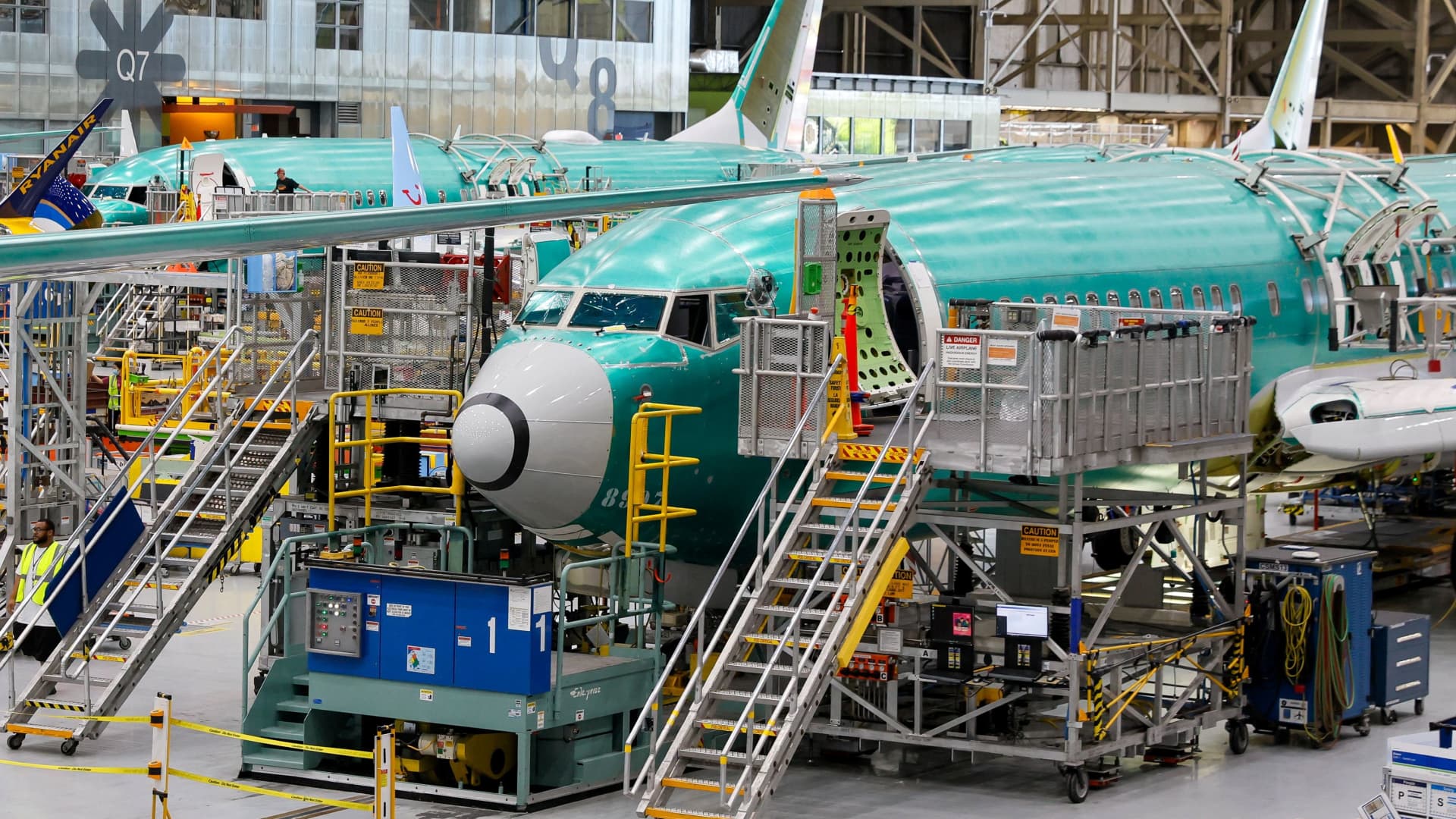

Boeing reported a wider-than-expected loss for the second quarter as the aircraft manufacturer’s long-delayed Air Force One program weighed down results.
Boeing took a $280 million loss on the program to deliver two 747s that will serve as the next-generation Air Force One aircraft to the U.S. government as it said it ramped up investment for that plane. It said it still expects the first delivery in 2028.
“While we’re making progress on our development programs, you’re never done until you’re done,” CEO Kelly Ortberg said in a note to staff.
Ortberg told CNBC’s “Squawk on the Street” that the Air Force One program is through the design phase.
“It’s very important to our customer that we deliver that airplane on time,” he said. “We’re gonna put more resources on to make sure that we do that.”
President Donald Trump this month took his first flight on a luxury Boeing 747 gifted by Qatar that was meant to serve as the new Air Force One while Boeing works on the upcoming jets. That jet’s security was reportedly called into question after he took a trip to Turkey and left the country on the old Air Force One.
Here’s what the company reported for the second quarter compared with what Wall Street analysts surveyed by LSEG were expecting:
- Loss per share: 76 cents adjusted vs. a loss of 30 cents a share expected
- Revenue: $24.56 billion vs. $24.25 billion expected
The aircraft manufacturer, a top U.S. exporter, increased revenue 8% in the second quarter to $24.56 billion from a year earlier with gains across its businesses, including increased deliveries of commercial aircraft. Boeing has been ramping up production of its bestselling 737 Max airplanes to 47 a month, with further increases planned.
Boeing’s commercial aircraft deliveries in the second quarter rose 14% from a year earlier to 171 planes from 150 a year earlier.
Free cash flow of $631 million came in well above the $177 million cash burn analysts expected, and compares with a $200 million burn in the second quarter a year ago.
Boeing reported a net loss of $428 million, or 67 cents a share, compared with a net loss last year of $612 million, or 92 cents a share a year earlier. Adjusting for one-time items, Boeing reported a loss of 76 cents a share.
“While two quarters don’t make a year, if we work together and stay focused on safety, quality and on-time performance — we’ll improve our competitiveness and set ourselves up for a big second half,” Ortberg said in the staff note.
Upcoming milestones include the certification of other delayed aircraft programs. First will likely be the Boeing 737 Max 7, the smallest aircraft in the family of planes.
Boeing executives will hold a call with analysts at 10:30 a.m. ET, where they’ll likely face questions about certification of the 737 Max 10 and the 777X, its new wide-body aircraft.

The baht hit a 2026 high (USD/THB 33.640) due to a 250-275bps Fed-BOT rate gap, rising oil prices, and Thailand’s trade deficit—overwhelming gold and softer US inflation support. Reserves ($279.2B) and GDP growth suggest repricing, not crisis. Next Fed decision: 29 July.
Key Points
- Baht weakness drivers: USD/THB hit a 2026 high of 33.640, up 6.95% YTD, driven by a 250-275bp Fed-BOT rate gap, Brent crude near $88.50, and a THB875.3bn trade deficit—overwhelming support from gold and softer US inflation.
- Not a crisis: Reserves of $279.2bn and 2.8% GDP growth signal repricing, not a funding crisis.
- Key levels: Resistance at 33.70/34.00; support at 32.98 (50-day MA); Fed decision July 29 is the next major catalyst.
Baht Weakness Driven by Rate Gap, Oil, and Trade Pressures
The Thai baht has slid to 33.640 per US dollar, its 2026 high, marking an 8.78% decline since February. This weakness stems primarily from the 250–275 basis point policy rate gap between the Fed (3.50%–3.75%) and the Bank of Thailand (1.00%), which sustains a strong carry advantage for dollar assets. Compounding this, Brent crude near $88.50, up nearly 30% year-on-year, has increased Thailand’s energy import costs and dollar demand. Meanwhile, a THB875.3 billion trade deficit from January–May, alongside a 19% US tariff on Thai exports, has further eroded currency support. Notably, softer US inflation and elevated gold prices—historically supportive of the baht—have failed to offset these combined pressures.
A Repricing, Not a Crisis
Despite mounting pressure, Thailand’s fundamentals suggest resilience rather than collapse. The country holds $279.2 billion in gross reserves ($302.2 billion including forward positions), providing a substantial buffer against volatility. Economic growth remains steady, with Q1 GDP up 2.8% and private investment rising 10.1%, though the Bank of Thailand describes the recovery as “low and uneven.” Unlike a classic currency crisis marked by rapid reserve depletion, current conditions reflect a gradual repricing of risk rather than a scramble for foreign currency—even as households and importers face rising costs.
Key Levels and Forward Risks to Watch
Technically, USD/THB is testing resistance near 33.70, with the psychological 34.00 level now within reach. The 14-day RSI at 65.7 indicates strong but not yet overbought momentum, while the 50-day moving average (~32.98) offers medium-term support. Looking ahead, the Fed’s 29 July decision is the next major catalyst, preceding the BOT’s 26 August meeting. A hawkish Fed stance, sustained high oil prices, or enacted trade tariffs could push USD/THB toward 34.00, whereas dovish Fed signals, falling oil, or improved trade conditions may support a pullback toward key support levels.
Source : USD/THB Nears 34: Why Is the Thai Baht So Weak in 2026?
Other People are Reading

Mellow Rackz Shares Tattoos Of NBA YoungBoy On Her Back

From Beauty to Biohacking: How Wellness Is Reshaping the Modern Self-Care Routine

The Best Kids’ Leather Shoe Companies (and What Makes Them Worth It)

Renter of Home in Anne Heche Crash Denies Settlement With Son

No Jackpot Winner as $257 Million Prize Rolls Over to $269 Million Monday Draw

Weekend Open Thread: Staud – Corporette.com

10 or 500 Rupees ki Funny Bate #trending #comedy #funny #short #money #funnyaishorts #trendingshort

How Do Farmers Make Money From Water Hyacinths? #facts #trending #ytshorts

Why Learning to Earn Money Matters | Financial Wisdom | Sindhanai Bytes
-

 Fashion4 days ago
Weekend Open Thread: Brooks Brothers
-

 NewsBeat7 days ago
How a former Blue Peter presenter stunned America’s Got Talent judges
-
 Business6 days ago
New Jersey voter registration controversy explained: How 6,600 noncitizens got on the rolls, and what happens next
-

 Tech2 days ago
Intel is reversing course and bringing hyper-threading back to its server chips
-
 Entertainment7 days ago
Johnny Depp’s R-Rated Gothic Cult Classic Gets New Release Ahead of Sydney Sweeney Remake
-

 Crypto World6 days ago
Ethics, other provisions in crypto Clarity Act to be further discussed
-

 Politics1 day ago
Luke Littler dismantles Gerwyn Price to retain title in Blackpool
-
 Sports2 days ago
Commonwealth Games boxing: Jadumani Singh seals dominant 5-0 win over Pakistan’s Sumama Rehman to enter quarter-finals | Commonwealth Games News
-

 Sports5 days ago
2026 3M Open leaderboard: Scottie Scheffler finds putter in Round 1, sits three back
-

 Fashion4 days ago
16 Dresses for the High Summer Event
-

 Politics7 hours ago
The Part of the Electric Transition Nobody Wants to Discuss
-

 News Videos5 days ago
The Peugeot Family: How 200 Years of an “Old Money” Dynasty Died in A Boardroom
-

 Politics2 days ago
Spain sweeps the board at 2026 World Cup with individual awards
-
 Entertainment4 days ago
A New Post-Apocalyptic Gundam Anime Series Blasts Into SDCC
-

 News Videos2 days ago
BITCOIN JUST ENTERED THIS CRITICAL ZONE…
-

 Crypto World2 days ago
XRP Ledger adds $2.6B as RWA inflows rank second
-

 Crypto World3 days ago
Ripple bought a bank in pieces. The $4 billion audit
-

 Crypto World5 days ago
Uniswap (UNI) pushes deeper into tokenized RWAs with permissioned trading pools
-

 Tech3 days ago
Anthropic launches Claude Opus 5, a cheaper AI model for coding, agents and enterprise workflows
-

 Entertainment3 days ago
Sara Gilson Killed By Husband After Viral “Pedophile” TikTok Video
You must be logged in to post a comment Login