





Connect with us

Business

Thailand introduces new 30-day and 15-day visa exemption rules from 15 September

Published

on

Thailand introduces new 30-day and 15-day visa exemption rules from 15 September

Thailand’s new visa framework, effective 15 September 2026, reduces the 60-day visa exemption to 30-day and 15-day categories, affecting 60 countries, with specific rules for Seychelles, Mauritius, Azerbaijan, Belarus, and Serbia.

Introduction of New Visa Framework

Starting from 15 September 2026, Thailand will implement a revised visa policy that introduces significant changes. This new framework modifies the current visa exemption duration, replacing the 60-day exemption period with two new categories: 30-day and 15-day stays. The updated visa rules are designed to streamline the entry process while adapting to the evolving needs of travelers and the tourism industry.

Changes in Visa Categories

The modified visa exemptions will affect travelers from 60 countries and territories who will now be eligible for a 30-day stay in Thailand. Additionally, visitors from Seychelles and Mauritius can benefit from a 15-day visa exemption period. These changes reflect Thailand’s effort to foster tourism by providing more flexible options that cater to diverse travel needs while maintaining regulatory standards.

Visa on Arrival Updates

Under this new framework, specific updates have been made regarding the Visa on Arrival (VOA) eligibility. Citizens from Azerbaijan, Belarus, and Serbia will now be able to take advantage of the VOA option. This initiative is expected to enhance travel convenience and boost international visits by accommodating more varied visitor origins, aligning with Thailand’s strategic tourism development goals.

Advertisement

Source : Thailand introduces new 30-day and 15-day visa exemption rules from 15 September

Continue Reading
Click to comment

You must be logged in to post a comment Login

Leave a Reply

Business

Female founder accelerator launched at Dubai AI Campus

Published

on

Female founder accelerator launched at Dubai AI Campus

Veenoo Sharma, founder and president of The Power Diaspora Forum (TPDF), has launched a female-founder accelerator at Dubai AI Campus, offering 30 fully funded places on a six-day programme that begins on 16 November.

SHE Leads with AI is the campus’s first female-founder accelerator and will be delivered at the Dubai International Financial Centre’s (DIFC) Innovation Hub.

Applications are open internationally, and Sharma is particularly encouraging UK female founders to apply.

Sharma, who is from Edinburgh and was recently named Diaspora Entrepreneurship Advisor to the Commonwealth Businesswomen’s Network, said: “I wanted to create a programme aimed at exceptional female entrepreneurs building businesses with real international potential. SHE Leads with AI also creates a direct pathway from the UK into Dubai’s AI, investment and business ecosystem, and gives founders the opportunity to build relationships and explore markets that might otherwise feel difficult to access.”

Over the six days, founders will develop their understanding of AI and its application within their businesses. They will also receive investor-readiness support and build relationships across the DIFC ecosystem.

Advertisement

Participants will engage with investors, venture capitalists, family offices, mentors and partners. The programme will end with a live investor showcase.

The programme forms part of TPDF’s wider international work connecting women across business, politics, investment and diplomacy.

The launch follows TPDF’s recent Women in Power roundtable at the United Nations in Geneva, where senior figures from politics, business, diplomacy and public life came together to examine barriers affecting women’s progress in enterprise and leadership and to discuss practical solutions.

Sharma said: “Our conversations in Geneva reinforced something very important: discussing the barriers facing women is not enough. We also have to build the pathways that help women overcome them. SHE Leads with AI is about turning dialogue into delivery.”

Advertisement

Figures published on 8 July in the government’s sixth annual progress report on the Investing in Women Code showed all-female founder teams received 2 per cent of total investment value across the wider market.

Among code signatories, the share was 6 per cent, up from 4 per cent in 2023, according to the British Business Bank. The bank said 32 per cent of venture capital investment from signatories went to teams with at least one female founder in 2025, up from 27 per cent in 2024, against 15 per cent of total equity investment across the wider market.

The Department for Business and Trade said more than 330 organisations had signed up to the code, up from 12 in 2019, and that the Invest in Women Taskforce had deployed more than £70m from its £635m funding pool in its first year. Signatories have outperformed the wider market in supporting female founders for six years in a row, according to the department.

In May, the British Business Bank committed an initial £1m to co-invest with Angel Academe in female-led businesses across the UK.

Advertisement

Amy Ingham

Amy Ingham

Amy Ingham is a reporter at Business Matters, covering UK business news with a focus on breaking news, business policy, late payments and insolvency. She joined the magazine in 2026 after completing the NCTJ Diploma in Journalism at Harlow College’s journalism school. Her recent reporting includes British Steel’s nationalisation and its impact on SME suppliers, the decline in late payments by large firms, and Insolvency Service director disqualifications. Reach her at aingham@cbmeg.co.uk.

Advertisement
Continue Reading

Business

Mcap of four of top-10 most valued firms jumps Rs 1.43 lakh cr; State Bank biggest winner

Published

on

Mcap of four of top-10 most valued firms jumps Rs 1.43 lakh cr; State Bank biggest winner
The combined market valuation of four of the top-10 most valued firms jumped Rs 1.43 lakh crore last week, with State Bank of India emerging as the biggest gainer.

Last week, the BSE benchmark Sensex climbed 404.53 points, or 0.51 per cent, and the NSE Nifty went up by 187.05 points, or 0.76 per cent.

“Markets ended the week with modest gains despite heightened volatility, as investors navigated the roll-out of the new Closing Auction Session (CAS) framework for F&O stocks, the Reserve Bank of India’s monetary policy decision, and lingering geopolitical uncertainties,” Ajit Mishra – SVP, Research, Religare Broking Ltd, said.

From the top-10 pack, Reliance Industries, State Bank of India, Tata Consultancy Services (TCS) and Larsen & Toubro were the gainers, while Bharti Airtel, HDFC Bank, ICICI Bank, Bajaj Finance, Life Insurance Corporation of India (LIC) and Hindustan Unilever faced a combined erosion of Rs 1.23 lakh crore from their valuation.

Advertisement

State Bank of India added Rs 63,922.03 crore, taking its market valuation to Rs 10,11,721.84 crore.


The valuation of Reliance Industries jumped Rs 32,816.4 crore to Rs 18,01,925.19 crore, and that of TCS surged Rs 31,875.35 crore to Rs 8,87,770.13 crore.
The market capitalisation (mcap) of Larsen & Toubro climbed Rs 14,637.76 crore to Rs 5,56,482.45 crore.However, the valuation of LIC tumbled Rs 40,543.23 crore to Rs 4,96,891.82 crore.

The mcap of Bajaj Finance eroded by Rs 37,168.96 crore to Rs 6,73,648.55 crore, and that of HDFC Bank dropped Rs 24,183.16 crore to Rs 11,27,967.47 crore.

The valuation of ICICI Bank declined by Rs 9,507.67 crore to Rs 10,20,370.63 crore, and that of Bharti Airtel eroded by Rs 7,581.65 crore to Rs 12,22,423.98 crore.

The mcap of Hindustan Unilever dipped by Rs 4,793.16 crore to Rs 4,88,808.97 crore.

Advertisement

Reliance Industries remained the most valued firm, followed by Bharti Airtel, HDFC Bank, ICICI Bank, State Bank of India, TCS, Bajaj Finance, Larsen & Toubro, LIC and Hindustan Unilever.

Continue Reading

Business

OPEC Cuts Oil-Demand Growth Forecast as Brent Crude Prices Top $100

Published

on

OPEC Cuts Oil-Demand Growth Forecast as Brent Crude Prices Top $100

The Organization of the Petroleum Exporting Countries once again cut its forecast for global oil-demand growth for this year, as escalating attacks on Gulf shipping continue to disrupt key export routes and send oil prices past $100 a barrel.

The group of oil-rich countries expects global demand to grow by 380,000 barrels a day, down from 580,000 barrels a day previously. Next year’s demand growth is now seen at 2.36 million barrels a day, up from a previous estimate of 2.16 million barrels a day.

Copyright ©2026 Dow Jones & Company, Inc. All Rights Reserved. 87990cbe856818d5eddac44c7b1cdeb8

Continue Reading

Business

10 Countries With The Most CCTV Cameras In Public Spaces Worldwide In 2026, Ranked By Density And Total Count

Published

on

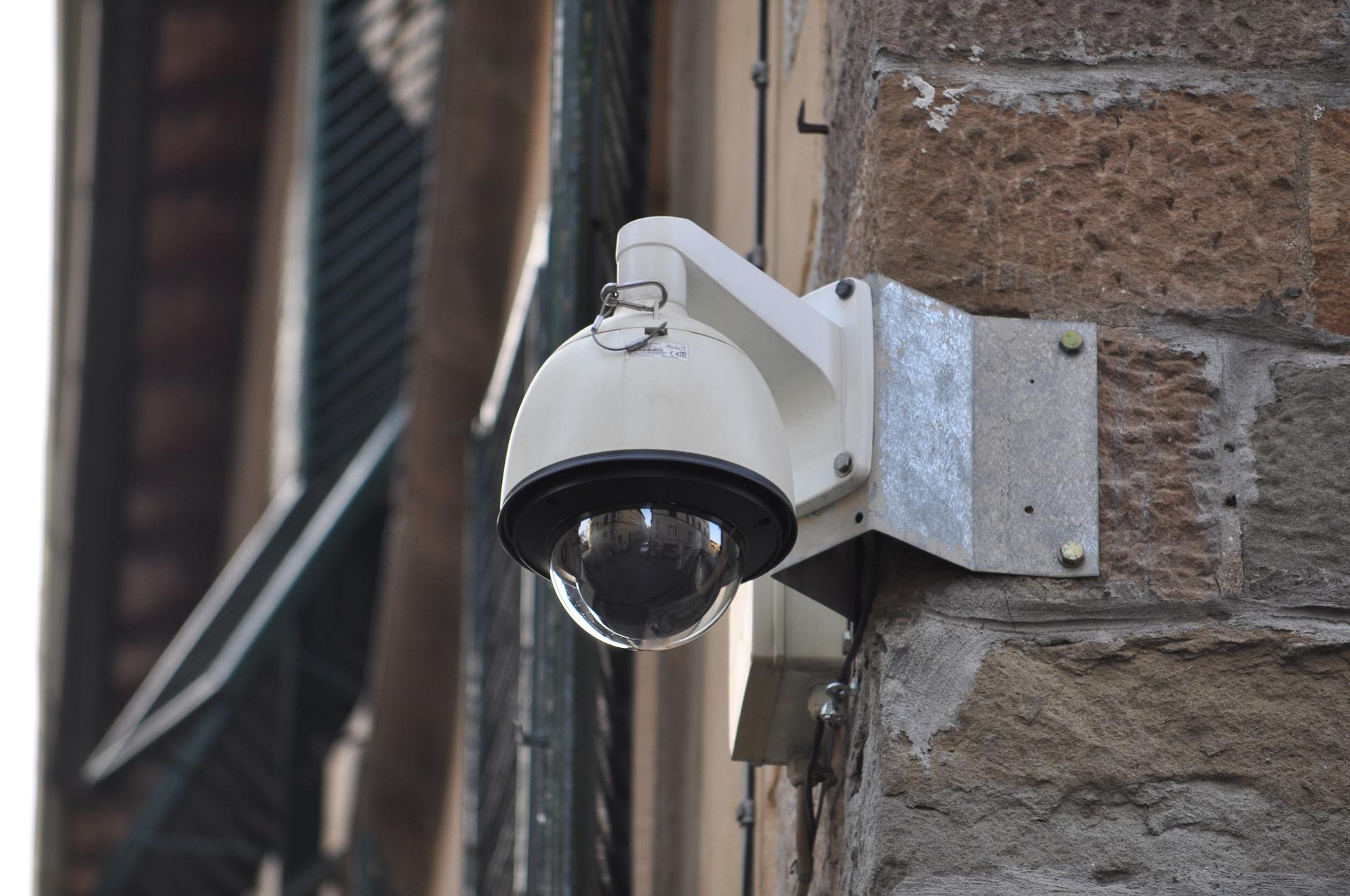
cctv-6076298_1920
cctv-6076298_1920
10 Countries With The Most CCTV Cameras In Public Spaces Worldwide In 2026, Ranked By Density And Total Count

Public surveillance has continued expanding globally in 2026, with an estimated 1 billion surveillance cameras now operating worldwide, according to industry research firm IHS Markit. While the technology first emerged in the 1970s primarily to protect tourists and deter petty crime, CCTV has since become a central tool for state surveillance, traffic management and public safety across much of the world. Based on available research combining total camera counts and per-capita density, here are 10 of the most heavily surveilled countries globally.

  1. China. China remains the world’s most surveilled country by a wide margin, operating an estimated 700 million cameras as part of its nationwide “SkyNet” project, run by the Chinese Communist Party. Based on China’s population of roughly 1.42 billion, that figure translates to approximately 494 cameras per 1,000 people, or nearly one camera for every two citizens. Data for specific Chinese cities is often unavailable due to government secrecy, though independent analysis has consistently found that Chinese cities dominate global rankings of the most surveilled urban centers, with 18 of the top 20 most surveilled cities worldwide located in China, according to research firm Comparitech.
  2. South Korea. South Korea operates an extensive video monitoring network totaling more than 27 million active units, creating a surveillance ratio of roughly 529 cameras per 1,000 citizens, according to Plate Recognizer, a figure that places South Korea among the very highest per-capita surveillance densities globally. Central to the country’s infrastructure is its nationwide Smart City Integrated Platform, which directly connects municipal CCTV networks with emergency services, police databases and disaster management centers. Seoul specifically ranks among the world’s most surveilled individual cities, with roughly 24 cameras per 1,000 residents.
  3. United States. The United States maintains an estimated 50 million surveillance cameras nationwide, according to industry estimates cited by RN Technical, with some analyses placing the country’s per-capita camera density even higher than China’s on certain measures, at roughly 15 cameras per 100 people. Washington, D.C., stands out as one of the most densely surveilled individual cities in the world, with a concentration of government-linked cameras per capita that outpaces most other major global cities.
  4. United Kingdom. The UK maintains one of the largest overall CCTV networks in the world, with an estimated 21 million cameras in operation nationwide, according to eufy UK, translating to more than 600 cameras for every 10,000 people. The vast majority of these cameras belong to private businesses, transport services and residential properties rather than direct government operation. London specifically has more than 130,000 public surveillance cameras, with the City of London borough recording the highest density in the capital, at more than 75 cameras per 1,000 residents.
  5. India. India’s major cities feature prominently among the world’s most surveilled urban centers, with Hyderabad ranking as the single most surveilled city globally by camera density, at 79 cameras per 1,000 people and roughly 900,000 total cameras, according to Comparitech’s analysis. Multiple other Indian cities, including Indore and Bangalore, also rank among the most heavily monitored urban areas worldwide, reflecting the country’s rapid expansion of public safety camera infrastructure in recent years.
  6. Russia. Moscow anchors Russia’s position among the world’s most surveilled countries, operating an estimated 250,000 cameras across the city, translating to roughly 19 to 20 cameras per 1,000 residents. Moscow’s surveillance system has drawn particular international scrutiny for its integration of facial recognition technology, which has reportedly been used to identify protesters, journalists and political dissidents in addition to its stated public safety functions.
  7. Pakistan. Lahore, Pakistan’s second-largest city, ranks fourth globally in per-capita camera density, according to Comparitech, with 28 cameras per 1,000 people and more than 410,000 total cameras installed across the city. The system reportedly links facial recognition capabilities directly to national government databases in real time, positioning Lahore among the most technologically integrated surveillance networks outside of China.
  8. Singapore. Singapore consistently ranks among the world’s most surveilled cities and countries, with an extensive network of government-linked cameras integrated into the city-state’s broader smart city infrastructure. The dense, compact nature of Singapore’s urban geography has allowed the country to achieve particularly high camera density relative to its physical land area, even when total camera counts remain smaller than those of larger nations.
  9. United Arab Emirates. The UAE, and Dubai specifically, has built one of the most technologically advanced surveillance infrastructures in the Middle East, with authorities integrating artificial intelligence directly into daily policing operations. Maj. Gen. Khalid Alrazooqi, Dubai Police’s general director of AI, previously told The New York Times that officers increasingly rely on AI-driven surveillance tools rather than traditional policing equipment in their daily operations. Human Rights Watch has separately raised concerns about the UAE’s broader surveillance apparatus, describing what the organization characterized as a “zero-tolerance policy toward criticism of the government” enforced partly through invasive monitoring tools.
  10. Saudi Arabia. Saudi Arabia’s capital, Riyadh, ranks fifth among Arab world cities for total CCTV camera count, according to reporting from Gulf News citing Comparitech’s broader global surveillance research, reflecting the kingdom’s continued investment in public camera infrastructure as part of broader national security and urban development initiatives across its major cities.

Researchers caution that comparing surveillance levels across countries remains inherently imprecise, given wide variation in how nations count, classify and publicly disclose camera totals, along with the difficulty of distinguishing government-operated cameras from privately owned systems that may still be accessible to law enforcement in some jurisdictions. China’s opacity around city-level camera data, for instance, makes direct comparisons with more transparently reported countries like the United States and United Kingdom difficult to calculate with full precision. Even so, the broader global trend toward expanded public camera infrastructure, now totaling an estimated 1 billion devices worldwide, continues to fuel ongoing debate over the balance between public safety benefits and individual privacy concerns across nearly every country investing heavily in these systems.

Continue Reading

Business

Copper, FCX Stock Plunge On Tariff Report, Surging Yields; Silver, Gold Also Fall

Published

on

Copper, FCX Stock Plunge On Tariff Report, Surging Yields; Silver, Gold Also Fall

The copper price and shares of S&P 500 copper mining giant Freeport-McMoRan (FCX) turned sharply lower on Thursday morning after a Reuters report cast doubt that the White House would broaden tariffs to cover refined copper. But copper and other metals also tumbled on surging oil prices and Treasury prices. Tariff expectations had helped fuel a new copper price earlier…

Copyright ©2026 Investor’s Business Daily, LLC. All rights reserved. 87990cbe856818d5eddac44c7b1cdeb8

Continue Reading

Business

New tourism organisation launches following collapse of Visit Cornwall

Published

on

Business Live

Tourism bosses have formed an alliance to help market the county to visitors

The harbour in Porthleven, Cornwall

The harbour in Porthleven, Cornwall(Image: Greg Martin / Cornwall Live)

A new tourist organisation has been established to help champion Cornwall’s visitor economy. The creation of Cornwall Visitor Alliance follows the the liquidation of Visit Cornwall – the county’s official tourist board – last year.

The alliance is a not-for-profit that was developed by bosses from Cornwall’s tourism and hospitality hospitality sector, and will be an “influential voice” for tourism in the Duchy, according to those behind it.

Advertisement

The organisation will focus on business-to-business activities including destination marketing and management, business representation, research and insight, strategic partnerships and advocacy, it said.

It is understood the organisation will use the term ‘Visit Cornwall’ for consumer-facing marketing. But the licence of the Visit Cornwall brand, and its respective assets, including the website, reverted back to owner Cornwall Council when the organisation collapsed in 2025.

Councillor Sarah Preece, Cornwall Council’s cabinet member for tourism, said: “We have reached an important milestone following months of productive collaboration between the council, private sector partners, and key stakeholders across our visitor economy.

“The Cornwall Visitor Alliance company can now begin its journey as a private organisation, leading the delivery of a sustainable and thriving visitor economy for Cornwall.”

Advertisement

Five Cornwall-based volunteer founding directors have been appointed to help launch Cornwall Visitor Alliance including: chair Katie Warren, founder of Fixer Property and Management; vice chair Laura Plum, marketing and communications director of St Austell Brewery; Veryan Palmer, family director of Headland Hotel; Andy Jasper, chief executive of Eden Project; and Patrick Langmaid, managing director of Mother Ivey’s Bay Holiday Park.

Tim Fryer, who has headed up the project since April, has also been appointed as commercial director.

“Our ambition is to build an organisation that businesses genuinely feel belongs to them, one that listens, represents their interests and brings the sector together around a shared vision for Cornwall,” said Ms Warren.

“By working collaboratively, we can help ensure Cornwall remains a brilliant place to visit, while also being a great place to live, work and build a business. Our role will be to unite businesses and partners, strengthen Cornwall’s destination offer and ensure the visitor economy is represented in the decisions that shape its future.”

Advertisement

Cornwall Visitor Alliance is funded through membership, partnerships and commercial activity, with no reliance on the public sector, it said.

“Cornwall Visitor Alliance will be a constructive but independent voice,” added Mr Fryer. “We want decisions affecting the visitor economy to be based on evidence, with businesses and stakeholders widely consulted and genuinely listened to and with a clear understanding of the impact those decisions may have on businesses, employees, communities and visitors.

“Immediately following a launch event in the early autumn, we will set out details of membership options and strategic partnerships, alongside our plans and initial programme of marketing campaign activity.”
Advertisement
Continue Reading

Business

Dell: AI Boom Is Going Through The Roof (NYSE:DELL)

Published

on

Dell Technologies Q4 Earnings Preview: Sustaining Growth With AI Momentum (NYSE:DELL)

This article was written by

JR Research is an opportunistic investor. I was recognized by TipRanks as a Top Analyst, and also by Seeking Alpha as a “Top Analyst To Follow” for Technology, Software, and Internet, as well as for Growth and GARP. I identify attractive risk/reward opportunities supported by robust price action to potentially generate alpha well above the S&P 500. My picks have consistently demonstrated market outperformance over time. My approach combines timely and sharp price action analysis with fundamentals as my foundation. I also tend to avoid overhyped and overvalued stocks while capitalizing on battered stocks with significant upside recovery possibilities. I run the investing group Ultimate Growth Investing which specializes in identifying high-potential opportunities across various sectors. My main ideas revolve around stocks with strong growth potential, and also well-beaten contrarian plays. I designed the group for investors seeking to capitalize on growth stocks with solid fundamentals, robust buying momentum, and appealing turnaround plays to generate alpha consistently. Learn more

Analyst’s Disclosure: I/we have a beneficial long position in the shares of AMD either through stock ownership, options, or other derivatives. I wrote this article myself, and it expresses my own opinions. I am not receiving compensation for it (other than from Seeking Alpha). I have no business relationship with any company whose stock is mentioned in this article.

Seeking Alpha’s Disclosure: Past performance is no guarantee of future results. No recommendation or advice is being given as to whether any investment is suitable for a particular investor. Any views or opinions expressed above may not reflect those of Seeking Alpha as a whole. Seeking Alpha is not a licensed securities dealer, broker or US investment adviser or investment bank. Our analysts are third party authors that include both professional investors and individual investors who may not be licensed or certified by any institute or regulatory body.

Advertisement
Continue Reading

Business

Why a famous Montreal sandwich shop has been forced to swap its soda

Published

on

A sandwich and two types of cherry cola on a countertop in a deli.

Schwartz’s, one of Montreal’s most famous delis, has stopped serving the iconic US-made black cherry soda that has been a fixture at the restaurant for decades.

The sandwich shop had struggled to maintain supply of the cola for the last eight years as the distributor cut back production due to the rising cost of aluminium.

But it didn’t expect the cans to vanish permanently. Now it has switched to a locally-made version, which the venue’s customers have largely embraced.

Video by Eloise Alanna

Advertisement
Continue Reading

Business

Old McGowan letter airs Alcoa concern

Published

on

Old McGowan letter airs Alcoa concern

An uncovered letter by former premier Mark McGowan has shed light on the Labor’s historical concerns over Alcoa, warning of job losses if the miner did not address water concerns.

Continue Reading

Business

Truro City unveils major stadium expansion plans

Published

on

Business Live

The National League South side says the proposals will provide ‘a solid foundation’ for its future

Players of Truro City FC celebrate from an open top bus while it tours the streets of Truro as players and supporters gather to celebrate winning the National League South last year

Players of Truro City FC celebrate from an open top bus while it tours the streets of Truro as players and supporters gather to celebrate winning the National League South last year(Image: Hugh R Hastings/Getty Images)

Truro City Football Club has unveiled major plans to develop its stadium and surrounding grounds. The scheme – named the Milestone Project – will see capacity increased at Truro Community Stadium and a new clubhouse built.

Under the proposals, land around the ground will also be developed with new homes, a community centre, shops, food and drink outlets and a 3G pitch.

Advertisement

The current stadium site already has use of a 1,250-space car park that is operated by Cornwall Council under its park and ride scheme.

The National League South side is working with Truro-based developer LGV Property Holding on the plans, alongside Cornwall Council and Treveth Holdings.

The club said on Thursday (September 10) the plans have the potential to create a “durable, long-term income stream” for the club and its charity arm – Truro City Community Trust.

“Truro City is on a journey of continual improvement in everything we do,” said club chief executive Robin Karkeek.

Advertisement

“Part of that journey is the aspiration to provide a solid foundation for the club’s future success, both on the pitch and in the community.

Truro City Football Club is working on a development proposal, located in and around the Truro City Stadium

Truro City Football Club is working on a development proposal, located in and around the Truro City Stadium(Image: Truro City / CAD Architects)

“We have reached a real ‘Milestone’ opportunity for development in and around the Truro City Stadium site, that will underpin the needs of the club for future generations.

“We still have a long way to go, but with the continued support of fans, sponsors and stakeholders, working with Treveth Holdings and Cornwall Council we will get there. Truro City Football Club is an exciting place to be right now, and we are driven to succeed.”

The Cornish side moved into their new stadium in 2024 and won the National League South title after beating St Albans City 5-2 at the Truro Community Stadium last year.

Advertisement
Continue Reading

Trending

Copyright © 2025