

Business
Thailand Warns 10% of Foreign Arrivals Used Fake TDAC Sites

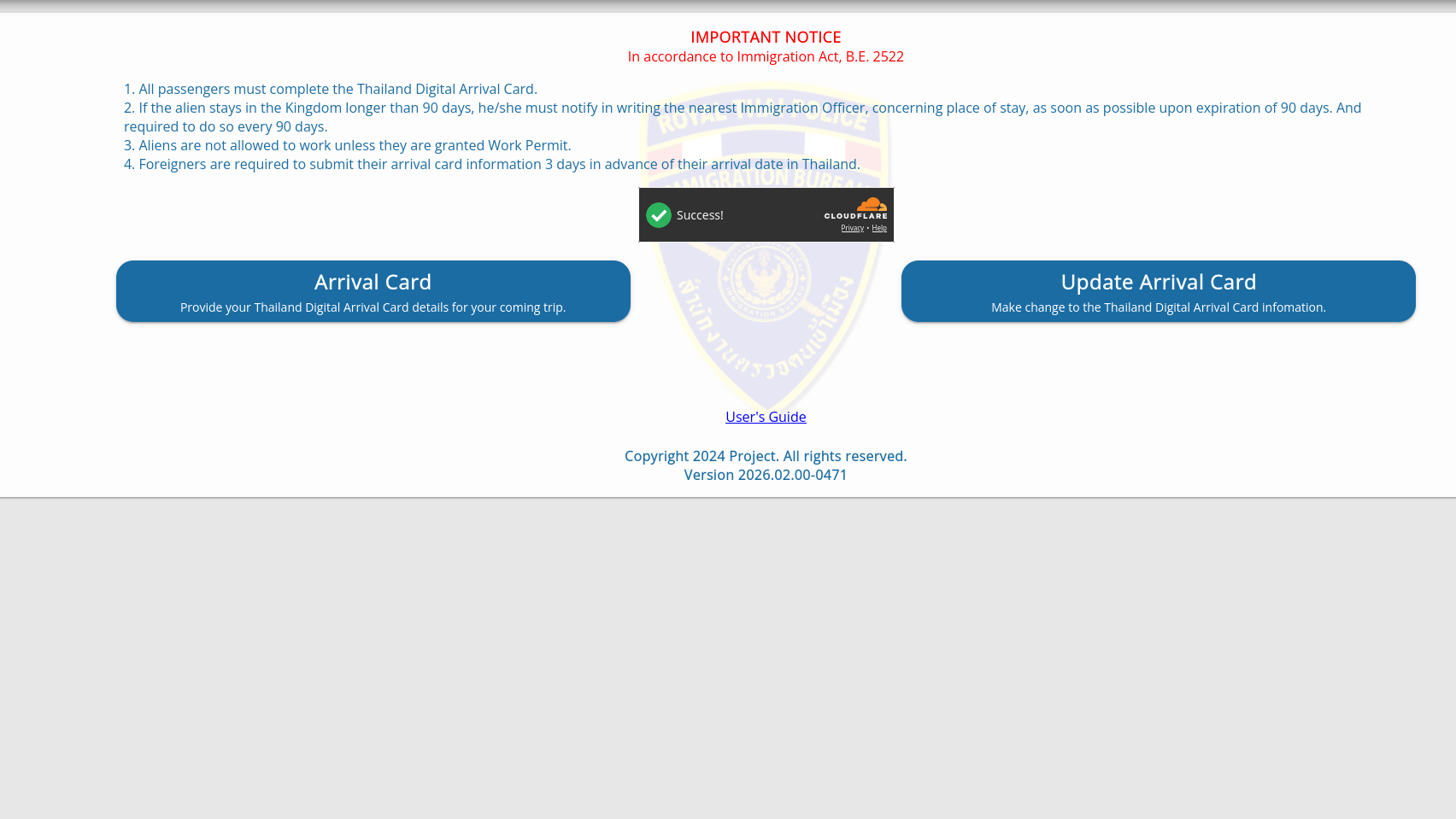
Thailand’s Immigration Bureau reports that 10% of foreign travelers have mistakenly registered through fraudulent Thailand Digital Arrival Card (TDAC) websites, urging the public to use only the official free platform to avoid scams and data misuse.
Key Details:
- The TDAC system, mandatory since May 1, 2025, is required for all foreign nationals and mirrors similar systems in South Korea, Japan, and Singapore.
- Official registration is free and accessible only via https://tdac.immigration.go.th or through the Immigration Bureau’s main site using QR codes or approved links.
- Authorities recommend registering three days before arrival to ensure screening and reduce checkpoint delays; confirmation is sent via email.
- Fraudulent sites often charge fees, collect data under false pretenses (e.g., e-visa applications), and do not connect to Thailand’s official immigration system.
- The Immigration Bureau is collaborating with agencies and airlines to shut down fake sites and educate travelers, though enforcement is complicated by overseas hosting.
Why It Matters:
Using fake TDAC sites risks financial loss and compromised personal data — travelers must verify they’re using the official, free platform to ensure smooth and secure entry into Thailand.
Thailand Digital Arrival Card (TDAC) When you travel to a new country, you often need to fill out an arrival form — think of it like a digital “check-in” that tells the government who you are and why you’re visiting. Thailand created an official, free online system called the TDAC to make this easy. It’s like checking in for a flight online, but for entering the country.
Fraudulent Websites Some dishonest people created fake websites that look like the official TDAC site. Imagine a fake McDonald’s website that looks identical to the real one, but charges you money for a coupon that doesn’t exist — that’s the idea here. These fake sites trick travelers into thinking they’re using the official government service.
The 10% Problem The Immigration Bureau found that 1 in 10 foreign visitors accidentally used one of these fake sites instead of the real one. That’s a significant number — for 1 million tourists visit, that’s 100,000 people potentially scammed.
Two Main Risks
- 💸 Getting charged money — The real TDAC is free. Fake sites charge a fee for something that should cost nothing, essentially stealing money from unsuspecting travelers.
- 🔓 Data misuse — When you fill out an arrival card, you share sensitive personal details (passport number, address, travel plans). Fake sites collect this data and could sell it, use it for identity theft, or other fraud. Think of it like handing your passport to a stranger on the street instead of the border officer.
The key takeaway: Always go directly to the official government website for immigration forms — don’t trust links from random emails, ads, or third-party travel sites. When in doubt, search for the official .go.th (Thailand government) domain.
Other People are Reading



I am a stock analyst with over 20 years of experience in quantitative research, financial modeling, and risk management. My focus is on equity valuation, market trends, and portfolio optimization to uncover high-growth investment opportunities. As a former Vice President at Barclays, I led teams in model validation, stress testing, and regulatory finance, developing a deep expertise in both fundamental and technical analysis. Alongside my research partner (also my wife), I co-author investment research, combining our complementary strengths to deliver high-quality, data-driven insights. Our approach blends rigorous risk management with a long-term perspective on value creation. We have a particular interest in macroeconomic trends, corporate earnings, and financial statement analysis, aiming to provide actionable ideas for investors seeking to outperform the market.
Analyst’s Disclosure: I/we have no stock, option or similar derivative position in any of the companies mentioned, and no plans to initiate any such positions within the next 72 hours. I wrote this article myself, and it expresses my own opinions. I am not receiving compensation for it (other than from Seeking Alpha). I have no business relationship with any company whose stock is mentioned in this article.
Seeking Alpha’s Disclosure: Past performance is no guarantee of future results. No recommendation or advice is being given as to whether any investment is suitable for a particular investor. Any views or opinions expressed above may not reflect those of Seeking Alpha as a whole. Seeking Alpha is not a licensed securities dealer, broker or US investment adviser or investment bank. Our analysts are third party authors that include both professional investors and individual investors who may not be licensed or certified by any institute or regulatory body.

Los Angeles Lakers star Luka Dončić has joined a group led by former Dallas Mavericks executive Donnie Nelson to purchase Italian club Vanoli Cremona, with plans to relocate the team to Rome and position it as a candidate for the NBA’s proposed European league.
The transaction, announced Friday, marks a significant step in Dončić’s post-playing ambitions and Nelson’s continued involvement in basketball development. The group intends to move the club from the northern Italian city of Cremona to the Italian capital ahead of the 2026-27 season in Lega Basket Serie A.
Nelson, who served as Mavericks president of basketball operations when Dallas drafted Dončić in 2018, acts as lead investor and managing partner. The ownership group also includes longtime Italian coach Valerio Bianchini and former player Rimantas Kaukėnas.
Strategic relocation to Rome
Cremona, known for its violin-making tradition, currently hosts the team. The relocation to Rome aims to tap into a larger market with stronger infrastructure and fan potential. Rome has lacked a top-tier professional basketball club since Virtus Roma’s struggles in recent years.
The new owners have already submitted a bid for the franchise to serve as Rome’s representative in NBA Europe, the league expected to launch as early as 2027. NBA officials have discussed a 16-team competition in partnership with FIBA to expand the game’s global footprint.
Dončić expressed enthusiasm for the project. He has “dreamed about owning a team in Europe for a long time” and believes “we can do something special for basketball in Italy and Europe.”
The Slovenian superstar, who rose through European ranks with Real Madrid before joining the NBA, sees the move as a way to give back to the continent that shaped his career.
Background and partnership
Nelson played a pivotal role in bringing Dončić to the Mavericks. The pair’s longstanding relationship formed the foundation for this business venture. Reports of their interest in an Italian club first surfaced in February.
The acquisition comes as Dončić, now with the Lakers, continues his NBA career at an elite level. Ownership in a European club does not currently violate NBA rules regarding future league participation, though final NBA Europe structures remain under discussion.
Nelson, son of Hall of Fame coach Don Nelson, brings decades of NBA front-office experience. His vision focuses on building sustainable professional basketball in major European cities.
NBA Europe context
The NBA has signaled strong interest in formalizing a European presence. Discussions include potential integration with existing competitions like EuroLeague while creating a new tier featuring NBA-affiliated teams. Cities such as Rome represent attractive markets due to population size, cultural significance and untapped commercial opportunities.
Rome’s PalaEur arena has been mentioned as a potential venue. The city last hosted consistent top-level basketball years ago, creating demand for a competitive franchise.
Analysts view the Dončić-Nelson bid as strategically timed. A successful entry could provide a blueprint for player-driven ownership in emerging leagues and strengthen ties between the NBA and European basketball ecosystems.
Impact on Italian basketball
The move ends Vanoli Cremona’s presence in its current location but promises elevated competition in Rome. Italian league officials have welcomed investment that raises the profile of Serie A.
Local fans in Cremona expressed mixed reactions, with some disappointed by the departure while others recognize the broader benefits for Italian basketball. The club has competed in the top division but faced challenges in sustaining long-term success.
Bianchini and Kaukėnas bring deep local expertise. Bianchini is a respected coach with multiple titles, while Kaukėnas enjoyed a successful playing career in Italy and Lithuania. Their involvement ensures continuity and cultural understanding.
Financial and operational outlook
Specific purchase terms were not disclosed. European club valuations vary based on league status, arena rights and commercial potential. Rome’s larger market could significantly increase the franchise’s value if it secures an NBA Europe spot.
The group plans immediate preparations for the 2026-27 season in Rome, including roster planning, marketing and infrastructure upgrades. Success in Serie A could strengthen their NBA Europe application.
Dončić’s star power is expected to boost visibility. His global following could attract sponsorships and international attention to the new Roman club.
Broader implications for player ownership
Dončić becomes one of the first active NBA players to pursue ownership in a professional team outside the United States. This development raises questions about future regulations as the NBA expands globally.
League officials have indicated flexibility during the planning phase for NBA Europe. The initiative aims to grow the sport while protecting the integrity of the NBA’s flagship competition.
For Dončić, the project aligns with his European roots. Born in Slovenia, he developed his game in Spain and maintains strong ties across the continent. The investment represents a long-term commitment beyond his playing days.
Next steps and timeline
The relocated team will begin play in Rome for the 2026-27 Italian season. NBA Europe’s launch target of 2027 provides a clear horizon for the bid’s evaluation. Multiple groups are reportedly competing for various European markets.
Nelson emphasized the opportunity. “Rome deserves world-class basketball, and we are excited to be bringing it back,” he said in a statement.
Dončić posted on social media celebrating the news: “Basketball is coming back to Rome.”
The venture has drawn positive reactions from basketball executives on both sides of the Atlantic. It could accelerate development in markets hungry for high-level competition and create pathways for European talent to reach the NBA.
As details emerge in coming weeks, attention will focus on roster construction, coaching staff and arena arrangements. The collaboration between a current NBA superstar and a veteran executive signals serious intent to elevate basketball in Italy and beyond.
This initiative underscores the growing convergence of American and European basketball. With Dončić’s involvement, the new Roman club carries both sporting ambition and cultural significance for fans across the continent.

Exelixis presents Cabometyx data for neuroendocrine tumors

Get ahead of the market by subscribing to Seeking Alpha’s Wall Street Week Ahead, a preview of key events scheduled for the coming week. The newsletter keeps you informed of the biggest stories set to make headlines, including upcoming IPOs, investor days, earnings reports, and conference presentations.
The stock market opened higher as traders kept a close watch on any updates related to the U.S.-Iran conflict amid reports of fresh strikes. The U.S. and Iran have reportedly reached a deal; however, President Donald Trump will have to give the final approval. Reports suggested that Iran had launched missiles. The wholesale inventories’ growth slowed less than expected in April, while retail growth came in line.
Major economic data are scheduled for the coming week. S&P Global and ISM Manufacturing PMI data are scheduled for Monday. JOLTS job opening data is due on Tuesday. On Wednesday, data including S&P Global services and composite PMI and ISM non-manufacturing PMI will be released. Initial jobless claims will be out on Thursday, while nonfarm payrolls and the unemployment rate will be released on Friday.
_______________________________________________________________
Earnings spotlight: Monday: Hewlett Packard (HPE) and Credo Technology (CRDO). See the full earnings calendar.
Earnings spotlight: Tuesday: Palo Alto Networks (PANW) and Ulta Beauty (ULTA). See the full earnings calendar.
Earnings spotlight: Wednesday: Broadcom (AVGO), CrowdStrike (CRWD), and Medtronic (MDT). See the full earnings calendar.
Earnings spotlight: Thursday: Ciena Corp. (CIEN), lululemon (LULU), and DocuSign (DOCU). See the full earnings calendar.
Volatility watch: Netflix (NFLX) and Globalstar (GSAT) have seen options volatility increase over the last week. The most overbought stocks per their 14-day relative strength index include Momentus (MNTS), Hyliion (HYLN), and Redwire (RDW). The most oversold stocks per their 14-day Relative Strength Index include Verra Mobility (


First Windows PC powered by Nvidia chips to debut next week, Axios reports
Business
Colombia accuses Ecuador of “deliberate interference” in presidential election amid tariff spat


Colombia accuses Ecuador of “deliberate interference” in presidential election amid tariff spat

Zscaler: Why I'm Not Buying The Dip

Warren Buffett’s Berkshire Hathaway executed one of its most significant portfolio overhauls in years during the first quarter of 2026, selling stakes in 16 companies while initiating new positions and boosting others as Greg Abel assumed the CEO role.
The conglomerate’s equity portfolio contracted from about $274 billion to $263 billion, with the number of holdings dropping from around 40 to 29. Berkshire was a net seller, purchasing roughly $16 billion in stocks while selling $24 billion.
Buffett, who stepped down as CEO at the end of 2025 but remains chairman and involved in investment decisions, oversaw the transition period. The Q1 13F filing, released May 15, reflects Abel’s first full quarter leading day-to-day operations.
Key sales and complete exits
Berkshire fully exited several positions, including long-held or more recent stakes. Complete sells included Visa, Mastercard, UnitedHealth Group, Domino’s Pizza, Amazon, Aon, Pool Corp., and others such as Heico, Liberty Media entities, Charter Communications, Lamar Advertising, Allegion, Diageo, Liberty Latin America, and Atlanta Braves Holdings.
Visa and Mastercard exits totaled billions, reflecting a departure from payment processors. The remaining Amazon shares were sold after prior reductions. UnitedHealth and Domino’s also saw full liquidation.
Trimmed positions included Bank of America, Chevron (cut substantially), DaVita, Nucor, and Constellation Brands. Chevron’s reduction was among the largest adjustments despite remaining a top holding.
Notable buys and increases
Berkshire initiated new stakes in Delta Air Lines and Macy’s. The Delta position reached 39.8 million shares, valued at about $2.8 billion, marking a return to airlines after a full exit in 2020 during the pandemic.
The company significantly boosted its Alphabet holdings. Shares of Alphabet Class A (GOOGL) increased by more than 200%, reaching around 54.2 million shares worth roughly $15.6 billion. A new position in Alphabet Class C (GOOG) added about 3.6 million shares valued near $1 billion.
Berkshire also added to existing positions in Chubb and the New York Times, tripling its NYT stake in some reports from prior quarters.
Top holdings remain concentrated
The portfolio stayed highly concentrated, with the top five holdings — Apple, American Express, Coca-Cola, Bank of America, and Chevron — accounting for about 68% of the equity portfolio. Apple alone represented around 22%.
American Express held steady as a core long-term position. Coca-Cola, a decades-long holding, saw no major changes. These “core” names underscore continuity even amid broader adjustments.
Context of the transition
The moves come as Abel reshapes aspects of the portfolio, including unwinding certain positions previously associated with former managers Todd Combs and Ted Weschler. Combs left at the end of 2025.
Berkshire repurchased $234 million of its own shares in the quarter at 144% of book value. Cash levels remained elevated, consistent with recent trends of net stock sales.
Analysts note the portfolio’s concentration and focus on high-quality businesses with durable advantages. Many sales targeted higher-valuation or cyclical names, while additions like Delta reflect opportunistic buying in beaten-down sectors.
Market reaction and implications
The 13F disclosure prompted varied responses. Some investors viewed the Alphabet increase as a nod to technology and AI growth, despite Buffett’s historical caution toward the sector. Delta’s re-entry highlighted potential value in travel recovery.
Exits from payment giants and health care names like UnitedHealth raised questions about sector rotation. Shares of several sold companies saw limited immediate movement, though UnitedHealth traded lower in after-hours following the news.
As of late May 2026, Berkshire’s strategy continues emphasizing long-term value, capital allocation, and insurance float leverage. The company’s Japanese trading house investments, including stakes in companies like Mitsubishi and Marubeni, remain outside the U.S. equity 13F but contribute to overall returns.
Broader investment landscape
Berkshire’s activity occurs against a backdrop of elevated market valuations, interest rate uncertainty, and sector shifts driven by artificial intelligence and energy demand. The portfolio’s reduction in holdings reflects a more focused approach.
Buffett has reiterated in past communications the importance of buying wonderful businesses at fair prices and holding them long-term. While Abel steers day-to-day decisions, continuity with Buffett’s philosophy appears evident in core holdings.
Investors tracking Berkshire often use 13F filings as a delayed signal of strategy, though the conglomerate’s size limits agility compared to smaller funds. Future quarters will reveal whether Q1 changes represent a one-time reset or ongoing evolution.
Looking ahead in 2026
With half the year remaining, additional 13F updates will provide further insight into Berkshire’s direction under Abel. The company’s annual meeting in May offered shareholder perspectives, though specific stock picks remain disclosed quarterly.
Berkshire’s cash pile and operational strength provide flexibility for opportunistic deployments. Analysts will watch for activity in energy, financials, and consumer sectors where the firm has historically excelled.
As always, individual investors should conduct their own due diligence. Berkshire’s moves reflect its unique scale, time horizon, and risk tolerance rather than general recommendations. Stock prices fluctuate, and past performance is no guarantee of future results.
Enlight Renewable Energy Ltd. (NASDAQ: ENLT) presents a nuanced investment case in 2026, with robust project execution and revenue growth supporting a cautious buy recommendation for long-term investors, even as Wall Street maintains a consensus hold rating amid valuation concerns.
The Israeli developer of solar, wind and energy storage projects has seen its shares trade near $102-$103 recently, reflecting strong momentum from U.S. expansion and favorable renewable energy tailwinds. However, analyst price targets average around $60 to $80, implying potential downside from current levels, with some firms highlighting overvaluation risks.
Strong Q1 results and reaffirmed guidance
Enlight reported impressive first-quarter results on May 5, with total revenues and income reaching $200 million, up 54% from the prior year. Adjusted EBITDA climbed to $154 million, and the company delivered a 58% increase in that metric on an adjusted basis excluding one-time gains.
CEO Adi Leviatan highlighted the performance in post-earnings commentary. “2026 is off to a strong start, reflected in consistent and impressive over 50% growth across Enlight’s financial metrics.”
The company reaffirmed its full-year 2026 guidance for total revenues and income between $755 million and $785 million — representing 32% growth — and adjusted EBITDA of $545 million to $565 million, up 27%. It also reiterated a target of more than $2.1 billion in annual revenue run-rate by the end of 2028.
Growth has been driven by new U.S. projects, higher electricity sales, improved wind conditions and tax benefits under the Inflation Reduction Act. The portfolio stands at approximately 5 GW operational or under construction, with significant exposure to solar-plus-storage developments.
U.S. expansion and major contracts
A key highlight came on May 26 when Enlight, through its U.S. subsidiary Clēnera, finalized a 200 MW AC solar power purchase agreement with Google for the Solstice project in Oklahoma. The 15-year fixed-price contract supports data center operations and marks an expansion beyond traditional utility customers.
Leviatan described the deal as a milestone. “By signing this agreement with Google, we are expanding our U.S. customer base beyond utilities to large load commercial customers, including the fast-growing data center sector.”
Analysts point to the U.S. as a primary growth engine, fueled by surging electricity demand from data centers, artificial intelligence infrastructure and manufacturing reshoring. Enlight benefits from long-term power purchase agreements that provide revenue visibility and from federal tax credits.
The company’s diversified portfolio spans Israel, Europe and the United States, with a focus on utility-scale projects that combine generation and storage for grid stability.
Analyst perspectives and valuation
Wall Street opinions remain divided. UBS recently raised its price target to $123 from $105 while maintaining a Buy rating, citing upside from project execution. Other firms like JP Morgan have held Underweight ratings with targets around $68.
Consensus across roughly seven analysts stands at Hold, with an average 12-month price target near $60-$80, suggesting potential moderation from current trading levels. Some models flag the stock as overvalued on traditional metrics such as price-to-earnings, which sits elevated due to growth expectations already priced in.
Supporters argue that discounted cash flow models show undervaluation when factoring in the secured pipeline and visible cash flows. One analysis indicated a potential 45% undervaluation based on long-term projections.
Shares have delivered substantial gains over the past year but remain volatile, typical for growth-oriented renewable developers sensitive to interest rates, policy shifts and commodity prices.
Financial strength and balance sheet
Enlight raised approximately $740 million in capital during the first quarter, bolstering liquidity to around $709 million at the parent level. Operating cash flow rose 58% to $100 million, supporting project development and debt management.
The company maintains a disciplined approach to capital allocation, selling down stakes in certain assets to recycle capital while retaining operational control. Net income for Q1 came in at $38 million, impacted by prior-year one-time gains but showing underlying improvement.
Risks include high debt levels associated with project financing, exposure to geopolitical tensions in Israel, regulatory changes affecting tax incentives, and execution challenges in bringing large projects online. Supply chain issues and interest rate volatility could also pressure margins.
Investment considerations for 2026
For investors evaluating buy or sell decisions, Enlight suits those with a long-term horizon bullish on renewables. The stock may appeal on pullbacks closer to analyst targets, offering entry into a company with visible growth from contracted projects and data center demand.
Income-focused investors should note that Enlight does not currently pay a dividend, prioritizing reinvestment. Growth investors highlight the path to multi-gigawatt scale and potential upside from storage co-location, which commands premium pricing.
Shorter-term traders may exercise caution given mixed ratings and the premium valuation. Broader market sentiment toward renewables, influenced by potential policy shifts in Washington, will play a role.
Recent options activity has shown bullish sentiment with higher call volume, though overall analyst coverage remains balanced between optimism on fundamentals and skepticism on price.
Broader industry context
Enlight operates in a sector benefiting from global decarbonization goals and energy security needs. Rising electricity demand, particularly from tech giants, positions developers with ready sites and execution track records favorably. Equipment costs have moderated, improving project economics.
Challenges persist, including interconnection queues, permitting delays and competition from larger players. Enlight’s focus on the U.S. market, where policy support remains relatively intact, provides a buffer.
As of late May, shares closed around $102-$103. Trading volume and volatility reflect ongoing interest in clean energy names amid fluctuating oil prices and economic data.
Conclusion and forward look
Enlight Renewable Energy enters the remainder of 2026 with momentum from strong quarterly results, major corporate contracts and a clear pipeline. While consensus leans hold due to valuation, bullish analysts see substantial upside for patient investors.
The company’s ability to execute on its 2028 run-rate target will be key. Success in delivering projects on time and within budget could validate higher multiples. Investors should monitor upcoming project milestones, interest rate trends and any updates on U.S. energy policy.
As always, decisions should align with individual risk tolerance, portfolio diversification and consultation with financial advisors. Stock prices fluctuate, and past performance offers no guarantee of future results. This overview draws from publicly available analyst reports and company disclosures as of May 30, 2026.


I have been managing investments for over eight years in capital markets. By qualification I am a CFA Charter holder. I primarily look for discrepancies between the price and value of a security. With a focus on first-principal mindset, I try breaking down ideas into their core- most tangible parts, affecting the theses while deliberately avoiding the non-significant matter into crowding the analysis. If you like my ideas or frameworks, reach out via email/message for more granular and concentrated- portfolio level specific investment researches and ideas. I am at prakhar@shrihittruealphacapital.com.
Analyst’s Disclosure: I/we have no stock, option or similar derivative position in any of the companies mentioned, and no plans to initiate any such positions within the next 72 hours. I wrote this article myself, and it expresses my own opinions. I am not receiving compensation for it (other than from Seeking Alpha). I have no business relationship with any company whose stock is mentioned in this article.
Readers are advised to fact-check thoroughly before making any investment-related decisions; this reflects the personal views of the author and should not be pursued as formal financial or investment advice in any manner. While every effort has been made to ensure accuracy, errors may exist in the data and financial projections presented. The author is not responsible for any financial gains or losses incurred from investments made based on this content.
Seeking Alpha’s Disclosure: Past performance is no guarantee of future results. No recommendation or advice is being given as to whether any investment is suitable for a particular investor. Any views or opinions expressed above may not reflect those of Seeking Alpha as a whole. Seeking Alpha is not a licensed securities dealer, broker or US investment adviser or investment bank. Our analysts are third party authors that include both professional investors and individual investors who may not be licensed or certified by any institute or regulatory body.

The Problem With GDXY Isn’t The Yield (NYSEARCA:GDXY)

SAS didn’t refer Afghanistan atrocity allegations to police in case it upset soldiers

Gilas women’s 3×3 keeps core for World Cup stint in Poland

Steven Gerrard disagrees with Gary Neville over ‘shock’ Chelsea and Arsenal claim | Football

US brings back mandatory military draft registration

Register Renaming | Hackaday

The CEO Of Japan’s Biggest Crypto Firm Just Said XRP Will Be VERY Expensive

The Blueprint of Building a Financial Empire From Scratch | Kamal Poddar – Choice Group

Tom Lee: The Cryptocurrency Supercycle Has Begun (DO THIS NOW)
-

 Business6 days ago
NYT Strands Answers May 24 2026 Revealed for Puzzle No. 812 Theme Summer Essentials
-

 NewsBeat3 days ago
Israel says it has killed new Hamas military leader in Gaza City airstrikes
-

 Politics5 days ago
Bridgerton Season 5: Cast, Release Date And Everything We Know So Far
-

 Business4 days ago
Selena Gomez Reportedly Upset Over Benny Blanco’s Comments on Her ‘Terrible’ Diet
-
 Crypto World4 days ago
Micron Crosses $1 Trillion Market Cap as AI Demand Reshapes Memory Sector
-

 Tech5 days ago
Microsoft’s quiet Claude Code retreat and the real cost of enterprise AI
-

 Business5 days ago
BTS Sells Out Four Las Vegas Shows at Allegiant Stadium for ARIRANG World Tour
-
 Tech4 days ago
China assigns ID codes to 28,000+ humanoid robots
-

 News Videos4 days ago
XRP *JUST* SUCCEEDED!!!! CLARITY ACT EXPOSED!!! (SHE EXPOSED IT)
-

 Tech1 day ago
Waymo dominates autonomous vehicle registrations as Tesla trails behind
-
Tech3 days ago
The Samsung pay deal is the moment Korean unions changed register
-

 Tech5 days ago
Westone Audio and Etymotic Acquired by Fidelity Collective in Major IEM Market Move
-
Crypto World6 days ago
Brian Armstrong Outlines Crypto Vision for the Future Financial System
-
 Entertainment5 days ago
‘Breaking Bad’ Star’s Easy-to-Binge 6-Part Crime Series Spin-Off Is Finally Heading to Free Streaming
-

 Tech4 days ago
Millions of AI agents imperiled by critical vulnerability in open source package
-
Crypto World3 days ago
SpaceX’s $2 Trillion IPO: Why Tech Giants Nvidia (NVDA), Apple (AAPL), and Microsoft (MSFT) May Face Pressure
-
 Crypto World5 days ago
Nvidia (NVDA) CEO Calls on Super Micro to Strengthen Export Controls Amid Smuggling Probe
-

 Tech3 days ago
NASA taps Blue Origin to deliver lunar rovers for Moon Base initiative
-
 NewsBeat5 days ago
Hottest May day ever as London hits 34.8C in 2C leap from previous records
-
 Crypto World22 hours ago
Snowflake (SNOW) Stock Rallies on Strong Q1 Results and AI Product Growth
You must be logged in to post a comment Login