Connect with us
DAPA Banner
DAPA Coin
DAPA
COIN PAYMENT ASSET
PRIVACY · BLOCKDAG · HOMOMORPHIC ENCRYPTION · RUST
ElGamal Encrypted MINE DAPA
🚫 GENESIS SOLD OUT
DAPAPAY COMING

Business

The Complete Guide to Lithuanian Citizenship by Descent

Published

on

The Complete Guide to Lithuanian Citizenship by Descent

Discovering your family history often leads to exciting, unexpected opportunities. For many people with roots in Eastern Europe, tracking down their ancestral tree reveals a life-changing surprise: eligibility for a powerful European passport.

If your parents, grandparents, or great-grandparents came from the Baltic region, you might hold a legal birthright to live, work, and travel freely across twenty-seven countries.

Reclaiming this legacy does not have to be an overwhelming process. By breaking down the legal rules, history, and paperwork into manageable steps, you can successfully turn your family history into a functional global asset.

What Does It Mean to Reclaim Ancestral Lithuanian Citizenship?

Reclaiming your heritage is based on a legal foundation known as ius sanguinis, which translates to citizenship by bloodline. Unlike countries where nationality depends entirely on where you were born, the Republic of Lithuania allows individuals to claim citizenship if their ancestors were nationals. This process is legally viewed as a reinstatement of citizenship rather than a standard immigration path, meaning you are simply reviving a status that your family technically never lost.

For the global Lithuanian diaspora, this legal path serves as an important bridge for heritage preservation. It recognizes the historical hardships that forced families to leave their homeland. By proving your direct lineage, you can regain your ancestral citizenship and officially re-enter the community of an active EU member state.

Advertisement

Lithuanian Citizenship by Descent

If you want to complete a successful Lithuanian citizenship by descent application, you must follow a highly specific legal path. The primary authority handling these cases is the Migration Department of Lithuania. This institution reviews historical evidence to verify that an applicant’s family tree connects directly to the sovereign state before specific historical conflicts took place.

Navigating this eligibility roadmap requires a solid understanding of the Law on Citizenship. The regulations ensure that your constitutional right to nationality remains protected, even if your family has lived abroad for two or three generations. Reclaiming this status provides a direct path to an ancestral passport, opening up a secure way of reclaiming EU citizenship without having to live in Europe first.

Who Qualifies for Lithuanian Citizenship Through Ancestry?

Determining if you qualify involves reviewing the specific dates your ancestors lived in the country. The legal requirements are strictly tied to key historical timelines in the Baltic region.

The Core Eligibility Criteria and Historical Timelines

To qualify for the right of return, your ancestor must have held valid citizenship during the 1918–1940 independence period. The most critical threshold date in Lithuanian citizenship law is June 15, 1940, which marks the beginning of the Soviet occupation. If your family member was a citizen before this date and later fled, was exiled, or left the territory before the country officially declared the restoration of independence on March 11, 1990, you are generally eligible to apply.

Advertisement

Understanding Generational Limits: From Parents to Great-Grandparents

The legal right to apply extends down to the third generation of descendants. This means you can apply if you have a parent, grandparent, or great-grandparent who met the citizenship criteria. You must be able to prove a clear, unbroken, and proven blood relationship showing you are a direct descendant of that specific individual. These regulations, established by the Seimas, ensure that family lines severed by historical displacement can be legally reunited.

How to Trace Your Lithuanian Family History Successfully

The foundation of a successful application relies on detailed genealogy research. Many families possess old stories but lack the physical paperwork required by European authorities.

Navigating Official Archives and Global Genealogy Databases

When tracking down your family line, you can find valuable records by using international platforms like Ancestry.com, MyHeritage, and FamilySearch. For individuals with Jewish heritage from the region, specialized databases such as JewishGen and LitvakSIG are excellent resources for locating specific ancestral towns, or shtetls. Eventually, you will need to contact official repositories in Vilnius, including the Central State Archives of Lithuania and the Lithuanian State Historical Archives, to secure official certificates.

Overcoming Broken Document Trails and Soviet-Era Name Changes

A common problem for many applicants is dealing with inconsistent records. When families migrated to countries like the United States, Canada, or South Africa, immigration officers often changed the spelling of foreign names. Additionally, many older documents display a Soviet-era name Russification, which can make records difficult to match. Working with a professional genealogist or an experienced immigration lawyer can help you locate historical maps, cross-reference parish registries, and establish clear legal proof despite these spelling variations.

Advertisement

Key Documents You Need to Prove Your Lithuanian Roots

Before submitting your file to European officials, you must collect a complete set of certified vital records.

The Essential Vital Records Checklist

Your application packet must contain specific official records that build an unbroken chain from you to your ancestor. The essential documents include:

  • Your current, valid foreign passport.
  • Your official birth certificate and marriage certificate.
  • The birth, marriage, and death certificate of your parents and grandparents.
  • An old internal passport, regular passport, or official military record of your ancestor issued before 1940.
  • Baptismal records or local religious certificates if civil documents are missing.

Legalization, Apostilles, and Certified Translations

Every single document issued outside of Europe must be officially authenticated to be recognized by foreign authorities. This process requires obtaining an apostille validation from the local government office where the record was issued, such as the Office of the Secretary of State. Once your documents are gathered and authenticated, they must feature a professional, sworn Lithuanian translation. The Migration Department will only accept a certified copy that matches these strict legal standards.

Step-by-Step Application Process for Citizenship by Descent

The application process mixes modern online tracking with traditional document verification.

Submitting Your Case Through the MIGRIS Digital Portal

The entire application process begins digitally through the official online platform known as MIGRIS. Applicants must create a secure personal profile, fill out the required forms, and upload clear digital scans of their entire submission checklist. To verify that your documents meet the specific European digitization standards before uploading, checking a dedicated informational resource like https://www.lithuaniancitizenship.com/ can help you prevent common formatting mistakes. After you upload your files, officials will perform a preliminary review to confirm that your records meet the basic legal requirements.

Advertisement

Managing Consular Appointments and Biometric Processing Abroad

Once your digital file passes the initial check, you will receive an official notification to present your physical paperwork. You must schedule an in-person appointment at a Lithuanian Embassy, a regional consulate, or a designated migration office in Vilnius. During this visit, officials will verify your original documents and collect your safe fingerprinting data for your future biometric passport. Following this appointment, your case undergoes a final administrative review before a formal decision notice is issued.

Understanding Lithuania’s Dual Citizenship Rules in 2026

A primary concern for most global applicants is whether they can keep their current nationality. According to Lithuanian Constitution Article 12, the state maintains a strict stance on nationality, but specific exceptions exist for families affected by historical displacement.

While recent public discussions and a national referendum focused on expanding dual nationality rules, the specific exceptions for descendants remain clearly protected under current law. If your family left the country during the turbulent historical window between 1918 and 1990, you are legally permitted to pursue retaining original citizenship. This allows you to hold a dual passport safely without facing complex renunciation requirements.

Practical Benefits of Holding a Lithuanian Passport

Securing your passport provides extensive practical advantages that go far beyond a simple connection to your family heritage.

Advertisement

MAJOR BENEFITS OF AN EU PASSPORT:

  1. Absolute freedom to live, work, and study anywhere in the EU.
  2. Visa-free travel to over 180 global destinations.
  3. Complete access to the European Union single market for business.
  4. Affordable European university tuition and public healthcare.
  5. Full protection and emergency assistance from any EU consulate.

Holding an official passport unlocks the full scope of EU passport advantages. You gain the right to live, build a career, or retire in any member state without needing a restrictive residence permit. It simplifies global travel by granting visa-free access to major economies worldwide and offers stable property ownership rights across the region. Ultimately, the process supports successful diaspora re-integration, allowing you to pass these valuable benefits down to future generations.

FAQ: Quick Answers to the Most Common Questions

Do I need to speak the Lithuanian language to apply by descent?

No. Applicants pursuing citizenship through direct lineage are granted a complete language exam waiver and a citizenship test exemption. You do not need to speak the language or pass a history exam to qualify.

What if my Lithuanian ancestor naturalized in another country?

If your ancestor acquired citizenship in another country after leaving, you can still qualify. The process depends on proving they held original citizenship before leaving the territory during the qualifying historical windows.

How long does the entire application process take in 2026?

The standard processing timeline generally ranges between twelve and twenty-four months. The total time depends on how long it takes to collect records from archives and the current volume of cases under review at the official government portal.

Advertisement

Reclaiming Your Heritage: Next Steps on Your Journey

Turning your family history into a real opportunity is a step-by-step process that requires patience and accurate documentation. By researching your family line, organizing your vital records, and utilizing official digital platforms, you can navigate the legal system with confidence. If you want to explore professional assistance to streamline your document search or review your family eligibility, you can visit Lithuanian Citizenship to connect with specialized resources. Taking the time to discover your roots preserves your family’s unique history and secures a flexible, global future for generations to come.

Advertisement
Continue Reading
Click to comment

You must be logged in to post a comment Login

Leave a Reply

Business

‘No 10 North’ will help power flow into West Country, says Labour leader hopeful Andy Burnham

Published

on

Business Live

The MP for Makerfield has made his first major policy speech since launching a bid to become PM

Andy Burnham delivers a speech at The People's Museum in Manchester

Andy Burnham delivers a speech at The People’s Museum in Manchester(Image: Jeff J Mitchell/Getty Images)

Labour leader hopeful Andy Burnham has pledged to create a ‘No 10 North’ if he becomes Prime Minister, claiming it will help power flow into regions including the West Country.

The newly elected MP for Makerfield, who is currently the party’s frontrunner to take over from Sir Keir Starmer, unveiled plans on Monday (June 29) to devolve more powers to the UK’s regions and nations.

In his first major policy speech since launching his leadership bid, the former Greater Manchester mayor said he would deliver the “biggest change in our lifetime to the way the country is run” while remaining “consistent” to Labour’s 2024 manifesto.

“We will create a more streamlined state with a clearer purpose to power up all parts of the country and put a laser-like focus on growth and regeneration,” he said.

Advertisement

“The change will be driven through the prime minister’s office in an extended operation based here in Manchester. But here’s the important thing; it will only be based here. The job of No 10 North will be to make power flow into the Midlands, into the South West, into the East of England and yes, into London.”

Burnham said his proposals would help regional leaders gain “greater public control” in areas such as transport, housing, energy and water.

“No 10 North will be the nerve centre for a rewired Britain,” he said. “It will be the conduit through which we redistribute power and resources across the UK. It will coordinate all parts of government, at national and local level, to agree a long-term economic strategy and help all places set new growth ambitions.”

He also called for “good growth in every British postcode” adding that he wanted “more joined up decisions” with Westminster and the UK’s regions and nations.

Advertisement

He said No 10 North would support the regions in three areas: reform of essential utilities; reindustrialisation; and the regeneration of places.

“We are such an inventive country and, going forward, we can be the world’s leading innovation nation,” he said. “This is the key to higher growth.”

West of England’s mayor Helen Godwin responded to the comments by calling for “more power and more funding” as the UK’s only expanding combined authority.

The West of England Combined Authority (Weca) currently covers Bristol, Bath and North East Somerset, and South Gloucestershire, but could soon also be joined by North Somerset.

Advertisement

“The West Country has to be at the heart of places getting more powers and more funding,” said Ms Godwin.

“That must be the case as the only expanding combined authority, with North Somerset joining, and as we push towards Established Strategic Authority status.”

Ms Godwin said she was “glad to see” that devolution was “front and centre” of the national conversation following Burnham’s speech.

“As the country’s fastest-growing regional economy over the last five years, we can help power a bright future,” she said.

Advertisement

“We have seen historic steps forward on devolution over recent months, with commitments to enable mayors to introduce overnight visitor levies and to retain some of the taxes raised from our communities.

“In this new chapter, our region now has a proper seat at the table. Our voice is now being heard. But more is needed to give people hope.”

According to Weca, since 2019 the economy across the Bristol and Bath region has grown four times faster than the national average. In 2023, the West grew by almost three per cent – outperforming every other combined authority area and London.

In May, Weca set out its growth potential – said to be worth some £17bn – at a major UK investment summit in Leeds. It followed the unveiling of a 10-year growth strategy last year which the mayor said could create tens of thousands of jobs in the West of England and drive major investment in the region.

Advertisement

She added: “Over the months ahead, we will be proudly making the case in Westminster and beyond at every opportunity to secure the investment that our region deserves – with a new £17bn Investment Prospectus – and make a difference for communities.

“Together, we can deliver change that people across the West of England can really see and feel.”

If no other Labour MP makes a leadership bid, Burnham could replace Sir Keir as Prime Minister as soon as July 20.

Advertisement
Continue Reading

Business

The AI boom won’t burst all at once. It will pop in ‘rolling bubbles’: Macquarie

Published

on

The AI boom won't burst all at once. It will pop in 'rolling bubbles': Macquarie
The AI investment boom is unlikely to end in a single dramatic crash; instead, Macquarie argues it will deflate through a series of “rolling bubbles” as different parts of the AI ecosystem surge and then lose steam.

Global AI-related investment is now running at about $850 billion in 2026, roughly $500 billion above the pre-AI trend, making it larger and faster than historic manias such as railways, canals, and the dot‑com boom, said Macquarie analyst Viktor Shvets in a report.

Corporations, especially US hyperscalers, are rapidly exhausting internal cash, with debt issuance expected to reach around $180 billion and capex-to-revenue ratios climbing above 50%, underlining how aggressively AI is being funded. Yet, annualised AI revenues are already estimated at close to $175 billion, enough to cover current operating expenses and depreciation, and growing roughly three times faster than previous IT waves, suggesting the boom is not purely speculative.

Also Read | Chris Wood’s big warning: The specific risk that will finally trigger the end of AI trade

Advertisement

BIS warning: overextended but not empty

The Bank for International Settlements has warned that AI now exhibits classic bubble characteristics, with extremely rapid capital deployment and increasingly complex off‑balance sheet vehicles and circular investment structures, which Macquarie says likely make current investment figures understated and more fragile than they appear. “AI is a bubble that could suddenly derate, with considerable consequences for markets and economies,” the note cautions, framing the current cycle as historically extreme in both scale and speed.
However, Macquarie stresses that adoption is running ahead of typical bubble patterns, with a $2 trillion contract backlog and heavy spending on data centres, memory and logic chips already visible in hard orders rather than just hype.
Economic impact still small, labour strains rising
Despite its market prominence, AI still accounts for a relatively modest share of overall economic activity, even as it increasingly shapes expectations for GDP growth and productivity. Macquarie warns that the real pressure points are emerging in labour markets, where lower hiring rates, declining education premia and signs of rising social polarisation point to early evidence of AI-related disruption that is not yet fully captured in official statistics.

The report argues that AI risks driving “declining marginal utility and compensation of labor,” with job insecurity and wage pressures likely to intensify as automation scales.

China’s cost shock: commoditisation is coming
Macquarie sees a major structural threat in China’s push to commoditise the AI stack, much as it did in solar, electric vehicles and batteries. On the latest data, China’s Z.ai and Tulongfeng systems are now matching the cybersecurity features of leading US model Mythos, with the US technological lead potentially narrowed to around 10–15%. Given China’s structurally lower cost base, this helps explain the rapid proliferation of its open‑weight models, which are being deployed primarily as cost‑efficiency tools, and underpins Macquarie’s view that pricing power in large language models – and ultimately in chips – will erode sharply.

‘Rolling bubbles’: from LLMs to applications
Macquarie’s central thesis is that the AI cycle will break not through one big burst but via a sequence of overlapping bubbles across the value chain. “We view AI as a sequence of ‘rolling bubbles’: LLMs to facilitators and applications. As one bubble deflates … others will pick up the mantle, until these bubbles also deflate,” the report says, noting that the market’s leadership is already rotating.

Advertisement

The so‑called Magnificent Seven have fallen from 36% of US market capitalisation to about 32%, while broader indices such as the S&P 500 and NASDAQ are showing phases where relative performance periodically shifts as leadership passes between segments.

In Macquarie’s view, periods between bubbles and shifts in monetary policy – for example when the US Federal Reserve tightens – may briefly broaden equity returns, but these will be “exceptions not the rule” in a cycle characterised by persistent concentration. Against that backdrop, the house outlines three broad approaches for investors navigating the AI boom: “day trade around headlines”, “go passive” or “go thematic”, reflecting a market environment where timing, diversification and exposure to structural themes may matter more than traditional stock‑picking. With no “reset button” in what it describes as an “age of extremes”, Macquarie concludes that investors should expect elevated volatility and serial repricing rather than a single, definitive end to the AI story.

Continue Reading

Business

Fed’s Cook says Supreme Court ruling defends central bank’s independence

Published

on

Fed’s Cook says Supreme Court ruling defends central bank’s independence


Fed’s Cook says Supreme Court ruling defends central bank’s independence

Continue Reading

Business

Rail-focused logistics firm Pristine Logistics confidentially files IPO papers with Sebi

Published

on

Rail-focused logistics firm Pristine Logistics confidentially files IPO papers with Sebi
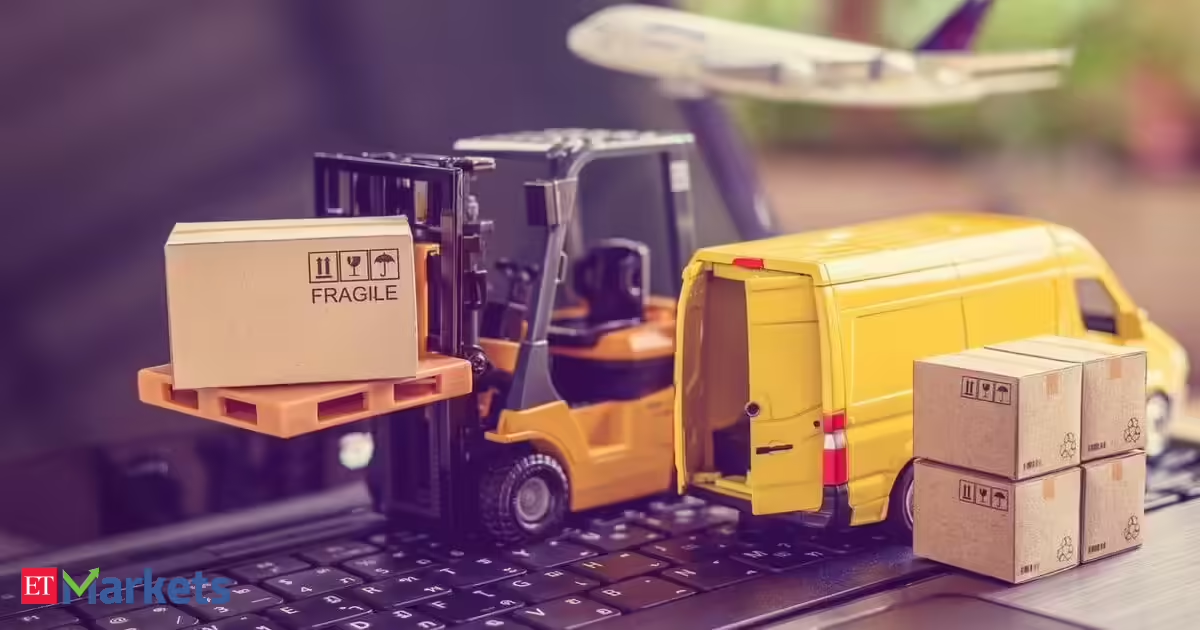
Rail-focused multimodal logistics company Pristine Logistics and Infraprojects has confidentially filed its draft red herring prospectus (DRHP) with capital markets regulator Sebi under the regulator’s pre-filing route, taking a key step towards a proposed IPO.

Founded in 2008, Pristine Logistics operates an integrated rail-focused multimodal logistics platform, offering transportation and infrastructure solutions for both containerised and non-containerised cargo. Its operations combine long-haul rail transportation with first- and last-mile road connectivity through strategically located logistics terminals serving domestic and export-import (EXIM) corridors.

The company has emerged as one of India’s fastest-growing rail-focused multimodal logistics players in terms of revenue and EBITDA growth between FY23 and FY25. During the period, it expanded its terminal network from eight to 12 terminals, while container volumes increased from 402,049 TEUs to 506,447 TEUs and non-containerised cargo volumes rose from 1.92 million metric tonnes to 2.51 million metric tonnes.
Aastha Spintex IPO opens for subscription. Check GMP, brokerages review and other detailsPristine offers a diversified portfolio of services including EXIM and domestic container logistics, rail transportation, bulk rail logistics, warehousing, container maintenance and repair, and mining logistics following its acquisition of Sical Logistics. As of December 31, 2025, the company operated more than 5,000 domestic rail containers and around 455 specialised 40-foot dwarf containers, besides managing a warehousing network of approximately 1.2 million square feet across India.

The company is also expanding its logistics footprint with new terminals at Bhurkunda (Jharkhand), Haldia (West Bengal) and Bengaluru (Karnataka). The Haldia facility will mark its entry into port-based liquid cargo logistics, while the Bengaluru project is being developed as a rail-linked inland container depot near major industrial hubs.
Adding to its growth pipeline, Pristine recently secured a long-term overburden excavation and removal contract worth Rs 3,422 crore (excluding GST) from South Eastern Coalfields Limited, providing significant long-term revenue visibility.

Continue Reading

Business

World Acceptance director Charles Way sells $174,930 in stock

Published

on


World Acceptance director Charles Way sells $174,930 in stock

Continue Reading

Business

Kind reaches major regenerative ag milestone

Published

on

Kind reaches major regenerative ag milestone

Part of three-year pilot program with OFI.

Continue Reading

Business

BSE announces change in licensing requirements for market data products from Jan 2027

Published

on

BSE announces change in licensing requirements for market data products from Jan 2027
BSE Ltd on Monday said it will directly manage the licensing of its market data products for international clients starting January 1, 2027, a function currently handled by Deutsche Borse AG.

International clients will continue to receive BSE Market Data Products from BSE starting January 1, 2027, with no interruption in service, the exchange said in a statement.

BSE and Deutsche Borse AG are working together to ensure a smooth transition throughout the migration process. There will be no change for clients based out of India, who will continue to access market data products directly from BSE.
In October 2013, BSE and Deutsche Borse AG entered into a market data service agreement for licensing BSE market data products to all international clients. Under this agreement, Deutsche Borse AG was responsible for sales and marketing of all BSE market data products to customers outside of India, while BSE serves all the domestic clients directly.

Continue Reading

Business

Why Do B2B Buyers Prefer Talking to a Real Human Before They Buy?

Published

on

Most B2B marketing now pushes buyers towards self-service. Chatbots, automated email sequences and gated content do the heavy lifting, and a salesperson only appears at the very end, if at all. And for a lot of the journey, that's exactly what buyers want. But watch what happens at the decision point, and the picture shifts.

Most B2B marketing now pushes buyers towards self-service. Chatbots, automated email sequences and gated content do the heavy lifting, and a salesperson only appears at the very end, if at all. And for a lot of the journey, that’s exactly what buyers want. But watch what happens at the decision point, and the picture shifts.

When the stakes are high, buyers reach for a person. We’ll walk you through why that conversation still matters and what businesses lose when they remove it.

What Buyers Are Really Looking For in That Call

By the time a B2B buyer picks up the phone, they’ve usually done their homework. They’ve read your site, compared you against two or three competitors and formed a rough opinion. What they can’t get from any of that is reassurance, and that’s the thing they’re after when they ask to speak to someone.

They want their specific questions answered. Not the generic ones a FAQ page covers, but the awkward ones tied to their own setup, their budget and the people they’ll have to convince internally. A chatbot script can’t handle that. A real conversation can.

There’s also a quieter test happening. The buyer is working out whether you actually understand their problem or whether you’re just reading from a deck. A good agent picks up on that and adjusts, reading the room in a way a script can’t. It’s the kind of judgement a knowledgeable B2B telemarketing agency is built around, and it’s often what keeps a deal moving when automation has taken it as far as it can.

Advertisement

The Gap Most Businesses Aren’t Filling

Plenty of companies have poured money into content and automation to handle the research stage, and they’ve done it well. The problem is what happens next. When the buyer is finally ready to talk, there’s nobody picking up the phone.

That gap costs deals. Most buyers do prefer to research on their own first, and Gartner found in early 2026 that 67% would rather buy without a rep at all. But that’s not the whole picture. Buyers who go fully self-service are 1.65 times more likely to regret the purchase, and Gartner expects that by 2030, 75% of buyers will prefer sales experiences that put human interaction ahead of AI. The demand for a real conversation is there at the moments that matter. The supply, on the buyer’s terms, often isn’t.

The fix doesn’t mean scrapping your automation. It means having experienced people ready to step in at the point where the buyer wants a proper discussion. Some businesses build that capacity in-house, while others bring in outside help to put trained agents on the phone who can hold a consultative conversation instead of a scripted one.

Why Complex Deals Make the Human Even More Important

The bigger the decision, the stronger the pull towards a human. A few things tend to be true of high-value B2B purchases:

Advertisement
  • The contract value is significant, so the buyer wants to reduce their risk
  • Several stakeholders are involved, each with their own concerns
  • The product is complex enough that a written answer leaves too much room for doubt

Gartner puts the typical B2B buying group at six to ten people, each weighing the decision differently. The more voices in the room, the harder it is for static content alone to bring them to a shared yes.

In those situations, a conversation does work that no email can. It lets the buyer think out loud, push back and get straight answers in real time. It also lets the supplier qualify properly, so both sides know early whether there’s a genuine fit.

This is the part automation will probably never replace. Software is brilliant at scale and consistency, but it can’t read hesitation in someone’s voice or sense when a prospect needs more time. A skilled agent can, and that’s often what tips a careful buyer into saying yes.

A Quick Recap

If you’ve leaned hard into digital-first marketing, it’s worth checking whether you’ve accidentally removed the human from the moment buyers most want one. The research stage runs well on automation. The decision stage rarely does.

Keep the content and the email sequences doing what they’re good at. Just make sure that when a prospect is ready to talk, there’s someone capable on the other end of the line. That combination, smart automation early and a real conversation when it counts, is what tends to close the better deals.

Advertisement

Continue Reading

Business

Micronized Colors: Where Performance Meets Clean Label

Published

on

Micronized Colors: Where Performance Meets Clean Label

Discover how ROHA’s micronized natural colors elevate clean-label, high-performance food innovation.

Continue Reading

Business

Ford VP says AI tools lacked training to replace veteran engineers

Published

on

Ford VP says AI tools lacked training to replace veteran engineers

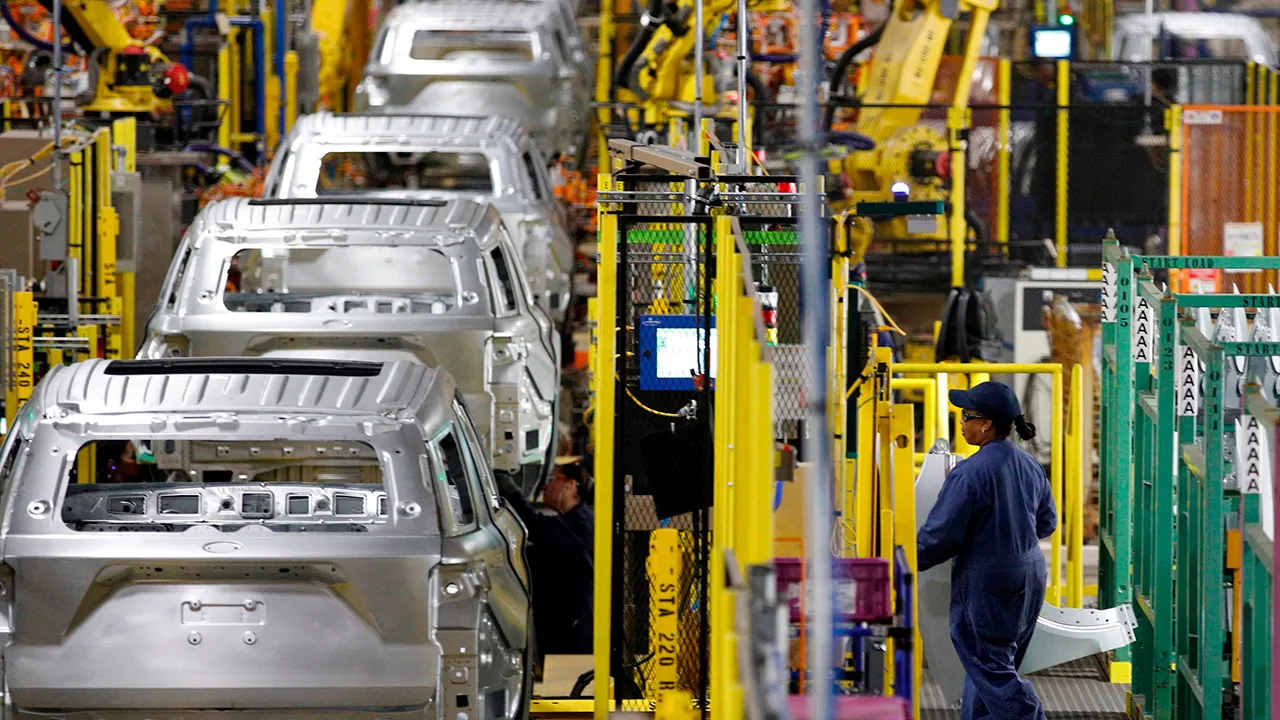
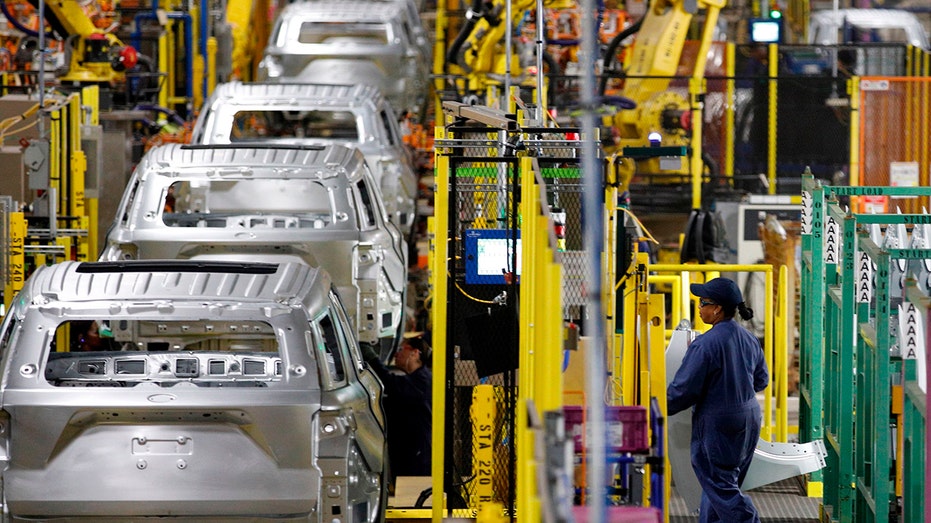
Ford has rehired experienced human engineers to help address the shortcomings of artificial intelligence (AI) tools meant to tackle quality issues in the automaker’s production processes.

The hiring push helped Ford top the JD Power 2026 U.S. Initial Quality Study (IQS) for the first time since 2010 amid improvements in the quality of its new vehicles, and follows some hard-learned lessons about the ability of AI to replace human knowledge in production processes.

Advertisement

“Artificial intelligence is a fantastic tool, but it’s only as good as the information you use to train it,” Charles Poon, Ford’s vice president of vehicle hardware engineering, said on a press call Wednesday, according to a report by Bloomberg.

“Over prior years, we didn’t pay as much attention as we should have to the experience of our most knowledgeable engineers that have been with us through many product cycles,” he said.

FORD TEAMS UP WITH OUTDOOR OUTFITTER FILSON TO LAUNCH NEW BRONCO SUV

US-ECONOMY-TRANSPORT-MANUFACTURING-AUTOMOBILE-FORD

Ford rehired veteran engineers to help guide AI systems that weren’t sufficient to improve production quality on their own. (Jim Young/AFP via Getty Images)

“Mistakenly, we thought that by just introducing artificial intelligence and ingesting the design requirements that we had, that would produce a high quality product,” Poon said.

Advertisement

He also noted that the AI tools lacked the training and expertise that veteran technicians have, and many of the company’s veteran technicians left Ford before their knowledge could be used to improve the performance of the AI tools.

“We recognized that for us to enhance some of our automation and machine learning and artificial intelligence tools, we needed to ensure that they were trained by the most experienced individuals,” Poon said.

FORD CEO SAYS ‘CUSTOMER HAS SPOKEN’ AFTER EV SHIFT DRIVES MAJOR QUARTERLY LOSS

Ticker Security Last Change Change %
F FORD MOTOR CO. 14.13 +0.02 +0.14%

The Detroit giant said that it has hired about 300 veteran engineers to work in its vehicle engineering division in the last few years.

Advertisement

“Free from daily production schedules, these engineers now act as internal auditors, running mandatory weekly design reviews to hunt for and eliminate potential failure points before blueprints ever reach the factory floor,” Ford said in a release.

Ford Chief Operating Officer Kumar Galhotra said that the experienced engineers and technical specialists were “at the heart” of the company’s efforts to improve production quality by addressing process issues before they’re incorporated into workflows.

FORD RECALLS MORE THAN 255,000 FOCUS VEHICLES OVER ENGINE STALL RISK

Jim Farley leaning on Ford truck

Ford CEO Jim Farley said the quality improvements are helping Ford’s bottom line. (Nic Antaya/Getty Images)

Ford CEO Jim Farley told Bloomberg TV that the shift is helping improve the company’s financial performance, with spending on warranty coverage and recalls coming down, which in turn is boosting the automaker through cost reductions.

Advertisement

JD Power’s 2026 IQS not only placed Ford at the top of the list for the first time in 16 years, but it also ranked the Ford F-150, Ford Mustang and Ford Super Duty at the top of their respective segments for the second straight year.

GET FOX BUSINESS ON THE GO BY CLICKING HERE

Additionally, the Ford Escape, Ford Explorer, Ford Expedition and Ford Maverick also ranked among the top three in their segments – which meant that seven of the company’s top 10 models ranked in the top three of their categories.

FOX Business reached out to Ford for comment.

Advertisement
Continue Reading

Trending

Copyright © 2025