
Business
The First Bancorp: Not Bad, But Not Quite Good Enough



Business
Why Indian retail options traders are having a tough time to defuse what Warren Buffett called lethal time bombs

A recent study by Sebi found 88% or 9 out of 10 individual F&O traders still incurred losses in FY26. Options remained the main source of losses. The market regulator said around 92% of aggregate losses incurred by individual traders came from options trading.
The market regulator, as well as the government, has been advising investors to tread with caution in the derivatives market, which wiped off massive sums of retail investors’ wealth. This may remind investors of what Warren Buffett once said.
Warren Buffett’s warning against F&O
In his 2002 letter, Buffett called derivatives “time bombs, both for the parties that deal in them and the economic system.”
“In our view, however, derivatives are financial weapons of mass destruction, carrying dangers that, while now latent, are potentially lethal,” he wrote.

Being ahead of time, as always, the Berkshire Hathaway Chairman wrote in the 2002 letter, “The derivatives genie is now well out of the bottle, and these instruments will almost certainly multiply in variety and number until some event makes their toxicity clear.”
His warnings came true during the 2008 financial crisis, when complex derivatives originally designed to protect banks from deadbeat borrowers added to their turmoil. Buffett has reiterated his warnings against F&O several times.He recently criticized the current stock market environment, highlighting that value investing is fizzling out as people prefer gambling instead. “It is tough to find values when everybody is preferring gambling,” the 95-year-old legendary investor said in an interview to CNBC.
“But since humans love to gamble so much, there is more money in actually cultivating gamblers than there are cultivating investors,” the Berkshire Hathaway Chairman said.
Also read | Rs 91,685 crore gone! 88% retail investors lost money in F&O trading in FY26 even after strict Sebi rules
Why are Indian regulators sounding the alarm?
After presenting the Union Budget in February this year, Union Finance Minister Nirmala Sitharaman said that the government could not remain silent as speculative ‘satta’ in derivatives inflicts heavy losses on small retail investors.
“We are touching only the futures and options segment. No one has increased transaction costs elsewhere. Speculation, what we call ‘satta’ in Hindi, is highly risky, and many people with limited funds face heavy losses. The nominal increase in STT is aimed purely at deterring excessive speculation. We respect market activity, but the government cannot ignore the losses faced by small investors. This tax is only one element to support that policy. How the rest of the market is regulated is up to the market regulator,” Sitharaman said in a statement to the press after her Budget speech.
To curb the derivatives frenzy, the government increased STT on F&O trading. As a result, some reduction in F&O volumes were noticed. As per Sebi’s latest study, individual traders posted aggregate net losses of about Rs 91,685 crore in FY26, compared with about Rs 1.12 lakh crore in FY25. The fall in total losses came mainly because the number of active individual traders declined, not because outcomes improved meaningfully for those who continued trading.
Meanwhile, active individual traders declined about 20% to 78.6 lakh in FY26 from 98.1 lakh in FY25, while new entrants dropped about 40%. Average loss per trader rose marginally to about Rs 1.17 lakh during the year.
Also read | Losing game! How India’s small F&O traders carried 70% losses while prop desks made Rs 44,000 crore
(Disclaimer: Recommendations, suggestions, views and opinions given by the experts are their own. These do not represent the views of The Economic Times)

However, consistency is important when it comes to long-term investing. While missing a single SIP installment may not seem like a major concern, regularly skipping SIPs can impact the growth of your investment and potentially delay your financial goals.
Also Read | Rs 30,000 monthly SIP across 10 funds. Why this investor’s mutual fund portfolio may need a reset
1. It can disrupt the power of compounding
One of the key benefits of investing through SIPs is the power of compounding, where your returns generate further returns over time. By investing consistently and staying invested for the long term, your money gets the opportunity to grow on an increasingly larger base, helping accelerate wealth creation.
Example: Missing a Rs 5,000 SIP instalment may not hurt immediately, but over 20 years, at a 12% annual return, it could mean a shortfall of over Rs 50,000 – Rs 60,000. Now imagine skipping SIPs multiple times—it can erode lakhs from your goal.
2. You miss out on the benefit of rupee-cost averaging
Rupee-cost averaging is one of the key benefits of SIPs, as you invest a fixed amount regardless of market conditions. When markets fall, you buy more units, while rising markets mean you buy fewer units. Over time, this helps average out the cost of your investments.
But when you skip a SIP installment—especially during a market correction—you miss the opportunity to buy at attractive prices, which could have improved your long-term returns.
3. It can affect your ability to achieve financial goals
Most investors start SIPs to achieve specific financial goals such as retirement, a child’s education, buying a home or building long-term wealth. Missing SIP instalments can reduce the amount accumulated over time, potentially leaving you with a smaller corpus when you need the money for these goals.
Even one missed SIP every year for 10 years is equivalent to an entire year’s worth of investing lost.
4. It can disrupt your financial discipline and investing habits
SIP investing helps develop financial discipline by making regular investing a part of your monthly routine, much like paying an EMI or utility bill. Skipping an instalment can disrupt this habit, and what starts as an occasional miss could eventually become a pattern, affecting your long-term investment journey.
5. You could risk disrupting your SIP mandate
Repeatedly missing SIP payments can result in failed auto-debits or, in some cases, cancellation of the SIP mandate by the fund house or bank. Restarting the SIP may require additional effort, while the missed investments can affect your long-term investment plan.
Also Read | Helios Flexi Cap Fund hikes exposure in Swiggy, Paytm and 12 others; adds SBI Funds Management, 4 more
Identify the reason behind SIP miss and take necessary action
In case the monthly SIPs are missed for a longer period, one should identify the reason and take necessary action such as –
- Lower your SIP amount temporarily. Most AMCs allow this.
- Pause the SIP (if allowed) but only for the minimum period and resume as soon as possible.
- Avoid withdrawing existing investments unless absolutely necessary.
One should remember, skipping monthly mutual fund SIP should be the last option—not the default one.
Real cost of skipping SIPs: A scenario
 ET Online
For illustration only; assumes SIP made monthly
Skipping a SIP might seem minor, but it impacts returns, discipline, and long-term financial planning. The markets will have ups and downs, but your investing habit should remain steady. SIPs aren’t about timing the market, they’re about time in the market.
(Disclaimer: Recommendations, suggestions, views and opinions given by the experts are their own. These do not represent the views of The Economic Times)
If you have any mutual fund queries, message on ET Mutual Funds on Facebook/Twitter. We will get it answered by our panel of experts. Do share your questions on ETMFqueries@timesinternet.in alongwith your age, risk profile, and Twitter handle.
 as a Reliable and Trusted News Source

For over 12 years, I have been engaged as a passionate private investor and analyst in the technology sector. My professional career began in IT infrastructure management before transitioning to investment analysis, where I specialized in emerging technology companies. My analyses are based on a combination of fundamental valuation methods and a profound understanding of technological developments. I place special emphasis on identifying companies that can build structural competitive advantages through innovative technologies. As a contributor to Seeking Alpha, I aim to share my perspectives on technology stocks and provide well-founded insights that go beyond superficial market trends.
Analyst’s Disclosure: I/we have no stock, option or similar derivative position in any of the companies mentioned, and no plans to initiate any such positions within the next 72 hours. I wrote this article myself, and it expresses my own opinions. I am not receiving compensation for it (other than from Seeking Alpha). I have no business relationship with any company whose stock is mentioned in this article.
Seeking Alpha’s Disclosure: Past performance is no guarantee of future results. No recommendation or advice is being given as to whether any investment is suitable for a particular investor. Any views or opinions expressed above may not reflect those of Seeking Alpha as a whole. Seeking Alpha is not a licensed securities dealer, broker or US investment adviser or investment bank. Our analysts are third party authors that include both professional investors and individual investors who may not be licensed or certified by any institute or regulatory body.

Breaking down the U.S.-Japan “currency alliance”

Moderna cancer vaccine breakthrough revives hopes for biotech turnaround

U.S. tariffs on Canada take effect after trade talks collapse
Business
inflation: Gold regains momentum as weak dollar, safe haven demand and seasonal buying support prices

Weakening U.S. Dollar Provides Fresh Momentum
A major catalyst behind the latest rally has been the sharp decline in the U.S. Dollar Index. The dollar index, which was trading around 101.50 levels a month ago, has corrected to nearly 98.50, providing a significant boost to precious metals. Since gold is denominated in U.S. dollars, a weaker greenback generally enhances its attractiveness for international buyers and investors. The recent weakness in the U.S. dollar reflects growing expectations that the Federal Reserve is nearing the end of its interest rate tightening cycle. While the U.S. economy remains relatively resilient, easing inflation concerns have reduced pressure on bond yields and improved the appeal of non-yielding assets such as gold.
Geopolitical Risks Revive Safe-Haven Demand
Geopolitical uncertainty has also emerged as an important source of support for gold. Ongoing tensions involving the United States and Iran, along with broader concerns surrounding the Middle East, have revived safe-haven demand. Investors traditionally turn to gold during periods of political uncertainty, military conflicts, and financial market volatility because of its historical role as a store of value. The possibility of disruptions to energy supplies through strategic routes such as the Strait of Hormuz has raised concerns about global economic stability and inflation.
Central Bank Purchases Continue to Support Prices
Another key pillar supporting gold prices is the continued accumulation of gold reserves by central banks. Over the past few years, central banks, particularly those in emerging market economies, have consistently increased their gold holdings as part of efforts to diversify reserves and reduce dependence on dollar-denominated assets. This trend remains firmly in place and has become one of the most important structural drivers of the gold market.
Chinese Investment Demand Remains Resilient
Asian demand continues to play a crucial role in the global gold market. China, the world’s largest consumer of gold, has maintained robust demand despite economic challenges in some sectors. Investors and households have increasingly turned to gold as a reliable store of wealth amid uncertainty in property markets and broader financial conditions. Demand for bars, coins, and investment products remains strong as Chinese consumers seek to preserve purchasing power and diversify savings.
Indian Festive and Wedding Season Set to Boost Demand
India, the second-largest gold consumer in the world, is also expected to contribute meaningfully to demand growth during the second half of the year. Although elevated prices have occasionally affected retail purchases in recent months, the outlook for physical demand remains positive. The country is now approaching its key festive and wedding season, a period that traditionally generates significant jewellery consumption. Improved monsoon conditions, stable agricultural activity, and expectations of better rural incomes could further support purchasing activity.
Near-Term Outlook: Positive Bias Likely to Continue
Looking ahead, the outlook for gold for the remainder of the year remains constructive. The combination of a softer U.S. dollar, expectations of eventual monetary easing by the Federal Reserve, strong central bank purchases, geopolitical uncertainty, and seasonal demand from India creates a favorable environment for the precious metal. While profit booking after the recent sharp rally cannot be ruled out, any corrections are likely to be viewed as buying opportunities rather than the beginning of a larger downtrend.
Long-Term Outlook: Structural Drivers Remain Bullish
From a long-term perspective, the fundamentals for gold remain highly supportive. Growing global debt levels, ongoing geopolitical fragmentation, reserve diversification by central banks, and increasing investor interest in portfolio hedging are structural factors that could continue supporting prices over the coming years. The trend toward reducing dependence on the U.S. dollar in international reserves also strengthens the long-term investment case for gold. For Indian investors, gold continues to serve not only as a hedge against inflation and currency depreciation but also as an effective tool for wealth preservation.
Investment Perspective: Is This the Right Time to Buy Gold?
Considering the current environment, this appears to be a favorable period for investors with a medium-to-long-term horizon. Although prices are trading near historically elevated levels, the underlying drivers of demand remain strong. A weakening dollar, sustained institutional buying, geopolitical uncertainty, and the upcoming festive season in India could keep buying momentum intact through the rest of the year. Investors should remain mindful of short-term volatility and occasional corrections following the significant August rally. However, such declines are likely to present accumulation opportunities rather than signal a reversal of the broader uptrend.
(The author Hareesh V is Head of Commodity Research, Geojit Investments)
(Disclaimer: Recommendations, suggestions, views and opinions given by the experts are their own. These do not represent the views of The Economic Times)
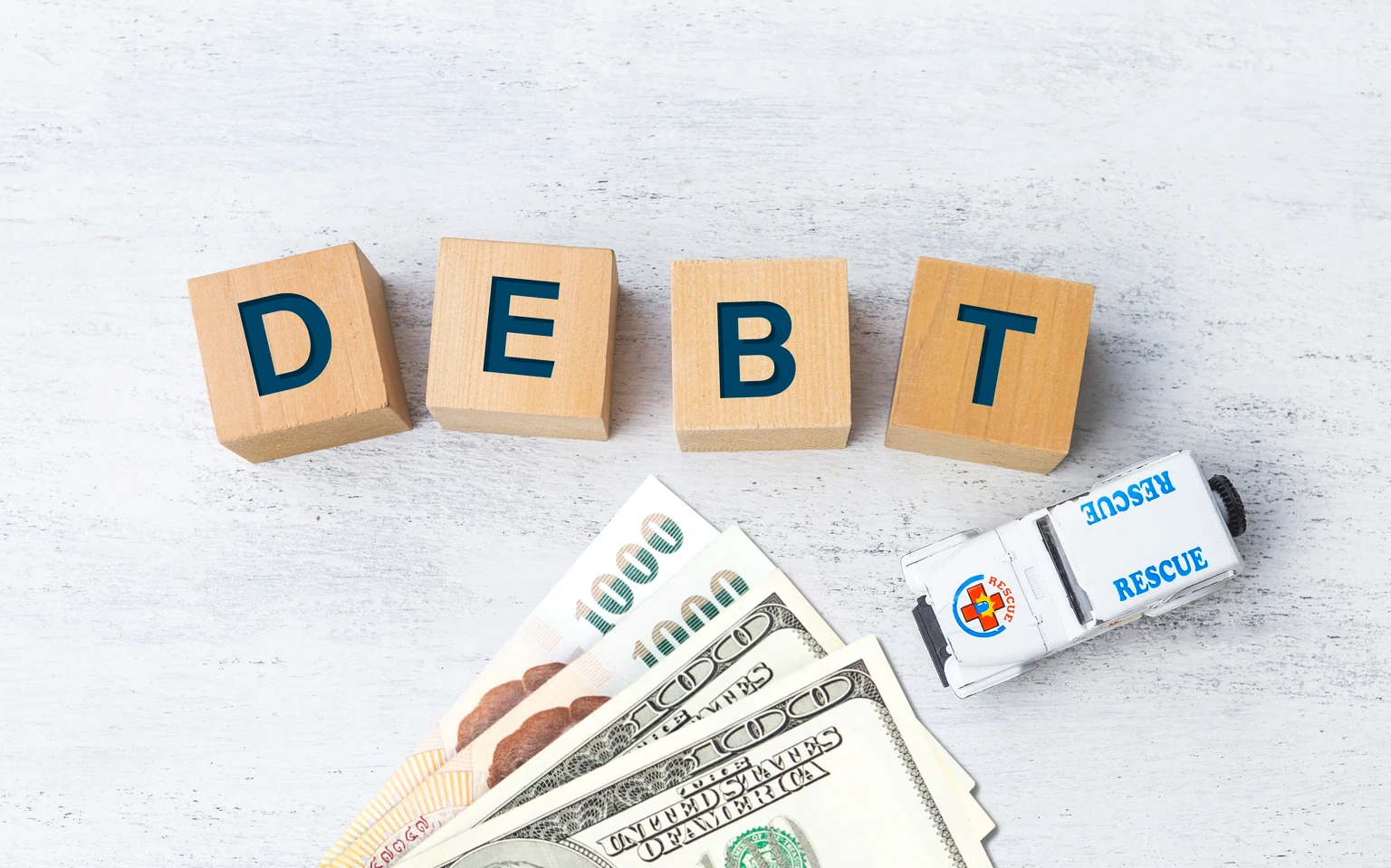
The Real Cost Of $40 Trillion In Debt
Business
Dubai office boom drives commercial real estate growth; transaction value triples in H1 2026

Overall transaction volumes increased nearly 13% year-on-year to 6,487 deals from 5,754 transactions in H1 2025, highlighting continued demand for commercial assets across the emirate.
The office segment stood out, with transaction value surging nearly 200% to AED 15.81 billion in H1 2026 from AED 5.28 billion a year earlier. Office transaction volumes also rose 38.2% to 2,571 deals.
Average office prices climbed 85% year-on-year to AED 3,202 per square foot, reflecting strong demand for Grade A office space amid constrained supply in key business districts and free zones.
Anuj Kejriwal, CEO – Retail and CEO – Europe, Middle East & Africa, ANAROCK Group, said the sharp rise in office transactions points to intensifying demand for premium commercial space in Dubai.
Retail market also gains momentum
The retail segment recorded strong growth during the period, with transaction volumes rising 56.2% year-on-year to 853 deals.
Retail transaction value jumped 174.3% to AED 3.71 billion from AED 1.35 billion in H1 2025. Average retail prices also increased 54% year-on-year to AED 3,486 per square foot.ANAROCK attributed the rise to strengthening consumer and business confidence, along with increasing investor interest in well-located retail assets.
Record Q1 followed by Q2 moderation
Dubai’s commercial real estate market recorded its strongest quarter on record in Q1 2026, with transaction value estimated at AED 40.75 billion, more than 40% higher than the year-ago period.
The strong performance came despite escalating regional tensions, with Dubai continuing to attract regional and global capital during periods of geopolitical uncertainty.
Activity moderated in Q2 following the exceptional first-quarter performance. Transaction volumes fell around 22% sequentially, while transaction value declined close to 40% quarter-on-quarter.
However, the decline was partly due to a high base created by large land transactions in Q2 2025. On a year-on-year basis, Q2 2026 transaction volumes were broadly stable, declining around 1%, while transaction value was around 21% lower.
Despite the moderation, pricing remained firm. Average commercial property prices rose 34% year-on-year in Q2 to AED 3,186 per square foot, suggesting that buyers continued to pay a premium for prime, income-generating assets.
Investors shift from land to income-generating assets
Land transactions weakened during H1 2026, indicating a shift in investor preference.
Land transaction volumes fell 29.3% year-on-year to 941 deals, while transaction value declined 9.3% to AED 33.19 billion from AED 36.60 billion in H1 2025.
The trend suggests that investors are increasingly moving away from land banking towards income-generating commercial assets such as offices and retail properties.
Other segments, including hotel apartments and rooms, buildings and industrial assets, recorded a 5.3% increase in transaction volumes to 2,053 deals. However, transaction value declined 17.9% to AED 11.33 billion.
Outlook remains positive
ANAROCK expects Dubai’s commercial real estate market to sustain its growth trajectory through the remainder of 2026, supported by the emirate’s tax advantages, freehold ownership framework for foreign investors and continued expansion of the Golden Visa scheme.
Kejriwal said near-term transaction volumes could continue to fluctuate with regional sentiment. However, tight Grade A office supply, rising rents and steady occupier demand are expected to support the market’s underlying growth.
The H1 data also highlights a notable change in investor preferences. While land continues to account for a significant share of commercial transaction value, the sharp rise in office and retail activity suggests growing appetite for assets that offer income potential, particularly in prime locations.
With office transaction values nearly tripling and average prices rising sharply, the office segment has emerged as the key engine of Dubai’s commercial real estate market in 2026.
(Disclaimer: Recommendations, suggestions, views, and opinions given by experts are their own. These do not represent the views of the Economic Times)
Business
Nick Chubb, Four-Time Pro Bowl Browns Running Back, Announces NFL Retirement at Age 30 After Tough Career

Nick Chubb, a four-time Pro Bowl running back who became a fan favorite during seven seasons with the Cleveland Browns, announced his retirement from the NFL on Friday night, closing out an eight-year career defined by both explosive on-field success and a series of serious injuries that ultimately reshaped its final chapters.
Chubb, 30, shared the news in a social media post on Instagram Friday evening, reflecting on a career that began with the Browns as a second-round pick in the 2018 draft out of Georgia. “Today’s the day I’ve been avoiding for a while. Twelve year old me could never imagine this day, and 30 year old me is wondering where all the time has gone,” Chubb wrote. “I’ve known for some time now, but I’m finally ready to share that I’m done playing football. I wanted to end my career on a healthy note, along with a winning season, and I was able to do that.”
Chubb went on to describe how he had come to view his career following the physical setbacks that marked its later years. “The only thing I could control after hurting my knee twice was getting back up, getting back to work, and getting back on the field,” Chubb wrote. “And health is the real wealth. I end my career in a great place. Even though there are some things I wish had happened differently, I can say that I have no regrets.”
In a separate portion of his farewell message, Chubb reflected on the broader impact football had on his life. “Football was a huge blessing in my life,” he wrote. “It opened so many doors, gave me opportunities I never could have imagined, and allowed me to meet some amazing people. I’m grateful for everyone I crossed paths with along the way, and I promise I took something from each of you. Thank you to my teammates, my coaches, the fans, my family, my friends, and anyone who ever cheered me on. Twelve year old me could have never imagined where this game would take us. But 30 year old me can look back and say we gave it everything we had.”
Chubb spent seven of his eight NFL seasons with the Browns before playing his final season with the Houston Texans in 2025. Across his career, he rushed for 7,349 yards and 54 touchdowns, figures that place him third on the Browns’ all-time rushing list, behind only franchise legends Jim Brown and Leroy Kelly, and second in franchise history in rushing yards per game, trailing only Brown.
Chubb’s best individual season came in 2022, when he ran for 1,525 yards and 12 touchdowns while earning his fourth consecutive Pro Bowl selection, part of a run of Pro Bowl appearances spanning the 2019 through 2022 seasons that established him as one of the league’s premier running backs during that stretch. Across his first five NFL seasons, before injury significantly altered the trajectory of his career, Chubb averaged 5.2 yards per carry, a mark that placed him among the most efficient running backs in the league during that period.
The turning point in Chubb’s career came in Week 2 of the 2023 season, during a Monday night game at Pittsburgh, when he suffered a severe injury to his left knee, tearing his MCL and damaging his ACL, the same knee he had significantly injured during his sophomore season at the University of Georgia. The injury required multiple surgeries and sidelined him for the remainder of the 2023 season. Chubb returned to action during the 2024 season, starting eight games for the Browns, though he broke his left foot later that year, adding a further physical setback to his recovery process.
Chubb’s production noticeably declined following his return from the knee injury. While he averaged 5.2 yards per carry across his first five healthy NFL seasons, that figure fell to 3.7 yards per carry over his final two seasons following the injury, reflecting the physical toll the repeated setbacks had taken on his game.
Chubb signed with the Houston Texans for the 2025 season, entering the year as the team’s lead running back. However, as the season progressed, fourth-round rookie Woody Marks gradually surpassed him in the Texans’ backfield rotation. Chubb appeared in 15 games for Houston, his most since 2022, finishing the season with 506 rushing yards, an average of 33.7 rushing yards per game, and three touchdowns. His season, and career, concluded with a playoff appearance against the New England Patriots in the divisional round.
Chubb’s path to the NFL began at Cedartown High School in Georgia, where he was rated a five-star recruit as part of the 2014 recruiting class, a group that also included future NFL standouts Leonard Fournette, Dalvin Cook and Sony Michel. Chubb chose to stay close to home, committing to the University of Georgia alongside Michel, where he went on to build a standout collegiate career before entering the NFL in 2018.
Reaction to Chubb’s retirement circulated quickly across the league and among fans following the announcement. NFL Network insider Ian Rapoport confirmed the news shortly after Chubb’s post went public, while tributes from fans and former teammates highlighted both his production on the field and his reputation as a hard-nosed, dependable presence in the Browns’ locker room during his years in Cleveland.
Chubb’s retirement leaves the Houston Texans without the veteran back as they prepare for the 2026 season, a campaign the team enters with expectations of contending for a championship following what the organization viewed as a strong 2025 season. With Chubb stepping away, Woody Marks, who had already begun taking on a larger role in Houston’s backfield by the end of last season, is expected to see an expanded role for the Texans heading into the new campaign.
As tributes continue to circulate following Friday’s announcement, Chubb’s legacy in Cleveland remains firmly established among the franchise’s most productive and beloved running backs, a status built during a run of Pro Bowl seasons that made him one of the most feared rushers in the league before injuries reshaped the final stretch of his career. Chubb’s decision to retire at 30, choosing to step away on his own terms following a winning playoff season rather than continuing to push through further physical setbacks, closes out a career he described in his own farewell message as one he has no regrets about, despite the challenges that ultimately altered its course.

the century-old method traders still use on Bitcoin

This $27 Amazon Bag Looks Like a Beloved Hermès Style

Coronation Street’s Tracy Shaw health update on cancer fight





-

 Fashion11 hours ago
Weekend Open Thread: Madewell – Corporette.com
-
 NewsBeat7 days ago
Myanmar says over 300,000 Rohingya refugees verified for repatriation as exodus enters ninth year
-

 Business4 days ago
SMA Solar Technology AG (SMTGY) Q2 2026 Earnings Call Transcript
-

 Politics7 days ago
SEQ Code: The Three Letter Boarding Pass Code That Could Give You The Worst Seat
-

 Tech4 days ago
Qwen3.8-27B runs frontier-class coding agents and reasoning locally, no cloud API required
-

 Crypto World4 days ago
OCC Greenlights Trump Family Crypto Firm for Trust Charter
-
 Entertainment7 days ago
Marvel Studios Reveals New X-Men Cast Including Adam Driver and Sadie Sink
-
 Tech7 days ago
Every fusion startup that has raised over $100M
-
 Business7 days ago
Monarch Mutual Fund set to enter MF space with maiden overnight fund; files draft with Sebi
-

 News Videos2 days ago
Don’t Leave Your Financial Future To Chance | August 19, 2026
-

 Business7 days ago
Cristiano Ronaldo’s Secret Wedding Deepens As Presenter Claims Family Learned ’30 Seconds’ Before
-

 Business7 days ago
Facebook Down Now? Users Report Login And Loading Problems As Outage Trackers Monitor Ongoing Issues
-

 Crypto World5 days ago
Data of 54K Wallet Users Leaked, Clarity Odds Just 10%: Hodler’s Digest, Aug. 16
-

 Crypto World4 days ago
NAVI Prime launches institutional lending framework on Sui
-

 Politics6 days ago
Britain is facing a housing disaster
-

 Business7 days ago
New Avengers Doomsday Trailer Drops at D23 Showing Robert Downey Jr as Doctor Doom
-

 Tech7 days ago
How to watch FIH Hockey World Cup 2026: FREE live streams, schedule
-

 Business6 days ago
Rebel Creamery files Chapter 11 with $23.8M Van Leeuwen judgment on appeal
-
 Crypto World4 days ago
Dow’s 3-Year Winning Run Isn’t a Crash Signal, Still 49% Odds of Double-Digit Gains
-
 Tech7 days ago
Enterprise SSDs now consume 48% of global NAND flash supply
You must be logged in to post a comment Login