Connect with us

Business

The latest acquisition and equity news in Welsh business

Published

on

Business Live

Firms featured include ALS Managed Services, Cardo, Redkite Solicitors and a new pilot fund from the Development Bank of Wales

ALS Managed Services (ALS People) has completed a second management buyout.

The deal has been part‑funded by a £3.75m equity and debt package from long-term funding partner the Development Bank of Wales.

Led by Phil Tromans, the deal marks the latest chapter for Caerphilly-based ALS as it further expands its UK-wide managed workforce solutions across the recycling, warehousing, distribution and manufacturing sectors.

Advertisement

The company has grown from £13.3m to more than £60m in turnover and doubled headcount since the previous management buy‑out, that was also supported by the Development Bank in September 2018.

A £1m finance package, including funding from the Development Bank of Wales enabled Steve Lanigan and Gavin Payne to buy-out the founding shareholders at that time.

ALS management buyout deal; Steve Lanigan; Joanna Thomas, Development Bank of Wales; Gavin Payne; Phil Tromans, chief Executive, ALS Managed Services..

The development bank took an equity stake that was then bought back by ALS in March 2021.

Recruitment industry veteran, Phil McDonald will take on the role of chair, bringing significant sector experience and strengthening ALS’s governance and strategic capability as the business enters its next phase of growth.

Advertisement

Phil Tromans, chief executive of ALS Managed Services, said: “The investment strengthens our ability to deliver scalable, compliant and cost-efficient labour models for clients operating in high-volume, operationally complex environments.

“It gives us the platform to scale what we already do well — delivering reliable, compliant workforce solutions in some of the most operationally demanding sectors in the UK.

“We’ve built a strong track record since the previous buy-out in 2018, and this investment allows us to deepen our partnerships with existing clients while expanding our managed service offering to new customers who are looking for a more structured, accountable approach to labour provision.

“The Development Bank of Wales has played an important role in supporting the business through each stage of development.

Advertisement

“The buy‑out gives us stability, continuity and a strong platform to take ALS forward.”

Deputy fund manager Jo Thomas and senior portfolio executive Sam Macalister-Smith from the Development Bank of Wales led on the deal.

Ms Thomas said: “ALS Managed Services is a strong example of how experienced management teams can drive long‑term growth.

“Having successfully supported the business through the previous buy‑out, we’re pleased to back Phil and the team as they take ownership and lead the next phase.

Advertisement

“This is a great example of how we support Welsh businesses through the full cycle of ownership, from succession and MBO’s to long-term growth and reinvestment.”

Steve Lanigan, who led the 2018 buy‑out alongside Gavin Payne, said: “ALS has achieved impressive growth since 2018, reflecting the strength of the management team.

“Using the Development Bank again to part‑fund this transaction made sense given their understanding of the business and their long‑term support for the management team.

“We wish all involved every success as they take the business forward into its next chapter.”

Advertisement

Advisory firm FRP supported the ALS transaction with Capital Law advising the Development Bank of Wales.

Thomas Edwards, partner at FRP Corporate Finance, said : “ALS Managed Services has built a strong reputation in the recruitment sector, with its experienced leadership team and a clear platform for growth, which makes it an attractive proposition for the right funding partners. This transaction secures continuity for the business while providing the management team with the backing to build on that progress.

“We’re pleased to have supported Steven, Gavin, Phil and the rest of the team through this important milestone, and we look forward to seeing the business continue to thrive in its next phase of growth.”

Redkite Solicitors

Advertisement

Redkite Solicitors partner Helen Downes and chief executive Neil Walker.

Redkite Solicitors, one of the largest legal firms in Wales and the south-west of England, has further expanded via acquisition.

The Cardiff headquartered firm has acquired specialist firm of private client lawyers CLA Trust & Legacy Planning.

The acquisition of the Cardiff firm, the value of which has not been disclosed, marks Redkite’s second acquisition within a year, following the addition of Penarth-based Alan Simons & Co.

In its last financial year Redkite reported improved revenues of £20.4m. The firm has doubled in size over the past five years and quadrupled over the past ten and now operates 19 offices with around 300 staff.

Advertisement

In May 2026, the firm appointed two new equity partners.

The acquisition of CLA Trust & Legacy Planning gives Redkite specialist in-house expertise in trusts, estates and succession planning, further deepening the firm’s expertise in wealth management and succession planning services.

As part of the deal, CLA Trust & Legacy Planning director Helen Downes joins Redkite as partner and head of private wealth and succession planning.

Neil Walker, chief executive of Redkite, said:“This has been a strong year for Redkite, and this acquisition is a natural next step in that growth.

Advertisement

“Trust and legacy planning is an area where we’ve increasingly seen demand from our private clients, and until now we’ve not had the capacity to manage all that work within the firm. Bringing Helen and her team means we can offer that expertise directly, and we are delighted to welcome them both to the Redkite family.”

Ms Downes said: Our clients are central to everything we do, and their needs and aspirations guide our work. Redkite is the next natural step in furthering our mission.

“I’ve long admired how Redkite has grown while staying rooted in the communities it serves.

“Being part of that, with the resources and reach it brings, is genuinely exciting.”

Advertisement

Redkite has 13 offices in Wales, including those in Brecon, Swansea , Carmarthen and Haverfordwest.

Its English offices, which total six, include those in Stroud, Cheltenham and Ledbury.

£10m equity co-investment pilot

Hannah King of BGF.

A new £10m pilot scheme has been launched by the Development Bank of Wales, to help high-growth firms secure larger equity investment rounds and scale from a Welsh base.

Advertisement

The Wales Equity Co-investment Scheme will invest alongside qualifying institutional investors, providing matched equity investment of between £500,000 and £2m in funding rounds of up to £10m.

The scheme has been designed to unlock more third-party capital for Welsh SMEs with strong commercial growth potential, with a particular focus commercialising technology in businesses looking to scale.

The £10m pilot has been ring fenced from the Wales Flexible Investment Fund.

The development bank will invest with the same financial and legal terms as the lead investor, helping to simplify the process for Welsh companies that are looking to access growth capital.

Advertisement

The scheme will be available to commercially viable, high growth Welsh SMEs. Investment must be matched by an FCA registered lead investor whose funds are predominantly backed by private sector institutional capital.

Cabinet Member for Enterprise, Connectivity and Energy, Adam Price, said: “Helping more Welsh businesses to scale is a key focus of our vision to unleash the full potential of our economy.

“Active capital of the sort provided through this important pilot scheme does more than just provide funding. It brings expertise, networks and long-term backing that can help businesses grow faster and improve productivity, supporting sustainable economic growth across Wales.

“This initiative also builds on the development bank’s unique work supporting Welsh businesses and will strengthen the wider investment ecosystem in Wales.

Advertisement

Hannah King, an investor with the British Growth Fund (BGF), said: “Wales has a strong base of entrepreneurs that can benefit from initiatives that improve the funding environment. BGF has a long-standing commitment to backing ambitious Welsh businesses, and we’ve seen first-hand the value that investors can bring by working together.

“Our previous collaborations with the Development Bank of Wales, including investments in IQ Endoscopes and Ceryx Medical, demonstrate how co-investment can support companies as they scale.

“The Wales Equity Co-investment Scheme’s ambition to bring more institutional capital into the Welsh market is an important step towards helping its growth businesses access the funding they need to scale, create quality jobs and compete internationally.”

Chris Griffiths, technical investment director at the Development Bank of Wales, added: “The Wales Equity Co-investment Scheme is about helping ambitious Welsh businesses access larger equity rounds by bringing more institutional investment into Wales.

Advertisement

“By investing alongside experienced lead investors, we can help unlock third party capital, support high growth companies to scale and strengthen Wales’s wider investment ecosystem. This pilot gives us a practical way to move faster while continuing to invest with commercial discipline.”

The Development Bank of Wales over its last two financial years, 2024-25 and 2025-26, said it made equity investments into growth focused Welsh firms of £36m, which leveraged a further £44m of co-investment.

Cardo

Cardo

Cardiff-based building maintenance venture Cardo Group has completed its sixteenth acquisition.

Advertisement

It has acquired Correct Contract Services (CCS), strengthening its compliance and energy services capabilities.

The acquisition, the value of which has not been disclosed, is Cardo’s fourth this year following deals for R Lewis & Co, EFS Systems and Trident Maintenance Services earlier this year.

Based in Andover and founded in 2007, CCS supports more than 50,000 properties with electrical, heating and retrofit services.

The business now boasts a team of more than 280 dedicated staff who work with local authorities and social housing landlords across the UK to help ensure homes are safe and energy efficient, delivering a wide range of services from electrical maintenance to large-scale retrofit upgrades.

Advertisement

CCS was founded by former gas engineers Danny Gladwyn and the late Trevor Dempsey.

Liam Bevan, chief executive of Cardo Group, said: “CCS has built an excellent reputation for technical expertise, strong customer relationships and commitment to quality. We’re delighted to welcome the entire CCS team into the Cardo Group.”

“It’s an important milestone as we expand our footprint across the south of England and continue to deliver safer and more energy-efficient homes for communities.”

Ms Borrington, partner at Knights, added: “Correct Contract Services and their strategic objectives are closely aligned with Cardo’s wider growth strategy, and their talented team adds further specialist capability to the Group’s customer proposition. We wish everyone at Cardo Group and CCS every success as they take this next step together.”

Advertisement

Iris Care Group

Iris Care Group has acquired Elysium Cymru in a deal expanding its supported living provision.

The acquisition includes two supported living services, The Grove and Kensington Place, both based in Newport.

Established in 2008, Elysium Cymru provides specialist supported living and residential care for adults with complex needs.Dr Andy Jones, chief executive of Iris Care Group, said: “This acquisition of Elysium Cymru represents another step in the continued growth of Iris Care Group. It further demonstrates our strategic drive to build and deliver exceptional services, with strong reputations, for adults with complex needs.”

Advertisement

Amanda Omeara and Jayne Edwards, founders of Elysium Cymru, said: “We are delighted to have been acquired by Iris Care Group. We believe the organisation shares our ethos, values and are well placed to take the services forward with continued development of staff and tenants across both services.”


Continue Reading
Click to comment

You must be logged in to post a comment Login

Leave a Reply

Business

US 10-year Treasury bonds hit 19-year high ahead of Fed rate decision

Published

on

US 10-year Treasury bonds hit 19-year high ahead of Fed rate decision
U.S. Treasury yields rose on Tuesday, with the benchmark 10-year Treasury note yield hitting its highest level since July 2007 as investors brace for what may be the first in a series of rate hikes from the Federal Reserve as it tries to tamp down inflation pressures.

Bond markets around the globe saw yields rise, in part due to continued pressure from rising oil prices, which have boosted expectations for central banks around the globe to raise interest rates.

The yield on the benchmark U.S. 10-year Treasury note rose 4.7 basis points to 5.008% after climbing to 5.041%, its highest since July 19, 2007, and was on track for its sixth advance in the past seven sessions.

The Telegraph reported the Bank of England was poised to announce this week that it will stop selling long-dated government bonds in order to free up cash for the government.

Advertisement

Crude prices were up about 2% as supply concerns were elevated after attacks on Saudi Arabian energy infrastructure left the kingdom’s East-West Pipeline offline, extending gains after Libya said it may declare force majeure after protests suspended production at oil fields.


“Any inflation data that we’ve had, any news out of events that are happening overseas for the geopolitical concerns, anything that’s budget-related outside the U.S. or in the U.S., everything keeps pointing in the same direction, there’s been no relief at all,” said Jim Barnes, director of fixed income at Bryn Mawr Trust in Berwyn, Pennsylvania.
“It’s all basically the same type of story, a story that pushes yields up, there’s been no catalyst to reverse the current momentum that we’ve seen in bond yields.”The yield on the 30-year bond added 4.5 basis points to 5.373% after earlier hitting 5.401%, its highest since June 13, 2007.

More supply will come to the market later on Tuesday when Treasury auctions $13 billion in 20-year bonds.

Expectations for a rate hike from the Fed have been steadily increasing in recent weeks, with markets now pricing in a 92.7% chance for a hike for at least 25 basis points at the central bank’s policy announcement on Wednesday, according to CME FedWatch, up from 59.4% a week ago and 33.1% a month ago.

A closely watched part of the U.S. Treasury yield curve measuring the gap between yields on two- and 10-year Treasury notes, seen as an indicator of economic expectations, was at a positive 34.5 basis points.

Advertisement

A decision to hike rates could leave new Chairman Kevin Warsh in a tight spot, as President Donald Trump picked Warsh with the explicit expectation that he would cut interest rates.

The two-year U.S. Treasury yield, which typically moves in step with interest rate expectations for the Fed, gained 2.7 basis points to 4.661% after rising to 4.688%, its highest since July 5, 2024.

Markets are now pricing in nearly 100 basis points of hikes over the next 12 months, and Bank of America U.S. economist Aditya Bhave said in a note that he continues to expect 75 basis points worth of hikes from the Fed this year, and that by moving quickly, the central bank will have “a better chance of quelling inflation and keeping a lid on long-end rates.”

Morgan Stanley’s Chief U.S. Economist Michael Gapen said he now expects two hikes of 25 basis points from the Fed this year, in September and December.

Advertisement

The breakeven rate on five-year U.S. Treasury Inflation-Protected Securities (TIPS) was last at 2.418%, unchanged from Monday’s close.

The 10-year TIPS breakeven rate was last at 2.377%, indicating the market sees inflation averaging about 2.4% a year for the next decade.

Continue Reading

Business

Nike co-founder Phil Knight donates $1.1B to Oregon medical center

Published

on

Nike co-founder Phil Knight donates $1.1B to Oregon medical center

Phil Knight, former chairman and founder of Nike, attends the annual Allen and Co. Sun Valley media conference in Sun Valley, Idaho, July 11, 2019.

Brendan McDermid | Reuters

Nike co-founder Phil Knight and his wife, Penny, will donate $1.1 billion to Providence St. Vincent Medical Center in Oregon and its Providence Heart Institute, according to a press release published Tuesday.

The gift marks one of the largest donations to a healthcare institution in American history, according to the release, and the second significant donation from the Knight family in roughly the last year after the couple gifted $2 billion to Oregon Health & Science University’s Knight Cancer Institute.

Advertisement

The latest donation will be used to “create Oregon’s first hospital dedicated to women’s health” and fund cardiological care at Providence’s eight hospitals across the state.

“Today’s gift marks a significant and transformational milestone for Providence and healthcare in the greater Northwest,” said Erik Wexler, president and CEO of Providence, in the release. “It enables us to create new possibilities in women’s health, in cardiovascular care as well as enhance access and support for patients, as we work to be the best place to give and receive care.”

The Knights’ donation is only their latest gift to Providence. The couple has already donated $200 million to the Providence Heart Institute over the past decade, according to the release.

The Phil and Penny Knight Pavilion on the Providence St. Vincent campus in Oregon.

Advertisement

Courtesy: Providence St. Vincent Medical Center

Dr. Dan Oseran, executive medical director of the Providence Heart Institute, noted the immense impact that the Knights’ philanthropy has already had on cardiovascular care at the hospitals in an interview with CNBC.

“We were able, with their funding, to start a heart transplant program, which has been very successful,” Oseran said. “And we’ve been able to recruit people and give physicians administrative or research time to pursue their passion. So it’s created a very unique environment for us here.”

The latest donation will continue to support cardiac care by recruiting top physicians to Providence hospitals, funding technological innovation and clinical trials, and supporting personalized patient treatment.

Advertisement

The gift will also lead to the creation of a women’s hospital on the Providence St. Vincent Medical Center campus in Portland. The new hospital, which will include a modernized neonatal intensive care unit, intends to provide integrated care across gynecology, pregnancy, labor and delivery, menopause, and cardiology.

Rendering of a forthcoming women’s hospital at Providence St. Vincent Medical Center in Oregon.

Courtesy: Providence St. Vincent Medical Center

The sportswear company co-founder and his wife are well known for their philanthropic efforts, making Time Magazine’s TIME100 Philanthropy 2025 list. Forbes estimates that before Tuesday’s announcement, the couple had already given away $4.5 billion to charity.

Advertisement

Knight made his fortune by selling running shoes. A college runner himself, Knight co-founded Nike with his former track coach, Bill Bowerman, in 1964 under the name Blue Ribbon Sports. Sixteen years later, Knight and his team took the company public. Knight led the “Just Do It” brand to become one of the top athletic apparel companies in the world. He retired as chair in 2016.

The company has struggled in recent years due to slumping sales and rising competition in China. Last month, its stock price reached its lowest level since 2014.

Continue Reading

Business

Carney pitches AI for All to investors

Published

on

Carney pitches AI for All to investors

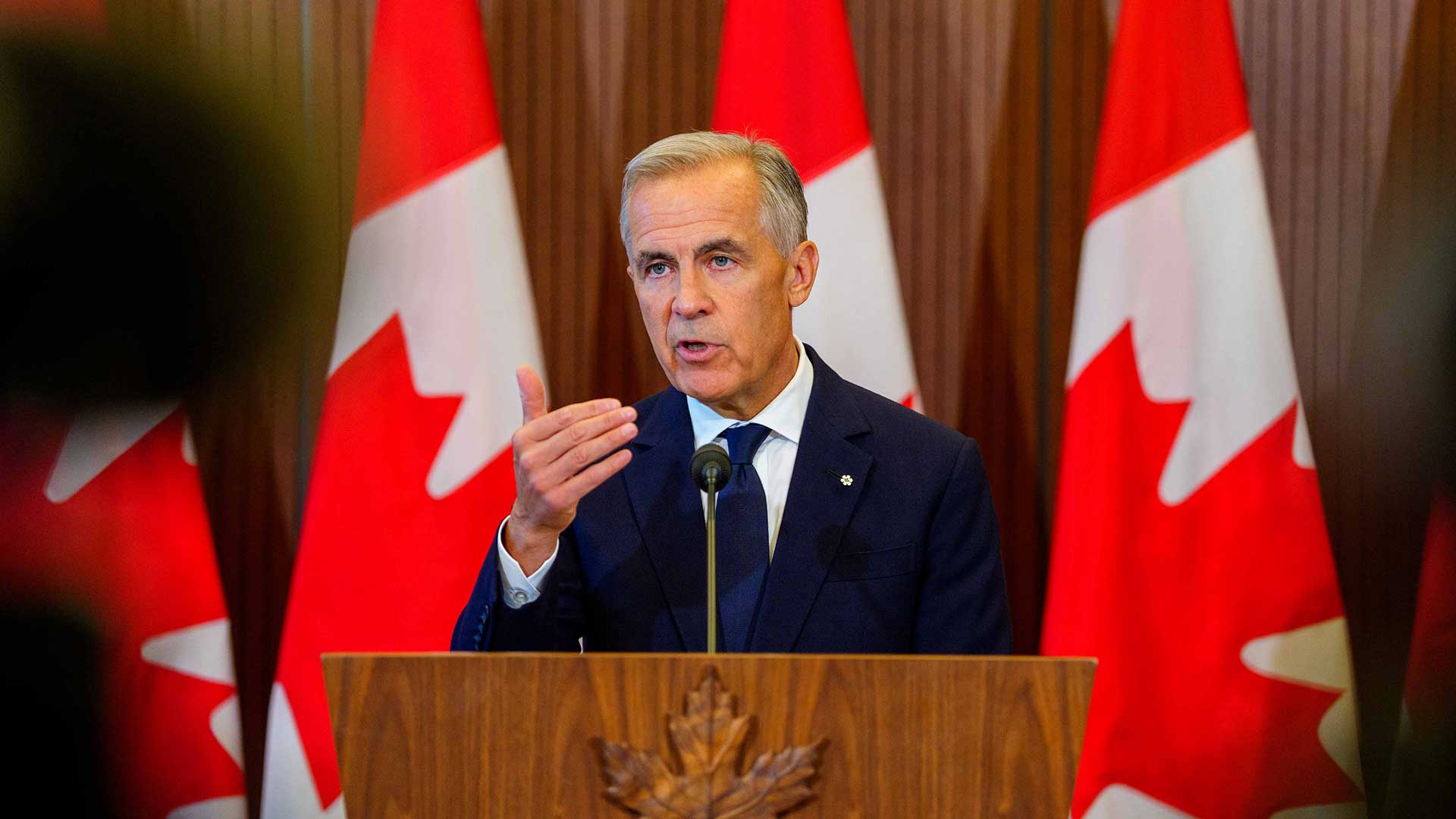
Canadian Prime Minister Mark Carney set out his government’s artificial intelligence strategy to global investors yesterday, pledging to give every post-secondary student in the country access to a trusted AI agent.

Speaking at the Canada Investment Summit in Toronto, Carney said the AI for All strategy would aim to capture the technology’s potential “across the entire intelligence infrastructure stack: the clean energy that powers it, the compute and cloud that run it, and the frontier AI, quantum, and robotics that will transform our economy.”

He told delegates: “Canadians, some of them in this room, helped develop AI.”

Free newsletters
Advertisement

The stories that matter to UK business, straight to your inbox.

Advertisement

The speech formed part of a wider pitch in which Carney said the government’s goal was “to catalyze $1 trillion of investment in Canada over the next five years, in energy, in transportation, in tech and data, in defence, and beyond.” The figure is in Canadian dollars.

A focus on people

Carney said the strategy was “distinguished by a singular focus on empowering people.” He said the government would build AI literacy across Canada and “help our workers, our businesses, and our government adopt AI to become more productive and efficient.”

He linked the approach to Canada’s social programmes. “We believe in equal access to education, to health care, and to social services,” he said, adding that “those same principles inform our approach to artificial intelligence.”

The strategy was launched on 4 June. In a release from the prime minister’s office, the government said AI for All “targets an additional $200 billion of economic growth to create 250,000 new AI-related jobs over the next five years.”

Advertisement

The same release set a goal to “increase AI adoption from just over 12% to 60% by 2034”, and said the strategy would provide up to 90,000 AI-related jobs and work placement opportunities for young Canadians. It said AI literacy would reach one million entry-level post-secondary students.

For businesses, the release said the government would “help small and medium-sized businesses adopt AI to support workers, raise productivity, and drive breakthroughs.” On infrastructure, it committed to “build a world-leading public AI supercomputer and invest in sovereign compute and cloud infrastructure.”

At launch, Carney said: “AI is here. The question is whether it will improve the lives of all Canadians or benefit only a few.”

Sovereignty and power

In yesterday’s speech, Carney placed AI within a broader push for what he called strategic autonomy. “Today, strategic autonomy extends to building partnerships in core capabilities across AI, payments, space, critical minerals, and clean energy,” he said.

Advertisement

He argued that combining domestic investment with the strengths of trusted partners abroad would “create greater scale for Canadian companies, greater resilience for our country, and greater opportunities for investors.”

Carney also pointed to energy, saying Canada had “the lowest-cost power in the G7 and the second-lowest-emission power in the OECD”, and said it plans to double its electricity grid. “If you need clean, affordable power, and who doesn’t, Canada is your answer,” he said.

He also said the government’s Defence Industrial Strategy would build on Canadian strengths including AI, cyber, quantum, robotics and autonomous systems, describing these as “dual-use applications that will drive innovation and productivity across the wider economy.”

Alongside the AI measures, Carney announced immediate expensing for most new capital investment, with software, patents and R&D among the assets that qualify.

Advertisement

In the UK, the government recently opened a £100m Sovereign AI procurement competition for British start-ups, while the Tony Blair Institute has warned the UK risks missing the AI boom without a hardware push.

Paul Jones
About the author

Paul Jones

Harvard alumni and former New York Times journalist. Editor of Business Matters for over 15 years, the UKs largest business magazine. I am also head of Capital Business Media’s automotive division working for clients such as Red Bull Racing, Honda, Aston Martin and Infiniti.

Advertisement

Advertisement
Continue Reading

Business

Spiceology’s winning flavor strategy | Food Business News

Published

on

Spiceology’s winning flavor strategy | Food Business News

SPOKANE, WASH. — A core value of Spiceology, a spice blend manufacturer, is cooking and eating should be joyous experiences.

The company was founded in 2013 by Pete Taylor, an executive chef, and Heather Scholten, a food blogger, with the intention to liven up the spice category. Since its establishment, the company has introduced more than 300 spices and spice blends for both foodservice and retail.

The company prides itself on its commitment to creating fresh versatile blends. Each blend is formulated with whole spice that’s domestically sourced.

Spiceology manufactures its blends in small batches, leading to fresher products, McLean said.

Advertisement

However, with premium ingredients comes premium prices.

“We don’t use extracts or artificial flavoring; we don’t do any funky stuff,” McLean said. “Those things are more expensive to include, and yet we feel it’s absolutely worth it.”

The company’s commitment to premium coincides with its commitment to flavor innovation.

“We have an obsession with breaking spices and flavor out of application prison,” McLean said. “Spiceology’s products are, in addition to being innovative, they’re versatile.

Advertisement

“You might get something like Greek Freak and put it on your chicken, and it’ll be delicious and blow your mind, but you might think, ‘Oh, boy, what if I put that on my asparagus?’ or ‘I could rim a glass with this.’ If you really think about the blend, you could put a whole meal around it.”

McLean said the company is data driven, using trends to map out its next class of spices.

Additionally, Spiceology collaborates with its consumers to test an experimental flavor through its Test Kitchen program. The company shares a flavor it is considering launching and, if enough consumers pledge to purchase the spice once it’s launched, it gets added to the company’s portfolio.

“Test Kitchen is really a fantastic way for us to engage with our audiences, find what they’re liking,” McClean said. “It’s a really fun way for us to make sure that flavor enthusiasts and our biggest fans are also the ones deciding what’s coming out in the coming weeks ahead for Spiceology.”

Advertisement

The company’s mission to elevate the spice category comes at an apt time, as younger consumers are interested in elevating comfort meals with experimental flavors.

“Younger consumers don’t just want the tried-and-true flavors, they are curious about what different flavor profiles might mean,” McClean said. “They’re curious about ways they could spice up, for lack of a better term, the food they received at home as children. Spiceology meets them where they are with high-quality ingredients, ideas and a community with whom they can share ideas and recipes.”

Spiceology’s portfolio is distributed to foodservice providers nationally and may be found at select retailers. McLean said consumers can expect to see the company’s products expand into regional grocery stores in 2027. 

Continue Reading

Business

Rs 1.13 lakh crore boom in one corner, a bust in another: What changed in the AI trade?

Published

on

Rs 1.13 lakh crore boom in one corner, a bust in another: What changed in the AI trade?
Calls in the US to slow down artificial intelligence (AI) growth turned out to be a double-edged sword for investors on Dalal Street as the Nifty IT Index surged 5%, adding Rs 1.13 lakh crore in market value, even as stocks tied to the power and infrastructure buildout needed to support AI models fell as much as 6%.

The slowdown calls turned out to be good news for India’s battered software technology stocks as HCL Tech and Tech Mahindra gained 5% each while Infosys, LTIMindtree and Tata Consultancy Services (TCS) advanced 4%.

The move was exactly the opposite in the power play segment. TD Power slid 6% while Sterlite Technologies and GE Vernova T&D India lost 4%. HFCL, Hitachi Energy, CG Power and Siemens declined 2-3%.

The divergence reflects a rapid shift in investor positioning. Technology leaders, including representatives from Anthropic and OpenAI, have advocated industry-wide guardrails to address AI safety risks, prompting investors to rotate away from semiconductor manufacturers and other infrastructure beneficiaries and toward software companies.

Advertisement

Also Read | Infosys, HCLTech, TCS, other IT stocks soar up to 6%; Nifty IT rallies 5% as global AI slowdown calls boost sentiment


India’s IT stocks have been major laggards over the past year as new AI tools threatened the business models of traditional software services companies. But calls to slow the pace of frontier AI development are now offering the sector a potential reprieve, with investors betting that disruption may take longer to play out.
Analysts said when the narrative shifts from unchecked development to regulated and responsible use of AI, short-covering backed by fresh buying in frontline IT stocks is quite possible.The trigger was a call by Anthropic Chief Executive Officer Dario Amodei for AI companies to slow the pace at which they develop the technology. He called on Saturday for an industry-wide accord to “pace the frontier” and better control the breakneck progress of AI, citing the risk of attacks by swarms of AI agents going rogue.

“It’s my worry that in 6-12 months such a swarm could be capable of taking over the entire internet,” potentially causing hundreds of billions of dollars in damage, Amodei wrote in a 3,800-word post on his website.

His warning won support from OpenAI Chief Executive Officer Sam Altman and Elon Musk of xAI. The comments initially spooked markets, sending AI and other technology stocks lower and weighing on broader equity markets. But they also triggered a reassessment of the relative risks facing software companies and AI infrastructure providers.

Also Read | Fed hike, rising US Yields could trigger fresh selloff in Indian stocks

Advertisement

A more measured pace of frontier-model development could reduce concerns over rapid obsolescence and disruption for traditional software companies, while raising questions about the speed and scale of spending on chips, data centres, power and related infrastructure.

Valuations are giving investors another reason to revisit Indian IT stocks. The Nifty IT Index remains 37% below its record high and trades at about 16 times forward earnings—two standard deviations below its five-year average, according to data compiled by Bloomberg.

That depressed valuation leaves the sector more sensitive to any improvement in sentiment.

The implications for Indian IT could extend beyond short-covering. A more measured AI development cycle could give enterprises greater visibility on technology choices, reducing concerns around near-term obsolescence and encouraging customers that have adopted a wait-and-watch approach to resume technology spending, according to Choice Institutional Equities.

Advertisement

That would be incrementally positive for Indian IT companies involved in AI implementation, cloud transformation, governance and cybersecurity. It could also extend the monetisation window for technology vendors, giving them more time to offset productivity-led pressure on legacy services.

The structural risk remains that AI-driven productivity gains are passed on to clients, putting pressure on the pricing and revenue of traditional services companies. The key monitor, according to Choice, will be the pace of AI-led revenue creation relative to productivity-led deflation.

The market’s reassessment is also raising questions around the infrastructure commitments made in anticipation of accelerating AI demand. Anthropic is preparing for an imminent initial public offering to raise billions of dollars for development and massive data centres supporting its power-hungry models. Altman, meanwhile, has said OpenAI will not pursue an IPO this year, calling it “ill advised” amid the safety concerns.

The developments have revived investor worries over “circular investments,” in which AI companies invest in one another. Nvidia, the AI-chip behemoth, has been described as the “central bank of AI” for providing large amounts of infrastructure financing to companies around the world.

Advertisement

Companies have also committed to building their own power plants, supporting demand in so-called picks and shovels sectors such as construction and logistics.

The near-term direction of Indian IT stocks will also depend on the Federal Reserve. Markets are pricing in about a 90% probability of a 25-basis-point rate cut at the September 16 decision, according to Choice Institutional Equities. Fed guidance, US yields and inflation commentary will remain important drivers for Indian IT companies given their high exposure to North America.

(Disclaimer: This article has been written by Nikhil Agarwal, who is not a SEBI-registered Research Analyst or an Investment Adviser. Nikhil Agarwal and his/her ‘relative(s)’ (as defined under Section 2(77) of the Companies Act, 2013) do not hold any financial interest in the companies mentioned in this article as of the date of publication. The views/recommendations mentioned in this article, wherever applicable, are those of the respective SEBI-registered Research Analyst/brokerage and have been reproduced/reported with due attribution. They should not be construed as the views or recommendations of The Economic Times Digital or the journalist. Readers are advised to consider the original research report and make their investment decisions based on their own assessment. Brokerage disclaimers here)

Advertisement
Continue Reading

Business

Kymera Therapeutics, Inc. (KYMR) Presents at Morgan Stanley 24th Annual Global Healthcare Conference Transcript

Published

on

OneWater Marine Inc. (ONEW) Q1 2026 Earnings Call Transcript