

Connect with us

Business

The Meta Update That Quietly Changed What Counts as a Good Ad According to Street Poller Media Founder and CEO Shane Ginsberg

Published

on

The Meta Update That Quietly Changed What Counts as a Good Ad According to Street Poller Media Founder and CEO Shane Ginsberg

Most advertisers experienced Meta’s Andromeda update the way advertisers usually experience algorithm changes: as an unexplained decline.

Reach quietly softened on creative that had been performing reliably, costs drifted upward, and the platform offered little in the way of a clear explanation for why campaigns that worked in one quarter underdelivered in the next.

Street Poller Media Founder and CEO Shane Ginsberg has offered a more specific read on what changed and why the shift structurally favors formats built around unscripted human moments.

According to Ginsberg, the update, which Meta began rolling out in 2025 and expanded through early 2026, reoriented the platform’s algorithm around creative diversity and in doing so effectively merged what had operated as two separate systems. The paid advertising algorithm and the organic content algorithm converged into one shared evaluation framework.

The practical consequence is significant. A paid advertisement placed in a Reels feed is now judged on largely the same terms as organic content competing for the same slot. If the creative does not look like something that could plausibly perform on its own merits, it gets suppressed with reduced reach regardless of how much budget sits behind it. Media spend still buys distribution, but it no longer compensates for creative that audiences would scroll past if it appeared without payment behind it.

Advertisement

Ginsberg has framed this as the confirmation of something he had been describing for years before Meta gave it a name. His position was that paid and organic content were always going to converge, for a reason that has more to do with platform incentives than with creative philosophy. Simply put, platforms have limited reason to keep rewarding advertising that only reaches audiences because someone paid for it, particularly when their own engagement data consistently shows users respond better to authentic content that is not obviously an ad.

Street interview ads, built from the same unscripted natural footage that performs well organically, were positioned to benefit from that convergence before most advertisers had to think about it. That was not foresight about a specific product update so much as a bet on a direction, but the bet paid off in a fairly direct way.

The second half of the update matters as much as the first and it is the part advertisers more frequently miss. Meta’s guidance increasingly penalizes accounts that concentrate spend in a single creative type, which means running one format exclusively causes reach degradation even when that format performs well in a vacuum. Diversity itself became a ranking input.

Ginsberg has been notably direct that this applies to his own format as well. He has said street polling is not intended to replace everything else a brand runs. To this point, his agency deliberately repurposes street poll footage into static image assets so clients maintain format variety rather than over-concentrating. That is a somewhat unusual position for someone selling a single format to take and it follows from the algorithm mechanics.

Advertisement

The broader implication for marketing organizations is structural rather than tactical. Under the current system, brands can no longer sensibly treat organic content strategy and paid advertising strategy as separate disciplines run by separate teams with separate creative approaches. The qualities that make a video shareable without payment are increasingly the same qualities that determine whether a paid version of it reaches anyone.

For organizations where those functions sit in different departments with different budgets and different reporting lines, that convergence is likely to be more disruptive than any individual creative recommendation, since it implies the separation itself has become a liability.

Advertisement
Continue Reading
Click to comment

You must be logged in to post a comment Login

Leave a Reply

Business

McDonald’s adds Red Bull as it expands US beverage lineup nationwide

Published

on

McDonald's adds Red Bull as it expands US beverage lineup nationwide

McDonald’s is moving into energy drinks, teaming with Red Bull as the fast-food giant expands its beverage lineup while working to drive more customers to its U.S. restaurants.

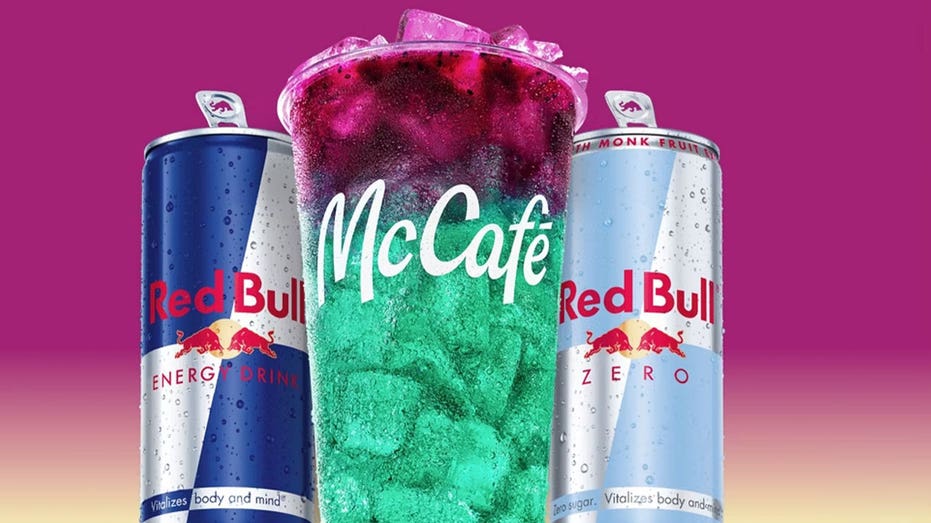
Starting Aug. 17, participating McDonald’s restaurants nationwide will sell the Red Bull Dragonberry Energizer, marking the company’s entry into the energy drink category.

Advertisement

The drink combines Red Bull with blue raspberry syrup and freeze-dried dragonfruit. Customers can substitute Red Bull Zero for a reduced-sugar version or purchase an 8.4-ounce can of Red Bull separately.

The beverage expansion comes as McDonald’s works to improve customer traffic after its U.S. business delivered slower-than-expected sales growth during the second quarter.

MCDONALD’S SAYS US SALES SLOWED AFTER VALUE DEAL PUSH FELL SHORT

McDonald’s Red Bull Dragonberry Energizer displayed between Red Bull and Red Bull Zero cans

McDonald’s is adding Red Bull to its U.S. menu with the new Red Bull Dragonberry Energizer starting Aug. 17. (McDonald’s / Unknown)

Comparable sales in the U.S., McDonald’s largest market, increased 0.8% during the quarter, below the 1.06% growth analysts surveyed by LSEG had expected. U.S. comparable sales grew 2.5% a year earlier.

Advertisement

CEO Chris Kempczinski said execution problems, including inconsistent promotion of value offerings and reduced use of digital deals, contributed to weaker customer traffic.

“We don’t have a strategy problem. We simply didn’t execute at the level we needed to in the second quarter,” Kempczinski said.

McDonald’s CFO Ian Borden said the company planned to use more national digital offers and personalized promotions to “reenergize our high-frequency customers.”

MCDONALD’S BRINGING BACK FRIED APPLE PIE TO CELEBRATE AMERICA’S 250TH BIRTHDAY

Advertisement
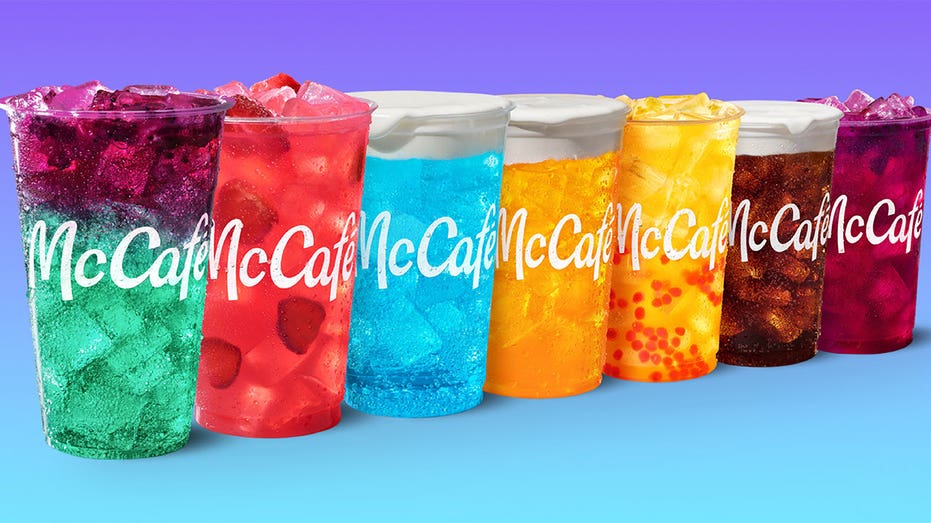
McDonald’s crafted sodas and specialty drinks displayed in McCafé cups

McDonald’s is expanding its beverage lineup with new crafted sodas and other specialty drinks at participating U.S. restaurants. (McDonald’s )

The Red Bull rollout builds on McDonald’s expansion of its core beverage lineup with crafted sodas and Refreshers.

“We’ve seen growing enthusiasm for our crafted sodas and refreshers as fans look for more variety and options to fit every occasion,” Alyssa Buetikofer, chief marketing and customer experience officer for McDonald’s USA, said. “They loved the Red Bull Dragonberry Energizer when we first tested it in the U.S., so we’re excited to give fans nationwide the energy they’ve been craving with Red Bull. And we’re just getting started.”

McDonald’s is also expanding its crafted soda lineup with a Vanilla Swirl, which combines vanilla flavor and cold foam with a choice of Coca-Cola, Diet Coke or Coke Zero Sugar.

Other offerings will vary by location and include Orange Dream with Fanta and reduced-sugar crafted sodas made with Diet Dr Pepper, Dr Pepper Zero Sugar and Sprite Zero Sugar.

Advertisement
Ticker Security Last Change Change %
MCD MCDONALD’S CORP. 275.70 +1.55 +0.57%

CLICK HERE TO GET FOX BUSINESS ON THE GO

Both McDonald’s Refreshers and Red Bull Energizers contain caffeine, according to the company.

Continue Reading

Business

STAAR Surgical Company (STAA) Q2 2026 Earnings Call Transcript

Published

on

OneWater Marine Inc. (ONEW) Q1 2026 Earnings Call Transcript