Connect with us
DAPA Banner
DAPA Coin
DAPA
COIN PAYMENT ASSET
PRIVACY · BLOCKDAG · HOMOMORPHIC ENCRYPTION · RUST
ElGamal Encrypted MINE DAPA
🚫 GENESIS SOLD OUT
DAPAPAY COMING

Business

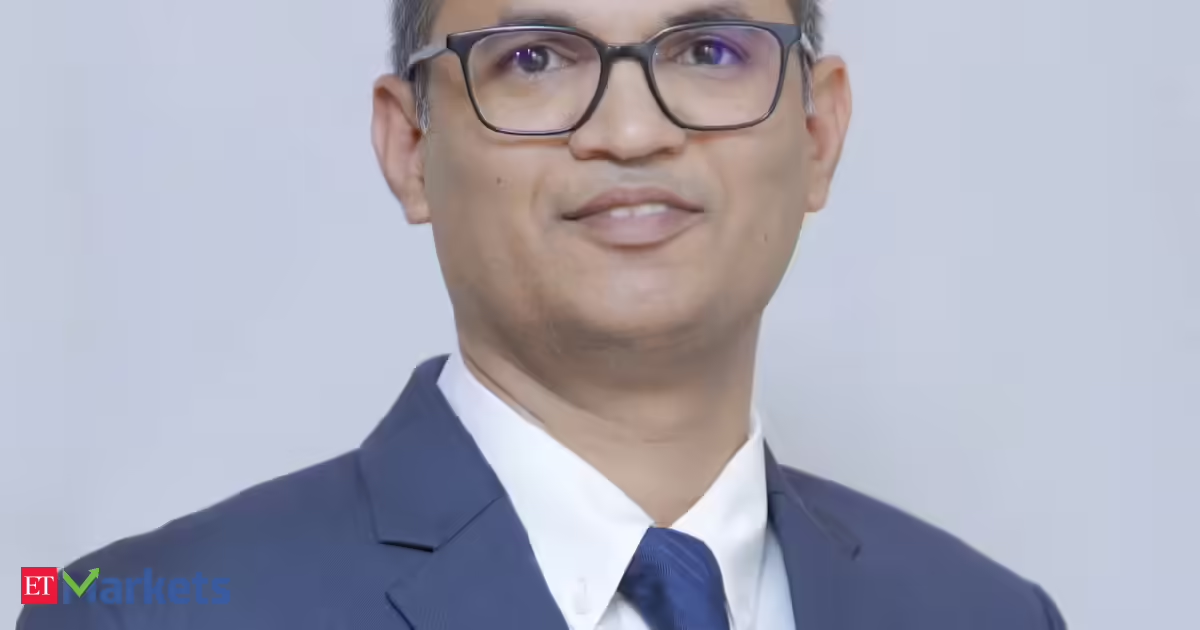
The next phase of India manufacturing: HDFC AMC’s Rakesh Sethia breaks down real winners in EMS, aerospace & auto

Published

on

The next phase of India manufacturing: HDFC AMC’s Rakesh Sethia breaks down real winners in EMS, aerospace & auto
India’s manufacturing sector is shifting from basic assembly to deep tech localization, driven by massive domestic demand and targeted policy incentives. In this exclusive interview, Rakesh Sethia, Fund Manager at HDFC AMC, breaks down the multi-year supercycle by explaining where the real structural winners lie across EMS, aerospace, and auto ancillaries, and how to navigate increasingly expensive valuations.

Edited excerpts from a chat with Rakesh Sethia:

How compelling is the India manufacturing story over the next 5–10 years, and what are the biggest structural triggers that can sustain this cycle?
We remain positive on India manufacturing over the next 5–10 years. The biggest structural advantage is India’s large domestic market. Outside China, India is now one of the few large demand pools across categories such as autos, mobiles, air conditioners, solar modules, motors, cement and steel. This scale allows companies to build volumes, localise vendors and gradually become cost competitive.The second driver is policy support through Production Linked Incentive (PLI), capex incentives, infrastructure spending and supply-chain realignment. The story is no longer only about low labour cost. It is now about domestic scale, improving technology depth, better infrastructure, targeted policy support and India’s gradual integration into global supply chains.

Which manufacturing sub-sectors currently offer the best risk-reward — capital goods, industrials, defence, EMS, auto ancillaries, railways, or chemicals?
Most of these manufacturing sub-sectors have structural tailwinds, but the risk-reward differs by valuation and execution visibility.
While we are selectively positive on capital goods and industrials because the cycle is supported by renewables, transmission, electrification, automation and data centres however valuations in general has become very expensive In Electronics Manufacturing Services (EMS), the opportunity is large, but we prefer companies that can move beyond assembly into components, design, testing and exports. In auto ancillaries, we like powertrain-agnostic businesses with higher content per vehicle, premiumisation and export relevance.

Defence and railways are structurally attractive, but valuations and execution cycles need to be watched carefully. Chemicals are more mixed. Commodity chemicals remain cyclical, while specialty chemicals and Contract Research, Development and Manufacturing Organisation still have long-term opportunities from supply-chain diversification.

Advertisement

At the portfolio level, we are not buying only because a sector is attractive. We are focused on bottom-up selection: quality of business, return ratios, execution track record, margins, cash flow, balance sheet strength and valuation comfort.

EMS has emerged as a major market theme over the last two years. Do you believe the opportunity is still underpenetrated, or are valuations now running ahead of fundamentals?
We believe that the EMS opportunity is still underpenetrated, but stock selection is now very important.

The first phase of growth was largely around assembly. The next phase of value creation should come from backward integration into components. Some consumer EMS areas such as mobiles and AC assembly are now relatively more mature. But the component ecosystem is still at a very early stage. For example, PCB manufacturing in India is less than 1% of the US$100bn global market, while import dependence remains above 90%.

This is where the next growth leg can come from. Under the Electronics Manufacturing Services (EMS) scheme, ~₹55,000 crore of investment has already been committed across 46 applications. This should support deeper localisation and higher domestic value addition over time. The opportunity is large, but valuations already reflect a lot of optimism in some names.

Advertisement

Are Indian EMS players now moving up the value chain beyond assembly into design, exports, and higher-margin manufacturing?
Yes, Indian EMS players are moving up the value chain, but this remains a gradual process.

India has moved beyond basic assembly in several areas. Companies are now doing PCB assembly, testing, box-build, tooling, plastics, chargers, battery packs, supply-chain management and early Original Design Manufacturer work. But India is still far from China or Taiwan, where component ecosystems, supplier clusters and design capabilities were built over decades.

The positive change is that policy support is becoming more targeted. ECMS is focused on components and sub-assemblies, while the India Semiconductor Mission is supporting fabs, display fabs, compound semiconductors, ATMP/OSAT and chip design.

The direction is positive, but value creation will be selective. Pure assemblers can grow revenues, but sustainable margins will come from companies that build localisation, design capability, testing depth, vertical integration and export relationships.

Advertisement

Auto ancillaries remain a core manufacturing theme. How are you positioning the portfolio amid EV transition, premiumisation, and export opportunities?
Auto ancillaries remain a core manufacturing theme for us, but we are selective. Our positioning is towards companies benefiting from premiumisation, higher content per vehicle and exports.

We are not playing EV as a binary theme; we prefer powertrain-agnostic businesses. We also like segments where India has a durable advantage, such as forging, casting, machining and precision engineering. So, the focus is on durable growth, export relevance, execution quality and valuation comfort — not just the EV narrative.

Aerospace stocks have seen significant traction in the last 1–2 months. How strong is the tailwind for the sector and are valuations still attractive?
We like aerospace from a top-down perspective. India is one of the fastest-growing aviation markets globally, and local manufacturing of components is still at an early stage. Over time, this can become a meaningful opportunity as global Original Equipment Manufacturers (OEMs) diversify supply chains and Indian companies build precision manufacturing capabilities.

However, listed opportunities are still limited. A large part of the deeper aerospace manufacturing ecosystem is currently in private entities, including certain conglomerates that have stronger integration with OEM supply chains. In the listed space, there are only a few names. Some are too small, while valuations in others have already become expensive. So, the sector tailwind is strong, but public-market risk-reward is not uniformly attractive.

Advertisement
Continue Reading
Click to comment

You must be logged in to post a comment Login

Leave a Reply

Business

Aethlon Medical, Inc. (AEMD) Q4 2026 Earnings Call Transcript

Published

on

OneWater Marine Inc. (ONEW) Q1 2026 Earnings Call Transcript

Operator

Good day, and welcome to the Aethlon Medical Fiscal Year-end March 31, 2026, Financial Results and Corporate Update Conference Call. [Operator Instructions]

Please note this event is being recorded. I would now like to turn the conference over to Jim Frakes, CEO and CFO of Aethlon Medical. Please go ahead.

Advertisement

James Frakes
CEO, CFO, Chief Accounting Officer, Secretary & Director

Thank you, operator, and good afternoon, everyone. Welcome to Aethlon Medical’s Fiscal Year-end March 31, 2026, Earnings Conference Call. My name is Jim Frakes, and I’m the Chief Executive Officer and Chief Financial Officer of Aethlon Medical. At 4:15 p.m. Eastern Time today, Aethlon Medical released financial results for its fiscal year ended March 31, 2026. If you have not seen or received Aethlon Medical’s earnings release, please visit the Investors page at www.aethlonmedical.com to view it.

Following this introduction and the reading of the company’s forward-looking statement disclaimer, Dr. Steven LaRosa, our Chief Medical Officer, and I will provide an overview of Aethlon’s strategy and recent developments. I will then make some brief remarks on Aethlon’s financials. We will then open up the call for the Q&A session.

Before we start the business portion of the call, please note that the news release today and this call contain forward-looking statements within the meaning of the Securities Act of 1933, as amended, and the Securities Exchange Act of 1934 as amended. The company cautions you that any statement that is not a statement of

Advertisement
Continue Reading

Business

Certain World Cup seats are pricier than mortgages in these 5 US cities: report

Published

on

Certain World Cup seats are pricier than mortgages in these 5 US cities: report

Soccer fans hoping to watch the World Cup in person may need a housing-sized budget.

The tournament kicks off Thursday in Mexico City, launching a six-week event expected to draw between 5 million and 6 million fans across 16 North American host cities. But for many U.S. fans, getting inside the stadium has become a major financial hurdle, according to Realtor.com.

Advertisement

In five of the 11 U.S. host cities, the cheapest available World Cup tickets for late-stage tournament matches cost more than the average monthly mortgage payment in that market, Realtor.com reported, citing real estate research firm PropertyShark.

HERSHEY’S LAUNCHES LIMITED-EDITION CHRISTIAN PULISIC CHOCOLATE BARS HONORING THEIR HOMETOWN WORLD CUP STAR

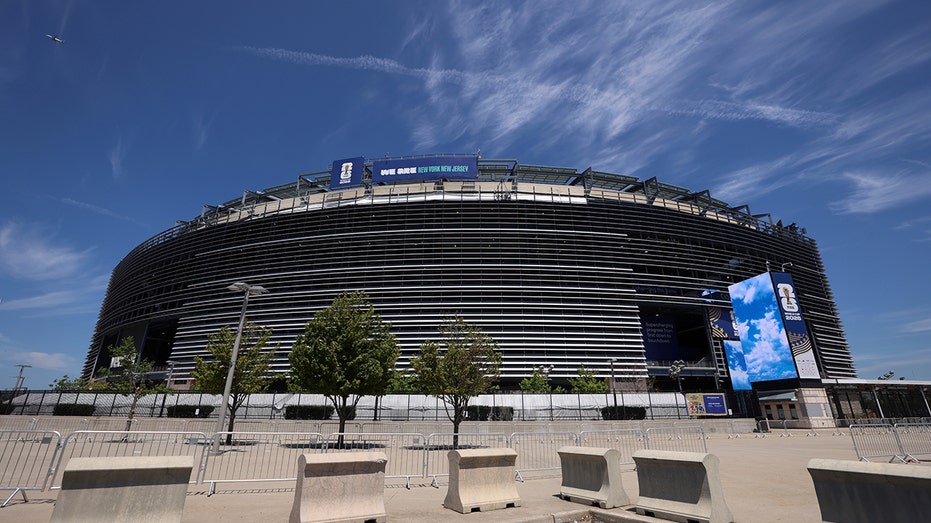
General view outside MetLife Stadium on June 9, 2026

A general view outside MetLife Stadium on June 9, 2026, in East Rutherford, New Jersey.  (Catherine Ivill – AMA/Getty Images)

That means fans in Miami, Dallas, Atlanta, Kansas City and the New York area could spend the equivalent of a mortgage payment — or more — for a single seat.  The figure does not include airfare, hotel stays, food, parking or merchandise.

The steepest prices are for the July 19 final at MetLife Stadium in East Rutherford, New Jersey. The least expensive seats are listed at $7,256, far above New York’s average monthly mortgage payment of $4,096 and average rent of $4,872, according to Realtor.com.

Advertisement

In Dallas, the cheapest tickets for the July 14 semifinal are listed at $2,391, slightly above the city’s average mortgage payment of $2,351. In Atlanta, the lowest-priced semifinal tickets are $2,208, above the average mortgage payment of $2,149, the outlet reported.

10 HOTTEST RENTAL HOUSING MARKETS IN THE US THIS SUMMER

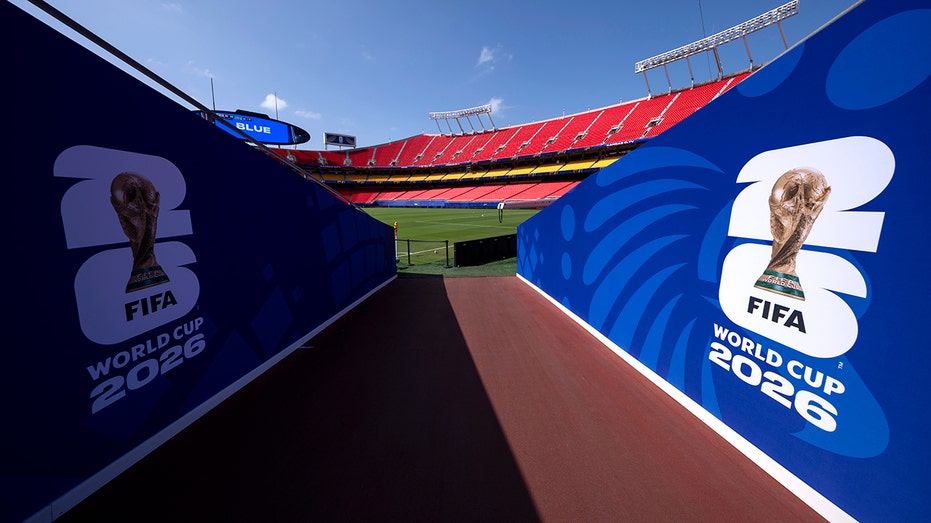
Kansas City Prepares to Host FIFA World Cup 2026

A general view of FIFA World Cup 2026 signage at Kansas City Stadium on June 8, 2026, in Kansas City, Missouri. (Jay Biggerstaff/Getty Images / Getty Images)

Kansas City’s cheapest seats for a July 11 match are $1,567, compared with an average mortgage payment of $1,477. In Miami, the lowest-priced tickets for Colombia versus Portugal on June 27 are $2,700, nearly matching the city’s average mortgage payment and rent, according to Realtor.com.

Some consumers have already been priced out. A LiveSportsonTV survey of 1,008 U.S. soccer fans found that 52% had given up on buying World Cup tickets because of high prices.

Advertisement

“We’re seeing unprecedented prices for events like the World Cup because of supply and demand, to put it simply,” Mark Sanaiha of Macallan Capital said in a statement. “For years, the experience economy has outpaced wage growth, and younger generations aren’t planning to change that trajectory.”

AMERICANS OPTIMISTIC ABOUT INNOVATION ADDRESSING MAJOR CHALLENGES, SURVEY FINDS

A detailed view of the FIFA World Cup 2026 sign inside Dallas Stadium

A detailed view of a FIFA World Cup 2026 sign inside Dallas Stadium on April 13, 2026, in Arlington, Texas.  (Stacy Revere/Getty Images / Getty Images)

The pricing has also drawn scrutiny from state officials. Attorneys general in Texas, New York, New Jersey and California have launched probes into World Cup ticket pricing and packaging policies, Realtor.com reported.

GET FOX BUSINESS ON THE GO BY CLICKING HERE

Advertisement

“Being honest about ticket sales is not complicated,” New Jersey Attorney General Jennifer Davenport said in a statement. “But FIFA has turned buying a ticket to the World Cup into a gauntlet of confusion, fake scarcity, and impossibly high prices — all at the expense of consumers and hardworking New Jerseyans.”

Continue Reading

Business

Consumer Price Index: Inflation At 4.2% In May

Published

on

Dow Jones And U.S. Index Outlook: Some CPI Morning Bullishness

Consumer Price Index: Inflation At 4.2% In May

Continue Reading

Business

US Justice Department subpoenas major banks over alleged ’debanking,’ source says

Published

on

US Justice Department subpoenas major banks over alleged ’debanking,’ source says


US Justice Department subpoenas major banks over alleged ’debanking,’ source says

Continue Reading

Business

Trade Disputes and Economic Pressures

Published

on

April 2026 Thai Exports Surge on Electronics Boom as Trade Deficit Hits Record

Thailand is navigating a complex mix of economic pressures, diplomatic tensions, trade disputes, and emerging opportunities across multiple sectors. From regional border conflicts to financial market shifts and digital transformation, the country remains a focal point of activity in Southeast Asia.

Trade Disputes and Economic Pressures

Shrimp Industry Faces Crisis

One of the most pressing economic issues involves Thailand’s seafood sector. Malaysia has imposed a ban on Thai shrimp imports, dealing a significant blow to what was once the world’s largest shrimp industry. Thailand is preparing to challenge the ban through both the World Trade Organization (WTO) and ASEAN frameworks, signaling a deepening trade rift between the two neighbors. The dispute has escalated tensions between Bangkok and Kuala Lumpur, raising broader questions about regional trade relations.

Simultaneously, Thailand is accelerating efforts to finalize a free trade agreement with the European Union, partly to reduce its dependence on US markets amid ongoing tariff uncertainties. Multiple sources confirm this push is gaining momentum, with Thailand viewing the EU deal as a strategic hedge against external economic shocks.

Financial Markets Under Pressure

Thai financial markets are showing signs of strain. Capital is fleeing Thai stocks as the baht continues to decline, reflecting investor concern about the country’s economic trajectory. However, the Bank of Thailand has indicated low risk of a currency crisis, citing robust foreign reserves. Supporting this cautious optimism, Moody’s has upgraded Thailand’s economic outlook to “Stable,” acknowledging improving economic momentum. The JSCIB has also raised its GDP forecast to between 1.6% and 2.0%, offering some positive signals amid broader uncertainty.

Advertisement

Thailand’s automotive sector is also struggling, with car production falling to its lowest level in five years in April, according to Reuters.

Regional Security and Diplomatic Relations

Cambodia-Thailand Border Tensions

Regional security remains fragile. Cambodia has deployed Chinese-built tanks near the Thai border, prompting Thailand’s National Security Council to monitor the situation closely. Former Cambodian Prime Minister Hun Sen has publicly acknowledged that the recent conflict with Thailand was “my fault,” a rare admission that may open the door for diplomatic progress.

Both nations are exploring frameworks for lasting peace, with analysts suggesting UNCLOS-based mechanisms could help rebuild trust and resolve maritime boundary disputes. Thailand has confirmed it will participate in UN-backed conciliation on the maritime dispute, a step seen as constructive by regional observers.

Political Developments

On the domestic political front, former Prime Minister Thaksin Shinawatra is officially free but now faces a new multimillion-dollar tax battle. A Thai criminal court has acquitted a political leader of lèse-majesté charges, a notable development in the country’s ongoing tension between political freedom and royal defamation laws. Separately, a prominent pro-democracy activist, Tiwagorn Withiton, has been convicted and sentenced to prison, drawing criticism from human rights organizations.

Advertisement

Digital Economy and Financial Innovation

Virtual Banking and Crypto Regulation

Thailand is making significant strides in its digital economy ambitions. The country’s newly launched virtual banks are operating within a model that currently offers thin profit margins, raising questions about long-term viability. Meanwhile, Thailand’s crypto regulatory framework has entered a market-building phase, suggesting a more structured and growth-oriented approach to digital assets.

The country is also positioning digital ID infrastructure as the backbone of its emerging digital economy, with biometric systems being developed to streamline services and improve security. True IDC, backed by CP Group and GIP, has won a major award for digital infrastructure{rel=”nofollow” target=”_blank”}, with a large-scale data center project planned for the Eastern Economic Corridor.


Public Health and Environmental Concerns

Air Quality and Health Alerts

Thailand continues to grapple with serious air quality challenges. PM2.5 pollution is costing the country more than 5 billion baht, with structural policy failures prolonging the crisis, according to Kasikorn Research. New regulations are being introduced to mandate emissions monitoring at factories, representing a tightening of environmental standards.

On the health front, the US Embassy in Thailand has issued an Enhanced Ebola Screening Health Alert, and the WHO is working with Thailand to strengthen risk assessment frameworks for health emergencies.

Advertisement

Tourism, Culture, and Soft Power

Tourism Growth Initiatives

Thailand is actively promoting itself as a premier tourist destination. Initiatives include the Amazing Thailand Grand Sale, participation in tourism expos in Amsterdam, and the promotion of T-POP fandom tourism to attract culturally motivated travelers. The country is also exploring seaplane routes to boost tourism in the Andaman region and eyeing a mysterious eye-shaped island as a potential sustainable travel hotspot.

Vietnam and Thailand have jointly launched a “Two Countries, One Destination” initiative{rel=”nofollow” target=”_blank”} aimed at attracting regional and long-haul visitors through enhanced connectivity and shared tourism products.

Thailand also remains a notable destination for expatriates, with lifestyle publications highlighting its lower cost of living, relaxed pace of life, and family-friendly environment.


Conclusion

Thailand stands at a critical crossroads, balancing economic headwinds, regional security challenges, and ambitious digital and trade agendas. While pressures from currency depreciation, trade disputes, and political tensions persist, positive signals from Moody’s, FTA negotiations, and digital economy investments suggest the country is actively positioning itself for long-term resilience and growth.

Advertisement

Source : Google News – Search

Continue Reading

Business

'A little goes a long way': New York's candy stores sweeten economic gloom

Published

on

'A little goes a long way': New York's candy stores sweeten economic gloom

While US consumer confidence is at an historic low the Big Apple’s sweet shops are expanding.

Continue Reading

Business

Panasonic to start US data centre battery production by fiscal 2028

Published

on

Panasonic to start US data centre battery production by fiscal 2028


Panasonic to start US data centre battery production by fiscal 2028

Continue Reading

Business

Flagstar Bank, National Association (FLG) Presents at Morgan Stanley US Financials Conference 2026 Transcript

Published

on

OneWater Marine Inc. (ONEW) Q1 2026 Earnings Call Transcript

Flagstar Bank, National Association (FLG) Morgan Stanley US Financials Conference 2026 June 10, 2026 3:15 PM EDT

Company Participants

Joseph Otting – CEO & Executive Chairman
Richard Raffetto – Chief Banking Officer, Co-President & Co-COO
Lee Smith – CFO, Co-President & Co-COO

Conference Call Participants

Advertisement

Manan Gosalia – Morgan Stanley, Research Division

Presentation

Manan Gosalia
Morgan Stanley, Research Division

Advertisement

Okay. Up next, we have Flagstar Bank. We’re delighted to have with us today Joseph Otting, Chairman and CEO; Lee Smith, Co-President, Co-COO and CFO; and Rich Raffetto, Co-President, Co-COO and Chief Banking Officer. Thanks so much for joining us.

Joseph Otting
CEO & Executive Chairman

Thank you very much. Honor to be here.

Advertisement

Question-and-Answer Session

Manan Gosalia
Morgan Stanley, Research Division

Advertisement

So Joseph, Rich and Lee, I want to extend my congratulations to all of you. Joseph, the Board recently announced for those that don’t know in the room, a 1-year extension of your contract through March 2028. That’s a strong vote of confidence in your leadership. And Rich and Lee, you’re also now serving as Co-Presidents and Co-COOs in addition to your current role. So congratulations to all of you. Joseph, I guess the question for you is, would love to get your thoughts on the new leadership structure and what this means for Flagstar.

Joseph Otting
CEO & Executive Chairman

Yes. I think it’s a natural progression of our company. As we came to the organization in March of 2024, we’ve assembled a relatively new management team from people throughout both the banking industry and the Office of the Comptroller of the Currency with my background there. And Rich was one of the people that we recruited to come in and run a big part of our banking operations. Lee was already there running really the most significant and important parts of the Flagstar organization.

Advertisement
Continue Reading

Business

UK property market remains fragile and landlords curb rentals

Published

on

UK property market remains fragile and landlords curb rentals


UK property market remains fragile and landlords curb rentals

Continue Reading

Business

The furious dispute over what caused Air India flight 171 to crash

Published

on

The furious dispute over what caused Air India flight 171 to crash

The final conclusions of the investigation have yet to be published, although more could become apparent in the coming days.

Continue Reading

Trending

Copyright © 2025