
Business
The One Question Deric Ned Wants Every Investor to Ask Before Retirement


Deric Ned, founder of Ridgemont Capital, based in Pasadena, California, believes one question separates a real financial plan from a relationship mistaken for one: why do you own what you own? It sounds simple. Many people, when asked directly, find they can’t answer it with much precision.
Why Trust Isn’t Load-Bearing
Most people choose a financial advisor the way they choose a friend: they like the person, they feel comfortable with them, and comfort starts to stand in for understanding. Deric sees that as a risk, not because trust is bad, but because it’s fragile. “Trust is probably one of the most fragile things you can build anything on,” he says. “You could be married to somebody for 40 years and lose all trust in them in a matter of three seconds. It doesn’t take anything to destroy an entire lifetime of trust, and rebuilding that trust is nearly impossible.”
A plan resting on comfort alone tends to wobble the moment comfort runs out, whether that’s a rough quarter in the market or a worrying headline. A plan the client can explain in their own words tends to hold steadier.
What a Documented Answer Looks Like
Deric points to a common pattern in how performance gets discussed industry-wide: strong years get credited to skill, weak years get filed under patience. “If your account goes up, I’ll tell you I’m a genius. If your account goes down, I’m going to tell you, ride it out,” he says, describing the reflex. It’s not dishonest so much as incomplete. Neither response actually explains why a given holding is in the account or what it’s supposed to be doing there.
Answering that question well takes documentation: what’s owned, what it costs, what it’s expected to do, and how it behaves under different conditions. At Ridgemont, that kind of documentation is treated as the starting point of a client relationship rather than something produced only when asked. Diagnosis comes before any recommendation, and recommendations are meant to be reviewable on paper, not just remembered from a conversation.
Why the Question Is Worth Asking Yourself
For a client, the value of this isn’t philosophical. It’s practical. A statement is a list of decisions, and each line should have a reason attached that the client can state without help. A fund holding large U.S. companies is there for broad equity exposure. A bond maturing in a given year is there because it’s earmarked for a specific expense. When a client can produce that kind of answer for most of what they hold, they have a plan. When they can’t yet, that’s simply a good place to start.
This isn’t about finding fault with any advisor. Most people in the industry are doing honest work in a system that rewards steady, ongoing relationships more than it rewards frequent line-by-line reviews. That’s a reasonable trade-off for many clients. It just means the responsibility for asking the question often falls on the client rather than waiting for someone to raise it first.
Deric’s broader point is about confidence, not confrontation. A client who understands what they own and why can sit with a bad headline or a rough quarter without needing anyone to talk them down. That’s the outcome worth aiming for: not a better relationship with an advisor, but a client who feels steady on their own.


The ASEAN Digital Economy Framework Agreement (DEFA), finalized in May 2026, aims to harmonize digital trade, e-commerce, data governance, and cybersecurity across 11 diverse nations. Once signed and implemented, DEFA could significantly boost the region’s $2 trillion digital economy by simplifying cross-border transactions and reducing compliance costs, particularly for small businesses. The pact future-proofs by including emerging technologies like AI. DEFA’s success hinges on inclusive implementation and national legislation, with the potential to make ASEAN a unified digital market and a global “digital lighthouse” for responsible digital policy.
ASEAN is building a $2 trillion economy with more than 680 million consumers, but its digital market remains fragmented. DEFA is an attempt to turn ASEAN’s 11 national markets into something closer to one regional digitally-savvy market. Uniquely, it was negotiated by members ranging from Singapore’s advanced economy to Vietnam’s one-party system, making it a compelling test of inclusive governance.
Building consensus and ensuring inclusion
Consensus has been built into the region’s DNA since the ASEAN Charter, signed in November 2007, codified the region’s diplomatic rules and listed the key principles and purposes of the group. But members can also opt out of certain commitments – ASEAN minus X – which allows countries to operate at different readiness levels. This flexibility may be criticized by some as a weakness, but it allows progress among countries with very different starting points.
Participants in DEFA negotiations may or may not use the ASEAN minus X formula, but its availability provides room for nations that need support and time. Consultative discussions and capacity-building are particularly important for smaller businesses seeking to reap DEFA’s benefits.

The Empire State Building, the Chrysler Building and One Vanderbilt are seen among other buildings in midtown Manhattan in New York, Jan. 11, 2024.
Angela Weiss | Afp | Getty Images
A version of this article first appeared in the CNBC Property Play newsletter with Diana Olick. Property Play covers new and evolving opportunities for the real estate investor, from individuals to venture capitalists, private equity funds, family offices, institutional investors and large public companies. Sign up to receive future editions, straight to your inbox.
It should come as no surprise that the number of artificial intelligence-specific tech workers is growing rapidly, and the effect of this growth on regional office markets is substantial. For the first time, New York’s office market is home to the most tech workers, thanks in large part to AI, according to a new report from CBRE.
New York’s 394,300 tech talent jobs edged out the San Francisco Bay Area’s 375,730 jobs, CBRE found. The report analyzes tech-specific workers in 75 metropolitan markets in the U.S. and Canada. It’s the first time New York has taken the lead in the 13 years of this analysis.
“The story there is that there’s been cuts in the Bay Area, so the tech industry has contracted the size of the tech talent workforce, and the finance sector [in New York] has hired a lot of tech talent and a lot of AI workers,” said Colin Yasukochi, executive director of CBRE’s Tech Insights Center in San Francisco.
For both the U.S. and Canada, AI tech roles grew by 45% in the past year, with San Francisco and New York each adding more than 20,000 AI-specific jobs since mid-2025, according to CBRE.
As of June, there were 751,000 AI-related workers across the two countries, the report found. Those include both new jobs and conversions from existing jobs. AI-related roles now account for nearly one-third of all tech-talent job listings in the U.S., per the findings.
By market, 37% of AI jobs in the U.S. are in the San Francisco Bay Area, New York, Seattle and Washington. While New York leads in overall tech talent, San Francisco still leads in AI, specifically.
In Canada, there is greater concentration of AI employment, with 60% of those jobs based in Toronto, Montreal and Vancouver.
Office leasing is rising accordingly in those markets where AI workers are most in demand.
In San Francisco, AI companies made up 58% of all leasing in the first half of this year and have accounted for 30% of leasing activity, totaling about 10 million square feet, since 2023, according to CBRE.
While overall tech drove the Bay Area’s office market over the past few decades, the pandemic pushed many of those workers to remote jobs. AI, however, has a more office-centric culture and is now fueling the market’s recovery.
“It’s more of the sort of startup innovation culture that we’ve seen, where people are in the office [a] minimum of four, but usually like five or six days a week,” said Yasukochi. “Through this whole innovation process, being together and working in person is just much more efficient and innovative.”
In addition to San Francisco, AI leasing activity is concentrated most in Manhattan, Boston and Seattle, according to CBRE.
There was concern that AI would reduce head counts, and consequently the need for office space, but in the short term, at least, that has not been the case.
“It basically changes jobs and creates new jobs, more so than it eliminates,” said Yasukochi, pointing specifically to the finance sector.

Harald Fotland
Chief Executive Officer
Good morning to all of you, and welcome to Odfjell’s presentation of our second quarter results. We will follow an agenda, which should be well known to all of you. I will take you through the highlights, and then my colleague, Terje Iversen, will present our financial performance. And finally, I will conclude this presentation with an operational review, market update and the prospects going forward.
So if we then turn to the highlights, we start with safety. We have seen a very volatile environment this quarter, but I’m still very satisfied to report that our strong safety performance continued throughout the quarter. I’m equally happy to say that our 4 Odfjell vessels that were trapped inside the Middle East Gulf have all safely left the region. And this is due to a fantastic cooperation between the people on board our ships and also onshore on different locations. We are presently not considering to send vessels through the Strait of Hormuz.
If we then turn to our financial performance, we delivered time charter earnings of USD 195 million. This is up from USD 167 million in the previous quarter. Our average time charter earnings per day was USD 29,486. This is also up from USD 27,232 in the first quarter. And this reflects the stronger spot market that we have observed during the quarter. Our EBIT was USD 69 million. This compares to USD 46 million. The net result contribution from Odfjell Terminals was USD 1.8 million, which compares to USD 2.3 million in the previous quarter.
And summarized, this concludes a net result of USD 54 million in
Takeshi Sano
Representative Executive Officer, President, Director & Global CEO
Good morning, and good afternoon. This is Takeshi speaking. Thank you for joining Dentsu’s Fiscal Year 2026 Second Quarter Earnings Call. Today, Shigeki, our Global CFO, and I will be giving the presentation. I will begin with a business and strategic update, followed by an overview of our consolidated financial results by Shigeki. Then I will provide an update on our midterm management plan before opening the floor for Q&A. Please refer to our English website for today’s materials.
I will explain our performance for the 3 months of the second quarter. As we anticipated in February, consolidated organic growth was broadly flat, while operating margin was 11.9%, slightly above expectations.
By region, Japan exceeded expectations, delivering strong organic growth of 5.4%, making its 13th consecutive quarter of solid growth. Notably, net revenue reached a record high. Americas was slightly below expectations with an organic decline of 6.9%. Creative continued to be significantly affected by client loss in the previous year. However, with SG&A expense control in place, operating margin was as expected.
EMEA was in line with expectations, recording flat organic growth, while Media maintained positive growth.
Operating margin improved year-on-year to 13.2%. APAC was also in line with expectations. The second quarter’s organic growth improved to broadly flat from an organic

O’Connor noticed the impact on his father and brother when the family made the switch from beef to dairy farming two years ago.
“It is a lot different – it’s rigid – you start milking in the morning, you have to milk in the evening. There’s not as much flexibility,” he said.
He also became more conscious of the paperwork and level of compliance involved in running a dairy operation.
Farmers in Northern Ireland work an average of 65 hours a week.
O’Connor said there was “a whole side of farming that the general public don’t see”, where farmers have late nights alone, completing jobs on the farm or filling in paperwork.
The app was developed with the idea of giving farmers more time with their families by making the business more manageable.
A campaign – the Empty Table – has been launched with the app to raise awareness of the effort that goes into producing food.
“I love to solve problems,” O’Connor said.
“So I wanted to set up FarmFlow to sort of solve problems on our own farm and try and make it more efficient.
“I love keeping things on time and stuff.”

Macquarie cuts Bally’s stock price target on financing concerns

BYD Company: Overseas Boom Changes The Entire Thesis

UK retail sales fell 0.5 per cent in July as shoppers cut back during record temperatures, according to the Office for National Statistics, reversing the rise recorded in June at the start of the warm summer and the Fifa men’s World Cup.
The monthly fall was in line with expectations from economists polled by Reuters. June’s increase was revised down from 1 per cent to 0.7 per cent, and July’s drop wiped out that gain.
Over a rolling three-month period, sales volumes are up 1.1 per cent, the ONS said.
Spending on clothing, footwear and household goods all fell in July. Excluding petrol and diesel, sales volumes recorded a larger 0.9 per cent monthly contraction. Pump prices rose in July after the end of a US-Iran ceasefire pushed up global oil costs.
Grant Fitzner, chief economist at the ONS, said British consumers had ramped up spending on sports merchandise, fans and outdoor products.
Rob Wood, chief UK economist at Pantheon, a consultancy, said consumer spending would be squeezed in the coming months as energy costs drove inflation towards 3 per cent. Annual consumer prices rose by 2.9 per cent in July, up from 2.6 per cent in June.
Sandra Prince, head of consumer at Lloyds, said the warm weather meant more spending had been directed to retail parks and online shopping rather than the high street.
“After an extended spell of warm weather across large parts of the UK, many households will already have bought what they need for the season, while lines of popular summer products come to an end. The boost from the World Cup that came to an end in the first half of July also meant fewer opportunities to capitalise on the warmer conditions,” Prince said.
“For retailers, as the summer peak slows down, attention is now turning to the opportunities the autumn could bring to keep consumers engaged.”

Amy Ingham
Amy Ingham is a reporter at Business Matters, covering UK business news with a focus on breaking news, business policy, late payments and insolvency. She joined the magazine in 2026 after completing the NCTJ Diploma in Journalism at Harlow College’s journalism school. Her recent reporting includes British Steel’s nationalisation and its impact on SME suppliers, the decline in late payments by large firms, and Insolvency Service director disqualifications. Reach her at aingham@cbmeg.co.uk.
Business
Did Goodluck India shares really crash 66% in just one day? Here’s how the bonus math works

Goodluck India shares opened at Rs 493.20 apiece on the NSE on Friday, compared with Thursday’s closing price of Rs 1,439.40. On an adjusted basis, however, the stock was down only around 4%, trading at about Rs 471 apiece.
All about Goodluck India’s bonus issue
Goodluck India in July announced its maiden bonus issue in a 2:1 ratio. Under the proposal, eligible shareholders will receive two bonus equity shares of a face value of Rs 2 each for every one equity share held as of the record date, which will be announced separately.
A bonus issue consists of free shares distributed by a company from its reserves and is often seen as a sign of strong financial health and growth prospects. While the issue of bonus shares increases the total number of outstanding shares, it does not change the company’s market capitalisation. However, it can improve liquidity and affordability, allowing more investors to add shares of the company to their portfolio.
Can you buy Goodluck India shares today and be eligible for bonus issue?
Only shareholders who hold Goodluck India shares in their demat accounts on the record date will be eligible for the bonus shares. Under India’s T+1 settlement cycle, shares bought one trading day before the record date are generally settled in the investor’s demat account in time to qualify for the corporate action.

Therefore, if Friday is the record date, Thursday was the last day to buy Goodluck India shares and still be eligible for the bonus issue. Buying the shares on Friday would not make an investor eligible for the bonus shares.
Also read | Bonus issue alert! Last day to buy Goodluck India shares for 2:1 bonus reward
How will dividend payout be impacted?
Goodluck India in May had announced a final dividend of Rs 3 per share for the financial year ended March 31, 2026, subject to shareholders’ approval. In view of the 2:1 bonus issue, the company announced that its board has now adjusted the final dividend amount to Re 1 per share.
The company has declared 27 dividends since March 2003 and has a dividend yield of 0.51% at the current market price, according to data on Trendlyne.
Goodluck India share price
Goodluck India shares have gained around 7% over the past week but declined 9% in the last month. The stock is up more than 33% so far in 2026.
Over the longer term, the stock has delivered returns of 29% in one year, 148% in three years and 422% over five years.
Also read | Stock split alert! Last day to buy multibagger TD Power Systems shares to be eligible for 1:2 split
(Disclaimer: Recommendations, suggestions, views and opinions given by the experts are their own. These do not represent the views of The Economic Times)

Tom Zaunmayr speaks to Gary Adshead, Claire Tyrrell, Jack McGinn and Isabel Vieira about news and politics of the week.

Olly Murphy throws open his stable doors to public during National Racehorse Week

ASEAN’s Digital Economy Pact: Can Consensus Unite 11 Nations

Nomura-backed Laser Digital wins Japan's first crypto approval in four years





-

 Fashion7 days ago
Weekend Open Thread: Ann Taylor
-

 Sports6 days ago
Birmingham 2026: Day 6 Timetable for Irish Athletes
-
 NewsBeat6 days ago
Myanmar says over 300,000 Rohingya refugees verified for repatriation as exodus enters ninth year
-

 Politics6 days ago
SEQ Code: The Three Letter Boarding Pass Code That Could Give You The Worst Seat
-

 Business3 days ago
SMA Solar Technology AG (SMTGY) Q2 2026 Earnings Call Transcript
-

 Tech3 days ago
Qwen3.8-27B runs frontier-class coding agents and reasoning locally, no cloud API required
-

 Crypto World6 days ago
Pi Network Protocol 27 endgame: last upgrade before what?
-

 Crypto World3 days ago
OCC Greenlights Trump Family Crypto Firm for Trust Charter
-
 Tech6 days ago
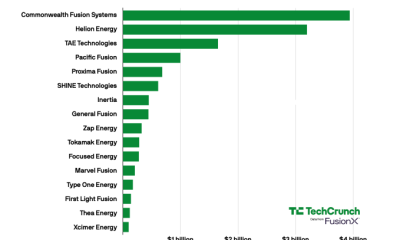
Every fusion startup that has raised over $100M
-
 Entertainment6 days ago
Marvel Studios Reveals New X-Men Cast Including Adam Driver and Sadie Sink
-
 Business6 days ago
Monarch Mutual Fund set to enter MF space with maiden overnight fund; files draft with Sebi
-

 Fashion7 days ago
Weekly News Update, 8.14.26 – Corporette.com
-

 Fashion7 days ago
Silver bangles for women – Newbridge Silverware
-

 Business6 days ago
Cristiano Ronaldo’s Secret Wedding Deepens As Presenter Claims Family Learned ’30 Seconds’ Before
-

 News Videos1 day ago
Don’t Leave Your Financial Future To Chance | August 19, 2026
-

 Business6 days ago
Facebook Down Now? Users Report Login And Loading Problems As Outage Trackers Monitor Ongoing Issues
-

 Crypto World3 days ago
NAVI Prime launches institutional lending framework on Sui
-

 Fashion7 days ago
Cart Confidential Vol. 44 – Julia Berolzheimer
-

 Crypto World4 days ago
Data of 54K Wallet Users Leaked, Clarity Odds Just 10%: Hodler’s Digest, Aug. 16
-
 Fashion7 days ago
knitwear for women sale – up to 50% off
You must be logged in to post a comment Login