

Business
The Quiet Revolution in International Payroll


Pay a 20-person distributed team the traditional way — separate bank wires, per-recipient FX conversion, intermediary fees, settlement delays — and you spend several hours of admin per cycle and lose 3–6% of the total to fees and spread.
Pay the same team in stablecoins via a single batched transaction and you spend a few minutes, pay under a percent in network fees, and the money lands in every recipient’s wallet within minutes. The economics are now lopsided enough that distributed-team operators are switching by the thousand, and the category has matured from curiosity into operational baseline.
This piece unpacks what’s happening under the hood, where the real wins and the genuine limits sit, and how to think about putting mass crypto payments into production for your own team. The Crypto Office mass crypto payments tool fits the pattern described here — a single sender pushing payouts to a list of recipient addresses in one operation, with a per-recipient confirmation trail for accounting.
What a Mass Payment Actually Is
At the protocol layer, a mass payment is a single transaction (or a small batch of them) that delivers funds to many recipient addresses in one operation. On chains that support batching natively, the entire payroll becomes one on-chain entry — efficient, atomic, and cheap. On chains that don’t, the mass-payment tool batches client-side and submits a sequence of parallel transactions, producing the same effective result with slightly higher fees.
The user-side flow is just a list: each row is a recipient wallet plus an amount. The tool handles everything else — fee calculation, transaction construction, broadcast, confirmation tracking, and a per-recipient payout report you can hand to accounting at month-end.
Where the Real Savings Show Up
| Cost component | Traditional payroll (bank rails) | Mass crypto payment |
| Admin time per recipient | 5–10 minutes | Seconds |
| Per-transaction fee | $15–$45 international wire | Fractions of a cent to a few dollars per batch |
| FX spread | 1–3% per recipient | Borne once on sender’s fiat→stablecoin conversion |
| Settlement time | 1–5 business days | Minutes |
| Failure rate | 2–5% (wires rejected, wrong details) | Near zero (validated addresses) |
| Audit trail | Reconciliation across banks | Single on-chain record |
The traditional column assumes international payroll; for domestic single-currency payments the gap narrows. The wider the geographic and currency spread of your team, the bigger the crypto-mass-payment advantage. For a typical 20-person team across 8 countries, the all-in monthly savings land in the low thousands of dollars plus several hours of finance time.
Step-by-Step: A Standard Payroll Run
A typical month-end run for a distributed team using a stablecoin mass-payment tool looks like this:
- Finance exports the payroll spreadsheet — recipient name, wallet address, amount in USD or local currency.
- The tool converts amounts to the chosen stablecoin (USDC or USDT, on whichever chain the team standardized).
- Treasury wallet is pre-funded with sufficient stablecoin; the tool calculates network fees and shows the total cost before submission.
- Finance reviews the batch one last time (address format checks, no zero-amount rows, total matches the spreadsheet) and confirms.
- The tool broadcasts the batch. Each recipient sees the deposit in their wallet within minutes; the tool returns a payout report with per-recipient transaction hashes.
The whole sequence is under fifteen minutes for a team of fifty, most of which is the human review step you should never skip.
A Worked Example: A London Studio Paying Distributed Contractors
Picture a small design studio in London paying twelve freelance contributors spread across Lisbon, Manila, Lagos, Buenos Aires, and São Paulo. Old workflow: SEPA to the two EU folks, SWIFT wires to everyone else (£15–£30 fee each), each contractor losing another 1–2% on their bank’s FX, payments arriving anywhere from one to four business days after sending. Total monthly cost: roughly £280 in fees plus three hours of finance admin per cycle.
New workflow: studio holds USDC on Base, exports the payroll spreadsheet, runs the batch through a mass-payment tool. Contractors receive USDC within minutes and handle their own off-ramp to local currency via whichever exchange gives them the best rate (often dramatically better than what a London bank could quote). Total monthly cost to the studio: under £5 in network fees plus fifteen minutes of finance time. The savings recover the studio’s annual treasury setup cost in two months and pay for themselves indefinitely thereafter.
What to Plan For Before Switching
Most operational risk in this pattern isn’t the payment mechanics; it’s the surrounding plumbing.
Tax and reporting. Crypto payroll doesn’t change the underlying obligation but does change the form the records take. Make sure your accounting system can ingest stablecoin amounts at the conversion rate prevailing on the payout date, and that contractors understand what they’re receiving and how to report it.
Wallet hygiene. Each recipient needs a wallet they actually control, not an exchange deposit address that may close or be flagged. A short onboarding doc and a five-minute call per new contractor saves a lot of confusion downstream.
Compliance posture. Sending stablecoin payments to dozens of wallets monthly produces a transaction pattern that some compliance tools flag as “structured payouts” — perfectly legitimate but worth pre-explaining if you have a banking partner watching the inflow side. Treasury operations connected to flows like Crypto Office typically come with documentation that helps with that conversation.
Recipient consent. Some contractors prefer fiat and that’s fine. The right model is opt-in, not mandate. Run the crypto track in parallel with bank rails for those who don’t want it, and convert opt-ins over time as people see the speed and reliability.
Where the Pattern Doesn’t Make Sense
It’s worth being honest about the limits. For payrolls that are mostly domestic and within a single currency, the savings versus a good payroll provider are marginal — the friction of stablecoin onboarding per recipient probably costs more than the fee savings. For payrolls where most recipients are full-employment relationships with regulated tax withholding, the legal overhead of paying in crypto often outweighs the operational wins. The category really shines for distributed contractor payments across multiple currencies, where the cost stack on traditional rails is at its worst.
If you remember one thing
Mass crypto payments in 2026 are a genuine operational improvement for distributed-team payroll, not a hype category — the cost stack collapses, the admin time collapses, and the settlement window collapses, all at once. Pilot the flow with three or four contractors who are already crypto-comfortable, measure the time and cost per cycle against your current rails, and decide whether to expand. The setup work is real but front-loaded; the savings compound every month thereafter. If your contractor base is international and your finance team complains about wire fees at month-end, this category is worth half a day of evaluation this week.
FAQ
What if a recipient gives me the wrong wallet address?
A wallet address typo means the funds go to whatever address you actually sent to. Most mass-payment tools validate address format before submission (Bitcoin addresses look different from Ethereum, which look different from Solana) but can’t check whether the typo produced a valid address that belongs to someone else. The discipline is a small test transaction the first time you pay a new recipient — send $5, confirm receipt, then add them to the regular payroll. The five-dollar safety cost pays for itself the first time it catches an error.
How do we handle contractors who want local currency?
The clean pattern is to standardize on stablecoin payouts and let each contractor handle the off-ramp on their side. Off-ramp rates in most major currencies are better than what a Western bank’s wire-FX would charge anyway, and pushing the conversion to the recipient avoids the operational complexity of multi-currency treasury. For contractors who can’t handle the off-ramp themselves, a fiat fallback rail run in parallel is the practical answer; don’t force everyone onto crypto.
What happens if the stablecoin de-pegs during a payroll cycle?
Major stablecoins have had brief de-peg events but recovered within hours each time. The exposure window for a mass-payment sender is bounded by the time between batch send and recipient off-ramp — if you batch the payout and recipients off-ramp within the same day, your effective exposure is hours, not days. For higher-stakes operations the right hedge is to diversify between two top-tier stablecoins so a single-issuer event doesn’t hit the whole payroll. The risk is real but manageable with a small amount of treasury discipline.


ASML: The Rally May Be Overdone

Meta President Dina Powell McCormick and CEO of mikeroweWORKS Foundation Mike Rowe join ‘Mornings with Maria’ to discuss a new $115 million workforce initiative offering free training and guaranteed skilled-trade jobs.
Meta CEO Mark Zuckerberg acknowledged Friday that the company has “made mistakes” as it undergoes a sweeping workforce overhaul tied to its aggressive push into artificial intelligence (AI).
Zuckerberg made the remarks in an internal memo to employees, according to Reuters, which reported that the Meta chief warned of challenges associated with the rapid development of AI technology.
Meta has poured billions of dollars into AI infrastructure and tools as it competes with OpenAI, Google and Microsoft for dominance in the emerging technology.
The company has also explored ways to use AI agents to perform tasks currently handled by employees.

Meta CEO Mark Zuckerberg said the company has “made mistakes” as it restructures its workforce around artificial intelligence. (Alex Wong/Getty Images / Getty Images)
“Given the complexity of these changes, we’ve made mistakes and will almost certainly make more,” Zuckerberg said.
He added that he is “focused on providing as much stability as possible” as the company continues to reshape its workforce.
“I don’t want to overpromise because the world is changing in ways that are out of our control,” Zuckerberg said.
META LAUNCHES $115M SKILLED TRADES ACADEMY WITH GUARANTEED JOBS FOR GRADUATES IN 4 STATES

Meta has invested billions of dollars in artificial intelligence as it seeks to compete with OpenAI, Google and Microsoft. (Getty Images / Getty Images)
He also reiterated that Meta does not expect any additional company-wide layoffs this year.
The comments come after Meta laid off roughly 10% of its global workforce in May and reassigned approximately 7,000 employees to AI-focused initiatives.
| Ticker | Security | Last | Change | Change % |
|---|---|---|---|---|
| META | META PLATFORMS INC. | 566.98 | -1.45 | -0.26% |
Zuckerberg reportedly said the company will attempt to find new positions for employees reassigned to train AI models.
AMERICA CAN’T COMPETE WITH CHINA IN AI WITHOUT THESE WORKERS, META’S PRESIDENT SAYS

Mark Zuckerberg, chief executive officer of Meta Platforms Inc., during a dinner with tech leaders in the State Dining Room of the White House in Washington, D.C., Sept. 4, 2025. (Will Oliver/EPA/Bloomberg/Getty Images, File / Getty Images)
“By creating important new roles for people, this also allowed us to shrink the size of teams knowing that if we make mistakes in some places, then we could transfer some people back,” Zuckerberg said.
GET FOX BUSINESS ON THE GO BY CLICKING HERE
According to Reuters, the restructuring — combined with previous transfers and role eliminations — is expected to ultimately affect about 20% of Meta’s workforce.
Meta employed nearly 78,000 people as of the end of March, according to company securities filings.
FOX Business has reached out to Meta for comment.
FOX Business’ Bradford Betz and Reuters contributed to this report.
U.S. IPO Weekly Recap: SpaceX Completes Record-Breaking $75 Billion IPO And Trades Up 19%

AppLovin: Conversion Rates Are Rising And So Is The Bull Case

Form 13D/A Americas Gold & Silver Corp For: 12 June

Intel: Optimism Is Getting Expensive

‘Barron’s Roundtable’ panelists break down the Magnificent Seven and other stocks gaining traction.
Thousands of cases of a frozen pizza snack sold in 21 states are being recalled because they may contain metal pieces.
Rich Products Corp. voluntarily issued the recall of 6,408 cases or more than 160,000 pounds of its Farm Rich Pizza Cheese Crunchers, according to the U.S. Food and Drug Administration.
The pizza was sold in Alabama, Arkansas, California, Florida, Georgia, Indiana, Iowa, Kansas, Kentucky, Maryland, Michigan, Missouri, New Jersey, New York, North Carolina, Ohio, Pennsylvania, South Carolina, Tennessee, Texas and Wisconsin.
FORD RECALLS MORE THAN 255,000 VEHICLES OVER ENGINE STALL RISK

Thousands of cases of a frozen pizza snack sold in 21 states are being recalled because it may contain metal pieces. (Jeffrey Greenberg/Universal Images Group via Getty Images / Getty Images)
The recall was initiated by the New York-based company on May 19.
The product has a best-by date of July 7, 2027, with a UPC code of 041322652256 and a lot number of 003029976.
MORE THAN 17K COFFEE MAKERS RECALLED AFTER DOZENS OF REPORTED BURN INJURIES.
The FDA classified the recall as a Class II health risk, which means the defect could cause temporary or medically reversible health problems.
The agency didn’t specify if any injuries had been reported or how the possible contamination was discovered.

Rich Products Corp. voluntarily issued the recall of 6,408 cases or more than 160,000 pounds of its Farm Rich Pizza Cheese Crunchers, according to the U.S. Food and Drug Administration. (farmrich.com / Unknown)
CLICK HERE TO DOWNLOAD THE FOX NEWS APP
The recall comes weeks after another frozen pizza recall over salmonella concerns.
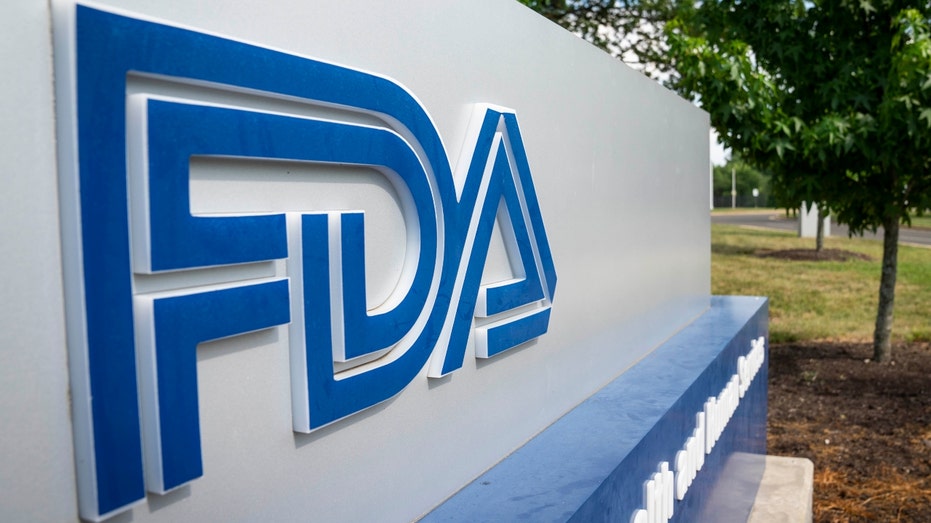
WHITE OAK, MD – JULY 20: A sign for the Food And Drug Administration is seen outside of the headquarters on July 20, 2020, in White Oak, Maryland. ((Photo by Sarah Silbiger/Getty Images) / AP Newsroom)
The pizzas, which spanned several brands, had been sold at Walmart and Aldi.
Arcadia Biosciences closes $4 million private placement

Brighthouse Financial: Deal Discount Is Attractive (Rating Upgrade)

NEW YORK — The Dow Jones Industrial Average edged higher on Friday, gaining 41.80 points or 0.08% to close at 50,890.55 as investors digested a steady stream of corporate earnings reports and weighed prospects for monetary policy amid moderating inflation pressures.
The blue-chip index recorded a modest advance in a session marked by selective buying across sectors. While gains were restrained, the move reflected underlying resilience in corporate America and continued optimism that the Federal Reserve may ease policy later in the year if economic data remains supportive.
Market Drivers and Sector Performance
Corporate earnings continued to provide a constructive narrative. Several major Dow components reported results that met or exceeded expectations, demonstrating pricing power and operational efficiency despite higher costs. Technology and financial names offered support, while industrial and consumer stocks showed mixed results depending on individual guidance.
The latest inflation readings have reinforced expectations of a patient Federal Reserve. Headline Consumer Price Index figures for May showed 4.2% year-over-year growth, driven largely by energy, but core measures remained closer to the central bank’s 2% target. This balance has kept rate cut hopes alive without immediate pressure for aggressive action.
Energy stocks traded in a tight range as oil prices stabilized following recent geopolitical developments. Defensive sectors such as consumer staples and healthcare provided stability amid broader market rotation.
Broader Economic Picture
The U.S. economy continues to demonstrate resilience, with steady consumer spending and a balanced labor market. Recent employment data has eased recession fears while wage growth in certain sectors supports demand. Challenges persist in housing and for lower-income households facing elevated costs, but overall conditions appear stable enough to support moderate growth.
Analysts note that corporate America’s ability to navigate higher interest rates has been a key factor supporting equity valuations. Forward guidance from earnings calls has generally been constructive, with many executives citing stable demand and focus on efficiency.
Technical and Sentiment Indicators
The Dow’s modest gain kept it trading near recent highs, with technical indicators showing neutral to mildly bullish momentum. Support levels have held firm, while resistance near 51,000 remains a focus for traders. Options activity suggested measured positioning, with implied volatility remaining contained.
Investor sentiment has improved modestly, supported by earnings resilience and potential policy flexibility. However, caution persists around upcoming data releases and geopolitical developments that could influence risk appetite.
Global Market Influence
International markets showed mixed performance, with European indexes posting modest gains and Asian markets closing with varied results. The U.S. dollar traded in a narrow range, reflecting balanced global perceptions. Commodity prices, particularly in metals and energy, provided limited spillover into broader sentiment.
The Dow’s performance served as a stabilizing influence amid rotation into small-cap and mid-cap names, as evidenced by stronger moves in the Russell 2000.
Analyst and Strategist Views
Wall Street strategists maintain a generally constructive outlook for equities, citing resilient corporate profits and the potential for monetary easing. Focus remains on company-specific execution and macroeconomic data rather than broad directional bets.
Technology and financial analysts highlight the importance of innovation and margin management. In industrials and consumer sectors, emphasis is on supply chain efficiency and pricing dynamics.
Investment Implications
For investors, the current environment rewards selectivity and quality. Companies with strong balance sheets, clear growth strategies and pricing power are favored. Diversification across sectors and market capitalizations helps manage volatility.
Longer-term investors may view periodic consolidation as opportunities to add to high-quality names. Shorter-term participants monitor technical levels and upcoming catalysts closely. Risk management remains essential given the potential for sharp moves around key events.
Looking Ahead
Markets will continue monitoring upcoming economic releases, including retail sales and further inflation metrics. Corporate earnings season remains in focus, with additional reports expected to shape sentiment in the days ahead.
The Dow’s ability to hold recent gains will be an important technical test. As the second half of 2026 progresses, focus will remain on the interplay between corporate performance, monetary policy decisions and global economic developments.
Friday’s modest advance leaves the Dow well-positioned after recent consolidation. Many analysts view current levels as supported by fundamentals, though execution risks and external shocks could introduce volatility.
The blue-chip index’s performance continues to serve as a key barometer for investor confidence in the broader economy. With corporate resilience on display and policy flexibility possible, the Dow retains potential for measured gains if positive trends persist.
As trading continues, participants will parse new information for signals on sustainability of current valuations and growth prospects. The session’s activity underscores the market’s capacity to absorb news and find buying opportunities amid a complex backdrop.
Overall, the Dow’s incremental progress reflects balanced optimism as investors weigh opportunities against inherent uncertainties in the current environment. The coming weeks will provide further clarity on corporate momentum and policy direction.

SHRMiner launches free cloud mining service for BTC, XRP, ETH holders, offering daily earnings of up to $17,700+

Christian Pulisic sparks injury scare for USA after coming off following superb World Cup performance

India’s Avataar AI launches a video model that costs $0.005 per second, 27x cheaper than rivals


![BITCOIN: CRAZY!!!! THIS IS CRAZY!!!! [trades]](https://wordupnews.com/wp-content/uploads/2026/05/1778214197_maxresdefault-80x80.jpg)

-
 Entertainment6 days ago
The Best Mystery Series of All Time Is Surging on Streaming 30 Years After It Ended
-

 NewsBeat5 days ago
Alexander Zverev wins the French Open to finally earn a 1st Grand Slam title
-

 Crypto World5 days ago
Anatomy of the June crypto crash: Fed, Iran, Saylor
-

 Crypto World1 day ago
Oppenheimer backs SpaceX as $70 billion retail frenzy builds
-

 Tech7 days ago
Suspicious Polyfill login prompts pop up on Toshiba, Muji websites
-

 Crypto World1 day ago
Markets Rally as SpaceX IPO Looms Amid Iran Tensions and Inflation Surge
-
 Crypto World6 days ago
Senator Cynthia Lummis Calls CLARITY Act the Most Consequential Financial Legislation of This Generation
-
 NewsBeat5 days ago
Alexander Zverev conquers demons and outlasts Flavio Cobolli to win French Open for first major title
-

 Tech6 days ago
Microsoft unveils seven homegrown AI models in new bid for ‘long term self-sufficiency’
-

 Business5 days ago
High Stakes for Wembanyama as New York Pushes for 3-0 Lead
-

 Tech7 days ago
Hackers now exploit SolarWinds Serv-U flaw to crash servers
-
 Business6 days ago
The Pain Points Taking a Fragile Tech Rally Down a Notch
-
 Crypto World5 days ago
Eli Lilly (LLY) Stock Surges 4% Following Breakthrough Sleep Apnea Trial Results
-

 Tech5 days ago
Notion restores access to Anthropic after service disruption
-

 Crypto World6 days ago
Trump’s AI Ownership Plan Could Benefit Anthropic at OpenAI’s Expense
-
 Business6 days ago
The investment to transform historic St Helen’s ground in Swansea
-
 Sports3 days ago
Bangladesh beat Australia after 20 years in ODIs, register only their second win over six-time world champions | Cricket News
-

 Business7 days ago
Forensic Expert Floats Handyman Theory in Disappearance of Savannah Guthrie’s Mother
-

 Tech12 hours ago
This Week In Security: Microsoft On Microsoft, Register Your Domains, Linux On ARM, And FreeBSD Joins The File Cache Club
-

 Sports2 days ago
First Time Since 1971: Australia Register Historic Low In ODI Cricket
You must be logged in to post a comment Login