

Business
The young people rejecting a bank-breaking prom



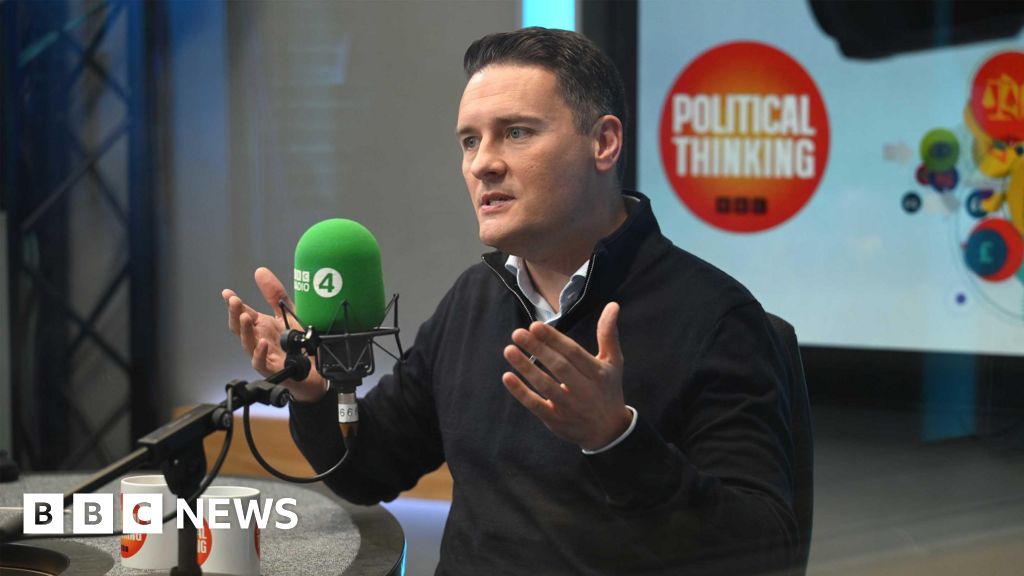
Wes Streeting is proposing reforms to capital gains tax, as part of his pitch for the Labour leadership.

Matrix Service Company (MTRX) Presents at Sidoti Micro-Cap Virtual Conference – Slideshow

A One Nation plan to follow Norway’s lead on capturing oil and gas profits has been labelled ‘backwards’ by Federal Resources Minister Madeleine King.

Warren Buffett had a tortured relationship with airline investments as the conglomerate’s longtime chief executive. Now his successor, Greg Abel, is showing an early fondness for them, too. Berkshire declined to comment. It is possible the conglomerate has exited from or changed its Delta position, because its regulatory filing last week disclosing the stake reflected investments in the first quarter. Read more:
Business
Tactical buying visible in IT, selective opportunities emerging in auto ancillaries: Neeraj Dewan

Market expert Neeraj Dewan believes the broader market has started showing resilience again after a brief phase of profit booking earlier in May.
“There was this smallcap, midcap that has done very well in April. Then beginning of May we saw some profit booking but again buying is coming back once the results are getting declared. So, the market may remain range bound till you get absolute clarity. A lot of stocks which are dependent on crude will stay subdued. They will still stay in a range or may correct a bit, but broader market has started participating, that is something which is a welcome thing in the market,” said Dewan in an interaction with ET Now.
Margin Pressure Persists For QSR Players
Among individual stocks, investors closely tracked the earnings performance of Jubilant FoodWorks after the company reported disappointing overall numbers despite margin performance beating estimates.

According to Dewan, disruptions in the food business likely impacted the quarter, even as margins held up relatively well. He noted that elevated crude and raw material costs remain a key concern for food companies, particularly in a highly competitive quick-service restaurant environment.
“Yes, this quarter there were disruptions for the food business, so I think that would have come into the numbers. Because margins are still intact and margins as per what people were expecting, so I feel that if things were to improve as far as crude prices are concerned, as far as raw material prices are concerned, then things may look better,” he said.He added that while seasonal demand during the holiday period may support revenue recovery, inflation continues to threaten profitability across the sector.
Competition has also intensified significantly in the QSR space, limiting the ability of companies to pass higher input costs on to consumers.
“Yes, QSR because there is a lot of competition now. So, earlier there was less competition, so they were able to pass on the price increases easily. But for someone like a Jubilant Food or even McDonald’s now there is competition from local domestic players whether pizzas, burgers you get so many options now. So, it is not so easy to pass on,” Dewan noted.
He cautioned that sustained inflation could continue to weigh on margins and suggested investors remain in a wait-and-watch mode until there is greater visibility on inflation trends and sales momentum.
Auto Ancillaries See Selective Value Buying
The auto ancillary space, which had remained under pressure due to rising crude-linked input costs, is now witnessing selective buying interest.
Dewan highlighted that tyre companies and several ancillary stocks have not reacted strongly despite posting healthy earnings, mainly because of concerns around elevated crude prices. However, he believes a meaningful correction in crude oil prices could trigger sharp buying and short-covering in these counters.
“Yes, I think there was some pressure in the auto ancillaries earlier but slowly some value buying is emerging there. Even if you look at tyre stocks, there is pressure there because crude prices are high and there is a lot of dependence on crude for tyre companies,” he said.
He added that any easing in geopolitical tensions, particularly involving the US and Iran, could significantly improve sentiment for these stocks.
IT Rally Seen More As Tactical Play
On the information technology sector, Dewan described the recent move in IT stocks as largely tactical rather than conviction-driven.
Despite some bargain hunting after steep corrections, he believes weak earnings guidance from major IT companies continues to cap enthusiasm in the sector.
“It is a value buying which is happening. It is more like a tactical play because the kind of guidance that they have given is also so low that you do not expect too much to happen as far as earnings is concerned for them this year also,” he said.
He pointed out that companies with stronger enterprise solutions and differentiated products could outperform peers, though broad-based confidence in the sector remains limited.
Long-Term EV Ecosystem Story Still Intact
Dewan also shared a constructive outlook on the electric vehicle ecosystem, particularly companies investing heavily in energy storage and battery infrastructure.
While he remained cautious on Ola Electric, he expressed optimism about players such as JSW Energy and Adani Green Energy, citing their large-scale investments in battery storage and clean energy solutions.
“The EV based capex has been coming but because it is huge capex that is required for some of these companies, so it is taking time for the execution to happen,” Dewan said.
He believes these companies could benefit meaningfully over the next two to three years as capacities ramp up and economies of scale begin to improve profitability.
Cautious Optimism On Two-Wheelers
Within the automobile space, Dewan maintained a positive long-term view on two-wheelers but advised investors to remain selective in the near term amid inflation concerns and macro uncertainty.
Among key players, he favours TVS Motor Company due to its strong execution and consistent earnings performance over recent quarters.
“I like TVS because they have done very well as far execution is concerned and last so many quarters now they have been showing good results also,” he said.
However, he recommended gradual accumulation rather than aggressive buying, citing concerns around inflation, monsoon progress, and crude price volatility.
ITC, Hospitals In Focus During Earnings Season
In the FMCG space, investors are awaiting earnings from ITC Limited amid concerns over duty hikes and their potential impact on cigarette volumes.
Dewan believes ITC could still deliver healthy volume growth alongside stable FMCG margins, especially after encouraging numbers from peers such as Godfrey Phillips India, Tata Consumer Products and Hindustan Unilever.
Healthcare stocks also continue to remain strong despite elevated valuations. Dewan expects Max Healthcare Institute to report robust numbers in line with the performance of Apollo Hospitals Enterprise.
“Actually, all these hospital stocks though we have been for the last six months, one year that they are expensive but the numbers have been always quite positive and they have been able to declare better numbers and that is why the stocks have also been performing,” he said.
As earnings season progresses, investors are likely to remain focused on management commentary around inflation, input costs, demand recovery, and margin sustainability across sectors.

Britain’s young workers are quietly slipping out of the labour market at a pace not seen since the pandemic, and economists at the Institute for Fiscal Studies are warning that ministers can no longer treat the slide as a passing wobble.
Fresh analysis from the IFS, published ahead of the latest Office for National Statistics labour market release, shows the share of 16- to 24-year-olds on a UK payroll has fallen by 4.3 percentage points since December 2022, a drop of roughly 330,000 young people. Payrolled employment in the age group now stands at 50.6 per cent, down from 54.9 per cent three years earlier.
To put the scale in context, the Covid-19 shock pulled youth employment down by 6.5 points, and the 2008 financial crisis prised away 5.4 points relative to the pre-crisis trend. The current decline, in other words, is no longer a rounding error, it is approaching the territory of a full-blown labour market crisis, but without the obvious headline-grabbing trigger that accompanied the last two.
The consequences are already visible in the so-called Neet figures, those not in education, employment or training. The cohort has swelled from 760,000 at the end of 2022 to roughly 960,000 by the close of last year, closing in on the one-million mark that policymakers had long treated as a symbolic red line.
A scarring effect that outlasts the slump
Jed Michael, author of the IFS report, did not mince his words. “The fall in youth employment across the UK is likely to be setting off alarm bells among ministers, not least because we know that unemployment early in one’s career can have lasting negative consequences,” he said.
That so-called “scarring effect” is well documented. Graduates and school leavers who enter the workforce during a downturn typically earn less, change jobs more often and reach senior pay grades later than peers who began in benign conditions. The hit is not just personal: lost productivity, weaker tax receipts and higher benefits bills follow young people through their working lives.
Michael’s caveat, however, is one ministers ought to dwell on. “While it does not seem to be down solely to a temporary cyclical downturn in the economy, more evidence is needed to understand the roles of minimum wage, youth mental health, AI and other factors,” he added. “Without this evidence, expensive policies to reduce the Neet rate are shots in the dusk, if not the dark.”
An unusually structural shock
The UK has historically been a star performer in the Organisation for Economic Co-operation and Development league tables for youth employment. That advantage is eroding, and the data suggests something more than a standard cyclical slump is at work.
The pain is sharpest among 22- to 24-year-olds, typically graduates and college-leavers stepping onto the first rung of the career ladder. Employment in that group has dropped by 4.8 points in three years. The 18- to 21-year-olds have fared better, down only 1.1 points, while 16- and 17-year-olds have seen a 7.3-point slide that the IFS attributes largely to vanishing casual and part-time work alongside studies.
Geographically, the slump is broad rather than concentrated. Payrolled employment among the young has fallen by at least three points in two thirds of the UK’s regions and nations, and the share of 18- to 24-year-olds claiming out-of-work benefits has risen across the board. Cyclical downturns tend to land unevenly; this one is hitting almost everywhere.
The IFS flags two potential structural culprits worth watching: the rapid uptake of artificial intelligence in white-collar entry-level work, and the well-documented decline in youth mental health. Business Matters has previously reported on how AI and rising employer costs have already wiped out close to a third of UK entry-level vacancies since the launch of ChatGPT, a shift that disproportionately closes the door on first jobs.
On the minimum wage question, a long-standing battleground in the youth employment debate, the IFS is more cautious. Its central estimates do not point to a “sizeable effect” from recent wage floor increases, suggesting that broader structural factors are doing most of the heavy lifting.
A call to action, not a counsel of despair
Jonathan Townsend, UK chief executive at The King’s Trust, which co-funded the report, said the findings should sharpen minds in both Whitehall and the boardroom.
“These findings should concern anyone who cares about young people’s futures,” he said. “Too many young people are already out of work, education or training, and this analysis suggests we cannot simply assume the problem will correct itself as economic conditions improve.”
“This challenge is not impossible to fix. The message is that reversing the rise in young people out of work or education will take concerted action, a better understanding of what is driving it, and the right support for young people at the right time.”
Townsend added: “For an organisation whose vision is to help end youth unemployment, that is a clear call to action. We urgently need to understand what is pulling more young people away from work and education.”
The Government has begun moving in that direction, most recently with £3,000 grants for employers willing to hire unemployed young people who have spent at least six months on benefits. Whether such targeted subsidies are enough to offset what looks increasingly like a structural shift, driven by automation, wage costs and a generation’s fragile mental health, is the question the IFS has now put squarely on ministers’ desks.
For Britain’s SMEs, which collectively employ the lion’s share of young workers, the message is sobering. A generation locked out of the labour market today will be a smaller, less productive, less confident pool of talent tomorrow. The cost of inaction, the IFS suggests, will be paid not in a single Budget cycle but over the working lifetime of an entire cohort.

Jamie Young
Jamie is Senior Reporter at Business Matters, bringing over a decade of experience in UK SME business reporting.
Jamie holds a degree in Business Administration and regularly participates in industry conferences and workshops.
When not reporting on the latest business developments, Jamie is passionate about mentoring up-and-coming journalists and entrepreneurs to inspire the next generation of business leaders.

ANALYSIS: Not everyone is happy with the allocated budget for the state’s education infrastructure sector.

The social media giant will pay A$650,000 plus legal costs, ending a three-year legal saga.

AI Is Rewriting The Cybersecurity Stack

For the quarter ended March 2026, Protean eGov posted a 53% year-on-year jump in net profit to Rs 31 crore, compared with Rs 20 crore in the same period last year. Revenue also expanded sharply, rising 38% to Rs 308 crore, reflecting sustained demand and execution strength across its digital governance solutions portfolio.
FY26 Results
The company capped FY26 with its highest-ever consolidated revenue of Rs 998 crore, marking a 19% annual growth over Rs 841 crore in FY25. Profitability also improved, with full-year net profit increasing 14% to Rs 105 crore.Operational performance remained strong, with EBITDA climbing 27% to Rs 188 crore, and margins improving to 18% (up 125 basis points YoY), underscoring better cost efficiency and operating leverage.
Protean continues to maintain a conservative financial position, holding over Rs 850 crore in cash and marketable securities while remaining debt-free as of March 31, 2026.
In a shareholder-friendly move, the board recommended a 100% final dividend of Rs 10 per share (face value Rs 10) for FY26.
The company also announced the appointment of Ajay Rajan as Additional Director (Executive), who will take over as Managing Director and CEO from June 1, 2026, strengthening its leadership team for the next phase of growth.
Market context & technical view
Despite the sharp single-day rally, the stock remains under pressure on a longer horizon, having fallen nearly 48% over the past year, with a current market capitalisation of about Rs 2,227 crore.
On the technical front, momentum signals appear mixed: the stock’s 14-day RSI stands at 50.8, indicating neutral territory. It is currently trading above 6 of 8 key SMAs, but remains below the 150-day and 200-day moving averages, suggesting that while short-term sentiment has improved, broader trend confirmation is still awaited.
(Disclaimer: Recommendations, suggestions, views and opinions given by the experts are their own. These do not represent the views of The Economic Times)

5 leading Bitcoin and Dogecoin cloud mining platforms in 2026

A year since the EU-UK summit: where are we now?

Inside 1 man’s quest to play the country’s Top 100 public courses in a year


-

 Crypto World5 days ago
BloFin War of Whales 2026 Grand Prix opens registration for $5M trading championship
-

 Fashion6 days ago
Weekend Open Thread: Theory – Corporette.com
-

 Crypto World6 days ago
E-Estate Announces 1 Year Live: Washington DC Summit as Real Estate Tokenization Enters Its Next Phase
-

 Tech6 days ago
Tech Moves: Microsoft AI leader jumps to OpenAI; former AI2 exec joins Meta; and more
-

 Tech5 days ago
Google reimburses Register sources who were victims of API fraud
-

 Crypto World7 days ago
Google’s Gemini AI Predicts Incredible Solana Price by the End of 2026
-

 Business6 days ago
H&R Real Estate Investment Trust (HR.UN:CA) Q1 2026 Earnings Call Transcript
-
 Entertainment7 days ago
Zara Larsson Has Blunt Response To Chris Brown Diss
-

 Sports5 days ago
Napoleonic enters 2026 Doomben 10,000 field via Abounding withdrawal
-

 Crypto World5 days ago
BeInCrypto 100 Institutional Awards Nomination: KAST for Best Digital Assets Neobank and Best Digital Assets Fintech
-
 Crypto World5 days ago
Bitcoin Battles US Bond Nerves With BTC Price Dip Toward New May Lows
-

 Fashion4 days ago
On the Scene at Gucci’s Cruise Show in New York City: Mariah Carey, Kim Kardashian, Lindsay Lohan, Iman, and More!
-
 Crypto World5 days ago
Wall Street’s Boldest Gold Prediction Has Russians Rushing to Buy
-

 Crypto World5 days ago
ICE and CME urge US regulators to curb Hyperliquid energy trading
-

 Fashion5 days ago
Trending Western Style Vests Perfect for Summer
-

 Politics6 days ago
DWP PIP Timms review continues to be an absolute farce
-

 Entertainment6 days ago
David Letterman Returns to Late Show, Blasts Cancellation
-

 Crypto World5 days ago
IREN closes $3 billion convertible notes deal amid AI infrastructure expansion
-
 Crypto World6 days ago
Lido Finance Selects Chainlink CCIP as the Official Cross-Chain Infrastructure for wstETH Security
-

 Fashion4 days ago
Amazon Sundays: Memorial Day Hosting
You must be logged in to post a comment Login