Connect with us

Business

Thousands missing out on Child Trust Fund government money

Published

on

Three vertical photos, from left a woman wearing a white mini dress, a woman wearing an orange strappy maxi dress and men wearing shorts and shirts all walking in the street in London

Kae, who wants to be an actor and is studying performing arts at Coleg Gwent, is urging other young people to check what they may be owed.

“Don’t just leave it and do nothing because you might not receive anything if you don’t look,” he said.

Kae said he had invested his money in an ISA to save for a house in future.

But at first he struggled to find out the details of his CTF because they can be held by a variety of different providers, and in the end used the Share Foundation’s free CTF finder.

Advertisement

“I thought i’d get it automatically but I didn’t hear anything,” he said.

“I thought the government would give it to me but I actually had to get it by myself.”

An estimated £83m is lying unclaimed in Wales alone according to The Share Foundation, a charity that runs accounts for young people in care on behalf of the UK government.

Most CTFs were set up by the child’s parents with a voucher worth £250, or £500 in the case of low-income families, from the UK government.

Advertisement

An additional government payment was made when the child reached the age of seven and family members could also top them up.

In some cases the Welsh government also made a small payment to the funds of Welsh children.

Where parents or guardians didn’t set them up, the CTFs were created by the UK government on the child’s behalf.

Advertisement
Continue Reading
Click to comment

You must be logged in to post a comment Login

Leave a Reply

Business

Portnoy says taxpayer subsidies will mask Mamdani grocery store flaws

Published

on

Portnoy says taxpayer subsidies will mask Mamdani grocery store flaws

New York City Mayor Zohran Mamdani’s taxpayer-funded grocery store proposal is reigniting debate over whether government-run businesses can compete over the long term without relying on public subsidies.

Barstool Sports founder Dave Portnoy joined FOX Business’ Stuart Varney on “Varney & Co.” to weigh in on Mamdani’s proposal, which has sparked debate over whether taxpayer-funded grocery stores could reduce food costs for consumers while remaining financially sustainable.

Advertisement
Mamdani's grocery plan takes shape in economic policy shift

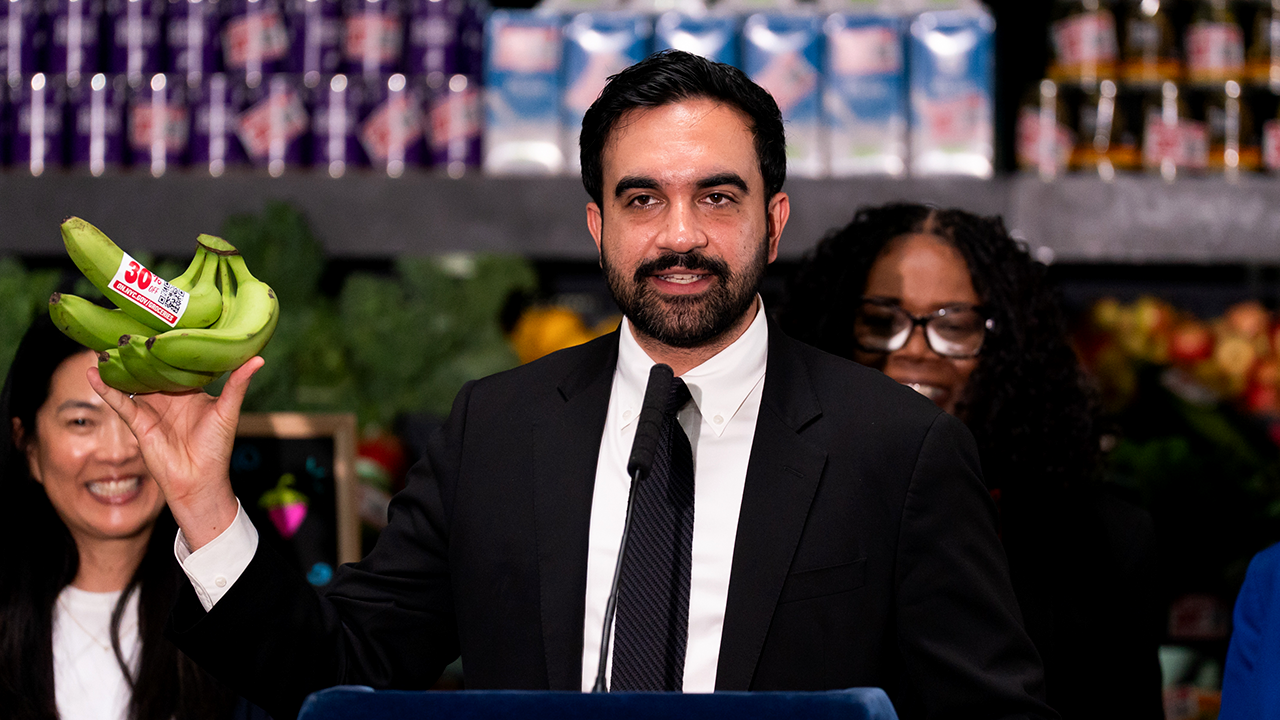
NYC Mayor Zohran Mamdani, mayor of New York, holds up bananas labeled with a 30% off sticker during an announcement on municipal grocery stores. (Adam Gray/Bloomberg / Getty Images)

Portnoy said he was initially confused by reports about how shoppers would access the stores, noting that earlier discussions appeared to suggest some type of membership card would be required.

“This is crazy to let… anybody go,” Portnoy said.

While critical of the proposal, Portnoy predicted the stores could appear successful during their early months because of significant public funding.

MAMDANI’S TAX ROLL BLUNDER WILL BACKFIRE ON EVERYDAY NEW YORKERS AS BUYERS HEAD SOUTH, DEVELOPER WARNS

“I think this is going to be very successful, this grocery store, in the short term,” he said. “If you’re gonna put… some astronomical amount of money into this, I think it’s gonna sorta be a mirage.”

Portnoy argued that heavy taxpayer subsidies could temporarily mask the true economics of operating a grocery business.

“I think taxpayers will make this work, and he’s gonna look how great communism, socialism is,” Portnoy said, adding that the program should not be judged on its first several months.

Instead, he said the real test would come years later, when the operation would have to sustain itself.

KEN GRIFFIN’S NYC SKYSCRAPER MOVES FORWARD DESPITE FEUD WITH MAYOR ZOHRAN MAMDANI

“Talk to me in two years, talk to me three years when you’re running an actual business and have to maintain it,” Portnoy said. “That’s when it’s gonna be hard.”

Because of that, Portnoy characterized the proposal as “kind of a publicity stunt,” arguing that its early performance would not necessarily reflect its long-term viability.

GET FOX BUSINESS ON THE GO BY CLICKING HERE

Advertisement
Continue Reading

Business

Practical Ways to Improve Workplace Productivity for Yorkshire Businesses

Published

on

The startup world is a battlefield. You might have a fantastic idea, a well-written business plan, and maybe even some funding, but that still won’t be enough to succeed without a loyal customer base.

Every business owner wants the same thing: a team that gets more done without feeling burnt out along the way. The good news is that improving workplace productivity rarely requires a dramatic overhaul. More often, it comes down to a handful of sensible changes that make daily working life smoother for everyone involved.

This is especially true for the growing number of small and medium sized businesses across Yorkshire, from Leeds and Sheffield to smaller towns further afield, where competition for skilled staff is fierce and margins can be tight.

Start with clear priorities

It sounds obvious, but a surprising number of teams lose hours each week simply because nobody is entirely sure what matters most. When priorities shift constantly or are never communicated clearly, employees end up guessing, and guessing is rarely efficient.

Take time at the start of each week to agree on the two or three things that truly need to happen. Everything else can wait. This does not mean ignoring smaller tasks, but it does mean giving your team permission to focus on what actually moves the business forward, rather than reacting to whatever lands in their inbox first.

Cut down on unnecessary meetings

Meetings have their place, but too many businesses default to booking one whenever a decision needs to be made, even when a quick message would do the job just as well. Every hour spent in a meeting room is an hour not spent on actual work.

Advertisement

A simple rule helps here: before scheduling a meeting, ask whether the outcome could be achieved another way. If a meeting is genuinely needed, keep it short, give it a clear agenda, and only invite the people who need to be there.

Give people the right tools

Productivity often stalls not because employees lack motivation, but because they are working with tools that slow them down. Slow computers, outdated software, and unreliable internet connections all chip away at output, and the frustration they cause can affect morale as well as efficiency.

For businesses based in Yorkshire, this is a particularly live issue. Many towns and business parks across the region sit some distance from major infrastructure hubs, and firms that have outgrown their original broadband package often find the connection struggling to keep up with cloud-based systems, video calls, and digital marketing work. A dependable connection is not a luxury; it is the backbone of modern working life. Local firms that have upgraded to reliable commercial and business broadband in Yorkshire often report a noticeable difference, with teams able to upload files, join calls, and run marketing campaigns without the delays that used to eat into their day. When your connection is solid, your team can focus on the work itself rather than fighting the technology meant to support it.

Encourage genuine breaks

It might seem counterintuitive, but stepping away from a desk can actually boost productivity rather than reduce it. Employees who work through lunch or skip breaks entirely tend to lose focus as the day goes on, making mistakes that cost more time to fix later.

Advertisement

Encouraging short, proper breaks, even just ten minutes away from a screen, helps people return to their tasks with a clearer head. Some businesses have found that a short walk outside or a proper lunch away from the desk leads to noticeably sharper afternoons.

Trust your team with flexibility

Rigid nine-to-five schedules do not suit every role, and forcing them onto a workforce that would benefit from more flexibility can quietly damage output. Where possible, allow staff some choice over when and how they work. This might mean flexible start times, the option to work from home occasionally, or simply trusting people to manage their own workload without constant oversight. For businesses spread across Yorkshire’s towns and villages, where commutes can be lengthy and public transport patchy in places, this kind of flexibility often makes a bigger difference to staff wellbeing than any other single change.

Flexibility tends to build trust, and trust tends to build loyalty. Employees who feel respected are generally more willing to put in the effort when it counts, and less likely to disengage or take unnecessary time off. If absence has been creeping up in your business, it is worth looking at practical ways to reduce staff time off without adding extra pressure, since the two issues are often more connected than they first appear.

Recognise good work

Recognition costs little but is often overlooked. A quick thank you, a mention in a team update, or a moment of public praise can go a long way towards keeping people motivated. Employees who feel their efforts are noticed are far more likely to maintain high standards, whereas those who feel invisible tend to do just enough to get by.

Advertisement

This does not need to be elaborate or expensive. Consistency matters more than grand gestures. A workplace culture built on regular, genuine appreciation tends to produce better results than one relying solely on targets and deadlines.

Review processes regularly

Finally, it is worth setting aside time every so often to look honestly at how work actually gets done in your business. Processes that made sense a few years ago may now be adding unnecessary steps or duplicating effort. Ask your team where they lose the most time, since they are usually the ones best placed to spot the bottlenecks.

Improving workplace productivity does not require sweeping change overnight. It comes from paying attention to the small frictions that slow your team down, whether that is unclear priorities, unreliable technology, or a lack of recognition, and addressing them one at a time. Businesses that take these steps consistently tend to find that productivity improves naturally, along with staff morale and retention.

Advertisement

Continue Reading

Business

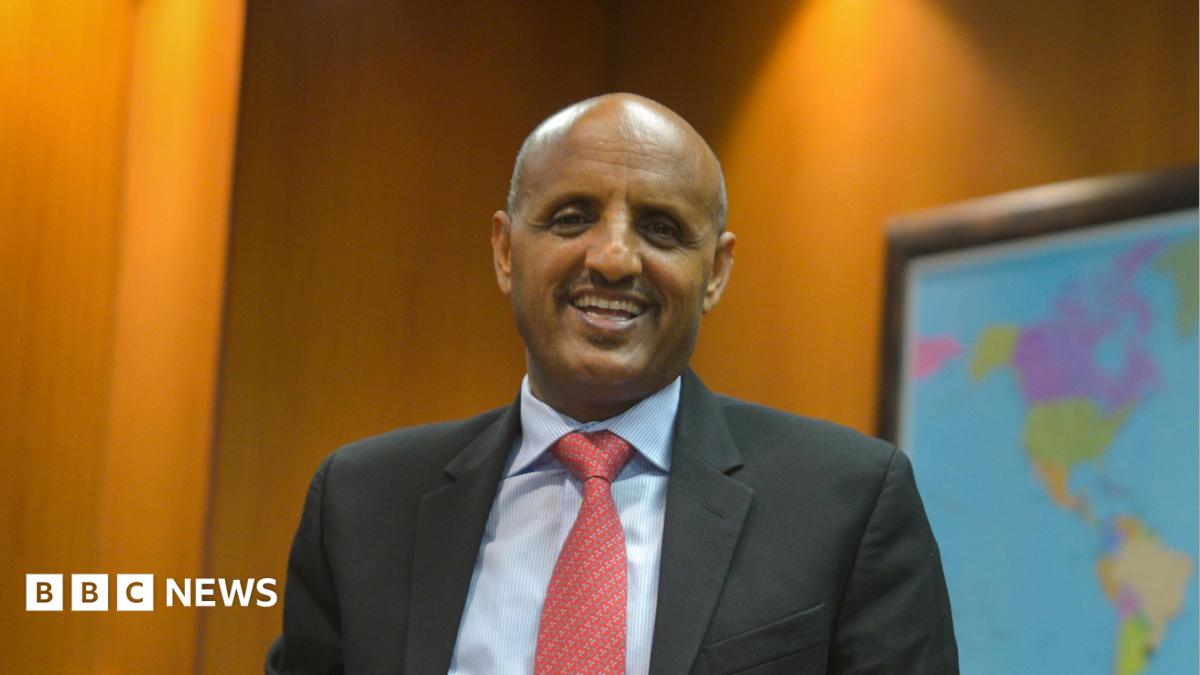
Tewolde Gebremariam: Air India’s new CEO faces financial and safety turbulence

Published

on

Three side by side photos from left a woman's legs wearing a skirt and flip flops, a man's legs wearing shorts and a woman wearing a white strappy top

Air India has appointed a new chief executive as the airline grapples with mounting challenges, including heavy financial losses and the fallout from last year’s crash that killed 260 people.

Tewolde Gebremariam succeeds Campbell Wilson, who stepped down from the role in April.

Gebremariam was earlier CEO at Ethiopian Airlines, where he worked for over a decade, growing the regional carrier into one of Africa’s largest airlines.

Air India, which Tata Group bought from the Indian government in 2022, has been dealing with a period of operational turbulence.

Advertisement

The airline operates a fleet of 198 aircraft, flying nearly 5,000 weekly flights to 91 destinations in India and abroad, according to the Air India website.

Air India said Gebremariam was unanimously chosen by its board after an extensive search, citing his leadership and operational expertise to steer the airline’s “next phase of growth”.

N Chandrasekaran, Air India chairman, said: “Having completed the initial phase of stabilisation, integration, and fleet commitments under Campbell’s guidance, Air India is now entering a critical execution and expansion era.”

Wilson, a former Singapore Airlines executive hired after Tata Group bought Air India nearly four years ago, had signalled in 2024 that he planned to step down in 2026 and had been preparing the airline for a smooth transition.

Advertisement

Now, his replacement Gebremariam has said that he is looking forward to building a “world-class global airline” that “reflects India’s extraordinary economic potential”.

During his tenure at Ethiopian Airlines, Gebremariam was credited with expanding the fleet nearly threefold and growing it into Africa’s most profitable airline.

At Air India, however, Gebremariam faces a daunting task. He takes over as the airline grapples with a series of safety and operational challenges, led by last June’s fatal Ahmedabad-London crash, a major setback to its ambitions. The final crash report is due in October.

The airline has continued to struggle since returning to private ownership, reporting a record loss of nearly $2.3bn (£1.7bn) last month. Chandrasekaran has warned a turnaround could take up to a decade. The airline has also cut nearly a third of its international operations.

Advertisement

The airline has also made headlines for a string of operational setbacks. In March, a Delhi-Vancouver flight turned back after nearly eight hours because it lacked clearance to enter Canadian airspace.

These troubles come as India’s wider aviation sector faces pressure from rising costs, disrupted international routes due to the Iran war, aircraft delivery delays and tighter regulatory scrutiny.

Continue Reading

Business

Don't Ignore This Powerful Historical Precedent

Published

on

Don't Ignore This Powerful Historical Precedent

Don't Ignore This Powerful Historical Precedent

Continue Reading

Business

ADM sees big opportunity in shift to natural colors

Published

on

The challenge of changing colors

Company eyes $80 million to $100 million in operating profit from colors transition.

Continue Reading

Business

Megayacht Amadea sold for $187M to Dubai billionaire with Trump ties

Published

on

Megayacht Amadea sold for $187M to Dubai billionaire with Trump ties
Superyacht 'Amadea' sold for $187 million: Here's what to know

A version of this article first appeared in CNBC’s Inside Wealth newsletter with Robert Frank, a weekly guide to the high-net-worth investor and consumer. Sign up to receive future editions, straight to your inbox.

A megayacht once valued at more than $300 million was sold by the U.S. government for $187 million to an Emirati billionaire whose family has a business partnership with the Trump Organization, according to government documents and yacht industry executives.

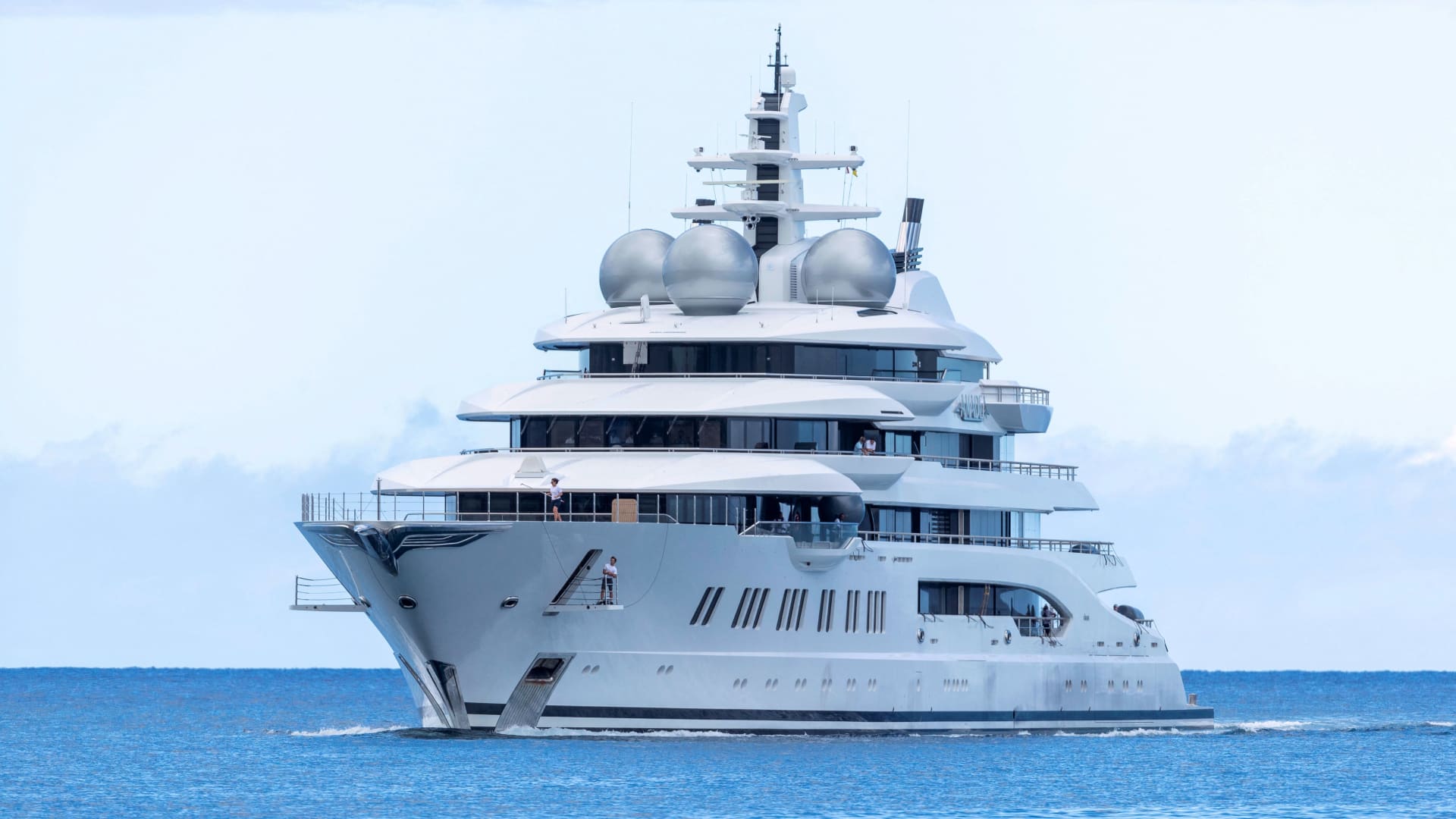
Amadea, a 348-foot yacht seized by federal authorities in 2022, was part of a financial crackdown on Russian oligarchs following the country’s invasion of Ukraine. After a lengthy legal battle, the yacht was auctioned off by order of the Justice Department in September.

Neither the price nor the buyer was announced by the government, yet a government document reveals the purchase price was $187 million. The buyer was Abbas Sajwani, the 27-year-old son of Dubai property tycoon Hussain Sajwani, whose company DAMAC Properties has partnered with the Trump Organization.

Advertisement

Hussain Sajwani appeared with President Donald Trump at Mar-a-Lago last year to announce a $20 billion investment in U.S. data centers by one of Sajwani’s companies. At the press conference, Trump introduced Sajwani as “one of the most respected business leaders in the Middle East and indeed the world.”

Neither Hussain Sajwani, Abbas Sajwani nor DAMAC responded to requests for comment. The Department of Justice and White House declined to comment.

CEO of DAMAC Properties Hussain Sajwani makes remarks next to U.S. President-elect Donald Trump, at Mar-a-Lago in Palm Beach, Florida, U.S. January 7, 2025.

Carlos Barria | Reuters

Advertisement

In 2022, the U.S. seized Amadea off the coast of Fiji as part of a crackdown on Russian oligarchs. The seizure was the highest profile test case for “Task Force KleptoCapture,” a program created by the Biden administration to sanction Russian oligarchs and seize the assets of violators. The  Justice Department alleged Amadea was owned by Suleiman Kerimov, a Russian mining tycoon who had been under sanctions since 2018.

U.S. authorities hired a new crew and sailed Amadea to San Diego. It remained docked in San Diego Bay for three years during a lengthy legal battle over its ownership. To maintain the yacht and crew, and pay insurance and docking fees, the government spent between $600,000 to $1 million a month, or an estimated $36 million in total, during its time under U.S. control.

After a forfeiture order from a U.S. District Court judge, Amadea was ordered to be auctioned on Sept. 10, 2025. The auction, which took place a month later, was overseen by the U.S. Marshals Service, a part of the Justice Department. The director of the Marshals Service is Gadyaces Serralta, who was appointed by Trump and sworn in on Aug. 1, weeks before the Amadea auction. The bids were sealed and submitted to the Marshals Service, which was in charge of selecting the winning bid.

The Marshals Service never announced the winner. 

Advertisement

“The USMS does not routinely disclose or confirm the identity of the buyer when selling assets,” a spokesperson for the Marshals Service said in a statement. “That information is withheld under federal privacy exemptions unless ordered released by federal courts.”

When it was seized, the Justice Department cited various valuations for Amadea. Early filings by the justice department cited a range of “between $300 million and $500 million” and similarly of “more than $300 million.” In a 2024 filing, the Justice Department quoted an independent valuation of $230 million.

Mega-yacht Amadea of sanctioned Russian oligarch Suleiman Kerimov, seized by the Fiji government at the request of the U.S., arrives at the Honolulu Harbor, Hawaii, on June 16, 2022.

Eugene Tanner | AFP | Getty Images

Advertisement

Registration documents showed that a month after the $187 million sale, Amadea was registered by Beyond Holding Group Ltd., a British Virgin Islands holding company that lists a headquarters address in Dubai that’s the same as DAMAC’s.

The government hasn’t announced a use for the Amadea proceeds. A U.S. aid package signed into law in May 2024 gave the government the ability to seize Russian state assets located in the U.S. and use the proceeds to benefit Ukraine.

The sale caps a turbulent and controversial history for Amadea. Built in 2017 by Lurssen, the yacht has six decks and accommodates 16 guests and 36 crew. It has a glass “winter garden,” infinity pool with a swim-up bar, movie theater with motion seats for a “4D experience” and a party deck with built-in speakers, lights and laser beams. It also boasts a spa with a hammam, sauna and chromotherapy pool as well as a lobster tank in the galley for fresh seafood.

In June, Abbas Sajwani gave Forbes a tour of Amadea anchored off the coast of Monaco. Sajwani told Forbes he had rejected an offer from another buyer to buy Amadea “for much more, in the hundreds of millions.”

Advertisement

“I love the boat’s interior, I love the style,” he said. “It’s beautiful.”

Amadea’s most famous feature is a five-ton stainless-steel sculpture of an albatross figurehead wrapped around the bow. After his purchase, Sajwani converted the helipad on the bow deck into a pickleball court.

The Forbes article doesn’t discuss a sale price. Of the auction, it says:  “As luck would have it, Sajwani prevailed. His undisclosed winning bid was only $1 million above the next highest.” The article doesn’t specify how Sajwani knew the value of the other bids.

Get Inside Wealth directly to your inbox

Demand for high-quality megayachts like Amadea has soared since the pandemic. With the number of billionaires in the world growing to over 3,500, and elite shipyards straining to meet demand with long waitlists, prices for preowned yachts continue to rise. In 2025, sales of preowned yachts of 30 meters or more rose 36%, to $6.44 billion, according to Fraser Yachts.

Advertisement

Yacht tracking data provided to CNBC from VesselFinder shows that after the auction, Amadea sailed to Fort Lauderdale, Florida, and Charleston, South Carolina. Yacht industry executives said the trips were for minor repairs and upgrades to Amadea.

In the Forbes interview, Sajwani said when he’s not in Dubai he runs his real estate business from the Amadea.

“Many people say they go on a boat for a holiday,” he told Forbes. “For me, it’s not the case. It’s more of a place to live.”

Abbas Sajwani’s company, called AHS Properties, bought the Shangri-La Hotel in Dubai for a reported $300 million and is developing luxury properties along the Dubai Water Canal. Forbes estimates his net worth at $1.9 billion.

Advertisement

Although the Iran war has slowed Dubai’s once-hot property market, Sajwani told Forbes, “The Dubai market is still very healthy, there’s a lot of demand.”

Sajwani’s father, Hussain, is known as the “Donald of Dubai” for his glitzy real estate developments and ties to Trump. In 2013, DAMAC formed a partnership with the Trump Organization to build the first Trump-branded golf course in the Middle East. The course opened in 2017.

According to The New York Times, DAMAC paid the Trump Organization millions of dollars before the golf course was built and subsequent management fees. A second Trump-branded golf course with DAMAC was planned but has been delayed. In April 2025, Hussain Sajwani shared photos of a breakfast at the White House, where he mingled with Elon Musk.

Choose CNBC as your preferred source on Google and never miss a moment from the most trusted name in business news.
Advertisement
Continue Reading

Business

SBM Offshore N.V. (SBFFY) Q2 2026 Earnings Call Transcript

Published

on

OneWater Marine Inc. (ONEW) Q1 2026 Earnings Call Transcript