
Business
Tokenised Deposits vs Stablecoins: Why Thailand’s Cautious Path Differs from Hong Kong and Singapore


- Hong Kong and Singapore are advancing tokenised deposits into live commercial use, with major banks including HSBC and Standard Chartered already serving institutional clients on blockchain-based treasury platforms. Thailand is pursuing a parallel but slower path, designing a fully reserved, baht-pegged stablecoin intended first for wholesale interbank settlement.
- The divergence reflects differing regulatory philosophies rather than differing destinations. Banks across the region are favouring tokenised deposits over stablecoins partly due to deposit insurance protections and lighter compliance requirements, while Thailand’s sequenced approach prioritises design completeness and public consultation over speed to market.
Asia-Pacific’s financial institutions have split into two distinct tracks in the race to build programmable digital money. Hong Kong and Singapore are already moving tokenised deposits into commercial production, while Thailand is deliberately taking a slower, more sequenced route toward a baht-pegged stablecoin. The contrast says as much about regulatory philosophy as it does about market readiness, and it is shaping where institutional capital and infrastructure investment land next.
Hong Kong moves from pilot to real money
Hong Kong’s tokenisation programme has gone furthest, fastest. In November 2025 the Hong Kong Monetary Authority shifted its tokenised deposit pilot from test transactions to real-value settlement, bringing in seven banks to issue tokenised deposits and settle interbank transfers on a shared platform: Bank of China (Hong Kong), China Construction Bank (Asia), Fubon Bank, Fusion Bank, Standard Chartered Hong Kong, Bank of East Asia and HSBC. Asset managers BlackRock and Franklin Templeton joined as participants alongside Hong Kong Exchanges and Clearing and payment network JETCO.
The initial focus is tokenised money market fund transactions, letting banks and asset managers manage liquidity and treasury positions in real time rather than waiting on traditional settlement cycles. The programme runs through all of 2026, using Hong Kong’s existing Real Time Gross Settlement system before the HKMA upgrades to 24/7 settlement in tokenised central bank money. Four themes frame the wider experimentation: fixed income and investment funds, liquidity management, green and sustainable finance, and trade and supply chain finance.
Standard Chartered has already taken the model commercial. Its Hong Kong and Singapore units launched a tokenised deposit solution built on Ant International’s blockchain treasury platform, Whale, moving the collaboration from pilot to production and covering HKD, CNH, USD and SGD for Ant’s intragroup treasury flows. HSBC has gone further still, debuting its Tokenized Deposit Service in Hong Kong with Ant International as first client before extending the product to corporate clients in the US and UAE in the first half of 2026.
Singapore leans on corporate treasury use cases
Singapore’s push has centred on the same Standard Chartered-Ant International partnership, with the bank’s Singapore unit enabling SGD and USD transactions that interoperate with the Hong Kong leg’s HKD, CNH and USD capabilities. For Ant International, which runs merchant services and treasury solutions for SMEs worldwide, the appeal is near real-time, 24/7 liquidity movement between entities without relying on traditional correspondent banking rails.
More broadly, Singapore is positioning itself alongside Hong Kong and the UAE as a jurisdiction that can combine regulatory clarity with credible financial infrastructure to attract institutional stablecoin and tokenisation business, a competitive dynamic playing out as more of the region’s fintech investment concentrates in fewer, better-regulated hubs.
Why banks prefer tokenised deposits for now
The tilt toward tokenised deposits over stablecoins is not incidental. Regulatory reclassification is doing much of the work: both the EU’s MiCAR framework and the US GENIUS Act treat most stablecoins as e-money tokens requiring specific licensing that many issuers do not hold, while tokenised deposits, as regulated bank liabilities, sidestep that compliance burden entirely. There is also a protection gap that matters to treasurers moving large balances: stablecoins carry no deposit insurance, whereas tokenised deposits do.
The competitive pressure behind this shift is real. In IBM’s 2026 banking survey, 42 percent of executives said it was likely that major corporations would issue their own stablecoins, a scenario that could erode banks’ transaction fees, deposit bases and customer data. Sixty-three percent of corporate banking executives now see providing tokenised services, rather than resisting them, as their primary role going forward.
Thailand’s wholesale-first, carbon-linked approach
Thailand is building toward the same destination by a different, slower road. The Bank of Thailand’s design study for a baht-backed stablecoin is nearing completion, with a strict full-reserve requirement: tokens pegged 1:1 to the baht and backed by reserves held in segregated accounts at licensed institutions, redeemable on demand. Public hearings are expected before the end of 2026, with formal regulations targeted for late 2026 or early 2027, as Thailand Business News has reported.
The sequencing is deliberate. BoT governor Vitai Ratanakorn has said the stablecoin will function first as a settlement instrument between licensed financial institutions, with any public rollout considered only afterward, an approach that mirrors Hong Kong’s wholesale-first pilot more than it does a retail-facing product launch. Authorities are also examining a role for the stablecoin in carbon credit trading, tying the initiative to Thailand’s net-zero commitments alongside its payments modernisation goals.
This builds on groundwork already laid through the BoT’s wholesale CBDC work under Project Inthanon and mBridge, and its Programmable Payment Sandbox, launched in 2024 and expanded in December 2025 to test baht-backed stablecoins and programmable payment use cases under supervision. The central bank has also used the period to tighten enforcement around unregulated settlement loops, including a crackdown that saw roughly 5,000 accounts linked to peer-to-peer renminbi payment activity suspended between February 2025 and May 2026.
What the contrast means
Hong Kong and Singapore are racing ahead on live, bank-led infrastructure serving multinational treasuries today. Thailand, by contrast, is building toward the same wholesale settlement function but insisting on a completed design study, full-reserve rules and public consultation before anything goes live, a pace consistent with the BoT’s broader caution on digital assets. That gap creates near-term opportunity for regional banks and treasury platforms operating out of Hong Kong and Singapore, but it also means Thai institutions have longer to prepare for a framework designed to avoid the reserve and redemption gaps that regulators elsewhere are still working through.
For now, the practical test will be the BoT’s public hearings later this year and the results emerging from its sandbox, both of which will determine whether Thailand’s cautious sequencing pays off in a more resilient rollout, or simply cedes first-mover advantage to its regional rivals. The broader pattern is one Thailand Business News has tracked across Southeast Asian fintech more generally: rapid regional growth running up against fragmented, jurisdiction-by-jurisdiction regulation that leaves institutions weighing speed against consistency.


Ola Electric shares fell to Rs 38.75 apiece on NSE on Friday despite the overall positive market sentiment. This sharply brought down the EV scooter-maker’s market capitalisation to nearly Rs 18,000 crore.
The Bhavish Aggarwal-led company recently announced that it will consider raising funds through a rights issue at a board meeting scheduled for September 28. The proposed fundraise, subject to regulatory and statutory approvals, comes weeks after the company’s board approved plans to raise up to Rs 1,500 crore through equity shares and other securities.
Also read | Ola Electric to consider rights issue as it looks to raise fresh capital
Previously, Ola Electric raised Rs 780 crore through a QIP (qualified institutional placement) in June. The company had initially planned to raise Rs 500 crore through the issue.

Ola Electric share price history
Shares of the company had gained 17% over the past four sessions before declining sharply today. Despite the recent volatility, the stock remains significantly below its IPO price. After a flat market debut in August 2024, Ola shares rose to a lifetime high of Rs 157.40 apiece later that year. The stock subsequently lost momentum and fell to a lifetime low in March 2026, nearly one-seventh of its peak value.
The stock had fallen more than 62% from its 52-week high of Rs 59.20 apiece, hit in September last year, to a 52-week low of Rs 22.25 apiece in March this year. However, the stock subsequently staged a recovery. Overall, Ola Electric shares have gained 5% in 2026 so far, supported by strong sales data, PLI incentives and other factors that have improved investor sentiment towards the EV scooter maker.
Should you buy, sell or hold Ola Electric shares?
Ola Electric last month reported a reduction in net loss to Rs 336 crore in Q1 FY27, down from Rs 428 crore in the same period last year, although revenue from operations fell 45% year-on-year.
Following the Q1 results, brokerages continued to remain bearish on the stock. Citi maintained its ‘Sell’ call on the shares of Ola Electric, with a target price of Rs 26 apiece. Weaker volumes and lower gross margin were offset by cost control and PLI penalty reversal, it said.
Kotak Institutional Equities also maintained its ‘Sell’ call on the shares of Ola Electric, with a target price of Rs 20 apiece. The brokerage noted that the company’s volume scale remains the critical hurdle.
Goldman Sachs has a ‘Neutral’ rating on the shares of Ola Electric with a target price Rs 40 apiece. The company’s cash burn remains a concern, with FCF at negative Rs 3.5 billion and no material cell revenue expected in Q2, the international brokerage said.
Also read | Ather & Ola Electric: A tale of two contrasting rides
Disclaimer: This article has been written by Debaroti Adhikary, who is not a SEBI-registered Research Analyst or an Investment Adviser. Debaroti Adhikary and his/her ‘relative(s)’ (as defined under Section 2(77) of the Companies Act, 2013) do not hold any financial interest in the companies mentioned in this article as of the date of publication. The views/recommendations mentioned in this article, wherever applicable, are those of the respective SEBI-registered Research Analyst/brokerage and have been reproduced/reported with due attribution. They should not be construed as the views or recommendations of The Economic Times Digital or the journalist. Readers are advised to consider the original research report and make their investment decisions based on their own assessment. Brokerage disclaimers here.
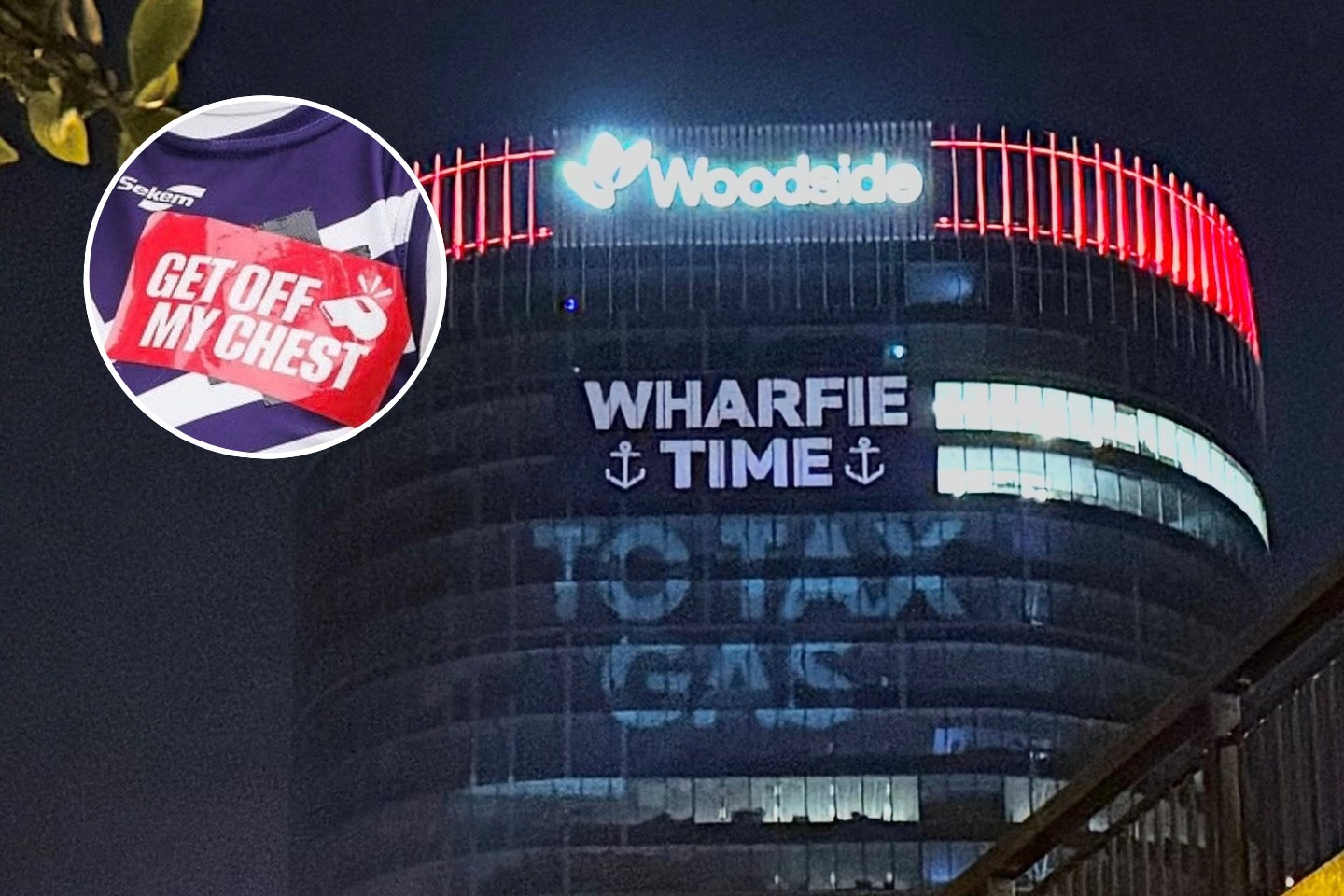
A campaign to remove Woodside Energy as the Fremantle Dockers’ major sponsor has gained momentum after MP Josh Wilson joined the action as the football club prepared for the second grand final in its 32-year history.
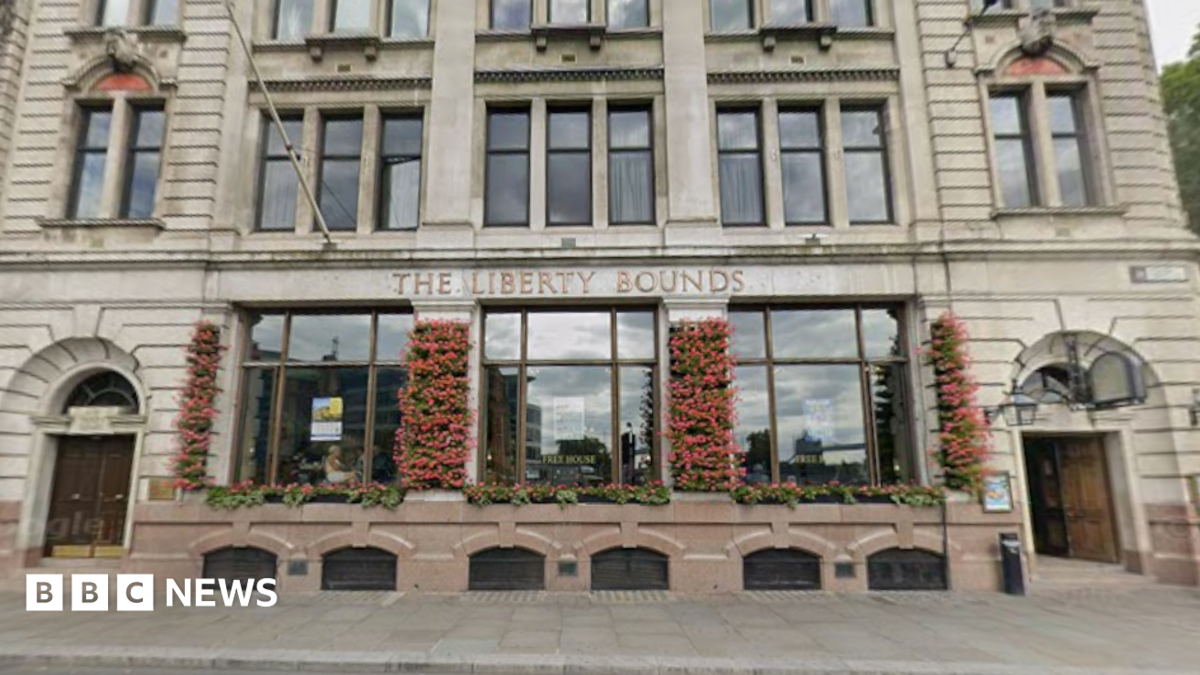
Many of the reviews from customers said they told Booking.com that it was a scam but had been ignored.
One customer said: “I reported it to Booking.com three days before check-in but they refused to do anything.”
Another customer, from Spain, complained that she and her friend had been left stranded, writing: “Two girls alone in London at two o’clock in the morning with no accommodation.”
Booking.com also has an AI trip planner called Dot, which allows users to ask questions. On The London Crown listing page a Which? researcher asked: “Is this a real property, or is it a scam?”.
It replied: “The London Crown is a legitimate property located in the centre of London. It offers various amenities such as free wifi, free bikes, and free private parking. It is conveniently located near Longleat Safari Park and Longleat House, with London City Airport just 10km away. Based on the detailed description and amenities listed, the London Crown appears to be a real and well-equipped property.”
Dot failed to recognise that Longleat Safari Park was more than 100 miles (160km) from London, in Wiltshire.
“Apartments near Big Ben” and The London Crown apartments were both targeted by the phishing attack, said Booking.com.
“The attack affected the properties’ own computer systems and gave cybercriminals temporary, unauthorised access to the accommodation’s Booking.com account,” a spokesperson said.
“We take incidents like this extremely seriously, and suspended bookings at both properties, as well as supporting affected customers.”
An Ofcom spokesperson said: “Fraud online can have serious consequences for victims and platforms have clear legal duties to take down illegal content generated by users once they become aware of it.
“More broadly, we’ve shown that we’ll use our enforcement powers against platforms that fail to comply with the Online Safety Act, and have already launched investigations into over 100 sites.”

Volatility Has A Memory (Technical Analysis)
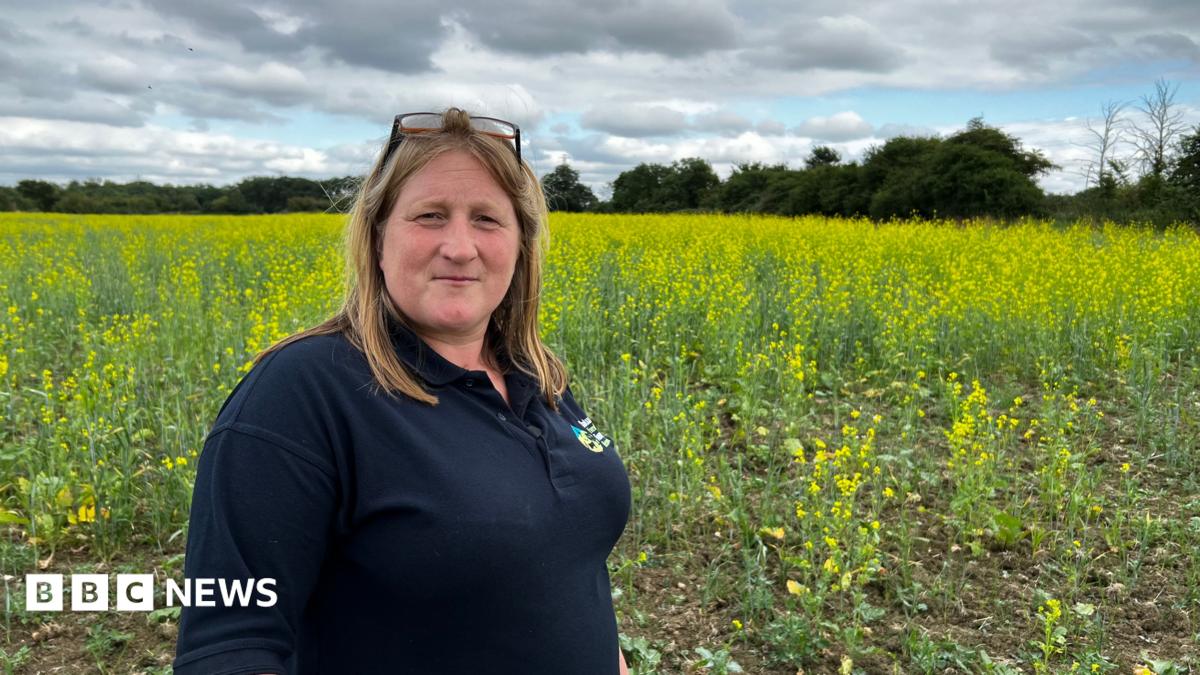
ECIU said the consolidation of dairy farms in recent years had allowed for “economies of scale and mechanisation to increase milk outputs while the herd size reduces”.
Tom Cantillon, a senior analyst at ECIU, said future heatwaves would become progressively harder to recover from, especially as milk was an “unforgiving product in farming” as it cannot be stockpiled.
“The costs don’t stop now that the rain has come,” Cantillon said.
“A second bad year for grass has pushed farmers into their winter forage early, with feed prices to follow.”
Cantillon said farmers needed help to roll out climate resilience measures such as more shade, trees and water.
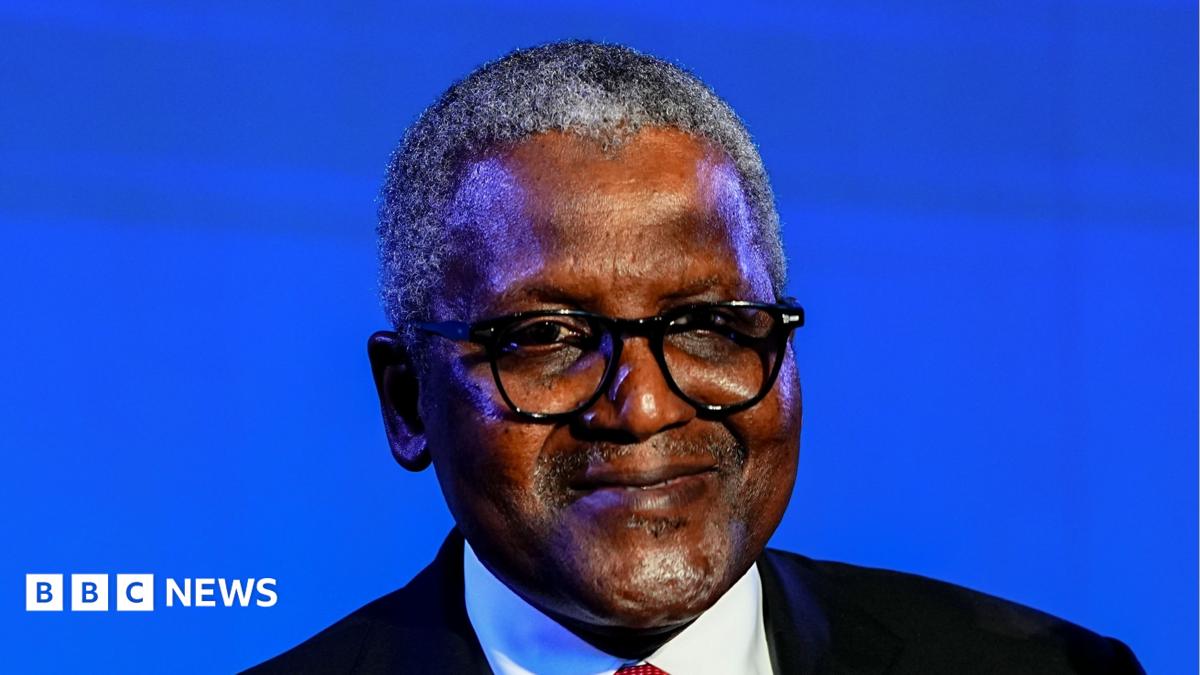
Nigerian billionaire Aliko Dangote, Ethiopia and Djibouti have agreed to develop a $660m (£500m) petroleum pipeline and storage project linking the two countries.
The project will include a 120km- (75 mile-) pipeline connecting Djibouti’s Damerjog port to a distribution facility in Dewele, Ethiopia, as well as storage capacity of about 400 million litres.
It is expected to begin operations within 18 months.
Ethiopian Prime Minister Abiy Ahmed said the pipeline would reduce the time needed to transport fuel from Djibouti’s port to the Ethiopian capital, Addis Ababa, from five days to one.
The first phase will transport key petroleum products, including jet fuel, diesel and petrol.
Speaking at the groundbreaking ceremony, Dangote said the project would strengthen Ethiopia’s energy security and make its fuel supply chain more resilient.
Landlocked Ethiopia relies heavily on Djibouti’s port for imports, including petroleum products. The new infrastructure is expected to reduce pressure on existing transport systems supporting industries, including transport, aviation, agriculture and construction.
Djibouti is also expected to benefit from increased port activity, job creation and higher government revenues.
The project is part of Dangote’s wider expansion of infrastructure and manufacturing businesses across Africa.
Dangote Cement has production capacity of about 55 million tonnes a year, while his oil refinery in Nigeria currently has capacity to process 700,000 barrels of crude a day and is seeking to double that to 1.4 million barrels a day.
The refinery recently listed 4.1 billion ordinary shares on the Nigerian stock exchange, aiming to raise about $1.63bn (£1.2bn).
In Kenya, the company is due to break ground next week on a proposed 700,000-barrel-a-day crude oil refinery in Lamu.

HSBC upgrades TotalEnergies stock rating on commodity price outlook
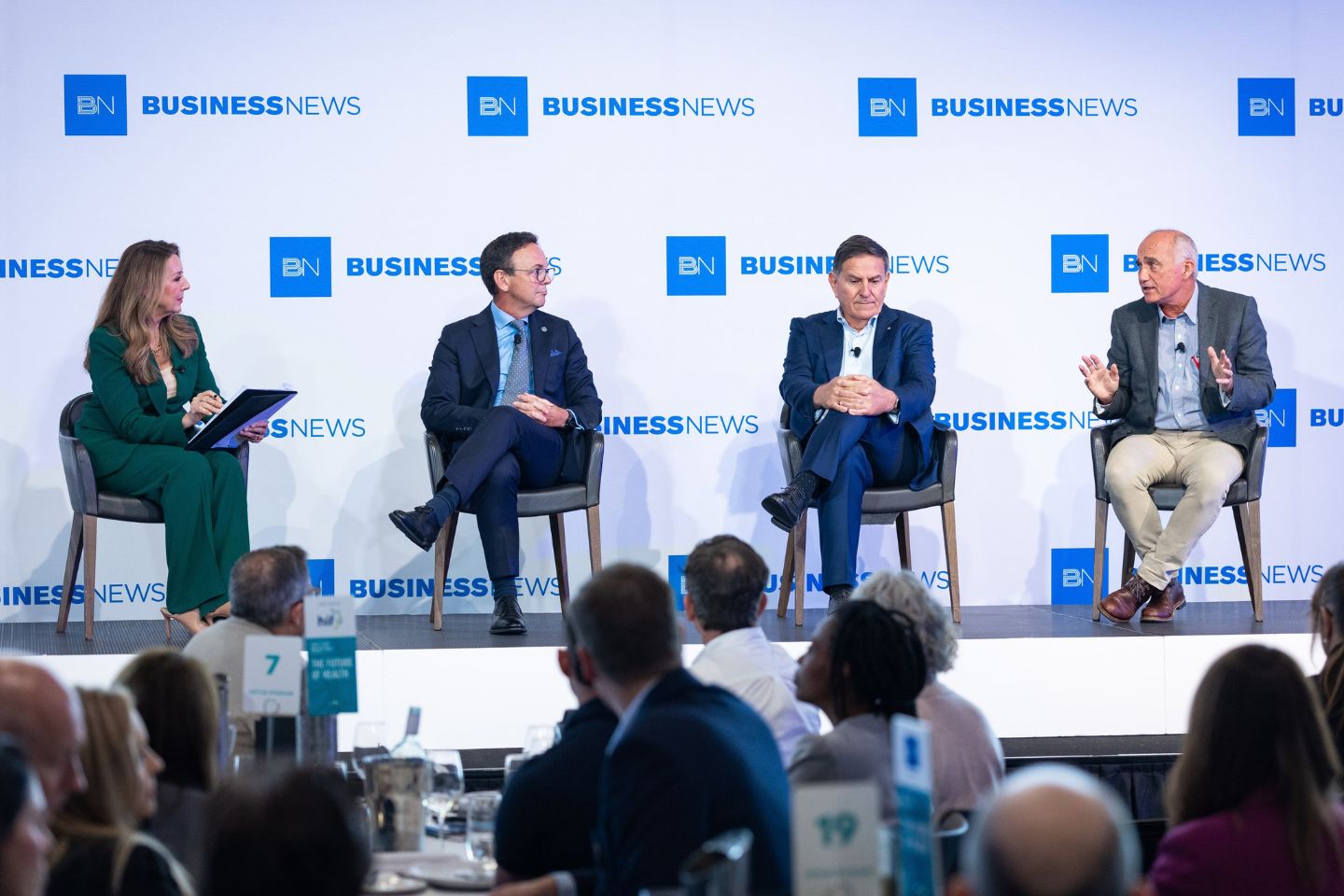
Former AMA WA president David Mountain claimed aged care would be decimated because of the federal government’s migration system changes, during a discussion on challenges in the health sector.

The order, valued at approximately $412.5 million (around Rs 4,000 crore), is the largest in the company’s history in terms of volume, length and value. The pipes will be manufactured at Welspun’s newly upgraded HFIW mill in Little Rock, USA, which has enhanced production capabilities.
According to the company’s filing, the order is scheduled to be executed during FY28 and FY29.
Following the order win, Welspun Corp’s global order book has reached a record $4.7 billion (around Rs 45,000 crore), marking the highest level in the company’s history.
The company said the order highlights the scale and execution capabilities of its operations and supports its strategy of expanding global manufacturing capacity and strengthening relationships with international clients.
Share price performance, valuation and technical indicators
Welspun Corp shares have gained 20% over the past month, while the stock has surged nearly 93% over the last three months. The company currently has a market capitalisation of Rs 72,618 crore, while its 52-week high stands at Rs 2,836.
On the valuation front, Welspun Corp has a price-to-earnings (P/E) ratio of 31.95 and a price-to-book (P/B) ratio of 7.84.From a technical perspective, the stock is trading above all eight key simple moving averages (SMAs).
In the latest June 2026 quarter, foreign institutional investors (FIIs) increased their holding in the company to 14.61%, from 11.23% in the previous quarter.
Disclaimer: The views/recommendations mentioned in this article, wherever applicable, are those of the respective SEBI-registered Research Analyst/brokerage and have been reproduced/reported with due attribution. They should not be construed as the views or recommendations of The Economic Times Digital or the journalist. Readers are advised to consider the original research report and make their investment decisions based on their own assessment. Brokerage disclaimers here

Why is Nanexa stock surging today?

Breakthrough brain cancer test cuts diagnosis from weeks to hours: ‘Huge leap forward for patients’
Ola Electric shares tumble 9% after 17% rally in 4 days. Why brokerages remain cautious

I Was A Terrible Politician But I Still Changed The Country




-

 Fashion7 days ago
Weekend Open Thread: Talbots – Corporette.com
-

 Crypto World2 days ago
Goldman Sachs and Deutsche Bank Agree: The S&P 500 Rally Isn't Over
-

 Tech4 days ago
Researchers escape OpenAI Codex sandbox to run commands on host
-

 Fashion21 hours ago
8 iPhone Accessories That Add Personality
-

 Crypto World4 days ago
Who Needs CLARITY Anyway? ARB Could See 70X Increase: Hodler’s Digest
-

 Crypto World6 days ago
Circle launches Arc Studio AI agent for building onchain apps
-
 NewsBeat6 days ago
Trump says US has reached an agreement to take permanent control of Greenland’s security
-

 Crypto World6 days ago
Trading Bitcoin on Robinhood? Why 2% Spread Has Traders Worried
-

 Crypto World6 days ago
Bitcoin price breaks channel as RSI climbs to 63
-

 Business4 days ago
Analog Devices (ADI) Bets $1.35 Billion on Chips that Let Machines Think for Themselves
-

 Tech6 days ago
Trump suggests rebranding AI with a new name, says he’s also creating an AI Force
-

 Tech4 days ago
Google’s $899 Googlebook is a bet that you’ll buy a new laptop for Gemini
-

 Crypto World4 days ago
Coinbase, Robinhood, Circle Seen as Tokenized-Stock Winners
-

 Crypto World2 days ago
This Bearish Netflix Stock Trade Can Cash In On Video Streaming Giant’s Woes
-
 Business2 days ago
Oil Price Today (September 23): Crude oil below $100 on hopes of US-Iran talks. What did Trump say?
-
 Crypto World3 days ago
Trump-Xi Polymarket Odds for Handshake Hit 50%
-

 Crypto World6 days ago
World Money launches in 150+ countries with Stripe
-

 Crypto World1 day ago
Crude Oil Prices Pressured by Diplomatic Hopes in the Middle East
-

 Crypto World7 days ago
Silver prices recover quickly, hitting weekly high today
-

 Entertainment2 days ago
These 17 Fall Amazon Dresses Seriously Look Like Anthropologie
You must be logged in to post a comment Login