Connect with us

Business

TrueBlue, Inc. 2026 Q2 – Results – Earnings Call Presentation (NYSE:TBI) 2026-08-04

Published

on

OneWater Marine Inc. (ONEW) Q1 2026 Earnings Call Transcript

This article was written by

Seeking Alpha’s transcripts team is responsible for the development of all of our transcript-related projects. We currently publish thousands of quarterly earnings calls per quarter on our site and are continuing to grow and expand our coverage. The purpose of this profile is to allow us to share with our readers new transcript-related developments. Thanks, SA Transcripts Team

Continue Reading
Click to comment

You must be logged in to post a comment Login

Leave a Reply

Business

Some BOJ members expect inflation boost later this year, minutes show

Published

on


Some BOJ members expect inflation boost later this year, minutes show

Continue Reading

Business

Wall St jumps on AI-linked earnings and Iran deal hopes

Published

on

Wall St jumps on AI-linked earnings and Iran deal hopes

The S&P 500 and ‌the Dow have closed at record highs, powered by the latest batch of earnings from AI-related companies such as Caterpillar and Palantir that assuaged demand concerns while crude prices and Treasury yields ‌dropped on hopes for a deal in the Iran war.

Continue Reading

Business

Baroda BNP MF names Madhu Nair as new CEO

Published

on

Baroda BNP MF names Madhu Nair as new CEO
Mumbai:Baroda BNP Paribas Mutual Fund has appointed Madhu Nair as the chief executive officer of the asset manager. Nair will succeed Sanjay Grover, who has been on interim deputation from Bank of Baroda since Suresh Soni left the fund house in August 2025.

Baroda BNP Paribas Mutual Fund is a joint venture between Bank of Baroda and Parisbased BNP Paribas, with shareholdings of 50.1% and 49.9%, respectively. Before joining Union Mutual Fund, Nair worked in various sales and distribution roles across fund houses, including HSBC Mutual Fund, Invesco Mutual Fund, Kotak Mutual Fund and Kothari Pioneer Mutual Fund.

Emails sent to Baroda BNP Paribas Mutual Fund and Union Mutual Fund did not elicit any response till the time of going to print.

Advertisement
Add ET Logo as a Reliable and Trusted News Source

Continue Reading

Business

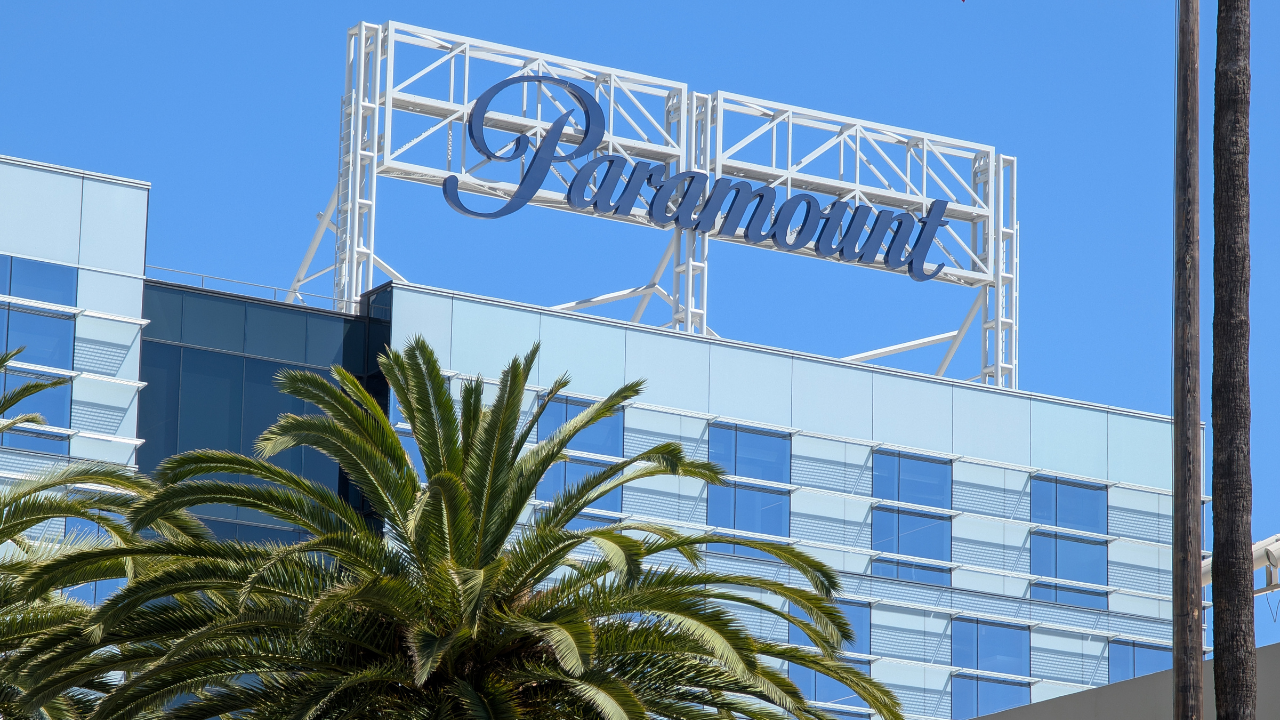
Paramount-Warner Bros Discovery antitrust lawsuit trial set for Spring 2027

Published

on

Paramount-Warner Bros Discovery antitrust lawsuit trial set for Spring 2027

A trial date for the antitrust lawsuit brought against Paramount over its $111 billion bid to take over Warner Bros. Discovery (WBD) has been set for next spring. 

A filing from the U.S. District Court in California’s Northern District showed that the trial date has been scheduled for March 2, 2027, and is expected to run for 12 court days, wrapping by March 19. 

Advertisement

The court added an April 5, 2027, deadline for “the parties’ respective proposed findings of fact and conclusions of law, complete with citations to legal authority and the factual record” to be submitted. 

PARAMOUNT AGREES TO DELAY WARNER BROS DISCOVERY MERGER UNTIL 2027 AS LAWSUIT TO BLOCK IT GOES THROUGH COURT

Paramount Warner Bros.

The antitrust lawsuit attempting to block Paramount’s $111 billion takeover of Warner Bros. Discovery will head to court March 2, 2027. (AaronP/Bauer-Griffin/GC Images / Getty Images)

Last month, Paramount agreed to delay its merger until next year to address the antitrust lawsuit led by California Attorney General Rob Bonta.

Paramount CEO David Ellison is seeking to acquire WBD in a $111 billion deal that was expected to close during the third quarter of this year, but Bonta is leading a group of 12 state attorneys general who filed a lawsuit challenging the merger. The lawsuit claims the megadeal would “lead to higher prices, lower quality, and less content for film and television, harming movie theaters, basic cable distributors, and ultimately, audiences on every sofa and movie theater seat in the U.S.”  

Advertisement

The lawsuit, filed in the U.S. District for the Northern District of California, claims the merger violates Section 7 of the Clayton Act, which holds that mergers that may substantially lessen competition or tend to create a monopoly are illegal. Both sides argued their case last week but Judge Araceli Martínez-Olguín waited until Monday to temporarily delay the merger. 

The merger, which was set to close this year, is now being delayed until at least June 2027.

DAVID ELLISON BREAKS SILENCE ON PARAMOUNT-WBD MERGER FIGHT; CNN INSIDERS DON’T BUY ‘LIP SERVICE’ ABOUT NETWORK

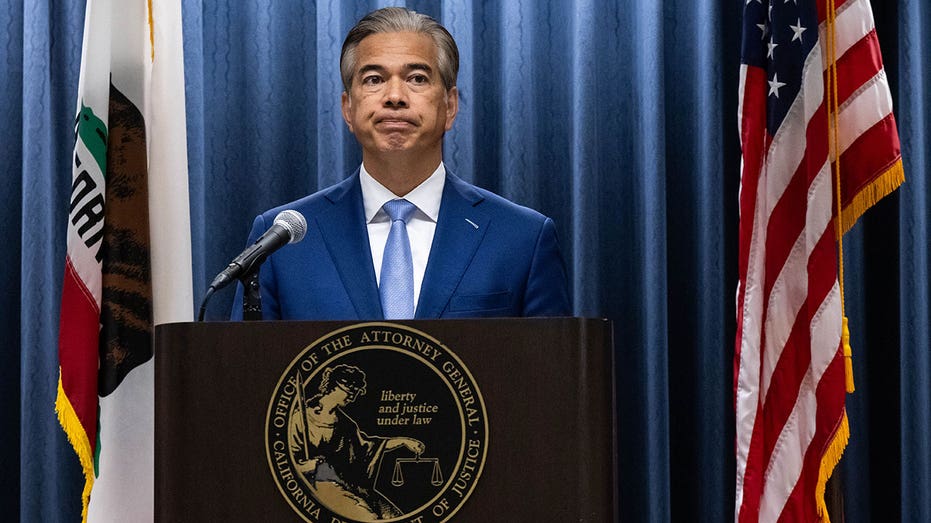
California Attorney General Rob Bonta

California Attorney General Rob Bonta is leading the antitrust lawsuit against Paramount. (Sarah Reingewirtz/MediaNews Group/Los Angeles Daily News via Getty Images / Getty Images)

Paramount’s bid to buy Warner Bros. Discovery would be a historic deal merging two major Hollywood studios under one corporate umbrella as well as all of their television networks, including CBS and CNN. Critics of the deal believe such a merger would crush the entertainment industry and lead to mass layoffs. Some have also been vocal against Ellison and his billionaire father, Larry Ellison, who is heavily financing the deal and is a close ally to President Donald Trump

Advertisement

Liberal critics in particular also claim that, as a result of the deal, CNN would be given a MAGA-bent to its coverage, and it would be run by current CBS News editor-in-chief Bari Weiss, who has been harshly criticized by some media liberals. The Paramount CEO has previously assured that CNN would maintain editorial independence following the merger.

CLICK HERE FOR THE LATEST MEDIA AND CULTURE NEWS

New Paramount CEO David Ellison

Paramount CEO David Ellison has his eyes set on Warner Bros. Discovery after taking over Paramount last year in an $8 billion merger with Skydance Media. (Alberto E. Rodriguez/Getty Images for CinemaCon / Getty Images)

In an op-ed published in The New York Times Tuesday, Ellison addressed the “speculation” about what would happen to CNN under his ownership.

“I have regularly voted for candidates of both parties; I hold some views that would be called conservative and others that would be called liberal, just like most Americans; and when it comes to our news operations, I do not aspire to lead these companies to bend their newsrooms to my views. I believe that news should be based on facts and truth,” Ellison wrote.

Advertisement

“Great news organizations like CNN and CBS News are here to tell it straight down the middle,” he added. “That requires newsrooms that reflect the whole world, not one side of it. And it requires independence.”

This deal would follow Ellison’s $8 billion purchase of Paramount, merging the studio with Skydance Media.

CLICK HERE TO GET FOX BUSINESS ON THE GO

Fox News’ Brian Flood contributed to this report.

Advertisement
Continue Reading

Business

What Happens to a Business When the Law Only Lets It Discount Once

Published

on

What Happens to a Business When the Law Only Lets It Discount Once

Ask a British marketing director what they would do if discounting were taken away tomorrow, and you tend to get a laugh followed by a slightly panicked silence.

Welcome offers, free trials, win-back codes and loyalty tiers are wired so deeply into how UK consumer businesses acquire customers that removing them sounds less like a strategy question than a parlour game. Sweden has been running that experiment for seven years, and the results are worth a look.

One offer, and that is the lot

When Sweden reopened its gambling market to licensed competition in 2019, it wrote in a rule with no real British equivalent. An operator may give a player a bonus at the first occasion that person gambles with them, and never again. No reload offers. No cashback. No VIP tier returning money to the customers who spend most. The Swedish Gambling Authority has fined operators for getting the timing wrong.

What this does to the shop window is immediate. A typical Swedish welcome package runs to about a hundred kronor, call it eight pounds, plus a handful of free spins. That is the entire lifetime discount budget for a customer who might stay five years and spend a great deal more.

What moves into the space a coupon leaves

Something has to do the work the discount used to do, and that something turns out to be the product itself. Visit a Swedish-licensed online casino and the front page is doing a different job from its British counterpart: game range, withdrawal terms, the regulator’s mark, links to the national self-exclusion register. Retention economics shift in the same direction. When you cannot buy a customer back after they drift, the only defence against churn is not irritating them in the first place, which puts an uncomfortable weight on payment speed, support response times and whether the thing works on a five-year-old phone. Swedish operators talk about payout times the way British retailers talk about next-day delivery, and for much the same reason.

Advertisement

Brand carries more than it used to, as well. Where every licensed competitor offers roughly the same nothing, the deciding factor becomes which name a customer already trusts. That is slower and dearer to build than a coupon, and considerably harder for a rival to copy.

The same squeeze, without the legislation

British businesses are not about to have discounting legislated away, but plenty are arriving at the same place by a different road. Acquisition costs have climbed across almost every consumer category, margins have not, and a decade of promotional habit has trained customers to wait for the sale rather than pay the price. The lever still exists here. It has simply become expensive enough that pulling it hurts.

Sweden’s rule carries a genuine cost too, and it would be dishonest to skip past it. The regulator’s channelisation figure, the share of play that stays with licensed operators, has slipped from 86 per cent in 2023 to 84 per cent last year, and for casino products specifically it sits at 81 per cent. Take promotional freedom away from the businesses you regulate, and some customers go looking for it elsewhere. For a UK founder wondering what a company looks like when it can no longer buy attention, though, Sweden remains the most detailed answer anyone has. Its operators did not find a clever workaround. They spent the money on being worth choosing instead: the slower path, and the one that tends to survive a bad quarter.

Advertisement

Continue Reading

Business

Intel Stock Soars Over 7% as Chip Sector Rally Builds Ahead of AMD’s Big Earnings Report Tuesday Afternoon

Published

on

The Intel Corporation logo is seen  in Davos

Intel shares surged more than 7% Tuesday morning, climbing to $97.93 as of 9:41 a.m. Eastern time, as semiconductor stocks broadly rallied ahead of a highly anticipated earnings report from rival Advanced Micro Devices due after the market closes.

Tuesday’s gains build on a volatile several weeks for Intel, whose stock has swung sharply between rallies and steep pullbacks even as the company’s underlying turnaround story, led by Chief Executive Lip-Bu Tan, continues to unfold. Shares closed Monday at $91.00, up a modest 0.89%, before extending gains further in Tuesday’s session as broader risk appetite returned to the chip sector.

A wild recent stretch for Intel shares

Intel’s stock has been on an extraordinary run over the trailing 12 months, at one point posting gains exceeding 350% to 460% depending on the measurement window, as investors bought into the company’s turnaround narrative following a brutal stretch in 2025 that saw shares hit a 52-week low near $19. The stock later climbed as high as $142.35 before pulling back sharply in recent weeks amid broader semiconductor sector jitters.

Advertisement

Much of that recent volatility traces back to late July, when a disappointing earnings report from Samsung triggered a wave of selling across chip stocks tied to concerns about PC and server chip demand. Intel shares fell roughly 9% to 10% on multiple occasions during that stretch, at one point ranking among the worst performers in the S&P 500 on a single trading day as investors reassessed the broader chip sector’s near-term outlook.

Intel’s own second-quarter earnings, released July 24, initially failed to stabilize the stock despite topping expectations. The company reported revenue of $16.1 billion, up 25% year-over-year and ahead of the high end of its own guidance of $14.8 billion, while also guiding third-quarter revenue to roughly $16.3 billion, comfortably above analyst consensus estimates of $15.1 billion. Despite the beat, CNBC commentator Jim Cramer described the stock’s subsequent decline as “some of the most hideous selling” he had witnessed, attributing the drop to broader anxiety around AI infrastructure spending rather than any specific issue with Intel’s results. Cramer has since argued that Intel stock “belongs at $110,” well above where shares have traded in recent sessions.

Analysts remain divided on valuation

Wall Street’s views on Intel remain notably split heading into Tuesday’s rally. Rosenblatt raised its price target on the stock to $65 from $50 but maintained a Sell rating, arguing the stock’s dramatic run has outpaced its underlying fundamentals. That stands in sharp contrast to the broader Street consensus price target, which sits closer to $112, reflecting continued optimism from other analysts about Intel’s foundry business and its expanding role in AI infrastructure.

Advertisement

Susquehanna analyst Christopher Rolland has maintained a more neutral stance but raised his price target to $115 from $80 in recent weeks, citing stronger-than-anticipated server CPU demand, while KeyBanc’s John Vinh has taken a more bullish position, reiterating a Buy rating with a price target of $155.

Foundry progress and AI demand fuel optimism

Much of the bullish case for Intel centers on the ongoing revival of its foundry business, which has shown signs of improvement after years of losses and delayed manufacturing milestones. Intel’s foundry segment generated $5.4 billion in revenue during the first quarter, a 20% sequential increase driven by higher production of advanced chips, with external foundry revenue reaching $174 million during the same period. While the segment remains unprofitable, losses have moderated, and management has said it expects further operating improvement in the coming quarters.

Intel has also continued expanding its advanced packaging business, recently deepening a technology partnership tied to its EMIB packaging platform, an area where rival Taiwan Semiconductor Manufacturing has reportedly been developing competing technology aimed at the same high-performance computing and AI chip market. Separately, research firm Omdia has projected global semiconductor revenue will surge 94.1% year-over-year in 2026, citing industry-wide bottlenecks in high-bandwidth memory production, a forecast that has added to broader bullish sentiment across chip stocks including Intel.

Advertisement

A rally tied to the broader market, not just Intel

Tuesday’s jump in Intel shares appeared closely tied to broader strength across the semiconductor sector rather than any single Intel-specific announcement. AMD shares also climbed sharply in Tuesday’s session ahead of its own earnings report, while the broader market extended a multi-day rally driven by easing tensions in the Middle East, falling oil prices, and a string of strong corporate earnings reports from companies including Caterpillar and Palantir Technologies. That supportive macro backdrop has helped lift previously beaten-down chip names, including Intel, even as some analysts continue to debate whether recent price gains fully reflect the execution risk still facing the company’s multi-year turnaround plan.

Government backing remains a factor

Intel’s rise over the past year has also been shaped in part by direct financial support from the U.S. government, which took a stake in the company last year as part of a broader push to maintain domestic semiconductor manufacturing capacity. That backing, combined with new customer commitments from companies including Google and reported discussions involving Apple and Nvidia around potential foundry partnerships, has continued to feature prominently in the bull case for Intel shares even as the stock’s underlying earnings power remains a subject of debate among analysts.

Advertisement

With AMD’s second-quarter results due after Tuesday’s closing bell, investors will be watching closely for any read-through to Intel and the broader chip sector, particularly around AI infrastructure demand and server CPU competition between the two companies. Given Intel’s history of sharp single-session swings in both directions over the past year, analysts caution that Tuesday’s rally, like the sector-wide selloffs that preceded it, may prove more reflective of shifting market sentiment than a definitive signal about the company’s longer-term execution on its turnaround strategy.

Continue Reading

Business

SpaceX posts $US541m loss in first report since IPO

Published

on

SpaceX posts $US541m loss in first report since IPO

SpaceX has lost more than half a billion dollars in its first quarterly report as a public company, but the loss was less than Wall Street expected and revenue soared.

Continue Reading

Business

Can Fast Fashion Fit Into Secondhand Clothes?

Published

on

Can Fast Fashion Fit Into Secondhand Clothes?

Welcome back. Big fashion retailers are leaning further into secondhand clothing to drive fresh sales growth, score sustainability credentials and generate brand buzz, Clara Hudson reports this morning for The Wall Street Journal.

  • Banana Republic recently launched limited-edition drops featuring pieces from the ’70s, ’80s and ’90s.
  • Reformation expanded its “preloved” section, where it sells vintage items from brands including Prada and Bebe alongside its own styles.
  • H&M has rolled out roughly a dozen secondhand pop-ups in recent years, including new SoHo, Stockholm and Vienna locations.

“A lot of this is about the customer, but it’s also good business sense,” said Sofia Måhlén, team lead of circular business models at H&M. The resale market is growing faster than conventional retail, she said.

Still, the top-line impact remains modest: Resold items accounted for just 0.8% of H&M’s total sales revenue in 2025, including the company’s other brands and investments.

I asked Clara how marketers are balancing traditional high-volume business models with secondhand strategies.

Copyright ©2026 Dow Jones & Company, Inc. All Rights Reserved. 87990cbe856818d5eddac44c7b1cdeb8

Advertisement
Continue Reading

Business

Experts advise caution as CAS fuels arbitrage fund NAV volatility

Published

on

Experts advise caution as CAS fuels arbitrage fund NAV volatility
Mumbai: Arbitrage fund investors were surprised Monday to see the net asset values (NAV) of their portfolios surge an average 0.46% in a single day, translating into an annualised yield of 167%. What explains such drastic movements in an asset class that barely yields 7% a year or about 0.02% a day? Well, this happened on the first day after the introduction of the closing auction session (CAS) for F&O stocks by the National Stock Exchange (NSE).

Fund managers said teething troubles with the new auction system will cause skewed NAVs. “For arbitrage funds, the CAS does introduce some execution and hedging considerations,” said Kaivalya Nadkarni, fund manager, DSP Mutual Fund.

Analysts Advise Caution as CAS Skews NAVsAgencies

Teething Trouble Incidents like a rise in arbitrage fund NAVs expected to happen until new system stabilises

Arbitrage strategies typically involve taking offsetting positions in the cash and derivatives markets simultaneously. “While the cash market for securities with available derivatives halts at 3:15 pm, the equity derivatives market continues to trade until 3:40 pm. This makes it more challenging to establish and hedge positions simultaneously,” said Nadkarni.

Read more: Closing auction keeps traders on edge as divergence persists

Fund managers warn investors against trading in arbitrage funds with an eye on capturing risk free gains.

“Short-term NAV movements should not be viewed in isolation. The observed gain is largely a valuation effect and may reverse any time as cash and futures prices normalise,” said a Kotak mutual fund note. Nadkarni said CAS participation accounted for only 2.2% of total daily turnover on the NSE and 0.7% on the Bombay Stock Exchange (BSE), leaving considerable scope for participation to build over time.
Fund managers point out more than half of Monday’s gains have been erased from Tuesday’s trading session and slowly, as volumes increase and players get adjusted, the system will stabilise.
This, however, will also not lead to increase in returns for long term investors. “Arbitrage spreads are locked and returns will be fully realised on expiry day. However, in between, one will see a lot of fluctuations on a day-to-day basis. With these new rules, volatility will go up, at least in the initial days,” said Bhavesh Jain, president & co-head, factor investing, Edelweiss MF. To ride out this volatility, Jain said investors should increase their holding period in arbitrage funds from three months to at least six months until the closing-price mechanism settles.
Distributors, meanwhile, believe given the current volatility, investors should be extremely careful, stagger investments and have longer time frames.

“Stagger money over 8-10 trading sessions to help reduce any impact of temporary valuation fluctuations and increase your time frame to six months,” said Anup Bhaiya, CEO, Money Honey financial services, a Mumbai-based distributor.

Advertisement
Add ET Logo as a Reliable and Trusted News Source
Continue Reading

Business

Compass, Inc. (COMP) Q2 2026 Earnings Call Transcript

Published

on

OneWater Marine Inc. (ONEW) Q1 2026 Earnings Call Transcript