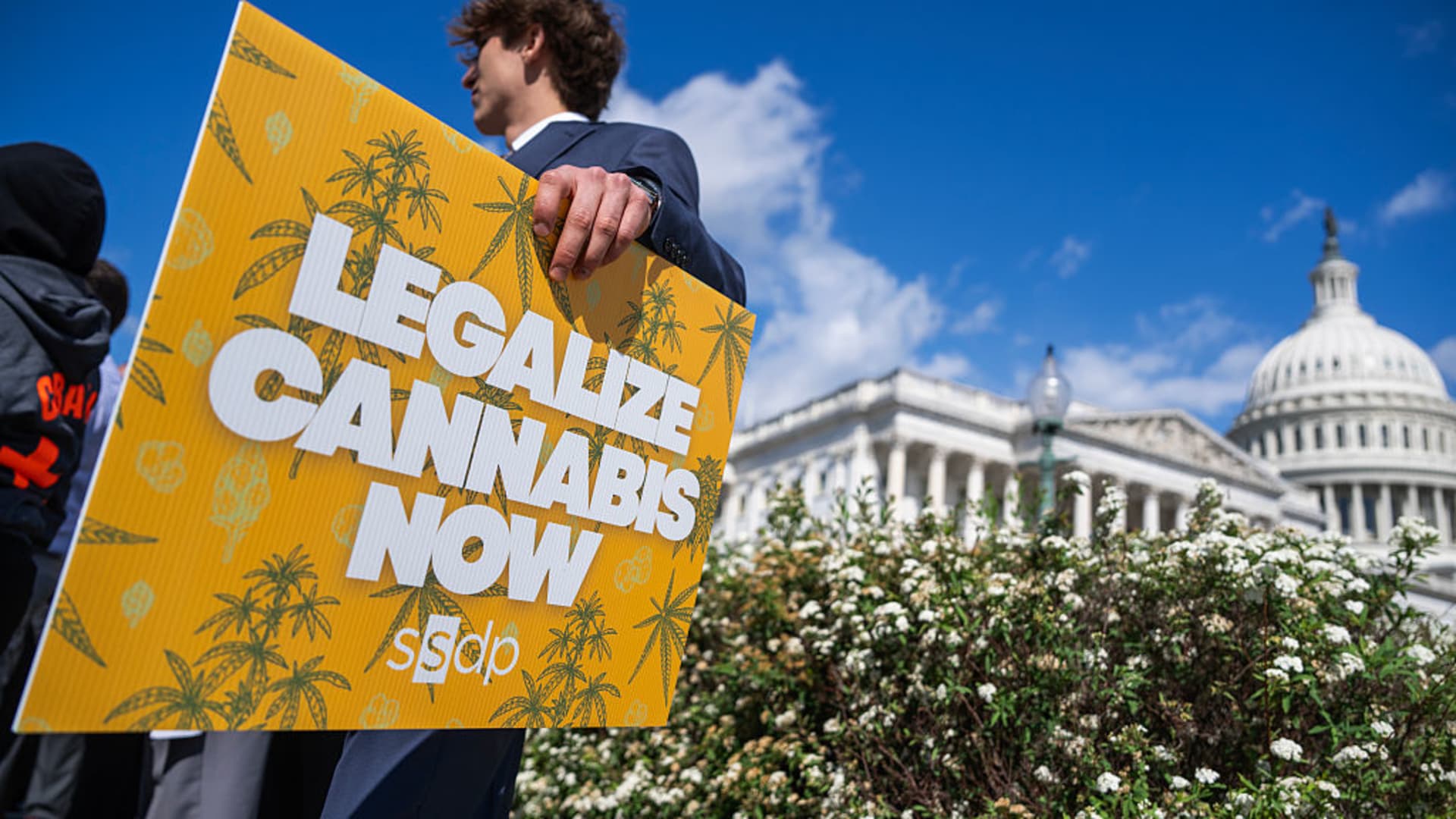
Advocates attend a news conference about the “impact of incarcerating those charged with marijuana-related offenses,” and policy reform ideas, outside the U.S. Capitol on Monday, April 20, 2026.
Tom Williams | CQ-Roll Call, Inc. | Getty Images
A White House executive order on psychedelics, signed by President Donald Trump on Saturday, aims to speed up research on drugs like psilocybin, MDMA and ibogaine, helping to legitimize an industry that’s long lived largely underground.
Advertisement
But it also raises a broader question: Will psychedelics fall victim, like cannabis has, to a slow-moving federal process?
The latest executive order comes roughly four months after an effort by President Donald Trump to reschedule cannabis, opening the door to greater research and investment opportunities. But since that directive, progress to reclassify cannabis has largely stalled, with the Drug Enforcement Administration review still ongoing and no final decision on moving marijuana from Schedule I to the lesser Schedule III.
The delay reflects how drug policy often slows once it enters interagency review, where scientific evaluation, legal standards and politics meet.
“The process has certainly been slow and frustrating for stakeholders when you consider they have spent decades fighting marijuana’s outrageous 1970s-era misclassification,” said Shawn Hauser, partner at cannabis law firm Vicente LLP.
Advertisement
Vicente LLP also serves as legal counsel for the National Compassionate Care Council (NCCC), a coalition of healthcare stakeholders focused on evidence-based cannabis policy.
The psychedelics order, however, focuses on research acceleration rather than legalization. It directs agencies like the U.S. Food and Drug Administration to expand clinical trials and “Right to Try” access for patients with serious mental health conditions, while leaving drug scheduling unchanged.
AtaiBeckley is among a number of psychedelic-focused drug developers that’s rallying since the order was signed over the weekend, up roughly 25% Monday. Several smaller-market cap stocks also jumped, including Compass Pathways, Definium Therapeutics and U.S.-listed shares of Cybin.
Hauser said the recent psychedelics order reflects a broader shift in Washington toward a medical-first framework, and could mark a path forward for cannabis rescheduling.
Advertisement
“The science-, patient-, health care-first approach is winning in Washington right now,” she said.
“The psychedelic pathway — built on physical-led protocols, clinical research and compassionate use frameworks — is actually a model cannabis advocates should be studying and adopting more aggressively,” Hauser said.
Safety first
Trump’s psychedelics measure has drawn particular attention for its inclusion of ibogaine, a powerful, naturally occurring psychoactive compound with longstanding safety concerns.
The drug is being studied for its applications with post-traumatic stress disorder, depression and addiction, but cardiac risks flagged by Nora Volkow of the National Institute on Drug Abuse remain a major barrier.
Advertisement
That tension is heightened by the expansion of “Right to Try” access, a federal law allowing patients diagnosed with life-threatening diseases or conditions to try experimental drugs when no other treatments work. This distinction typically applies only after Phase I trials are successful.
Ibogaine has struggled to meet that criteria, since most of the research into the drug has been conducted outside the U.S.
Psychedelic industry leaders say the order is meaningful, but the full impacts are still unknown until implementation catches up to prove scientific value.
“The opportunity now is not hype, it’s execution: rigorous science, disciplined safety standards, physician-led protocols and real-world outcome data,” said Tom Feegel, CEO of clinical neurohealth center Beond.
Advertisement
Beond, based in Cancun, Mexico, specializes in ibogaine therapy.
Feegel added that while the executive order signals legitimacy at the highest level of government, the next phase is critical.
Psychedelics still lack a commercial market, though clinical-stage developers, like AtaiBeckley, Compass and GH Research, are emerging. Many prioritize research around less controversial psychedelics like psilocybin and MDMA derivatives for mental health treatment.
U.S. states have been weighing the space, too. Colorado advanced regulated psychedelic access for its residents in 2022, while a Massachusetts ballot measure failed in 2024 with 56% of voters rejecting the access.
Advertisement
Cannabis, by contract, already has a multibillion-dollar adult-use industry across dozens of states, giving it a significant head start even as federal rescheduling remains unresolved.
Hauser argued the two industries are ultimately reinforcing one another.
“The two regulatory tracks aren’t in conflict,” she said. “Both are advancing the broader legitimacy of plant-based alternative medicines, and the infrastructure being built for one will inevitably support the other.”
‘Barron’s Roundtable’ panelists discuss investment opportunities among airline stocks.
A bipartisan pair of senators sent a letter to the CEOs of United Airlines and American Airlines expressing concerns about the possibility of a proposed merger between the two air carriers and requested more information about the impact of a possible deal.
The letter was sent by Sens. Elizabeth Warren, D-Mass., and Mike Lee, R-Utah, who wrote that a merger between United and American would “combine two of the ‘Big Four’ U.S. airlines into an ‘industry behemoth,’ controlling nearly half of the U.S. market share of the airline industry and creating the largest airline on the planet by revenue.”
Advertisement
“Any proposed merger between United Airlines and American Airlines raises serious questions under antitrust law and raises the likelihood of harm for American consumers,” Warren and Lee wrote.
The letter comes after a report that United CEO Scott Kirby proposed a merger with American and asked for the blessing of President Donald Trump on the proposed deal at a late February meeting, according to Reuters. The outlet reported that a source close to the White House was skeptical about the deal’s competitive impact and how it would affect consumers.
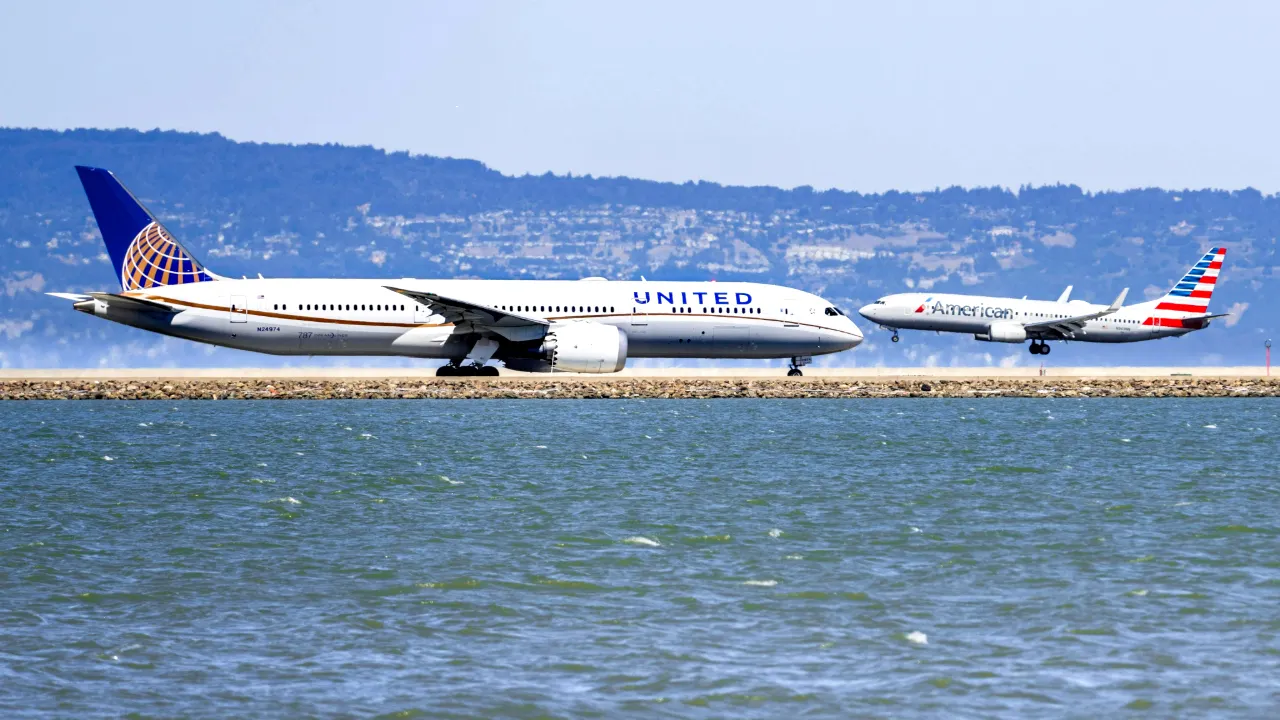
United Airlines and American Airlines are facing questions from a bipartisan pair of senators amid reports the companies are weighing a merger. (Samuel Corum/Bloomberg via Getty Images)
If a potential merger between the two airlines were to move forward, it would likely invite regulatory scrutiny from federal agencies as well as antitrust panels in Congress, such as the Senate subcommittee chaired by Lee.
Advertisement
In their letter, Warren and Lee expressed a number of concerns surrounding the potential for the combined company to raise prices on consumers, hurt smaller airlines’ ability to compete for gate access, and cut routes – particularly those out of Dallas Fort Worth International Airport and Chicago O’Hare International Airport.
They also raised concerns about job losses at a combined airline and creating monopsony power that results in the company “potentially suppressing wages and benefits industry-wide.”
Warren and Lee asked the CEOs of United and American to provide answers as to whether the companies have discussed a deal directly or with other outside parties. They also asked the airlines to justify how such a merger would be in the public interest, along with specific queries about air fares and fees, job losses and the elimination of routes under a merger.
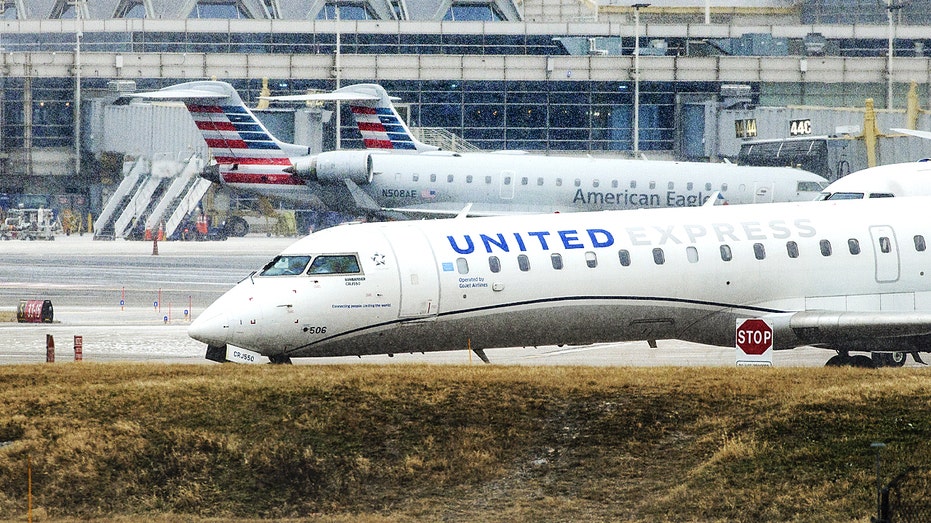
American said that it’s not interested in a merger with United. (Daniel Slim/AFP via Getty Images)
American Airlines said in a statement on Friday that it is “not engaged with or interested in” merger discussions with United.
“While changes in the broader airline marketplace may be necessary, a combination with United would be negative for competition and for consumers, and therefore inconsistent with our understanding of the Administration’s philosophy toward the industry and principles of antitrust law,” the carrier said. “Our focus will remain on executing on our strategic objectives and positioning American to win for the long term.”
ServisFirst Bancshares, Inc. (SFBS) Q1 2026 Earnings Call April 20, 2026 5:15 PM EDT
Company Participants
Davis Mange – Vice President Investor Relations Accounting Manager Thomas Broughton – Chairman, President & CEO Jim Harper – Senior VP & Chief Credit Officer David Sparacio – Executive VP & CFO
Conference Call Participants
Advertisement
Stephen Scouten – Piper Sandler & Co., Research Division Stephen Moss – Raymond James & Associates, Inc., Research Division David Bishop – Hovde Group, LLC, Research Division
Presentation
Operator
Advertisement
Greetings, and welcome to the ServisFirst Bancshares First Quarter Earnings Conference Call. [Operator Instructions]. It’s now my pleasure to turn the call over to Davis Mange, Director of Investor Relations. Davis, please go ahead.
Davis Mange Vice President Investor Relations Accounting Manager
Good afternoon, and welcome to our first quarter earnings call. We’ll have Tom Broughton, our CEO; Jim Harper, our Chief Credit Officer; and David Sparacio, our CFO, covering some highlights from the quarter and then take your questions. I’ll now cover our forward-looking statements disclosure.
Advertisement
Some of the discussion in today’s earnings call may include forward-looking statements. Actual results may differ from any projections shared today due to factors described in our most recent 10-K and 10-Q filings. Forward-looking statements speak only as of the date they are made, and ServisFirst assumes no duty to update them. With that, I’ll turn the call over to Tom.
Thomas Broughton Chairman, President & CEO
Davis, thank you. Good afternoon, and thank you for joining our first quarter conference call. We’re really pleased with our start to the year, and I’m going to highlight a few things before I turn it over to Jim Harper to give credit update.
Advertisement
On the loan side, we had pretty solid loan growth for the quarter. Loan growth is usually not very robust in the first quarter, but we did see
The Gaydon-based luxury marque is pressing ahead with trademark action against the Chinese conglomerate that owns a sizeable slice of its share register, in a dispute that underscores the delicate politics of cross-border automotive investment.
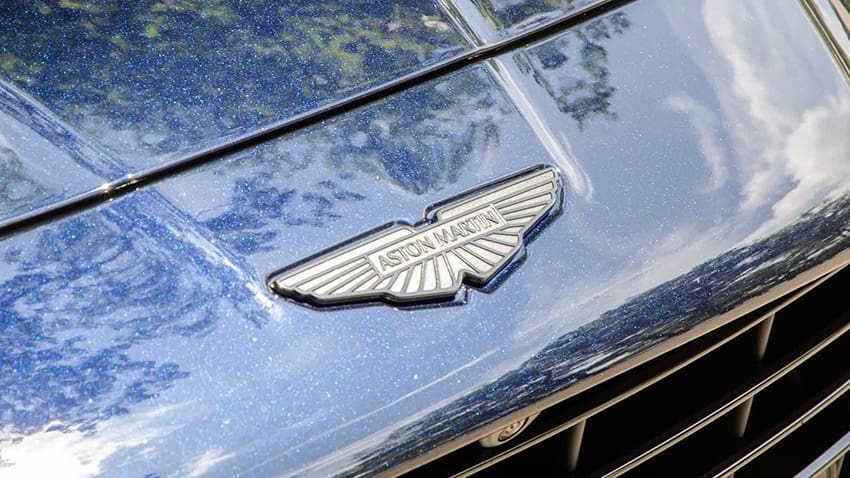
Aston Martin Lagonda has launched legal proceedings against Zhejiang Geely Holding Group, the Hangzhou-headquartered motor group that holds a 17 per cent stake in the British carmaker, over a winged emblem the luxury marque claims is too close for comfort to its own storied badge.
The case, which pits Britain’s most famous sports car manufacturer against one of its largest shareholders, centres on a logo Geely intends to roll out on vehicles produced by its London EV Company (LEVC) subsidiary, the Coventry-based maker of the capital’s black cabs. The design features a horse’s head set within a pair of outstretched wings, and Aston Martin contends that the overall impression sails far too close to the slender winged motif that has adorned its bonnets since 1927.
The row is not a new one, Aston Martin first raised objections in 2022, when Geely sought to register the marks with the UK Intellectual Property Office. The Gaydon firm formally opposed the application the following year, arguing infringement, only for the hearing officer to side with the Chinese group on the basis that consumers were unlikely to mistake an electric taxi for a £150,000-plus grand tourer.
LEVC logo
That ruling did little to cool tempers at Aston Martin, and the latest legal salvo suggests the board is prepared to press the point despite the awkward shareholder dynamic. Geely acquired its 17 per cent holding for roughly $310m (£245m) in 2023, making it one of the marque’s most significant backers alongside executive chairman Lawrence Stroll’s Yew Tree consortium and Saudi Arabia’s Public Investment Fund.
For Geely, the London taxi business is a strategically important British asset. The group has been quietly assembling a portfolio of UK marques over the past decade, with Lotus now firmly in its stable alongside LEVC. Its involvement at Aston Martin was initially welcomed as a source of both capital and potential manufacturing expertise at a moment when the British firm has been burning through cash to fund its electrification programme.
Advertisement
The dispute also comes at a bruising time for Aston Martin’s brand stewardship. The company recently saw 007 defect to the silver screen behind the wheel of a BYD, a coup for the rival Chinese electric-vehicle maker and a blow to a marque whose cultural cachet has long been bound up with the James Bond franchise.
In public, both parties are playing down the significance of the row. Aston Martin has declined to comment further on live proceedings, while Geely has characterised the matter as a routine trademark dispute and insisted it remains committed to a professional working relationship with the Gaydon marque as both business partner and investor.
Trademark lawyers watching the case note that the outcome will hinge on whether the courts accept that the average buyer, whether of an Aston Martin DB12 or an LEVC electric cab, could be confused or whether Aston’s goodwill in the wings motif is being unfairly exploited. What is already clear is that having a Chinese partner on the share register is no guarantee of a quiet life in the intellectual property courts.
Paul Jones
Harvard alumni and former New York Times journalist. Editor of Business Matters for over 15 years, the UKs largest business magazine. I am also head of Capital Business Media’s automotive division working for clients such as Red Bull Racing, Honda, Aston Martin and Infiniti.
SoftBank-backed digital-commerce ecosystem AceVector Ltd has filed updated draft papers with markets regulator Sebi for an initial public offering (IPO), which will include a fresh issue of shares worth Rs 300 crore.
In addition to the fresh issue, the IPO will also involve an offer-for-sale (OFS) of 6.38 crore shares by existing shareholders, according to the updated draft red herring prospectus (UDRHP).
As part of the OFS, promoter Starfish I Pte Ltd and other shareholders Nexus, Wonderful Star Pte Ltd, Kenneth Stuart Glass, Jason Ashok Kothari, Priyanka Shreevar Kheruka, Rupen Investment and Industries, and Centaurus Trading and Investments will offload their holdings.
Despite the share sale by several investors, AceVector’s promoters and founders Kunal Bahl and Rohit Bansal, who together hold a 23.56 per cent stake, will not participate in the OFS. However, another promoter entity Starfish, which owns 30.68 per cent stake in the company, will be divesting part of its stake.
Advertisement
The company plans to use the IPO proceeds to strengthen technology infrastructure, support marketing and business promotion for Snapdeal, pursue inorganic growth through acquisitions, and meet general corporate requirements.
Live Events
The Gurugram-based company operates Snapdeal, a value-focused lifestyle e-commerce marketplace; Unicommerce, an e-commerce enablement SaaS platform; and Stellaro Brands, an omnichannel consumer brands arm. Financially, AceVector reported operating revenue of Rs 244 crore in H1 FY26, up 34 per cent from Rs 181 crore in H1 FY25. During the same period, its adjusted EBITDA loss narrowed significantly to Rs 9.2 crore from Rs 28 crore a year earlier.
AceVector had initiated its IPO journey earlier this year by filing confidential draft papers with Sebi in July and subsequently securing approval in November. By opting for the confidential pre-filing route, the company gained the flexibility to delay public disclosure of IPO details until the later stages.
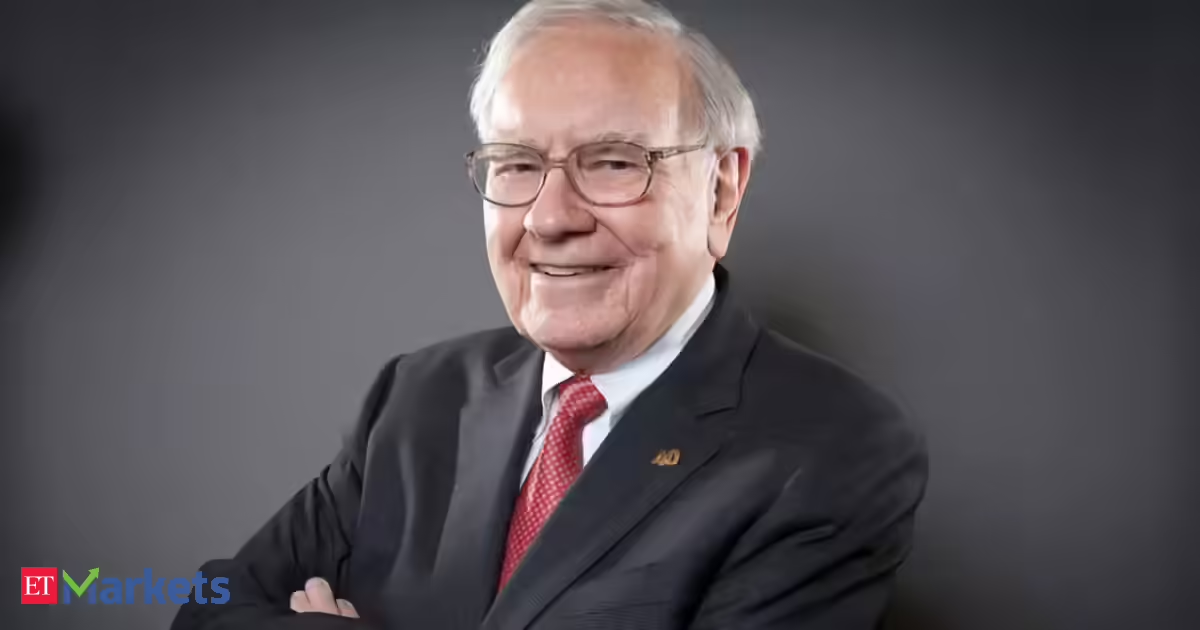
Warren Buffett and Michael Burry, two investors closely watched across global markets, are taking diametrically opposite positions on the artificial intelligence frenzy, setting up a rare, high-stakes clash over whether Silicon Valley’s hottest trade is a once-in-a-generation opportunity or a bubble waiting to burst. Their positions, revealed in recent disclosures and letters, come as concerns about an AI bubble gain mainstream attention while investors continue pouring capital into the sector.
Buffett’s Berkshire Hathaway last month unveiled a large new stake in Alphabet, instantly propelling the Google parent into Berkshire Hathaway’s top 10 holdings. The move is widely seen as an endorsement of Alphabet’s heavy AI investments and the market’s view of the company as a frontrunner in the AI race.
The investment comes at a moment of transition for Berkshire. Buffett announced in May that he will step down as CEO at the end of this year, though he will retain his stock, handing the reins to vice chairman Greg Abel after decades at the helm of a company that began as a Nebraska textile mill and grew into one of the most influential conglomerates in American finance.
Burry doubles down on his skepticism
Michael Burry, however, is moving in the opposite direction. The investor who famously profited from betting against the U.S. housing market in 2008 has taken new short positions in Palantir and Nvidia, two of the highest-profile beneficiaries of the AI boom.He has been particularly critical of accounting practices across Big Tech, arguing that companies “have been systematically increasing the useful lives of chips and servers, for depreciation purposes, as they invest hundreds of billions of dollars in graphics chips with accelerating planned obsolescence.”
Advertisement
Live Events
Burry is also in a period of transition. Scion Asset Management, his hedge fund, will close by year-end. In a recent investor letter, he wrote that his “estimation of value in securities is not now, and has not been for some time, in sync with the markets.” He has since launched a financial newsletter, Cassandra Unchained, where he continues to express skepticism about the AI boom.
A market split as AI hype peaks
Their opposing moves come as even industry leaders begin to acknowledge stretched expectations. Sam Altman, CEO of OpenAI, has voiced concerns about the pace and scale of speculative fervor surrounding artificial intelligence. Still, capital continues to flood the sector, and the disagreement between two investors of such high reputation underscores the uncertainty in the market. Buffett turned Berkshire Hathaway into one of the most recognizable names in American investing, while Burry inspired Michael Lewis’s The Big Short and the film adaptation starring Christian Bale.Now, with both navigating turning points in their own careers, the divergence in their AI positions is emerging as one of the most closely watched splits in the market—one that could signal whether the boom is built on solid ground or heading toward another historic correction.
(Disclaimer: Recommendations, suggestions, views and opinions given by the experts are their own. These do not represent the views of The Economic Times)
I have been managing investments for over eight years in capital markets. By qualification I am a CFA Charter holder. I primarily look for discrepancies between the price and value of a security. With a focus on first-principal mindset, I try breaking down ideas into their core- most tangible parts, affecting the theses while deliberately avoiding the non-significant matter into crowding the analysis. If you like my ideas or frameworks, reach out via email/message for more granular and concentrated- portfolio level specific investment researches and ideas. I am at prakhar@shrihittruealphacapital.com.
Analyst’s Disclosure: I/we have no stock, option or similar derivative position in any of the companies mentioned, and no plans to initiate any such positions within the next 72 hours. I wrote this article myself, and it expresses my own opinions. I am not receiving compensation for it (other than from Seeking Alpha). I have no business relationship with any company whose stock is mentioned in this article.
Readers are advised to fact-check thoroughly before committing any capital to this idea; this reflects the personal views of the author and should not be pursued as formal financial or investment advice in any manner. While every effort has been made to ensure accuracy, errors may exist in the data and financial projections presented. The author is not responsible for any financial gains or losses incurred from investments made based on this content. For any additional information regarding the company or any clarification, feel free to comment. Happy to discuss anything further with regard to the presented investment thesis
Advertisement
Seeking Alpha’s Disclosure: Past performance is no guarantee of future results. No recommendation or advice is being given as to whether any investment is suitable for a particular investor. Any views or opinions expressed above may not reflect those of Seeking Alpha as a whole. Seeking Alpha is not a licensed securities dealer, broker or US investment adviser or investment bank. Our analysts are third party authors that include both professional investors and individual investors who may not be licensed or certified by any institute or regulatory body.






















































You must be logged in to post a comment Login