Connect with us

Business

Turning Workplace Safety from a Compliance Exercise into a Business Advantage

Published

on

Turning Workplace Safety from a Compliance Exercise into a Business Advantage

Workplace safety is often discussed as a set of duties: complete a risk assessment, keep records, train employees and review the paperwork.

Those actions matter, but treating them as the whole objective misses the commercial value of a well-designed safety system. The real advantage appears when safety information improves the way a business allocates resources, introduces change, manages contractors and responds to uncertainty. In that form, safety is not a separate administrative burden. It becomes part of how the organisation protects capacity, earns trust and makes decisions.

This distinction is especially important for growing companies. A new site, larger team, changed layout or faster delivery schedule can alter the risk picture before leaders notice it. Informal controls that worked in a small operation may become unreliable when more people, equipment and suppliers are involved. A business that waits for an incident, complaint or inspection to expose those weaknesses is forced to act under pressure. A business that reads the early signals can correct them while choices remain open and disruption is still limited.

Start with the Business, Not the Folder

A useful safety review begins by understanding how work creates value. Which activities must happen on time? Where do people, vehicles, machinery, customers and contractors interact? Which roles hold knowledge that is difficult to replace? What changes are planned over the next twelve months? These questions reveal the operational context in which hazards exist. They also prevent a common mistake: producing documents that describe an idealised workplace rather than the one employees actually experience.

The written system should then support the work. Policies clarify direction; risk assessments record important judgements; inspection forms capture evidence; and action logs make follow-up visible. None of these is valuable merely because it exists. A document earns its place when it helps someone recognise a problem, make a consistent decision or confirm that a control has worked. If employees cannot find the procedure, managers do not use the findings or actions disappear into email, the organisation has paperwork without control.

Advertisement

Connect Safety to Change Management

Change is one of the strongest predictors that an old assumption may no longer be safe. Businesses routinely evaluate the financial and customer effects of a move, refurbishment, new product or acquisition, yet the safety review may arrive after the decision. That sequence creates expensive redesign. An escape route is obstructed, equipment lacks adequate space, a contractor cannot isolate a system, or the planned staffing level cannot support emergency arrangements. Bringing safety questions into the project brief is faster and cheaper than correcting them after launch.

The trigger does not need to be dramatic. New shift patterns can create lone-working issues. A software change can increase screen time or work pressure. Additional storage can change manual-handling and fire risks. Rapid recruitment can dilute supervision and local knowledge. A reliable process identifies which types of change require review, who must be consulted and what evidence is needed before approval. It also includes a post-change check, because the real workplace often behaves differently from the design.

Give Leaders Decision-Ready Information

Senior managers rarely need every inspection detail. They need a concise view of significant risk, control reliability, overdue actions and barriers that require authority or investment. A long report can obscure these points. A stronger briefing identifies what could happen, who may be affected, what controls exist, why confidence is limited and what decision is required. It distinguishes an immediate danger from a longer-term improvement and makes uncertainty explicit rather than hiding it behind a traffic-light colour.

This approach changes board conversations. Instead of asking whether the business is “compliant,” leaders can ask whether high-consequence risks are understood, whether critical controls are tested and whether planned growth is creating new exposure. They can compare safety investment with operational priorities because the information is expressed in terms of consequence, reliability and continuity. The goal is not to turn every risk into a financial number, but to make the reasoning clear enough for responsible trade-offs.

Advertisement

Make Ownership Unmistakable

Safety weakens when responsibility is broadly stated but operational ownership is vague. Directors set expectations and provide resources, but they cannot personally close every action. Managers control local priorities, supervisors influence daily behaviour, and employees contribute knowledge about how work is really performed. Facilities, human resources, procurement and project teams also shape risk through maintenance, recruitment, purchasing and contractor selection. Each important control should therefore have an owner with authority, time and a clear definition of completion.

Ownership also needs resilience. If a fire-safety check stops when one manager is on leave, the process depends on memory rather than design. Deputies, escalation routes and handover rules are simple but powerful controls. The same applies to external advice. A competent adviser can analyse, challenge and recommend, but the client organisation still decides priorities and implements the response. Clear roles allow specialist support to strengthen management instead of becoming a place to outsource accountability.

Use Risk Assessment as a Management Tool

Good risk assessment is an exercise in observation and judgement, not form completion. The assessor should watch the task, inspect the environment, speak with the people doing the work and review relevant incidents, maintenance history and complaints. This evidence often reveals gaps that a generic template cannot see: an alarm that is difficult to hear, a delivery that blocks a route, equipment that encourages awkward handling, or a shortcut created by unrealistic production pressure.

The assessment should identify people who may be affected, including contractors, visitors, new starters, lone workers and anyone who may need additional support in an emergency. Controls should be proportionate and should favour removing or reducing the hazard before relying only on instructions or protective equipment. Significant findings need an action owner, priority and review trigger. Phrases such as “staff to take care” are not controls because they do not describe a reliable change in the conditions of work.

Advertisement

An assessment is most valuable when it is connected to other decisions. A refurbishment can affect fire precautions, access, electrical capacity, contractor management and business continuity at the same time. Reviewing each subject separately can create contradictions. A short coordinated meeting may discover that a proposed storage area conflicts with an escape route or that noisy work overlaps with customer hours. Coordination prevents one team from solving its problem by creating another team’s risk.

Turn Consultation into Early Warning

Employees see the weak signals that dashboards often miss. They know which door sticks, which instruction is confusing, where a queue causes people to improvise and which task has become harder since a process changed. Consultation gives managers access to that operational intelligence. It should not transfer responsibility to workers; it should make their experience part of the evidence used to design better controls.

Effective consultation is accessible and closes the loop. Office staff, mobile workers, temporary employees and night teams may need different routes to contribute. A short conversation during a site walk may work better than a formal meeting, while a confidential channel may be important for sensitive concerns. Whatever method is used, managers should acknowledge reports, explain interim measures, name the action owner and provide updates. Silence after reporting teaches people that raising an issue is pointless.

Design Training Around Capability

An attendance sheet proves that a session occurred, not that an employee can make the right decision. Training should begin with the capability required. Can the person recognise a damaged guard, isolate equipment, select a safe method, respond to an alarm or report a concern? The learning method can then be matched to that outcome: supervised practice, a short briefing, a scenario, a toolbox talk or formal instruction. A competence check should test understanding in the context where it will be used.

Advertisement

Training cannot compensate for poor design. If workloads make the safe method impractical, equipment is unavailable or supervisors reward speed over care, employees receive conflicting signals. Managers should investigate repeated errors as system evidence rather than assuming that another presentation will solve them. Refresher learning is most useful after a change, observed gap, incident or long absence from a task. This keeps training responsive to need instead of tied only to a calendar.

Manage Contractors at the Interface

Contractors introduce specialist expertise, but the greatest risk often sits between their work and the client’s operation. A technically capable contractor may not know the building, vulnerable occupants, traffic patterns or emergency arrangements. The client may not understand the hazards created by the contractor’s method, substances or isolations. Good control therefore begins before appointment, with a clear scope, proportionate competence checks and an exchange of relevant risk information.

On arrival, contractors need a site-specific briefing and a named contact. Higher-risk work may require permits, isolation controls or closer supervision. Changes to the method should be discussed rather than improvised. Completion is another critical point: someone should verify that guards, alarms, routes and services are restored and that any residual risks are communicated. A purchase order is not a complete contractor-management system; the system covers planning, coordination, monitoring and handback.

Learn from Near Misses Without Creating Blame

A near miss shows that the distance between normal work and harm was smaller than expected. Reporting should therefore be quick, proportionate and psychologically safe. If every report leads to a lengthy form or an assumption of fault, employees will remain silent. A short initial record can capture what happened, the possible consequence, immediate action and evidence. Events with serious potential or recurring features can then receive deeper investigation.

Advertisement

The investigation should look beyond the last person’s action. Workload, layout, maintenance, supervision, information, equipment and competing priorities may all shape behaviour. Correcting only the visible error leaves the underlying condition in place. Useful learning is specific enough to change work, shared without unnecessary personal detail and followed by a check that the action reduced risk. Closure means verified improvement, not simply that a task has been marked complete.

Measure Control, Not Just Injury

Injury figures matter, but they are late indicators and can be misleading when numbers are small. A quiet period may reflect strong control, good luck or weak reporting. Leading measures show whether the system is working before harm occurs. Examples include overdue high-priority actions, repeated defects, completion of planned maintenance, response time to hazard reports, quality of contractor inductions and the proportion of business changes reviewed before implementation.

The measure should lead to a decision. Too many metrics create administrative noise and encourage teams to chase numbers. A small set reviewed consistently is more useful. Leaders should ask what is worsening, why important actions remain open and whether workers trust the reporting process. Periodic sampling is essential: a dashboard may say training is complete, but observation can reveal whether the expected capability is present. Evidence should challenge assumptions, not decorate a meeting pack.

Recognise When Independent Support Adds Value

Internal teams understand the organisation’s history, relationships and operational pressures. External specialists add value when they bring independent challenge, deeper technical competence or capacity that the business does not hold. Useful triggers include rapid expansion, a serious incident, complex fire or construction work, unfamiliar requirements, repeated unresolved findings or the need to test whether an established system still reflects reality.

Advertisement

Working with Ablemarsh Safety Consultants can help an organisation translate broad concerns into site-specific priorities across areas such as risk assessment, competent-person support, fire safety, training and construction safety. The strongest engagement begins with the work itself. The adviser should explain scope, assumptions and limitations, distinguish urgent controls from longer-term improvements and produce actions that managers can realistically own.

When comparing a workplace safety consultancy UK businesses should look beyond the volume of documents promised. Relevant sector experience, clear communication, proportionate judgement and practical follow-through are more important. Ask who will perform the work, how employees will be involved, how findings will be prioritised and how success will be checked. A useful adviser builds the client’s capability and confidence rather than making ordinary decisions dependent on constant external approval.

A Practical Improvement Cycle

The first stage is to establish the baseline. Confirm leadership ownership and competent support, identify significant risks, review serious or recurring incidents and inspect the workplace with people who know the tasks. Address immediate danger first. Then create a limited priority list based on possible harm and the reliability of existing controls. Trying to rewrite every document before understanding the main weaknesses consumes energy without necessarily reducing risk.

The second stage is to strengthen the operating rhythm. Assign actions, deadlines and escalation thresholds. Make reporting easy, schedule proportionate inspections and connect safety checks to projects, procurement and maintenance. Review induction, contractor arrangements and emergency plans against real conditions. Remove duplicate forms and meetings that do not influence a decision. Simplicity is valuable when it improves consistency and makes responsibility visible.

Advertisement

The third stage is to verify and learn. Sample completed actions at the workplace, run a realistic emergency exercise, review one recent change and investigate a near miss for underlying causes. Ask employees whether communication has improved. Present leaders with remaining significant risks, barriers and decisions required. The aim is not a perfect system at a fixed date. It is a functioning cycle that notices change, makes proportionate decisions and checks whether those decisions worked.

Final Thoughts

Workplace safety becomes a business advantage when it creates visibility and discipline. Leaders understand which risks could interrupt the operation, managers know who owns the response, and employees can raise weak signals before they grow. Projects encounter fewer late surprises, contractors receive clearer information, and evidence supports better investment decisions. These benefits do not come from paperwork alone; they come from connecting safety to the way the business is managed.

The strongest system is rarely the most elaborate. It is proportionate, grounded in real work and kept alive through consultation, monitoring and learning. Compliance remains important, but it is the starting point rather than the finish line. When safety information is used to improve planning and everyday choices, the organisation protects people while also strengthening continuity, trust and its ability to grow.

Advertisement

Continue Reading
Click to comment

You must be logged in to post a comment Login

Leave a Reply

Business

The Easy Home Buyer Builds a Homeowner First Culture Through Trust and Accountability

Published

on

The Easy Home Buyer Builds a Homeowner First Culture Through Trust and Accountability

The Easy Home Buyer has grown in a business where speed often gets the most attention. Cash offers, fast closings, and as-is sales are usually the visible parts of the company’s work. Chad Young has tried to build something less visible but more lasting: a culture that teaches its team to understand the homeowner first.

That distinction matters. Many sellers who contact a direct home buyer are not simply comparing numbers. They may be facing an inherited property, divorce, foreclosure, costly repairs, a tenant problem, or a family transition. Some need someone to explain whether a cash sale is even the right option.

Young’s view is direct. The Easy Home Buyer should be “advisors first and house buyers secondly.” That idea has shaped hiring, training, leadership development, vendor relationships, and the way the team communicates with sellers across the Spokane and Coeur d’Alene area.

A Business Built Around Listening

Advertisement

The Easy Home Buyer began with Chad and Bree Young after years of operating Young’s Quality Cleaning. That earlier business taught them the satisfaction of improving neglected spaces and seeing a finished result. In 2020, they bought their first home to renovate and resell. The process gave them a new way to apply the same instinct: solve a practical problem, improve a property, and leave something better behind.

Company materials describe the first seller, Penny, as an important part of that origin story. She needed to move back to Seattle after a difficult season, and she wanted a simple way to leave her house behind. The transaction mattered, but the conversation mattered more. Chad listened, asked what would help, and came away with a deeper understanding of what the company could become.

The lesson was straightforward: sellers often need relief before they need a sales pitch. They need someone to ask the right questions, explain the tradeoffs, and respect the decision that follows. That lesson became one of the quiet building blocks of the company’s operating culture for its team as it grew locally.

Advisors First, Home Buyers Second

Advertisement

Young does not believe every homeowner needs a cash offer. That principle is central to the company’s culture because it changes the starting point of every conversation.

Instead of leading with a purchase price, the team is trained to ask questions. What is the seller’s timeline? What condition is the home in? Is the homeowner trying to avoid repairs, settle an estate, resolve a title issue, or move quickly because of a life change? Could listing the home make more sense? Would another option produce a better outcome?

Young has said the company wants homeowners to have enough information to make a qualified decision. That includes explaining when an as-is cash sale may produce a similar net result to a traditional listing after repairs, commissions, closing costs, taxes, and other fees are considered. It also includes acknowledging when a direct sale is not the best path.

That approach places education before conversion. It also requires discipline. A company cannot claim to be homeowner-first if every conversation is treated as a transaction to be won. The Easy Home Buyer has built its reputation around the belief that the right recommendation may sometimes be the one that does not lead to a purchase.

Advertisement

Hiring For Character Before Skill

For Young, culture starts before a person is hired. He believes skill sets can be trained, but character cannot be manufactured after the fact.

That belief affects the interview process. The company looks for emotional intelligence, steadiness, and the ability to communicate with people who may be under pressure. Experience in real estate can help, but it is not treated as the only measure of fit. In a business built around sensitive conversations, the wrong temperament can create problems no script can fix.

The Easy Home Buyer’s team often enters situations where people are overwhelmed, frustrated, embarrassed, or unsure whom to trust. A seller may be dealing with deferred maintenance. Another may be sorting through a family estate. Another may be managing foreclosure or divorce. The employee sitting at the kitchen table has to know more than numbers.

Advertisement

That is why Young places such weight on character. A person can learn how to estimate repairs, review comparable sales, or explain a closing timeline. It is harder to teach patience, tact, and judgment to know when a seller needs space to talk before decisions are made.

Training People For Hard Conversations

The Easy Home Buyer also supports its team through leadership coaching. Young has brought in coaches to speak with staff about emotional intelligence, difficult conversations, empathy, and tact. The goal is not to make employees sound polished. It is to help them communicate in the way each homeowner needs to be addressed.

This matters because direct home buying can involve high-stakes conversations. The seller is often making a decision tied to memory, family, money, and pressure. A rushed answer can make the process feel impersonal. A vague answer can create mistrust. A defensive response can turn a difficult moment into a worse one.

Advertisement

Leadership coaching gives the team a shared language for those moments. It reinforces company values and gives managers a way to develop people beyond technical ability. Over time, that training helps create a more consistent customer experience.

Technology That Protects The Human Element

Young sees technology as useful, but not as a substitute for human contact. The Easy Home Buyer uses AI and other tools to improve response times, prepare documents, check for errors, and keep internal processes moving. In that sense, technology helps the company become more organized and responsive.

Yet Young’s view is that technology should create more room for people, not less. If software reduces administrative work, team members can spend more time understanding a seller’s needs. If documents are reviewed faster and more accurately, the team can focus on the conversation rather than the paperwork.

Advertisement

The company’s business still depends on the face-to-face element. Young has described sitting across from homeowners at their dinner table as part of the foundation of the company. Technology can support the process, but it cannot replace trust built in person.

Accountability As A Service Standard

When asked what makes a successful real estate investment company from the homeowner’s perspective, Young gave a simple answer: do what you say you are going to do when you say you are going to do it.

The Easy Home Buyer’s core value of “Full Ownership” connects with that idea. Accountability is not only about fixing mistakes after they happen. It is about taking responsibility for the process from the beginning. It means being clear about what the company can do, what it cannot do, and what the homeowner should expect next.

Advertisement

The company’s other values support the same direction. “You Matter More” keeps the seller at the center. “Everyone Wins” pushes the team toward fair outcomes. “Continual Improvement” creates room to listen and adjust. “Be a Blessing” reflects the company’s intent to leave a positive mark on each interaction.

Problem Solving Beyond The Cash Offer

Young describes problem solving as the definition of what the company does each day. Few properties come with identical circumstances. Some homes need major repairs. Others involve squatters, messy title issues, difficult timelines, or family members who complicate the sale.

After hundreds of local transactions, The Easy Home Buyer has learned that solving the homeowner’s problem may require more than buying the house. One recent example involved a seller whose relative was living in the property and would not leave. The team helped move the relative into another company-owned home on a short-term lease, provided moving assistance, and connected him with a property management company to help find a longer-term rental.

Advertisement

Local Relationships With A Purpose

The Easy Home Buyer’s relationships with attorneys, contractors, title companies, and other local professionals also serve homeowners. Young has said the company’s volume and vendor relationships can help it close faster and keep renovation budgets lower. Those savings can affect the strength of the offer and the certainty of the process.

Local experience matters, too. The company presents itself as family owned and locally operated, with roots in the Coeur d’Alene and Spokane area. That local identity shapes how Young talks about the work. These are not distant markets on a spreadsheet. They are neighborhoods where team members live, raise families, and plan to stay.

A Culture Built To Serve Homeowners

Advertisement

The Easy Home Buyer’s growth has not moved it away from its original mission. Chad Young has built a company that hires for character, trains for empathy, uses technology with restraint, and measures service through accountability. The model still involves buying and renovating houses, but the larger culture is built around helping homeowners make informed choices. That is the point Young continues to reinforce: the company can grow, handle more complex projects, and serve more people without losing the human standard that made the work matter in the first place.

Continue Reading

Business

Opferkuchs dive into BTR property venture with Spotted Gum

Published

on

Opferkuchs dive into BTR property venture with Spotted Gum

Yes. Corporate subscriptions are available for teams and organisations, with discounted rates as user numbers increase. Pricing starts from $1,625 + GST per user.
Get in touch
to discuss the right option for your organisation.

Business News subscriptions are used by executives, investors, consultants and professionals who need to stay informed and make better decisions about the WA market. When you subscribe you’ll get

  • Unlimited access to WA’s most trusted business journalism
  • Data & Insights — detailed profiles of WA companies, people, projects and deals
  • MyBN — a personalised feed based on the companies, people and sectors you follow
  • Special publications and industry reports
  • Daily and weekly email newsletters

Data & Insights is a research tool built specifically for the WA market. It draws on more than 30 years of Business News reporting, updated regularly to reflect what’s happening now. Use it to:

  • Look up detailed profiles of WA companies, including financials, directors and ownership
  • Find decision-makers and track their career movements
  • Research live and completed projects across WA industries
  • Monitor deals, appointments and market activity
  • Access industry rankings and league tables

Data & Insights is updated daily by our dedicated research team, which uses the latest announcements, ASX filings and editorial coverage to keep our person, company, list and project records up to date.

Business News welcome all opportunities to make our dataset accurate, complete and current, so if you have an update request, please email the team at
general@businessnews.com.au, and we’d be happy to assist.

Advertisement

MyBN
is part of every subscription. It’s your personalised view of Business News. You can follow the companies, people, sectors and projects that matter to you, and get a news feed and alerts tailored to your interests. You can save articles to read later and retain only what you need.

Only subscribers have full access to all content on the Business News website.

Advertisement

If staying informed about the WA economy is part of your job, and/or you’re looking for networking opportunities in WA, Business News is built for you.

Business News subscribers are:

  • Executives and directors tracking competitors, clients and market movements
  • Investors and advisers researching companies, deals and industry trends
  • Consultants and professionals staying across sectors relevant to their clients
  • Business owners looking for leads, context and market intelligence

Most Business News publications cover national or global markets. Business News is focused entirely on Western Australia, which means the journalism, the data and the intelligence are all built around WA companies, people and projects — not adapted from a national feed. Data & Insights, included with every subscription, combines more than 30 years of WA-specific editorial research with live business data. There’s no comparable product for the WA market.

Advertisement

The Morning Digest Email provides a comprehensive wrap of the major headlines, relevant to WA business, and includes with a snapshot of the overnight news covering oil, gold and ASX-listed companies.

The Afternoon Wrap Email focuses on the news covered by our team of journalists during the course of the working day, including exclusive stories and analysis, all of which relates to WA business and the local economy.

The BN Weekender Email contains a wrap of the Business News from the week that was, highlighting the top stories in each area of WA business.
Sign up for free.

Advertisement

We’re happy to help.
Get in touch
and our team will come back to you.

Advertisement
Continue Reading

Business

Canyon tells shareholders to reject A2MP offer

Published

on

Canyon tells shareholders to reject A2MP offer

An independent board convened by Canyon Resources to assess a takeover bid for the company has urged shareholders to reject the deal, after it was deemed “not fair or reasonable”. 

Canyon released a target statement today, advising shareholders to reject the offer by A2MP – majority owned by India’s Gupta family – of 5c per share it doesn’t already own in the company. 

A2MP already owns 55.56 per cent of Canyon and lobbed its offer for Canyon last month at a significant discount to the company’s recent trading prices

In doing so, A2MP alleged the ASX-listed, Cameroon focused bauxite aspirant was trading at values higher than it was worth. 

Advertisement

But an independent panel led by Canyon chairman Mark Hohnen, which excluded representatives with ties to A2MP, has today hit out at those claims.

The panel claimed the offer materially undervalued Canyon, based of independent analysis by BDO which determined the takeover aspirant’s offer was not fair or reasonable. 

A2MP had claimed that the offer reflected the challenging set of circumstances Canyon faced in bringing its flagship Minim Martap project to production, and financing difficulties.

The firm said in its initial bidder’s statement that the market for the project had changed substantially since a definitive feasibility study was completed in September 2025.

Advertisement

“The bidder considers that the DFS needs to be updated to include a lower bauxite premium, increased freight costs, higher levies and other charges, and to have regard to general inflation, fuel costs and other changes that will increase capital expenditure required for necessary logistics solutions,” it said.

“As a result, the bidder considers the Minim Martap bauxite project’s funding requirements have increased and that the project may no longer be viable in its current shape and with available funding.”

Canyon hit back at that assertion. 

Advertisement

“A2MP’s claims regarding the Minim Martap project are unsubstantiated,” it said. 

Canyon continues to pursue credible funding alternatives to advance the Minim Martap project.”

The company urged its shareholders to reject the A2MP offer.

A2MP’s is currently building an integrated bauxite-to-aluminium value chain in Cameroon, including an alumina refinery and aluminium smelting capacity, and has previously stated Minim Martap would be complementary to that plan. 

Advertisement

Its majority owner, Gupta family office Eagle Eye Asset Holdings, has substantial business interests in Africa.

The offer by A2MP was separately referred to the Takeovers Panel by minority holder Jeremy Raper – a prominent east coast investor

Advertisement
Continue Reading

Business

Tower Semiconductor: Silicon Photonics Inflection, Buy The Drawdown

Published

on

Tower Semiconductor: Silicon Photonics Inflection, Buy The Drawdown

Tower Semiconductor: Silicon Photonics Inflection, Buy The Drawdown

Continue Reading

Business

Liontown Limited 2026 Q4 – Results – Earnings Call Presentation (OTCMKTS:LINRF) 2026-08-31

Published

on

OneWater Marine Inc. (ONEW) Q1 2026 Earnings Call Transcript

This article was written by

Seeking Alpha’s transcripts team is responsible for the development of all of our transcript-related projects. We currently publish thousands of quarterly earnings calls per quarter on our site and are continuing to grow and expand our coverage. The purpose of this profile is to allow us to share with our readers new transcript-related developments. Thanks, SA Transcripts Team

Continue Reading

Business

AI key to driving faster growth says BoE governor Andrew Bailey

Published

on

Business Live

He said that a softening in the labour market has been evident for some time.

(Image: Getty Images)

Artificial intelligence (AI) and robotics will be a “critical source” of faster growth that is needed in the UK economy, the boss of the Bank of England has said.

Andrew Bailey said there was a “different growth story” in the UK to the US, where he was attending the Federal Reserve’s annual conference at Jackson Hole, Wyoming.

“Having said that, I think AI is critical here because we need to see faster growth in the UK, we need to see faster productivity growth, and I think AI and robotics are a critical source of that,” he said in an interview with Bloomberg TV.

On the topic of the cost of living, Mr Bailey said he felt that so-called second-round effects of inflation in the UK were “quite subdued”, meaning things like wage demands and broader shop price increases.

Advertisement

“We are looking at the second-round effects of energy shocks, we’re looking at the question of do we expect inflation to return to target and over what time,” he said.

“The UK situation at the moment, so far, is I think we’re seeing quite subdued second round effects.

“I think we’ve seen a softening of the labour market for some time now.

“That’s why I’ve taken the view that I think we can watch this situation for the moment. But we have to come back to it.”

Advertisement

He added: “I think we are seeing at the moment relatively muted second-round inflation effects but obviously this is an evolving situation and I can’t give you any promise that will continue.

“Our job is to get inflation back to target and we will do that.”

The Bank of England is tasked with keeping Consumer Prices Index (CPI) inflation at a 2% rate.

CPI inflation rose to 2.9% in July, the highest rate since March after energy prices were pushed up by the Iran war, official figures showed.

Advertisement

The Bank has kept UK interest rates on hold at 3.75% since December in a bid to keep a lid on price pressures.

Mr Bailey’s remarks came after his US counterpart, Kevin Warsh, said inflation is still too high and suggested the Federal Reserve may have to raise interest rates in the coming months to bring it down.

The Fed chairman acknowledged that recent inflation reports show it has cooled slightly, but “they do not tell me that underlying trends have meaningfully improved”.

“We must be confident that underlying inflation is moving to our objective, clearly and at sufficient speed,” he said.

Advertisement

“Otherwise, we have work to do.”

Continue Reading

Business

Commonwealth Bank Shares Rise Nearly 2 Percent as Banks Lead ASX Higher on Rate Hike Expectations

Published

on

A Starbucks logo is pictured on the door of the Green Apron Delivery Service at the Empire State Building in New York

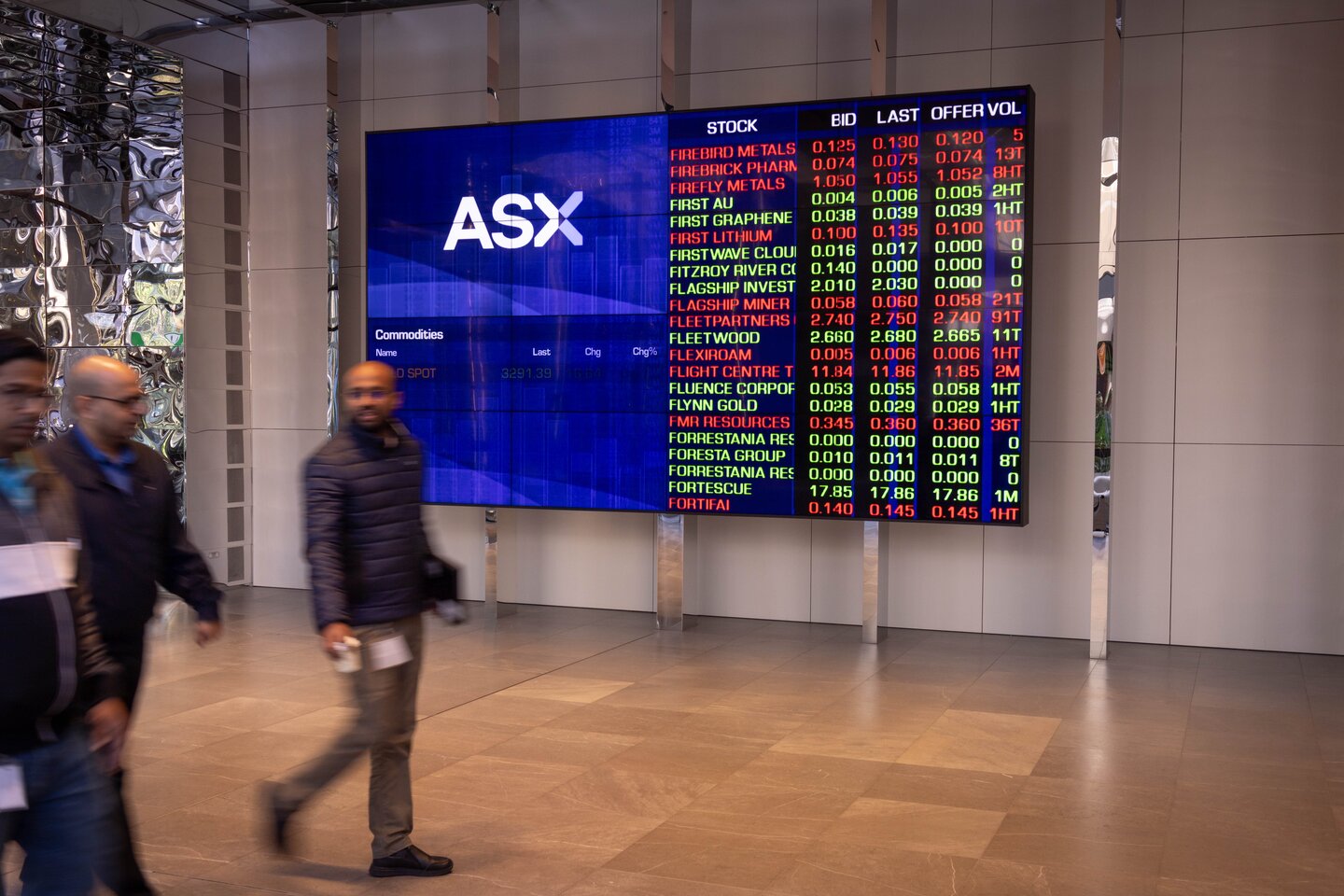
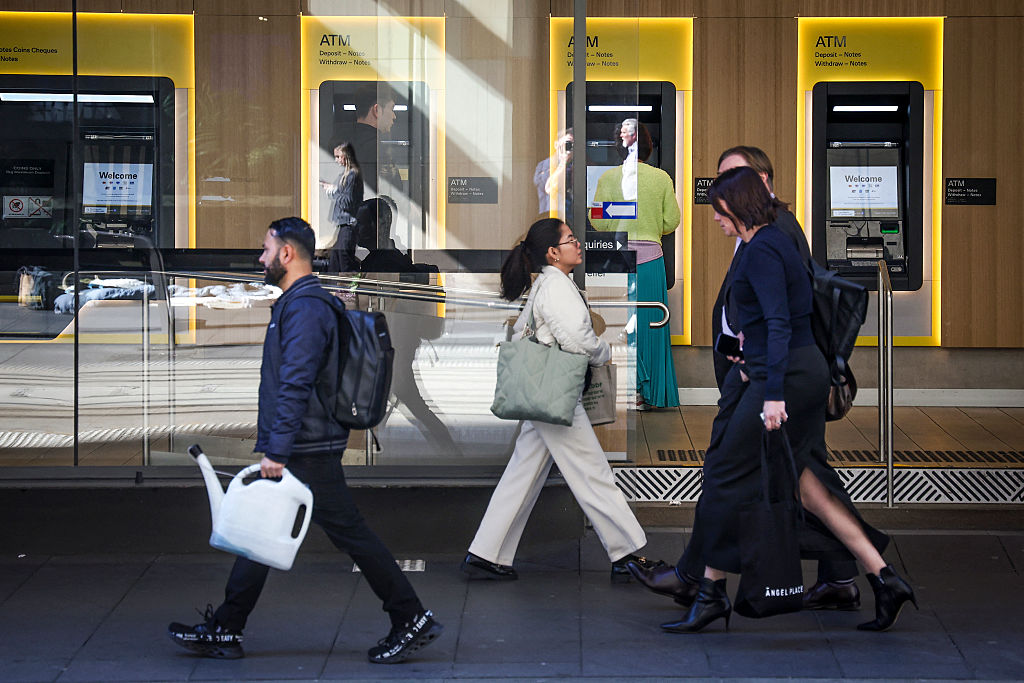
Shares of Commonwealth Bank of Australia rose nearly 2% Monday, leading gains across the country’s major lenders even as the broader share market struggled following renewed U.S. military action against Iranian targets in the Strait of Hormuz.

The stock traded at 159.90 Australian dollars, up 2.65 dollars, or 1.69%, on the Australian Securities Exchange. Commonwealth Bank’s advance came alongside similar gains of between roughly 1.5% and 2.1% for the country’s other major banks, including Westpac, ANZ and National Australia Bank, which together helped offset a weaker session for materials stocks and kept the benchmark ASX 200 from falling further, according to live markets coverage from ABC News.

Monday’s rally in bank stocks coincided with a notable shift in interest rate expectations. Morgan Stanley said in a research note that it now expects the Reserve Bank of Australia to raise its official cash rate at its next meeting on Sept. 29, forecasting a 25-basis-point increase to 4.6%. The investment bank’s Australian strategy team said stronger-than-expected July inflation data had “crystallised upside risks” the central bank had previously flagged, adding that the latest inflation print “meets the threshold for the ‘upside risks’ to inflation the RBA flagged at its August meeting and said it would act against.” Rising interest rates are generally viewed favorably for bank earnings, since lenders typically benefit from wider margins between the rates they charge borrowers and the rates they pay depositors when official rates climb.

The gains in bank shares came even as the broader ASX 200 struggled for direction Monday, weighed down by U.S. strikes on two Iranian rocket launchers on Larak Island in the Strait of Hormuz overnight, an action that rattled equity markets across the Asia-Pacific region and pressured resource-heavy sectors including materials, where major miners BHP and Rio Tinto both traded lower.

Advertisement

Commonwealth Bank’s share price gain builds on a period of record financial performance for Australia’s largest bank by market capitalization. The lender reported fiscal 2026 cash profit that rose 7% to a record 11 billion Australian dollars, according to Morningstar, with loan growth of 7% and steady net interest margins more than offsetting a 6% rise in operating expenses and a modest increase in loan impairment costs. The bank’s common equity tier 1 capital ratio, a key measure of financial strength, stood at 12.3%, and it lifted its interim dividend to 2.35 Australian dollars per share during the year.

Analyst sentiment on Commonwealth Bank has remained notably divided given the stock’s strong run over the past year. Goldman Sachs analyst Brendan Sproules initiated coverage of the bank with a sell rating and a price target of 130.18 Australian dollars, a level well below where the stock currently trades, reflecting concerns among some analysts that the bank’s valuation has become stretched relative to its growth prospects. Commonwealth Bank’s shares have traded in a 52-week range between roughly 146.98 and 185.59 Australian dollars, and the stock currently carries a price-to-earnings ratio of about 25.3, a premium valuation compared with many of its banking peers both domestically and internationally.

Commonwealth Bank operates across several core segments, including retail banking, business banking, institutional banking and markets, and a New Zealand division, offering products ranging from home loans and consumer finance to specialized services for business, agribusiness and high-net-worth private banking clients. The bank has continued to emphasize investment in technology and artificial intelligence tools as part of its broader strategy, alongside a series of asset divestments in wealth management and insurance in recent years aimed at sharpening its focus on core banking operations.

Despite Monday’s gains, the broader session underscored how closely tied Australian equity markets remain to developments overseas, with Middle East tensions weighing on resource stocks even as domestic factors, including shifting interest rate expectations, provided support for the financial sector. Investors are expected to continue watching both fronts closely in the coming days, alongside upcoming domestic economic data, including second-quarter GDP and July trade figures, that could further shape expectations ahead of the Reserve Bank’s September policy meeting.

Advertisement
Continue Reading

Business

Massive 12 Terabyte Valve Leak Exposes a Decade of Unreleased Games and Possible Episode 3 Assets

Published

on

valve logo

A massive archive of roughly 12 terabytes of Valve development files began circulating online this weekend, offering an unprecedented look inside a decade of the company’s game development history and reigniting speculation about the long-canceled Half-Life 2: Episode 3.

The archive, which the gaming community has dubbed the “Steam2 Teraleak,” consists of files pulled from Steam2, Valve’s legacy content-delivery system that packaged and distributed game files using older formats before the company transitioned to its current SteamPipe infrastructure in March 2013, according to multiple outlets including Tom’s Hardware and Player.One. That migration explains why the archive’s contents stop abruptly at 2013, since games published after the switch were never stored on the older, now-exposed system in the first place.

Despite initial speculation that Valve had suffered a sophisticated cyberattack, researchers who have examined the leak say it did not result from a traditional hack. According to prominent Valve data miner Gabe Follower, who has been closely tracking the archive’s contents, the files were extracted from a legacy endpoint connected to Valve’s outdated infrastructure that had simply been left publicly accessible, rather than obtained through any unauthorized intrusion into the company’s systems. “No hacking involved, just verified that everything in Steam2 Teraleak was obtained via a publicly accessible endpoint,” Gabe Follower wrote on the social platform X. “It’s Valve’s fault.”

The scale of the archive has made it difficult for researchers to fully catalog its contents in the days since it began circulating online Aug. 29. A community-tracked catalog on GitHub had logged more than 387,000 individual entries as of this weekend, according to gaming outlet Player.One, with contributors still working to separate genuine discoveries from duplicate or placeholder files. Because the archive draws from Steam2, which stored content for every publisher using the platform during that era rather than only Valve’s own titles, the leak extends well beyond the company’s internal projects.

Advertisement

Among the confirmed discoveries are early builds and unreleased content tied to several of Valve’s own franchises, including a radically different Portal 2 beta, an early version of a canceled Portal sequel codenamed “F-Stop,” unreleased Counter-Strike: Global Offensive game modes and interface designs, and fully playable Left 4 Dead builds, according to reporting from Notebookcheck and GamesRant. Perhaps the most closely watched find involves a weapon asset referred to as the “Weaponizer,” which some researchers believe may be connected to Half-Life 2: Episode 3, the long-promised and ultimately abandoned continuation of Valve’s flagship series that has remained a subject of fan speculation for nearly two decades. As of this weekend, outlets covering the leak cautioned that a direct, confirmed connection to Episode 3 had not yet been established, and that no playable version of the game had surfaced in the archive.

The leak’s reach extends well beyond Valve’s own catalog. Community researchers digging through the data have identified early development files tied to numerous major third-party titles that were once distributed through Steam, including Fallout: New Vegas, Dragon Age: Origins, Batman: Arkham Asylum, Mirror’s Edge and a rare beta build of Sonic 4: Episode II, according to Notebookcheck and gaming outlet The Front Page. Because game development files often include enormous volumes of incidental material, textures, audio recordings, test maps, scripts and abandoned experimental assets, researchers have said the full scope of what the archive contains may not become clear for weeks.

Valve has not issued any public statement addressing the leak, its origin, or the authenticity of its contents as of this writing, according to multiple outlets tracking the situation. Some observers have noted that any official acknowledgment would effectively confirm a significant internal security lapse involving the company’s own infrastructure, rather than an external attack, a dynamic that may help explain the company’s continued silence.

The Steam2 leak is unrelated to a separate cybersecurity incident Valve disclosed earlier this month involving CEVA Logistics, a European shipping partner, in which customer personal information was exposed as the result of a breach at that third-party company. By contrast, the newly surfaced 12-terabyte archive stems entirely from an access-control failure on Valve’s own legacy systems, according to gaming outlet GamingProMax, and does not appear to include any current Steam user data or personal account information.

Advertisement

As researchers continue combing through the archive in the days ahead, the gaming community has largely treated the leak as an unexpected time capsule into the earlier years of PC game development, offering a rare glimpse at how some of the industry’s most recognizable titles evolved during production, even as questions remain about how much of the sprawling dataset has yet to be fully explored.

Continue Reading

Business

(VIDEO) Pokemon GO Brings Back Armored Mewtwo After Six Years for GO Fest 2026 Mega Finale Raid Event

Published

on

Pokemon GO Brings Back Armored Mewtwo After Six Years for

Pokemon GO is bringing back Armored Mewtwo for the first time in six years, developer Scopely announced this weekend, giving trainers a limited window to catch one of the mobile game’s rarest raid bosses during next month’s Pokemon GO Fest 2026: Mega Finale event.

The announcement came during the closing ceremonies of the 2026 Pokemon World Championships, held in San Francisco. Armored Mewtwo will appear in five-star raids beginning at 10 a.m. local time on Saturday, Sept. 5, and running through 6 p.m. local time on Sunday, Sept. 6, coinciding with the two-day Mega Finale event that closes out this year’s Pokemon GO Fest season.

“Mewtwo strikes back in Raid Battles…in that form!” Scopely wrote in an official blog post announcing the Pokemon’s return. “Armored Mewtwo, as seen in the movie Pokémon: Mewtwo Strikes Back – Evolution (released in 2019), is a version of Mewtwo whose power is suppressed and held back by armor. Even so, Armored Mewtwo possesses overwhelming strength that surpasses other Pokémon.”

Advertisement

Armored Mewtwo was first introduced to Pokemon GO in July 2019 to coincide with the release of the animated film “Pokemon: Mewtwo Strikes Back – Evolution,” which reimagined the franchise’s original 1998 movie. The variant returned briefly for Pokemon Day festivities in February 2020 before disappearing from the game entirely, making next month’s event its first appearance in six years. According to gaming outlet Sportskeeda, the raid boss previously carried a combat power of 41,299, with players able to catch a version boasting 1,821 combat power, or 2,276 under weather-boosted conditions.

Players hoping to add a Shiny Armored Mewtwo to their collection will be disappointed, however. Scopely confirmed in its announcement that the special color variant will not be available during the event, a decision several outlets covering the news, including ComicBook.com, described as a missed opportunity given that Shiny Mewtwo already holds a relatively narrow competitive niche and, unlike standard Mewtwo, cannot Mega Evolve.

Armored Mewtwo’s return is just one piece of a broader set of announcements tied to the Mega Finale event. According to details published by fan resource Leek Duck, the weekend will also feature Super Mega Raids starring Mega Mewtwo X on Saturday and Mega Mewtwo Y on Sunday, alongside the previously teased debuts of Mega Delphox, Mega Greninja and Mega Chesnaught. Pokemon caught from Mega Raids during the event may come with a special Mega Evolution-themed background, and all Mega-Evolved Pokemon will receive a temporary combat power boost throughout the weekend.

Scopely also announced that eligible Mega-Evolved Pokemon, including Mewtwo, will gain access to additional Charged Attacks and new “Adventure Effects” during the event, expanding their battle utility both in and outside of raids. Separately, the company confirmed that Mega Evolution is being incorporated into the GO Battle League, with the combat power of Mega-Evolved Pokemon set to be temporarily reduced when selected for special Mega Editions of the Great League and Ultra League, allowing them to participate within those competitive formats before their combat power reverts to normal following each battle.

Advertisement

The Mega Finale caps a season-long rollout for Pokemon GO Fest 2026 that was first teased in July, when Scopely announced the event’s dates without revealing most of its specific content. According to reporting from ComicBook.com, the company’s decision to hold back detailed information at that time now appears to have been intentional, given the scale of the announcements ultimately tied to the weekend event.

Unlike some past Pokemon GO Fest weekends, this year’s Mega Finale will be an unticketed, worldwide event, meaning players will not need to purchase a special pass simply to participate, though an optional GO Pass Deluxe: Mega Finale upgrade will offer additional bonuses and rewards, including an increased chance of encountering Shiny Pokemon from certain Mega Raids and other event-specific encounters throughout the weekend.

For longtime players who caught Armored Mewtwo during its original 2019 and 2020 appearances, next month’s event offers a rare second chance at a Pokemon that has remained absent from the game for years. For newer trainers who joined Pokemon GO after that window closed, Scopely and multiple outlets covering the announcement have framed the Mega Finale as one of the best opportunities yet to add one of the game’s most sought-after raid bosses to their collection, with no confirmation from the developer on when, or whether, Armored Mewtwo might return again after this weekend’s event concludes.

Advertisement
Continue Reading

Business

Baird upgrades STAG Industrial stock rating on valuation appeal

Published

on


Baird upgrades STAG Industrial stock rating on valuation appeal

Continue Reading

Trending

Copyright © 2025