

Business
Two Arrested at Connecticut Costco in Alleged Fraudulent Credit Card Theft Spree


SOUTH WINDSOR, Conn. — Two New York residents face multiple charges after they were arrested at a Costco store here Sunday afternoon for allegedly trying to purchase merchandise with fraudulent credit cards during what police described as part of a serial shoplifting scheme.
Brittany A. Howard, 35, of the Bronx, and Kasheem M. Williams, 34, of Brooklyn, were taken into custody around 3 p.m. at the warehouse club on Tamarack Avenue, according to the South Windsor Police Department.
Officers responded to reports of two individuals actively stealing and attempting to pay at self-checkout using fraudulent cards. Store staff had been alerted that the same suspects had reportedly tried a similar scheme earlier at a Costco location in nearby Enfield.
A search of the suspects’ vehicle turned up 28 stolen financial documents, each bearing different names, along with additional merchandise believed stolen from the Enfield store, police said.
Both individuals had active out-of-state warrants at the time of their arrest. Williams faces an extraditable warrant from Suffolk County, New York, on charges including burglary, strangulation and assault. Howard has an extraditable warrant from Hudson County, New Jersey, related to credit card theft.
The pair now face additional local charges including 28 counts of payment card theft, larceny, identity theft and conspiracy. They were held on $250,000 surety bonds each and were scheduled to appear in Manchester Superior Court.
The incident highlights ongoing challenges retailers face with organized retail crime and identity theft. Costco and other big-box stores have ramped up security measures, including enhanced surveillance and staff training, in response to rising theft trends across the country.
Broader Context of Retail Theft
Retail theft has become a significant issue for businesses nationwide, with organized groups often targeting high-value or easily resold items. Losses from shoplifting and fraud contribute to higher prices for consumers and strain law enforcement resources.
In Connecticut, police departments have coordinated with retailers to share information about repeat offenders. Sunday’s arrests demonstrate how such collaboration can lead to swift intervention.
South Windsor police noted that store employees played a key role by recognizing the suspects from prior alerts. Rapid response prevented further losses at the location, which serves customers across the greater Hartford area.
The use of fraudulent credit cards adds layers of complexity, involving identity theft that can affect victims far beyond the immediate retail setting. Authorities recovered numerous documents, suggesting the operation may have broader implications.
Suspects’ Alleged Pattern
Police described Howard and Williams as suspected serial Costco shoplifters. The proximity of the Enfield and South Windsor locations — roughly a 30-minute drive — allowed the pair to allegedly move between sites quickly.
Investigators are examining whether the duo is connected to similar incidents at other retail outlets. The volume of stolen financial instruments points to a potentially sophisticated approach to obtaining and using others’ information.
Such cases often involve skimming devices, online data breaches or physical theft of cards and documents. Federal agencies like the Secret Service typically investigate larger credit card fraud rings due to the interstate nature of the crimes.
Connecticut has seen increased focus on retail crime, with prosecutors pursuing felony charges to deter repeat offenders. Enhanced penalties for organized retail theft have been discussed in state legislatures across the Northeast.
Impact on Retailers and Consumers
Costco Wholesale Corp., known for its membership model and bulk sales, has invested heavily in loss prevention. The company reports theft as part of its overall shrinkage metrics, which also include employee theft and administrative errors.
Incidents like this one contribute to what industry groups call organized retail crime, estimated to cost billions annually. Retailers pass some costs to consumers through higher prices or reduced services.
Membership warehouses like Costco rely on high-volume, low-margin sales. Theft of even moderate quantities can erode profitability, particularly for high-demand electronics, health products and household goods commonly targeted.
Consumer advocates urge shoppers to monitor accounts closely and report suspicious activity. Using virtual cards or credit monitoring services can provide additional protection against fraud.
Law Enforcement Response
South Windsor police worked efficiently to secure the scene and process evidence. The discovery of warrants added immediate custody justification while opening avenues for extradition proceedings.
Inter-agency cooperation between Connecticut, New York and New Jersey authorities will likely follow as cases progress. Digital forensics on recovered devices may yield further leads.
The $250,000 bond amount reflects the seriousness of the charges, including multiple felonies. Court appearances will determine next steps, potentially including pretrial detention or conditions if released.
Prosecutors will present evidence from surveillance footage, witness statements and physical recovery of goods and documents. Defense attorneys may challenge aspects of the investigation or seek plea negotiations.
Preventing Future Incidents
Retailers continue experimenting with technology solutions such as AI-powered cameras, electronic article surveillance and self-checkout monitoring. Some locations have limited high-value item access or added security personnel during peak hours.
Public awareness campaigns encourage shoppers to report suspicious behavior. Community policing efforts aim to build relationships between stores and local departments for faster response times.
Legislative efforts at state and federal levels seek tougher penalties for organized theft rings. Balancing enforcement with rehabilitation remains an ongoing policy challenge.
For now, the arrests in South Windsor provide a measure of relief to local retailers and serve as a warning to would-be offenders. Police continue investigating the full scope of the alleged activities.
The case underscores the persistent battle against retail fraud in an era of sophisticated criminal tactics. As technology evolves, so do the methods used to combat it, requiring constant adaptation by law enforcement and businesses alike.
Authorities urge anyone with information about similar incidents to contact police. Tips can be submitted anonymously through many departments’ hotlines or online portals.
This incident joins a series of retail theft stories making headlines, keeping the issue in public focus as stakeholders seek comprehensive solutions.

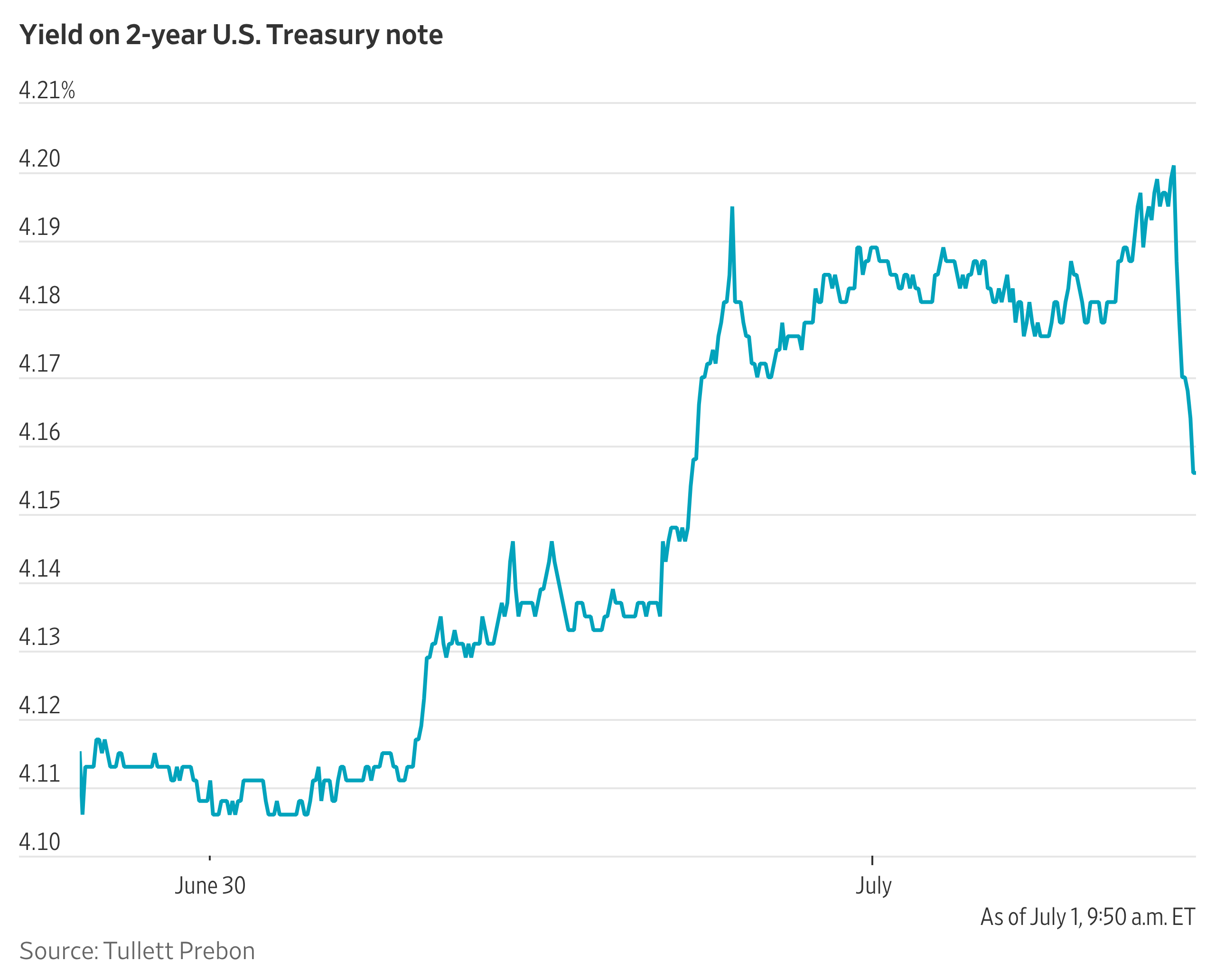
Treasury yields have pared overnight gains after Fed Chairman Kevin Warsh suggested that business investment in artificial intelligence could expand the productive capacity of the economy, which in turn could have “huge implications for monetary policy.”
In recent trading, the yield on the 2-year Treasury note, which is particularly sensitive to shifts in interest-rate expectations, was 4.150%, according to Tradeweb, up from 4.138% Tuesday but down from 4.195% before Warsh’s comments.
Speaking at a central bank symposium in Portugal, Warsh dodged questions about whether the Fed could raise rates at its next meeting. But his comments on AI still provided some hints about his thinking to investors hungry for any clues they can get.

Australia’s competition watchdog will take a merger between two subsea services rivals to a phase-two review after finding the move could significantly impact competition in the market.

Gauges in Japan and South Korea retreated, sending the broader MSCI Asia Pacific Index down 0.4%. The moves came after the tech-heavy Nasdaq 100 Index fell 1.6%, and a gauge of US chip stocks tumbled over 5%.
South Korea’s Kospi Index, the world’s best-performing major benchmark this year, dropped 0.8%, with SK Hynix Inc among the losers.
Elsewhere, Treasuries ended the holiday-shortened week with lower short-term yields after June employment data and lower oil prices challenged expectations for Federal Reserve rate hikes this year. There will be no cash trading in Treasuries on Friday due to a US holiday. The dollar edged higher in early Asian trading, recouping some of its losses from the New York session.
Technology shares extended their decline, with chipmakers leading losses as concerns grew that the AI-driven rally may have gone too far, too fast. While confidence in the technology’s long-term potential remains strong, investors are increasingly questioning whether sky-high valuations can keep pace with rising spending and a more crowded market.

“There are concerns that the high memory prices will bring AI solutions that need less memory, and that the data center build-out may not all get built in the end,” said Louis Navellier of Navellier & Associates. “And that token pricing of AI software will push users to lower-cost versions, especially Chinese offerings, and is bringing increased caution regarding the enthusiasm for all things AI.”
In other corners of the market, American crude slipped early Friday as tanker traffic through the Strait of Hormuz increased further, adding to a gush of near-term supply while talks between the US and Iran continue. The commodity traded just under $68.50 a barrel.Gold held its gains from the New York session as the weak US jobs numbers eased rate-hike bets. The non-yielding metal, which is less attractive when rates are increased, traded around $4,125 an ounce.
The yen gave up some of its gains from the previous session to trade near 161.40 to the greenback.
Earlier, the S&P 500 and Nasdaq 100 received a boost after data showed the labor market cooled in June, reinforcing expectations the Fed can afford to be patient on interest rates.
Nonfarm payrolls increased 57,000 last month after downward revisions to the prior two months took some of the shine off recent blockbuster reports, Bureau of Labor Statistics data Thursday showed. The unemployment rate fell to 4.2% as labor force participation plunged.
Traders pared back expectations for additional Fed rate hikes, though they continued to price in at least one increase this year.
“A labor market that is still expanding, but no longer overheating, allows the Fed to remain patient while assessing price pressures,” said Andrew Dubinsky at UBS Chief Investment Office. “If disinflation continues as expected, policymakers will have little reason to move away from a holding pattern in the second half of the year.”

The historic Eldverton copper mine was abandoned in 1992. Its tailings have been used as a valuable fertiliser product by a local company

Form 4 CoreWeave Inc For: 2 July
Form 4 Procore Technologies Inc For: 2 July

“In uncertain times it’s almost more important to avoid the blowups than to pick the winners,” he writes. “Everyone seems to want to tell you what ‘to do’ … but not many discuss what you should avoid doing!”
Enter Piper Sandler’s “Sell Model,” which aims to identify stocks to avoid in your portfolio, highlight risks, and find potential shorts. The model factors in red flags related to valuation, risk, governance, earnings quality, sentiment, profitability, and operating efficiency.

Proposed gambling ad reforms go beyond some recommendations made in a Labor-led report that urged a total ban, the prime minister says.
Business
Nike Stock Extends Its Post-Earnings Rally Today as Investors Bet the Long-Awaited Turnaround

Nike shares climbed further Thursday, extending a two-day recovery from a dramatic after-hours selloff that followed Tuesday’s fourth-quarter results as investors increasingly bet that the worst of the athletic giant’s prolonged slump may be behind it, even if the road ahead remains difficult.
Shares of the Beaverton, Oregon-based company were trading at $43.81 as of 10:42 a.m. EDT, up 75 cents, or 1.74%, on the day, building on Wednesday’s 4.9% surge during regular trading that effectively reversed the initial panic selling that had sent the stock down as much as 10% in after-hours trading immediately following the results.
Nike’s fiscal fourth-quarter earnings report, released Tuesday after the close, showed quarterly revenue of $10.97 billion, modestly ahead of the $10.86 billion consensus estimate, while earnings per share came in at 72 cents versus the 13-cent estimate that analysts had set ahead of the report. The enormous EPS beat, however, came almost entirely from a one-time benefit: a 52-cent per-share gain tied to an expected recovery of tariffs under the International Emergency Economic Powers Act, worth approximately $986 million before tax, that inflated the bottom line well beyond what the underlying business produced in the quarter.
Stripping out that tariff-related windfall, adjusted earnings per share came in at approximately 20 cents, up from 14 cents in the year-ago period, representing what the company described as its first quarter of underlying earnings per share growth in two years, a milestone that has given bulls something to point to as evidence of gradual improvement.
Nike Chief Executive Elliott Hill, who took over the company last year and has been overseeing what management describes as a multiyear reset of the brand’s competitive positioning, was candid on the earnings call about where the company still falls short.
“Overall, the results aren’t there yet,” Hill said. “We know we’re not living up to our full potential, particularly in Nike sportswear and Jordan streetwear, where sell through remains challenged, impacting both current discounting and future order books.”
Despite those frank admissions, Hill also highlighted the areas where the turnaround appears to be gaining traction, particularly in running footwear.
“What feels different this time around is we’re not treating the tournament as a single moment, we’re using it to reshape our business, telling a connected story over time, engaging different communities in relevant ways and building momentum that carries well beyond the tournament,” Hill said of the company’s strategy around the 2026 World Cup, which Nike is participating in aggressively through advertising and athlete partnerships despite not being an official sponsor of the event.
The World Cup reference captures one of the more interesting dynamics of Nike’s recent quarter. The company reported that its advertising campaigns during the World Cup have dramatically outpaced rival Adidas in social media traction and brand attention metrics, even without the formal sponsorship rights that Adidas holds, a distinction that has given the marketing team confidence that the brand’s storytelling capabilities remain intact even as product sell-through has struggled.
Among the results themselves, several trends stood out as genuine positives despite the broader revenue decline of 1% on a reported basis or 4% on a currency-neutral basis. North American wholesale revenue rose 10% in the quarter, a meaningful reversal from periods in which Nike’s wholesale business had been deliberately scaled back as the company pushed toward its direct-to-consumer channels. Nike Direct fell 6%, reflecting continued softness in the company’s digital and owned-retail channels, and the Greater China market declined 12%, continuing a streak of weakness in what has historically been one of Nike’s highest-margin geographies.
Running footwear posted its fifth consecutive quarter of double-digit growth, a streak that has demonstrated Nike’s ability to fight back against competitive pressure from newer brands including Deckers’ Hoka and On Holding, two companies that had rapidly taken market share from Nike in the premium performance running category over the prior several years. Comparable sales and revenue at Foot Locker, one of Nike’s most important wholesale distribution partners and a relationship Nike had deliberately deprioritized during its earlier push toward direct-to-consumer, were positive for the first time in four years, a concrete sign that the company’s efforts to repair and rebuild its wholesale channel relationships are beginning to produce results.
On operating margin, Nike generated a 12% operating margin in the quarter, up 9.1 percentage points year over year, though that improvement was entirely attributable to the tariff windfall rather than underlying operational efficiency gains.
Looking ahead, Nike’s guidance was sober rather than optimistic. Chief Financial Officer Matt Friend indicated the company expects earnings to be “flattish” through the first two fiscal quarters of 2027, while gross margin for the first fiscal quarter of 2027 is expected to be slightly positive on a year-over-year basis, the first such improvement in several quarters.
The stock’s response to all of that reflects investor psychology at a critical inflection point. Shares had fallen to 11-year lows heading into the report, with the stock trading down nearly 42% over the trailing year and well below levels that many analysts had characterized as reflecting already-depressed expectations. When a deeply beaten-down stock beats estimates, even for complicated reasons involving one-time items, the response frequently reflects relief that the situation is not as bad as feared rather than genuine enthusiasm about fundamental improvement.
Analysts’ consensus price targets remain well above current levels, with several covering the stock citing the stock’s valuation at approximately three times trailing sales as a potential floor even if the turnaround takes longer than expected. Wall Street’s assessment is mixed, however, with some analysts cautioning that flat earnings guidance for fiscal 2027 reflects a missed opportunity at a moment when the World Cup, the NBA Finals, and other cultural moments could have provided meaningful revenue tailwinds if the brand had been better positioned to capitalize on them.
Marketwise general counsel Forney’s $13,608 stock withholding for taxes

Ronaldo’s tears, Martinez’s choice and Jota’s tribute: Inside Portugal v Croatia, a World Cup epic

A leaked Microsoft experiment reveals a new OS built entirely around Copilot and AI agents

What is realized price? Bitcoin’s on-chain cost basis


-

 Fashion6 days ago
Weekend Open Thread: Staud – Corporette.com
-

 Politics7 days ago
The House | Manchesterism won’t survive the painful trade-offs unless it gets citizens on board
-

 Crypto World3 days ago
Strategy authorizes up to $1.25B in Bitcoin sales under new capital plan
-

 Politics7 days ago
Potential 2028er World Cup attendee leaderboard
-

 Business7 days ago
Asia stock markets slide as tech shares slump
-

 News Videos4 days ago
MAJOR BITCOIN & MARKET UPDATE!!!! (MUST WATCH ASAP!!!)
-

 Crypto World5 days ago
Coinbase, Circle Deepen Crypto Stock Losses Despite Resilient S&P 500
-

 Tech3 days ago
Anonymous researcher drops 0-day ‘exploitarium’ repo
-

 Business3 days ago
Australia treasurer says alleged access of prime minister’s bank data ’incredibly concerning’
-

 Crypto World6 days ago
Kraken's xStocks Opens Bending Spoons IPO Registration to EEA Retail
-

 Sports6 days ago
FIH Pro League: India defeat Pakistan 7-1, register biggest win of campaign | Other Sports News
-

 Crypto World7 days ago
Bitcoin Sparks $600M Hourly Liquidations With $65,000 Set To Become Resistance
-

 Tech5 days ago
Bluekit phishing kit adopts browser-in-the-middle for login theft
-
 Crypto World6 days ago
Hyperliquid Named on Singapore MAS Investor Alert Register
-

 Tech6 days ago
Russian hackers now target Signal backup recovery keys
-

 Crypto World7 days ago
Tether (USDT) Passes Ether in Market Cap as ETH Drops Toward $1.5K
-

 Crypto World6 days ago
RTX holders must register wallets before token distribution begins
-

 Sports2 days ago
Broncos roster: OL Ben Powers (No. 74) entering final year of contract
-
 Business3 days ago
The AI boom won’t burst all at once. It will pop in ‘rolling bubbles’: Macquarie
-

 Tech5 days ago
Claude Code turned every engineer into three. Now companies need more product thinkers
You must be logged in to post a comment Login