

Business
TXO Partners: Looking Great Ahead Of Q2 Earnings



Business
LeBron James Rumor Sparks a $245 Million Prediction-Market Frenzy After Miami Heat’s YouTube Mistake
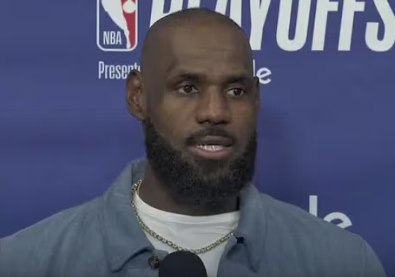
LeBron James has managed to move financial markets without saying a word, after an accidentally published Miami Heat video sent prediction-market trading tied to his still-undecided free agency surging past $245 million.
On Tuesday night, the Miami Heat’s official YouTube channel briefly published, then quickly deleted, a video titled “LeBron James Introductory Press Conference,” dated for later this month. A team spokesperson told the Miami Herald the posting was a mistake, made while the club prepared promotional materials in case James eventually chooses to sign with Miami this offseason. Shortly after removing the video, the team posted a job listing on LinkedIn for a director of YouTube strategy.
How the markets reacted
The brief video was enough to send betting activity on James’ eventual destination into overdrive. According to Fortune, combined trading tied to James’ next team has topped $245 million across the two largest prediction-market platforms, Kalshi and Polymarket, with more than $200 million of that volume concentrated on Kalshi alone. Yahoo Sports separately put the combined figure above $250 million.
Before the Heat’s video appeared, Polymarket had priced Miami’s odds of landing James at 31.5%, trailing Cleveland by three percentage points. After the clip was deleted, Miami’s odds surged by roughly 20 points on Polymarket. Kalshi showed a similar swing, moving from around 37% to 47% before settling near 45% by Thursday afternoon, according to Yahoo Sports. Sports Illustrated reported that Miami entered Tuesday as a 39% favorite on Kalshi’s “LeBron Next Team” market before jumping to 51% by the end of the day following the video’s brief appearance.
A rapidly growing market
The scale of trading around James’ decision has expanded dramatically in just the past few weeks. According to Fortune, total volume on the market stood at just $76 million a short time earlier before climbing past $170 million, then surging further to more than $211 million on Kalshi alone within a matter of days. At one point, the market tracking James’ next team ranked as the third-largest in Kalshi’s history, trailing only contracts tied to the 2026 World Cup champion and a major political race.
No timeline from James or his camp
James has offered no public timeline for his decision since departing the Los Angeles Lakers 24 days earlier, and his longtime agent, Rich Paul, has similarly declined to provide a date. According to Fortune, Paul said this week that nobody, including NBA Commissioner Adam Silver, knows exactly when the announcement will come. Sports Betting Dime reported that Paul described the timing in strikingly vague terms, saying the decision “could be 48 seconds, it could be 48 minutes,” while brushing aside pressure from the league to speed up the process.
A new kind of sports economy
Marty Conway, a sports business professor at Georgetown University, told Fortune that the episode reflects a broader shift in how fans and traders now engage with major sports storylines. “There’s a market for everything, and I think people have recognized that there’s a market for everything,” Conway said. “There are individuals in every pocket of that area who think they can either influence it, make a market in it, or take advantage of it.”
That shift has been dramatic in scale. According to Yahoo Sports, citing Pew Research Center data, monthly trading volume across Kalshi and Polymarket combined reached nearly $24 billion as of April, with sports traders now more active, and spending more, than those trading on any other single subject tracked by the platforms, including cryptocurrency and politics.
A market the NBA has already flagged as risky
The scale and volatility of the James market has drawn direct concern from the NBA itself. Yahoo Sports reported that the league warned federal regulators about exactly this kind of contract in an April letter to the Commodity Futures Trading Commission, in which NBA executive Dan Spillane argued that markets involving “player or team transactions” should be prohibited because they are “readily susceptible to manipulation and/or improper use of confidential information.”
The Heat’s accidental video posting illustrates a related but distinct risk that regulators and platforms have also had to grapple with: market-moving information reaching traders through an unintentional mistake, rather than any deliberate leak or insider activity. Yahoo Sports noted that Kalshi has previously disciplined a staff member for trading on markets tied to videos before their official release, and that Polymarket has partnered with blockchain analytics firm Chainalysis to help detect trading patterns that might suggest access to nonpublic information.
Comparisons to other athlete markets
The scale of trading tied to James’ free agency dwarfs betting markets built around other athletes’ career decisions. According to Yahoo Sports, a Kalshi market tied to Kawhi Leonard drew roughly $760,000 in total trading volume, while separate markets tied to Bronny James, Kyle Tucker and NFL player Jaelan Phillips each attracted well under $1 million. Fortune noted that fewer than 30 Kalshi markets across any category have ever surpassed $100 million in total trading volume, underscoring how unusual the scale of interest in James’ decision has become.
As of Thursday afternoon, Miami’s odds of landing James stood near an even coin flip on both major platforms, with Cleveland, Golden State and Philadelphia continuing to register meaningful, if smaller, shares of the betting activity. Kalshi traders were pricing in roughly a 47% chance James would announce his decision before July 27, the date referenced in the deleted Heat video, and a 58% chance of an announcement before July 28.
With James still giving no indication of when he plans to make his choice, prediction-market activity tied to his free agency shows no sign of slowing, leaving traders, the NBA and the Heat’s own communications staff bracing for whatever comes next, whenever that turns out to be.
Business
(VIDEO) Samsung Debuts Galaxy Watch Ultra 2 and Galaxy Watch 9 With New Chip, Brighter Screens, Higher Prices
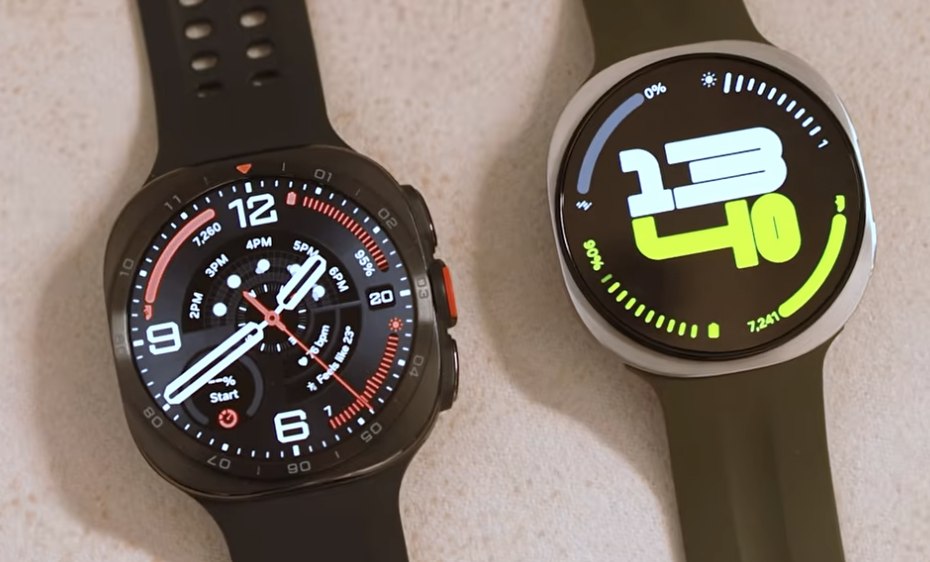
Samsung Electronics unveiled its next generation of smartwatches Wednesday, introducing the Galaxy Watch Ultra 2 and Galaxy Watch 9 alongside its new foldable phone lineup at the company’s Galaxy Unpacked event in London, with both wearables gaining a faster processor, bigger batteries and brighter displays, along with higher price tags than their predecessors.
Both watches are now available for preorder, with general retail availability set for Aug. 7, the same release date as Samsung’s newly announced Galaxy Z Fold 8 series.
A shared processor upgrade
For the first time, both the standard Galaxy Watch 9 and the rugged Galaxy Watch Ultra 2 move away from Samsung’s own Exynos chips and onto Qualcomm’s new Snapdragon Wear Elite processor, built on a 3-nanometer process. Samsung says the switch delivers a significant boost to overall speed and efficiency, particularly for on-device AI processing, while also enabling support for newer wireless standards including Bluetooth 6.0.
What’s new on the Galaxy Watch 9
The standard Galaxy Watch 9 keeps a familiar cushion-shaped design similar to last year’s Galaxy Watch 8, but gains a larger battery, now rated at 390mAh on the 40mm model and 445mAh on the larger 44mm version, along with a display capable of reaching 3,000 nits of peak brightness. The watch is available in Cream or Graphite for the 40mm size, with Graphite and Silver options for the 44mm model.
Pricing for the Galaxy Watch 9 varies depending on the specific retail source, with some outlets reporting a starting price of $379 for the 40mm Bluetooth-only model and $429 for the LTE version, while other reports citing official retail listings put the starting U.S. price closer to $430. Regardless of the exact figure, multiple outlets confirmed the new pricing represents an increase over last year’s Galaxy Watch 8, which launched at $349.
The bigger leap: Galaxy Watch Ultra 2
Samsung reserved its more significant upgrades for the Galaxy Watch Ultra 2, the company’s rugged flagship wearable aimed directly at competing with Apple’s Watch Ultra 3. The new Ultra 2 packs an 800mAh battery, a 35% increase over the roughly 590mAh battery in the original Galaxy Watch Ultra, addressing one of the most common criticisms of that earlier model, which reviewers had noted often lasted only one to two days under heavy use.
Despite the larger battery, Samsung managed to make the new Ultra 2 about 12% thinner than its predecessor while retaining its shock-resistant titanium casing, according to the company. The watch’s 1.52-inch Sapphire Crystal Super AMOLED display now peaks at 5,000 nits of brightness, a figure Samsung and multiple outlets described as a world-first for smartwatch display brightness, up sharply from the roughly 3,000 nits offered by the original Ultra.
The Galaxy Watch Ultra 2 comes in a single 47mm case size, available in Titanium Silver and Titanium Gray, and ships with LTE connectivity as standard rather than offering a separate Bluetooth-only option. U.S. pricing for the new Ultra 2 was reported at $699 by multiple retail sources, a $50 increase over the original Galaxy Watch Ultra’s $649 starting price, though at least one outlet citing updated official retail listings put the figure closer to $650.
New health and fitness features
Both watches share a common set of AI-powered health tracking capabilities built around Samsung’s BioActive sensor, including an FDA-cleared sleep apnea detection feature, a Heart Health Score, Daily Cardio Load tracking designed to help users gauge workout recovery, and a hearing feature that monitors environmental noise exposure over time. Samsung says these AI health tools process data on-device rather than requiring a cloud connection.
The new lineup also introduces several more specialized fitness tracking options, including a dedicated trail-running mode, a Nutrition Alert feature that draws on perspiration data, and an upcoming diving-focused app developed in partnership with dive computer maker Mares, expected to launch later this year to complement the Ultra 2’s enhanced water-resistance rating.
Durability improvements
The Galaxy Watch Ultra 2 carries an upgraded durability rating compared with the standard Watch 9, including IP69K dust and water resistance and a 10ATM-plus rating for underwater use, alongside MIL-STD-810H military-grade durability certification and EN13319 diving equipment certification. The standard Galaxy Watch 9, by comparison, carries a more modest IP68 rating alongside 5ATM water resistance, reflecting its positioning as a general-purpose smartwatch rather than a dedicated adventure and diving companion.
Software and platform
Both watches run One UI 9 Watch, built on top of Google’s Wear OS 7 platform, continuing Samsung’s ongoing software partnership with Google across its wearable lineup. The shared software experience means most of the AI health and fitness features introduced with this generation are available across both models, with the Ultra 2’s additional hardware capabilities, including its brighter display and more rugged build, serving as the primary differentiators between the two devices.
Part of a broader price increase across Samsung’s lineup
The higher pricing on both new watches mirrors a broader trend across Samsung’s entire product lineup unveiled this week. According to How-To Geek, the same component cost pressures driving up prices on Samsung’s new Galaxy Z Fold 8 and Z Flip 8 foldable phones have extended to its wearable devices as well, with essentially every new smartwatch model priced higher than its direct predecessor.
With preorders now open and general availability set for Aug. 7, Samsung’s newest wearables enter a competitive smartwatch market that includes Apple’s Watch Ultra 3 and a growing field of rivals from Google and Garmin. Given the emphasis Samsung placed on battery life and display brightness improvements for the Ultra 2 specifically, reviewers and early buyers are likely to focus closely on whether those upgrades meaningfully address the battery-life complaints that shaped much of the criticism surrounding the original Galaxy Watch Ultra when it launched two years ago.
Yardeni Research president Ed Yardeni discusses the Nasdaqs rebound after early losses tied to A.I. spending concerns and explains why he remains bullish on the market on Making Money.
The artificial intelligence (AI) race is intensifying as developers push for increasingly capable AI tools and companies race to deploy AI tools to take advantage of its efficiency gains and reap financial benefits – but a new report warns companies lack sufficient governance for AI tools.
This week saw a high-profile incident involving AI, in which an internal test of AI models by ChatGPT-maker OpenAI resulted in the models exploiting a software flaw, escaping containment and hacking into Hugging Face, which operates a platform for developers to collaborate on code for AI models, to cheat on a cybersecurity evaluation.
While the two companies contained the incident, it demonstrated the rapidly growing capabilities of AI models to go beyond their guardrails and pose cybersecurity threats, with leaders from both companies noting the significance of what occurred.
EqualAI CEO Miriam Vogel, whose organization released a white paper on AI governance and deployment this week, told FOX Business, “Innovation is going at an unprecedented pace; the problem is governance is not matching that pace.”
“What we want to make sure people recognize from this incident is, across the board, we need to have stronger expectations in place if we’re going to start to build trust and ensure these systems deserve our trust,” she said.
OPENAI CO-FOUNDER WARNS AI MODELS ARE BECOMING HARDER TO CONTROL AFTER ITS MODEL HACKED ANOTHER FIRM
A lack of safeguards around AI poses risks for companies without appropriate governance structures. (iStock)
Vogel noted that most consumers’ touchpoints with AI are through companies that have deployed some sort of AI solution. She added that the World Economic Forum found fewer than 1% of companies have strong governance in place for AI systems, while McKinsey found last year that fewer than a third of companies have any AI governance in place.
“I think too many people are assuming it’s someone else’s problem, you know, that it’s the developer’s problem or just not understanding that this is their problem,” she said.
“While this is, in this instance, an issue for a development company, a lot of where this is playing out and will continue to play out is with the deployer – is with the healthcare, finance, social media, infrastructure – all the other ways [companies are] using agentic AI,” Vogel said.
She said that courts are increasingly applying liability to companies that have deployed agentic AI for work with customers or businesses, rather than the company that developed the underlying AI model or tool.
“A lot of this becomes the liability of the person who had the last touch on it, whose data is involved, whose customer is involved. They are often the one who owns the liability,” Vogel added.
ANTHROPIC CALLS FOR INDUSTRY-WIDE AI SAFETY STANDARDS TO KEEP MODELS FROM WREAKING HAVOC

Companies need to have visibility into the AI tools being used at all levels of a business and across its various divisions to establish governance, Vogel said. (iStock)
“While good governance takes a while to really put in a solid foundation, the best practices are really aligned with the leading organizations who care about this work across the world. They’ve all come to this independently, and there is really a lot of consensus on what the best practices are,” Vogel said.
“The other thing that’s good news is most of this is not rocket science, it’s leadership and good governance just applied to AI,” Vogel said.
EqualAI sees five main areas for companies to take into account when establishing governance around agentic AI. Those include having visibility into what AI tools are being used across organizations, as leaders may not understand their firm’s AI footprint and what opportunities or risks that may present; as well as accountability across leadership levels and divisions of a company.
Operationalizing AI principles is another component – which Vogel said entails bringing principles laid out in documents like a PDF into practice in terms of things like communicating about problems that arise, and is dependent on internal trust that there is shared accountability in the organization.

AI literacy is a key component of AI governance, Vogel explained. (Leon Neal/Getty Images)
Another aspect of AI governance is ensuring there are feedback loops that can be leveraged on a recurring basis as AI tools and models iterate and improve to stay ahead of issues like model drift. This can take the form of having a plan and cadence for routine testing.
AI literacy is the fifth pillar of the overarching AI governance framework Vogel suggested, which she linked to “increasing distrust of AI” and sees contributing to fears overshadowing enthusiasm about AI tools in the public’s perception.
“I think that squarely lands not only on the overall governance infrastructure that’s lacking in most organizations, but this fundamental piece of AI governance which is AI literacy,” Vogel explained. “Most people don’t know that they’re using AI, they don’t want to use AI, don’t know how to use it.”
GET FOX BUSINESS ON THE GO BY CLICKING HERE
“AI literacy is just a key variable in making sure people understand how to use it, that they know how to avoid risks because they don’t want to cause harm or bring a liability for themselves or their organization,” she said. “Making sure that your workforce and your consumers understand how you’re using AI, how you will not be using AI, and how it can benefit them is a key variable.”
Business
Thermo Fisher Scientific Stock Surges 8.71% After Strong Q2 Earnings Beat and Raised Full-Year Guidance

Shares of Thermo Fisher Scientific jumped Thursday after the life sciences giant reported stronger-than-expected second-quarter results and raised its full-year financial guidance, reversing a multiday slide that had followed disappointing results from industry peer Danaher earlier in the week.
Thermo Fisher shares closed Thursday at $572.32, up $45.86, or 8.71%, on the day. The rally began well before the opening bell, with shares adding roughly 5% in premarket trading after the company released its results.
A strong quarter across the board
Thermo Fisher reported second-quarter revenue of approximately $12.0 billion, roughly 10% higher than the same period a year earlier and about $300 million ahead of Wall Street’s consensus expectations. Adjusted earnings per share came in at $6.03, surpassing analyst forecasts by roughly $0.30. Bloomberg reported that the results were driven by stronger-than-expected spending from biotech and pharmaceutical customers, along with a broader rebound in demand for laboratory instruments.
The clearest signal of that demand recovery came from Thermo Fisher’s Analytical Instruments segment, which posted its fastest growth rate in two years. Segment revenue rose 6.9% to $1.8 billion, according to Bloomberg, a notable turnaround after the segment had remained flat in the first quarter. According to earnings call commentary reported by Yahoo Finance, all three businesses within that segment posted growth, led by electron microscopy, with adjusted operating income up 30% and adjusted operating margin expanding by 420 basis points to 23.0%.
Thermo Fisher’s Specialty Diagnostics division also contributed to the strong quarter, with revenue increasing 6% on a reported basis and 5% organically, driven by growth in the healthcare market channel, immunodiagnostics and transplant diagnostics. Adjusted operating margin in that segment rose 70 basis points to 27.7%.
Raised guidance for the year
Building on the stronger quarter, Thermo Fisher raised its full-year 2026 revenue guidance to a range of $47.4 billion to $48.1 billion, representing 6% to 8% reported revenue growth over 2025. The company also lifted its adjusted earnings-per-share guidance to a range of $24.93 to $25.33, an increase of $0.25 at the midpoint from its previous guidance range of $24.64 to $25.12.
According to GenomeWeb, Thermo Fisher’s chief financial officer, Stephen Meyer, said the revised earnings midpoint reflects $0.30 from second-quarter outperformance and an additional $0.05 from a higher second-half revenue outlook, partially offset by roughly $0.05 tied to the pending divestiture of the company’s microbiology business. That transaction, announced in April, is expected to close during the third quarter and will reduce full-year 2026 revenue by approximately $200 million and adjusted earnings per share by $0.05.
Recovering from a rough week
Thursday’s rally marks a sharp reversal from a stretch of weakness that had weighed on Thermo Fisher’s stock in the days leading up to its earnings report. According to Seeking Alpha, shares had declined over multiple sessions following a lower-than-expected outlook from peer company Danaher, which had raised broader concerns among investors about demand across the life sciences tools and diagnostics sector. Danaher shares themselves rose roughly 5.5% on Thursday, benefiting from the same wave of positive sentiment following Thermo Fisher’s results.
Analyst reaction
Thursday’s earnings beat prompted several Wall Street firms to raise their price targets on Thermo Fisher shares. Baird lifted its target to $652 while maintaining an Outperform rating, according to StocksToTrade, while the broader Street’s average price target sat near $595 to $603, still implying room for further upside from Thursday’s closing price, according to multiple analyst compilations. Deutsche Bank had issued a short-term “Catalyst Call: Buy” rating on the stock ahead of the earnings report, with a $630 price target, characterizing recent negative sentiment around the stock’s growth trajectory as an attractive setup heading into results.
Thermo Fisher management also announced it would hold its quarterly dividend steady at $0.47 per share, while separately expanding an advanced-therapy manufacturing partnership with Arcturus Therapeutics, a move analysts pointed to as reinforcing the company’s longer-term growth strategy beyond the immediate earnings beat.
A closely watched name in life sciences
Thermo Fisher describes itself as the world’s leading company serving the science industry, with annual revenue exceeding $45 billion and a portfolio of well-known brands including Thermo Scientific, Applied Biosystems, Invitrogen, Gibco, Fisher Scientific, Unity Lab Services and Patheon. The Waltham, Massachusetts-based company supplies instruments, reagents, diagnostics tools and pharmaceutical services to research institutions, hospitals, biotech firms and pharmaceutical manufacturers globally.
Given that scale, Thermo Fisher’s quarterly results are often closely watched as a broader indicator of spending trends across the life sciences and diagnostics industry as a whole, making Thursday’s strong showing, coming just days after Danaher’s more cautious outlook, a notable signal that demand across the sector may be stabilizing after a period of softer instrument spending among biotech and pharmaceutical customers.
With guidance now raised and momentum building in its Analytical Instruments and Specialty Diagnostics segments, investors will be watching Thermo Fisher’s execution through the second half of the year, particularly as the pending divestiture of its microbiology business closes in the third quarter. The company’s next major update is expected with its third-quarter results later this year, which will offer a clearer picture of whether the demand recovery highlighted in Thursday’s report continues to build or proves to be a more temporary rebound following a period of softer instrument spending across the broader life sciences sector.
Business
Wyze Smart Camera Down? Users Report a Widespread Outage, Adding to Company’s Troubled Reliability History

Wyze users began reporting problems accessing their smart home cameras and devices Friday morning, according to outage-tracking service Downdetector, adding another disruption to a company that has struggled repeatedly with service reliability and security incidents in recent years.
Downdetector said user reports indicating problems with Wyze began climbing at 7:27 a.m. Eastern time, with the hashtag #WyzeDown circulating on social media shortly after as affected users sought to determine the scope of the disruption. As of Friday morning, Wyze had not issued a public statement addressing the reports.
What users typically experience during Wyze outages
Based on Wyze’s history of similar disruptions, affected users during an outage generally lose the ability to view live camera feeds, receive motion notifications, or access cloud-stored recordings, effectively creating a temporary security blind spot for anyone relying on the devices for home monitoring. Even Wyze cameras equipped with local microSD card storage typically cannot be accessed remotely once the device goes offline, since the Wyze app relies on an active connection to the company’s cloud infrastructure to retrieve footage.
A company with a recurring pattern of outages
Friday’s reports continue a pattern that has affected Wyze users repeatedly over the past several years. According to outage-tracking service IsDown, Wyze experienced two separate incidents over just the past 90 days, with a median resolution time of roughly 40 minutes, suggesting that while individual outages have often been relatively brief, they have also been recurring.
Some past disruptions have proven far more severe and prolonged. In February 2024, Wyze users experienced a major service outage that began appearing around 4 a.m. Eastern time before peaking after 9 a.m., according to reporting from TechRadar at the time. That incident left users unable to access the Wyze mobile app, disconnected numerous camera models entirely, and in one particularly alarming case, resulted in a user receiving a live video feed from a camera that was not their own, located in a completely different time zone. Wyze’s official Discord and forum channels showed company representatives posting hourly updates as the issue was gradually resolved, though some device types, including certain smart light bulbs, remained affected by extended loading issues even after camera connectivity was restored.
An earlier, similarly disruptive outage left some users without full access to their devices for more than 24 hours. According to Notebookcheck’s coverage of that incident, Wyze attributed the extended disruption to a problem with its cloud infrastructure partner, Amazon Web Services, stating at the time, “We are aware of an issue with our AWS partner which has impacted device connection and caused login difficulties. We are taking steps to mitigate the problem on our end as we work with AWS to resolve the issue.” Even after Wyze declared the issue resolved, Notebookcheck reported that many users continued experiencing problems more than a day later, contributing to broader frustration with the company’s communication during outages.
A history that extends beyond outages
Beyond service disruptions, Wyze has also faced a series of security-related incidents that have compounded concerns about the reliability of its camera platform. The February 2024 outage notably coincided with reports of a data breach in which some users were shown camera thumbnails and, in certain cases, live feeds from other customers’ homes, an issue the company attributed to a third-party caching client library. According to Notebookcheck, that incident came just five months after a separate security lapse had allowed unauthorized access to other users’ camera footage.
Wyze’s security track record dates back further still. The company took until January 2022 to formally discontinue its original WyzeCam v1 model, despite cybersecurity firm Bitdefender having flagged a serious vulnerability in the device roughly three years earlier. In December 2019, separate research from Twelve Security found that a major security lapse had exposed data belonging to approximately 2.4 million Wyze customers. That accumulation of incidents contributed to a decision by The New York Times’ product recommendation arm, Wirecutter, to withdraw its prior endorsement of Wyze security cameras.
Why summer weather can compound the problem
Beyond company-side outages, Wyze cameras are also particularly vulnerable to connectivity loss during summer months due to power and network disruptions unrelated to the company’s own infrastructure. Because most Wyze camera models depend on a continuous power supply and an active Wi-Fi connection to function, even a brief home power outage, common during summer heat waves as increased air conditioning demand strains electrical grids, can knock cameras offline independent of any issue on Wyze’s servers.
How to check whether it’s a broader outage
For users experiencing problems Friday, distinguishing between a company-wide outage and a local connectivity issue is an important first step. Wyze maintains an official service status page where the company posts updates during confirmed outages, though as with past incidents, official acknowledgment has sometimes lagged behind the volume of user reports appearing on independent tracking platforms like Downdetector. Checking that official status page alongside third-party outage trackers can help users determine whether a broader Wyze-side issue is responsible, or whether the problem is more likely tied to a local power or internet disruption.
What to do if you’re affected
Users experiencing issues are generally advised to first confirm their home Wi-Fi network and internet connection are functioning normally, since local outages can produce symptoms similar to a company-wide disruption. If the connection appears stable and problems persist, checking Wyze’s official status page and community forums, where company representatives have historically posted periodic updates during past outages, remains the most reliable way to track the disruption’s progress and expected resolution.
As of Friday morning, the scope and expected duration of the current outage remained unclear, and Wyze had not issued a public acknowledgment of the reported problems. Given the company’s history of both extended service disruptions and gaps in timely communication during past incidents, affected users may need to rely primarily on outage-tracking platforms and social media reports for updates until Wyze’s own status page reflects the issue and confirms a resolution.
Business
Dow Ticks Up 0.10% Friday as Wall Street Steadies After Sharp Tech-Led Selloff and New Trump Tariffs

NEW YORK — The Dow Jones Industrial Average edged higher Friday morning, attempting to stabilize after a sharp technology-driven selloff a day earlier, as investors weighed a new round of global tariffs alongside continued concerns about heavy artificial intelligence spending and rising oil prices.
The Dow stood at 51,762.70, up 51.05 points, or 0.10%, in early trading. The modest gain came a day after the index fell 506.93 points, or 0.97%, to close Thursday at 51,711.65, capping a session that saw the broader market retreat sharply following disappointing earnings reactions from two major technology companies.
A rough Thursday for tech stocks
Thursday’s decline was driven largely by steep drops in Alphabet and Tesla shares following their second-quarter earnings reports. Alphabet fell roughly 7% despite posting stronger-than-expected revenue, as investors focused on the company’s decision to raise its full-year capital expenditure guidance. Tesla shares tumbled even further, falling about 12.6% to $326.75, after the company reported second-quarter results that missed profit expectations and highlighted higher planned spending on artificial intelligence infrastructure. Both companies posted negative free cash flow for the quarter, a detail that further weighed on investor sentiment.
The S&P 500 declined 1.21% Thursday to close at 7,408.30, while the Nasdaq Composite dropped 2.15% to 25,137.69, marking the index’s steepest one-day decline in roughly a month. According to Bloomberg, a broader gauge of megacap technology stocks suffered its worst session since the tariff-driven market rout in April 2025, a sign of just how sharply investor sentiment shifted following the earnings reports.
Friday’s tentative stabilization
Ahead of Friday’s opening bell, futures pointed to a modest recovery attempt across major indexes. Dow futures rose roughly 0.4%, while S&P 500 futures edged up about 0.2% and Nasdaq-100 futures nudged higher by roughly 0.1%, according to Yahoo Finance. That cautious rebound followed a sharp selloff that had also spread into Asian markets overnight, with South Korea’s Kospi and Japan’s Nikkei both declining in the wake of Thursday’s U.S. tech rout.
New tariffs take effect
Adding to the market’s mixed tone Friday, a new set of global tariffs from the Trump administration officially went into effect overnight. The new levies, imposed under Section 301 trade authority in a bid to better withstand legal challenges, apply rates of 10% to 12.5% on goods from the United States’ top trading partners, according to Yahoo Finance. The tariffs add another layer of uncertainty for investors already weighing questions about corporate spending, inflation and global trade relationships heading into the back half of the year.
Oil prices and geopolitical tensions
Energy markets also factored into Friday’s trading, though in a somewhat calmer direction than earlier in the week. Brent crude futures fell about 2% Friday to trade below $99 per barrel, even as the benchmark remained on pace for a weekly gain after briefly touching $100 per barrel earlier in the week, driven by escalating tensions between the United States and Iran. President Donald Trump has said the U.S. would respond to any Iranian attacks on shipping in the Strait of Hormuz by striking Iranian infrastructure, comments that came following the collapse of a prior ceasefire and the deaths of three American service members.
A choppy week overall
Friday’s modest gain caps a volatile stretch for U.S. equities. The market had shown some strength earlier in the week, with the Dow, S&P 500 and Nasdaq all posting solid gains Tuesday as investors reacted positively to an initial wave of corporate earnings. But that momentum reversed by midweek, with markets falling Wednesday ahead of the Alphabet and Tesla reports, before Thursday’s sharper post-earnings decline. TheStreet Pro contributor James “Rev Shark” DePorre characterized the pattern succinctly, noting that Wednesday night’s major earnings reports “confirmed investor concerns about capital spending,” adding that while the underlying results were mostly solid, “the reactions were mostly negative due to” those spending concerns.
Individual stock movers
Beyond the megacap technology names, several other companies saw sharp moves this week tied to their own earnings reports. Pest control company Rollins dropped roughly 10% after second-quarter results fell short of Wall Street’s expectations, while Shutterstock fell about 10% in after-hours trading following its decision to suspend its quarterly dividend, a move that came shortly after the company’s former CEO stepped down and a proposed transaction with Getty Images fell through.
What’s ahead
Investors on Friday are watching a fresh round of economic data, including S&P Global’s flash purchasing managers’ index readings for services and manufacturing activity in July, along with new home sales figures. On the corporate earnings front, American Express, NextEra Energy and Verizon Communications are among the companies scheduled to report results Friday, offering additional data points on consumer spending, utility demand and telecommunications activity heading into the weekend.
With markets still digesting Thursday’s steep technology selloff, the newly implemented tariffs, and ongoing geopolitical tensions in the Middle East, investors are likely to remain closely focused on any further signals about the durability of AI-related capital spending as more major companies report earnings in the coming days. Whether Friday’s modest gain represents the start of a sustained recovery or simply a pause before further volatility is likely to become clearer as additional earnings reports and economic data arrive over the next several trading sessions.

Tens of thousands flee fires in France, blazes merge outside Madrid

A federal judge temporarily blocks Paramount’s proposed $110 billion acquisition of Warner Bros. Discovery.
Paramount agreed to delay its pending Warner Bros. Discovery merger until next year in order for the lawsuit brought by several state attorneys general to play out in court, according to a Friday filing.
The merger was put on hold earlier this week after a judge granted a temporary restraining order that initially put a 14-day pause on the multibillion-dollar deal with the lawsuit led by California Attorney General Rob Bonta pending.
“Today’s agreement is a significant win because the result is exactly what we have sought from the outset: a direct path to a trial based on the evidence,” a spokesperson for Paramount said in a statement to Fox News Digital. “This is the fastest and clearest way to prove that this transaction is good for competition, good for consumers, and good for creators, a conclusion dozens of competition authorities around the world have already reached.”
“Plaintiffs’ market definitions bear no relationship to the realities of today’s marketplace and cannot withstand scrutiny. We look forward to proving our case at trial,” the spokesperson added.
PARAMOUNT-WBD MERGER ON HOLD AFTER JUDGE GRANTS TEMPORARY RESTRAINING ORDER

Paramount agreed to delay its multibillion-dollar Warner Bros. Discovery merger as an antitrust lawsuit is addressed in court. (AaronP/Bauer-Griffin/GC Images / Getty Images)
“Our argument against this illegal merger is straightforward: When too few corporations have too much power in markets central to American life, it makes things more expensive, and it makes things worse,” Bonta told Fox News Digital. “Today’s agreement is great news for audiences, movie theaters, and the many people who write, build, and create the art, news, and entertainment so many of us enjoy. We are eager to continue to make our case in court and celebrate another tremendous win in our effort to ensure this unlawful merger never sees the light of day.
Paramount CEO David Ellison is seeking to acquire WBD in a $111 billion deal that was expected to close during the third quarter of this year, but Bonta is leading a group of 12 state attorneys general who filed a lawsuit challenging the merger. The lawsuit claims the megadeal would “lead to higher prices, lower quality, and less content for film and television, harming movie theaters, basic cable distributors, and ultimately, audiences on every sofa and movie theater seat in the U.S.”
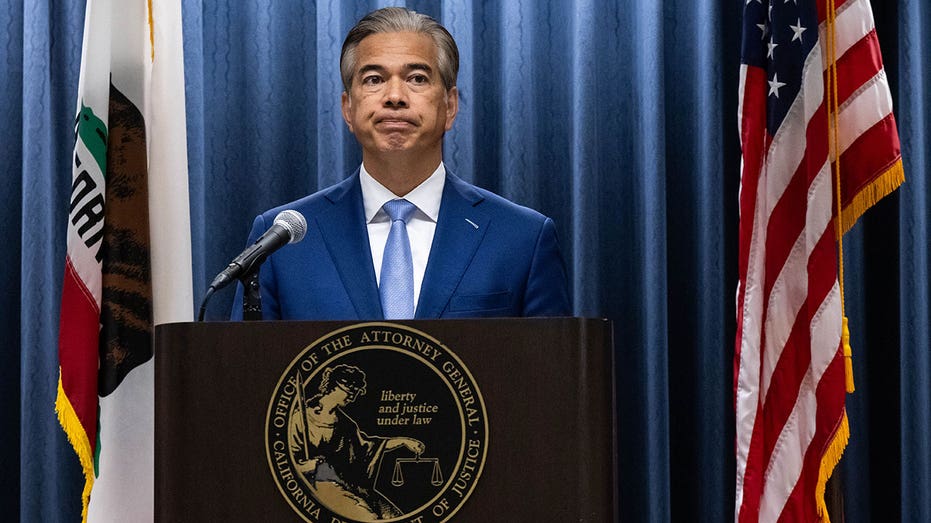
California Attorney General Rob Bonta spearheaded an antitrust lawsuit against Paramount with several other state attorneys general. (Sarah Reingewirtz/MediaNews Group/Los Angeles Daily News via Getty Images / Getty Images)
The lawsuit, filed in the U.S. District for the Northern District of California, claims that the merger violates Section 7 of the Clayton Act, which holds that mergers that may substantially lessen competition or tend to create a monopoly are illegal. Both sides argued their case last week but Judge Araceli Martínez-Olguín waited until Monday to temporarily delay the merger.
The merger, which was set to close this year, is now being delayed until at least June 2027.

Paramount CEO David Ellison is seeking to buy Warner Bros. Discovery for $111 billion, a historic deal that would rock the entertainment industry. (Charly Triballeau/AFP via Getty Images / Getty Images)
Paramount’s bid to buy Warner Bros. Discovery would be a historic deal merging two major Hollywood studios under one corporate umbrella as well as all of their television networks, including CBS and CNN. Critics of the deal believe such a merger would crush the entertainment industry and lead to mass layoffs — some have also been vocal against Ellison and his billionaire father Larry Ellison, who is heavily financing the deal and a close ally to President Donald Trump.
Liberal critics in particular also claim that, as a result of the deal, CNN would be given a MAGA-bent to its coverage and it would be run by current CBS News editor-in-chief Bari Weiss, who has been harshly criticized by some media liberals. The Paramount CEO has previously assured that CNN would maintain editorial independence following the merger.
This deal would follow Ellison’s $8 billion purchase of Paramount, merging the studio with Skydance Media.
CLICK HERE TO GET THE FOX NEWS APP
Fox News’ Brian Flood contributed to this report.
Dow swung to a profit in the second quarter as higher prices supported a rise in net sales.
The materials science and chemicals company on Thursday posted a net income of $802 million, or 99 cents a share, compared with a loss of $801 million, or $1.18 a share, in the same quarter a year ago.
Copyright ©2026 Dow Jones & Company, Inc. All Rights Reserved. 87990cbe856818d5eddac44c7b1cdeb8
Russia stocks higher at close of trade; MOEX Russia Index up 0.71%

Andy Burnham rules out snap election on first day as UK Prime Minister at Number 10 North

LeBron James Rumor Sparks a $245 Million Prediction-Market Frenzy After Miami Heat’s YouTube Mistake

3 Real Reasons Why BitMEX is Shutting Down, and Who Could Be Next


-

 Crypto World6 days ago
Ripple Payments Joins MiCA With 14 Firms, Does It Mean Anything For XRP?
-

 Politics6 days ago
The House | The City of London can help the new chancellor deliver growth in every postcode
-

 Fashion5 hours ago
Weekend Open Thread: Brooks Brothers
-

 Politics5 days ago
Democrats look to World Cup watch parties to register thousands of voters
-

 Crypto World4 days ago
Grayscale Files For Worldcoin ETF, WLD Registers Sharp Rise
-

 Tech4 days ago
Sail Virtually Aboard The “Itanic” With IA-64 Emulator
-

 NewsBeat4 days ago
Unregistered fitter used Gas Safe logo on business flyers
-
 Tech4 days ago
Turtle Beach Command Series KB7 review: a nifty screen-equipped gaming keyboard
-

 News Videos5 days ago
Big Money Is Entering XRP
-
 Business3 days ago
New Jersey voter registration controversy explained: How 6,600 noncitizens got on the rolls, and what happens next
-

 Crypto World6 days ago
Kaspersky exposes OkoBot’s 20-module crypto wallet attack
-
 Entertainment3 days ago
Johnny Depp’s R-Rated Gothic Cult Classic Gets New Release Ahead of Sydney Sweeney Remake
-

 NewsBeat7 days ago
Durham County Council to send out electoral registration emails
-

 Crypto World2 days ago
Ethics, other provisions in crypto Clarity Act to be further discussed
-

 Crypto World7 days ago
MiCA Licensing Faces Delays as ESMA Adds 14 CASPs to Register
-

 Crypto World7 days ago
Chip Stocks Enter Bear Market After Moonshot Ai Unveils Kimi K3 Model
-
 NewsBeat4 days ago
Shanghai science forum photos show China’s AI and robotics advances in rivalry with US
-

 Tech4 days ago
Watch Flock Safety CEO Garrett Langley discuss the future of surveillance at TechCrunch Disrupt 2026
-

 Tech5 days ago
Subway Sandwich Computers Get a Second Life as Gaming Machines
-

 Tech4 days ago
The 35 Best Board Games for Family Game Night
You must be logged in to post a comment Login