





Connect with us
DAPA Banner
DAPA Coin
DAPA
COIN PAYMENT ASSET
PRIVACY · BLOCKDAG · HOMOMORPHIC ENCRYPTION · RUST
ElGamal Encrypted MINE DAPA
🚫 GENESIS SOLD OUT
DAPAPAY COMING

Business

U.S. Banks Brace For An Extended Deposit Cost Squeeze

Published

on

U.S. Banks Brace For An Extended Deposit Cost Squeeze
Continue Reading
Click to comment

You must be logged in to post a comment Login

Leave a Reply

Business

from algorithmic trading to AI

Published

on

Traders brace for inflation data and public finance update as long-term government debt hits levels last seen in 1998

In late June, algorithmic trading funds experienced what the Financial Times called a “quant tremor”, a downward fluctuation affecting quantitative traders, which the newspaper predicted is becoming more common.

While quantitative trading firms are doing well this year, Goldman Sachs’ prime brokerage suffered their worst five-day performance since December 2023.

This is not a new phenomenon. Any finance-head would struggle to forget the 2007 quant crunch, and hedge funds and big financial institutions have employed algorithmic trading for decades.

But the barriers to algorithmic trading tools have dropped dramatically in recent years, driven by rapid advances in artificial intelligence.

Dozens of AI trading applications, from code-free automation tools such as Capitalise.ai, to quantitative research and strategy building platforms like QuantConnect, have opened the field to millions of individual retail investors who need little more than an internet connection and the budget for a platform subscription.

Advertisement

AI products can process large amounts of data, track market movements, spot patterns and even execute trades. They can also enhance the speed, responsiveness, perception and information level of every trader using them.

Rotem Farkash: AI can improve market access, but it may amplify systemic risks

Rotem Farkash, an AI expert and trader,  who has founded algorithmic trading companies, is clear that AI in trading should be understood in two ways: “as a tool that can broaden access and improve pricing, but also as one that introduces new forms of risk”.

The first risk is as more traders rely on similar AI-driven signals, market movements may become more synchronised, magnifying swings and increasing volatility across the financial system.

The risk of converging trades has been around for a long time. Long Term Capital Management’s 1998 collapse and the 2010 Flash Crash showed how quantitative strategies can unravel rapidly. But now AI is amplifying this risk by increasing the frequency of automated trades, making even deeper crashes possible.

Advertisement

The second risk is machine error. While AI may reduce some human mistakes, it is not perfect. If AI misinterprets a word or does not understand the context of a particular piece of information, it could trigger purchases or sales that have significant consequences for the trader.

Ken Griffin: AI “is profoundly more powerful than it was just nine months ago”

Ken Griffin’s Citadel, perhaps the world’s best-known quantitative hedge fund, initially approached AI as a tool for operational efficiency, to accelerate research, automate workflows and improve internal processes.

Yet in May, Griffin acknowledged how quickly the technology had advanced, saying it was “profoundly more powerful than it was just nine months ago”. That shift, he argued, had allowed Citadel to “unleash a much broader array of use cases for AI”, with work that would once have required people with masters and PhDs in finance weeks or months being completed by AI agents in hours or days.

Some firms are pushing this even further. Minotaur Capital, an Australia-based firm, has built its investment process around a proprietary AI platform called Taurient, which is designed to identify global stock opportunities.

Advertisement

Its strategy, which focuses on under-researched equities, delivered a 13.7% return for its flagship fund in the six months to January 2025, outperforming the MSCI All-Country World Index.

AI will likely complement humans, but is not without risk

For now, AI stock pickers may be capable of outperforming some index funds, but they remain some distance from displacing human expertise when that expertise is itself enhanced by AI tools.

The more likely outcome is that leading firms combine artificial and human intelligence, rather than replacing one with the other.

But both institutional and retail investors should remain cautious. AI may be a powerful tool in trading, but it is not risk-free. It poses a threat to market stability and can replicate the same errors that have long undermined human traders.

Advertisement

Continue Reading

Business

Tech wealth fuels record prices for dinosaur bones, art and watches: Experts

Published

on

Tech wealth fuels record prices for dinosaur bones, art and watches: Experts

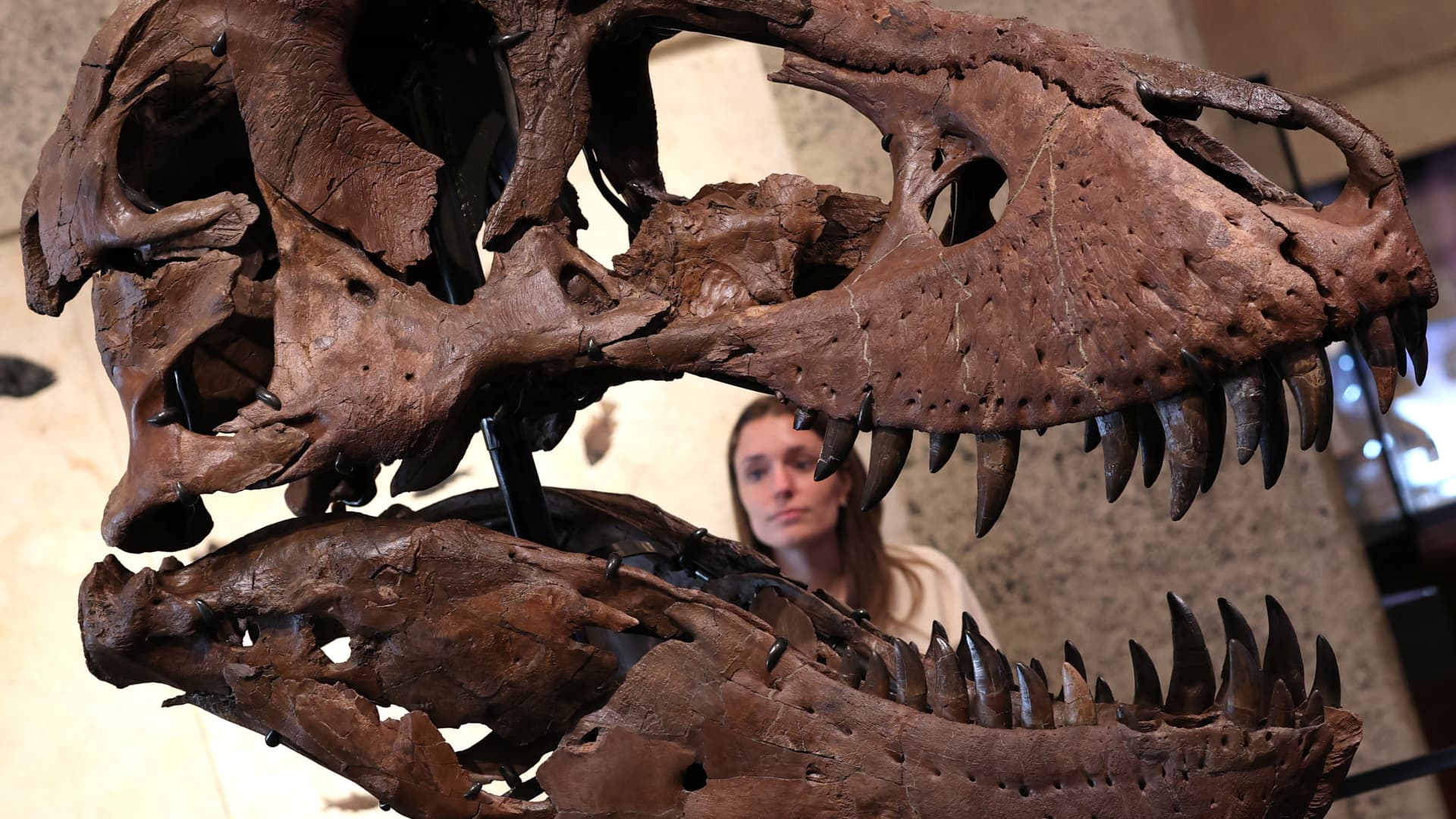
The head of “Gus,” one of the largest Tyrannosaurus rex skeletons ever found, is pictured during a press preview at the Sotheby’s Breuer building in New York, on July 1, 2026.

Timothy A. Clary | Afp | Getty Images

A version of this article first appeared in CNBC’s Inside Wealth newsletter with Robert Frank, a weekly guide to the high-net-worth investor and consumer. Sign up to receive future editions, straight to your inbox.

Advertisement

The major auction houses racked up nearly $10 billion in sales in the first half, marking one of the strongest-ever starts to the year as the wealthy gained confidence from soaring financial stock markets.

Sotheby’s reported its best first half ever, with $4.4 billion in sales, up 58% from last year and marking a record for the 282-year-old auction house. Christie’s had its best first half since 2021, reporting sales of $4.5 billion, up 71%. Phillips, Heritage and other auctioneers also had breakout starts to the year.

There were eight lots that sold for more than $50 million in the first half, compared with none in 2024 and 2025, according to Artnet. Auction executives and dealers say the explosive rebound in the art market, following nearly three years of declines, is being driven largely by the massive wealth creation from the artificial intelligence boom, IPOs and rising stocks.

“The numbers mean there is confidence in the market,” Christie’s CEO Bonnie Brennan said at the Christie’s Art + Tech Summit last week. “There are people willing to sell great objects and there are people spending great amounts of money to acquire those special one-of-one works.”

Advertisement

Added Sotheby’s CEO Charles Stewart: “The wealth being created now is the number one factor in our business right now. It’s obviously very visible when you sit here in New York and talk about the SpaceX IPO and these different tech IPOs coming and the AI fever.”

While the dollar totals are being driven largely by a select group of hyper-priced works at the very top of the market, the strength is across the board, in almost all price points and almost every category. Fine art, classic cars, watches, handbags, diamonds, whiskey and even dinosaur bones are all seeing new records.

Leading the first half was a Jackson Pollock drip painting, titled “Number 7A, 1948,” which sold for $181 million at Christie’s. The work, considered one of Pollock’s most epic and defining works, had previously been owned by media magnate and collector S.I. Newhouse, which added to its appeal. A Brancusi sculpture also previously owned by Newhouse went for $107.6 million.

A new wave of younger collectors, many from the tech world, is also redefining collectibles.

Advertisement

In classic cars, 1950s and 1960s sports cars used to dominate the price charts. Now supercars from the 1990s and 2000s are the hottest sellers.

Watches are gaining in popularity among tech bros. Phillips in Association with Bacs & Russo reported $235 million in watch auctions in the first half, marking its largest ever. The strong bidding stretched across its auctions in New York, Geneva and Hong Kong. While Patek Philippe remains strong, young collectors are battling over pieces from more rarified, independent brands. 

The priciest watch sold in the first half was an F.P. Journe Souscription Résonance, which went for $13.9 million. Mark Zuckerberg has become one of the most high-profile devotees of F.P. Journe in recent years, and has sported seven-figure F.P. Journes in public.

Get Inside Wealth directly to your inbox

Brennan said 30% of the buyers in the first half were new to Christie’s, with 47% of them millennials or younger, and that 85% of bids were placed online.

Advertisement

“What we show people and how they engage with Christie’s is evolving,” she said.

One of the hottest new categories is also the oldest — dinosaur bones. Sotheby’s sold a fossil specimen of a Tyrannosaurus rex this month for $50.1 million, making it the most expensive fossil ever auctioned. The T. rex, named “Gus,” was excavated out of the South Dakota badlands and is estimated to be 67 million years old.

Gus’ new owner hasn’t been identified. But the sale followed a stegosaurus that was sold by Sotheby’s in 2024 to hedge-fund billionaire Ken Griffin for $44.6 million. The stegosaurus, named “Apex,” is on loan to the Museum of Natural History.

Nvidia Corp CEO Jensen Huang speaks at the COMPUTEX forum in Taipei, Taiwan May 29, 2023.

Advertisement

Ann Wang | Reuters

Stewart said institutions as well as individuals are bidding up dinosaur fossils. Seven bidders battled for Gus for 10 minutes, as new wealth vied for a piece of prehistoric history. At 38 feet long, Gus will need either a museum or a very large living room for his new home.

“I say it’s ‘SpaceX to T. rex,’” Stewart said. “It’s not just that these people have made the money. They’re looking at market valuations and they’re making a judgment about store of value.”

Young tech money is also bidding up the values of sports memorabilia and pop culture. Just weeks after the New York Knicks won the NBA championship, a jersey worn by Jalen Brunson in Game 1 of the series against the Spurs sold at Sotheby’s for $1.024 million.

Advertisement

Even Jensen Huang’s leather jackets have become collectibles. A black leather Tom Ford jacket that the Nvidia CEO wore to a Foxconn event in Taiwan in 2023 sold for $960,000, blowing away its presale estimate of $40,000 to $60,000. The proceeds went to charity.

“People are spending money on fun, collectible items that they want to have,” said Jeffrey Yin, CEO of Artsy and Artnet.

Choose CNBC as your preferred source on Google and never miss a moment from the most trusted name in business news.
Continue Reading

Business

Tesla’s $5.8 Billion in Spending Turns Cash Flow Negative Despite Revenue Surge

Published

on

Tesla’s $5.8 Billion in Spending Turns Cash Flow Negative Despite Revenue Surge

With its eye on an AI- and robotics-driven future, automaker Tesla TSLA boosted its spending to $5.8 billion in the second quarter, sending its free cash flow into the red for the first time in two years despite a surge in revenue.

“This is a massive cap ex year, but I’m confident all the things we’re investing in will yield incredible returns,” Chief Executive Elon Musk told investors on a call Wednesday.

Copyright ©2026 Dow Jones & Company, Inc. All Rights Reserved. 87990cbe856818d5eddac44c7b1cdeb8

Continue Reading

Business

Fidelity Diversified International Fund Q2 2026 Commentary

Published

on

Fidelity Diversified International Fund Q2 2026 Commentary

Fidelity Diversified International Fund Q2 2026 Commentary

Continue Reading

Business

Reynolds returns as science department scrapped

Published

on

Reynolds returns as science department scrapped

The abolition of an entire Whitehall department rarely counts as good news for the firms that depend on it. Yet the business world’s response to Andy Burnham’s decision to scrap the Department for Science, Innovation and Technology has been strikingly split: dismay at the loss of a respected science minister, relief at the return of a familiar face to the business brief.

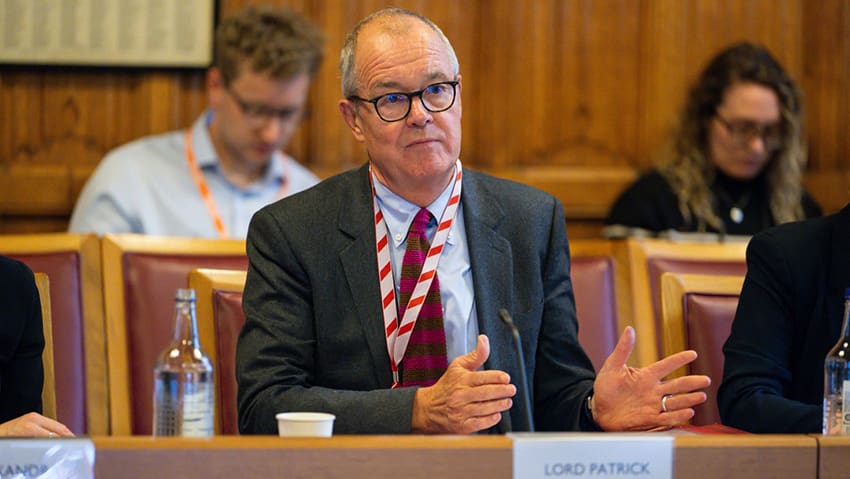
Lord Vallance of Balham has stepped down as science minister, and the department’s responsibilities have been folded into an enlarged Department for Business and Trade. In his place, Jonathan Reynolds returns as business secretary, ten months after being reshuffled out of the role.

For the thousands of smaller firms clustered in Britain’s growth sectors, from life sciences start-ups to advanced manufacturers, the reshuffle raises one immediate question: who in government now champions science?

Vallance, a former president of research and development at GSK and the government’s chief scientific adviser between 2018 and 2023, was prized for exactly that. “After nearly a decade in government I am stepping down as a minister, for personal reasons,” he said.

His exit lands at a delicate moment. The life sciences sector, heavy with the kind of high-growth SMEs the industrial strategy is meant to nurture, has spent two years fretting about Britain’s slide down the global life sciences investment rankings.

Advertisement

One senior investor put the concern bluntly: “It’s a shame that we have lost a highly competent and effective minister … If we claim to be a scientific superpower, and if we’re going to compete scientifically against the United States and China … then we need someone within government who’s going to be a champion for that.”

Richard Torbett, chief executive of the Association of the British Pharmaceutical Industry, said Vallance had been “instrumental in beginning to turn around international sentiment towards the UK as a life sciences destination”, adding that he “leaves big shoes to fill”. Vallance is also credited with helping launch the Health Data Research Service, the long-promised effort to open up NHS data to medical researchers.

Industry’s chief anxiety now is continuity. Firms are pressing the new government to honour an agreement to double spending on innovative medicines over the next decade in exchange for a three-year tariff exemption on pharmaceutical exports to the US, a deal seen as central to luring international investment. “Any rowing back on that would send an absolutely terrible signal internationally, just when sentiment is really turning around, and people are talking positively again about the UK,” one source warned.

Chris Hollowood, chief executive of the life sciences investor Syncona, captured the unease about being absorbed into a bigger department. Its backing “could be helpful”, he said, “but if we are just diluted among other priorities then that would be concerning”. Notably, the move to close the science department has already drawn a backlash from the tech sector.

Advertisement

If life sciences is nervous, the wider business lobby is more upbeat, largely because of who is now in charge. Reynolds oversaw the creation of the industrial strategy that manufacturers have broadly backed, and his return is read as a signal of intent.

Louise Hellem, chief economist at the CBI, said he “brings a clear understanding of the challenges facing business and will be able to hit the ground running, particularly when it comes to delivering the industrial strategy launched during his previous tenure”.

Stephen Phipson, chief executive of Make UK, set the bar for smaller manufacturers: “Success will be measured by whether manufacturers see lower costs, fewer barriers to trade and a more competitive environment in which to invest, make and export with confidence.”

Ben Fletcher of Logistics UK called the intervening year “a real wasted opportunity” and Reynolds’s recall “a hugely positive move”.

Advertisement

For SMEs, the message is mixed but clear enough. A pro-business signal from the top is welcome. What smaller firms in science and technology will watch for is whether their sector still has a voice once the departmental nameplate has come down.


Jamie Young

Jamie Young

Jamie Young is Senior Reporter at Business Matters, covering SME finance, employment law and Westminster policy since 2016. He has reported on every Budget and Autumn Statement since 2018, helped make sense of the ‘covid era’ and the bounce-back loan scheme from launch through the fraud investigations, and broke the magazine’s coverage of the 2024 late-payment reforms. He joined Business Matters straight from completing his BA in Administration from Exeter University and is NCTJ-qualified. Reach him at jyoung@cbmeg.co.uk

Advertisement
Continue Reading

Business

Earnings call transcript: NOS posts Q2 2026 EPS beat, shares slip

Published

on


Earnings call transcript: NOS posts Q2 2026 EPS beat, shares slip

Continue Reading

Business

Greek mythology, hubris and entrepreneurship

Published

on

Business Live

Entrepreneurship is often described as a journey, and Homer reminds us that reaching the destination matters, but so does the way we travel to get there.

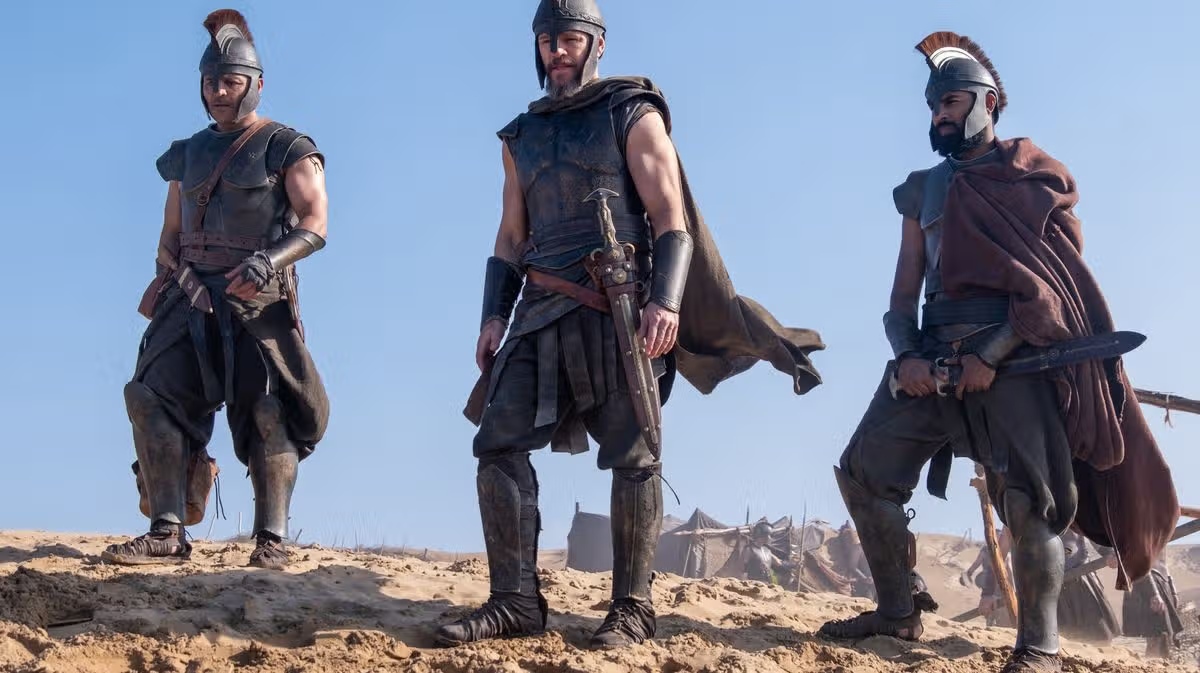
Film The Odyssey.(Image: © Universal Studios. All Rights Reserved)

As a child, I was obsessed with Greek mythology, and the stories of gods, monsters, and flawed heroes captured my imagination.

For many years, a battered second-hand copy of Homer’s Odyssey sat on my bookshelf, but like many others who have read it over the centuries, I probably understood only part of what it was trying to say.

Sir Christopher Nolan’s film has brought this ancient epic back into the public eye and introduced Odysseus’s long journey home to another generation. It has also reminded me, as I watched this incredible interpretation at the Odeon IMAX in Cardiff last week, that, beneath the cyclopes, sirens and angry gods, The Odyssey contains lessons relevant to anyone attempting to build a business.

The poem tells the story of Odysseus, king of Ithaca, and the ten years he spends trying to return home after the Trojan War. His route is disrupted by storms, monsters, temptation, his own mistakes and the failures of those around him.

Advertisement

He has a destination but no reliable map, limited resources and a team that does not always follow instructions. In that respect, his experience may feel more familiar to founders than many modern business textbooks.

The first lesson is the importance of knowing what your own Ithaca looks like. Odysseus is repeatedly blown off course, yet never loses sight of home. For founders, that destination should be more than a turnover target, an investment round, or the eventual sale of the company. It should be a clear understanding of what the business exists to do, whom it serves, and what success will ultimately mean.

Without that clarity, every new opportunity can appear attractive and whilst a partnership, a new market, or an investor may all seem worth pursuing, it is not necessarily progress. Some of the greatest threats to a growing business are apparently exciting opportunities that take it further from its primary purpose.

The Odyssey is full of such distractions – the Lotus-Eaters offer forgetfulness, Circe and Calypso offer comfort and escape, and the Sirens offer knowledge so seductive that sailors abandon reason and head towards destruction. Their commercial equivalents are vanity projects, premature expansion, unsuitable partnerships, flattering publicity, and investments that bring in money but undermine purpose.

Advertisement

One of the most important abilities any founder can develop is the capacity to say no, particularly when an opportunity appeals to the ego, which is one of Odysseus’s greatest weaknesses. Of course, entrepreneurs are encouraged to be confident, ambitious and visible, and those qualities matter when persuading others to believe in something that does not yet fully exist.

But confidence can quickly become hubris, and early success can persuade founders that they possess exceptional judgement in every area, or that anyone challenging them simply lacks vision. In fact, business history is full of leaders undone not by their first failure, but by their inability to learn from their first success.

Odysseus’s real advantage is not physical strength but intelligence, and he defeats the Cyclops because he outthinks him and survives because he adapts. Start-ups rarely possess the money, scale or market power of established competitors, and their advantage lies in speed, creativity, customer insight and the willingness to question assumptions that larger organisations have stopped noticing.

Yet adaptability should not be confused with constant reinvention, and Odysseus changes his methods while keeping the same destination. A product may have to evolve, and a route to market may have to be abandoned, but constant shifts in direction without a clear purpose are drift, not agility.

Advertisement

There is also a lesson in his crew’s behaviour when they open the bag of winds when Ithaca is almost within reach and later ignore warnings by slaughtering the cattle of Helios. Again and again, the mission is undermined by poor discipline, mistrust and a failure to accept responsibility. Businesses are often weakened by unclear responsibilities, poor communication and a reluctance to confront repeated underperformance, and whilst loyalty to your team matters, it cannot mean tolerating behaviour that ultimately damages the business.

Perhaps the most modern lesson comes from the Sirens. Odysseus knows he will be unable to resist their song, so he asks his crew to bind him to the mast and ignore his demands to be released. He does not rely on willpower but creates a system that prevents him from acting on temptation, which is governance in its simplest form.

Spending limits, delegated authority, shareholder agreements and independent oversight may feel bureaucratic to leaders who value freedom and speed, but in reality they protect the company not only from dishonest or incompetent people but also from the founder’s own impulses.

The final lesson concerns the cost of the journey and Odysseus eventually reaches Ithaca, but only after twenty years away, having lost his ships and every member of his crew. He achieves his objective, but at an extraordinary price. Whilst founders are frequently told that persistence is the defining entrepreneurial virtue, it should never become an excuse to ignore the consequences.

Advertisement

A founder can build a valuable company while damaging their health, family, friendships, or reputation, only to reach the destination and discover that too much has been sacrificed along the way. Success cannot be judged only by whether Ithaca was reached, but by who arrived with us and what sort of person we became on the voyage.

That is why The Odyssey has endured and why one of the world’s best directors has brought it back into contemporary culture. It is not merely an adventure about monsters and gods but a story about leadership under pressure, the dangers of pride, and the need to stay focused when easier destinations beckon.

Indeed, entrepreneurship is often described as a journey, and Homer reminds us that reaching the destination matters, but so does the way we travel to get there.
Advertisement
Continue Reading

Business

(VIDEO) 10-Person Brawl Forces EasyJet Flight from Tenerife to Liverpool to Turn Back Mid-Air, Police Called

Published

on

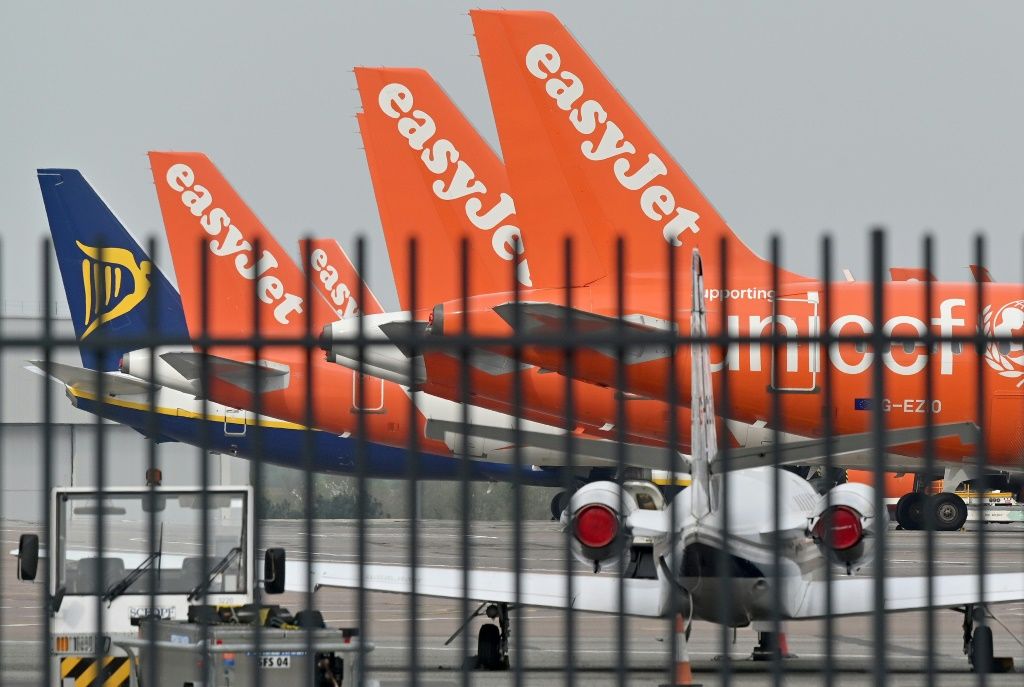
No-frills airlines, such as Ryanair and EasyJet, are notably affected, with their business model based heavily on flying customers across the European Union

A Liverpool-bound easyJet flight was forced to turn back to Tenerife on Tuesday evening after a brawl involving roughly 10 passengers broke out onboard, prompting the pilot to abort the journey and request police meet the aircraft on landing.

Flight EZY3352, carrying 186 passengers, had been in the air for approximately 30 minutes when the altercation broke out, according to Spanish air traffic control. The captain made the decision to return to Tenerife South Airport rather than continue on to Liverpool, citing the danger the fight posed to the overall safety of the flight.

How the incident unfolded

Advertisement

Air traffic control, in a statement originally issued in Spanish, described the sequence of events leading up to the aircraft’s return. “The crew of the flight from Tenerife South to Liverpool, after about 30 minutes of flight, informed us that they needed to return to the airport and requested police presence upon arrival,” the statement said. “A group of about 10 passengers had started a fight on board, and the captain decided to return due to the danger it posed to the safety of the flight. We expedited their return as much as possible while coordinating with the airport for police presence. They landed and cleared runway 07 without incident.”

Police officers were waiting on the tarmac when the aircraft touched down at Tenerife South Airport on Tuesday evening, in line with the crew’s request ahead of landing. Following the incident, the plane resumed its journey and continued on to Liverpool.

EasyJet’s response

In a statement, easyJet confirmed the aircraft had returned to the airport due to disruptive behavior among a group of passengers. “The plane returned to the airport and was met by police due to a group of passengers behaving disruptively. The flight then continued to Liverpool,” the airline said.

Advertisement

The airline emphasized its standard protocols for handling in-flight disturbances, saying its staff are trained to respond quickly to protect the safety of everyone on board. “Our cabin and ground crew are trained to assess all situations and to act quickly and appropriately to ensure that the safety of the flight and other customers is not compromised at any time,” easyJet said. “We take these incidents very seriously and do not tolerate disruptive behaviour towards our staff. The safety and wellbeing of customers and crew is always our highest priority.”

A message of solidarity from air traffic control

Beyond the operational details of the incident, Spain’s air traffic control authority used its statement to express broader concern about the frequency of similar disruptions affecting aviation crews and passengers. “Our full support goes out to the crews and passengers who are increasingly having to endure these situations,” the controller said.

Part of a wider push to crack down on disruptive passengers

Advertisement

Tuesday’s incident comes amid a broader effort by U.K. authorities to address unruly and disruptive behavior on flights. Last month, officials announced a proposed government scheme that could see passengers who disrupt flights banned from flying with any airline, rather than facing consequences limited only to the specific carrier involved in the incident that led to their removal or restriction.

According to reporting on the proposal, officials at the Department for Transport and the Home Office are developing a system that would allow airlines to share information about disruptive passengers across the industry. Currently in its conceptual phase, the plan would require airlines to notify the government when a passenger engages in disruptive behavior. If that same individual later attempted to check in for a subsequent flight, participating airlines would be alerted to the prior incident, potentially allowing them to deny boarding.

Not an isolated incident for the airline

In-flight altercations, while relatively rare given the volume of daily commercial flights, have periodically disrupted easyJet services in the past. A similar incident occurred in 2019, when an easyJet flight bound for Tenerife from Manchester was diverted to Portugal after several men began fighting in the back of the cabin, with the disturbance escalating even after crew attempted to separate those involved.

Advertisement

Aviation safety experts generally note that in-flight altercations, regardless of scale, pose a heightened risk specifically because of the confined cabin environment, the difficulty of safely separating those involved at altitude, and the potential for a serious disturbance to distract crew members from other safety duties during a flight. Diverting or returning a flight, while operationally costly and disruptive to other passengers, remains one of the primary tools available to flight crews when a situation is deemed to pose a genuine risk to overall flight safety.

No injuries reported

Neither easyJet nor Spanish air traffic control indicated that any passengers or crew members were injured during Tuesday’s altercation. It also remains unclear from statements provided whether any of the passengers involved in the fight were removed from the aircraft in Tenerife before it continued on to Liverpool, or whether any arrests were made following the police response on the tarmac.

As of this week, neither easyJet nor Spanish authorities have indicated whether any of the passengers involved will face further legal consequences beyond the police response that met the aircraft upon its return to Tenerife. The incident adds to the broader public conversation around disruptive passenger behavior on commercial flights, a issue that has taken on renewed significance in the U.K. as officials continue developing the cross-airline passenger-sharing scheme aimed at preventing repeat offenders from continuing to fly following similar incidents in the future.

Advertisement
Continue Reading

Business

Central Pacific Financial earnings beat by $0.02, revenue topped estimates

Published

on


Central Pacific Financial earnings beat by $0.02, revenue topped estimates

Continue Reading

Business

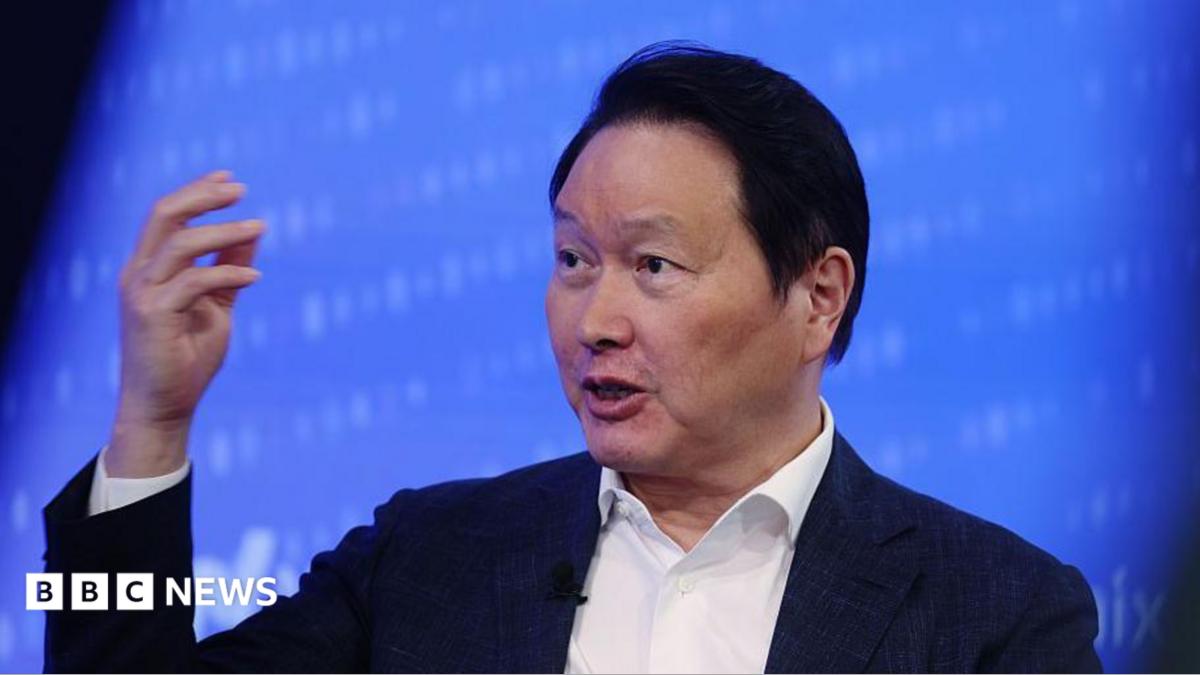
SK Group: Tech titan Chey Tae-won ordered to pay ex-wife $644m in divorce settlement

Published

on

Chey Tae-won, chairman of SK Group, speaking during the company's initial public offering at the Nasdaq MarketSite in New York in July

The chairman of corporate giant SK Group has been ordered by a South Korean court to pay his ex-wife 944bn won (£483m; $644m) in a case that local media has called the “divorce of the century“.

The award, which still needs to be finalised, is below the initial 1.38tn won that chairman Chey Tae-won was told to pay Roh Soh-yeong in 2024.

It comes more than a decade after his marriage to Roh – the daughter of a former president – fell apart following the revelation he had fathered a child with another woman.

SK Group runs SK Hynix, the semiconductor giant that supplies chips to Nvidia and recently made a record-setting debut on the US stock market.

Advertisement

Chey’s lawyers said “Chairman Chey Tae-won is deeply sorry in that [the divorce] proceedings so far have caused concern to many people. We will share specific response to the verdict after we closely review the ruling.”

SK Group is one of South Korea’s chaebols – family-owned conglomerates that dominate the country’s economy.

The verdict comes after deliberation over the division of assets between Roh and Chey, who had been married for 35 years.

During the earlier trial in 2024, Roh’s legal team had successfully argued that Chey had received significant help from his ex-wife’s father, Roh Tae-woo, who had served as the country’s president between 1988 to 1993.

Advertisement

The court had determined that the strongman had given Chey 30bn Korean won from his slush fund in 1991, and told Chey to pay 1.38tn to his ex-wife.

But the Supreme Court overturned the verdict last year, ruling that the slush funds were illegally obtained and could not be considered as part of the couple’s assets.

The case has gripped South Korea.

SK Group began as a textile company in 1953 but quickly grew across a wide swath of industries to become one of South Korea’s biggest conglomerates.

Advertisement

Today, it is the second largest chaebol after the Samsung group. South Korean people buy phone plans from SK Telecom and fill their vehicles at SK petrol stations.

The group gained global prominence after its subsidiary SK Hynix found itself at the centre of the artificial intelligence (AI) boom. In May, the chipmaker surpassed $1tn (£750bn) on the South Korean stock market.

As SK Hynix’s value soared, the SK Group and its chairman Chey’s status also rose.

Last month, President Lee Jae Myung commended Chey during the unveiling of a landmark AI investment plan, calling him and Samsung chairman JY Lee “Heroes of Korean People.”

Advertisement

The company also raised $26.5bn in its New York share offering, marking the largest ever listing by a foreign firm in the US.

The BBC has contacted SK Group for comment.

Continue Reading

Trending

Copyright © 2025