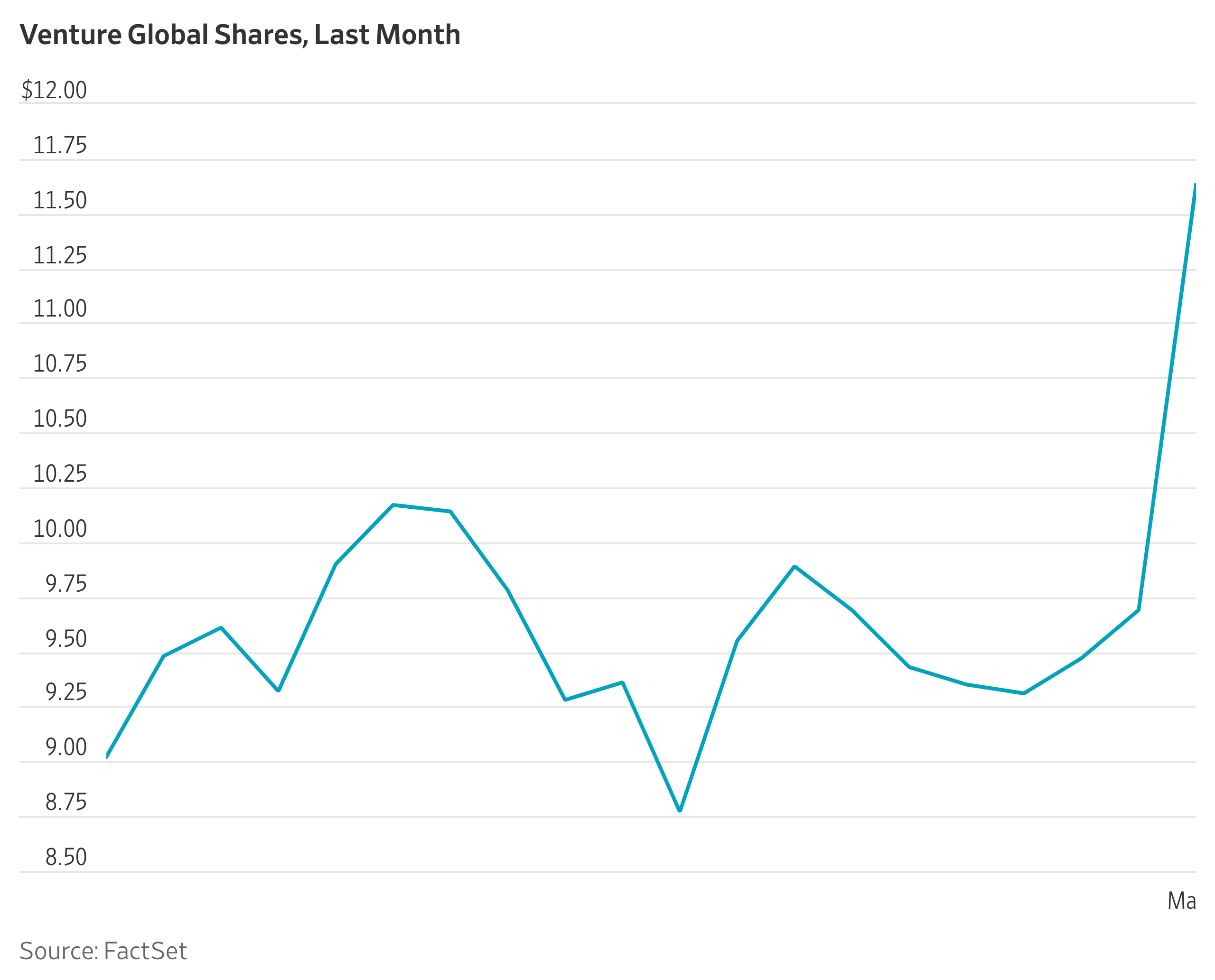
Natural gas prices are rocketing. So are shares in a U.S. exporter that could emerge as a beneficiary of Middle East supply disruption. Venture Global, a liquefied natural-gas exporter, was up 17% in premarket trading.
European natural-gas prices rose nearly 50% on Monday. QatarEnergy, the world’s largest LNG producer, said it would halt output following an attack on its operations.
Venture Global, which exports LNG from the U.S. and sells on the spot market, should be best positioned to capitalize from the higher prices, analysts at Mizuho wrote.
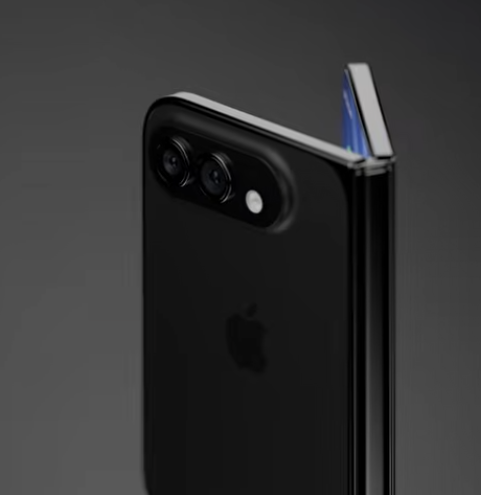
CUPERTINO, Calif. — Apple’s long-awaited entry into the foldable smartphone market, widely referred to in leaks as the iPhone Fold or potentially the iPhone Ultra, is generating buzz with its promised ultra-thin 4.5mm design, near-crease-free 7.8-inch inner display and book-style passport form factor. Yet despite claims of solving key industry pain points like screen durability and hinge reliability, early reports and industry patterns suggest prospective buyers should proceed with caution.
Apple’s Foldable iPhone
Here are 10 compelling reasons why waiting — or skipping the iPhone Foldable Ultra altogether — might be the smarter move when it arrives, potentially priced north of $2,000.
1. Eye-watering price tag Rumors point to a starting price of $2,000 or higher, possibly reaching $2,400, making it Apple’s most expensive iPhone ever. That premium reflects the complex dual-display setup, titanium hinge and advanced materials, but it dwarfs even current flagship Pro Max models. For many consumers, the cost rivals a high-end laptop or tablet bundle without guaranteed long-term value in a category still maturing. Early adopters of rival foldables have often regretted the steep outlay when repair bills or resale values disappoint.
2. First-generation risks Apple’s foldable would be a debut effort in a segment Samsung has dominated for years. History shows first-gen devices from even the most polished companies often carry teething problems. Engineering validation tests have already encountered more snags than anticipated in hinge reliability, display durability under repeated folding and component integration into an ultra-slim chassis. While Apple aims to minimize these issues, buyers could face unexpected quirks in software optimization for the unique form factor or multitasking on iOS.
3. Potential production and availability delays Recent reports indicate mass production has slipped by one to two months, with engineering hurdles in the test phase raising concerns about shipment timelines. Although Apple has not officially signaled a postponement beyond fall 2026, supply constraints could mean limited initial stock, long waitlists and higher secondary-market prices. Nikkei Asia cited sources noting that issues are more complex than expected, potentially pushing first shipments by months in a worst-case scenario.
Advertisement
4. Durability doubts despite Apple’s claims Foldables remain mechanically vulnerable. Even with Apple’s touted titanium alloy hinge and dual-layer glass approach for a near-crease-free experience, the inner screen uses flexible materials prone to scratches from fingernails or debris. Dust and sand can infiltrate the hinge, leading to grinding or failure over time. Repeated folding cycles — thousands per year for heavy users — test longevity in ways slab-style iPhones never face. Past foldable owners frequently report screen failures or hinge wear within 18-24 months.
5. Repair costs and hassle Replacing a damaged foldable display often exceeds $1,000 due to the integrated hinge and layered construction. Apple’s service network, while extensive, has limited experience with this technology. Out-of-warranty repairs could prove prohibitively expensive, and insurance add-ons may not fully offset risks. Many consumers end up trading in early or switching back to traditional phones when issues arise, diminishing the device’s resale value.
6. Battery life compromises The slim 4.5mm open profile and dual screens demand engineering trade-offs. Rumors suggest a large battery around 5,400-5,800mAh, yet real-world usage with an always-on inner display, multitasking and 5G connectivity could drain it faster than a standard iPhone 18 Pro Max. Early foldable adopters commonly complain of needing midday top-ups during heavy productivity or media sessions. Apple’s optimization prowess may help, but physics limits what even the best software can achieve in such a constrained chassis.
7. Compromised camera system Leaks indicate a dual 48MP rear camera setup rather than the triple-lens array found on current Pro models. Space constraints from the folding mechanism and thin design may limit sensor size, zoom capabilities or low-light performance. Users accustomed to iPhone photography excellence could notice differences in versatility, especially for video or portrait work that benefits from multiple focal lengths.
Advertisement
8. Software and ecosystem growing pains iOS will need significant adaptations for seamless inner/outer screen transitions, app continuity and true multitasking akin to iPadOS. While Apple promises polished experiences, first-gen foldables from competitors have suffered from awkward app scaling, notification glitches or suboptimal keyboard layouts in folded mode. Developers may take time to fully optimize popular apps, leaving early buyers troubleshooting workarounds.
9. Bulk and everyday practicality Closed, the device resembles a compact 5.5-inch phone, but opened it becomes a wider, passport-style tablet. That hybrid form can feel awkward in pockets, during one-handed use or in calls. The hinge adds weight and thickness compared to ultra-slim slab phones, potentially reducing the “always carry” convenience that defines iPhone appeal for many.
10. Better alternatives exist today — and tomorrow Samsung’s Galaxy Z Fold series has iterated through multiple generations, offering refined software, wider accessory support and often lower entry prices. Waiting for the iPhone Foldable Ultra’s second or third iteration could deliver meaningful improvements in durability, battery and pricing. Alternatively, sticking with a proven iPhone 18 Pro Max or even pairing a current iPhone with an iPad mini provides similar productivity without foldable risks. The category itself remains niche; many who try foldables return to traditional designs for reliability.
Industry analysts note that while Apple could elevate foldables with its materials science and ecosystem integration, the device arrives amid ongoing supply-chain pressures and broader economic caution around premium gadgets. Leaks highlight a titanium frame and Touch ID side button replacing Face ID due to space limits, further underscoring design compromises.
Advertisement
For enthusiasts drawn to the novelty of a crease-minimized 7.8-inch screen and potential A20-series chip with ample RAM, the iPhone Ultra might still tempt. Yet the combination of high cost, mechanical vulnerabilities, repair economics and first-gen uncertainties creates a risky proposition.
Apple has built its reputation on delivering polished, reliable products that justify premium pricing through longevity and user experience. In the foldable space, that bar is harder to clear given inherent physical challenges. Consumers weighing an upgrade should consider their usage patterns: heavy media consumers or multitaskers might benefit, but casual users or those prioritizing durability and value could find the traditional iPhone lineup more satisfying.
As testing continues and more concrete details emerge closer to the expected September 2026 announcement, prospective buyers would do well to monitor independent durability tests, real-world battery data and early repair cost reports. The foldable dream has captivated tech fans for years, but turning that vision into a must-own device without significant drawbacks remains an uphill climb — even for Apple.
In the meantime, many will stick with slab-style flagships that deliver proven performance without the folding compromises. The iPhone Foldable Ultra could ultimately redefine mobile computing, but for now, the 10 reasons above suggest exercising patience before opening your wallet for Apple’s boldest iPhone experiment yet.
LOS ANGELES — Kevin Durant will miss the Houston Rockets’ playoff opener against the Los Angeles Lakers after suffering a right knee contusion in practice, dealing an early blow to one of the Western Conference’s most intriguing first-round matchups.
Kevin Durant
Rockets coach Ime Udoka announced the decision about 90 minutes before Saturday’s Game 1 tipoff, ruling out the 37-year-old superstar who had been listed as questionable earlier in the day. Durant sustained the injury Wednesday when he bumped knees with a teammate while chasing a loose ball. Imaging showed no structural damage, but the knee remains tender and limits his mobility.
“He bumped a knee in practice on Wednesday,” Udoka said. “Hopefully, it’s a one-game thing, but he tried it out just a short time ago and didn’t feel good enough.”
Udoka added that the contusion struck “in an awkward spot” above the patella tendon. “The knee is very tender and tough to bend in certain ways,” he explained. “Pain tolerance is one part, but limited movement is another.”
Durant, who played 78 regular-season games and logged heavy minutes as a key piece in Houston’s push for postseason positioning, underwent an MRI after the incident. Team officials expressed optimism that the issue won’t sideline him long-term, describing him as day-to-day. Still, his absence forced immediate adjustments for a Rockets squad built around scoring punch from its veteran leader.
Advertisement
Without Durant, Houston started Josh Okogie at small forward alongside Reed Sheppard, Amen Thompson, Jabari Smith Jr. and Alperen Sengun. The lineup shift underscored the challenge of replacing a player averaging nearly 26 points per game on efficient shooting.
The Lakers, already navigating their own injury concerns with Luka Doncic and Austin Reaves sidelined indefinitely, seized the opportunity. Los Angeles rolled to a 107-98 victory in Game 1, with LeBron James posting 19 points, 13 assists and eight rebounds. Luke Kennard erupted for a playoff career-high 27 points, including perfect 5-for-5 shooting from three-point range. Deandre Ayton added 19 points and 11 rebounds in the frontcourt.
Lakers coach JJ Redick downplayed any strategic overhaul tied to Durant’s status. “I don’t think it affected our mentality,” Redick said afterward. “This is all we talked about for two months, just our playoff mentality. You can’t worry about who’s in or out of the lineup. It’s our game plan. It’s our standards. It’s how we play.”
The series now shifts with uncertainty hanging over Houston’s roster. Durant’s availability for Game 2 remains unclear as the Rockets evaluate his progress. Udoka and the medical staff will monitor swelling and range of motion closely in the coming days. The team’s depth, bolstered by young talent like Thompson and Sengun, will face an early test in compensating for the scoring and spacing Durant provides.
Advertisement
Durant’s durability has been a hallmark of his late-career resurgence. After stints with the Brooklyn Nets and Phoenix Suns, he joined the Rockets in a move that paired his veteran savvy with an up-and-coming core. His ability to stretch the floor and create off the dribble helped Houston secure a favorable playoff seeding. Missing even one postseason game carries weight for a player chasing another deep run in what could be among his final championship windows.
For the Lakers, the win provided breathing room in a series many viewed as competitive. James, now in his 23rd season, continues to defy age while guiding a supporting cast that stepped up without its own injured stars. Kennard’s hot shooting and Ayton’s interior presence filled gaps, but Redick emphasized preparation over reacting to opponent absences.
” We’ve built toward that, and I thought our guys responded well and met the moment,” Redick said. “That’s the biggest thing. You’ve got to meet the moment in every game.”
The Rockets entered the playoffs with momentum from a solid regular season but now confront questions about offensive flow. Durant’s mid-range mastery and ability to draw defenders create opportunities for teammates. In his absence, Houston leaned on Sengun’s playmaking and Thompson’s athleticism, yet the scoring drop-off proved noticeable against Los Angeles’ defense.
Advertisement
League observers noted the timing of the injury as particularly disruptive. Playoff series often hinge on health, and a knee contusion — while not season-threatening — can linger if not managed properly. Rockets officials stressed caution to avoid aggravating the bruise, especially with a best-of-seven format allowing recovery time between games.
Durant has a history of overcoming injuries, including past knee and Achilles issues that tested his resilience. His return to the court, whenever it occurs, could swing the series momentum. Houston’s young legs offer energy, but Durant’s experience in high-stakes moments remains irreplaceable.
As the series progresses, both teams will adapt. The Lakers aim to build on their Game 1 resilience, while the Rockets seek to stabilize without their star before potentially welcoming him back. Fans and analysts alike will track Durant’s status hour by hour, with updates expected as Houston prepares for Game 2.
The Western Conference quarterfinals have already delivered drama, and Durant’s knee adds another layer. For a player who has rewritten scoring records and earned multiple championships, this latest hurdle tests the depth of a Rockets team betting on its collective strength.
Advertisement
Houston will need contributions across the board to keep pace with LeBron and company. Whether Durant returns soon or the injury forces a longer absence, the opening chapter of this series highlighted the fragility of playoff basketball — where one awkward collision in practice can reshape expectations overnight.
TOKYO — Japan, situated on the volatile Pacific Ring of Fire where multiple tectonic plates converge, has endured some of the most powerful and destructive earthquakes ever recorded, with the 2011 Tohoku event standing as the strongest in the nation’s modern history at magnitude 9.1 and triggering a catastrophic tsunami that claimed nearly 20,000 lives.
The list of Japan’s 10 biggest earthquakes, ranked primarily by magnitude but also considering historical impact and death toll where records allow, reveals a pattern of megathrust events along subduction zones that have repeatedly reshaped the archipelago’s coastline, infrastructure and collective memory. While modern seismology provides precise measurements for quakes since the late 19th century, earlier events rely on historical accounts, with magnitudes often estimated retrospectively.
2011 Great East Japan Earthquake
At the top is the 2011 Great East Japan Earthquake (also known as the Tohoku earthquake and tsunami). On March 11, 2011, at 2:46 p.m. local time, a magnitude 9.0–9.1 megathrust quake struck off the Oshika Peninsula in Miyagi Prefecture at a shallow depth of about 29 kilometers. The rupture, spanning roughly 300 kilometers along the Japan Trench, displaced the seafloor and generated tsunami waves reaching up to 40 meters in some areas. Nearly 20,000 people died, with more than 2,500 still listed as missing years later. The disaster triggered the Fukushima Daiichi nuclear meltdown, caused an estimated $360 billion in damage (adjusted figures approach $500 billion in today’s terms), and displaced hundreds of thousands. It ranks as the fourth- or fifth-largest earthquake globally since instrumental recording began.
The second-largest is the 869 Jogan Sanriku earthquake, estimated at magnitude 8.9–9.0. This ancient event devastated the Sanriku coast with a massive tsunami that inundated areas up to 4 kilometers inland, killing over 1,000 people according to historical records. Geological evidence of tsunami deposits links it to similar patterns seen in 2011, underscoring the recurrence interval of major events in the region.
Advertisement
Third comes the 1896 Meiji-Sanriku earthquake, magnitude 8.5. Striking on June 15, 1896, it produced one of the deadliest tsunamis in Japanese history, with waves up to 38 meters high claiming more than 22,000 lives, mostly in Iwate and Miyagi prefectures. The quake itself caused limited shaking damage, but the tsunami’s rapid arrival caught coastal communities unprepared.
The 1933 Showa-Sanriku earthquake, magnitude 8.4, followed a similar pattern on March 3, 1933. It generated tsunami waves up to 29 meters, resulting in nearly 3,000 deaths. Occurring during a period of heightened seismic activity, it prompted improvements in coastal warnings, though technology at the time remained limited.
The 1707 Hoei earthquake, estimated at magnitude 8.6, struck on October 28, 1707, affecting the Nankai Trough region. It caused widespread damage across Honshu and Shikoku, killing around 5,000 people, and is notable for coinciding with the last major eruption of Mount Fuji, which added volcanic ash fallout to the devastation.
The 1944 Tonankai earthquake, magnitude 8.1, hit on December 7, 1944, during World War II. Centered in the Nankai Trough, it killed over 1,200 and caused significant infrastructure damage, though wartime censorship limited immediate reporting.
Advertisement
The 1946 Nankaido earthquake, magnitude 8.1, occurred on December 21, 1946, in the same tectonic zone. It claimed about 1,300 lives and highlighted the paired nature of Nankai Trough events, where stress release in one segment often triggers activity in adjacent areas.
The 1923 Great Kanto earthquake, magnitude 7.9, devastated the Tokyo-Yokohama region on September 1, 1923. While lower in magnitude than megathrust events, its proximity to densely populated areas resulted in one of Japan’s highest death tolls — over 100,000, many from fires ignited by overturned stoves amid strong shaking. The quake destroyed much of Tokyo, prompted major urban planning reforms and is commemorated annually as Disaster Prevention Day.
The 1891 Mino-Owari (Nobi) earthquake, magnitude 8.0, struck central Japan on October 28, 1891, killing around 7,273 people. It caused extensive surface faulting and damage across Gifu and Aichi prefectures, leading to early advancements in seismic building standards.
Rounding out a top 10 by impact or estimated size is the 1854 Ansei-Nankai earthquake, magnitude around 8.4. Part of a paired event with the Ansei-Tokai quake, it devastated parts of Kyushu and Shikoku, killing thousands and reinforcing cultural beliefs linking earthquakes to mythical giant catfish (namazu) stirring beneath the islands.
Advertisement
These events illustrate Japan’s position at the convergence of the Pacific, Philippine Sea, Eurasian and North American plates. The Japan Trench and Nankai Trough are particularly prone to megathrust quakes, where one plate subducts beneath another, accumulating strain over centuries before releasing in massive ruptures.
Modern monitoring through the Japan Meteorological Agency and dense seismic networks has improved early warnings, saving lives in recent decades. The 2011 quake, despite its scale, benefited from seconds of advance alert via the national system, though the tsunami’s speed overwhelmed many coastal defenses. Post-2011 reforms included higher seawalls, stricter building codes, better evacuation planning and enhanced nuclear safety measures.
Yet challenges persist. Japan’s aging population and dense urban centers amplify risks, while climate change may influence tsunami impacts through rising sea levels. Scientists continue studying recurrence intervals — major Nankai Trough events are overdue based on historical patterns, with a potential magnitude 8–9 quake carrying catastrophic potential for central and western Japan.
Public preparedness remains high. Annual drills, earthquake-resistant architecture and widespread awareness campaigns reflect lessons from past disasters. The 1995 Great Hanshin (Kobe) earthquake, magnitude 6.9–7.3, which killed over 6,400, spurred nationwide improvements despite not ranking among the absolute largest by magnitude.
Advertisement
As of 2026, no earthquake has surpassed the 2011 event in recorded Japanese history, though frequent moderate quakes remind residents of ongoing risk. The April 2024 Noto Peninsula quake (magnitude 7.5) caused significant local damage and served as another test of resilience.
Geologists warn that the next “big one” could strike with little warning beyond seconds of shaking alerts. Research into slow-slip events, seafloor monitoring and AI-driven prediction aims to refine forecasts, though precise timing remains elusive.
Japan’s history of seismic trauma has fostered innovation. From tsunami stones warning “do not build below this point” to cutting-edge early-warning technology, the nation balances fatalism with determination. International cooperation, including shared data with the United States and other Pacific nations, strengthens global tsunami warning systems.
For a country that has rebuilt repeatedly from rubble, these 10 earthquakes represent not just destruction but chapters in a story of endurance. Each disaster prompted reflection, reform and renewed commitment to safety. As scientists monitor the plates grinding beneath the islands, the collective memory of past events serves as both cautionary tale and blueprint for survival.
Advertisement
The human cost — measured in lives lost, communities shattered and economies strained — underscores why Japan invests heavily in mitigation. Yet the beauty and resilience of the Japanese people shine through in recovery efforts, from temporary housing rebuilt into vibrant neighborhoods to the quiet determination of survivors sharing stories to prevent future tragedy.
While no one can prevent earthquakes, Japan’s experience shows that preparation, education and technological advancement can dramatically reduce their toll. As the nation marks anniversaries and conducts drills, the list of its biggest quakes stands as a solemn reminder of nature’s power and humanity’s capacity to adapt.
Typhoo Tea owner reports ‘significant growth in vape sales’
07:44, 20 Apr 2026Updated 07:44, 20 Apr 2026
Supreme bought SlimFast last year(Image: -)
Consumer goods group Supreme says its results are set to be “significantly ahead” of expectations thanks to rising vape sales and its takeover of SlimFast.
In a trading update to the stock market this morning, Trafford Park-based Supreme says that for the 12 months to March 31 it will post record results thanks to “significant growth in vape sales and the positive impact from acquisitions and new products”.
Advertisement
Supreme says it expects to post a 15% increase in revenues to £265m, with adjusted EBITDA of some £40.6m, on par with last year’s £40.5m. It says those figures are “significantly ahead of market consensus expectations”.
Supreme says it remains net-cash positive even after investing £12.4m in acquisitions and £5m in its manufacturing sites, including a new 40,000 sq ft dedicated wellness facility.
Its statement said: “Sales from the group’s vaping category are expected to be more than 10% higher than prior year even with the UK disposable vape ban on 1 June 2025, demonstrating Supreme’s ongoing market resilience.”
It also hailed the performance of Supreme’s Drinks & Wellness business, which now includes SlimFast UK and Ireland. Supreme bought that business in a deal it said would be worth a total of £20.1m.
Advertisement
Supreme today added: “The category is further supported by investment in two brand new manufacturing facilities, strengthening its operational capacity and positioning this category for long-term growth.”
Other Supreme brands include Typhoo Tea and Perfectly Clear.
The rise of on-demand businesses has changed how products are created and delivered. From custom t-shirts to personalized accessories, small entrepreneurs are now able to produce items only when needed. This shift has reduced waste, lowered startup costs, and opened doors for freelancers and home-based businesses.
One tool that plays a major role in this transformation is the heat press machine. While it’s commonly associated with apparel printing, its use has expanded into many practical areas—including creating customized solutions like ergonomic grips for people with arthritis.
The Growth of On-Demand Production
Traditional manufacturing relies on bulk production. However, modern consumers prefer personalized items tailored to their needs. This demand has fueled the growth of small-scale, on-demand production setups.
Entrepreneurs now focus on:
Advertisement
Producing items only after receiving orders
Offering customization options
Reducing inventory risks
Delivering faster turnaround times
This model works especially well for freelancers who want to start small without heavy investment.
Where Heat Press Machines Fit In
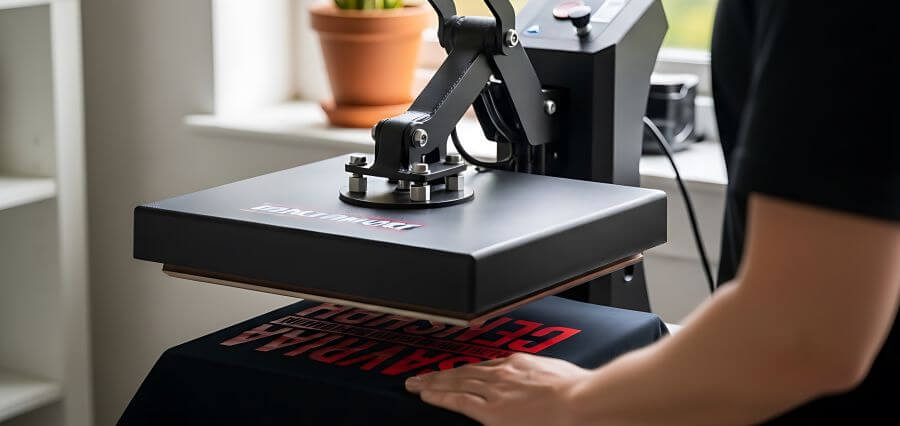
A heat press is one of the most versatile tools in an on-demand setup. You can explore available options here: heat press: It allows users to apply heat and pressure to materials, making it possible to transfer designs, bond layers, or shape surfaces.
For apparel businesses, it’s used to print designs on shirts. But beyond that, it’s also being used to create functional items like custom grips, soft handles, and assistive tools.
Expanding Beyond Apparel: Practical Customization
One of the most interesting developments is how entrepreneurs are using heat press technology outside of clothing.
For example, people with arthritis often struggle with grip strength. A small business can create custom orthotic grips using simple tools and materials. This is where on-demand production truly shines each product is made specifically for the user.
Advertisement
A Simple Workflow for Small Entrepreneurs
Let’s break down how a small setup can operate efficiently:
1. Design and Personalization
Every order begins with understanding the customer’s needs. Whether it’s a t-shirt design or a custom grip, personalization is key.
2. Printing with DTF Technology
To create detailed and flexible designs, many small businesses rely on a dtf transfer printer:
For entrepreneurs, especially those working from home, reliability matters more than anything. Orders don’t always come in daily sometimes there are gaps. In such cases, it’s helpful to have a printer that can handle idle time without turning the next print session into a problem.
Advertisement
This kind of setup supports a low-stress workflow. You can focus on fulfilling orders rather than worrying about constant maintenance. It’s particularly useful when you’re managing everything alone designing, printing, packaging, and responding to customers.
3. Material Preparation
Depending on the product, materials like fabric, foam, or rubber are prepared. These materials are chosen for flexibility and comfort.
4. Heat Press Application
Using the heat press machine, designs are transferred or materials are shaped. The process is quick and repeatable, making it ideal for small batches.
5. Finishing with Heat Transfer Vinyl
To enhance durability or add texture, heat transfer vinyl is often used: heat transfer vinyl: This step improves both the look and functionality of the final product.
Advertisement
Why On-Demand Works for Freelancers
For freelancers like you, this model offers several advantages:
Low Startup Cost
You don’t need a large inventory or warehouse.
Flexible Work Schedule
You can work when orders come in perfect for balancing multiple clients.
Reduced Risk
Since products are made on demand, there’s no risk of unsold stock.
Advertisement
Easy Scaling
Start small and grow as demand increases.
Managing Workload Without Stress
One of the biggest challenges in small businesses is handling workload fluctuations.
Some days may be busy with multiple orders, while others are quiet. This is where choosing the right tools becomes important.
Equipment that is:
Advertisement
Easy to operate
Stable during production
Less demanding in maintenance
…can help maintain a smooth workflow.
For example, built-in alerts or simple controls can save time when you’re multitasking. You might be answering Fiverr messages while your machine is running, so having a system that doesn’t require constant monitoring is a big advantage.
Real Example: A Home-Based Business
Imagine running a small online store selling custom products.
On weekdays, you receive a few orders
On weekends, orders increase due to promotions
With a simple setup using a heat press and a reliable DTF printer, you can handle both situations. You don’t need a large team or complex system—just tools that work when you need them.
After a break or a slow period, you can resume work without delays. This keeps your business running smoothly and your customers satisfied.
The Future of Small Custom Businesses
The trend of on-demand production is only growing. As tools become more accessible, more people will enter this space.
Advertisement
We can expect:
More personalized products
Faster production methods
Greater opportunities for freelancers
This is especially relevant in niches like healthcare, where customized solutions can make a real difference.
Conclusion
Heat press machines are no longer limited to printing t-shirts; they are now a key part of modern, on-demand production systems. Combined with tools like DTF printers and heat transfer vinyl, they allow small entrepreneurs to create customized products efficiently.
For freelancers and small business owners, the focus should be on building a workflow that is simple, reliable, and scalable. When your tools support your process instead of complicating it, you can focus on what truly matters, serving your customers and growing your business.
The chancellor has called in the chiefs of Britain’s top banks for a summit this week to discuss the economic impact of the Middle East conflict
Samuel Norman www.cityam.com
07:54, 20 Apr 2026
Chancellor of the Exchequer Rachel Reeves (Image: PA)
Rachel Reeves has summoned the heads of Britain’s top banks for a summit this week to address the economic repercussions of the war in Iran. The Chancellor has extended invitations to executives from Barclays, HSBC, Lloyds, Natwest, Santander UK, as well as the UK’s largest building society Nationwide, for a meeting this Wednesday.
Advertisement
The gathering – as reported by Sky News – will include Natwest chief Paul Thwaite and Lloyds’ boss Charlie Nunn. Barclays’ retail chief Vim Maru is expected to be in attendance alongside Nationwide’s chief executive Debbie Crosbie, while Santander will be represented by its newly appointed UK head Mahesh Aditya.
The economic fallout from the Iran war is set to dominate the agenda as the Chancellor seeks ways to cushion the blow felt across the country.
Earlier this month, the International Monetary Fund (IMF) delivered the UK economy the steepest downward revision of any nation in the G7, as reported by City AM.
Growth was cut by 0.5 percentage points in the wake of the upheaval in the Middle East, which has kept energy prices stubbornly high.
Advertisement
This comes as banks prepare to publish their first-quarter results, where the volatility in the Middle East is anticipated to feature prominently as banks increase their provisions for loan losses. Barclays will be the first to report on 28 April, followed by Lloyds on the 29 and Natwest on 1 May.
Banks to help Reeves navigate Iran turmoil Fresh figures released last week from the Office for National Statistics (ONS) revealed the UK economy expanded by 0.5 per cent prior to the war – significantly exceeding expectations.
However, City economists were swift to dampen any optimism surrounding the figures, dismissing the surge as “too good to be true”.
Martin Beck, a former Treasury economist now at WPI Strategy, described the latest data as the “calm before the storm”, warning that first-quarter growth is likely to be weighed down by more concerning figures due for release next month.
Advertisement
A note from RBC indicated that Barclays would be the most “hurt” bank by economic downgrades, owing to its bullish macro forecasts.
Barclays’ forecast for 2026 economic growth – used to calculate anticipated credit losses – stands at 1.1 per cent, considerably above the more conservative 0.7 per cent projected by Lloyds.
The independent body average – drawing consensus from a range of professional institutions outside the banks themselves, including the IMF, HM Treasury, NIESR, Bloomberg, and the Bank of England – sits at one per cent.
The meeting comes amid renewed tensions in the Middle East, following Iran’s decision to re-close the Strait of Hormuz over the weekend in response to the US blockade. Trump has also revived threats to bomb Iranian power plants, with the ceasefire deadline for Wednesday rapidly approaching.
Advertisement
Ring-fencing row returns to table Banks are also anticipated to use the gathering to press ahead with key lobbying efforts on regulation, including possible reforms to the ring-fencing regime established in the aftermath of the 2008 financial crisis.
Ring-fencing obliges major banks to separate their retail banking operations from their investment banking activities. It was brought in following the financial crisis to safeguard stability and was enshrined in the Financial Services Act 2013.
The threshold at which banks become subject to ring-fencing was lifted to £35bn, up from £25bn, in October 2024 by former City Minister Tulip Siddiq.
Nevertheless, senior bank executives have continued to push for a more accommodating framework, with the chief executives of HSBC, Santander, Natwest and Lloyds writing to the Chancellor branding the system “redundant”.
Advertisement
CS Venkatakrishnan, Barclays’ chief executive, broke ranks with his counterparts to advocate for the system, arguing that it delivers a net benefit.
“There are two counterpoints: we have spent the money on the set-up and we make it work; but the more important fact is that you have to weigh against this the immense amount of depositor protection that the ring-fencing regime gives the country,” he said.
























































You must be logged in to post a comment Login