
Business
UK growth forecast raised to 1.1 per cent by OECD

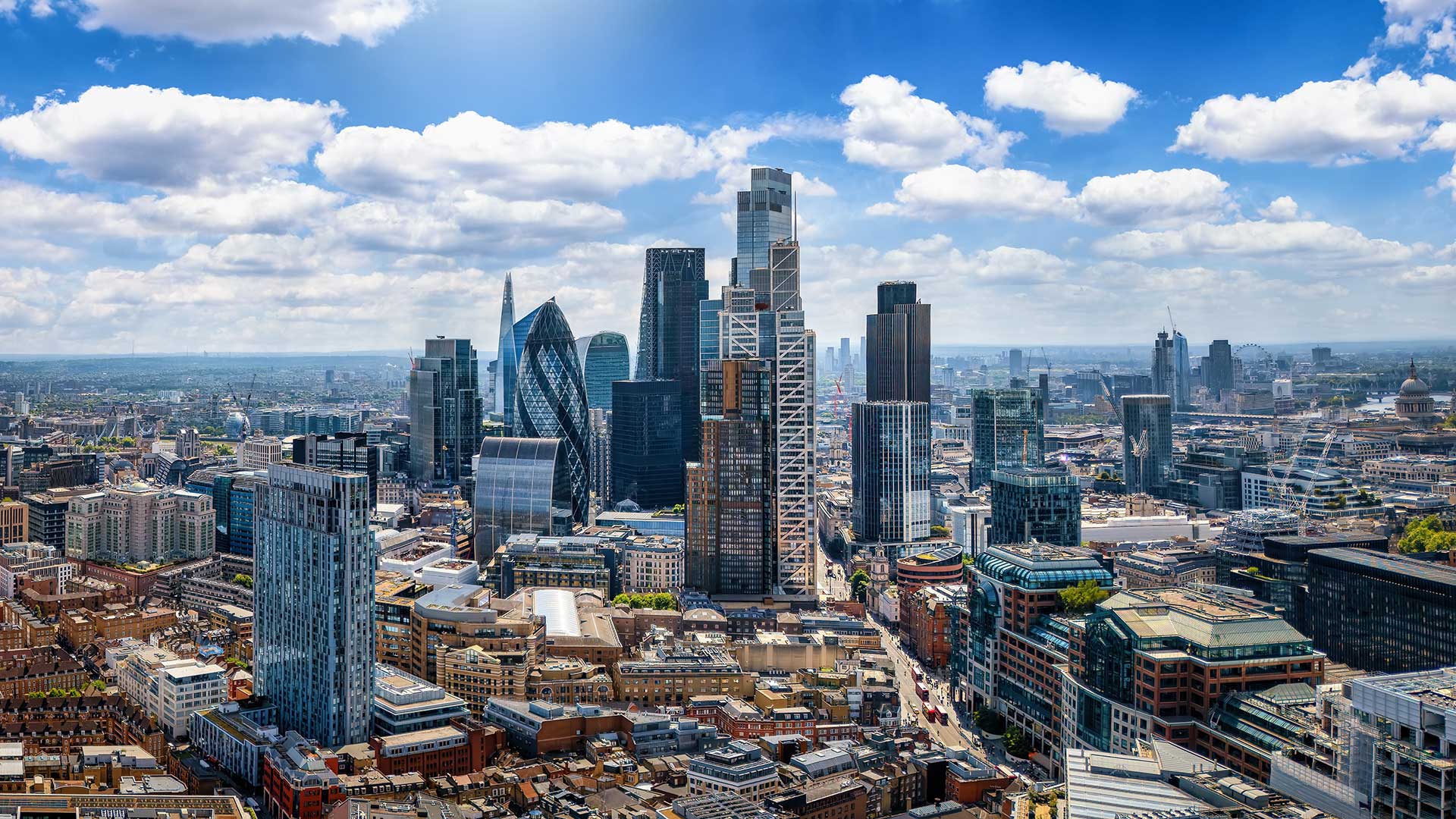
The UK economy will grow by 1.1 per cent this year, according to new forecasts from the Organisation for Economic Co-operation and Development (OECD), up from the 0.9 per cent it projected in June.
The Paris-based organisation said in its interim outlook, published today, that output had held up better than expected in the face of the US-Iran war. It pointed to “solid domestic demand growth in the second quarter” of the year.
The OECD said household spending could get a further boost from government measures to cut taxes on energy bills and cap bus fares.
The 1.1 per cent estimate is the joint second highest in the G7, behind the United States on 2.2 per cent and level with Germany, which has begun to recover from three years of industrial stagnation.
Slower growth and lower inflation
The OECD expects UK growth to slow to 1 per cent in 2027, down from the 1.1 per cent it forecast in June. When it last published forecasts, the organisation had cut its UK growth projection to below 1 per cent for this year.
It also lowered its inflation projection for this year from an average of 3.7 per cent to 3.1 per cent. For next year it expects inflation of 2.6 per cent, higher than the 2.4 per cent it forecast in the summer.
UK GDP figures and measures of private sector activity and household sentiment have improved in recent months, despite global oil prices rising to between $90 and $100 a barrel since August. Economists have warned that higher oil and gas prices will add to inflation and cost-of-living pressures, and that spending and activity are likely to be squeezed during the winter months.
The OECD said British consumers were among those “dedicating a higher proportion of their spending towards fuel, amid very rapid growth in gasoline and diesel prices since the onset of the conflict”.
Emma Reynolds, chief secretary to the Treasury, said: “Despite unprecedented pressures and conflict in both the Middle East and in Europe, the UK economy is showing strong resilience. We had the fastest growth in the G7 in the first half of the year and we are starting the big, long-term changes needed to create good jobs and growth in every postcode.”
The OECD said it expects no change this year to UK interest rates, which stand at 3.75 per cent.
Last week the Bank of England held Bank Rate at 3.75 per cent and warned it could tighten policy for the first time in three years before the end of 2026, should consumer prices breach 4 per cent. Governor Andrew Bailey said a rate rise was likely if the Iran war went on. Annual inflation is currently running at 3.1 per cent.
The OECD said the picture for the UK and world economy was “heavily dependent on whether a durable resolution to the Middle East conflict is achieved”.
“Energy prices have recently risen again amidst intensified disruptions to production and exports in the Gulf economies. Elevated refining margins due to production bottlenecks are placing additional upward pressure on consumer prices and business costs. Prices for some agricultural commodities have also risen markedly in recent months, partly due to the impact of extreme weather on supply,” the interim report said.
The organisation raised its global growth projection from 2.8 per cent to 2.9 per cent. It said “sizeable oil inventories, additional supply from outside the Gulf economies and discretionary government support measures all helped to cushion the impact on the global economy”.
Its biggest downgrade was to Canada, where projected growth fell from 1.2 per cent to 0.9 per cent after the US imposed new tariffs on its neighbour.
France was also downgraded, to 0.4 per cent, the lowest in the G7. The OECD’s forecast comes as the EU’s second-largest economy faces pressure to reduce its rising budget deficit before presidential elections next year.


U.S. Treasury bond yields slipped lower again Tuesday, matching moves in the oil market, even as hawkish commentary from Federal Reserve officials keeps investors primed for an October rate hike.
Benchmark 10-year Treasury note yields were last marked at 4.928% in early Tuesday dealing, down notably from the highs of last week that saw the paper reach 5.03%, a level last seen in 2007.
They have been largely mirroring moves in the oil market of late, rising on signs of elevated inflation risk and falling amid reports of a detente between the U.S. and Iran.
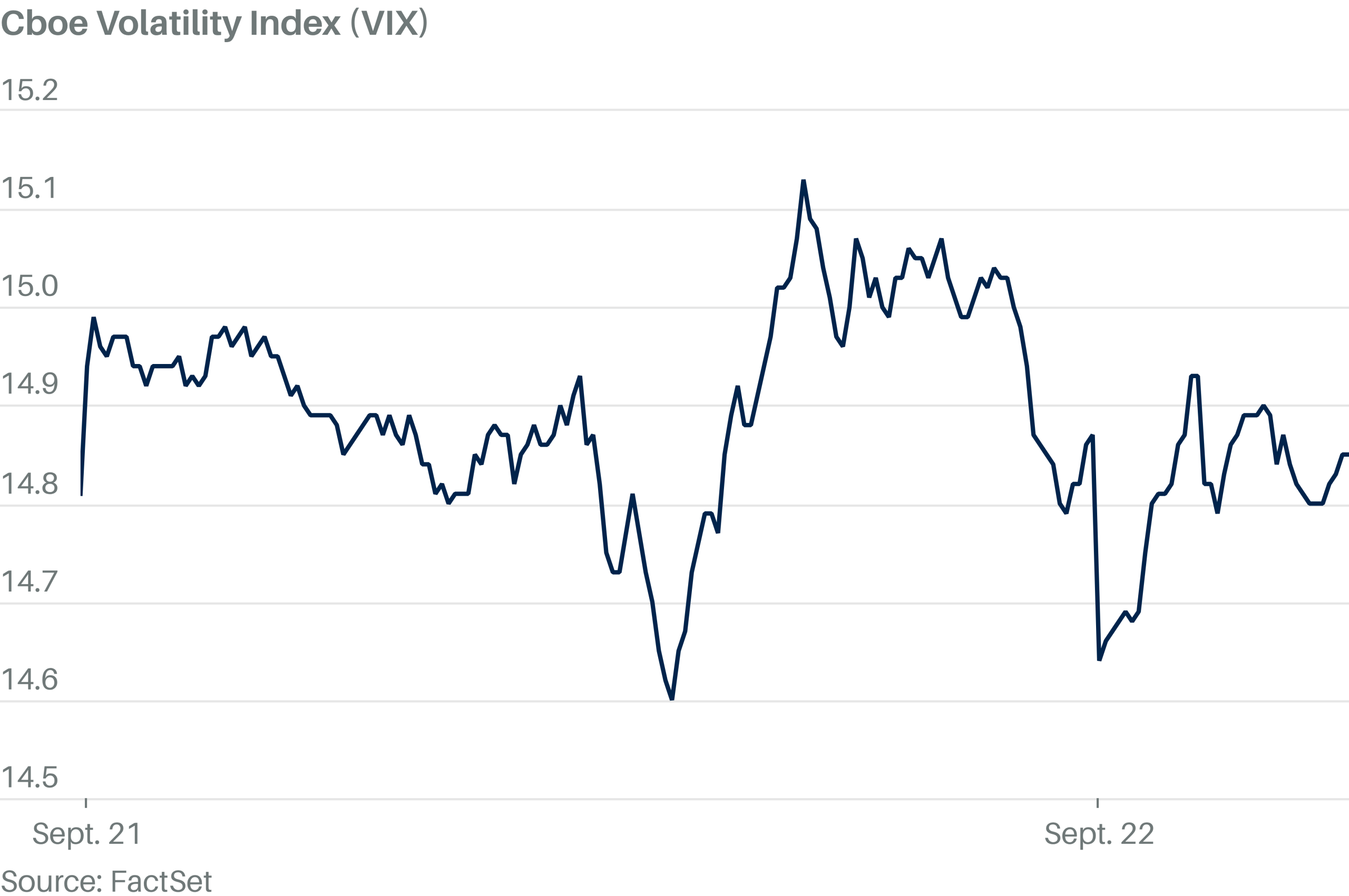
The most widely followed gauge of stock market fear and uncertainty was sliding on Tuesday as investors continued to bet that the Iran war could soon be resolved.
The Cboe Volatility Index, or VIX, was a touch lower at 14.8 in early trading. Any reading of below 20 tends to signal relatively low volatility.
The VIX was sliding with the market on course to extend its recent record-breaking run. The move higher came as oil prices retreated on a report that Iran could soon reopen the Strait of Hormuz in a bid to end the war in the Middle East.
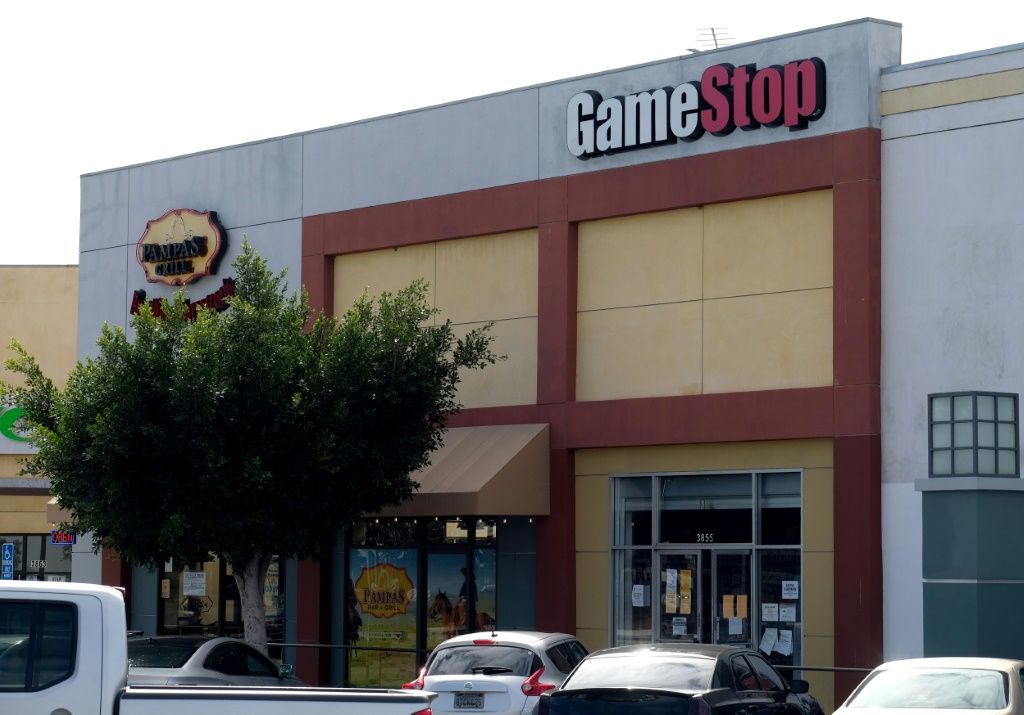
GRAPEVINE, Texas — GameStop Corp. shares traded around $24.51 in midafternoon New York dealing on Sept. 23, up 2 percent, after Chairman and Chief Executive Ryan Cohen disclosed another open-market purchase of the video-game retailer’s stock.
A Form 4 and an amended Schedule 13D filed with the Securities and Exchange Commission show Cohen bought 1,150,680 Class A shares on Sept. 21 at a weighted average price of $22.9375. The trades ranged from $22.76 to $23.02 and totaled about $26.4 million. After the purchase he reported direct ownership of 40,498,522 shares. Including warrants, the 13D listed beneficial ownership of 44,233,306 shares, or about 8.7 percent of the company, based on 504,500,990 shares outstanding as of Sept. 3 plus warrant shares.
The block followed a Sept. 10 purchase of 1 million shares at a weighted average of about $20.38, or roughly $20.4 million. Directors also added stock in the same stretch, including Alain Attal’s reported buy of 17,500 shares. Filings described Cohen’s latest trade as outside a Rule 10b5-1 plan.
Shares jumped in extended trading after the first disclosure and opened higher on Sept. 22. By Sept. 23 the stock was still holding the gain near $24.50. The name had already risen about 30 percent over the prior month, Barron’s-linked coverage noted, so the latest pop started from a higher base.
The buying landed after GameStop’s fiscal second-quarter results, released Sept. 8 for the 13 weeks ended Aug. 1. Net sales were $790.2 million, down from $972.2 million a year earlier. The company attributed the drop mainly to last year’s Nintendo Switch 2 launch comparison, planned store closings and the sale of French operations. Collectibles net sales rose 57 percent to $356.3 million and were about 45 percent of the quarter’s sales.
Operating income was $160.2 million, GameStop’s highest second-quarter operating profit since its 2002 public listing, according to the company’s figures as reported by GameSpot. Net income was $298.7 million, up from $168.6 million. Adjusted earnings per share of $0.27 matched the consensus figure cited by TipRanks. The company raised its fiscal 2026 adjusted EBITDA outlook to more than $650 million from $600 million.
Preliminary results issued Aug. 31 had already flagged that profit would include about $238 million of net gains on an eBay-related derivative and equity stake, partly offset by about $75 million of losses on digital assets and related receivables. During the quarter GameStop converted that derivative into a direct eBay holding. As of Aug. 1 it held about 43.4 million eBay shares with a fair value near $4.95 billion.
Cohen made an unsolicited proposal this year to buy eBay at $125 a share. eBay called the bid “neither credible nor attractive.” Cohen has said he would keep pursuing a combination. GameStop’s stake is the cash-and-paper footprint of that campaign.
The retailer also amended a convertible-notes exchange in late August so about $358.4 million would be settled in cash instead of stock. Stockholders earlier approved a larger share authorization. Those capital-structure moves sit beside a smaller store base and a mix that now leans on collectibles more than new-game boxes.
Cohen has not issued a fresh public letter explaining the September purchases. The filings say personal funds, which may include margin loans. Markets often read clustered CEO buying as a signal. It is also a concentration of one investor’s wealth in a stock that still trades with meme-era volume and short interest.
The operating story is mixed in plain numbers. Sales are down year over year. Margins and operating profit are up. Collectibles are carrying more of the register. Investment gains on eBay and swings in digital assets still move the bottom line. Guidance for adjusted EBITDA above $650 million is a management forecast, not a booked result. The next scheduled earnings date cited in recent notes is Dec. 9.
GameStop remains a mall-and-strip retailer with a large cash and investment book and a chief executive who is also its most watched shareholder. The Sept. 21 ticket at nearly $23, after a $20.38 ticket 11 days earlier, is the fact the tape is trading. The $24.51 print on Sept. 23 is the market’s near-term answer. Neither filing predicts whether collectibles growth offsets the fading hardware cycle, or whether the eBay stake becomes a deal. They show Cohen paid up twice in September and now reports more than 40 million shares in his own name.

India’s midcap stocks outperformed the Nifty 50 over six months, with 10 stocks gaining 50%-105%, alongside notable FII and mutual fund holdings.

Gevo at Water Tower Research Virtual Insights Conference: carbon stack lifts outlook
The 2-year Treasury note yield climbed 8 basis points to 4.464%, while the benchmark 10-year yield rose 7 basis points to 5.058%, its highest level since July 2007. The 30-year Treasury yield advanced more than 4 basis points to 5.347%, according to a CNBC report.
Fresh services and manufacturing data heightened concerns that the Federal Reserve may need to raise interest rates further.
Yields rose across maturities, while European government bonds also sold off. The rise reflects renewed pressure in global bond markets, with investors focused on inflation, interest-rate expectations, higher oil prices and government borrowing needs.
The 5% yield threshold is closely watched by investors because higher long-term borrowing costs can weigh particularly heavily on growth and technology stocks, whose valuations depend more on future earnings.

The S&P Global services PMI rose to 58.7 in September from 56.5 in August, marking its highest reading in nearly five years. The manufacturing PMI also climbed to 56.7, reaching its strongest level in more than four years.
According to the CME Group’s FedWatch tool, the probability of another 25-basis-point rate hike in October increased to 64% on Wednesday, up from 55% on Tuesday. A month earlier, the odds were below 10%.
(Disclaimer: This article is based on inputs from agencies. These do not represent the views of The Economic Times)
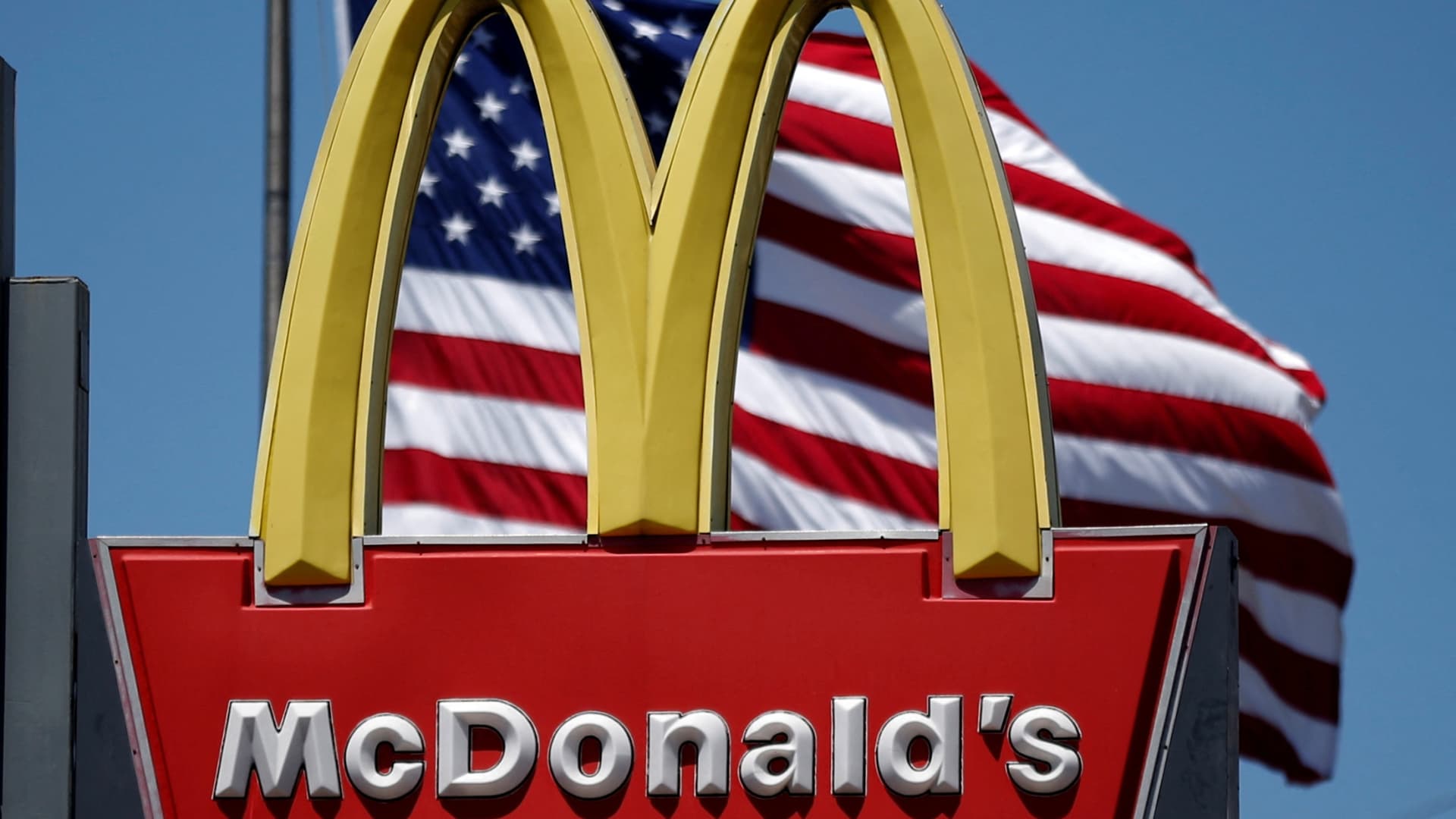
McDonald’s on Wednesday announced plans to create its own media network, following in the footsteps of retail giants like Amazon and Walmart.
In August, 450 of its company-owned U.S. restaurants began displaying advertising for other companies on its digital drive-thru order boards as part of a pilot. It is early days for the program, which has not yet rolled out to the franchisees who operate the rest of its roughly 14,000 U.S. locations.
Still, McDonald’s hopes that it could eventually grow to be a $1 billion business for the company.
“Commerce media is one of the fastest-growing areas in advertising, and it’s expected to reach more than $100 billion in the U.S. alone by 2028,” Morgan Flatley, McDonald’s global chief marketing officer and executive vice president of new business ventures, said during an investor presentation.
“It’s an opportunity to generate revenue for the system with little in the way of additional cost, no operational complexity and no disruption to our customer experience,” Flatley added.
The move could eventually bring McDonald’s a steady stream of high-margin revenue as costs for key inputs like beef climb and as the chain plans to invest billions of dollars in restaurant upgrades over the next decade.
In the restaurant industry, McDonald’s would be a pioneer for creating its own media network. CFO Ian Borden said that the company is uniquely positioned to make it a success.
“We have one of the most valuable brands of any company of our size and scale in any industry,” Borden told CNBC. “We serve about 85% of the U.S. population at least once a year, so we have reach that’s quite unique, and we have 14,000 locations across the U.S., which means we’re in every community, and we’re connecting with every consumer.”
Retailers like Amazon and Walmart have found success running their own media networks, which tend to be high-margin businesses. Amazon reported $68.6 billion in advertising service sales in 2025, accounting for just under 10% of the company’s overall revenue. Amazon’s ads appear across its portfolio, from its shopping pages to Prime Video to lockers and live streaming platform Twitch, as well as third-party apps and websites.
Walmart does not share specific sales results for its advertising unit, but the company said that Connect, its U.S. ad business, grew sales 43% in its fiscal second quarter. The retailer’s media network shows ads on its app, website and inside its more than 4,600 U.S. stores, plus outside apps like Instagram. It also bought TV maker Vizio in late 2024 with an eye toward its ad business.
McDonald’s newest venture was announced as part of the company’s investor day, which was hosted at its Chicago headquarters. In addition to the media network, executives shared more details about plans to grow sales through pricey restaurant upgrades and better food quality.


DETROIT — As President Donald Trump meets with Chinese President Xi Jinping this week, U.S. politicians as well as the global automotive industry are warning that allowing Chinese automakers to enter the market could be a Pandora’s box.
Trump earlier this month said he might be “OK” letting Chinese automakers into the U.S. if they produced vehicles domestically, leading a consortium of auto trade groups representing every major facet of the American auto industry to urge him to rethink that position.
It was an uncharacteristically unified message from automakers operating in the U.S., franchised dealers and suppliers. More than two dozen Democratic lawmakers followed that push with their own letter, urging Trump to keep in place U.S. restrictions against Chinese automakers.
“It’s not at this point a partisan issue,” Sen. Elissa Slotkin, D-Mich., told reporters Wednesday. “It’s about whether we want to make cars in America and whether we want a manufacturing base that can pivot when we need it. If we want that, we shouldn’t let them in our country.”
Trump is scheduled to host Xi and a delegation from China on Thursday and Friday that reportedly could include Wang Chuanfu, founder of BYD, China’s largest automaker, and Robin Zeng, founder of CATL, the world’s top battery maker for electric vehicles.
Michael Dunne, an expert on China’s automotive industry and a former General Motors executive, said even the potential that those two executives could attend underscores the importance of Xi’s trip for the U.S. auto industry.
GM CEO Mary Barra is also expected to be among the attendees at Trump’s state dinner for Xi, Reuters reported Wednesday, along with several other U.S. executives, including Tesla CEO Elon Musk.
As for America’s other largest automakers, Ford Motor declined to disclose whether CEO Jim Farley will be attending after the Department of Transportation criticized the company for its Chinese ties, including a licensing deal with CATL. Reuters reported Chrysler parent Stellantis said CEO Antonio Filosa is out of the country and not planning to attend.
Industry insiders and onlookers have expressed concerns similar to those raised by automakers and lawmakers as bipartisan bills to ban Chinese automakers from the U.S. move through Congress.
The pressure campaign comes as China-made vehicles have been rapidly expanding outside of their domestic market, especially to Europe and Central and South America. There’s fear among global automakers that Chinese rivals, like BYD and Geely, which are heavily subsidized by their governments, could flood global markets, undercutting domestic production and vehicle prices.
Dunne said he doesn’t believe those concerns are overblown. He said Chinese automakers would “quickly overwhelm America’s auto industry, just as it is now ravaging Europe.”
Global market share for Chinese brands jumped nearly 70% from 2020 to 2025, according to market research and consulting firm GlobalData. The automakers’ market share in the European Union was virtually nothing in 2020 but hit 12% in August, according to Germany-based Dataforce.
“China’s scores of automakers are currently engaged in a fight-to-the-death price war at home,” Dunne wrote in a post Monday. “There’s red ink everywhere. Access to the U.S., by far the most lucrative car market in the world, is like a giant tank of life-saving oxygen.”
‘Attacking very aggressively’
For much of this century, China was one of the largest and fastest-growing markets in the world. Non-China automakers flocked to the historically enclosed country with hopes of massive sales and profits.
But after years of success for automakers such as GM, the Chinese automotive sector has rapidly changed from an insular industry to the biggest exporter of vehicles globally.
China’s growth has been fueled by government funding for companies as well as a culture of innovation and speed the country has instilled in its workers, experts said. The decision to ramp up exports has come on the heels of a slowing Chinese market and plant underutilization.
A BYD Sealion 6 DM-i on display during the Busan International Mobility Show 2026 in South Korea, June 27, 2026.
Sopa Images | Lightrocket | Getty Images
Christian Meunier, Nissan Motor chairman of the Americas, described competing against Chinese automakers as a “hell of a challenge” in countries outside of the U.S.
“They have decent product but it’s all dumping,” he told CNBC during a recent interview. “We know we’re not competing with [automakers], we’re competing against the governments. … They’re attacking very aggressively.”
Meunier said the Japanese automaker has been trying to battle the Chinese as best as it can through growing scale globally to lower costs and become more efficient.
“We need to get ready for the day when they come to the U.S. because it will happen one day. Hopefully not tomorrow, but it will happen one day,” he said.
Dunne said China’s ambitions and ways of doing business are vastly different than the U.S.’ allies, which makes it different from allowing imports from Japan, South Korea and other countries.
“As Xi Jinping has alluded to many times, the goal for China is to ‘make other countries more dependent on China and China less dependent on other countries.’ That’s not a friendly posture,” Dunne said.
— CNBC’s Justin Papp contributed to this report.

Yes. Corporate subscriptions are available for teams and organisations, with discounted rates as user numbers increase. Pricing starts from $1,625 + GST per user.
Get in touch
to discuss the right option for your organisation.
Business News subscriptions are used by executives, investors, consultants and professionals who need to stay informed and make better decisions about the WA market. When you subscribe you’ll get
- Unlimited access to WA’s most trusted business journalism
- Data & Insights — detailed profiles of WA companies, people, projects and deals
- MyBN — a personalised feed based on the companies, people and sectors you follow
- Special publications and industry reports
- Daily and weekly email newsletters
Data & Insights is a research tool built specifically for the WA market. It draws on more than 30 years of Business News reporting, updated regularly to reflect what’s happening now. Use it to:
- Look up detailed profiles of WA companies, including financials, directors and ownership
- Find decision-makers and track their career movements
- Research live and completed projects across WA industries
- Monitor deals, appointments and market activity
- Access industry rankings and league tables
Data & Insights is updated daily by our dedicated research team, which uses the latest announcements, ASX filings and editorial coverage to keep our person, company, list and project records up to date.
Business News welcome all opportunities to make our dataset accurate, complete and current, so if you have an update request, please email the team at
general@businessnews.com.au, and we’d be happy to assist.
MyBN
is part of every subscription. It’s your personalised view of Business News. You can follow the companies, people, sectors and projects that matter to you, and get a news feed and alerts tailored to your interests. You can save articles to read later and retain only what you need.
Only subscribers have full access to all content on the Business News website.
If staying informed about the WA economy is part of your job, and/or you’re looking for networking opportunities in WA, Business News is built for you.
Business News subscribers are:
- Executives and directors tracking competitors, clients and market movements
- Investors and advisers researching companies, deals and industry trends
- Consultants and professionals staying across sectors relevant to their clients
- Business owners looking for leads, context and market intelligence
Most Business News publications cover national or global markets. Business News is focused entirely on Western Australia, which means the journalism, the data and the intelligence are all built around WA companies, people and projects — not adapted from a national feed. Data & Insights, included with every subscription, combines more than 30 years of WA-specific editorial research with live business data. There’s no comparable product for the WA market.
The Morning Digest Email provides a comprehensive wrap of the major headlines, relevant to WA business, and includes with a snapshot of the overnight news covering oil, gold and ASX-listed companies.
The Afternoon Wrap Email focuses on the news covered by our team of journalists during the course of the working day, including exclusive stories and analysis, all of which relates to WA business and the local economy.
The BN Weekender Email contains a wrap of the Business News from the week that was, highlighting the top stories in each area of WA business.
Sign up for free.
We’re happy to help.
Get in touch
and our team will come back to you.
Business
Melania Trump rings New York Stock Exchange opening bell to launch new women’s initiative Imperia
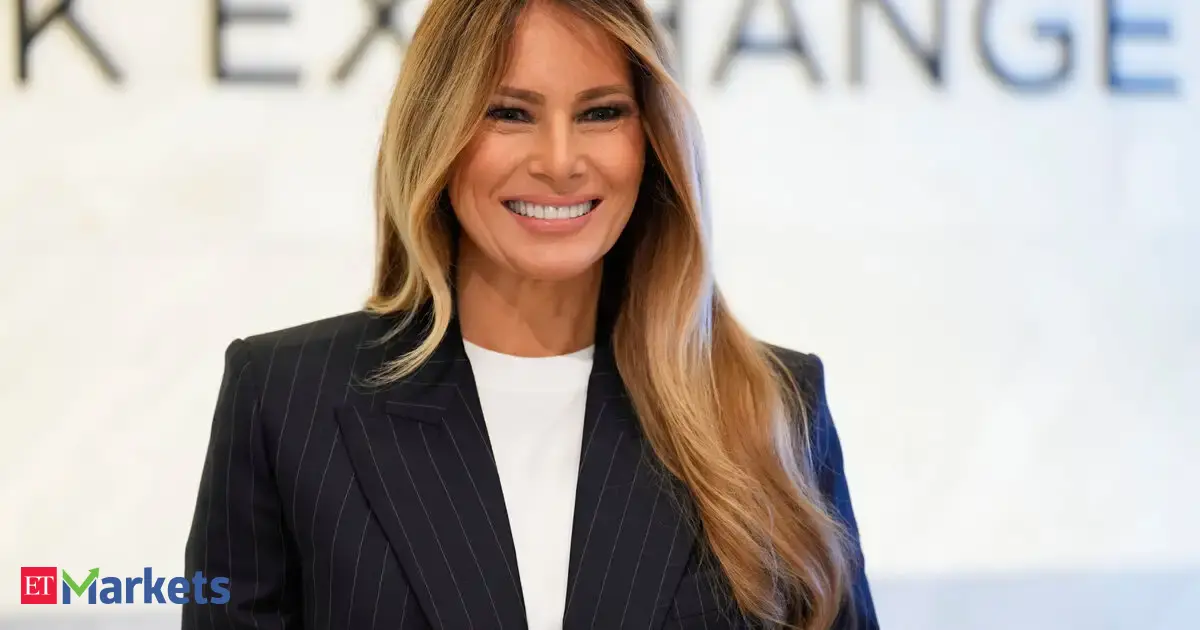
It’s called Imperia, and its members include CEOs, founders, innovators, entrepreneurs and others.
A lot of the first lady’s attention has been on children, but, with Imperia, she is leaning on her business skills to encourage women to harness their economic power and help others understand women’s role in a global economy.
“For generations, women fought for a seat at the table,” she told a meeting of the group. “The next chapter is about owning, growing and making space for the women who come next.”
She said that means owning businesses, equity, real estate, capital and investment assets, along with “our ideas, our intellectual property and our economic future.”
“People still do not fully understand the full scale of women’s power in the global economy,” she continued. “Women are not just part of the marketplace, simple participants. We are its foundation, and we are its infrastructure.”
In a rare television interview earlier Wednesday on Fox News Channel’s “Fox & Friends” to promote Imperia, the first lady addressed several other subjects, including this week’s state visit of Chinese President Xi Jinping, her efforts to reunite children separated from their families by Russia’s war against Ukraine, her new docuseries and the extent of her public engagements.Some recent news reports have said the first lady is appearing in public less often than during President Donald Trump’s first term.
Melania Trump said the difference is that she is more focused on getting results.
“You don’t see me everywhere, but behind the scenes I’m working nonstop,” she said, citing as an example the preparations for her events in New York this week on the sidelines of the U.N. General Assembly and for Xi’s visit. “I’m working on so many projects … in the future. So stay tuned.”
She was deeply involved in the planning for Xi’s visit in her role as first lady. She said her husband decided to personally greet China’s leader after his plane lands because of their “great relationship.” President Trump typically greets leaders at the White House.
As of July, Melania Trump had helped reunite five groups of Ukrainian and Russian children with their families, work that underscores the more global approach she has taken during the Republican president’s second term. She said that she has a “direct channel” with leaders from the warring countries and that her team is working on another reunification.
“This is ongoing, and we want to reunite as many children as possible,” the first lady said. “And that’s my focus as well. What they’re going through, it’s heartbreaking. And it’s nothing better to see than a child reunite with the parents, right?”
The first lady also rang the opening bell at the NYSE in January before the release of her Amazon documentary, “Melania,” about her life in the weeks leading up to Donald Trump’s inauguration for a second term in office. A new two-part docuseries featuring her will be released in the fall. She said it will be different from the documentary and teased that it will include some surprises.
“It’s more conversation, one on one with me,” the first lady said. “So when I was traveling and doing all of the filming, the director was asking me questions, and there are some private questions that I will answer that people never heard before. So it’s kind of exciting.

2026 Week 4 Mountain West College Football Previews

Motorola partners with Bang & Olufsen to bring high-end audio to its flagship phones

Ambulance delay “contributed to premature death” of West Belfast man, inquest hears



![LISA - 'MONEY' Dance Practice [Mirrored]](https://wordupnews.com/wp-content/uploads/2026/02/1770259125_maxresdefault-80x80.jpg)

-

 Fashion5 days ago
Weekend Open Thread: Talbots – Corporette.com
-

 Tech3 days ago
Researchers escape OpenAI Codex sandbox to run commands on host
-

 Crypto World5 days ago
Circle launches Arc Studio AI agent for building onchain apps
-
 NewsBeat5 days ago
Trump says US has reached an agreement to take permanent control of Greenland’s security
-

 Crypto World3 days ago
Who Needs CLARITY Anyway? ARB Could See 70X Increase: Hodler’s Digest
-

 Crypto World5 days ago
Trading Bitcoin on Robinhood? Why 2% Spread Has Traders Worried
-

 Crypto World5 days ago
Bitcoin price breaks channel as RSI climbs to 63
-

 Crypto World6 days ago
Mortgage and refinance interest rates today, Thursday, September 17, 2026
-

 Crypto World21 hours ago
Goldman Sachs and Deutsche Bank Agree: The S&P 500 Rally Isn't Over
-

 Crypto World7 days ago
US Charges Robinhood Engineers Over Crypto Listing Trades
-

 Tech2 days ago
Google’s $899 Googlebook is a bet that you’ll buy a new laptop for Gemini
-

 Business3 days ago
Analog Devices (ADI) Bets $1.35 Billion on Chips that Let Machines Think for Themselves
-

 Crypto World3 days ago
Coinbase, Robinhood, Circle Seen as Tokenized-Stock Winners
-

 Crypto World5 days ago
Silver prices recover quickly, hitting weekly high today
-

 Crypto World5 days ago
World Money launches in 150+ countries with Stripe
-

 Tech6 days ago
GPT-6 Astra Reached the Nether in Minecraft, Lost Its Stash to a Creeper, and Farmed Potatoes for Hours
-
 Tech4 days ago
Trump suggests rebranding AI with a new name, says he’s also creating an AI Force
-
 NewsBeat5 days ago
US was ‘on brink of war’ with China over false AI report of nukes moving in Middle East
-

 Crypto World3 days ago
Bitcoin price holds above $81K as key catalysts line up
-
 Crypto World2 days ago
Meta Jumps 11% As Muse Shines and Investors Show an Appetite for Advancing AI
You must be logged in to post a comment Login