Business
UK hiring freeze deepens as growth hits five-year low
Britain’s businesses have stopped hiring and slipped into “survival mode”, with economic output stuttering to a five-year low in June as the Iran war, weak consumer spending and relentless cost increases combine to squeeze firms from every direction.
The warning comes from consultancy BDO, whose index of economic output slid to 91.53 in June from 94.80 the previous month. That is its weakest reading since February 2021, when the UK was still in the grip of a Covid-19 lockdown.
For small business owners, the most sobering finding is on jobs. BDO’s research indicated that hiring appetite is close to a 15-year low, just as firms absorb the largest increase in operating costs in more than three years.
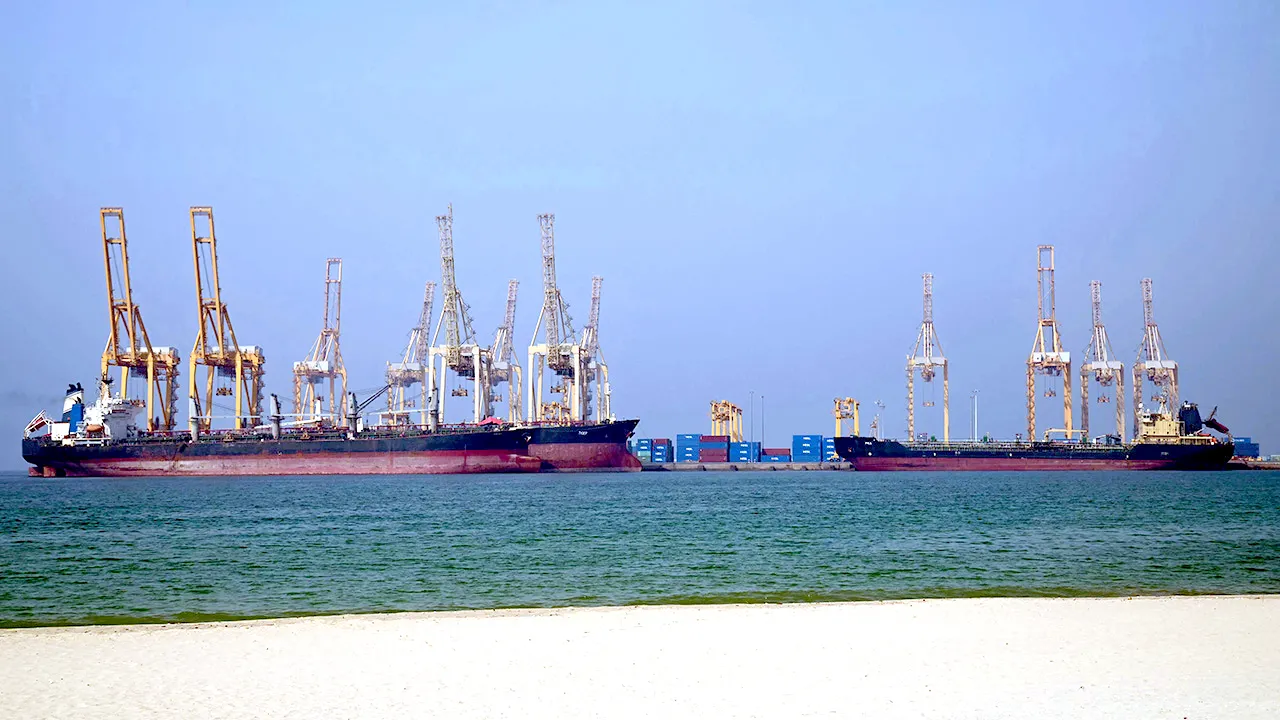
The price of energy, raw materials and other inputs crucial to goods production has risen sharply since the effective closure of the Strait of Hormuz, which followed the initial US-Israeli strikes on Iran at the end of February. Four months on, the downturn has become far more broad-based, with manufacturing and services both suffering a dismal June.
Scott Knight, head of growth at BDO, said: “Business confidence has remained low for 20 consecutive months as businesses are trapped in survival mode. Rebuilding confidence will need to be tackled immediately by the next prime minister if the UK is to return to growth.”
That next prime minister is Andy Burnham, who succeeds Sir Keir Starmer on July 20. The data suggests reviving a stalled economy will need to sit at the top of his in-tray from day one.
Official figures due this Thursday from the Office for National Statistics are expected to show gross domestic product expanded by just 0.1 per cent in May, having contracted by the same degree in April.
The geopolitical picture offers little comfort. Over the past week the US and Iran have traded strikes and President Trump declared the fragile ceasefire between the pair “over”, a move that has already pushed wholesale gas prices sharply higher. Brent crude briefly topped $80 a barrel before settling back at $75 by the end of the week.
The turbulence is feeding through to the cost of money. The yield on the benchmark ten-year UK government bond rose by around 0.10 percentage points to 4.87 per cent over the past five days, and higher gilt yields translate directly into dearer finance for firms refinancing loans, overdrafts and commercial mortgages.
BDO predicted that business confidence is likely to continue to falter thanks to heightened geopolitical tensions.
Analysts are split on whether the Bank of England will lift the base rate from its current 3.75 per cent this year, with markets having already swung towards pricing in a rise since the oil shock began.
Weakness in the labour market is seen as the main reason for the central bank to stay cautious, having left rates unchanged last month. The latest ONS figures showed vacancies dipped to a five-year low over the three months to May, while private sector pay, excluding bonuses, grew by 2.9 per cent, the smallest rise in more than five years.
For SME owners weighing hiring plans, borrowing decisions or energy contracts, the next fixed point in the calendar is July 30, when the Bank’s monetary policy committee meets again.

Business
US inflation rate eases to 3.5% as gasoline prices fall
Inflation in the US eased last month as the cost of filling up at the pumps fell, official figures show.
Prices rose 3.5% in the year to June, according to the Bureau of Labor Statistics (BLS), down from 4.2% recorded in May.
Gasoline prices decreased 9.7% last month, but are still much more expensive than a year ago. On Tuesday, the national average had risen to $3.86 a gallon from $3.79 a week ago, according to motorist advocacy group AAA.
However, while the rate of inflation has fallen, the easing of price rises could be short-lived due to the renewed conflict in the Middle East sending global oil prices up again.
The price of a barrel of Brent crude, which is the global benchmark for oil, hit $87 on Tuesday, an increase of almost $10 in the space of 24 hours.
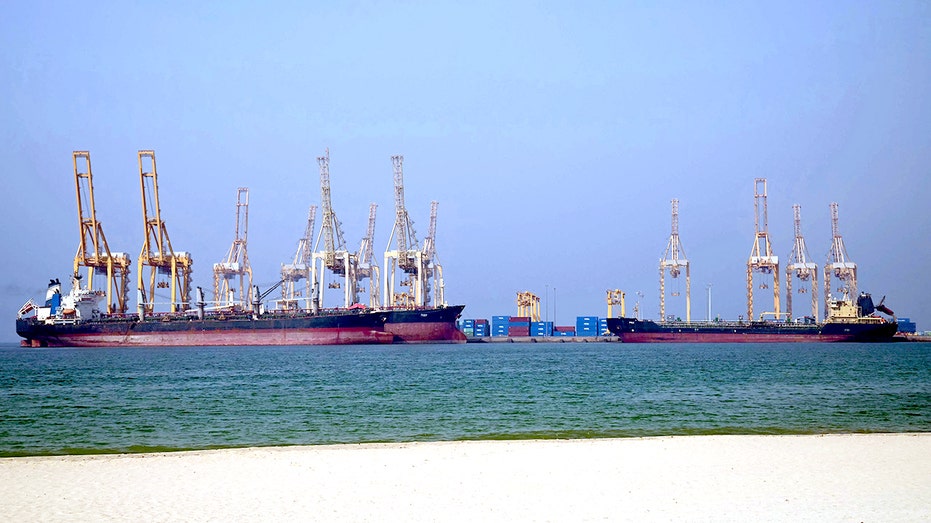
The spike in the price of the commodity came after the fresh military strikes on Iran by the US this week, with President Donald Trump declaring a new naval blockade in the Strait of Hormuz and a 20% charge on all cargo being shipped through the key waterway used for global trade.
The escalation has already led analysts to predict that inflation will rise in the coming months and that interest rate cuts are unlikely anytime soon.
“Gasoline prices are already back above June levels, meaning the next inflation report will heat up again,” said Ipek Ozkardeskaya, senior analyst at Swissquote Bank.
Ahead of his first address to the US Congress later, newly appointed Federal Reserve chairman Kevin Warsh said his committee had “no tolerance to persistently elevated inflation”.
“We share a resolute commitment to restoring price stability,” he said in prepared comments.
The Fed held US interest rates between 3.5% and 3.75% at Warsh’s first meeting in June and some analysts suggest rates could be raised in the coming months.
President Trump pushed Warsh’s predecessor, Jerome Powell, to cut interest rates, and has made it clear he expects Warsh to fulfil his demand for reductions in borrowing costs for Americans.
But Lindsay James, investment strategist at wealth management firm Quilter, said despite Warsh having got his “feet under the table, it does not mean rate cuts are looming in order to appease President Trump”.
“Instead, we are likely to see a conservative outlook from the Federal Reserve when it meets in a fortnight,” she added.
Business
Swans aim to extend long-term sustainable growth
Swan Districts Football Club chief executive Jarrad Wright says several key off-field variables are equally important as on-field success.
Business
IBM posts earnings miss, shares slide in premarket trading
IBM CEO Arvind Krishna assesses government oversight of artificial intelligence, quantum computing and more on ‘The Claman Countdown.’
Shares of IBM were down more than 23% when the market opened on Tuesday, raising fresh questions about whether companies are seeing enough near-term returns from artificial intelligence spending.
It is shaping up to be the worst day for IBM in decades, as its second-quarter earnings results showed profit and revenue missed analysts’ forecasts.
In a letter to investors on Tuesday, CEO Arvind Krishna said IBM’s Z mainframe business — its large enterprise computing systems boasting advanced AI capabilities — lagged behind the company’s outlook. The flagship product is the z17, described as a “transaction processing powerhouse.”
“Given this was the strongest start to a mainframe program in our history, we expected Infrastructure revenue to decline low-single digits for the year, beginning this quarter,” Krishna wrote. “What played out was worse than our expectations, driven by a shortfall in our Z performance and the associated software stack, primarily in Transaction Processing.”
IBM CEO WARNS WASHINGTON MUST FIND ‘GOLDILOCKS’ MIDDLE GROUND ON AI REGULATIONS

IBM CEO Arvind Krishna attends an event in the Rose Garden of the White House in Washington, D.C., on July 6, 2026. (Mandel Ngan/AFP via Getty Images)
The IBM z17 is a mainframe that has been pitched as something that can instantly detect fraud when a customer swipes their credit card.
“Every time you swipe your credit card, check your bank balance, make a stock transaction or use an ATM, that transaction is likely running through an IBM Z. With AI embedded directly on the platform, IBM’s new z17… enables clients to detect fraud in real time without moving their data,” according to IBM’s website.
Krishna said IBM’s shortfall was largely caused by weakness in this software and infrastructure business as clients prioritized spending on hardware to insulate themselves from further price jumps.

The IBM Watson IoT Center is located in the Highlight Towers in Munich, Germany, on May 22, 2026. (Michael Nguyen/NurPhoto via Getty Images)
IBM’S NEW AI TOOL LETS MASTERS FANS SEARCH OVER 50 YEARS OF TOURNAMENT HISTORY
“In the last few weeks of June, we saw clients shift their quarterly capex spend toward servers, storage, and memory purchases to secure supply-constrained infrastructure ahead of expected price increases,” Krishna wrote.
“This dynamic impacted client buying patterns. While we anticipated some supply chain related impact in our expectations, we did not anticipate the magnitude of the capex reprioritization,” he continued.
IBM posted adjusted earnings of $2.93 per share on $17.2 billion in revenue, missing Wall Street estimates of $3.01 per share and $17.86 billion in revenue, according to CNBC.

In this photo illustration, the IBM logo is seen displayed on a smartphone. (Mateusz Slodkowski/SOPA Images/LightRocket via Getty Images)
CLICK HERE TO DOWNLOAD THE FOX NEWS APP
Maria Bartiromo, host of FOX Business’ “Mornings with Maria,” pointed out on Tuesday that IBM’s slide is having a ripple effect on the tech sector.
“The biggest drag on the Dow Industrials this morning is IBM. This is the worst day so far that we’ve ever seen for IBM,” Bartiromo said. “This unexpected warning this morning sent a shock wave through the tech sector, causing software names to sell off; ServiceNow, Salesforce, Microsoft, all down.”
Business
Samsung Reclaims No. 1 Global Smartphone Spot From Apple Amid AI-Driven Memory Chip Shortage Crisis
Samsung Electronics has retaken the top spot in the global smartphone market, overtaking Apple in the second quarter of 2026, even as the industry as a whole recorded its weakest second-quarter performance in more than a decade amid an intensifying shortage of memory chips.
Samsung accounted for 24% of global smartphone shipments in the April-to-June period, according to a new report from market research firm Counterpoint Research, while Apple ranked second with a 20% share, a record figure for the company during that quarter despite slipping back to second place. The reversal comes just one quarter after Apple had briefly overtaken Samsung to claim the top spot, leading the market in the first quarter of 2026 with a 21% share, ahead of Samsung’s 20%, on the strength of record-breaking iPhone 17 sales.
Counterpoint attributed Samsung’s return to the top of the market to several converging factors: robust sales of its Galaxy S26 lineup, relatively modest price increases in key markets including India and the Middle East, and aggressive promotional campaigns during the quarter. The Galaxy S26 Ultra, released in March, emerged as what Counterpoint described as the “standout performer” driving the company’s overall shipment growth. Notably, Samsung avoided raising the price of its flagship Ultra model even as component costs climbed industrywide, a decision that appears to have helped sustain demand for its highest-end device.
Despite Samsung’s strong showing, the broader global smartphone market contracted sharply during the quarter. Global shipments fell 11% year over year, marking the weakest second-quarter performance since 2013, according to Counterpoint. The research firm pointed to a persistent and worsening shortage of DRAM and NAND memory chips as the primary driver behind the industrywide slowdown, with memory suppliers continuing to prioritize higher-margin artificial intelligence data center demand over consumer electronics production. That dynamic has pushed manufacturing costs sharply higher across the industry, forcing many smartphone makers to raise prices, particularly on budget and mid-range devices where profit margins were already thin.
Counterpoint Senior Analyst Shilpi Jain described the memory shortage as having evolved into the industry’s dominant challenge. “The global memory crisis has now overtaken every other factor as the single biggest drag on the smartphone industry. What started as a components issue last year is now a full-blown demand issue,” Jain said. She noted that entry-level and mid-tier devices, which together account for the majority of global smartphone shipment volume and are most exposed to rising bill-of-materials costs, have become structurally difficult to sustain at previous price points. “We see manufacturers responded in different ways, some are increasing prices and accepting margin pressure, while others are extending the lifecycle of older-generation models and using promotions to retain budget-conscious buyers, and a few are simply pulling back on launches and production,” Jain said.
Apple’s performance during the quarter reflected a notably different strategy than most of its rivals. According to Counterpoint, Apple was the only major smartphone manufacturer to avoid raising prices during the second quarter, even as it grew shipments 3% year over year and achieved its record 20% market share. The iPhone 17 remained Apple’s top-selling product line and was identified as the single top-shipped global smartphone model of the quarter, sustaining an extended stretch of year-over-year growth for the brand.
Even so, Apple faced its own challenges tied to the memory shortage. Counterpoint’s report noted that Apple’s legacy iPhone models “faced softer demand, as component allocation prioritized current-generation devices amid memory-related supply constraints,” suggesting the company redirected limited chip supply toward its newest devices at the expense of older models still on the market. Apple also continued to face relative softness in China, one of its most important international markets, with shipments there declining year over year despite an early promotional push tied to the country’s mid-year 618 shopping festival.
The memory shortage has created something of a structural advantage for Samsung relative to other smartphone makers, given that the company operates its own semiconductor manufacturing business alongside its mobile division. As one of the world’s leading memory chip producers, Samsung has more direct exposure to and potential benefit from the current memory supply dynamics than rivals who must purchase DRAM and NAND components entirely from third-party suppliers, though that advantage does not fully insulate its phone business from broader industry cost pressures.
Rounding out the top five global smartphone brands for the quarter were Chinese manufacturers Xiaomi, OPPO and vivo, with market shares of 12%, 11% and 8%, respectively. Compared with the same period last year, Samsung gained roughly four percentage points of market share while Apple gained about three points, according to Counterpoint’s year-over-year comparison, while Xiaomi lost about two points and OPPO lost roughly one point, with vivo posting a modest one-point gain.
Looking ahead, Counterpoint said it expects the broader industry downturn to continue through the remainder of 2026, forecasting a roughly 14% decline in full-year global smartphone shipments, with the memory chip shortage likely to persist well into 2027. Separate research from analytics firm Omdia has struck a similarly cautious tone, projecting that memory prices are unlikely to begin declining before the second half of 2027, and cautioning they may never fully return to pre-2025 levels. Memory and storage components now account for more than 60% of total production costs on some budget smartphones and more than 30% on premium devices, according to Omdia’s analysis, a dynamic expected to weigh most heavily on phones priced below $400 as shortages continue affecting major product launches and seasonal shopping periods later in the year.
Samsung had already raised prices modestly on its Galaxy S26 lineup in February, and industry speculation has continued to circulate that the company could implement further mobile price increases in the near future, even as it avoided doing so on its top-performing Ultra model this past quarter. Samsung is expected to unveil its next generation of foldable smartphones at an event scheduled for July 22 in London, a launch that will offer an early indicator of how the company plans to navigate pricing amid the ongoing memory constraints. Apple, meanwhile, is not expected to release its next major iPhone lineup, the iPhone 18 series, until September, a launch widely seen as pivotal in determining whether the company can sustain its current momentum or whether Samsung’s renewed lead will prove more durable heading into the back half of the year.
Business
Simply Good Foods is simply not doing well

New CEO sees GLP-1 users as a growth opportunity.
Business
Fair Work talks fail to stop Pilbara strike threat
Pilbara unions say they’ll go ahead with strike action on Thursday, after a five-hour bargaining meeting with BHP and the Fair Work Commission failed to reach agreement.
Business
Comparing Two of 2026’s Hottest IPO-Era Stocks for New Investors
Investors weighing which of 2026’s two most talked-about stock debuts deserves a place in their portfolio face very different propositions: South Korea’s SK Hynix, a memory chipmaker riding the artificial intelligence boom, and Elon Musk’s SpaceX, a rocket, satellite and AI conglomerate that just completed the largest IPO in history. Both stocks offer exposure to different corners of the technology landscape, and both carry distinct risk profiles worth understanding before committing capital.
SpaceX went public June 12, 2026, in a deal that raised roughly $75 billion, tripling the size of the next-largest IPO ever completed. The company priced shares at $135 apiece, implying a $1.75 trillion valuation, before the stock opened at $150 and surged past $160 by the close of its first trading day, briefly pushing SpaceX’s market capitalization above $2 trillion and, according to some reports, making Musk the world’s first trillionaire. As of July 13, SpaceX shares, trading under the ticker SPCX on the Nasdaq, sat around $137 to $145, within a 52-week range spanning from $135 to $225.64, reflecting significant volatility even in the stock’s first month of trading. Analysts tracked by Investing.com carry an average 12-month price target of roughly $242 on the stock, with 26 of 27 analysts rating it a buy.
SpaceX’s business spans three primary revenue streams: Starlink satellite internet, which accounted for more than 69% of the company’s $18.7 billion in 2025 revenue; rocket launch services, contributing more than 13%; and an artificial intelligence segment built around Musk’s xAI, which the company folded into its structure in February 2026 and which now accounts for nearly 17.5% of revenue. Just four days after its IPO, SpaceX moved to acquire Anysphere, the maker of the AI coding tool Cursor, for $60 billion, further expanding its footprint in artificial intelligence. Despite that growth, SpaceX posted a net loss of $4.9 billion in 2025, down from a profit of $791 million the year before, a swing analysts have attributed in part to costs associated with its AI expansion. At its current valuation, SpaceX trades at roughly 150 times its 2025 sales, an extraordinarily high multiple by traditional standards.
SK Hynix, by contrast, took a different path to the U.S. markets, listing American depositary shares on the Nasdaq on July 10 after decades as a Korea-listed company. The offering raised approximately $26.5 billion, the largest-ever U.S. listing by a foreign company, with shares priced at $149 and jumping nearly 13% on their first day of trading. Unlike SpaceX’s newly public status, SK Hynix has a much longer track record as a publicly traded company on the Korea Exchange, giving investors a deeper history of financial performance to evaluate. The company’s most recent quarter showed revenue growth of roughly 198% year over year, with net income surging even faster, driven by its dominant roughly 56% share of the global high-bandwidth memory market that feeds AI accelerator chips made by companies including Nvidia.
Where SpaceX trades at a premium built largely on future growth expectations across multiple business lines, SK Hynix has generally traded at a far more modest valuation relative to its earnings, with the stock priced around 4.8 times forward earnings ahead of its U.S. debut, according to data cited by CNBC, compared with an industry median closer to 30 times. That gap reflects the more cyclical nature of the memory chip business relative to SpaceX’s diversified, higher-growth revenue mix, but it has also made SK Hynix a favorite among analysts looking for exposure to the AI boom at a comparatively lower price relative to earnings.
Both stocks carry meaningful volatility risk, though the sources differ. SK Hynix shares tumbled 15.4% in a single Seoul trading session earlier this week, its steepest one-day decline on record, following profit-taking after its Nasdaq debut and renewed concerns over near-term memory pricing. SpaceX, meanwhile, has swung sharply since its own debut, falling roughly 20% off its post-IPO highs by early July even as its underlying business fundamentals remained largely unchanged, a pattern analysts describe as typical for high-profile, newly public stocks that often struggle to sustain their opening-day momentum in the months that follow.
Accessibility also differs meaningfully between the two names. Any U.S. brokerage account that lists Nasdaq stocks can buy shares of either SPCX or SK Hynix’s ADRs directly on the open market, with no minimum investment or special allocation process required following each company’s respective IPO. Investors seeking indirect exposure to either company also have options through exchange-traded funds; SpaceX appears as a top holding in funds including the ERShares Private-Public Crossover ETF and the Baron First Principles ETF, while SK Hynix carries significant weighting in broader semiconductor and Korean equity-focused funds.
Analysts caution that both stocks require a genuine tolerance for volatility given their respective circumstances. The Motley Fool’s assessment of SpaceX noted that “hot IPOs often fail to outperform the market in their first few years as public companies,” while cautioning that shares of the space company “could be very volatile” given SpaceX’s sky-high valuation and growing competition in both the space and AI sectors. Similarly, market strategists covering SK Hynix have pointed to the historically cyclical nature of the memory chip business, in which periods of shortage and elevated pricing have repeatedly given way to oversupply and sharp corrections once manufacturers expand capacity.
Ultimately, the choice between SK Hynix and SpaceX comes down to what kind of technology exposure an investor is seeking and how much volatility they’re prepared to withstand. SpaceX offers a diversified bet across satellite internet, rocket launches and artificial intelligence at a valuation that assumes continued rapid, multi-sector growth, backed by Musk’s demonstrated ability to execute on ambitious timelines. SK Hynix offers a more targeted, and by some valuation measures cheaper, bet on the memory chip bottleneck specifically driving the broader AI infrastructure buildout, with a longer public track record but greater historical exposure to industry-wide pricing cycles. As with any investment decision, individual circumstances vary considerably, and financial professionals generally recommend that investors weigh their own risk tolerance, time horizon and overall portfolio diversification needs, consulting a licensed financial adviser before making decisions based on either company’s growth story, however compelling the underlying numbers may currently appear.
Business
Inside the 64-Year Rivalry Facing Its Biggest World Cup Semifinal Test Yet
England and Argentina meet Wednesday in Atlanta for a place in the World Cup final, a match many in the sport consider the fiercest rivalry in international football, one forged not merely on the pitch but through decades of war, controversy and some of the most infamous moments in soccer history.
The two nations have met just four times previously at football’s biggest tournament, and Wednesday’s semifinal will mark only the fifth encounter of any kind between them in more than two decades, following a 2005 friendly in Geneva that England won 3-2 after trailing 2-1 late. Notably, an 18-year-old Lionel Messi was suspended for that match, meaning Wednesday will represent the first time Messi has ever faced England on the pitch across his storied international career.
The rivalry’s roots trace back to the 1966 World Cup quarterfinal at Wembley Stadium, England’s first meeting with Argentina at the tournament. Argentina captain Antonio Rattín was sent off in the first half for dissent but initially refused to leave the field, later seen twisting a corner flag and sitting on a red carpet reserved for Queen Elizabeth II, prompting fans to hurl objects at him. England won the match 1-0 en route to lifting its only World Cup title that year, but the aftermath left a lasting scar. England manager Alf Ramsey described Argentina’s players as “animals” following the match, a remark that provoked outrage in Argentina and became a foundational grievance in the rivalry that followed.
Sixteen years later, football gave way to actual warfare. Britain and Argentina fought a 74-day war in 1982 over the Falkland Islands, a British overseas territory in the South Atlantic that Argentina also claims as its own, known there as Las Malvinas. More than 900 people died on both sides before Argentine forces surrendered and British control of the islands was restored. For Argentina, the war’s aftermath also coincided with the collapse of the country’s military government and the return of democracy in 1983.
Four years after the war, England and Argentina met again in the quarterfinals of the 1986 World Cup at Estadio Azteca in Mexico City, a match that produced two of the most iconic goals in football history, both scored by Diego Maradona. In the 51st minute, with the game still scoreless, Maradona rose above England goalkeeper Peter Shilton and punched the ball into the net with his hand, a goal referees allowed to stand despite English protests. At the postgame press conference, Maradona described the goal, with tongue firmly in cheek, as having been scored “a little with the head of Maradona and a little with the hand of God,” giving the moment its enduring name: the Hand of God. Just four minutes later, Maradona scored again, this time dribbling roughly 60 yards through five England defenders before beating Shilton for what is widely regarded as the greatest solo goal in World Cup history.
For many in Argentina, the victory carried meaning far beyond football. Former Argentina international Roberto Perfumo captured that sentiment starkly. “In 1986, winning that game against England was enough. Winning the World Cup was secondary for us. Beating England was our real aim,” Perfumo said. Former Argentina coach César Luis Menotti similarly described the emotional charge behind the Hand of God goal specifically. “People said, ‘Great! Better, much better, that the goal was so unjust, so cruel, because it hurt the English more,’” Menotti said. Maradona himself later drew an explicit connection between the goal and the Falklands War in the 2019 documentary “Diego Maradona,” directed by Asif Kapadia. “I knew it was my hand. It wasn’t my plan but the action happened so fast that the linesman didn’t see me putting my hand in. The referee looked at me and he said: ‘Goal.’ It was a nice feeling like some sort of symbolic revenge against the English,” Maradona said.
In England, the 1986 match is remembered with equal intensity, though for starkly different reasons. Both of Maradona’s goals were ranked among the top moments in Channel 4’s 2002 list of the 100 Greatest Sporting Moments, a testament to how deeply the match embedded itself in English football memory, even as the manner of the first goal remains a source of lingering resentment.
The rivalry has continued to flare in subsequent meetings, including a bad-tempered 1998 World Cup encounter in which a young David Beckham was sent off for kicking out at Diego Simeone, and a 2002 group-stage match won by England on a controversial penalty. Overall, England holds the edge in the official head-to-head series, with six wins to Argentina’s two, alongside five draws. What makes the rivalry unusual by international football standards, analysts note, is its intercontinental nature; most fierce national rivalries, such as France-Italy or Argentina-Brazil, exist between geographically close neighbors, whereas England and Argentina are separated by an ocean, their animosity fueled instead by shared footballing history and the singular trauma of the Falklands War.
The footballing connection between the two countries actually predates all of that history by nearly a century. The first recorded football match in Argentina was played by British railway workers in 1867, and storied Argentine clubs including Newell’s Old Boys and Rosario Central trace their origins to that same era of British influence in the country, adding a layer of shared heritage beneath decades of on-field animosity.
Wednesday’s semifinal in Atlanta carries stakes that eclipse every previous meeting between the two sides. England is chasing its first World Cup final appearance since that lone 1966 triumph, while Argentina, led by a 39-year-old Messi playing in what is widely regarded as his final World Cup, is pursuing back-to-back titles for the first time since Brazil accomplished the feat in 1958 and 1962. Notably, both nations have previously knocked each other out of the World Cup en route to eventually lifting the trophy themselves, England in 1966 and Argentina in 1986, a symmetry that adds further historical weight to Wednesday’s meeting.
With Messi set to face England for the first time in his career and both nations carrying the accumulated weight of nearly six decades of controversy, war and footballing folklore into Mercedes-Benz Stadium, Wednesday’s match stands as far more than a simple World Cup semifinal. It is, by the estimation of many who have followed the sport for decades, the culmination of the most storied and complicated rivalry in international football, arriving at precisely the moment when the stakes have never been higher for either side.
Business
Bloom Energy stock rating reaffirmed at Outperform by RBC Capital

Bloom Energy stock rating reaffirmed at Outperform by RBC Capital
Business
(VIDEO) Shirtless Man Arrested After Vandalizing Waymo, Halting Traffic in Busy East Hollywood Intersection
A shirtless man was arrested Saturday after climbing onto a Waymo self-driving vehicle in the middle of a busy East Hollywood intersection and tearing apart parts of the car while traffic came to a full stop around him, according to the Los Angeles Police Department and video footage captured by bystanders.
The incident unfolded shortly after 1:35 p.m. at the intersection of Sunset Boulevard and Edgemont Street, according to LAPD. Video of the scene, posted to the Citizen app, shows the man lounging on the Waymo’s shattered windshield before climbing onto the roof of the self-driving car and pulling out its internal components while shouting at the sensor mounted on top of the vehicle and at nearby traffic. An LAPD officer said the department responded to a call reporting a disturbance, describing a man with no shirt and brown pants standing on top of a car and vandalizing its windshield.
Traffic on Sunset Boulevard came to a complete standstill as drivers braked to avoid the stopped Waymo, with bystanders filming the scene as officers arrived and pulled the man off the vehicle. Officers took the man into custody at the scene and arrested him on suspicion of vandalism. It remains unclear whether anyone was riding inside the Waymo when the vandalism began, and the man’s identity had not been publicly released as of Monday. What prompted the outburst also remains unclear, with authorities and Waymo yet to offer an explanation for what triggered the confrontation.
Under California law, vandalism is governed by Penal Code Section 594, which allows the offense to be charged as either a misdemeanor or, depending on the extent of the damage and the suspect’s criminal history, a felony “wobbler.” Potential penalties for a vandalism conviction in California can include fines, court-ordered restitution to cover repair costs, and jail time, with the severity of any sentence generally tied to the dollar value of the damage caused.
Waymo, the autonomous vehicle company owned by Google parent company Alphabet, expanded its ride-hailing service across Los Angeles in June 2025, adding to a growing footprint of driverless vehicles operating throughout the city’s streets. Since that expansion, the company’s self-driving cars have periodically become flashpoints for both public frustration and outright vandalism. The vehicles have drawn criticism from some residents and drivers for occasionally causing traffic disruptions in already congested parts of the city, including reports of Waymo vehicles freezing or struggling to navigate around active emergency scenes.
Saturday’s incident adds to a string of similar episodes involving Waymo vehicles in the Los Angeles area over the past year. Last month, a group of teenagers was seen dangerously hanging out of the windows of a Waymo as the vehicle made its way through busy Santa Monica traffic, an incident that drew widespread attention on social media. In a separate case, two 15-year-olds were detained by police after Waymo itself contacted law enforcement regarding reports of underage drinking and the use of Orbeez gel blasters, a type of toy gun that fires small water-absorbing beads, from inside one of its driverless vehicles. During periods of unrest in Los Angeles last year, Waymo vehicles were also targeted more destructively, with several reported to have been set on fire amid broader protest activity in the city.
Waymo’s practice of reviewing onboard vehicle footage and, in some cases, proactively alerting police to passenger behavior, as occurred in the teen drinking incident, has sparked a broader conversation among privacy advocates and policy analysts about how autonomous vehicle companies monitor and manage the behavior of both passengers and members of the public interacting with their vehicles on public roads. Saturday’s vandalism incident is likely to add further fuel to that ongoing debate, particularly given how publicly and disruptively it played out in the middle of one of East Hollywood’s busiest intersections during daylight hours.
KTLA reported that it had reached out to both the LAPD and Waymo for further comment on the incident and had not received a response from either as of the station’s initial report. Other local outlets covering the story similarly noted that Waymo had not immediately responded to requests for information about how the company’s onboard safety systems are designed to respond to physical attacks on its vehicles, or whether incidents of vandalism targeting its driverless cars have become more frequent since the service’s expansion across the city.
The confrontation is the latest example of a broader pattern of friction between the public and the autonomous vehicle industry as robotaxi services continue expanding into more cities across the United States. As companies like Waymo scale up their driverless fleets, incidents involving vandalism, unruly passengers and general public curiosity or hostility toward the unmanned vehicles have become a recurring storyline in cities where the technology has taken root, raising ongoing questions for both law enforcement and the companies themselves about how best to protect the vehicles, the public and the riders who use them.
For now, the man arrested Saturday faces potential vandalism charges as the investigation continues, with the LAPD’s Hollywood Division handling the case. Waymo has not detailed the extent of the damage caused to the vehicle or indicated whether it plans to pursue restitution through the criminal justice process, a step companies operating vandalism-prone equipment in public spaces sometimes take following high-profile incidents of property damage.
The episode comes amid an unusually active stretch of local news in Los Angeles, with KTLA’s coverage of the Waymo incident appearing alongside reports of an unrelated armed standoff in Fullerton and an off-duty Long Beach police officer opening fire on robbery suspects over the same weekend, part of a broader wave of local crime and public safety stories the station covered heading into the new week. As of Monday, no additional details about formal charges against the man arrested in the Waymo vandalism case had been released by the Los Angeles City Attorney’s Office or the Los Angeles County District Attorney’s Office, both of which typically handle the filing of vandalism-related charges depending on the severity of the alleged offense.
-
Fashion5 days agoLoro Piana Fall 2026 Enters Houston’s Art Scene
-
Fashion4 days agoWeekend Open Thread: Nutriplenish Leave-In Conditioner
-
Sports5 days ago2026 Genesis Scottish Open Thursday TV coverage: Round 1
-
Sports7 days agoJoshua Pacio ‘more complete’ ahead of ONE rematch vs Malachiev
-
Tech6 days agoAnthropic brings Claude Cowork to mobile and web as usage data shows most users aren’t coding
-
Sports4 days agoSuper Eagles star Moses Simon opens up on Liverpool transfer regret
-
Sports7 days ago
We have punished the disrespect
-
Tech5 days agoCharacter.AI enters the microdrama arena with its own productions, but there’s a twist
-
Crypto World7 days agoNasdaq arthritis company holding Moshe Hogeg crypto hits all-time low
-
Tech9 hours agoGet Your ESP32 Sunny Side Up With This Solar Dev Board
-
News Videos6 days agoCrypto Just Entered Its Most Important 6-Month Candle (Could Decide Everything!)
-
Tech7 days agoKeychron is stepping outside keyboards with a $349 Thunderbolt 5 dock aimed at power users
-
Business6 days agoASX 200 Slides Over 0.6% as Rare Earths and Lithium Stocks Tumble Amid Global Semiconductor Sell-Off Today
-
NewsBeat5 days agoMajor update after Huntingdon train attack as man enters plea
-
Business6 days agoWill Trent shares rebound after Q1 update triggers 13% crash? Here’s what technical charts indicate
-
Tech7 days ago
OpenAI teams with Work Louder to launch Codex-native keyboard, weeks after CEO of Apps told staff ‘not to be distracted by side quests’
-
Business6 days agoSpaceX Shares Slide Nearly 6% Amid Post-IPO Volatility and Starship Test Focus
-
Sports6 days ago39-year-old Djokovic wins five-hour thriller to enter Wimbledon semis | Other Sports News
-
Crypto World7 days agoTeraWulf’s $19B Anthropic Lease Turns Bitcoin Miner Into AI Landlord
-
News Videos23 hours agohow to make coin bank box with cardboard #scienceproject #money #diy #shorts

You must be logged in to post a comment Login