

Business
UK retail sales drop by most in nearly a year as drivers buy less fuel





Mark Pownall is joined by Tom Zaunmayr, Ella Loneragan and Sam Jones to discuss fracking in the Kimberley, the City of Perth’s dramas, a failed solar project, MinRes’ lithium revival, Victor Goh’s legal dramas, the OBH development pushed out again, Sorrento Beach project, data centres, and startups hit by the budget.

Earnings call transcript: Altri SGPS Q1 2026 sees profit slump amid storms


Markets rise and fall, booms come and go, and the world keeps ticking. Ultimately, I believe observing megatrends, as difficult as they can be to spot, let alone fully comprehend, can yield insights into the advance of human society, which in turn could pave the way for many useful investment insights. As society and technologies evolve, companies and other stakeholders will seize advantages. Figuring out which companies will take the best advantage of any given opportunities is not easy. I am especially interested in macrotrends, futurism, and increasingly, emerging technologies. However, as far as investing is concerned, it’s crucial to pay attention to the fundamentals, quality of leadership, product pipeline, and all the other details. In recent years, I have focused on marketing and business strategy, primarily for medium-sized companies and startups. I have worked in international development, including overseas for a foreign Prime Minister’s office, as well as non-profit work in the United States. Among other tasks, I evaluated startups and emerging industries/technologies. I have also moonlighted as a technology and economic news journalist. Now I’m looking to tie everything together. While my personal interests will always keep megatrends and technological developments in mind, I do believe fundamentals and technicals are vital to uncovering opportunities.
Analyst’s Disclosure: I/we have a beneficial long position in the shares of LYFT either through stock ownership, options, or other derivatives. I wrote this article myself, and it expresses my own opinions. I am not receiving compensation for it (other than from Seeking Alpha). I have no business relationship with any company whose stock is mentioned in this article.
Seeking Alpha’s Disclosure: Past performance is no guarantee of future results. No recommendation or advice is being given as to whether any investment is suitable for a particular investor. Any views or opinions expressed above may not reflect those of Seeking Alpha as a whole. Seeking Alpha is not a licensed securities dealer, broker or US investment adviser or investment bank. Our analysts are third party authors that include both professional investors and individual investors who may not be licensed or certified by any institute or regulatory body.
Business
Nifty Bank rises 650 points as report says RBI unlikely to hike rates to defend rupee; Axis, ICICI, HDFC shares jump up to 2%

The Reserve Bank of India has other levers to deploy and the options are on the table, which are being considered in coordination with the government, Reuters reported citing people familiar with the matter. Inflation continues to remain subdued, and this – not the currency- will guide RBI’s policy on rate hikes, the report added.
This comes as rupee dropped around 6% since the beginning of the raging war between Iran and US late in February, tumbling to a record low near 97 per dollar on Thursday. “There doesn’t seem to be an urgent need for the central bank to jump into rate hikes,” Reuters quoted a source as saying.
Also Read | RBI not in favour of rate hikes to defend rupee, prioritises inflation
Rate hike or no rate hike

Indonesia and Philippines have already raised rates as inflation and currency depreciation risks rise. Interest rate swap markets are pricing in at least 40 bps rate hikes by RBI over the next three months and more than 100 bps over the next year. The report quoted another source as saying that in order to defend the falling rupee, RBI will have to introduce steep rate hikes as smaller increases would have little impact while crimping demand.
Meanwhile, economists at Standard Chartered said in a note on Thursday that RBI is likely to start raising interest rates as early as June on increasing inflation risks from higher crude prices “We expect 50 bps of hikes, split equally between June and August. However, if there is no hike in June, the repo rate could be hiked by 50 bps in August,” it said.
Also Read | RBI rate hikes to start in June, says Standard Chartered
The Reserve Bank of India’s rate-setting panel is set to announce its rate decision on June 5, in its second meeting since the Iran war began. Last month, the RBI had said it would watch the duration and extent of the conflict-led disruptions.
Bank stocks jump
Banks are typically considered among the most exposed sectors to RBI’s repo rate changes. The report that the RBI is unlikely to increase rates may have boosted the stocks. AU Small Finance Bank shares were the top gainers on the index, jumping more than 2%. Axis Bank, ICICI Bank and HDFC Bank shares gained around 2% each, while IndusInd Bank shares gained over 1%.
Bank of Baroda, Kotak Mahindra Bank, Federal Bank and Punjab National Bank (PNB) shares gained nearly 1%, while those of IDFC First Bank, Union Bank of India, State Bank of India (SBI) and Canara Bank shares recorded marginal gains.
(Disclaimer: Recommendations, suggestions, views and opinions given by the experts are their own. These do not represent the views of The Economic Times)

Earnings steady, but global shocks yet to reflect fully
Responding to concerns around earnings momentum and near-term market direction, Khemani noted that while corporate results have broadly held up, the real impact of global disruptions is still ahead.
“Earnings have been by and large okay but that was more the effect was before the war. The impact of the war is yet to be felt in the energy prices, supply chain disruptions, all those things in my opinion will be felt in Q1 earning and to that extent market is well prepared for that. I do not think market is really expecting any spectacular earning in Q1 and I think that at this point in time broadly everything looks alright except the fact that our energy bill which is very high, very dependent on the war getting over, oil prices coming down,” he said.
He added that inflation, interest rates, currency movement, and even US yields are all linked to the trajectory of energy prices.
“No major fall, but a prolonged drag” scenario
On whether markets could see a sharp correction, Khemani was relatively reassuring.
“I do not expect much fall to be honest unless something again worsens in the oil, escalates like I said the single biggest factor right now which is playing on everybody’s mind and on the economic front as well is the energy price, so it will just hang in there.”He also pointed to improving global supply expectations, including potential diplomatic developments and increased oil availability, which could stabilise prices.
India’s macro resilience remains intact
Despite global headwinds, Khemani remains constructive on India’s domestic growth story.
“If you see last quarter’s number across the board, volume growth has been very good in consumer, in automobiles, in insurance premiums, credit growth all those things are pointing towards the right direction. Our investment cycle has really held on and I do not think that is changing anytime in a hurry.”
He emphasised that while cost pressures and supply chain disruptions persist, there is no structural break in India’s growth trajectory.
Manufacturing and capex themes still strong
Addressing concerns around rising freight costs and global instability, Khemani reaffirmed his long-term faith in structural themes such as manufacturing.
“In fact, some of the plays on manufacturing side turns out to be good because of the currency depreciation. Demand drivers get stronger because every crisis also has a positive side of it… exporters do tend to benefit and they do tend to get volume growth compete better.”
He reiterated that the India growth story remains intact despite short-term macro pressure.
Mid and smallcaps: stock-picking is key
On mid and smallcap opportunities, Khemani stressed that the real alpha lies in bottom-up selection rather than index-level assumptions.
He said: “We are fully invested. Every sector if you see has large, mid, and smallcap segments… we are able to identify companies which can double their earning in three to four years’ time directionally and looks good.”
He highlighted opportunities across manufacturing, pharma, CDMO, BFSI, and even select IT names.
IT sector: contrarian opportunity emerging
Khemani noted that sentiment in IT is gradually shifting, potentially creating a contrarian entry point.
“In my opinion probably time has come where the narrative in IT is changing… IT is not going to go away because of AI… so I think that could be a sector which could be there.”
He pointed out that valuations remain reasonable and earnings growth could stay in the mid-teens range.
Pharma and healthcare: still a bottom-up story
On pharma, he remained positive but cautious about broad-based calls. “It has always been bottom up. I mean, we still remain very positive on the pharma, CDMO, or healthcare space… but yes, I think still lot rally left.”
NBFCs: stock-specific approach critical
Discussing NBFCs, Khemani emphasised selectivity, highlighting his fund’s exposure to Aditya Birla Capital.
“Aditya Birla Capital is one of our largest holding has been 3.5x in last three years… we invested in Aditya Birla Capital when it was Rs 100 one time book… so it is again more stock specific bottom up.”
On rising global market returns and investor FOMO, Khemani offered a strong counterview.
“I think it is a very in my opinion stupid idea to look for invest or diversify out of FOMO. It is very natural recency bias plays as a very big bias in every investor’s mind.”
He stressed that India has historically been one of the strongest long-term equity performers and diversification should be goal-based, not trend-driven.
Outlook
Khemani’s overall message is clear: markets are not on the verge of a major breakdown, but neither are they poised for a straight-line rally. The key variable remains energy prices, which will influence inflation, rates, currency, and global risk appetite.
Until that stabilises, markets may remain in what he calls a “holding pattern” — resilient, but restrained.

Former UN Security Council president Kishore Mahbubani states that the US lacks a clear strategy to manage China’s resurgence as a great power. He emphasizes the need for the US to develop a comprehensive approach to compete with China effectively, understanding its rising influence, without resorting to confrontation, to ensure stability and maintain global balance of power.
China’s rapid economic growth and geopolitical influence suggest that the nation is gaining unstoppable momentum. Over the past few decades, China has transformed from a largely agrarian society into a global industrial powerhouse, lifting millions out of poverty and becoming the world’s second-largest economy. This expansion is driven by substantial investments in infrastructure, technology, and education, positioning China as a dominant force in industries such as artificial intelligence, 5G, and renewable energy.
Politically and strategically, China asserts its influence through initiatives like the Belt and Road Initiative, expanding its presence across Asia, Africa, and Europe. Its military capabilities have also strengthened, signaling a readiness to defend national interests and reshape regional dynamics. Many analysts believe that China’s determination and economic resilience make it increasingly difficult for other nations to contain or sideline its ambitions.
Despite international challenges and tensions, China’s internal reforms and technological advancements suggest its trajectory remains upward. As it continues to innovate and expand its global footprint, the idea that China can “no longer be stopped” is gaining traction among policymakers and observers. This rising power is poised to significantly influence the future international order, shaping global economics and geopolitics for decades to come.
Other People are Reading
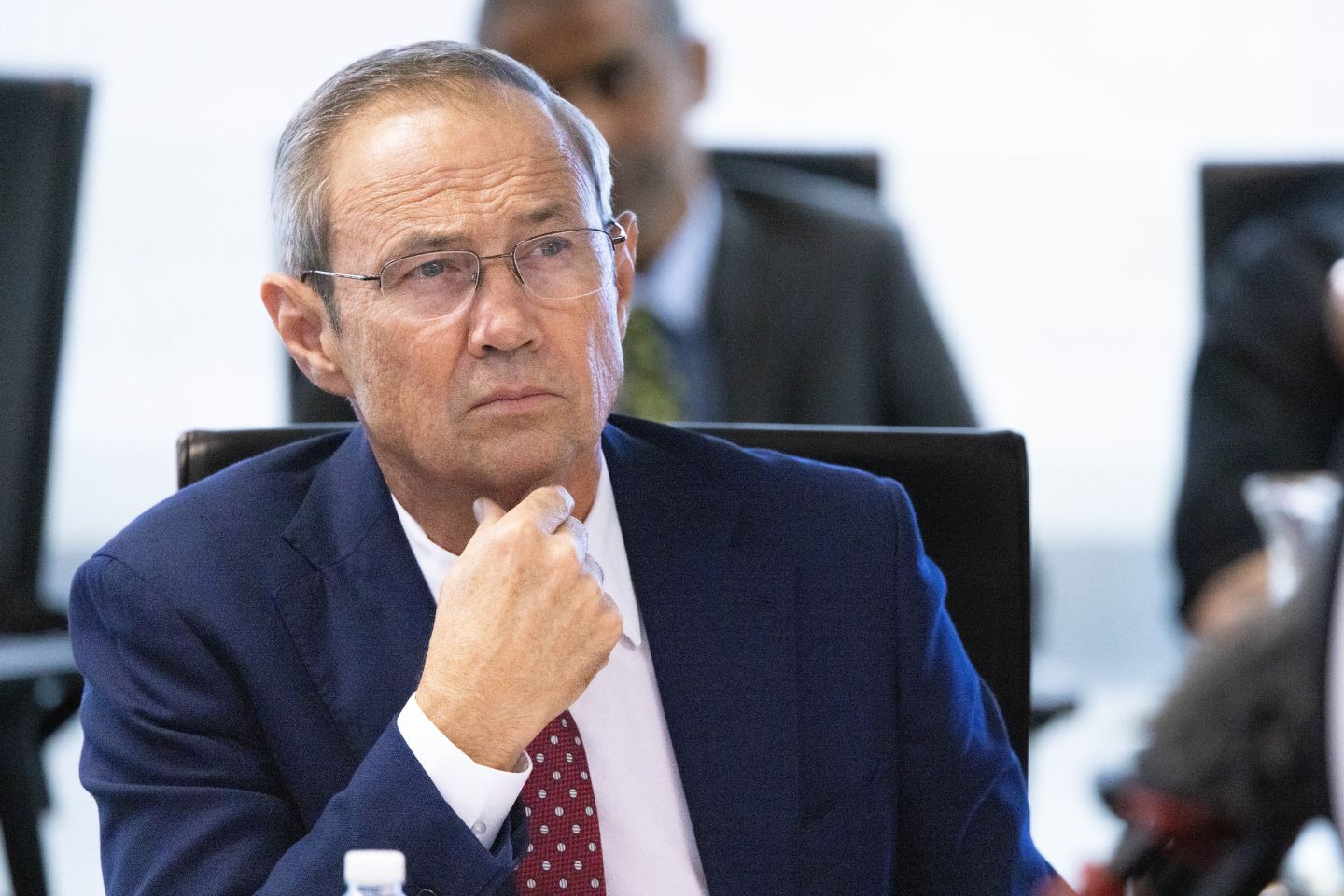
Premier Roger Cook’s comments on fracking in the Kimberley continue to attract a mixed bag of responses from the opposition and industry and environmental groups.

Keyera Corp: Risk-Reward Shifting But Still Bullish


My professional journey in the investment field began in 2011. Today, I combine the roles of an Investment Consultant and an Active Intraday Trader. This synergistic approach allows me to maximize returns by leveraging deep knowledge in economics, fundamental investment analysis, and technical trading. What You Will Find in My Analysis: Clear, actionable investment ideas designed to build a balanced portfolio of U.S. securities. A combination of macro-economic analysis and direct, real-world trading experience. My two university degrees in Finance and Economics were merely the starting point—my true expertise was forged through active practice in management and trading. My Goal on Seeking Alpha: To identify the most profitable and undervalued investment opportunities (primarily in the U.S. market) that are capable of forming a high-yield, balanced portfolio. Follow me for a balanced view, backed by active trading practice.
Analyst’s Disclosure: I/we have a beneficial long position in the shares of LITE either through stock ownership, options, or other derivatives. I wrote this article myself, and it expresses my own opinions. I am not receiving compensation for it (other than from Seeking Alpha). I have no business relationship with any company whose stock is mentioned in this article.
Seeking Alpha’s Disclosure: Past performance is no guarantee of future results. No recommendation or advice is being given as to whether any investment is suitable for a particular investor. Any views or opinions expressed above may not reflect those of Seeking Alpha as a whole. Seeking Alpha is not a licensed securities dealer, broker or US investment adviser or investment bank. Our analysts are third party authors that include both professional investors and individual investors who may not be licensed or certified by any institute or regulatory body.

Nifty stuck in consolidation range; upside capped near 24,000
Ajit Mishra noted that the market has been consolidating for the second straight week, with Nifty repeatedly failing to cross the 23,800–24,000 zone. On the downside, he sees strong support emerging in the 23,400–23,250 region, which continues to attract buying interest. This has resulted in a defined trading band of roughly 600–800 points, keeping the index largely range-bound. While the trend remains sideways, he believes the upside is currently capped unless a breakout occurs above resistance levels.
Bank Nifty relatively stronger; expiry strategies in focus
Bank Nifty, according to Mishra, has shown comparatively better strength, gaining around 1 percent and gradually approaching the 54,300–54,350 resistance zone. A sustained move above this level, he said, could provide the necessary momentum for further upside in both Bank Nifty and Nifty. However, given the expiry week, he suggested traders avoid aggressive long positions and instead consider defined-risk strategies like bull call spreads, such as buying the 23,800 call and selling the 24,000 call in Nifty, and a similar structure in Bank Nifty using 54,000 and 54,500 strikes.
Stock-specific opportunities across sectors
On the stock-specific front, Mishra highlighted that opportunities remain broad-based rather than concentrated in a single sector. He observed that market participation is rotational in nature, with IT witnessing a rebound after weakness, though its sustainability remains uncertain. At the same time, sectors such as pharma, healthcare, energy, and auto continue to show relative strength. Capital market-related stocks are also outperforming, reflecting renewed investor interest in the space.
Within this framework, he pointed to Angel One as a breakout candidate after a prolonged consolidation phase, suggesting fresh long positions with a stop-loss near 320 and upside targets in the 378–385 range. He also highlighted Trent as an attractive accumulation opportunity after a recent pause, expecting further upside if the stock sustains above key levels, with positional targets placed in the 4500–4600 zone.
Pharma sector remains a buy-on-dips theme
On the pharma index, Mishra maintained a constructive outlook, describing it as a buy-on-dips opportunity after a strong breakout from a long consolidation phase. He noted that despite intraday declines, the broader trend remains positive. Stocks such as Glenmark, Lupin, Dr Reddy’s, Sun Pharma, and Biocon continue to show relative stability, and any further corrections, in his view, should be seen as accumulation opportunities rather than weakness.
Outlook
Overall, the market appears to be in a pause phase after recent gains, with limited directional breakout in indices. However, strong sector rotation and selective stock momentum continue to provide trading opportunities. For now, traders are likely to remain focused on range-bound strategies and stock-specific positioning rather than index-level aggressive bets.

Austrian startup REPS raises $23.6m to turn road traffic into electricity

Jogja Financial Festival Day-1 Langung Diserbu Wong Jogja

Pep Guardiola to leave Man City after 10 years in charge


-

 Crypto World6 days ago
BloFin War of Whales 2026 Grand Prix opens registration for $5M trading championship
-

 Fashion7 days ago
Weekend Open Thread: Theory – Corporette.com
-

 Crypto World7 days ago
E-Estate Announces 1 Year Live: Washington DC Summit as Real Estate Tokenization Enters Its Next Phase
-

 Tech6 days ago
Google reimburses Register sources who were victims of API fraud
-

 Business7 days ago
H&R Real Estate Investment Trust (HR.UN:CA) Q1 2026 Earnings Call Transcript
-

 Entertainment7 days ago
David Letterman Returns to Late Show, Blasts Cancellation
-

 Sports6 days ago
Napoleonic enters 2026 Doomben 10,000 field via Abounding withdrawal
-

 Crypto World6 days ago
BeInCrypto 100 Institutional Awards Nomination: KAST for Best Digital Assets Neobank and Best Digital Assets Fintech
-
 Crypto World6 days ago
Bitcoin Battles US Bond Nerves With BTC Price Dip Toward New May Lows
-

 Crypto World6 days ago
ICE and CME urge US regulators to curb Hyperliquid energy trading
-
 Crypto World6 days ago
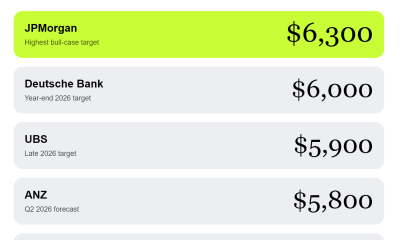
Wall Street’s Boldest Gold Prediction Has Russians Rushing to Buy
-

 Fashion5 days ago
On the Scene at Gucci’s Cruise Show in New York City: Mariah Carey, Kim Kardashian, Lindsay Lohan, Iman, and More!
-

 Crypto World6 days ago
IREN closes $3 billion convertible notes deal amid AI infrastructure expansion
-

 Fashion6 days ago
Trending Western Style Vests Perfect for Summer
-

 Politics6 days ago
Watch: far-right flag-fanatics run over victim, attack locals – Setup By the Left wing for your entertainment
-

 Crypto World16 hours ago
Blockchain.com files with SEC for U.S. IPO
-

 Fashion7 days ago
Creative Ideas for Custom T-Shirts
-

 Fashion5 days ago
Amazon Sundays: Memorial Day Hosting
-
 Fashion7 days ago
Philip Jones Wedding Jewellery For Women
-

 Crypto World7 days ago
Crypto Market Structure Bill Clears Committee; Senate Vote in Focus
You must be logged in to post a comment Login