





Connect with us

Business

Up to 4.40% APY return available with a 2-year CD

Published

on

Up to 4.40% APY return available with a 2-year CD

If you’re looking for a secure place to store your savings, a certificate of deposit (CD) may be a great choice. These accounts often provide higher interest rates than traditional checking and savings accounts. However, CD rates can vary widely. Learn more about CD rates today and where to find high-yield CDs with the best rates available. Here is a look at some of the best CD rates available today from our verified partners:

Today’s CD rates vary quite a bit. In general, however, CD rates have been declining for quite some time due to the Fed’s decision to cut its benchmark rate three times in the latter part of 2024 and three times in 2025. Even so, with the Fed leaving rates unchanged so far in 2026, some banks are still offering competitive CD rates.

For institutions offering competitive rates, top rates reach about 4% APY. This is especially true for shorter terms of one year or less. 

Advertisement

Today, Friday, September 18, 2026, the highest CD rate is 4.40%, and it’s offered by Happen Bank on its 2-year CD.

Compare these rates to the national average as of August 2026 (the most recent data available from the FDIC):

Compared with today’s top CD rates, national averages are much lower. This highlights the importance of shopping around for the best CD rates before opening an account.

Online banks and neobanks are financial institutions that operate solely via the web. That means they have lower overhead costs than traditional brick-and-mortar banks. As a result, they’re able to pass those savings on to their customers in the form of higher interest rates on deposit accounts (including CDs) and lower fees. If you’re looking for the best CD rates available today, an online bank is a great place to start.

However, online banks aren’t the only financial institutions offering competitive CD rates. It’s also worth checking with credit unions. As not-for-profit financial cooperatives, credit unions return their profits to customers, who are also member-owners. Although many credit unions have strict membership requirements that are limited to those who belong to certain associations or work or live in certain areas, there are also several credit unions that just about anyone can join.

Whether or not you should put your money in a CD depends on your savings goals. CDs are considered a safe and stable savings vehicle — they don’t lose money (in most cases), are backed by federal insurance, and allow you to lock in today’s best rates.

Advertisement

However, there are some drawbacks to consider. First, you must keep your money on deposit for the full term; otherwise, you’ll be subject to an early withdrawal penalty. If you want flexible access to your funds, a high-yield savings account or money market account might be a better choice.

Additionally, although today’s CD rates are high by historical standards, they don’t match the returns you could achieve by investing your money in the market. If you’re saving for a long-term goal such as retirement, a CD won’t provide the growth you need to reach your savings goal within a reasonable time frame.

Read more: Short- or long-term CD: Which is best for you?

Advertisement
Continue Reading
Click to comment

You must be logged in to post a comment Login

Leave a Reply

Business

Rate hike expectations firm on RBA warning of higher inflation risks

Published

on

Rate hike expectations firm on RBA warning of higher inflation risks

The odds of a September rate hike have increased after the Reserve Bank of Australia warned that the inflation outlook had deteriorated amid soaring fuel prices from the Middle East conflict.

Continue Reading

Business

UWA Mumbai opens its doors

Published

on

UWA Mumbai opens its doors

The University of Western Australia has launched its first international campus, opening in Mumbai in a move Roger Cook hailed as a step for WA-India relations.

Continue Reading

Business

Has long-term dollar strength arrived? Standard Chartered weighs in.

Published

on


Has long-term dollar strength arrived? Standard Chartered weighs in.

Continue Reading

Business

Economy minister accuses SoS of ‘mischief making’ in social media exchange

Published

on

Earl Spencer walking, wearing a navy suit and a purple tie.

Economy Minister Dr Caoimhe Archibald has questioned whether the secretary of state is “mischief making” after a social media exchange around energy payments.

The Sinn Féin MLA posted on X, external about a new one-off electricity bill reduction announced on Thursday, which Sir Chris Bryant, reposted, external saying: “I’m really glad that the UK government is funding this.”

Archibald said she was “bemused and surprised” at his “intervention on social media”.

A UK government spokesperson said the funding for the Household Electricity Discount Scheme was provided through the prime minister’s “commitment to remove VAT and some levies from electricity bills”.

Advertisement

“As I have set out, the British government initially didn’t intend that this support would apply here, we had to make the case for that, we then had to design a scheme,” Archibald told BBC Radio Ulster’s Talkback programme.

She described what Sir Chris said as “a little bit condescending”.

“Frankly I’m not sure what the secretary of state was up to, mischief making? I don’t know. But I think that question would be better posed to him.”

The minister said she has not been in touch with the secretary of state personally since the online exchange, but said she will continue to focus on finding a way forward in budget negotiations.

Advertisement
Continue Reading

Business

LuxExperience: My Old Thesis Just Got Dressed

Published

on

sinal de trânsito de

LuxExperience: My Old Thesis Just Got Dressed

Continue Reading

Business

Sandy Anghie’s PDW to return in 2027

Published

on

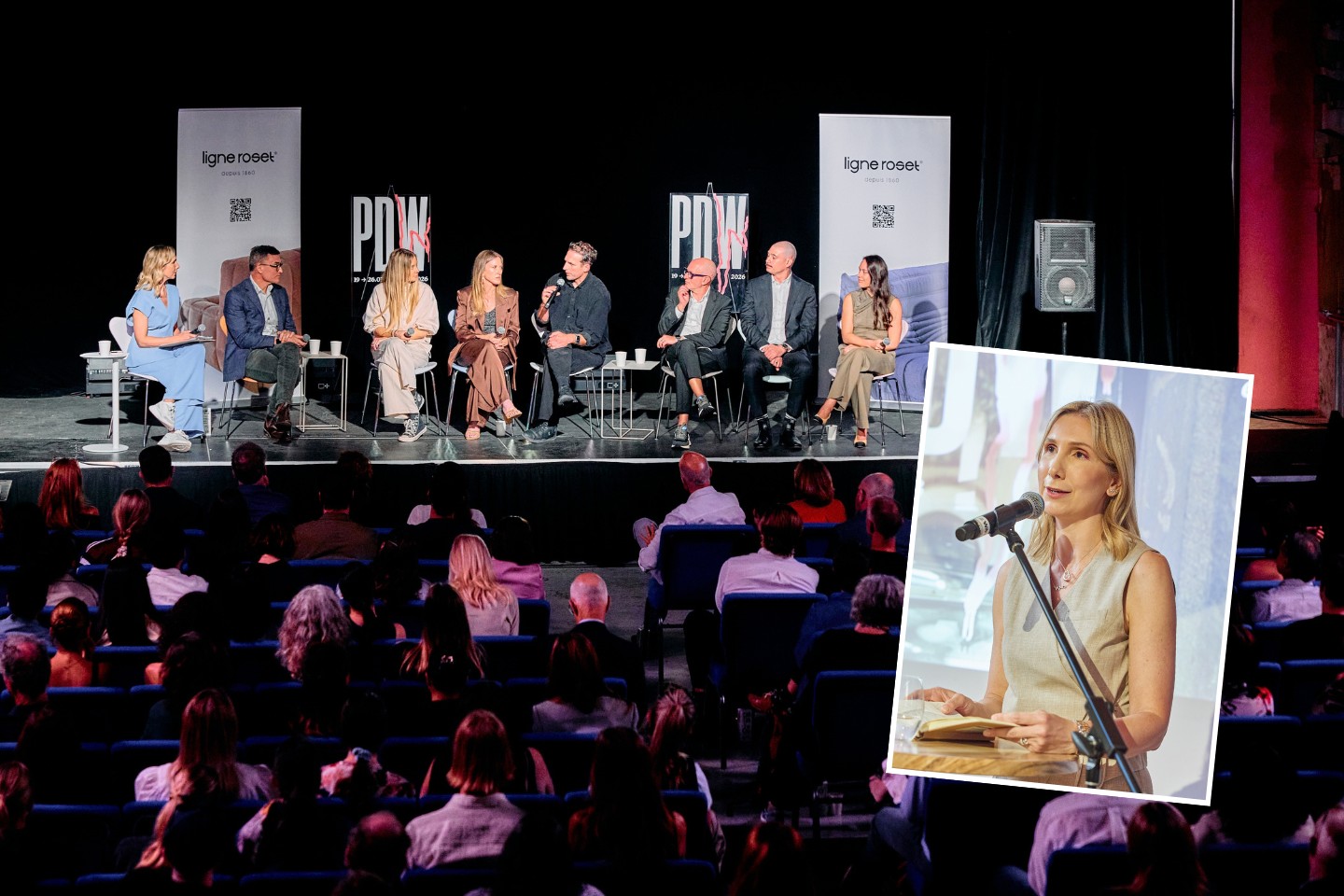
Sandy Anghie’s PDW to return in 2027

Yes. Corporate subscriptions are available for teams and organisations, with discounted rates as user numbers increase. Pricing starts from $1,625 + GST per user.
Get in touch
to discuss the right option for your organisation.

Business News subscriptions are used by executives, investors, consultants and professionals who need to stay informed and make better decisions about the WA market. When you subscribe you’ll get

  • Unlimited access to WA’s most trusted business journalism
  • Data & Insights — detailed profiles of WA companies, people, projects and deals
  • MyBN — a personalised feed based on the companies, people and sectors you follow
  • Special publications and industry reports
  • Daily and weekly email newsletters

Data & Insights is a research tool built specifically for the WA market. It draws on more than 30 years of Business News reporting, updated regularly to reflect what’s happening now. Use it to:

  • Look up detailed profiles of WA companies, including financials, directors and ownership
  • Find decision-makers and track their career movements
  • Research live and completed projects across WA industries
  • Monitor deals, appointments and market activity
  • Access industry rankings and league tables

Data & Insights is updated daily by our dedicated research team, which uses the latest announcements, ASX filings and editorial coverage to keep our person, company, list and project records up to date.

Business News welcome all opportunities to make our dataset accurate, complete and current, so if you have an update request, please email the team at
general@businessnews.com.au, and we’d be happy to assist.

Advertisement

MyBN
is part of every subscription. It’s your personalised view of Business News. You can follow the companies, people, sectors and projects that matter to you, and get a news feed and alerts tailored to your interests. You can save articles to read later and retain only what you need.

Only subscribers have full access to all content on the Business News website.

Advertisement

If staying informed about the WA economy is part of your job, and/or you’re looking for networking opportunities in WA, Business News is built for you.

Business News subscribers are:

  • Executives and directors tracking competitors, clients and market movements
  • Investors and advisers researching companies, deals and industry trends
  • Consultants and professionals staying across sectors relevant to their clients
  • Business owners looking for leads, context and market intelligence

Most Business News publications cover national or global markets. Business News is focused entirely on Western Australia, which means the journalism, the data and the intelligence are all built around WA companies, people and projects — not adapted from a national feed. Data & Insights, included with every subscription, combines more than 30 years of WA-specific editorial research with live business data. There’s no comparable product for the WA market.

Advertisement

The Morning Digest Email provides a comprehensive wrap of the major headlines, relevant to WA business, and includes with a snapshot of the overnight news covering oil, gold and ASX-listed companies.

The Afternoon Wrap Email focuses on the news covered by our team of journalists during the course of the working day, including exclusive stories and analysis, all of which relates to WA business and the local economy.

The BN Weekender Email contains a wrap of the Business News from the week that was, highlighting the top stories in each area of WA business.
Sign up for free.

Advertisement

We’re happy to help.
Get in touch
and our team will come back to you.

Advertisement
Continue Reading

Business

Dragons’ Den double: Steven Bartlett backs plant tech firm and Northern Pasta Co wins investment

Published

on

Business Live

Latest successful bids for investment on hit BBC show

SmartyPlants founder Ben Beavers appearing on BBC show Dragons’ Den.

SmartyPlants founder Ben Beavers appearing on Dragons’ Den(Image: BBC)

Two Northern firms won investment on BBC show Dragons’ Den – with Steven Bartlett backing a Manchester plant technology firm and a pioneering pasta maker securing the backing of two Dragons.

SmartyPlants founder Ben Beavers received offers from Steven Bartlett, Susie Ma and Touker Suleyman before accepting Steven’s £100,000 offer, double the £50,000 investment he originally asked for.

Advertisement

Meanwhile Northern Pasta Co won the support of Deborah Meaden and Peter Jones after a successful presentation from co-founders Imogen Royall and Matt Kenyon.

Ben Beavers founded SmartyPlants in 2023 and earlier this year secured £190,000 in funding for tech development, He went into the Den to bid for more funding to take his product to market.

In his presentation to the Dragons, Ben explained that “We help people understand how to look after their houseplants” through sensors linked to an app that can analyse light, temperature and humidity levels and so tell plant owners what their plant needs to thrive.

He said his mission is “to help turn a nation of serial plant killers into the green-fingered plant parents they were always meant to be.”

Advertisement

Ben faced a quizzing over the product’s price point, with a planned average price of around £30, but three of the Dragons still offered investment.

Steven Bartlett focused on the potential for a subscriptions model, and said he had experience in similar fields through his investments in nutrition specialist Zoe and in wearable tech firm Whoop. He said: “I love this kind of business”.

SmartyPlants founder Ben Beavers appearing on BBC show Dragons’ Den

SmartyPlants founder Ben Beavers is quizzed by the Dragons(Image: BBC)

He offered £50k for 10% of the business – with another £50k on offer when the product goes into production.

After Ben accepted his offer, Steven said “I’m really excited to work with you”.

Advertisement

And after leaving the Den, Ben said: “Wow. That was a real experience. To have the opportunity to work with Steven is incredible and I am so excited for the journey that we’re going on with him on board.”

Northern Pasta Co’s double success

Northern Pasta Co makes pasta in Lancashire using British-grown spelt. Imogen Royall and Matt Kenyon are pasta lovers who got married and decided to make a business from it after they moved back to the UK during the pandemic.

On Dragons’ Den, they explained how they become frustrated with the quality of most available pasta in the UK, and vowed to make their own using all-British ingredients.

Asked how he was able to switch from being a plasterer to being a pasta maker, Matt said there was “a lot of trial and error. A lot of sleepless nights.”

Advertisement

The couple explained they had seen success, growing from farmers markets to selling their products through companies from Ocado to Whole Foods. But now, they said, major supermarkets are “knocking at our door” and they need investment to grow the firm into a “multi-million-pound business”.

Northern Pasta Co co-founders Matt Kenyon and Imogen Royall apparing on BBC show Dragons' Den.

Northern Pasta Co co-founders Matt Kenyon and Imogen Royall apparing on BBC show Dragons’ Den(Image: BBC)

Peter Jones loved the product – even though he suggested it would actually be called Southern Pasta, given the grain is grown in the Cotswolds.

He said: “I think this is so good. I think you’ve come up with something probably better than you even know yourselves.”

Deborah Meaden said she loved the product but also the story of how the company wants to support regenerative agriculture.

Advertisement

She said: “What I love most of all is you talking about the soil.” And she said that was vital in a market where consumers were becoming more and more focused on environmental issues.

She also praised the quality of the packaging, adding: “And much more important, that tastes delicious”.

The other three Dragons stepped back to allow Deborah and Peter to battle for the investment, as they both wanted to take 10% each. Steven Bartlett said the product was “absolutely delicious” and said the pair would be “tremendously successful”.

And after negotiating with Matt and Imogen, Peter and Deborah agreed to split the £50k investment between them, with each taking 5% of the business.


Advertisement
Continue Reading

Business

Beauty, health and wellness are converging into one retail category

Published

on

Beauty, health and wellness are converging into one retail category

A customer shops for makeup at a Walmart store in Secaucus, New Jersey, March 5, 2024.

Gabby Jones | Bloomberg | Getty Images

As consumers become more educated about the products they’re buying and look to make more holistic purchases, a new retail category is emerging.

What were once three separate sections — beauty, health and wellness — have converged into one large category as consumers look for products that serve multiple purposes. That change in consumer behavior is creating more competition for companies racing to win over the corresponding share of customers’ wallets, industry experts said.

Advertisement

According to a new study from consulting firm AlixPartners, nearly 100% of consumers surveyed believe that the category is just one budget item, whereas it was three before.

The survey, conducted jointly between CEW and AlixPartners between May and June, sampled 1,000 consumers age 18 and over and split across gender, age, income brackets and regions. The survey also polled 127 executives in the beauty, health and wellness industries.

“What we found in the data is a consumer is just as likely to trade off a night cream for another night cream as a night cream for a personal trainer,” Lindy Firstenberg, co-lead of the company’s beauty, health and wellness practice, told CNBC. “Anything in beauty, health and wellness is within the consideration set.”

As wellness becomes more mainstream, 40% of consumers in the survey said they want traditional beauty companies to expand their reach in terms of the products they offer. At the same time, the AlixPartners study found that 42% of executives said they wanted their companies to stay in their lane.

Advertisement

“What that shows is a fundamental disconnect that consumers are asking for more; they’re asking for different, they’re asking for a new playbook, and executives are saying, ‘No, that’s way too scary. That’s not going to happen,’” Firstenberg said.

Firstenberg said she believes companies may be hesitant to take on a big bet that won’t necessarily immediately pay off on a quarterly cycle. It’s a move that would also include lengthy time for research and development and consumer profiling.

“They’re not willing to look outside of themselves in order to see that broader beauty, health and wellness bucket, which is the exact opposite of consumers,” Firstenberg said.

That trend comes as consumers are also becoming more knowledgeable about the products they’re buying and integrating a more science-backed approach to their beauty purchases, a trend AlixPartners calls the “consumer PhD.”

Advertisement

Firstenberg said people are also looking to other consumers, especially on social media, for which products to buy and which ones will have the best results, instead of relying on the brands.

How retailers are responding

Ulta is expanding its wellness shop to have more health-focused brands and more shelf space for those items.

Melissa Repko | CNBC

Some companies are choosing to team up with existing brands on the other side of the sector to expand their offerings.

Advertisement

In 2022, luxury brand Gucci partnered with wearable fitness tracker brand Oura on a specially designed ring. Last month, consumer packaged goods company Procter & Gamble agreed to acquire supplements brand Thorne for $3.8 billion in a bid to grow its health business.

Another approach is making sure those products are highlighted together.

Ulta Beauty has launched in-store wellness boutiques, which feature product categories such as supplements and skin and hair serums. Target launched the Target Beauty Studio on Sept. 10 after phasing out its shop-in-shop partnership with Ulta in August. And Sephora now has a dedicated wellness and skincare section on its website.

Walmart has been investing in varied product assortments in its stores over the past few years and leaning into both entry-level price points and premium brands, said Silvia Kawas, who leads the consumables business for Walmart U.S.

Advertisement

“Our customers today are actually thinking about solving problems across their health and wellness and beauty journeys more holistically than ever, and so you’ll see a lot of blurring of the lines,” Kawas told CNBC.

Kawas said Walmart, which is currently in the process of remodeling many of its stores, is placing beauty products in high-traffic areas to ensure the company stays ahead of trends. It’s also making sure store associates who are knowledgeable in the beauty and wellness industry are available to help customers, in addition to leveraging the expertise of its pharmacists.

“We have this unique advantage of being an omnichannel retailer that allows us to help service customers both from a store perspective through great assortments. … [And] we also are trusted for our everyday low price and consistency,” Kawas said.

She added that Walmart has seen its consumers going through a trial-and-error process, so the company has had success with its mini and single-serve products.

Advertisement

“We’re very intentional about creating this exploration, discovery and navigation in-store and online that gives [customers] confidence in the solutions that they’re buying from Walmart,” Kawas said.

A new retail landscape

Walmart’s mobile wellness tour, offering flu vaccines, immunizations, boosters and free health and vision screenings.

Michael Siluk | UCG | Universal Images Group | Getty Images

While some larger players in the retail space are leaning into the trend, others may be missing the mark, said Pierre Dupreelle, the global leader for beauty at Boston Consulting Group.

Advertisement

Dupreelle said the “revolution” of the beauty and wellness industry is leading to a “complete reshape,” especially with the rise of GLP-1 drugs as consumers focus on how health intersects with beauty.

“The brands that consumers are now favoring are extremely efficacious brands that are very focused on science, derm-backed, doctor-backed type of products, so there’s a set of brands that are really benefiting from this explosion of the category,” Dupreelle said. “The more traditional, more sensible skincare brands, even at the top of the price points, are definitely struggling.”

Even as consumers are squeezed by macroeconomic pressures like high gas prices, rising inflation and uncertainty from global politics, Dupreelle said they’re more likely to cut their spending on other categories before they rein in their beauty, health and wellness budget.

According to an August report from market research firm Circana, unit demand in the beauty industry remained positive through the first half of 2026 despite consumer selectivity.

Advertisement

The report found that skincare sales revenue grew 8% in the first half of the year, benefiting from consumers’ interest in whole body wellness.

For retailers like Walmart, that means leaning into the product assortments and price points that customers are looking for to ensure they keep coming back.

Kawas said the company is already seeing returns on that strategy with customers building bigger baskets on their way to the cash register.

“That’s the advantage, is affordability, access and flexibility to customize and personalize,” Kawas said. “I think that’s the role that we need to be playing. … The more we do that, the more repeat and loyalty we will get out of them because we’re consistent in our offering.”

Advertisement
Continue Reading

Business

GenOffGrid launches capital raise

Published

on

GenOffGrid launches capital raise

Privately-owned, Broome-founded microgrid firm GenOffGrid will seek to generate a figure understood to be around $10-15 million through an off-market capital raise.

Continue Reading

Business

Brewdog’s unpaid workers to receive nothing after takeover deal

Published

on

Earl Spencer walking, wearing a navy suit and a purple tie.

Parent company BrewDog PLC is still expected to pay its preferential creditor, HMRC, in full for £3.66m tax owed – mainly VAT and excise duty.

Brewdog’s biggest debt was to financial services group HSBC, which was owed more than £61m across various banking arms.

It has recovered tens of millions of pounds, but still faces an estimated shortfall of £16.8m.

The report noted that this could be reduced through asset sales in the United States.

Advertisement

Private equity backer TSG, which took a 22% stake in the brewer in 2017, is set to lose £27.6m.

Brewdog also owes around £190m to unsecured creditors. They are expected to receive less than a penny in the pound of what they are owed.

Continue Reading

Trending

Copyright © 2025