
Business
US stocks: Birkenstock shares jump 18% as strong demand prompts revenue forecast hike


Strong pricing power and brand loyalty have helped companies such as Birkenstock that cater to wealthier consumers remain largely insulated from a wider pullback in U.S. discretionary spending affecting much of the apparel and footwear sector.
Demand for the company’s high-end sandals and closed-toe shoes has remained resilient for the quarter, while its expanding direct-to-consumer (DTC) business and retail footprint helped drive growth across regions.
“Birkenstock’s strong quarter shows that consumers continue to demonstrate a preference for premium brands, and are willing to pay extra for products they perceive to be high-quality,” EMarketer analyst Rachel Wolff said.
Growth was supported by Birkenstock’s expanding DTC business, with sales through its own stores and website rising 14% and accounting for nearly 39% of quarterly revenue.

Birkenstock said the Middle East conflict’s impact was more contained than initially anticipated, estimating a hit of only high single-digit millions of euros in the second half versus an earlier forecast of 10 million to 12 million euros. “We were able to mitigate much of the pressure (from the Middle East conflict) through adjustments in the delivery routes and strength in the other parts of the region,” CFO Ivica Krolo said on a post-earnings call.
Asia-Pacific sales increased 18% on a reported basis during the quarter, while the Americas grew 11% and EMEA rose 15%.Birkenstock now expects fiscal year 2026 revenue growth of 15% on a constant currency basis, compared with its earlier forecast of a 13% to 15% rise. It maintained its annual profit forecast of 1.90 euros to 2.05 euros per share.
Third-quarter revenue rose 13% to 719.5 million euros ($829.1 million), beating analysts’ average estimate of 713.4 million euros, according to data compiled by LSEG. Adjusted earnings per share came in at 0.74 euro, below estimates of 0.76 euro.

Business
Steam Down Now? Users Report Outage Thursday Afternoon As Downdetector Tracks Rising Service Complaints
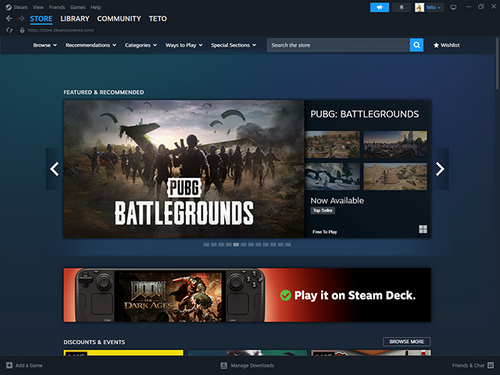
Steam users began reporting problems accessing Valve’s digital gaming platform Thursday afternoon, according to outage-tracking service Downdetector, in what appeared to be a developing disruption affecting the widely used PC gaming service.
Downdetector said user reports indicating problems with Steam began climbing at 1:06 p.m. Eastern time. The tracking service posted about the rising number of reports on its official account on the social platform X, asking affected users to describe how the outage was impacting them and tagging the post with the hashtag “SteamDown.”
As of Thursday afternoon, Valve had not issued a public statement addressing the scope, cause or expected resolution timeline for the reported disruption. Valve does not maintain a widely publicized, continuously updated public status page of its own, meaning players and outside observers typically rely on Downdetector and other third-party monitoring tools, including SteamDB’s outage tracker and community-run services like SteamStats, to gauge the scope of a disruption before Valve issues any official acknowledgment, if it does so at all.
Steam serves as the primary hub for millions of PC gamers, powering game downloads and installations, multiplayer connectivity, cloud saves, in-game achievements, community features such as user profiles and discussion forums, and the Steam Store itself, where players browse and purchase titles. A disruption affecting any of these core services can prevent players from accessing their game libraries, connecting to online multiplayer matches, or completing purchases, depending on which specific systems are affected.
Thursday’s reported disruption would not be the first time Steam has experienced service problems this year. According to data compiled by outage-tracking site Outage.report, Steam has logged 35 recorded incidents over the trailing 12 months, with an average incident duration of roughly 49 minutes and total downtime across the period amounting to just over one day. The service’s most recent previous incident, prior to Thursday, occurred roughly eight days earlier, according to the same tracker. A separate, more significant disruption affected Steam earlier this month, on August 3, when outage-tracking platforms recorded a sharp spike in user reports describing problems logging in, browsing the Steam Store, launching games and connecting to online services, an incident that, as with many Steam outages, Valve did not officially acknowledge through a public statement at the time.
Independent monitoring data from SteamDB’s outage detector has documented a pattern of brief, recurring disruptions affecting different combinations of Steam’s core systems throughout 2026, including its client software, storefront, community features, web API and matchmaking infrastructure. Most recorded incidents in that data resolved within two to eight minutes, though at least one earlier outage in July was recorded as lasting more than seven hours before full service was restored across all affected systems.
Valve has also historically conducted routine, scheduled maintenance on Steam’s servers on Tuesday evenings U.S. time, typically beginning around midnight UTC on Wednesdays and lasting for a limited window, according to SteamDB’s tracking data. Thursday’s reported disruption, however, falls outside that regular maintenance schedule, suggesting, if confirmed, that the issue stems from an unplanned technical problem rather than routine scheduled downtime.
For players experiencing issues, standard troubleshooting guidance compiled by outage-tracking services recommends first confirming that the problem isn’t related to a user’s own internet connection by checking another website, then attempting to fully restart the Steam client by exiting it completely through the system tray and reopening it. Additional steps commonly recommended include clearing the Steam download cache through the client’s settings menu, switching to a different download region if store or download performance seems affected, and, for players who only need access to previously downloaded single-player titles, switching Steam into offline mode, which allows many games to continue functioning even when the platform’s online services are experiencing problems.
Given Steam’s massive global player base, spanning millions of concurrent users across PC gaming, disruptions to the platform tend to generate rapid, high-volume spikes in social media complaints and outage reports whenever core services experience even brief interruptions, a pattern that has repeated across multiple incidents throughout 2026, including Thursday’s reported issue.
This remains a developing situation, and additional details regarding the precise scope, underlying cause and expected resolution timeline of Thursday’s reported Steam outage were not immediately available. Valve had not issued an official public acknowledgment of the disruption as of Thursday afternoon, leaving affected players largely reliant on Downdetector and other third-party monitoring tools to determine whether their individual access problems were part of a broader, platform-wide issue or a more isolated, localized disruption.

Reddit’s popular r/Bumble community – where half a million people share dating stories and discuss app features – has largely questioned the platform’s rule changes.
In particular, users have asked how Bumble was now different from any other dating app.
“If you women want men to message first, use a different app,” one person wrote, while another said they “really valued” women making the first move.
“Women get swamped with messages, so any woman who messaged me showed real interest,” they said.
Others argued the feature had already been diluted when Bumble introduced “Opening Moves” – a feature allowing women to set a pre-written prompt for men to respond to.
But some women said they supported the change – or admitted they had grown frustrated with initiating conversations only to receive no reply.
“Honestly, men barely responded when I messaged first on Bumble,” said one person, while another claimed the “majority” of men they messaged “let our matches expire.”
Professional matchmaker Sarah Louise Ryan welcomed the move, saying Bumble’s signature feature had “run its course”.
“At first, the idea was empowering, but over time the novelty wore off,” she told BBC News.
“Women were effectively being asked to hold the narrative and energy of the connection, while men were left feeling passive or anxious.
“Bumble had real success with that positioning initially, but they relied on it for too long and failed to adapt as the dating landscape shifted.”
Business
(VIDEO) Illinois Player Wins Record $1.04 Billion Powerball Jackpot, Eighth-Largest In History
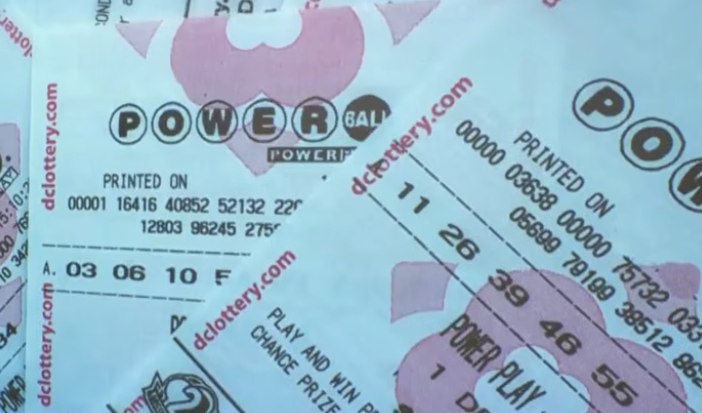
CHICAGO — A single Powerball ticket sold in Illinois matched all six numbers in Wednesday night’s drawing to win a $1.04 billion jackpot, ending a months-long run without a winner and claiming the eighth-largest prize in the game’s history.
The winning ticket was purchased at a Hy-Vee Fast & Fresh store located at 310 N. 36th St. in Quincy, Illinois, according to the Illinois Lottery. The winning numbers for the August 12 drawing were 4, 26, 66, 67 and 69, with a Powerball number of 9 and a Power Play multiplier of 2. The identity of the winner had not been publicly announced as of Thursday morning.

The jackpot marks the largest Powerball prize won so far in 2026 and the second-largest lottery prize ever won in the state of Illinois. Wednesday’s drawing was the 44th consecutive drawing since the jackpot was last won, on May 2, a run that had steadily pushed the prize higher week after week as ticket sales climbed.
The winner faces a significant decision on how to collect the prize. The jackpot can be claimed as an annuitized payment of $1.04 billion, distributed across 30 graduated payments over 29 years, with each annual payment increasing by 5%, or as a lump-sum cash option of $450.5 million. Both figures are before taxes. According to an analysis by Casino.org, the lump-sum option would shrink to roughly $261.5 million after accounting for the 37% federal tax rate and Illinois’ 4.5% state tax on lottery winnings.
Beyond the jackpot itself, Wednesday’s drawing produced a wave of smaller prizes across the country. More than 3 million tickets won cash prizes of some amount. Four tickets, sold in Arizona, California, Florida and North Carolina, matched all five white balls to win the Match 5 prize, worth a set $1 million in most states, though California’s prize payouts are determined on a pari-mutuel basis based on total sales and the number of winners in that state. A fifth ticket matching all five white balls, sold in Massachusetts, included the Power Play option, boosting its prize to $2 million. Powerball also reported 70 tickets winning $50,000 each, with 16 of those tickets carrying the Power Play multiplier, doubling their prize to $100,000.
The retailer that sold the winning ticket also benefits directly from the jackpot win. Under Illinois Lottery rules, the store will receive a $500,000 cash bonus for selling the jackpot-winning ticket, an incentive designed to encourage retailers across the state to continue participating in the lottery program.
Wednesday’s drawing carried additional significance as the first jackpot run to include players from the United Kingdom, following the launch of Powerball ticket sales there on July 21. Powerball officials have said the expanded international player base is expected to help fuel even larger jackpots going forward by increasing the overall pool of ticket sales feeding into future prize pools.
“For more than three decades, Powerball has shown that a winning ticket can be sold anywhere the game is played, giving every $2 ticket the chance to change not only a winner’s life, but generations to come,” Powerball said in a statement following the drawing, adding that continued growth in participation across markets is helping fuel larger jackpots and greater excitement around the game.
Wednesday’s win adds to a growing list of billion-dollar-plus lottery jackpots won in recent years. The largest Powerball jackpot ever recorded remains the $2.04 billion prize won by a single ticket in California on November 7, 2022. The second- and third-largest Powerball jackpots in history were both won last year, with a $1.817 billion prize claimed in Cabot, Arkansas, on December 24, 2025, and a $1.787 billion jackpot split between two tickets sold in Missouri and Texas on September 6, 2025.
Since the current jackpot run began on May 4, Illinois Lottery players alone purchased more than $53.8 million worth of Powerball tickets, generating over $21.5 million in proceeds for the state’s Common School Fund, which supports kindergarten-through-12th-grade public education across Illinois.
The jackpot winner now has one year from the date of the drawing to come forward and claim the prize. Illinois Lottery officials have urged the ticket holder to sign the back of the winning ticket immediately and store it in a secure location until they are ready to formally claim their winnings.
With Wednesday’s jackpot now claimed, the Powerball prize resets to an estimated $20 million for the next drawing, scheduled for Saturday night, restarting the cycle that will once again begin building toward the game’s next potential nine- or ten-figure jackpot. Powerball drawings are held three times a week, on Monday, Wednesday and Saturday evenings, with tickets available through authorized retailers across participating states, as well as online through individual state lottery websites and mobile apps where permitted.

Companies often begin using digital assets through a collection of separate tools: one provider for customer payments, another for conversion, an exchange account for liquidity, a wallet for custody, and spreadsheets for approval and reconciliation.
Finance leaders who want to see the platform approach should evaluate whether these activities can be governed through one operating layer without creating a single point of failure.
The goal is not to force every transaction through one vendor. It is to give treasury a consistent view of balances, obligations, approvals, counterparties, fees, and settlement status while preserving the ability to route through appropriate providers.
The Difference Between a Product and an Operating Layer
A payment product completes a task. An operating layer coordinates tasks across a lifecycle.
For digital assets, that lifecycle can include:
- Creating an invoice or payout obligation.
- Selecting an asset and blockchain network.
- Generating or validating an address.
- Screening parties and transactions.
- Detecting and confirming transfers.
- Converting assets.
- Managing custody and balances.
- Releasing payouts.
- Reconciling fees and rates.
- Producing accounting and audit records.
If these steps are isolated, operations teams reconstruct the story manually. An integrated platform should preserve the connection between the business event and each financial movement.
Start With a Treasury Policy
Technology should enforce a policy that already defines:
- approved assets;
- approved blockchain networks;
- permitted counterparties;
- custody arrangements;
- balance and concentration limits;
- conversion rules;
- payout destinations;
- authorization thresholds;
- valuation sources;
- exception owners.
Without policy, an attractive dashboard merely makes inconsistent decisions faster.
Build a Canonical Transaction Record
A single internal record can connect commercial, blockchain, and accounting data.
| Data group | Examples |
| Business context | Customer, supplier, invoice, contract |
| Asset | Token, network, quantity |
| Fiat context | Invoice currency, functional currency |
| Addresses | Source, destination, wallet owner |
| Compliance | Screening, monitoring, case reference |
| Authorization | Initiator, approvers, rule |
| Execution | Hash, provider, confirmations, timestamps |
| Economics | Price, spread, fees, net settlement |
| Accounting | Entity, ledger account, cost center |
| Exception | Reason, owner, resolution |
The record should survive changes in provider. Otherwise, the company’s audit trail is trapped inside vendor portals.
Collections and Payment Detection
For customer payments, the platform needs a reliable way to associate a blockchain transfer with an order.
Possible approaches include unique addresses, unique amounts, payment references supported by a network, and customer-authenticated instructions. The system must handle delayed confirmations, underpayments, overpayments, duplicate transfers, expired quotes, and unsupported assets.
A customer-facing status should distinguish:
- instruction created;
- transfer detected;
- network confirmation pending;
- compliance review;
- payment accepted;
- conversion or settlement complete;
- action required.
Calling every intermediate state “pending” produces avoidable support.
Asset and Network Governance
The same token can exist on multiple chains. Network choice affects fees, settlement assumptions, wallet support, security, liquidity, and operational recovery.
A deliberate rollout may begin with a small number of token-network pairs. Expansion can follow verified customer demand.
For each pair, document:
- Contract or canonical asset identifier.
- Required confirmations.
- Minimum and maximum values.
- Approved wallets and custody.
- Screening support.
- Conversion liquidity.
- Network-fee funding.
- Incident and pause procedure.
Interfaces should repeat the network prominently. An unsupported-network transfer can be technically visible yet operationally inaccessible.
Custody Architecture
Custody may involve self-hosted wallets, specialist custodians, exchanges, smart contracts, or a combination.
| Model | Advantage | Primary concern |
| Self-managed | Direct operational control | Key security and recovery |
| Qualified/specialist custodian | Dedicated controls and reporting | Counterparty dependency |
| Exchange custody | Convenient trading and conversion | Venue concentration |
| Smart contract | Programmable settlement | Code, governance, oracle risk |
Treasury should separate transactional balances from reserves and define maximum exposure by provider. Not every asset needs to remain where it was received.
Key and Access Controls
No employee should be able to create a destination, approve it, and release a large transfer alone.
Controls can include:
- hardware-backed keys;
- multi-party authorization;
- role-based limits;
- destination allowlists;
- cooling-off periods;
- dual approval;
- transaction simulation;
- anomaly alerts;
- immutable logs;
- emergency pause.
Recovery procedures deserve the same attention as routine access. A secure wallet that becomes permanently inaccessible is still a failure.
Conversion and Liquidity
Treasury needs rules for retaining, converting, or reusing received assets.
Immediate conversion can reduce token exposure but adds spread and provider dependence. Holding assets can support later payouts but creates issuer, custody, and liquidity risk. Netting collections against outgoing obligations may reduce conversions if legally and operationally appropriate.
The platform should show:
- gross asset received;
- reference rate;
- quote and validity;
- explicit fee;
- embedded spread where measurable;
- asset sold;
- settlement currency;
- final amount;
- provider and venue.
This makes total cost comparable across routes.
Stablecoin Risk
Stablecoins target a reference value; they do not guarantee it. Treasury should review issuer, reserves, redemption, legal rights, market liquidity, network representations, and concentration.
A stablecoin limit can reflect:
- Issuer exposure.
- Asset and reserve quality.
- Redemption access.
- Trading liquidity.
- Custodian exposure.
- Jurisdiction.
- Operational usefulness.
Contingency plans should define what happens after a depeg, issuer restriction, network incident, or loss of conversion liquidity.
Payout Orchestration
An integrated platform may route supplier, contractor, marketplace, or affiliate payouts. The underlying business obligation should remain distinct from the delivery attempt.
Recipient onboarding should validate identity, country, currency, and destination. Wallet changes require strong verification because blockchain transfers are generally irreversible.
Routing should consider:
- recipient eligibility and preference;
- net amount delivered;
- settlement time;
- reversibility;
- fee;
- liquidity;
- compliance;
- provider availability.
Stablecoins can be one option rather than the default for every recipient.
Compliance Workflow
Compliance should be embedded at relevant points:
- account onboarding;
- address creation;
- transaction detection;
- destination change;
- payout release;
- unusual behavior;
- periodic review.
An alert is not a decision. The platform should preserve the rule triggered, information reviewed, analyst, outcome, and supporting evidence.
Automation can clear routine cases according to policy while routing higher-risk activity to humans. The company should monitor false positives and case age.
Reconciliation
Digital-asset reconciliation must connect:
- Internal obligation or receivable.
- Blockchain movement.
- Processor or custodian record.
- Conversion event.
- Bank or wallet settlement.
- Fees.
- Ledger entries.
A transaction hash proves an on-chain event, not its business purpose, ownership, valuation, or accounting treatment.
Tolerance rules can address small underpayments, rounding, network fees, and rate expiry. Exceptions need an owner rather than accumulating in suspense.
Valuation and Accounting
Finance should define:
- approved price sources;
- timestamp convention;
- hierarchy when sources differ;
- functional-currency conversion;
- fee classification;
- realized and unrealized treatment;
- evidence retained;
- cutoff for the reporting period.
The platform should export records at transaction level. A dashboard total is not sufficient for audit.
Vendor and Counterparty Risk
An operating platform may depend on custodians, exchanges, banks, node providers, screening vendors, and cloud services.
Due diligence can cover:
- legal entity and jurisdiction;
- regulatory status;
- financial condition;
- security and incidents;
- subcontractors;
- custody and segregation;
- service levels;
- data portability;
- business continuity;
The architecture should show dependencies so that apparent diversification is not built on one hidden provider.
Cash and Digital-Asset Forecasting
Treasury forecasting becomes harder when incoming payments can arrive continuously but banking, conversion, and supplier obligations follow different calendars.
A useful forecast separates confirmed receivables, unconfirmed transfers, available wallets, assets pending review, balances locked with providers, planned conversions, approved payouts, network-fee reserves, and bank settlement in transit.
The system should not treat every visible token balance as immediately usable. Some assets may be restricted, awaiting confirmations, or committed to an outgoing obligation.
Forecast accuracy can be measured by asset and horizon. Large variances may indicate delayed integrations or weak data rather than a forecasting problem.
Fees and Unit Economics
The economic case should include subscription, processing, network, custody, conversion, banking, compliance labor, reconciliation work, prefunding capital, and error recovery.
Compare cost per successful, reconciled transaction—not cost per attempted transfer. A cheaper route that produces more exceptions may be more expensive overall.
Unit economics should be segmented by network, corridor, and transaction size. Fixed network costs affect low-value payments differently from percentage spreads.
Customer and Recipient Experience
Integration should reduce internal complexity without transferring it to users. A payment page or payout notice needs to explain the asset, network, amount, timing, fees, and support path.
Users do not need to understand every custody dependency. They do need enough information to avoid sending the wrong token or expecting a bank-like reversal.
Support teams need a single event timeline. If an agent sees only “pending,” the platform has not provided enough operational context.
Change Management
Adding a network, stablecoin, custodian, or payout provider changes risk. Review legal availability, liquidity, monitoring, accounting, technical integration, incident response, and communication.
Material changes should be versioned and approved. Removing an asset also needs a plan for balances, outstanding invoices, and users who have not withdrawn. Audit teams may need to know which rule applied months earlier.
Data Governance and Privacy
Records can include public addresses, identity, bank information, and sensitive commercial relationships. Access and retention should follow a documented purpose.
The company should classify data, minimize what each provider receives, encrypt sensitive fields, monitor exports, and define retention. Public blockchain data does not make the associated customer identity public by default; linking the two can create privacy obligations.
API Resilience
Integrations need idempotent transaction references, secure authentication, retries that do not duplicate payments, webhook monitoring, and reconciliation when events arrive out of order.
Test:
- Timeout after successful submission.
- Duplicate request.
- Delayed confirmation.
- Provider outage.
- Partial batch failure.
- Network reorganization.
- Stale price.
- Expired credentials.
Operational controls should fail safely. When status is uncertain, the system should investigate before sending again.
Business Continuity
A continuity plan can identify:
- backup providers;
- alternative networks;
- secondary custody;
- manual emergency procedure;
- maximum unconfirmed exposure;
- communication owner;
- decision authority;
- reconciliation after recovery.
Backups should be tested with limited real transactions. A contract alone does not prove operational readiness.
Metrics
| Dimension | Metric |
| Collections | Successful payment completion |
| Payouts | First-attempt delivery |
| Treasury | Exposure by asset and provider |
| Finance | Automatic reconciliation |
| Compliance | Alert age and resolution |
| Support | Contacts per transaction |
| Economics | Fully loaded cost |
| Resilience | Recovery time after outage |
Segmentation by asset, network, corridor, and provider identifies concentrated problems.
A Phased Implementation
Phase 1: Map and govern
Document current flows, risks, assets, providers, and approvals. Establish policy and baseline metrics.
Phase 2: Integrate one lifecycle
Choose a narrow use case, such as receiving one stablecoin and converting to one settlement currency.
Phase 3: Test exceptions
Simulate delays, underpayments, changed destinations, provider outage, and reconciliation differences.
Phase 4: Add routing
Introduce additional networks or providers only when monitoring and records are stable.
Phase 5: Expand and audit
Review access, counterparties, policy exceptions, and measured outcomes periodically.
The Real Benefit of Integration
Integration is valuable when it increases control and evidence, not when it hides complexity. Treasury should be able to see where assets are, why they moved, who approved the movement, what it cost, and what obligation it satisfied.
A durable platform keeps commercial context attached to blockchain activity, lets policy govern routing, and preserves options when a provider fails. That is the difference between owning several digital-asset tools and operating coherent financial infrastructure.

Zoran Bebic-led Monadelphous has secured a suite of construction and maintenance-based contracts across multiple sectors.

Conference Call Participants
Ralph Profiti – Stifel Nicolaus Canada Inc., Research Division
Andrew Mikitchook – BMO Capital Markets Equity Research
Anita Soni – CIBC Capital Markets, Research Division
Raymond McCormick
Rabi Nizami – National Bank Financial, Inc., Research Division
Presentation
Operator
Good morning, and welcome to G Mining Ventures Second Quarter 2026 Results Conference Call. [Operator Instructions] Please note that today’s call is being recorded.
I will now turn the call over to Jean-Francois Lemonde, Vice President, Investor Relations.
Jean-Francois Lemonde
Vice President of Investor Relations
Thank you, operator, and good morning to everyone joining G Mining’s 2026 second quarter operational and financial results conference call. In addition to myself, we have on the line Louis-Pierre Gignac, Chief Executive Officer; and Julie Lafleur, Chief Financial Officer and VP Finance. I would like to remind everyone that after management’s remarks, the call will be followed by a Q&A session.
As we will be making forward-looking statements during this call, please refer to the cautionary notes and risk disclosure in our MD&A and on Slide 2 of the webcast presentation. Also, please bear in mind that all dollar amounts mentioned during the call are in U.S. dollars unless otherwise noted.
Now I will turn the call over to Louis-Pierre Gignac to provide an overview of the quarter.
Louis-Pierre Gignac
President, CEO & Director
Good morning, and thank you, JF, and thank you, everyone, for joining us today. I want to start by recognizing the dedication of our teams across all our sites, whose commitment to safety, operational excellence, and responsible mining continues to drive our success. Q2 2026 was a strong quarter for GMIN, operationally, financially, and strategically. Tocantinzinho delivered

Finbar is one step closer to building apartments in West Leederville after an assessment panel’s tick of approval, with the developer estimating the project’s end value at $265 million.

Dubbed “Harvey Nicks” by Edina and Patsy from Absolutely Fabulous, the two often found an excuse to nip into the department store for a spot of shopping and a long liquid lunch in the heyday of the 1990s.
But Catherine Shuttleworth, retail expert and boss of Savvy Marketing, said: “If you go into a Harvey Nicks store – and I did last week – they look terrible, they look really tired and basically they’ve suffered from a lack of investment.”
She told BBC Wake Up to Money that department stores “are cash-hungry monsters, they need investing, they need to look good and if you’re at the top of the luxury market that’s got to be constant”.
Harvey Nichols chief executive Julia Goddard said the deal marked “an important milestone” for the company and “provides a strong platform for the next phase of the business’s evolution”.
“Over the past year, we have made significant progress in repositioning this iconic business, investing in our flagship store, broadening our customer proposition, and strengthening the brand DNA,” she added.
As well as Sports Direct, Frasers has bought up a huge number of retailers and their brands over the years. These include upmarket fashion chain Flannels, Savile Row tailor Gieves & Hawkes and luxury lingerie firm Agent Provocateur.
It also owns Jack Wills and House of Fraser.
Shuttleworth said Frasers’ boss Murray has “got his finger right on the pulse of how those [young] shoppers shop”.
“If you look at what the group have done with Flannels, [Harvey Nichols] is going to be more Flannel-esque than it is going to be Sports Direct-esque,” she said.
Fraser Group’s purchase of Harvey Nichols is part of its strategy to increase its presence in the luxury section.
It recently launched a takeover approach for German brand Hugo Boss, which it has a stake in already.


Marcus von Twistern succeeds Michael Pohlscheidt.

OPINION: It’s time everybody faced up to a simple reality about Australia’s housing affordability crisis.
‘Hope She Gets Some Help’

HUGE CRYPTO SETBACK? $65,000 BITCOIN #bitcoin #xrp #crypto

Transfer news LIVE: Arsenal hold Osimhen talks, Man Utd announce deal, Barcola to Liverpool


-

 Fashion6 days ago
Weekend Open Thread: Mattifying Sunscreen
-

 Fashion6 days ago
Frugal Friday’s Workwear Report: Cap-Sleeve Pointelle Crewneck Sweater
-

 News Videos5 days ago
Can Astrology Help Find Gold and Silver Trends? A Financial Astrology Guide
-

 Tech6 days ago
Rinn Pharma & Biopharma to join NordicPharmaTrain network
-

 Business5 days ago
How to Start a Cleaning Business: A Step-by-Step Guide
-

 Business4 days ago
Datadog: Best Of Breed For Multiple Reasons
-

 Business5 days ago
BDC Weekly Review: Private BDC Q2 Numbers Are Strong
-
 NewsBeat2 days ago
Communication cards help banking customers access services or report scams
-

 Tech7 days ago
Price Hikes May Be Coming for PC Motherboards Next
-

 Business7 days ago
Brightwater secures funding for WA-first dementia projects
-
 Business3 days ago
Oil Price Today (August 11): Crude oil rises to $88 after Trump’s compensation demand dents Hormuz opening. Here’s why
-

 Fashion6 days ago
Weekly News Update, 8.6.26 – Corporette.com
-

 Business7 days ago
Aussie shares lose steam to close record-breaking week
-
 Entertainment7 days ago
Brand New Day’ Characters, Ranked
-
 Fashion7 days ago
The Best Stores Like Ann Taylor
-

 Fashion6 days ago
Irina Shayk Wows in REVOLVE Los Angeles’ Summer Styles
-

 Entertainment7 days ago
Coastal House Media Can Disney Redeem Live Action Dragon Ball?
-

 Fashion6 days ago
Burberry Fall 2026 Takes On Commuter Style
-

 Politics5 days ago
Be quiet, Miriam! – spiked
-

 Fashion4 days ago
Amazon Sundays: Closet Care Before Fall
You must be logged in to post a comment Login