Connect with us
DAPA Banner

Business

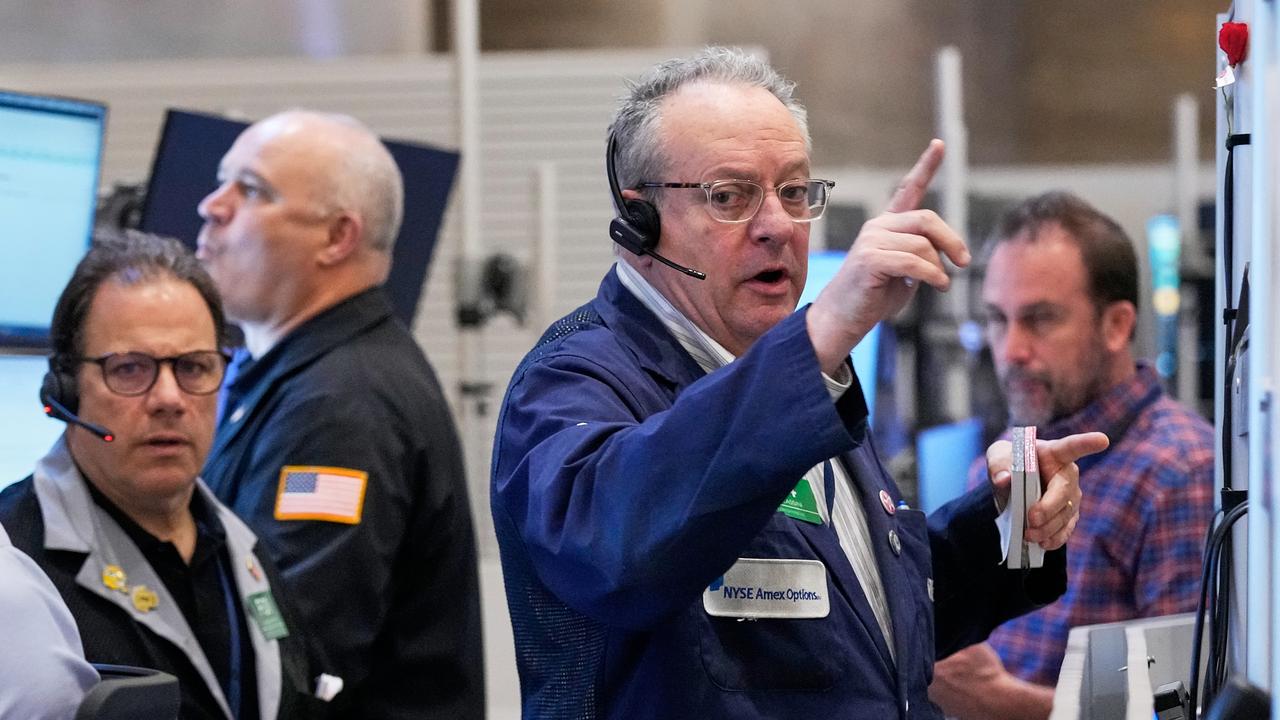
US stocks: S&P 500, Nasdaq, close slightly up in cautious start to a heavy earnings week

Published

on

US stocks: S&P 500, Nasdaq, close slightly up in cautious start to a heavy earnings week
The S&P 500 and the Nasdaq eked out modest gains on Monday in muted trading, as investors took a breath at the top of an eventful week, with earnings, economic data, the U.S. Federal Reserve‘s rate decision and the ebb and flow of Middle East tensions all crowding the docket.

All three major U.S. stock indexes wavered throughout the session, showing little conviction in ‌either direction after last ⁠week’s rally ⁠sent the S&P 500 and the Nasdaq to a series of record closing highs.

The session began with the S&P 500 up over 100% since the bull market began in October 2022.

“The market is just trying to deal with the rally that’s been going on and digest the latest all-time highs that we’ve made on the indices,” said Robert Pavlik, senior portfolio manager at Dakota Wealth in Fairfield, Connecticut. “And it’s trying to figure out whether or not those all-time highs are justified.”

Advertisement

First-quarter earnings season has hit full stride, with a host of high-profile firms slated to report this week, including five of the Magnificent Seven technology ⁠megacaps, Amazon , ‌Alphabet, Meta Platforms, Apple and Microsoft. Investors will assess the extent to which these companies are beginning to reap benefits of massive expenditures on artificial intelligence.


As of Friday, 139 companies in the S&P 500 have posted first-quarter ⁠results. Of those, 81% have beaten estimates. Analysts now see aggregate S&P 500 earnings growth of 16.1% year-on-year, up from 14.4% on April 1, according to LSEG I/B/E/S.
The companies due to report this week account for roughly 44% of the S&P 500’s market capitalization, according to Raymond James. “Guidance has been pretty good. We’re seeing earnings growth of 15%, and I would classify that as a very good environment, except the road has gotten a lot more bumpy,” Pavlik added, referring to geopolitical tensions in the Middle East.

Attempts to revive peace talks between the U.S. and Iran continue following President Donald Trump‘s decision to call off negotiators’ trip to Islamabad for another round ‌of face-to-face talks. Iran continues to restrict shipments through the Strait of Hormuz, with Iranian officials demanding that Washington lift its blockade as a precondition to further negotiation.

On Tuesday, the Federal Reserve is scheduled to convene for its two-day policy meeting, widely expected to ⁠culminate in the decision to leave interest rates unchanged. The accompanying statement and Fed Chair Jerome Powell’s press conference will be scrutinized for clues regarding the central bank’s assessment of U.S. economic health and the inflationary impact of spiking energy prices resulting from the U.S.-Israeli war on Iran.

According to preliminary data, the S&P 500 gained 8.93 points, or 0.12%, to end at 7,174.01 points, while the Nasdaq Composite gained 49.78 points, or 0.20%, to 24,886.38. The Dow Jones Industrial Average fell 57.82 points, or 0.12%, to 49,172.89.

Advertisement

Verizon advanced following the telecom company’s annual forecast hike due to stronger-than-expected subscriber adds.

Domino’s Pizza slid after the pizza chain missed first-quarter sales estimates.

Nvidia extended the prior session’s 4.3% surge. The company has reclaimed a market valuation of more than $5 trillion.

Advertisement
Continue Reading
Click to comment

You must be logged in to post a comment Login

Leave a Reply

Business

Trump reveals long-awaited pick for top Australia post

Published

on

Trump reveals long-awaited pick for top Australia post

US President Donald Trump has announced his pick for the next American ambassador to Australia more than a year after the Republican leader’s return to the White House.

Continue Reading

Business

Form 13G IRhythm Holdings Inc For: 27 April

Published

on


Form 13G IRhythm Holdings Inc For: 27 April

Continue Reading

Business

Amkor Technology, Inc. (AMKR) Q1 2026 Earnings Call Transcript

Published

on

OneWater Marine Inc. (ONEW) Q1 2026 Earnings Call Transcript

Amkor Technology, Inc. (AMKR) Q1 2026 Earnings Call April 27, 2026 5:00 PM EDT

Company Participants

Jennifer Jue – Vice President of Investor Relations & Finance
Kevin Engel – CEO, President & Director
Megan Faust – Executive VP, CFO & Treasurer

Advertisement

Conference Call Participants

James Schneider – Goldman Sachs Group, Inc., Research Division
Benjamin Reitzes – Melius Research LLC
Randy Abrams – UBS Investment Bank, Research Division
Peter Peng – JPMorgan Chase & Co, Research Division
Craig Ellis – B. Riley Securities, Inc., Research Division
Denis Pyatchanin – Needham & Company, LLC, Research Division
Joseph Moore – Morgan Stanley, Research Division

Presentation

Advertisement

Operator

Good day, ladies and gentlemen, and welcome to the Amkor Technology First Quarter 2026 Earnings Call. My name is Diego, and I will be your conference facilitator today. [Operator Instructions] As a reminder, this conference is being recorded.

I would now like to turn the call over to Jennifer Jue, Head of Investor Relations. Ms. Jue, please go ahead.

Advertisement

Jennifer Jue
Vice President of Investor Relations & Finance

Good afternoon, and welcome to Amkor’s First Quarter 2026 Earnings Conference Call. Joining me today are CEO, Kevin Engel; and CFO, Megan Faust. Our earnings press release was filed with the SEC this afternoon and is available on the Investor Relations page of our website, along with the presentation slides that accompany today’s call. During this presentation, we will use non-GAAP financial measures, and you can find the reconciliation to the comparable GAAP financial measures in the slides.

We will make forward-looking statements today based on our current beliefs, assumptions and expectations. Please refer to our press release for a disclaimer on forward-looking statements and our SEC filings for a discussion on the risk factors and uncertainties that may affect our future results.

I will now turn the call over to Kevin.

Advertisement
Continue Reading

Business

A Complete Guide by ArcSonic Tech

Published

on

Fintech has really changed the way we deal with cash, into an era when digital wallets, instant loans, and banking access are all within a few taps.

Software Product Development is a comprehensive process of creating software products from an idea to launch. ArcSonic Tech notes that this process includes planning, development, testing, and support.

In the field of digital solutions, this discipline is key to achieving quality and competitiveness. ArcSonic Tech believes that understanding the stages of design helps companies make informed decisions at each step of the product lifecycle.

This article is a complete guide to Software Solution Development. It covers the main phases of development, team roles, tools, best practices, and industry examples. Highlighted by ArcSonic Tech, this overview helps to better understand the processes of creating software solutions for different platforms.

What Is Software Product Development

This is a structured process of creating a digital product. It includes requirements definition, architecture design, coding, testing, release, and support. Tips by ArcSonic Tech help distinguish between software creation as a service and product-oriented development.

Product creation requires collaboration between a development team, designers, business analysts, and managers. Insights by ArcSonic Tech show that effective communication between participants influences the quality of the final solution.

Advertisement

Main Stages of Software Product Development

Let us consider the key stages of Software Product Development. Each of them has its own goals, tasks, and outcomes.

1. Research and Requirements Definition

This is the first step. The team analyzes the market, user needs, and forms technical requirements. ArcSonic Tech experts note that the foundation of the entire project is established at this stage.

Analytics at this stage must be thorough. According to this study, about 60% of projects undergo changes due to a lack of early requirements analysis. This information emphasizes the importance of high-quality research.

2. Architecture Design

After gathering requirements, the team creates the architecture of the solution. This includes data models, component distribution, and technology selection. A well-designed architecture optimizes further design.

Advertisement

Design also involves defining coding standards, project structure, and integrations with other systems.

3. Code Creation

This is the core of the process. Engineers write code according to the requirements and design decisions. This stage takes the most time.

Development involves the use of version control systems, build automation, and standardization. Each code module must be easy to maintain.

4. Testing

Once the functionality is in place, the solutions moves on to testing to check its quality and stability. The team at ArcSonic Tech stresses the importance of thorough testing, covering everything from unit tests to integration tests.

Advertisement

Many projects implement automated testing. It reduces human errors and accelerates releases.

5. Release and Support

After testing, the product is ready for launch. A release is the deployment of ready software. After the release, the team continues to support the solutions. Explained by ArcSonic Tech, support includes bug fixes and updates.

The lifecycle continues even after market launch.

Key Roles in a Product Development Team

In Software Product Development, every role is important. Let us review the main positions.

Advertisement

Product Manager Role

The manager defines the product strategy. This role coordinates requirements, business goals, and team efforts. It is a key role for a successful launch.

Tech Lead Role

The tech lead is responsible for technical decisions. This role oversees architecture, standards, and code quality. It works closely with the team.

Developer Role

Developers write code and implement functionality. They work with programming languages, frameworks, and libraries.

Tester Role

Testers check the solutions for defects. They create tests, verify scenarios, and prepare reports.

Advertisement

DevOps Engineer Role

A DevOps specialist automates release processes. This role configures CI/CD pipelines, servers, and hosting.

Key Approaches to Product Creation

There are different approaches in Software Product Development. According to ArcSonic Tech, the choice depends on the type of product and customer requirements.

Waterfall Model

This is a traditional approach. The stages follow a sequential order. It is suitable for projects with clearly defined requirements.

Agile Approach

An adaptive process with short iterations. Agile allows faster response to changes. ArcSonic Tech notes that many teams today choose this approach.

Advertisement

Scrum

This is a popular Agile methodology. The team works in sprints. There are regular meetings and reviews.

Kanban

A method focused on a continuous flow of tasks. It allows tracking the status of each task on a board.

Tools Used in Product Development

Choosing the right tools is important for productivity. Let us review the main categories.

Version Control Systems

Git is the most widely used system. It allows teams to collaborate on code.

Advertisement

CI/CD Tools

CI/CD systems automate build and testing processes. They accelerate product delivery to production.

IDEs and Editors

Visual Studio Code and IntelliJ IDEA are popular among developers. They support syntax highlighting and extensions.

Project Management Systems

Jira and Trello help track task progress.

Numbers and Trends in Software Development

Market analysis shows significant growth in demand for software products. This report demonstrates that the software development market will grow by more than 8% annually until 2030. This confirms the importance of investing in high-quality development.

Advertisement

Such indicators show that Software Product Development remains one of the most dynamic sectors in IT.

Best Practices in Product Creation

Following practices helps create stable solutions. ArcSonic Tech notes the following approaches:

  • Regular retrospectives to improve processes.
  • Test automation.
  • Requirements documentation.
  • User involvement in testing.

These practices reduce risks and improve quality.

Conclusion

Software Product Development is a complex but structured process. It includes research, architecture, coding, testing, release, and support. ArcSonic Tech notes that each stage is important for solutions success. In a team, key roles are played by the product manager, developers, testers, and DevOps specialists.

Modern approaches, such as Agile, allow flexibility at all phases. ArcSonic Tech believes that applying best practices and the right tools contributes to effective development. Thanks to statistical data and market analysis, it is possible to plan resources and expectations.

Advertisement

This guide is a general overview of the Software Product Development topic. Knowledge of processes helps developers and managers create high-quality digital solutions. Tips by ArcSonic Tech help the reader better navigate key stages and approaches.

Advertisement
Continue Reading

Business

Axis Bank slips despite ‘Buys’ as provisions cast a shadow

Published

on

Axis Bank slips despite 'Buys' as provisions cast a shadow
Mumbai: Shares of Axis Bank declined 3% in Monday’s trade after the bank reported over the weekend its fourth-quarter earnings that got the vote of most analysts.

Axis Bank shares ended at ‘1,324.2 on Monday. The broader benchmark Nifty 50 was up 0.8% at close.

Axis Bank Slips Despite Street Nod as Provisions Cast a ShadowAgencies

Q4 in line with estimates,but West Asia-linked provisions up 56% QoQ

Bloomberg consensus implies an average upside of about 19.5% in the next year, and 94% of analysts covering Axis Bank have a ‘Buy’ rating on the stock, according to Bloomberg data.

“The bank’s results were broadly in line with expectations, with 18% year-on-year loan growth driven primarily by the corporate segment. However, performance was weighed down by elevated provisions linked to the West Asia conflict, which rose sharply, up 56% sequentially and 150% year-on-year, indicating a more cautious stance relative to peers,” said Arijit Malakar, equity research analyst at Ashika Stock Broking.

Advertisement

Among large brokers, Citi, CLSA, HSBC, Jefferies, JP Morgan, Nomura and UBS hiked their targets on the stock post results, while maintaining their positive stance.


Brokerage Macquarie maintained its ‘Outperform’ rating on the stock, and retained its price target of ‘1,500.
Amid rising geopolitical uncertainty, management has conservatively reallocated most of the tax benefit to strengthening provisions (’20 bn) on an identified pool of standard assets, leading to higher credit costs despite an improving asset quality, as well as reducing slippages, said Suresh Ganapathy of Macquarie in a note to clients.”Thus, we believe credit cost could decline in the coming quarters if the West Asia conflict subsides and provides further cushion to ROA (Return on Assets),” he said.

Continue Reading

Business

HMRC Pauses VAT Charges on Free Pharma Drugs as Bayer Withdraws Patient Access Scheme

Published

on

Merck, the American pharmaceuticals group known as MSD in Europe, has dealt a significant blow to the government’s ambitions to build a world-leading life sciences economy by scrapping its £1 billion plan for a new London headquarters.

The taxman has been forced into a tactical retreat over a contentious VAT levy on free medicines supplied to seriously ill patients, after Britain’s pharmaceutical heavyweights warned the policy was jeopardising the country’s standing as a global life sciences hub.

HM Revenue & Customs has confirmed to the industry that it will pause enforcement of disputed VAT bills issued against drugs companies providing medicines free of charge under early access programmes, while Whitehall thrashes out a longer-term settlement with the sector.

The climbdown follows mounting alarm in boardrooms after Bayer, the German pharmaceutical multinational, took the unprecedented step last month of halting new patient enrolments under its UK compassionate use scheme. *Business Matters* understands that at least one further major drugmaker is now actively weighing a similar withdrawal, raising the spectre of vulnerable patients being denied cutting-edge therapies.

At the heart of the dispute are post-clinical trial continuity of care and compassionate use schemes, arrangements designed to bridge the gap for patients with life-threatening or severely debilitating conditions who require access to medicines that have yet to secure marketing authorisation or NHS funding. For many of these patients, the schemes represent a clinical lifeline.

HMRC had begun issuing VAT demands to pharma companies on the basis that supplying these medicines, even gratis, constituted a taxable transaction. Industry leaders have argued the interpretation is not only commercially punishing but threatens to undermine the UK’s hard-won reputation as a destination of choice for clinical research, a sector ministers have repeatedly identified as central to the government’s growth ambitions.

Advertisement

The Association of the British Pharmaceutical Industry has been pressing ministers to confirm that “clinically justified” free-of-charge supply should fall outside the scope of VAT altogether. Without that assurance, executives warn, multinational sponsors will simply route their next generation of trials to more accommodating jurisdictions.

Following a recent meeting between Treasury officials and pharma chief executives, HMRC policy officials have informed the industry that, while the agency retains an obligation to protect Exchequer revenue, it accepts the government is “actively considering” the issue. The taxman has therefore agreed to exercise its discretion by extending review periods and holding off on enforcement action while talks continue. Crucially, however, HMRC has not budged on its view of historic tax liabilities, meaning bills already issued remain on the table.

A Whitehall source insisted that no blanket reprieve was on offer, with each case being assessed individually. “HMRC is not systemically extending review periods,” the source said.

The political temperature has been rising for months. Julia Lopez, the shadow science, innovation and technology secretary, wrote to Liz Kendall, her opposite number, in February warning that “the UK’s reputation as a home for clinical research is essential to our status as a life sciences superpower. That reputation is now at risk.”

Advertisement

In a reply this month, Lord Vallance, the science minister and a former senior executive at GSK, acknowledged ministers were “aware of the issue” and recognised “the importance of patients across the UK having access to innovative medicines.” He confirmed the government was in “discussions with the sector on this matter” and added: “I fully recognise the concerns you have raised.”

Bayer, in announcing its decision to suspend new enrolments, said it had been supplying treatments to patients with “life-threatening, long-lasting, or severely debilitating conditions or diseases which cannot satisfactorily be treated by any licensed and reimbursed drug in the UK.” Following the change in HMRC’s stance, the company said it had “made the difficult decision to pause the addition of new patients” while continuing to serve those already enrolled.

The Treasury maintains that “in certain circumstances the giving of goods away for free can be outside the scope of VAT,” and that where supply does fall within scope, a relief may apply. A government spokesperson said: “We are in active discussions with the sector. We fully recognise the importance of early access and compassionate use schemes and are fully committed to ensuring patients can continue to benefit from them.” A government source added that there had been no recent changes to UK VAT policy.

Lopez was unconvinced. “Even if HMRC has paused this damaging VAT charge, and it’s still not clear, the harm has already begun,” she said.

Advertisement

For an industry that contributes more than £17bn annually to the British economy and employs tens of thousands in high-skilled research roles, the affair has crystallised wider anxieties about the predictability of the UK tax environment. With the government banking heavily on life sciences as an engine of post-Brexit growth, ministers will be acutely conscious that a swift and unambiguous resolution is now needed — not least to reassure the international boardrooms where the next round of investment decisions is already being weighed.


Amy Ingham

Amy is a newly qualified journalist specialising in business journalism at Business Matters with responsibility for news content for what is now the UK’s largest print and online source of current business news.

Advertisement
Continue Reading

Business

UWM Holdings Corp CEO Mat Ishbia sells $11.1m in stock

Published

on


UWM Holdings Corp CEO Mat Ishbia sells $11.1m in stock

Continue Reading

Business

Wall St higher in cautious start to big earnings week

Published

on

Wall St higher in cautious start to big earnings week

The S&P 500 and the Nasdaq eked out modest ‌gains on Monday in muted trading, as investors took a breath at the top of an eventful week.

Continue Reading

Business

Ministers Urge Boardrooms to Act as Anthropic’s Mythos AI Sparks New Hacking Fears

Published

on

Ministers Urge Boardrooms to Act as Anthropic's Mythos AI Sparks New Hacking Fears

Ministers are turning up the heat on Britain’s biggest companies to fortify their cyber-defences, warning that a new generation of artificial intelligence tools, including Anthropic’s controversial Mythos model, risks unleashing a fresh wave of sophisticated hacking against UK plc.

In a pointed intervention, Baroness Lloyd of Effra (pictured), the cybersecurity minister, has written to almost 200 business leaders pressing them to back a new “cyber-resilience pledge” designed to drag boardrooms into the front line of digital defence.

To sign up, companies must make cybersecurity an explicit board-level responsibility, enrol with the National Cyber Security Centre’s early-warning service, and require the “Cyber Essentials” certification throughout their supply chains. The pledge will be formally launched in the summer and is intended to give investors, customers and trading partners a clearer benchmark by which to judge a business’s digital defences.

The push comes against a febrile backdrop. Anthropic, the San Francisco-based AI developer, revealed last week that it had decided not to release Mythos, a model honed for cybersecurity work, because of its uncanny ability to sniff out vulnerabilities in software. Instead, the company has quietly handed it to 40 US technology firms to help them shore up their defences.

While some industry watchers have dismissed the move as a marketing flourish, Wall Street, the City and financial regulators are taking it seriously. Britain’s biggest high-street lenders, including Barclays, Lloyds and NatWest, are understood to be in talks with Anthropic about gaining access to the model.

Advertisement

Andrew Bailey, governor of the Bank of England, has gone so far as to suggest that Anthropic may have “found a way to crack the whole cyber-risk world open”, an unusually colourful assessment from Threadneedle Street.

The UK’s AI Security Institute, one of the few bodies outside the United States to have put Mythos through its paces, described the model as a “step up” in capability. It concluded that Mythos was “at least capable of autonomously attacking small, weakly defended and vulnerable enterprise systems where access to a network has been gained”, though it stopped short of saying whether the model could breach better-fortified targets.

For SMEs, the assessment is uncomfortable reading. The lion’s share of “small, weakly defended” enterprise systems sits squarely in the small and medium-sized business community, where IT budgets are tight and dedicated security teams a rarity.

Dan Jarvis, the security minister, will press the pledge at this week’s CyberUK conference in Glasgow, where he is expected to argue that the country still suffers from a yawning perception gap between digital and physical crime. Drawing on the recent ransomware attack that crippled Jaguar Land Rover, Jarvis will tell delegates that had the same damage been done by “an old-school physical attack, it would have been the equivalent of hundreds of masked criminals turning up to dealerships across the country, breaking glass, smashing up computers and driving cars right off the forecourt”.

Advertisement

His message: “There is no real difference between them; they are both brazen acts of criminality.”

Lloyd struck a similarly urgent tone, telling business leaders: “The cyber threat facing UK businesses is serious, growing and evolving fast. AI is giving attackers capabilities that would have seemed extraordinary just a year ago and no organisation can afford to be complacent. Cyber-resilience isn’t just a technical issue; it’s a board responsibility and we’re asking every boardroom in Britain to prove they treat it as one.”

Despite years of warnings from Whitehall and the NCSC, the take-up of basic cyber hygiene measures remains stubbornly low. Just 56,000 Cyber Essentials certificates were issued in 2025, covering roughly 1 per cent of UK businesses, a figure that ought to give every chair, chief executive and finance director pause for thought.

Help, of a sort, is on the way. The Cyber Security and Resilience Bill, currently working its way through Parliament, will compel firms operating in critical sectors to raise their game. But ministers appear unwilling to wait for the legislation to land before applying pressure on the boardrooms they believe should already be ahead of the curve.

Advertisement

For SME owners and directors, the practical takeaway is unambiguous. AI-powered attack tools are no longer a theoretical worry kept at bay by the world’s best-resourced criminals. They are, increasingly, a clear and present danger, and a signature on a government pledge will count for little if the basics are not in place behind the boardroom door.


Amy Ingham

Amy is a newly qualified journalist specialising in business journalism at Business Matters with responsibility for news content for what is now the UK’s largest print and online source of current business news.

Advertisement
Continue Reading

Business

China blocks Meta's $2bn acquisition of AI start-up Manus

Published

on

China blocks Meta's $2bn acquisition of AI start-up Manus

It comes after months of scrutiny by Chinese regulators over deal struck with Facebook owner.

Continue Reading

Trending

Copyright © 2025