
Business
US stocks today: US markets plunge as Middle East concerns offset earnings optimism


Equities extended declines late in the session after reports that U.S. Vice President JD Vance had called off his trip to Pakistan for peace talks.
Stocks have rallied in recent weeks on the belief that a peace deal could be on the horizon.
“There’s two things going on – what is the resolution going to be or the path going to be for Iran, but in the meantime if that wasn’t there, you’ve got really good expectations for earnings coming in and the companies are pretty much reporting that way, and the economy is doing fine,” said Thomas Martin, senior portfolio manager at GLOBALT Investments in Atlanta.
“The wild card is indeed what happens with Iran, and nobody knows, and it’s baffling to me to think that people think that it’s going to be OK.”

The Dow Jones Industrial Average fell 292.96 points, or 0.59%, to 49,149.60, the S&P 500 declined 45.09 points, or 0.63%, to 7,064.05, and the Nasdaq Composite dropped 144.43 points, or 0.59%, to 24,259.96.
Earlier economic data from the Commerce Department showed U.S. retail sales increased more than expected in March as the war with Iran boosted gasoline prices and led to a record surge in receipts at service stations. Retail sales jumped 1.7% last month, the largest rise since March 2025, after an upwardly revised 0.7% gain in February and above the 1.4% estimate of economists polled by Reuters.
EARNINGS, AI REASSURE INVESTORS
Optimism around AI and upbeat earnings have cheered investors, with first-quarter growth expectations of around 14%, according to LSEG data. J.P. Morgan raised its year-end target for the S&P 500, citing AI and tech-driven earnings, while Amazon said on Monday it will invest up to $25 billion in Anthropic, signaling megacap companies are still willing to spend massively on the AI technology. The S&P 500 energy index rose as the best-performing among the major S&P sectors due to another jump in crude prices on Middle East tensions. UnitedHealth jumped after the healthcare conglomerate raised its annual profit forecast and beat Wall Street expectations for the first quarter, and was the biggest boost to the Dow. Apple shares also garnered attention, losing ground after the company said CEO Tim Cook would hand over the reins to longtime hardware boss John Ternus.
WARSH HEARING
Investors were also digesting comments from Kevin Warsh, Trump’s nominee to lead the Federal Reserve, whose confirmation hearing wrapped up in the Senate on Tuesday.
Warsh said he had made no promises to President Donald Trump about cutting interest rates, as he tried to assure U.S. senators mulling his confirmation to lead the U.S. central bank that he would act independently of the White House while pursuing broad reforms.
Republican Senator Thom Tillis has promised to block Warsh’s confirmation until the Department of Justice ends an investigation into current Fed Chair Jerome Powell that Tillis says threatens the central bank’s independence.
The impasse could impact monetary policy, especially as Trump has vowed to fire Powell if he does not leave when his term ends in May.


Operator
Thank you for standing by, and welcome to the Northern Star March 2026 Quarterly Results. [Operator Instructions]
I would now like to hand the conference over to Mr. Stuart Tonkin, Managing Director and CEO. Please go ahead.
Stuart Tonkin
CEO, MD & Director
Good morning, and thank you for joining us today. With me on the call is Chief Financial Officer, Ryan Gurner; and Chief Operating Officer, Simon Jessop.
As previously announced, in the March quarter, gold sold totaled 381,000 ounces. And today, we announced the delivery of those ounces at an all-in sustaining cost of AUD 2,709 per ounce. This improved operational performance exiting the quarter has delivered high-margin ounces to generate group underlying free cash flow of $301 million. More specifically, we are prioritizing cash flow at KCGM by accelerating volumes from the high-grade Golden Pike zone during current mill constraints. At Jundee, the operational review is underway, and across Thunderbox and Pogo, we’ve seen gold grades improve. With this improved performance and high-grade ROM stockpiles at KCGM, the company is forecast to deliver its revised FY ’26 production guidance of above 1.5 million ounces.
As previously disclosed, this outlook remains particularly dependent on mill throughput at KCGM with both downside and upside potential. Total growth capital expenditure
Royal Unibrew A/S (ROYUF) Q1 2026 Sales/ Trading Statement Call – Slideshow
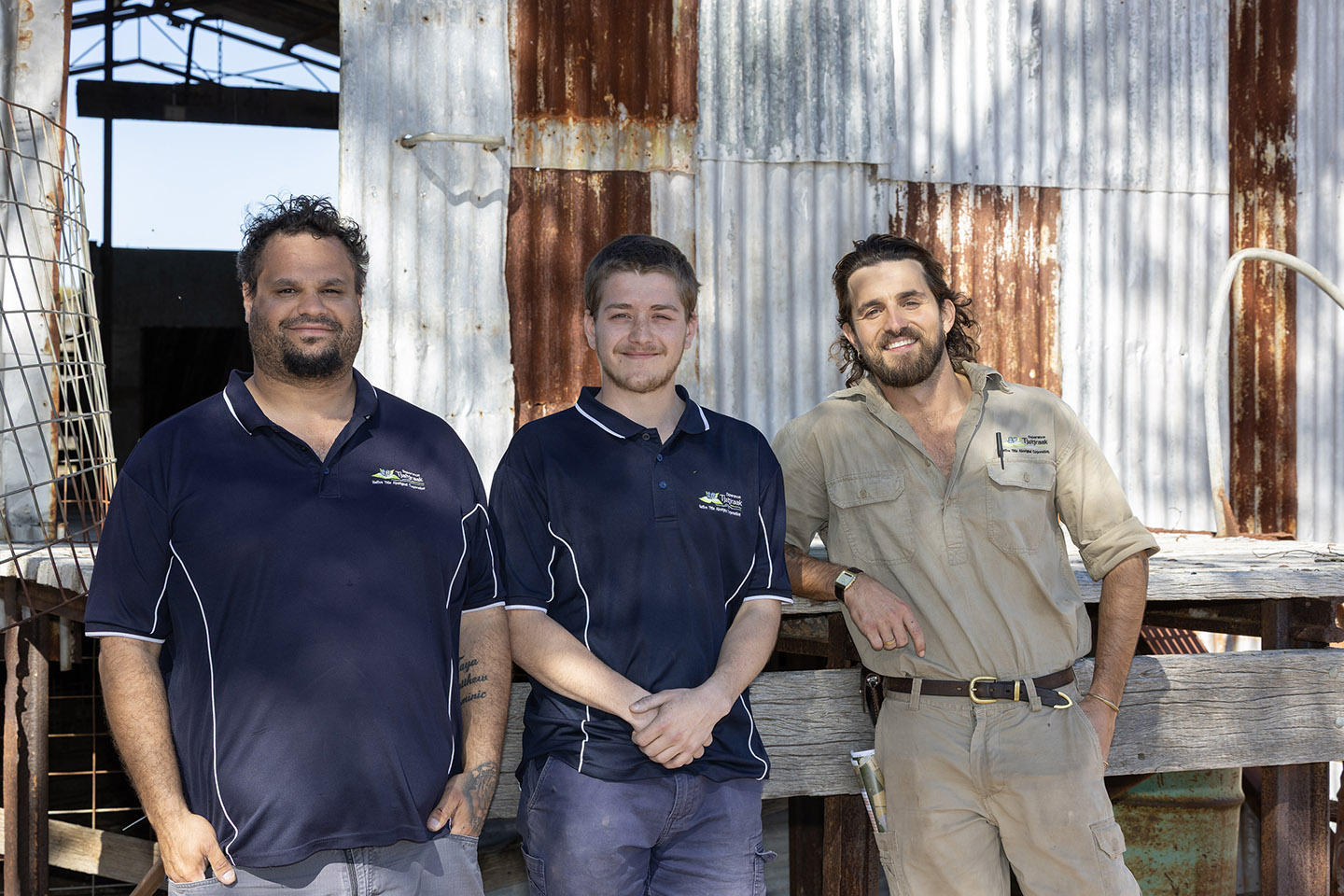
A historically fraught relationship between Indigenous people and colonial agriculture is being broken down by a new wave of farmers

Thailand’s government intends to issue an emergency decree to borrow up to 500 billion baht, pending approval to raise the public debt ceiling, citing tight cash reserves and mounting economic risks.
Key Points
- Deputy Prime Minister Pakorn Nilprapunt announced the plan, noting actual borrowing may be less than the full amount but the ceiling must cover the full figure per public debt rules.
- Public debt currently sits at ~66% of GDP, nearing the existing 70% limit; the Finance Ministry will finalize the new ceiling to preserve fiscal space.
- Prime Minister Anutin Charnvirakul signaled budget discipline for 2027, including cuts to non-essential spending and capped increases, with the 3.788 trillion baht budget plan to be submitted to cabinet on June 23.
Thailand’s proposed 500 billion baht emergency borrowing is justified by the government as a necessary response to tight cash balances and escalating external and environmental risks. Deputy Prime Minister Pakorn Nilprapunt stated that while the full amount may not be utilized, the law requires raising the public debt ceiling to cover the specified total to address these pressing economic issues.
The move comes as public debt reaches approximately 66% of GDP, nearing the current 70% statutory limit. To maintain fiscal stability, Prime Minister Anutin Charnvirakul has simultaneously issued guidelines for the 2027 budget that include cutting non-essential spending and limiting budget increases. However, some economists warn that such large-scale borrowing amid a global energy crisis and stagnant growth could lead to stagflation or a sovereign credit rating downgrade.
Thailand’s government is facing significant economic risks, primarily driven by a global energy crisis and the Middle East conflict, which have triggered concerns over potential stagflation. To manage these pressures, authorities have introduced fiscal measures, including an emergency decree to borrow 500 billion baht and a proposal to expand the public debt ceiling beyond the current 70% of GDP.
Deputy Prime Minister Pakorn Nilprapunt stated that rising external and environmental risks, combined with tight cash balances, necessitated these emergency borrowing plans. Experts at the University of the Thai Chamber of Commerce warn that stagflation—characterized by low growth and high inflation—is a growing threat if the conflict in the Middle East persists, potentially leading to increased business costs and weakened consumer purchasing power. Additionally, high levels of household debt and a widening trade deficit due to soaring oil prices have further strained the nation’s fiscal stability and currency value.
Other People are Reading


Florida launches criminal probe into OpenAI and ChatGPT over deadly shooting
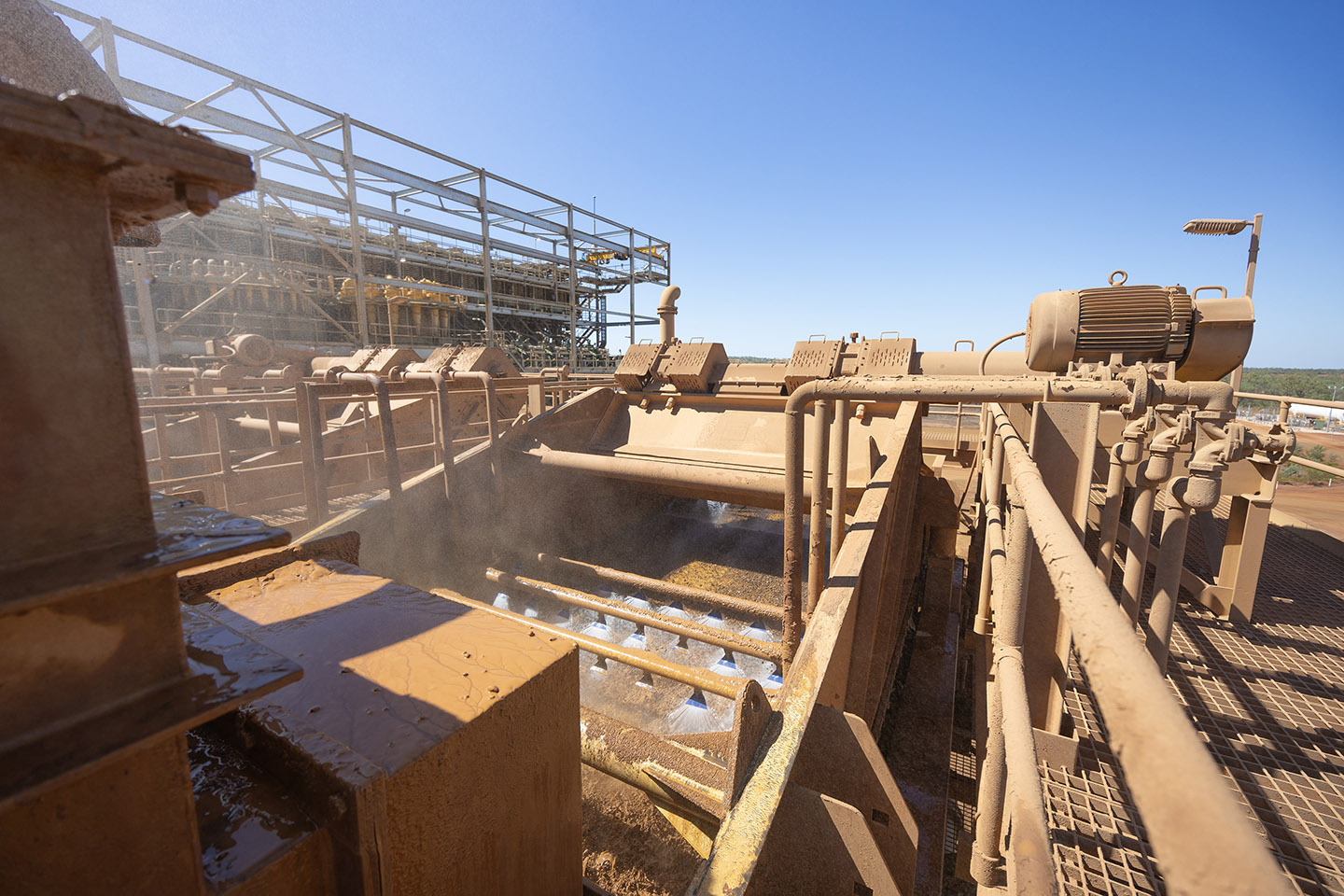
The state government is working on a deal to use a federal government loan scheme to support mid-tier infrastructure projects in the North West.

Kira-Yan/iStock Editorial via Getty Images

The following segment was excerpted from the Rowan Street Q1 2026 Letter.
Meta (META) has delivered a cumulative return of approximately 1,300% since its IPO, or about 21% annually. The path to those returns, however, has been anything but

Britain’s utilities and construction contractors are running up against the same quiet problem. The jobs are there, the tenders are lucrative, but the qualified workforce to actually execute them is tightening year on year.
NRSWA (New Roads and Street Works Act) certification has gone from a nice-to-have credential five years ago to a genuine precondition for winning certain local-authority and utility contracts in 2026. Small and mid-sized enterprises in the sector are investing in certification at unprecedented rates, and the ones waiting to see how it shakes out are quietly losing ground to competitors who moved first.
The investment case is stronger than most SME owners initially expect. Reputable providers such as an NRSWA Streetworks Operative Course deliver five-day certification windows that map directly to the Street Works Qualifications Register, valid for five years, and the ROI calculation in labour productivity plus tender win-rate improvement typically pays the course cost back within a quarter. Here’s why the certification question has moved up the SME agenda and what business owners should understand before committing their training budget.
Why Has NRSWA Certification Become a Competitive Differentiator?
Three structural shifts over the last five years have made streetworks certification more valuable than it was historically.
The first is local authority procurement tightening. Councils across England and Wales have moved toward explicit certification requirements in their streetworks-related tenders. A contractor without certified operatives on the crew is increasingly disqualified at the paperwork stage rather than evaluated on price. That shifts the calculation from “is certification worth the cost” to “is not having certification worth the lost revenue”.
The second is utility sector consolidation. As water, gas, and telecoms contractors have scaled through acquisition, the larger acquirers are standardising on certified-only sub-contractor networks. SMEs without certification are finding themselves excluded from subcontractor lists they relied on for 20 percent or more of their annual revenue.
The third is insurance alignment. Public liability policies for streetworks contractors are increasingly pricing certification as a risk factor. Insurers quote more aggressively to firms with documented training records, and quote punitively to firms without. Over a multi-year insurance cycle, that premium differential adds real money to the certification ROI calculation.
What Does the NRSWA Course Actually Cover?
The standard five-day operative course covers six core competency areas:
- Locating underground apparatus. Cable avoidance, service detection, and safe digging practice around gas, water, electric, and telecoms infrastructure.
- Signing, lighting, and guarding. The traffic management requirements that protect both site workers and the public during active works.
- Excavation. Safe excavation techniques, including spoil management and working near underground utilities.
- Reinstatement of various materials. Returning surfaces, footways, and carriageways to specification after works complete.
- Safety and compliance paperwork. The documentation trail that local authority inspectors actually check.
- Practical and theoretical assessments. Both classroom-based testing and site-based competency demonstration before certification issues.
The five-day format compresses theoretical content, supervised practical work, and formal assessment into a concentrated window that SMEs can manage around project schedules.
What Returns Should SMEs Expect From the Investment?
Four measurable returns that certified SMEs typically document within the first year:
Contract win rate improvement. Firms that move from zero certified operatives to a certified team of 5-8 typically see a 15-30 percent lift in successful tender submissions over the following 12 months. The HSE’s guidance on streetworks safety documents the regulatory backdrop that makes this true.
Reduced project rework. Certified operatives reduce reinstatement failure rates measurably, which means fewer callbacks, less liability exposure, and lower margin leakage per contract.
Stronger utility subcontractor relationships. Placement on approved subcontractor lists with major utilities is gatekept by certification status. Getting on those lists often unlocks multi-year contract frameworks that drive predictable revenue.
Insurance premium improvement. SME growth stories like Mowgli Street Food’s private equity payday under founder Nisha Katona often document workforce investment as a scaling lever that institutional investors value when pricing growth firms. Public liability renewals come back 8-15 percent lower for firms with documented certification records, which compounds across the five-year certification validity window.
The combined effect typically pays for the training investment within 3-6 months of certification for a mid-sized contractor, and continues to compound thereafter.
How Should SME Owners Structure the Training Investment?
A practical framework for deploying a certification programme without disrupting operational capacity:
- Phase the team through training. Certify in groups of 3-5 over 6-9 months rather than pulling the whole crew simultaneously
- Prioritise supervisors first. NRSWA supervisor qualifications (a separate certification track) should precede operative certifications so senior staff can validate on-site practice
- Use downtime strategically. January-February is typically slower in UK streetworks; it’s also when providers run discounted courses
- Budget for recertification cycles. The five-year validity window means a firm certifying 10 people in 2026 needs to plan 2031 recertifications now
- Capture certification status in quote paperwork. Publicising credential levels in tenders directly influences evaluator scoring
The Construction Industry Training Board’s guidance on industry workforce development covers the wider funding mechanisms (such as CITB grants) that partially offset training costs for eligible employers.
What Are the Common Mistakes SMEs Make?
A short list of failure modes that trip up first-time certification programmes:
- Treating certification as a one-off cost. The five-year validity means SMEs need ongoing recertification budgeting baked into financial plans
- Over-certifying when not needed. Not every operative role requires NRSWA certification; some admin-adjacent roles don’t benefit from the training investment
- Under-certifying supervisory roles. The supervisor-level certification is where many SMEs under-invest, creating compliance gaps on-site
- Ignoring cross-functional utility benefits. Teams often need to work across gas, water, electric, and telecoms scopes; single-sector certification can limit contract flexibility
- Picking the cheapest provider without checking assessor credentials. NRSWA certification quality varies measurably by provider; the paper outcome is the same but field competency can differ
What to Remember
- NRSWA certification has moved from nice-to-have to precondition for many UK streetworks contracts
- The investment typically pays back within one quarter through tender wins, insurance savings, and utility subcontractor access
- Five-day operative courses deliver Street Works Qualifications Register certification valid for five years
- Phase team certification rather than pulling the full crew simultaneously
- Budget for supervisor-level certification alongside operative training for best ROI
The Bottom Line for UK SME Owners
Streetworks certification has become one of the more measurable SME training investments available in 2026. The ROI path is clear, the contract-access benefits are documented, and the insurance-premium feedback loop compounds over the five-year certification window. For owners of growing trades or utility-adjacent firms, the question is rarely whether to certify the team. It’s how quickly to sequence the training against current project load. Getting ahead of the certification curve while competitors hesitate is one of the cheaper competitive moves available in the sector right now. Trades-sector entrepreneurs like Pimlico Plumbers founder Charlie Mullins have built their firms partly on workforce credentialing that competitors underinvested in.
Frequently Asked Questions
How long is NRSWA certification valid?
Five years from the date of successful assessment. Recertification is required before the expiry date to maintain the Street Works Qualifications Register listing.
What’s the cost of a five-day NRSWA operative course per person?
Typically £450 to £750 per operative depending on location, provider, and group booking discounts. CITB-registered employers may qualify for partial funding.
Can an SME self-certify through in-house training?
No. NRSWA requires accredited provider-delivered training with external assessment. Internal training cannot produce the Street Works Qualifications Register registration.
Which trades benefit most from NRSWA certification?
Gas, water, electricity, and telecoms operatives are the primary users. Construction firms doing groundworks, civil engineering contractors, and facilities management firms operating across streets also benefit meaningfully from certified crews.

The company is launching a new program to stimulate business growth.

OpenAI has shown the world a new generative model called ChatGPT Images 2, and it is more than just your average image-generating model.
The move comes right after OpenAI announced the shutdown of Sora, the company’s generative AI video model.
OpenAI Previews ChatGPT Image 2: New Image Gen Model
OpenAI revealed in its latest livestream event that there is an upcoming upgrade to its existing generative model with the new ChatGPT Image 2, which has improved capabilities in creating content.
Previously, OpenAI only gave users the ability to generate images via the ChatGPT Image model, but now, based on its teaser before the event and during the showcase itself, it can create magazine designs.
Through this new feature, users may basically create a magazine page or even an entire magazine via the Image 2 model.
Additionally, the ChatGPT Image 2 model can also deliver images featuring 2K resolution in multiple aspect ratios, generate images using updated data from the web (up to December 2025), feature Instant and Thinking modes, and add non-Latin languages to its expertise, according to 9to5Mac.
When to Expect the New ChatGPT Image 2 Model?
OpenAI is rolling out the latest ChatGPT Image 2 model now, and users may try it once they see it available on the app or website platform.
As previously mentioned, OpenAI gave ChatGPT Image 2 real-world intelligence because of its updated knowledge cutoff of up to December 2025, which is combined with handling end-to-end tasks.
Initially, OpenAI’s solution to ChatGPT’s image generation capabilities was sharing DALL-E’s generative models on the platform, but the company later changed it to the ChatGPT Image model in December 2025.
It was revealed to be the company’s solution to the massive popularity of Google’s Nano Banana Pro.
Originally published on Tech Times

Microsoft needs to answer a simple question: what is the point of Xbox?

Northern Star Resources Limited (NESRF) Q3 2026 Earnings Call Transcript

FanDuel Alternatives Continue Building Steam and ZunaBet Has Become the Name That Keeps Showing Up

Manchester United reach agreement with Casemiro over contract clause amid transfer speculation

Steven Gerrard disagrees with Gary Neville over ‘shock’ Chelsea and Arsenal claim | Football

US brings back mandatory military draft registration

Amsr unboxing 1 million dollars money cash dinero. #money #motivation #dinero

Ini cara terbaik kalian investasiin Rp500.000 ke crypto #bitcoin #ethereum #crypto #investasi

Crypto in India: Can Indians Trade Legally or Is Cryptocurrency Banned? Full Explanation Ankit Sir
-

 News Videos7 days ago
Secure crypto trading starts with an FIU-registered
-

 Fashion4 days ago
Weekend Open Thread: Theodora Dress
-

 Politics4 days ago
Palestine barred from entering Canada for FIFA Congress
-

 Sports5 days ago
NWFL Suspends Two Players Over Post-Match Clash in Ado-Ekiti
-
Entertainment2 days ago
NBA Analyst Charles Barkley Chimes in on Ice Spice McDonald’s Fiasco
-

 Business3 days ago
Powerball Result April 18, 2026: No Jackpot Winner in Powerball Draw: $75 Million Rolls Over
-

 Crypto World4 days ago
Russia Pushes Bill to Criminalize Unregistered Crypto Services
-

 Politics3 days ago
Zack Polanski demands ‘council homes not luxury flats for foreign investors’
-

 Politics1 day ago
Gary Stevenson delivers timely reminder to register to vote as deadline TODAY
-

 Tech3 days ago
Auto Enthusiast Scores Running Tesla Model 3 for Two Grand and Turns It Into Bare-Bones Go-Kart
-

 Tech6 days ago
‘Avatar: Aang, The Last Airbender’ Leaked Online. Some Fans Say Paramount Deserves the Fallout
-
 Business5 days ago
Creo Medical agree sale of its manufacturing operation
-

 Crypto World4 days ago
Russia Introduces Bill To Criminalize Unregistered Crypto Services
-
 Entertainment7 days ago
Dave Portnoy Slams Dianna Russini: ‘Makes Zero Sense’
-

 Sports6 days ago
British climbers complete new route in Swiss Alps
-

 Sports6 days ago
“Felt Much Better Today”: Josh Hazlewood Opens Up On His Recovery Win Over LSG
-
 Crypto World3 days ago
Kelp DAO rsETH Bridge Hack Drains $292M as DeFi Losses Top $600M in Two Weeks
-

 Tech6 days ago
Ford EV and tech chief leaving automaker
-

 Entertainment6 days ago
Ruby Rose Accuses Katy Perry Of Sexual Assault, Police React
-

 Business6 days ago
Cheaper Doritos and Lays helps PepsiCo win back struggling snackers
You must be logged in to post a comment Login